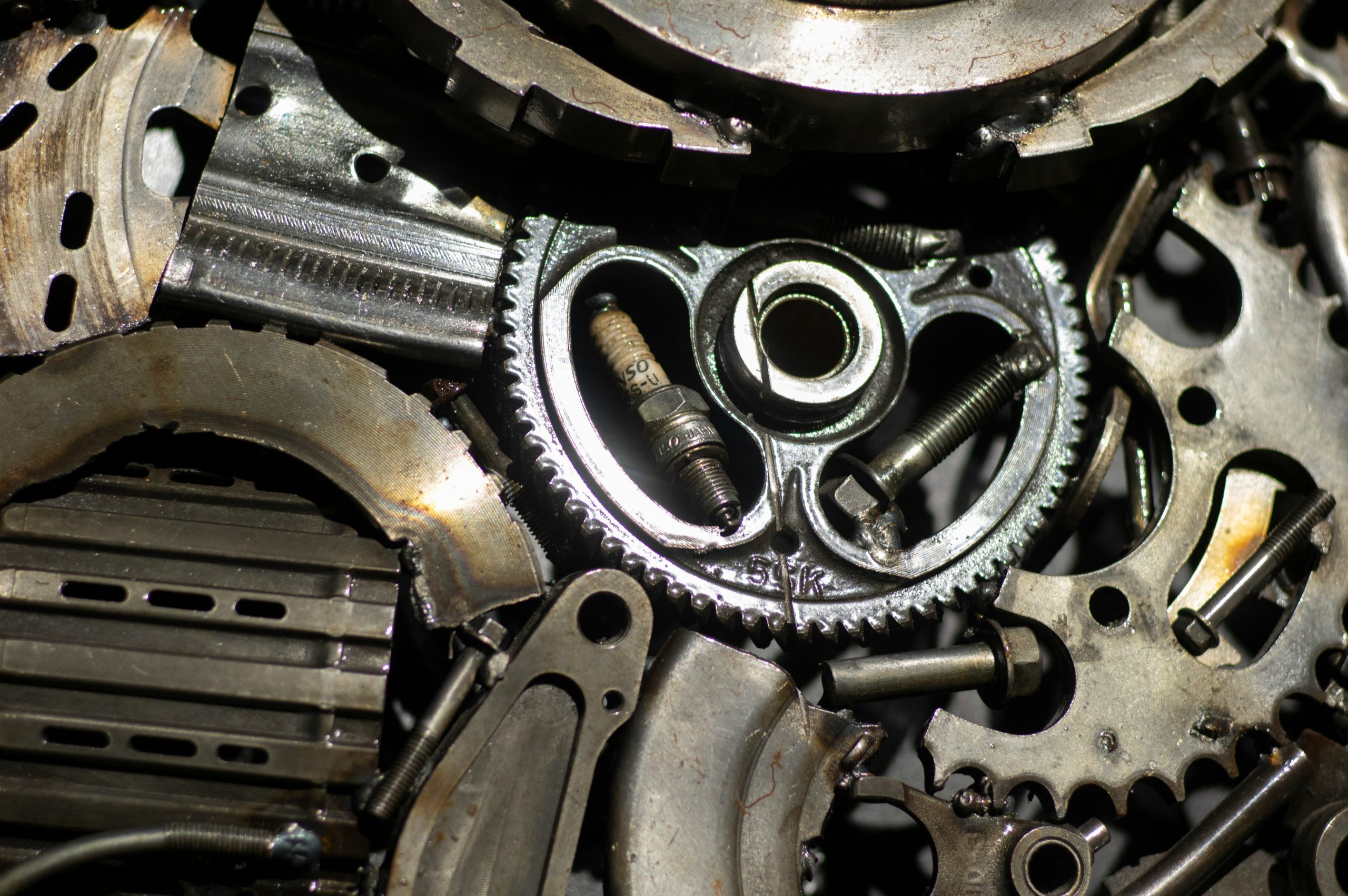
So, you’re wondering whether to go with a ready-made gearbox or get one built just for you? It’s a common question, whether you’re tinkering with a classic car, setting up a factory floor, or pushing the limits on the racetrack. The short answer? It really depends on what you need it to do, how quickly you need it, and what your budget looks like. There’s no single “best” answer, but understanding the differences can save you a lot of headaches and money down the line.
Standard Gearboxes: The Reliable Workhorse
Think of standard gearboxes as the off-the-rack suits of the mechanical world. They’re designed to fit a wide range of common applications, and because they’re produced in volume, they’re usually the most accessible and cost-effective option.
What Makes Them “Standard”?
These are gearboxes that manufacturers produce as part of their regular catalog. They’ve been designed, tested, and proven across many different scenarios. This means they come with established specifications and performance characteristics.
Common Applications
You’ll find standard gearboxes in everything from conveyor belts in a warehouse to the transmission in your average sedan. They’re built for general-purpose use, where specific, highly unique demands aren’t the primary concern.
Lead Times and Availability
This is often the biggest draw for standard units. Most common industrial catalog gearboxes can be shipped out relatively quickly, often within 1 to 4 weeks. For very broad product lines, you might even see things ready in as little as 7 to 15 days. This speed is crucial when a machine is down and you need a replacement part now.
Cost-Effectiveness
Because of the economies of scale in manufacturing, standard gearboxes are generally cheaper upfront. The development costs have been spread across many units, and the production process is optimized for efficiency.
Trade-offs in Performance
While cost-effective, standard gearboxes aren’t always the peak performers in every situation. They might have higher internal friction compared to a specialized design, which can lead to slightly greater energy consumption. They’re designed to be “good enough” for most, but not necessarily “perfect” for any one specific, demanding task.
When considering the advantages of custom versus standard gearboxes, it’s essential to understand the implications of gearbox repair and maintenance. For insights into the repair processes and services available for industrial gearboxes, you can refer to a related article on industrial gearbox repair in Aurora, Illinois. This resource provides valuable information on the importance of proper maintenance and repair to ensure optimal performance of both custom and standard gearboxes. For more details, visit Industrial Gearbox Repair in Aurora, IL.
Custom Gearboxes: Tailored for Your Needs
Now, custom gearboxes are the bespoke tailor-made suits. They’re designed from the ground up, or at least significantly modified, to meet very specific requirements. This could be for an exotic supercar, a specialized industrial robot, or a piece of scientific equipment.
When “Standard” Just Won’t Cut It
If your application has unique demands – like extreme torque requirements, unusual operating speeds, specific environmental conditions (think intense heat, corrosive atmospheres, or dust-filled areas), or a need for ultra-compact size with high power – then a custom solution might be your only real option.
Bespoke Design and Engineering
With a custom gearbox, engineers can optimize every aspect for your particular application. This can include the gear tooth profiles, bearing types, lubrication systems, and housing materials. The goal is to achieve the absolute best performance, efficiency, and reliability for your specific challenge.
Performance Advantages
This level of customization often unlocks significant performance gains. You can expect higher efficiency, meaning less wasted energy and lower running costs over time. Torque density can be increased, allowing for more power from a smaller package. They can also be engineered to handle specific load profiles and duty cycles far better than a general-purpose unit.
Lead Time and Cost Considerations
This is where the traditional “custom” approach has its drawbacks. Designing, prototyping, and manufacturing a truly bespoke gearbox can take a considerable amount of time, often ranging from 8 to 16 weeks or even longer. And naturally, the engineering and one-off production mean a higher upfront cost.
The Rise of Modular and Configurable Solutions
The good news is that the industry is evolving rapidly, blurring the lines between fully custom and standard. New approaches are emerging that give you much of the benefit of customization without the extreme lead times or costs.
Bridging the Gap
Manufacturers are developing sophisticated modular systems. These aren’t simply off-the-shelf units, nor are they fully bespoke builds from scratch. Instead, they offer a range of pre-engineered modules and components that can be combined in numerous ways.
“Custom-Like” Performance with Standard Speed
Companies are creating platforms where you can select from thousands of pre-validated configurations. This means you’re not getting a completely new design every time, but rather a highly optimized combination from a proven set of parts. The result is performance that’s very close to a truly custom unit, but with lead times that are much closer to standard catalog items. Think of it as highly advanced Lego for gearboxes.
Flender’s Universal Platform Example
One notable example is Flender’s new universal platform. They’ve managed to combine the idea of 100% custom design with the efficiency of mass production. Using an online configurator, users can apparently specify fully customized gear units in minutes. This tackles the age-old problem of waiting months for a tailored solution.
OEM Shift Towards Modularity
Original Equipment Manufacturers (OEMs) are increasingly looking at these modular ranges. It offers them a way to achieve system optimization that was previously only possible with lengthy custom builds, while also streamlining their supply chains.
Sure, here is the sentence with the clickable link:
Please feel free to contact Industrial Gearbox Solutions for any inquiries.
Automotive Trends: Performance and Accessibility
In the automotive world, especially in performance and racing, the demand for customized transmissions has always been high. However, it’s historically been a complex and expensive undertaking for smaller builders or even individual enthusiasts.
Simplifying Bespoke Builds
Companies focused on performance transmissions are making it easier for car builders to get custom solutions. This isn’t about ordering a standard transmission and slapping a performance badge on it; it’s about accessing deeply engineered, tailored gearboxes.
“Platinum Series” Packages
Brands like Performance Automatic offer what they call “Platinum Series” packages. What this means in practice is they handle the entire build process for you. They’ll take your requirements, tune the transmission, perform rigorous testing, and even apply specialized coatings. Essentially, they’re taking the guesswork and the extensive engineering burden off the customer.
Making Custom Accessible
These packages are designed to make truly bespoke, high-performance transmissions more accessible for both racing applications and souped-up street cars. It removes some of the traditional barriers associated with obtaining a custom-built unit.
F1’s Evolving Gearbox Strategy
Even at the pinnacle of motorsport, the concept of standardization versus custom design is a hot topic. The FIA (Fédération Internationale de l’Automobile) had plans to switch to standard gearbox cassettes for Formula 1, which would have meant a more uniform design across all teams.
Standard Canceled for F1
However, the World Motor Sport Council voted against this plan. This decision means teams will continue to have the freedom to develop and use their own custom gearbox designs, supplied by specialized manufacturers like Xtrac.
Relief for Suppliers
Suppliers like Xtrac have expressed relief. For them, a “one-size-fits-all” approach in F1 would have limited their ability to innovate and cater to the unique demands of each racing team. This highlights how, even in the most extreme performance categories, the value of custom engineering is still recognized and sought after.
When considering the advantages of custom versus standard gearboxes, it’s essential to understand the implications of each choice on performance and efficiency. For those interested in the intricacies of gearbox repair and maintenance, a related article provides valuable insights into the best practices for ensuring optimal functionality. You can explore this informative piece on industrial gearbox repair to gain a deeper understanding of how proper maintenance can extend the lifespan of both custom and standard gearboxes.
Choosing the Right Path for You
So, how do you decide? It really boils down to a few key factors:
1. Application Requirements
- ### What are your performance needs?
- Do you need extreme efficiency?
- High torque density?
- Specific speed ranges?
- Operation in harsh environments?
- ### What are your load conditions?
- Constant heavy loads?
- Intermittent shocks?
- Specific start-stop cycles?
If your application is highly specialized or pushing the boundaries of what’s typically possible, a custom or carefully configured modular solution is likely the way to go. If your needs are more standard, an off-the-shelf gearbox will likely suffice and save you money.
2. Budget and Cost Considerations
- ### Upfront Investment vs. Long-Term Savings
- Standard gearboxes are cheaper initially.
- Custom gearboxes often have a higher purchase price but can offer long-term operational savings through increased efficiency and reduced downtime if they are better suited to the task.
- ### Total Cost of Ownership
- Consider not just the purchase price, but also energy consumption, maintenance, and potential for premature failure if an underspecified standard unit is used in a demanding role.
If budget is extremely tight and the application isn’t overly demanding, a standard gearbox is the obvious choice. If you can justify a higher initial cost for better performance, reliability, or efficiency, then custom or modular solutions become more attractive.
3. Urgency and Lead Times
- ### How quickly do you need the gearbox?
- If you have an immediate need due to equipment failure, speed is paramount. Standard gearboxes are usually the fastest option.
- Modular systems can offer a good compromise for those who need a tailored solution but can’t wait for a full custom build.
- Fully custom builds require the most patience.
If you have a tight deadline or need a system back online quickly, prioritize standard or modular options. If you have the luxury of time for engineering and manufacturing, custom becomes more feasible.
4. Supplier and Support
- ### Do you need extensive technical support?
- Reputable suppliers of both standard and custom gearboxes can offer valuable advice.
- For custom solutions, a strong relationship with your manufacturer is crucial throughout the design and build process.
Choosing a supplier you trust and who understands your needs, regardless of whether you opt for standard or custom, is essential for a successful outcome.
FAQs
What is the difference between custom and standard gearboxes?
Custom gearboxes are designed and manufactured to meet specific requirements of a particular application, while standard gearboxes are pre-designed and mass-produced for general use.
What are the advantages of using a custom gearbox?
Custom gearboxes offer the advantage of being tailored to the specific needs of an application, providing optimal performance, efficiency, and durability. They can also accommodate unique space constraints and operating conditions.
What are the advantages of using a standard gearbox?
Standard gearboxes are readily available, cost-effective, and widely used in many applications. They are suitable for general-purpose use and can be easily replaced or interchanged if needed.
What factors should be considered when deciding between a custom or standard gearbox?
Factors to consider include the specific requirements of the application, such as torque, speed, space limitations, environmental conditions, and budget. Custom gearboxes are ideal for unique or specialized applications, while standard gearboxes are suitable for more common or standardized applications.
Can a standard gearbox be modified to meet specific requirements?
Yes, some standard gearboxes can be modified or customized to a certain extent to meet specific requirements. However, for highly specialized or unique applications, a custom gearbox may be the more suitable option.