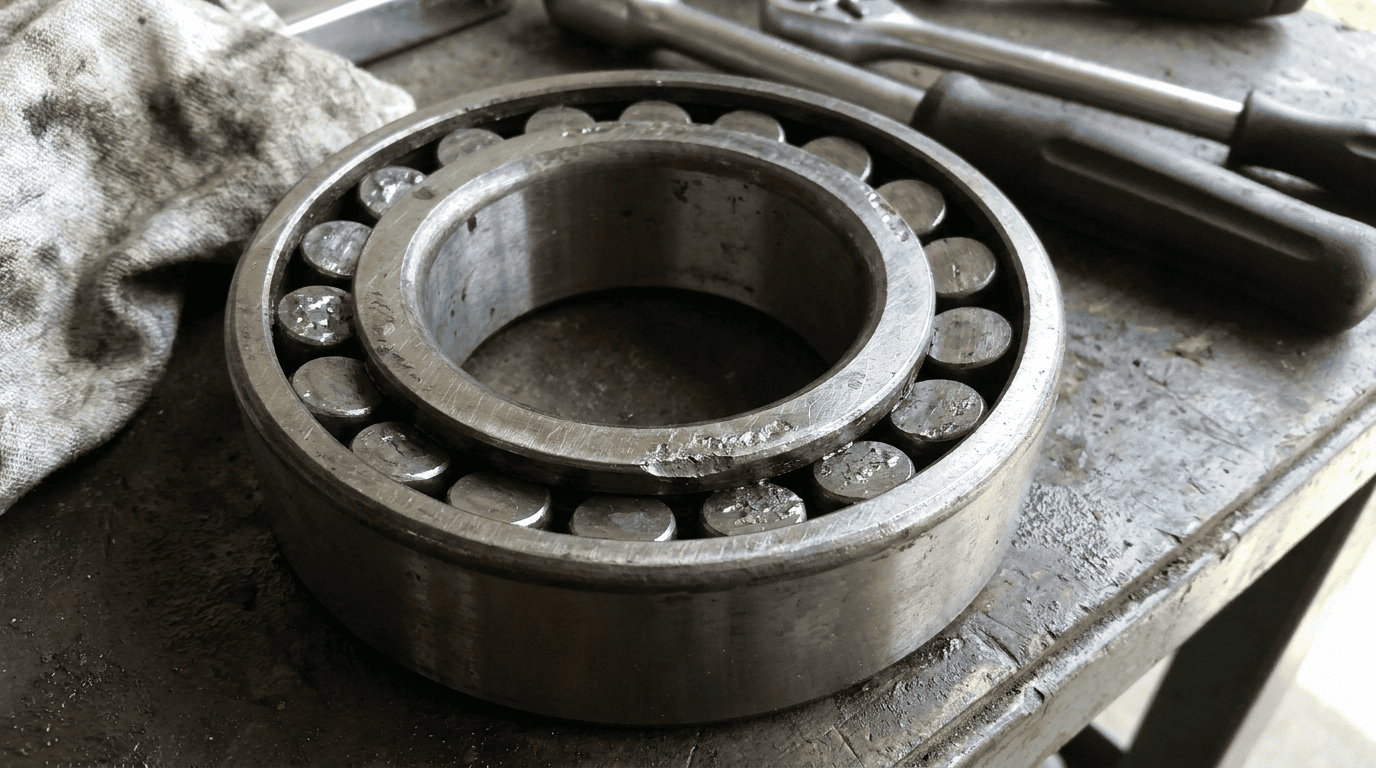
Bearing fatigue failure is one of the most common root causes of unplanned gearbox downtime, especially in industrial drives that operate under heavy loads, contamination, misalignment, lubrication stress, or variable-speed conditions. For maintenance managers, plant engineers, reliability teams, mechanics, and purchasing professionals, understanding how bearing fatigue begins, how it progresses, and how to prevent it can reduce emergency shutdowns and extend gearbox service life. In most cases, fatigue does not happen suddenly; it develops through repeated stress cycles that create microscopic cracks, spalling, vibration, heat, and eventually bearing failure.
Bearing fatigue failure occurs when repeated rolling contact stress creates subsurface or surface cracks in a bearing raceway or rolling element. Over time, these cracks grow and release small fragments of material, causing spalling, noise, vibration, heat, metal debris, and eventual gearbox failure. The most common contributors include overload, poor lubrication, contamination, misalignment, improper installation, electrical damage, and operating conditions beyond the bearing’s design limits. Early detection through vibration analysis, oil analysis, temperature monitoring, and visual inspection can prevent catastrophic damage.
For a deeper understanding of the implications of bearing fatigue failure in industrial applications, you may find the article on industrial gearbox repair in West Virginia particularly insightful. This resource discusses the importance of maintaining gearboxes to prevent failures, including those caused by bearing issues. To read more, visit Industrial Gearbox Repair in West Virginia.
What Is Bearing Fatigue Failure?
Bearing fatigue failure is the progressive breakdown of bearing material caused by repeated stress cycles between the rolling elements and raceways. In industrial gearboxes, bearings support shafts, control gear mesh alignment, and manage radial and axial loads. When these components experience millions of load cycles, even properly designed bearings eventually reach a fatigue limit.
However, premature bearing fatigue is often preventable. A gearbox bearing that should last years may fail in months if it is overloaded, misaligned, under-lubricated, contaminated, or improperly installed.
How Bearing Fatigue Develops
Fatigue typically begins in one of two ways:
- Subsurface fatigue: Cracks start below the raceway surface due to repeated Hertzian contact stress.
- Surface-initiated fatigue: Cracks begin at or near the surface due to lubrication breakdown, contamination, skidding, corrosion, or surface distress.
Once cracks form, they propagate with each rotation. Eventually, small pieces of bearing material break away, forming pits or flakes. This condition is commonly called spalling.
Why It Matters in Industrial Gearboxes
In gearboxes, bearing fatigue can lead to:
- Gear misalignment
- Increased backlash
- Seal failure
- Oil contamination
- Shaft damage
- Housing bore wear
- Excessive vibration
- Catastrophic gearbox failure
A failed bearing rarely damages only itself. If not addressed early, bearing fatigue can destroy gears, shafts, seals, and housings, turning a manageable repair into a complete gearbox rebuild or replacement.
For related gearbox service support, see Industrial Gearbox Solutions’ resources on industrial gearbox repair and gearbox rebuild services.
Common Causes of Bearing Fatigue Failure
Bearing fatigue may be a natural end-of-life condition, but premature fatigue usually points to an underlying mechanical, lubrication, or operating issue.
Excessive Load or Overload
Bearings are designed for specific radial and axial loads. When actual operating loads exceed design limits, contact stress increases and fatigue life drops dramatically.
Common overload sources include:
- Increased production demands
- Shock loading
- Jammed conveyors
- Improper gearbox selection
- Torque spikes during startups
- Process changes not reflected in gearbox ratings
- Gear mesh problems that transfer abnormal forces to bearings
Even small increases in load can significantly reduce bearing life. This is why reviewing application conditions is essential before replacing a failed bearing with the same part number.
Poor Lubrication
Lubrication separates metal surfaces, reduces friction, removes heat, and protects against corrosion. When the lubricant film is too thin or contaminated, surface fatigue accelerates.
Lubrication-related causes include:
- Incorrect oil viscosity
- Low oil level
- Overfilled gearbox
- Wrong lubricant type
- Degraded oil
- Foaming or aeration
- Incompatible grease
- Starvation at high-speed bearings
- Blocked lubrication passages
Noria provides excellent lubrication reliability guidance and oil analysis education at Noria.com.
Contamination
Contamination is one of the leading causes of premature bearing fatigue in industrial gearboxes. Hard particles dent raceways and rolling elements, creating stress risers that lead to crack initiation.
Common contaminants include:
- Dirt
- Dust
- Water
- Process chemicals
- Metal particles
- Sand or abrasive material
- Worn seal fragments
- Paint chips or assembly debris
Water contamination is especially harmful because it reduces lubricant film strength, promotes corrosion, and can cause hydrogen embrittlement in bearing steel.
Misalignment
Misalignment changes how loads are distributed across the bearing. Instead of evenly sharing load across the rolling elements, one area may become overloaded, causing edge loading and accelerated fatigue.
Misalignment may be caused by:
- Soft foot
- Improper shaft alignment
- Distorted gearbox base
- Worn housing fits
- Bent shafts
- Poor installation practices
- Thermal growth not considered during alignment
If bearing fatigue appears on one side of the raceway or is concentrated near the edge, misalignment should be investigated.
Improper Installation
Bearings are precision components. Installation damage can create early fatigue even before the gearbox returns to service.
Common installation mistakes include:
- Hammering directly on bearing rings
- Applying force through rolling elements
- Using incorrect heating methods
- Overheating the bearing
- Installing with dirty tools
- Incorrect fits or clearances
- Mixing unmatched components
- Improper preload or endplay adjustment
A bearing damaged during installation may fail quickly and appear to have a lubrication or overload problem.
Electrical Fluting and Current Damage
In gearboxes driven by variable frequency drives, stray electrical currents can pass through bearings. This can create microscopic pits, fluting, and surface damage that later develops into fatigue failure.
Warning signs include:
- Washboard-like raceway patterns
- Frosted bearing surfaces
- High-frequency vibration
- Unusual noise
- Repeated bearing failures in motor-driven systems
Proper grounding, shaft grounding rings, insulated bearings, or ceramic rolling elements may be needed.
Inadequate Bearing Selection
Sometimes the bearing is simply not correct for the application. This may occur when operating conditions have changed or when a replacement bearing is chosen based only on dimensions rather than performance requirements.
Selection factors include:
- Load rating
- Speed rating
- Internal clearance
- Cage design
- Lubrication method
- Sealing requirements
- Temperature range
- Shock load capacity
- Axial load capability
Manufacturers such as SKF and Timken provide technical resources for bearing selection, installation, lubrication, and failure analysis.
Industrial gearbox bearing failure can lead to costly downtime and repairs, so it’s important to address the issue promptly. Industrial gearbox bearing failure
Symptoms of Bearing Fatigue Failure
Bearing fatigue failure usually provides warning signs before catastrophic failure. Detecting these symptoms early can prevent secondary gearbox damage.
Common Operational Symptoms
Maintenance teams should watch for:
- Increased gearbox vibration
- Rumbling, growling, or clicking sounds
- Rising bearing temperature
- Increased oil temperature
- Metallic debris in lubricant
- Gearbox housing vibration
- Irregular shaft movement
- Seal leakage
- Increased motor current
- Reduced gearbox efficiency
- Recurring coupling alignment issues
Visual Symptoms During Inspection
When the gearbox is opened, fatigue damage may appear as:
- Spalling on raceways
- Pitting on rolling elements
- Flaking metal
- Cracks
- Discoloration from heat
- Brinelling or false brinelling
- Scoring
- Cage wear
- Metal debris embedded in surfaces
Vibration Signature Symptoms
Vibration analysis often detects fatigue before visual inspection is possible. Common indicators include:
- Increased bearing defect frequencies
- High-frequency acceleration peaks
- Sidebands around bearing frequencies
- Elevated noise floor
- Repeated impacts
- Harmonic patterns linked to ball pass frequency or roller pass frequency
Reliability engineers should compare vibration data against historical baselines rather than relying only on alarm thresholds.
Understanding bearing fatigue failure is crucial for maintaining the longevity of machinery, and for those interested in further exploring this topic, a related article on industrial gearbox repair provides valuable insights. This article discusses common issues faced by gearboxes and how proper maintenance can prevent failures, including those caused by bearing fatigue. For more information, you can read the full article on industrial gearbox repair.
Bearing Fatigue Troubleshooting Guide
| Category | Metrics |
|---|---|
| Causes of Failure | Fatigue, Overloading, Contamination, Improper Installation |
| Signs of Failure | Noise, Vibration, Increased Friction, Overheating |
| Preventive Measures | Proper Lubrication, Regular Maintenance, Correct Installation |
| Impact | Downtime, Production Loss, Equipment Damage |
Troubleshooting bearing fatigue requires more than replacing the failed bearing. The goal is to identify why the fatigue occurred.
Step-by-Step Troubleshooting Process
- Document the failure symptoms.
- Record operating hours since installation.
- Review load, speed, and duty cycle.
- Inspect lubricant condition and level.
- Check oil analysis history.
- Inspect seals and breathers.
- Perform shaft and housing fit measurements.
- Review alignment records.
- Examine bearing damage patterns.
- Check for contamination sources.
- Verify installation procedure.
- Compare bearing selection to application requirements.
- Inspect gears, shafts, and housings for secondary damage.
- Determine corrective action before restart.
Bearing Fatigue Failure Troubleshooting Table
| Symptom | Possible Cause | Inspection Method | Recommended Action |
|||||
| Spalling in load zone | Normal fatigue, overload, misalignment | Visual inspection, load review | Verify load, alignment, and bearing rating |
| Edge spalling | Misalignment or shaft deflection | Contact pattern, shaft runout | Correct alignment and inspect shaft/housing |
| Widespread pitting | Contamination or lubricant failure | Oil analysis, filter inspection | Flush gearbox and improve filtration |
| Blue or brown discoloration | Overheating | Temperature logs, lubricant review | Correct lubrication and cooling issues |
| Fluting pattern | Electrical current damage | Visual inspection, electrical testing | Add grounding or insulated bearing solution |
| Cage damage | Lubrication starvation, vibration, poor handling | Visual inspection | Correct lubrication and installation practices |
| Repeated short life | Wrong bearing or unresolved root cause | Application review | Perform engineering evaluation |
Questions to Ask During Root Cause Analysis
- Did the gearbox operate beyond its rated torque?
- Was the bearing replaced recently?
- Was the correct bearing clearance used?
- Was the gearbox properly aligned after installation?
- Has the oil been tested?
- Were filters or breathers changed?
- Is there evidence of water ingress?
- Are there vibration trends showing progressive damage?
- Did production conditions change?
- Was the gearbox exposed to shock loads or starts/stops?
Inspection Methods for Bearing Fatigue
A good inspection program combines condition monitoring, lubricant analysis, and mechanical inspection.
Vibration Analysis
Vibration analysis is one of the most effective tools for detecting bearing fatigue in operating gearboxes. It identifies changes in frequency patterns that correspond to bearing geometry and rotational speed.
Best practices include:
- Establish baseline readings after installation
- Monitor in horizontal, vertical, and axial directions
- Trend velocity, acceleration, and enveloping data
- Use bearing defect frequency calculations
- Compare changes over time
- Investigate sudden changes immediately
Oil Analysis
Oil analysis can identify contamination, wear particles, lubricant degradation, and early signs of bearing distress.
Important oil analysis tests include:
- Particle count
- Viscosity
- Water content
- Acid number
- Ferrous density
- Spectrometric analysis
- Analytical ferrography
- Oxidation and nitration testing
If fatigue spalling is occurring, oil analysis may show increased iron, elevated particle counts, and abnormal wear debris.
Temperature Monitoring
Rising temperature can indicate lubrication failure, overload, misalignment, or internal friction. Temperature should be monitored at bearing locations, not only at the oil sump.
Useful methods include:
- Infrared thermography
- Fixed temperature sensors
- Bearing RTDs
- Oil temperature sensors
- Trend-based alarms
A gradual temperature rise may indicate developing fatigue or lubrication distress.
Visual and Dimensional Inspection
During a gearbox teardown, inspect all related components, not only the failed bearing.
Inspection points include:
- Bearing raceways
- Rolling elements
- Cage condition
- Shaft journals
- Housing bores
- Gear tooth contact patterns
- Seals and seal surfaces
- Oil passages
- Retaining hardware
- Endplay or preload settings
Dimensional checks are essential because loose fits can cause creep, fretting, and repeat failures.
Borescope Inspection
For gearboxes that cannot be fully disassembled immediately, borescope inspection may help detect:
- Spalling
- Metal debris
- Gear tooth damage
- Oil distribution problems
- Seal fragments
- Internal corrosion
Borescope inspection is not a replacement for full teardown, but it can support shutdown planning.
Prevention Strategies for Bearing Fatigue Failure
Preventing bearing fatigue requires controlling load, lubrication, contamination, alignment, installation, and operating conditions.
Improve Lubrication Practices
A strong lubrication program can dramatically extend bearing life.
Best practices include:
- Use the correct lubricant viscosity and specification
- Maintain proper oil level
- Avoid mixing incompatible lubricants
- Filter new oil before adding it
- Store lubricants properly
- Use desiccant breathers where appropriate
- Sample oil consistently from the same location
- Set oil change intervals based on condition, not guesswork
- Verify oil flow to bearings in splash or forced-lube systems
Control Contamination
Contamination control is one of the highest-return reliability improvements.
Recommended actions:
- Upgrade breathers
- Improve shaft seals
- Use proper fill and drain procedures
- Keep gearbox inspection covers sealed
- Filter oil during transfer
- Install offline filtration where needed
- Flush after major repairs
- Keep washdown water away from seals and vents
- Maintain clean storage for spare bearings
Ensure Proper Alignment
Alignment should be checked whenever a gearbox, motor, coupling, or driven equipment is installed or repaired.
Key alignment practices:
- Correct soft foot before alignment
- Use precision laser alignment tools
- Account for thermal growth
- Verify base flatness
- Inspect coupling condition
- Recheck alignment after tightening bolts
- Document final alignment readings
For gearbox-related field service, see Industrial Gearbox Solutions field service.
Follow Correct Installation Procedures
Proper bearing installation prevents hidden damage.
Recommended practices:
- Keep bearings in original packaging until use
- Work in a clean area
- Use induction heaters when appropriate
- Never apply heat with an open flame
- Apply installation force only to the ring being fitted
- Use correct tools and sleeves
- Verify internal clearance
- Set preload or endplay according to specifications
- Rotate the bearing after installation to confirm smooth movement
Monitor Operating Conditions
Bearings fail faster when actual operating conditions differ from assumptions.
Track:
- Load
- Speed
- Starts and stops
- Shock events
- Ambient temperature
- Process changes
- Motor current
- Vibration
- Oil temperature
- Production rate changes
This data helps determine whether the bearing is failing from true fatigue life exhaustion or from avoidable operating stress.
Repair vs. Replacement: What Should You Do?
When bearing fatigue is found, the decision is not simply whether to replace the bearing. The full gearbox condition must be evaluated.
When Bearing Replacement May Be Enough
Simple bearing replacement may be appropriate when:
- Fatigue is limited to one bearing
- No gear, shaft, or housing damage is present
- Lubricant contamination is minimal
- Root cause is identified and corrected
- Shaft and housing fits are within tolerance
- Correct bearing type is available
- Gearbox alignment can be verified before restart
Even in these cases, flushing and oil replacement are usually recommended.
When Gearbox Repair Is Required
A gearbox repair or rebuild is likely needed when:
- Metal debris circulated through the gearbox
- Multiple bearings show distress
- Gears show abnormal wear
- Shaft journals are worn or fretted
- Housing bores are oversized
- Seals failed
- Lubrication passages are blocked
- Vibration has damaged connected equipment
- Fatigue recurs after previous bearing replacement
Industrial Gearbox Solutions can support teardown, inspection, reverse engineering, rebuilding, and testing through gearbox inspection and repair services.
When Replacement May Be the Better Option
Complete gearbox replacement may be justified when:
- The gearbox is obsolete
- Repair cost approaches replacement cost
- Lead time for parts is unacceptable
- Housing damage is severe
- Gear geometry is no longer serviceable
- The application requires a higher-rated unit
- Repeated failures indicate the gearbox is undersized
Purchasing professionals should compare total cost of ownership, not just purchase price. A lower-cost replacement unit may become expensive if it has shorter life, poor parts availability, or inadequate service support.
Maintenance Best Practices for Longer Bearing Life
The best bearing fatigue prevention programs combine predictive, preventive, and precision maintenance.
Recommended Maintenance Schedule
| Maintenance Task | Suggested Frequency | Purpose |
||:||
| Visual leak inspection | Daily or weekly | Identify seal or oil level issues |
| Temperature check | Weekly | Detect overheating trends |
| Vibration route | Monthly or quarterly | Detect early bearing defects |
| Oil level check | Weekly | Prevent starvation or overfilling |
| Oil analysis | Quarterly or semiannual | Detect wear, contamination, and degradation |
| Breather inspection | Monthly | Prevent moisture and particle ingress |
| Alignment verification | After installation or major maintenance | Prevent misalignment-related fatigue |
| Fastener torque check | During planned outage | Prevent looseness and housing distortion |
| Full internal inspection | During scheduled outage | Confirm bearing, gear, and shaft condition |
Frequencies should be adjusted based on criticality, operating environment, and failure history.
Critical Spare Parts Planning
Purchasing and maintenance teams should identify critical gearbox bearings before failure occurs.
Spare parts planning should include:
- Bearing part numbers
- Manufacturer and equivalents
- Internal clearance requirements
- Seal kits
- Shims and spacers
- Locknuts and washers
- Lubricant specification
- Lead times
- Criticality ranking
- Repair vendor contact information
Avoid substituting bearings based only on size. Internal clearance, cage material, precision class, and load rating matter.
Documentation That Improves Reliability
Good records help identify patterns and prevent repeat failures.
Document:
- Installation date
- Bearing type and manufacturer
- Lubricant type
- Oil change dates
- Oil analysis reports
- Vibration trends
- Alignment readings
- Load changes
- Repair history
- Failure photos
- Root cause findings
This information strengthens future decisions about repair, replacement, lubrication, and upgrades.
Industry Standards and Authoritative References
Bearing fatigue analysis should be based on recognized engineering principles and reputable sources.
Useful references include:
- SKF Bearing Failure Analysis
- Timken Bearing Damage Analysis
- AGMA Standards and Technical Publications
- Noria Lubrication Reliability Resources
AGMA resources are especially relevant for gear drive rating, lubrication, and gearbox reliability standards. SKF and Timken provide detailed bearing damage interpretation guides, while Noria is a strong source for lubrication and contamination control best practices.
Key Takeaways
- Bearing fatigue failure is caused by repeated rolling contact stress that creates cracks, pitting, and spalling.
- Premature fatigue is often linked to overload, poor lubrication, contamination, misalignment, installation damage, or electrical current.
- Early warning signs include vibration, noise, heat, metal particles, oil degradation, and seal leakage.
- Vibration analysis and oil analysis are two of the most valuable tools for early detection.
- Replacing the bearing without identifying root cause can lead to repeat failure.
- Contamination control, proper lubrication, precision alignment, and correct installation are essential for longer bearing life.
- Repair vs. replacement decisions should consider total gearbox condition, downtime risk, parts availability, and application demands.
- Reliable documentation helps maintenance and purchasing teams make better long-term decisions.
FAQs About Bearing Fatigue Failure
What is the main cause of bearing fatigue failure?
The main cause is repeated contact stress between rolling elements and raceways. However, premature bearing fatigue is usually accelerated by overload, inadequate lubrication, contamination, misalignment, improper installation, or incorrect bearing selection.
How can you tell if a bearing has fatigue damage?
Common signs include spalling, pitting, flaking, increased vibration, rumbling noise, rising temperature, and metallic debris in the lubricant. Vibration analysis can often detect bearing fatigue before visible damage appears.
Can bearing fatigue be repaired?
The bearing itself is not typically repaired in industrial gearbox service. Once fatigue spalling occurs, the bearing should be replaced. However, related gearbox components such as shafts, housings, and gears may be repaired or rebuilt depending on their condition.
Is bearing fatigue the same as spalling?
Not exactly. Bearing fatigue is the process of material damage caused by repeated stress cycles. Spalling is a visible result of fatigue where small pieces of material break away from the raceway or rolling element.
How do lubrication problems cause fatigue?
Poor lubrication allows metal-to-metal contact, increases friction, raises temperature, and reduces film thickness. This creates surface distress, pitting, and crack initiation that can develop into fatigue failure.
How does contamination lead to bearing fatigue?
Hard particles dent the bearing surface. These dents create stress concentrations where cracks can begin. Water contamination also weakens lubrication, promotes corrosion, and accelerates surface damage.
Should a gearbox be flushed after a bearing fatigue failure?
Yes, in most cases. Spalling releases metal particles into the lubricant, and those particles can damage gears, seals, and new bearings. A proper flush, filter change, and oil replacement are usually recommended.
How long should industrial gearbox bearings last?
Bearing life depends on load, speed, lubrication, contamination control, alignment, temperature, and duty cycle. A properly selected and maintained bearing may last for many years, while a bearing exposed to contamination or overload may fail prematurely.
Can vibration analysis predict bearing failure?
Vibration analysis can identify developing bearing defects and trend their progression. It is one of the most effective predictive maintenance tools for detecting fatigue before catastrophic failure.
When should I replace the entire gearbox instead of only the bearing?
Consider gearbox replacement if the unit is obsolete, undersized, severely damaged, repeatedly failing, or too costly to rebuild. If gears, shafts, housing bores, and lubrication systems are still serviceable, repair may be more cost-effective.
Suggested Branded Images
Image 1: Bearing fatigue spalling close-up
Alt text: Close-up of bearing fatigue failure spalling on an industrial gearbox bearing raceway
Caption: Spalling on a bearing raceway is a common visual sign of advanced fatigue failure.
Image 2: Technician inspecting gearbox bearing
Alt text: Industrial Gearbox Solutions technician inspecting a gearbox bearing for fatigue damage
Caption: Precision inspection helps identify whether bearing fatigue was caused by overload, lubrication failure, contamination, or misalignment.
Image 3: Oil analysis sample from industrial gearbox
Alt text: Oil sample collected from an industrial gearbox to detect bearing wear particles
Caption: Oil analysis can reveal early signs of bearing fatigue through wear debris, contamination, and lubricant condition data.
Image 4: Vibration analysis on gearbox
Alt text: Reliability technician performing vibration analysis on an industrial gearbox bearing location
Caption: Vibration monitoring helps detect bearing fatigue before catastrophic gearbox failure occurs.
Image 5: Rebuilt industrial gearbox
Alt text: Rebuilt industrial gearbox after bearing replacement and internal inspection
Caption: A proper gearbox rebuild includes bearing replacement, root cause analysis, cleaning, inspection, and testing.
SEO Metadata
SEO Title
Understanding Bearing Fatigue Failure in Industrial Gearboxes
Meta Description
Learn the causes, symptoms, inspection methods, troubleshooting steps, and prevention strategies for bearing fatigue failure in industrial gearboxes.
Primary Keyword
bearing fatigue failure
Secondary Keywords
industrial gearbox bearing failure, bearing spalling, gearbox vibration, bearing fatigue symptoms, bearing failure analysis, gearbox bearing repair, lubrication failure, gearbox maintenance
Suggested URL Slug
understanding-bearing-fatigue-failure
Search Intent
Informational and commercial investigation. The reader wants to understand why bearings fail, how to detect fatigue early, and whether to repair or replace an industrial gearbox.
Conclusion
Bearing fatigue failure is a serious but manageable reliability issue when maintenance teams understand its causes, symptoms, and warning signs. In industrial gearboxes, fatigue can begin as microscopic cracking and progress into spalling, vibration, heat, contamination, and major mechanical damage. The most effective approach is not simply replacing the failed bearing; it is identifying the root cause and correcting the operating, lubrication, alignment, contamination, or installation issue that allowed premature fatigue to occur.
For maintenance managers, plant engineers, reliability engineers, mechanics, and purchasing professionals, a disciplined inspection and maintenance program can reduce downtime, extend gearbox life, and improve asset performance. If your gearbox is showing signs of bearing fatigue, abnormal vibration, heat, or oil contamination, schedule an expert inspection before a small bearing issue becomes a costly production outage.
FAQs
What is bearing fatigue failure?
Bearing fatigue failure occurs when a bearing is subjected to repeated cyclic loading, causing cracks to form and propagate within the material. This can ultimately lead to the bearing’s inability to support the applied load, resulting in failure.
What are the common causes of bearing fatigue failure?
Common causes of bearing fatigue failure include inadequate lubrication, excessive loading, improper installation, contamination, and misalignment. These factors can contribute to the development of cracks within the bearing material, leading to fatigue failure.
How can bearing fatigue failure be prevented?
Bearing fatigue failure can be prevented through proper maintenance, including regular lubrication, monitoring of loading conditions, and ensuring proper installation and alignment. Additionally, using high-quality bearings and implementing effective contamination control measures can help prevent fatigue failure.
What are the signs of bearing fatigue failure?
Signs of bearing fatigue failure may include abnormal noise, increased vibration, elevated operating temperatures, and visible damage to the bearing components. Regular inspection and monitoring of these indicators can help identify potential fatigue failure before it occurs.
What are the implications of bearing fatigue failure?
The implications of bearing fatigue failure can include unplanned downtime, increased maintenance costs, potential damage to surrounding equipment, and safety risks for personnel. Addressing and preventing fatigue failure is crucial for maintaining the reliability and efficiency of machinery and equipment.