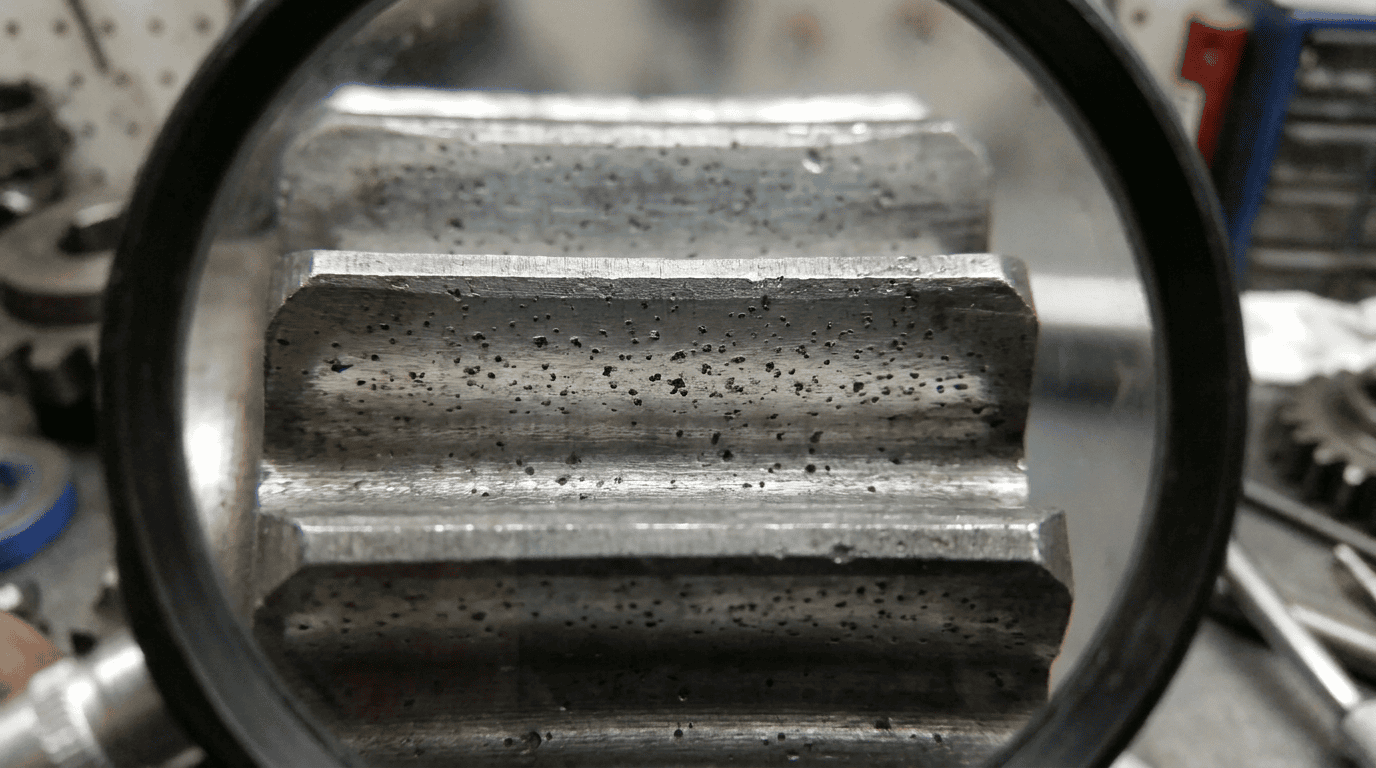
Micropitting in rolling bearings is a fatigue-related surface damage mode that can shorten bearing life, contaminate lubrication systems, and trigger costly gearbox downtime if it is not identified early. For maintenance managers, plant engineers, reliability engineers, mechanics, and purchasing teams, understanding how micropitting starts—and how it differs from wear, scuffing, and macropitting—is essential for making sound maintenance and procurement decisions. In industrial gearboxes, rolling bearings often operate under high loads, vibration, variable speeds, and imperfect lubrication conditions. These factors can create the thin-film stress environment where micropitting develops long before catastrophic failure is visible.
Micropitting in rolling bearings is a form of rolling contact fatigue that appears as very small, grayish, frosted, or matte surface damage on bearing raceways and rolling elements. It is commonly caused by inadequate lubricant film thickness, high surface roughness, contamination, misalignment, overload, vibration, or unsuitable lubricant selection. Early symptoms include increased vibration, rising temperature, abnormal noise, lubricant debris, and dull gray raceway patterns. Prevention focuses on correct lubricant viscosity and additives, filtration, proper bearing installation, alignment, load control, and routine condition monitoring.
Micropitting in rolling bearings is a critical issue that can lead to premature failure and reduced performance in machinery. For a deeper understanding of related mechanical challenges, you may find the article on gearbox replacements particularly insightful. It discusses the implications of wear and tear in gear systems, which can be closely associated with the effects of micropitting. To read more about this topic, visit the article here: Browning Gearbox Replacement.
What Is Micropitting in Rolling Bearings?
Micropitting is a microscopic surface fatigue phenomenon that occurs in rolling-sliding contacts when the lubricant film is not sufficient to fully separate the bearing surfaces. Instead of a smooth elastohydrodynamic lubrication film protecting the metal surfaces, small asperities on the raceway and rolling elements come into contact under repeated load cycles. Over time, these tiny contact stresses cause shallow cracks, material removal, and a gray-stained or frosted surface appearance.
Unlike large fatigue spalls, micropits are extremely small—often only a few microns deep. However, the damage can spread across the raceway, increase friction, alter bearing geometry, produce debris, and eventually progress into macropitting or bearing seizure.
For industrial gearbox applications, micropitting is especially important because bearings often operate under:
- High radial and axial loads
- Variable torque conditions
- Shock loading
- Start-stop cycles
- Contaminated oil environments
- Elevated temperatures
- Misalignment from shaft or housing distortion
- Lubrication starvation during startup or low-speed operation
Micropitting vs. Macropitting
Micropitting is often misunderstood because it can look like general wear or polishing. However, it is a distinct fatigue process.
| Damage Type | Typical Appearance | Common Cause | Severity |
||:|||
| Micropitting | Gray, frosted, matte surface with tiny pits | Thin lubricant film, roughness, fatigue stress | Early-to-moderate damage |
| Macropitting | Larger visible pits or spalls | Advanced rolling contact fatigue | Severe damage |
| Abrasive wear | Scratches or directional grooves | Hard contamination | Variable severity |
| Scuffing/smearing | Transfer marks, heat discoloration, torn metal | Sliding, lubricant failure, high heat | Often severe |
| False brinelling | Small depressions at rolling element spacing | Vibration while stationary | Moderate to severe |
Micropitting may begin as a subtle surface condition, but in critical gearbox bearings, it can become a leading indicator of lubrication or operating condition problems.
Why Micropitting Matters in Industrial Gearboxes
Rolling bearings in gearboxes support shafts, gears, and rotating elements under precision alignment. If micropitting changes the surface profile of a raceway, it can influence vibration, load distribution, and gear mesh behavior. In some cases, bearing micropitting may be accompanied by gear tooth micropitting, especially when the same lubricant and operating conditions affect both components.
For related gearbox support, see Industrial Gearbox Solutions resources on:
- Industrial gearbox repair: https://industrialgearboxsolutions.com/industrial-gearbox-repair/
- Gearbox inspection and failure analysis: https://industrialgearboxsolutions.com/gearbox-inspection/
- Gearbox rebuilding services: https://industrialgearboxsolutions.com/gearbox-rebuilding/
- Bearing and seal replacement: https://industrialgearboxsolutions.com/bearing-seal-replacement/
Common Causes of Micropitting in Rolling Bearings
Micropitting usually develops from a combination of lubrication, surface, load, and operating factors. A single root cause is possible, but many real-world failures involve multiple contributors.
Inadequate Lubricant Film Thickness
One of the most common causes is insufficient film thickness between the rolling elements and raceways. In rolling bearings, the lubricant must create a protective elastohydrodynamic lubrication film. If the film is too thin, asperity contact occurs.
Common reasons for inadequate film thickness include:
- Oil viscosity too low for operating temperature and speed
- Excessive operating temperature reducing viscosity
- Low-speed operation where film formation is weak
- Starved lubrication due to poor oil flow
- Incorrect grease consistency or grease degradation
- Overextended oil change intervals
- Foaming, aeration, or water contamination
SKF notes that lubrication regime and film thickness are central to bearing life calculations and surface distress risk. Reference: SKF bearing lubrication guidance: https://www.skf.com
Surface Roughness and Poor Finish
Micropitting is more likely when bearing raceways or rolling elements have rough surfaces. Even small asperities can act as stress concentrators under repeated rolling contact. High-quality bearings are manufactured with controlled finishes, but roughness can increase during operation due to contamination, corrosion, poor lubrication, or debris denting.
Surface roughness problems may result from:
- Contaminated lubricant
- Improper bearing handling
- Corrosion during storage
- Poor-quality replacement bearings
- Inadequate shaft or housing fits
- Debris from gears, seals, or previous failures
Contamination in Oil or Grease
Contamination is a major contributor to bearing distress. Hard particles can indent the raceway, creating raised edges that increase local stress. Water reduces lubricant film strength, promotes corrosion, and can accelerate fatigue damage.
Common contaminants include:
- Metal wear debris
- Sand, dust, and process particles
- Dirt introduced during maintenance
- Water from washdown, condensation, or leaking coolers
- Degraded lubricant oxidation products
- Seal fragments
- Gear tooth debris from adjacent failures
Noria provides extensive lubrication reliability resources emphasizing contamination control and oil analysis. Reference: Noria lubrication and oil analysis resources: https://www.noria.com
Excessive Load or Shock Loading
Bearings are designed for specific radial, axial, and combined load conditions. When actual loads exceed design assumptions, contact stress rises and surface fatigue accelerates.
Sources of overload include:
- Process jams
- Torque spikes
- Misapplied gearboxes
- Incorrect bearing selection
- Improper preload
- Shaft deflection
- Gear mesh misalignment
- Thermal growth
- Coupling misalignment
Timken bearing engineering resources emphasize the relationship between bearing load, lubrication, and fatigue life. Reference: Timken engineering information: https://www.timken.com
Misalignment and Improper Installation
Misalignment changes how load is distributed across the bearing. Instead of an even load zone, the bearing may experience edge loading, skewing, or uneven contact stress. This increases the likelihood of micropitting.
Installation-related causes include:
- Incorrect bearing mounting method
- Hammering or impact damage
- Improper shaft fits
- Housing bore distortion
- Incorrect endplay or preload
- Uneven tightening of housing bolts
- Poor coupling alignment
- Failure to account for thermal expansion
Lubricant Additive Compatibility
Lubricant chemistry matters. Gearbox bearings are often lubricated by the same oil used for gears. Extreme pressure additives, antiwear chemistry, friction modifiers, and base oil type can influence micropitting performance. Some lubricants may perform well for gears but poorly in certain bearing applications if viscosity, additive balance, or cleanliness is unsuitable.
AGMA provides standards and technical information related to gear lubrication and gearbox performance. Reference: American Gear Manufacturers Association: https://www.agma.org
Industrial gearbox bearing failure can lead to costly downtime and production losses, so it’s important to address the issue promptly. Industrial gearbox bearing failure
Symptoms of Micropitting in Rolling Bearings
Micropitting can be difficult to detect early because damage begins at a microscopic level. However, several operating indicators can signal developing problems.
Visual Symptoms
During inspection, micropitting may appear as:
- Gray staining on the raceway
- Frosted or matte surface texture
- Dull bands in the load zone
- Fine surface distress on rolling elements
- Discoloration without obvious large spalls
- Polished areas next to dull distressed areas
- Early pitting near stress concentration zones
In advanced cases, the matte surface may progress to visible flaking, spalling, or deeper pitting.
Vibration and Noise Symptoms
Condition monitoring often detects bearing distress before visual inspection is possible. Micropitting may cause:
- Increased broadband vibration
- Changes in high-frequency acceleration
- Bearing defect frequencies
- Increased ultrasonic noise
- Rough running sounds
- Intermittent vibration spikes under load
- Gearbox resonance changes
Because micropitting is shallow, early vibration signals may be subtle. High-frequency envelope analysis is often more effective than basic velocity readings.
Lubrication System Symptoms
Lubricant condition can reveal early warning signs. Look for:
- Increased iron or chromium levels in oil analysis
- Rising particle counts
- Ferrous debris in magnetic plugs
- Darkened or oxidized oil
- Water contamination
- Additive depletion
- Abnormal viscosity change
- Foam or aeration
Oil analysis should be trended over time. A single sample may be less valuable than a pattern of rising wear metals or contamination levels.
Temperature Symptoms
Micropitting increases friction and can contribute to higher bearing operating temperatures. Temperature increases may also be caused by lubrication failure, overload, or misalignment, so thermal readings should be interpreted alongside vibration, oil analysis, and inspection data.
Common thermal warning signs include:
- Gradual increase in bearing housing temperature
- Localized hot spots
- Temperature spikes during load changes
- Higher temperature after oil changes due to wrong viscosity
- Excess heat after bearing replacement or preload adjustment
Micropitting in rolling bearings is a critical issue that can lead to premature failure and reduced performance in machinery. Understanding the causes and effects of this phenomenon is essential for maintaining the reliability of mechanical systems. For those interested in exploring related topics, an insightful article on industrial gearbox repair can provide valuable information on how to address such issues effectively. You can read more about it here.
Troubleshooting Micropitting in Rolling Bearings
| Factors | Effects |
|---|---|
| Surface roughness | Increased risk of micropitting |
| Operating temperature | Higher temperatures can accelerate micropitting |
| Lubrication quality | Poor lubrication can lead to micropitting |
| Material hardness | Harder materials are more resistant to micropitting |
Troubleshooting should combine operating history, inspection data, lubrication analysis, and application review. The goal is not just to identify micropitting but to determine why it occurred.
Step-by-Step Troubleshooting Process
| Step | Action | Purpose |
|:|||
| 1 | Document operating conditions | Identify load, speed, temperature, duty cycle, and recent changes |
| 2 | Review lubricant specification | Confirm viscosity, additives, base oil, and OEM requirements |
| 3 | Check oil analysis history | Look for wear metals, water, particles, viscosity changes, oxidation |
| 4 | Inspect filters and breathers | Determine contamination control effectiveness |
| 5 | Perform vibration analysis | Identify bearing defect frequencies and severity |
| 6 | Check alignment and mounting | Find edge loading, preload, or fit issues |
| 7 | Inspect bearing surfaces | Confirm visual micropitting patterns |
| 8 | Review gearbox history | Connect damage to overloads, repairs, or process events |
| 9 | Determine corrective actions | Prevent recurrence after repair or replacement |
Questions Maintenance Teams Should Ask
When micropitting is suspected, ask:
- Was the lubricant recently changed?
- Is the oil viscosity correct at actual operating temperature?
- Has the gearbox experienced overload or shock loading?
- Are vibration levels increasing?
- Has oil cleanliness changed?
- Are breathers, seals, and filters working properly?
- Was the bearing installed using proper tools and procedures?
- Is the gearbox operating at lower speed than originally designed?
- Are there signs of water or process contamination?
- Is the bearing type suitable for the load and speed?
Common Diagnostic Mistakes
Avoid these common errors:
- Assuming all gray staining is harmless polishing
- Replacing the bearing without correcting lubrication problems
- Ignoring oil analysis trends
- Using the same failed lubricant specification after repair
- Overlooking shaft or housing distortion
- Treating vibration symptoms without root cause analysis
- Installing a new bearing into a contaminated gearbox
- Reusing oil after a bearing failure
- Failing to inspect gears for related micropitting
Inspection Methods for Micropitting
A thorough inspection program helps identify micropitting before it becomes catastrophic.
Visual Inspection
Visual inspection is usually performed during gearbox teardown or bearing removal. Use strong lighting, magnification, and clean surfaces. Micropitting may be hard to see under oily conditions, so bearing surfaces should be carefully cleaned without damaging evidence.
Look for:
- Dull gray raceway bands
- Fine pitted texture
- Damage concentrated in the load zone
- Damage at raceway edges indicating misalignment
- Roller end distress
- Cage wear or discoloration
- Smearing or scuffing that may indicate lubricant failure
Magnification and Surface Examination
Micropitting often requires magnification to confirm. Useful tools include:
- Handheld magnifiers
- Digital microscopes
- Borescopes for limited access
- Surface profilometers
- Metallurgical microscopes
- Scanning electron microscopy for lab failure analysis
For critical assets, professional failure analysis may determine whether damage is true micropitting, corrosion, abrasive wear, or electrical fluting.
Oil Analysis
Oil analysis is one of the best early warning tools for gearbox bearing distress.
Key oil analysis tests include:
| Test | What It Reveals |
|||
| Particle count | Cleanliness level and contamination trend |
| Ferrous density | Iron wear debris concentration |
| Spectrometric analysis | Wear metals and additive elements |
| Karl Fischer water test | Moisture contamination |
| Viscosity test | Oil thickening, thinning, or wrong lubricant |
| Acid number | Oxidation and degradation |
| Ferrography | Wear particle shape, size, and severity |
| FTIR analysis | Oxidation, nitration, contamination, additive depletion |
Vibration Analysis
Vibration monitoring can detect bearing deterioration while equipment remains in service. For micropitting, high-frequency techniques are often helpful.
Recommended vibration methods include:
- Time waveform analysis
- FFT spectrum analysis
- Envelope demodulation
- PeakVue or similar high-frequency stress wave analysis
- Ultrasonic monitoring
- Trending of bearing defect frequencies
- Comparison against baseline readings
Bearing Failure Analysis
If a bearing is removed, preserve it for analysis. Do not grind, sand, or excessively clean the surfaces. Mark orientation and load zones when possible. Record the bearing position, operating hours, lubricant type, and failure symptoms.
A structured failure analysis should document:
- Bearing manufacturer and part number
- Mounting arrangement
- Shaft and housing fits
- Lubricant condition
- Contamination evidence
- Damage location and pattern
- Operating history
- Related gear or seal damage
- Root cause and corrective actions
Prevention Strategies for Micropitting
Preventing micropitting requires controlling surface stress, lubricant film thickness, contamination, and operating conditions.
Select the Correct Lubricant
Lubricant selection should consider actual operating conditions—not just the nameplate recommendation. Important factors include:
- Viscosity at operating temperature
- Base oil type
- Viscosity index
- Additive package
- Oxidation resistance
- Demulsibility
- Foam control
- Micropitting resistance
- Compatibility with seals and existing oil
- OEM and bearing manufacturer recommendations
For gearboxes operating at slow speeds, high loads, or elevated temperatures, consult lubrication specialists or OEM documentation. In some cases, a higher-viscosity oil or synthetic lubricant may improve film thickness. However, increasing viscosity without analysis can cause churning losses, heat generation, or poor oil flow.
Improve Contamination Control
Clean oil dramatically improves bearing life. Contamination control should include:
- High-quality shaft seals
- Desiccant breathers
- Proper filter sizing
- Offline kidney-loop filtration
- Clean oil transfer containers
- Dedicated lubricant handling equipment
- Sealed storage drums
- Routine oil sampling
- Water removal systems
- Magnetic plugs and debris monitoring
A gearbox rebuild should always include flushing or cleaning to remove debris from the previous failure.
Optimize Bearing Installation
Proper installation reduces internal stress and prevents premature damage.
Best practices include:
- Use induction heaters for controlled mounting
- Avoid hammering directly on bearing rings
- Apply force only to the ring being fitted
- Verify shaft and housing dimensions
- Check roundness and surface finish
- Confirm internal clearance or preload
- Follow torque specifications
- Maintain clean installation conditions
- Use manufacturer-approved tools
- Document installation measurements
Control Alignment and Load
Alignment should be verified after installation and after thermal stabilization where practical. Poor alignment can quickly create edge loading and fatigue.
Check:
- Coupling alignment
- Soft foot
- Shaft runout
- Baseplate condition
- Gear mesh contact pattern
- Housing bore alignment
- Thermal growth
- Pipe strain or external forces
- Foundation looseness
- Load distribution
Maintain Proper Operating Conditions
Micropitting risk increases when equipment operates outside design assumptions. Review process changes such as higher throughput, frequent starts, speed reductions, or new load cycles.
Operating controls may include:
- Soft starts
- Torque limiting
- Vibration monitoring
- Temperature alarms
- Oil flow monitoring
- Load monitoring
- Operator training
- Startup lubrication procedures
- Controlled shutdowns
Repair vs. Replacement: What Should You Do?
Once micropitting is confirmed, the decision to repair or replace depends on severity, criticality, bearing availability, and gearbox condition.
When Continued Operation May Be Possible
In some low-criticality applications, minor micropitting may be monitored if:
- Vibration is stable
- Temperature is normal
- Oil analysis is acceptable
- Damage is not progressing
- No large spalls are present
- The bearing remains within acceptable operating limits
- A planned outage is scheduled soon
However, continued operation should be a controlled decision, not a guess. Trend monitoring should be increased.
When Bearing Replacement Is Recommended
Replacement is usually recommended when:
- Micropitting is widespread
- Vibration is increasing
- Oil debris is rising
- Raceways show visible spalling
- Rolling elements are damaged
- Cage wear is present
- Bearing temperature is abnormal
- The asset is production-critical
- The gearbox is already open for repair
- Root cause correction requires teardown
When Gearbox Repair or Rebuild Is Needed
If bearing micropitting has produced debris, affected shaft alignment, damaged gears, or contaminated the entire lubrication system, a broader gearbox repair may be necessary.
A comprehensive gearbox rebuild may include:
- Bearing replacement
- Seal replacement
- Shaft inspection and repair
- Gear inspection and reconditioning
- Housing bore inspection
- Contact pattern checks
- Lubrication system cleaning
- Filter and breather upgrades
- Precision assembly
- Test run and vibration verification
For support, visit Industrial Gearbox Solutions gearbox rebuilding services: https://industrialgearboxsolutions.com/gearbox-rebuilding/
Cost Considerations for Purchasing Teams
Purchasing professionals should evaluate total cost of ownership rather than bearing price alone.
Consider:
- Downtime cost per hour
- Lead time for replacement bearings
- Risk of secondary gear damage
- Labor cost for repeat repairs
- Oil flushing and filtration cost
- Upgrade opportunities
- Warranty and documentation
- Availability of failure analysis
- OEM-equivalent or upgraded bearing options
Cheaper bearings, incorrect substitutions, or rushed procurement can lead to repeated failures.
Maintenance Best Practices for Preventing Micropitting
A strong maintenance program combines lubrication reliability, condition monitoring, and precision mechanical practices.
Recommended Maintenance Checklist
| Task | Frequency | Notes |
||:||
| Check oil level | Daily/weekly | Confirm proper level during operation |
| Inspect breathers and seals | Monthly | Replace damaged or saturated breathers |
| Monitor temperature | Continuous or route-based | Trend changes, not just absolute values |
| Vibration monitoring | Monthly/quarterly | Increase frequency for critical assets |
| Oil sampling | Quarterly or based on criticality | Use consistent sample ports and methods |
| Filter inspection | Based on pressure differential | Investigate abnormal debris |
| Alignment check | After installation or major repair | Include thermal considerations |
| Borescope inspection | During outages | Look for raceway and gear tooth distress |
| Lubricant review | Annually or after process changes | Verify viscosity and additive suitability |
| Failure analysis | After every significant failure | Use findings to prevent recurrence |
Lubrication Handling Best Practices
Many bearing failures begin before the oil ever reaches the gearbox. Improve lubricant handling by:
- Using sealed, labeled transfer containers
- Filtering new oil before use
- Avoiding open funnels and dirty pumps
- Storing drums indoors or protected from weather
- Using quick-connect fittings
- Keeping grease guns dedicated by lubricant type
- Training mechanics on lubricant compatibility
- Sampling new oil deliveries for critical assets
Condition Monitoring Program Tips
For reliability engineers, micropitting prevention depends on trend-based monitoring. A mature program should include:
- Baseline vibration data after installation
- Alarm limits based on asset history
- Oil analysis trend charts
- Integrated work orders for abnormal findings
- Root cause analysis after bearing replacement
- Collaboration between maintenance, operations, and purchasing
- Documentation of lubricant changes
- Post-repair verification testing
Branded Image Suggestions
Image 1: Micropitted Bearing Raceway Close-Up
Alt text: Micropitting in rolling bearing raceway showing gray frosted surface fatigue damage
Caption: Close-up of a rolling bearing raceway with early micropitting damage, often caused by inadequate lubricant film thickness.
Image 2: Gearbox Bearing Inspection During Rebuild
Alt text: Industrial Gearbox Solutions technician inspecting rolling bearing during gearbox rebuild
Caption: Precision bearing inspection during gearbox repair helps identify micropitting, contamination, and alignment-related damage.
Image 3: Oil Analysis and Contamination Control
Alt text: Oil sample from industrial gearbox used to detect bearing wear debris and contamination
Caption: Oil analysis can detect rising wear debris, water contamination, and viscosity changes before bearing failure occurs.
Image 4: Bearing Installation with Induction Heater
Alt text: Proper rolling bearing installation using induction heater for industrial gearbox repair
Caption: Controlled bearing installation reduces mounting damage and helps prevent premature surface fatigue.
Image 5: Vibration Monitoring on Industrial Gearbox
Alt text: Reliability technician collecting vibration data from gearbox bearing housing
Caption: Vibration analysis is a key method for detecting early bearing distress, including micropitting progression.
SEO Metadata
SEO Title
Understanding Micropitting in Rolling Bearings | Causes, Symptoms & Prevention
Meta Description
Learn what causes micropitting in rolling bearings, how to identify symptoms, inspect gearbox bearings, prevent recurrence, and decide when to repair or replace.
Primary Keyword
micropitting in rolling bearings
Secondary Keywords
- rolling bearing micropitting
- bearing surface fatigue
- gearbox bearing failure
- bearing pitting causes
- industrial gearbox bearing inspection
- bearing lubrication failure
- micropitting prevention
- rolling contact fatigue
Suggested URL Slug
understanding-micropitting-in-rolling-bearings
Search Intent
Informational and commercial investigation. The reader wants to understand bearing micropitting, diagnose symptoms, prevent recurrence, and find expert gearbox repair or inspection support.
FAQs About Micropitting in Rolling Bearings
What causes micropitting in rolling bearings?
Micropitting is usually caused by insufficient lubricant film thickness, high surface roughness, contamination, excessive load, misalignment, vibration, or unsuitable lubricant chemistry. In gearboxes, it often develops when bearings operate under high contact stress with oil that is too thin, dirty, degraded, or poorly matched to the application.
Is micropitting the same as normal bearing wear?
No. Normal wear is generally material loss from sliding or abrasive action, while micropitting is a rolling contact fatigue process. It produces tiny pits and a gray or frosted surface appearance. Although it may look minor at first, micropitting can progress into larger spalling and bearing failure.
Can a bearing with micropitting continue operating?
Sometimes, but only if damage is minor and stable. Maintenance teams should monitor vibration, temperature, and oil analysis closely. If micropitting is progressing, widespread, or accompanied by rising debris or vibration, replacement is usually recommended.
How can oil analysis detect micropitting?
Oil analysis can reveal increased wear metals, ferrous particles, water contamination, viscosity changes, oxidation, and additive depletion. Ferrography can also identify fatigue wear particles. Trending is especially important because micropitting often develops gradually.
What lubricant helps prevent micropitting?
The best lubricant depends on bearing type, speed, load, temperature, and gearbox design. In general, the lubricant should provide adequate viscosity at operating temperature, strong film strength, oxidation resistance, contamination control, and appropriate additive chemistry. Always compare lubricant selection with OEM, bearing manufacturer, and gearbox operating requirements.
Can filtration prevent micropitting?
Filtration helps reduce one major contributor: particle contamination. Clean oil reduces debris dents and surface stress risers that promote micropitting. However, filtration alone cannot fix incorrect viscosity, overload, misalignment, or installation problems.
Does micropitting only happen in gears?
No. Micropitting is widely discussed in gear tooth contacts, but it also occurs in rolling bearings. Both gears and bearings operate under high rolling-sliding contact stress and can be affected by lubricant film thickness, surface finish, load, and contamination.
Should the entire gearbox be inspected if bearing micropitting is found?
Yes. Bearing micropitting may indicate a broader lubrication or contamination issue. Gears, shafts, seals, filters, breathers, oil passages, and housing bores should be inspected to ensure the root cause is corrected.
Key Takeaways
- Micropitting in rolling bearings is a microscopic rolling contact fatigue condition that creates gray, frosted, or matte surface damage.
- The most common contributors are inadequate lubricant film thickness, contamination, rough surfaces, overload, misalignment, and incorrect lubricant selection.
- Early detection requires vibration analysis, oil analysis, temperature trending, and careful visual inspection.
- Replacing a bearing without correcting the root cause often leads to repeat failure.
- Clean, correctly selected lubricant is one of the most effective defenses against micropitting.
- Proper installation, alignment, load control, and contamination prevention are essential for gearbox reliability.
- Purchasing decisions should consider downtime, lead time, quality, and total lifecycle cost—not just bearing price.
- For critical gearboxes, professional inspection and failure analysis can prevent secondary damage and recurring failures.
Conclusion
Micropitting in rolling bearings is small in scale but significant in consequence. What begins as microscopic surface fatigue can lead to vibration, heat, lubricant contamination, spalling, and unplanned gearbox downtime. For maintenance managers, plant engineers, reliability engineers, mechanics, and purchasing teams, the best approach is proactive: select the right lubricant, keep it clean and dry, install bearings correctly, monitor condition trends, and investigate early warning signs before failure escalates.
If your gearbox bearings show gray raceway staining, rising vibration, abnormal temperature, or oil debris, do not treat the symptom alone. A complete inspection can identify whether the true cause is lubrication, contamination, overload, misalignment, or installation error. Industrial Gearbox Solutions can help evaluate bearing damage, repair gearbox components, and recommend practical steps to prevent recurrence.
FAQs
What is micropitting in rolling bearings?
Micropitting is a type of surface damage that occurs in rolling bearings due to repeated rolling and sliding contact under high loads and insufficient lubrication. It appears as small cracks or pits on the surface of the bearing.
What causes micropitting in rolling bearings?
Micropitting is primarily caused by a combination of high contact stresses, insufficient lubrication, and surface roughness. Other contributing factors include inadequate material hardness, improper bearing design, and operating conditions such as high speeds and temperature variations.
What are the consequences of micropitting in rolling bearings?
Micropitting can lead to increased noise, vibration, and reduced bearing life. If left untreated, it can progress to more severe forms of damage such as macropitting, spalling, and ultimately bearing failure.
How can micropitting in rolling bearings be prevented?
Preventative measures for micropitting include using high-quality lubricants, optimizing surface finish and hardness, improving bearing design, and controlling operating conditions such as load, speed, and temperature. Regular maintenance and monitoring of bearing condition are also essential.
How is micropitting in rolling bearings diagnosed and treated?
Micropitting can be diagnosed through visual inspection, surface analysis, and vibration monitoring. Treatment typically involves improving lubrication, modifying operating conditions, and replacing damaged bearings. In severe cases, redesigning the bearing or its application may be necessary.