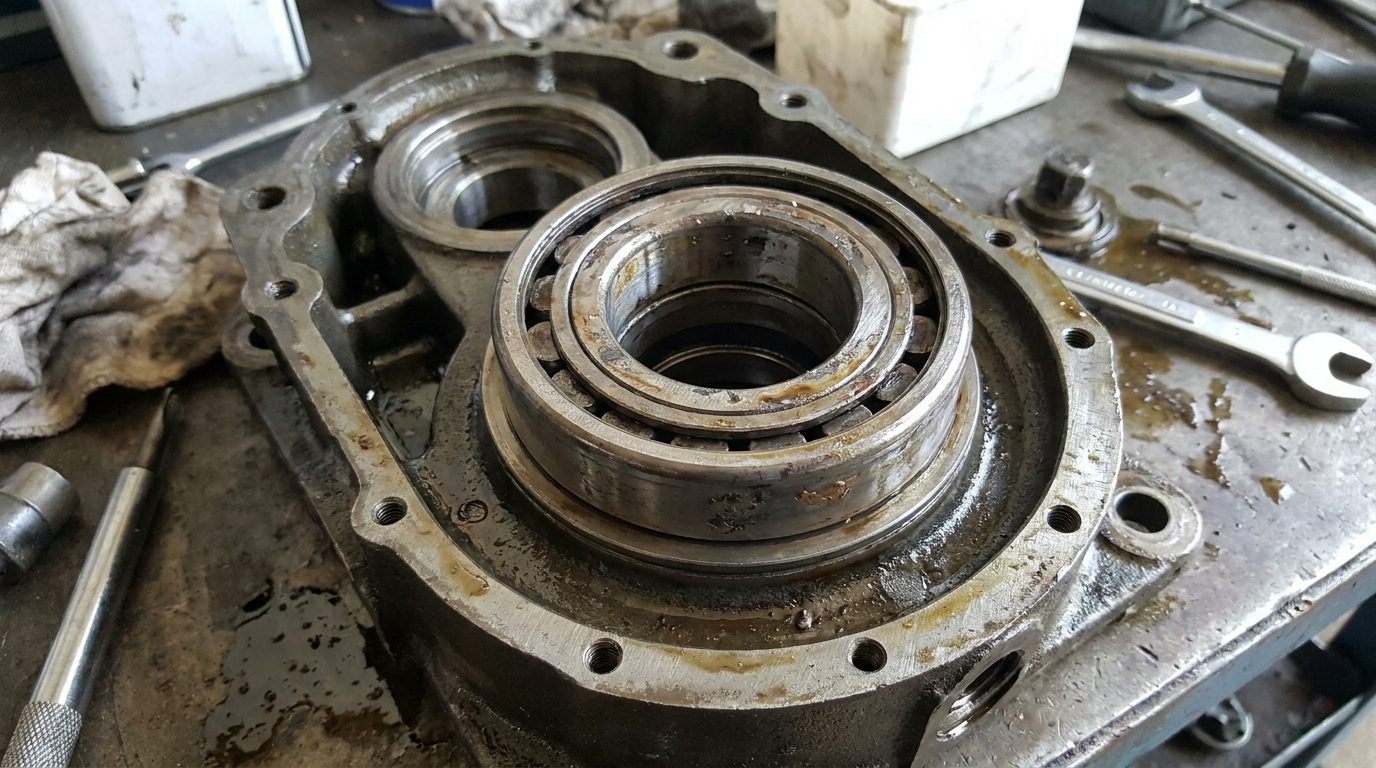
Gearbox bearing failure is one of the most common and costly causes of industrial gearbox downtime, leading to vibration, heat, gear misalignment, lubricant contamination, and catastrophic damage if not addressed early. For maintenance managers, plant engineers, reliability teams, mechanics, and purchasing professionals, the goal is not simply to replace a failed bearing—it is to identify why it failed, correct the root cause, and prevent repeat failures. This troubleshooting guide explains the causes, symptoms, inspection methods, repair decisions, and best practices needed to keep critical gearboxes running reliably in demanding industrial environments.
Gearbox bearing failure is typically caused by lubrication problems, contamination, misalignment, overload, improper installation, excessive heat, electrical damage, or fatigue. Common symptoms include abnormal vibration, rising temperature, unusual noise, metallic debris in oil, shaft movement, and reduced gearbox efficiency. Troubleshooting should include vibration analysis, oil analysis, visual inspection, temperature monitoring, alignment checks, load review, and bearing damage pattern analysis. The best prevention strategy is a structured gearbox maintenance program that includes proper lubrication, filtration, condition monitoring, precision alignment, contamination control, and timely repair by qualified gearbox specialists.
For those seeking further insights into gearbox maintenance and repair, the article on industrial gearbox repair in Wichita, Kansas, provides valuable information that complements the Gearbox Bearing Failure Troubleshooting Guide. This resource discusses common issues, repair techniques, and best practices for ensuring the longevity of your industrial gearboxes. You can read more about it here: Industrial Gearbox Repair in Wichita, Kansas.
What Is Gearbox Bearing Failure?
Gearbox bearing failure occurs when a rolling element bearing inside an industrial gearbox can no longer support shaft loads, maintain alignment, or rotate smoothly within its designed operating limits. Bearings are responsible for supporting radial and axial loads while keeping shafts and gears in proper mesh. When a bearing deteriorates, the entire gearbox system is affected.
A failed or failing bearing can cause:
- Gear tooth misalignment
- Increased vibration
- Excessive heat
- Seal damage
- Lubricant degradation
- Shaft wear
- Housing damage
- Catastrophic gearbox failure
In many cases, the bearing is the “victim” rather than the original problem. A bearing may fail because of poor lubrication, contaminated oil, improper preload, gear overload, soft foot, misalignment, or incorrect operating conditions. That is why effective troubleshooting must go beyond replacing the bearing.
For more related service information, see Industrial Gearbox Solutions resources on industrial gearbox repair, gearbox inspection services, and gearbox rebuild services.
Common Causes of Gearbox Bearing Failure
Understanding the cause of failure is the first step toward preventing recurrence. Bearings rarely fail randomly. Most failures leave evidence in the bearing raceways, rolling elements, cage, lubricant, or gearbox housing.
Inadequate Lubrication
Lubrication failure is one of the leading causes of industrial gearbox bearing failure. Bearings require the correct lubricant viscosity, additive package, oil level, and delivery method to maintain an adequate film between rolling elements and raceways.
Common lubrication-related causes include:
- Low oil level
- Incorrect oil viscosity
- Wrong lubricant type
- Oil starvation
- Over-lubrication in grease applications
- Foaming oil
- Oxidized or degraded lubricant
- Blocked oil passages
- Failed oil pump or lubrication system
- Incompatible lubricant additives
When the lubricant film breaks down, metal-to-metal contact occurs. This can lead to smearing, scuffing, pitting, discoloration, cage damage, and rapid bearing deterioration.
Authoritative lubrication guidance is available from Noria, which provides extensive reliability-focused resources on oil analysis, contamination control, and lubrication best practices.
Contamination
Contamination is another major cause of gearbox bearing failure. Industrial gearboxes often operate in harsh environments where dust, water, process fluids, metal particles, and chemical contaminants can enter the system.
Common contaminants include:
- Dirt and airborne dust
- Water or condensation
- Metal wear debris
- Process chemicals
- Sand or abrasive particles
- Cleaning fluids
- Degraded seal material
- Paint chips or gasket material
Contamination damages bearings by creating abrasive wear, corrosion, surface fatigue, and lubricant degradation. Water contamination is especially destructive because it reduces lubricant film strength and promotes rust, hydrogen embrittlement, and additive depletion.
Misalignment
Misalignment changes the way loads are distributed across bearing surfaces. Instead of even load distribution, the bearing may experience edge loading, excessive axial force, or uneven raceway contact.
Misalignment may result from:
- Improper coupling alignment
- Soft foot on the gearbox or motor base
- Distorted foundation
- Shaft deflection
- Thermal growth
- Worn mounting surfaces
- Improper gearbox installation
- Housing bore distortion
Misalignment can also damage gears, seals, and couplings. If a gearbox has repeated bearing failures, alignment should always be verified before installing new bearings.
Overload and Shock Loading
Bearings are designed for specific load ratings. When a gearbox is subjected to overload, sudden shock loads, jam-ups, or process surges, bearing life can decrease dramatically.
Typical overload causes include:
- Equipment jams
- Frequent starts and stops
- Reversing loads
- Incorrect gearbox selection
- Increased production demands
- Oversized motors
- Unexpected process loads
- Torque spikes
- Poorly controlled variable frequency drive settings
Overload can cause spalling, brinelling, cage fracture, shaft movement, and overheating. In severe cases, bearing failure may happen quickly even when lubrication appears acceptable.
Improper Installation
Even a high-quality bearing can fail prematurely if it is installed incorrectly. Industrial gearbox bearings require proper handling, mounting tools, fits, clearances, preload, and cleanliness.
Installation-related failure causes include:
- Hammering directly on the bearing
- Applying force through rolling elements
- Incorrect heating method
- Contaminated installation environment
- Wrong bearing orientation
- Incorrect internal clearance
- Improper shaft or housing fit
- Excessive preload
- Insufficient preload
- Failure to follow manufacturer specifications
Bearing manufacturers such as SKF and Timken provide technical resources on bearing mounting, lubrication, and failure analysis that can help maintenance teams improve installation quality.
Excessive Heat
High temperature accelerates lubricant oxidation, reduces viscosity, expands components, and can change internal bearing clearances. Excessive heat may be caused by friction, overload, lubrication failure, poor ventilation, misalignment, or incorrect bearing setup.
Warning signs of heat-related damage include:
- Blue or brown discoloration on bearing surfaces
- Burnt oil odor
- Darkened lubricant
- Hardened seals
- Reduced oil viscosity
- Cage deformation
- Thermal expansion-related shaft binding
Temperature monitoring is one of the simplest and most effective early warning tools for bearing distress.
Electrical Damage
In gearboxes connected to motors controlled by variable frequency drives, stray electrical currents can pass through bearings. This may cause electrical fluting, pitting, or frosting on bearing raceways.
Electrical damage symptoms include:
- Washboard-like fluting marks
- Frosted raceway appearance
- High-frequency vibration
- Audible whining or humming
- Premature bearing noise
- Repeated motor or gearbox bearing failures
Corrective actions may include shaft grounding rings, insulated bearings, improved grounding, proper VFD cable shielding, or electrical system review.
Industrial gearbox bearing failure can lead to costly downtime and repairs, so it’s important to address the issue promptly. Industrial gearbox bearing failure
Symptoms of Gearbox Bearing Failure
Identifying early warning signs allows maintenance teams to intervene before major gearbox damage occurs. Symptoms may appear gradually or suddenly depending on the failure mode.
Vibration Changes
Vibration is often the first measurable sign of bearing failure. A failing bearing may generate specific vibration frequencies related to the bearing geometry and shaft speed.
Common vibration indicators include:
- Increased overall vibration amplitude
- High-frequency bearing fault frequencies
- Sidebands around gear mesh frequencies
- Impacts or shock pulses
- Rising acceleration readings
- Changes in vibration trend data
Reliability engineers often use vibration analysis to detect inner race, outer race, rolling element, and cage defects before audible noise develops.
Unusual Noise
Bearing failure often produces abnormal noise. Operators and mechanics may notice a change in sound before instruments confirm the issue.
Common sounds include:
- Grinding
- Rumbling
- Growling
- Whining
- Clicking
- Knocking
- Squealing
- Intermittent popping
Noise alone should not be used as the only diagnostic method, but it is a valuable early warning sign when combined with temperature, vibration, and oil analysis.
Elevated Temperature
A failing bearing typically creates more friction, which increases gearbox temperature. Sudden or steadily rising temperature should be investigated immediately.
Possible heat-related symptoms include:
- Hot bearing housings
- Increased oil sump temperature
- Thermal paint discoloration
- Seal hardening
- Oil darkening
- Smoke or burnt oil smell
Temperature readings should be trended over time. A gearbox that normally runs at 150°F and begins operating at 190°F under the same load deserves attention.
Metallic Debris in Lubricant
Metal particles in the gearbox oil are a strong warning sign. Bearing spalling, cage wear, and raceway damage can release metallic debris into the oil.
Inspection methods include:
- Magnetic drain plug inspection
- Oil sample analysis
- Filter debris analysis
- Ferrography
- Patch testing
- Visual inspection of oil condition
Oil analysis can help determine whether the debris is from bearings, gears, shafts, or other internal components.
Shaft Movement or Endplay
Excessive shaft movement may indicate bearing wear, improper preload, cracked components, housing wear, or retaining hardware failure.
Symptoms may include:
- Coupling movement
- Seal leakage
- Gear mesh changes
- Axial shaft float
- Uneven gear tooth contact
- Bearing looseness
- Increased vibration during load changes
If shaft movement is detected, the gearbox should be inspected before additional damage occurs.
For those looking to deepen their understanding of gearbox maintenance, the troubleshooting guide on Gearbox Bearing Failure is an essential resource. It provides valuable insights into identifying and resolving common issues that can arise in gearbox systems. Additionally, you may find it helpful to explore related services offered by experts in the field. For more information, check out this comprehensive overview of gearbox services that can help ensure optimal performance and longevity of your equipment.
Gearbox Bearing Failure Troubleshooting Process
| Common Symptoms | Possible Causes | Troubleshooting Steps |
|---|---|---|
| Unusual noise from gearbox | Insufficient lubrication, worn bearings | Check lubrication levels, inspect bearings for wear |
| Overheating of gearbox | Excessive load, inadequate cooling | Reduce load, improve cooling system |
| Increased vibration | Misalignment, damaged gears | Check alignment, inspect gears for damage |
A structured troubleshooting process helps teams move from symptoms to root cause. Avoid replacing the bearing until evidence has been collected.
Step 1: Document Operating Conditions
Start by gathering information about how the gearbox was operating when symptoms appeared.
Record the following:
- Equipment ID and gearbox model
- Operating speed
- Load conditions
- Oil type and viscosity
- Oil level
- Recent maintenance history
- Temperature readings
- Vibration readings
- Production changes
- Start/stop frequency
- Recent overload events
- Environmental conditions
This information helps determine whether the failure is related to operation, lubrication, installation, or component fatigue.
Step 2: Perform External Inspection
Before opening the gearbox, inspect the outside of the unit.
Check for:
- Oil leaks
- Damaged seals
- Loose mounting bolts
- Soft foot
- Cracked housing
- Misaligned coupling
- Abnormal noise
- Excessive heat
- Breather condition
- Contaminated lubricant around seals
- Foundation movement
External inspection often reveals clues such as contamination entry points, foundation issues, or signs of overheating.
Step 3: Check Lubricant Condition
Lubricant condition is a direct indicator of gearbox health.
Inspect for:
- Low oil level
- Milky oil indicating water contamination
- Dark or burnt oil
- Foam
- Sludge or varnish
- Metallic particles
- Strong odor
- Incorrect viscosity
- Excessive oxidation
If possible, take an oil sample before draining the gearbox. Sampling after shutdown or after draining may reduce diagnostic value.
Step 4: Analyze Vibration Data
Vibration analysis is one of the most powerful methods for identifying bearing defects. A qualified analyst can identify fault frequencies associated with:
- Inner race defects
- Outer race defects
- Ball or roller defects
- Cage defects
- Looseness
- Misalignment
- Gear mesh problems
- Imbalance
- Resonance
Trending vibration over time is especially useful. A sudden increase may indicate rapid failure, while gradual increases may suggest progressive wear.
Step 5: Inspect the Bearing After Removal
Once the bearing is removed, protect it from additional damage and inspect it carefully. Do not clean away all evidence before documentation.
Look for:
- Spalling
- Pitting
- Flaking
- Scoring
- Smearing
- Discoloration
- Corrosion
- Cage cracks
- Broken rolling elements
- Brinelling
- Fretting
- Electrical fluting
- Uneven wear patterns
Photograph the bearing, raceways, shaft fits, housing bores, seals, gears, and lubricant condition. These records support root cause analysis and future maintenance planning.
Gearbox Bearing Failure Symptoms and Likely Causes
| Symptom | Possible Cause | Recommended Action |
||||
| Rising vibration | Bearing defect, misalignment, looseness, gear damage | Perform vibration analysis and inspect alignment |
| High temperature | Lubrication failure, overload, excessive preload, contamination | Check oil level, viscosity, load, and bearing setup |
| Grinding noise | Advanced bearing damage, poor lubrication, contamination | Shut down if severe and inspect bearing condition |
| Metallic debris in oil | Bearing spalling, gear wear, cage damage | Conduct oil analysis and internal inspection |
| Oil leakage at seals | Shaft movement, worn seals, excessive pressure, misalignment | Inspect bearing clearance, breather, and seals |
| Repeated bearing failures | Root cause not corrected, incorrect installation, overload | Perform full root cause failure analysis |
| Milky oil | Water contamination | Identify entry point, drain, flush, and refill |
| Blue bearing discoloration | Excessive heat or lubrication starvation | Review lubrication system and operating temperature |
| Fluting on raceway | Electrical current passage | Check grounding and VFD-related issues |
| Edge loading marks | Misalignment or housing distortion | Verify alignment, shaft geometry, and housing bores |
Inspection Methods for Gearbox Bearings
Effective inspection combines predictive technologies, visual examination, and mechanical measurements.
Vibration Analysis
Vibration analysis helps detect developing bearing problems without stopping production. It is especially valuable for critical gearboxes where unplanned downtime is expensive.
Useful vibration techniques include:
- Time waveform analysis
- FFT spectrum analysis
- Envelope detection
- Acceleration measurement
- PeakVue or shock pulse methods
- Trend monitoring
Vibration analysis is best performed at regular intervals under consistent operating conditions.
Oil Analysis
Oil analysis provides insight into lubricant health, contamination, and internal wear. A good oil analysis program can detect bearing failure before severe damage occurs.
Recommended oil tests include:
- Viscosity
- Water content
- Particle count
- Acid number
- Oxidation
- Additive depletion
- Ferrous density
- Analytical ferrography
- Wear metal analysis
For lubrication program improvement, Noria’s resources on oil analysis and contamination control are highly useful for reliability teams.
Thermography
Infrared thermography can identify abnormal heat patterns in gearbox housings, bearings, and lubrication systems.
Thermography can help detect:
- Overheated bearing zones
- Low oil conditions
- Cooling system problems
- Misalignment-related heat
- Excessive friction
- Thermal imbalance between similar assets
Thermal images should be compared with baseline data and similar equipment under similar loads.
Borescope Inspection
A borescope allows internal inspection without a complete teardown. This is useful when teams need to evaluate gear teeth, bearings, oil distribution, and internal contamination.
Borescope inspection can reveal:
- Bearing surface damage
- Gear pitting or scoring
- Oil sludge
- Broken cage material
- Metallic debris
- Seal fragments
- Lubrication flow problems
For more comprehensive support, Industrial Gearbox Solutions can assist with gearbox failure analysis and emergency gearbox repair.
Mechanical Measurements
When the gearbox is opened, precision measurements are essential.
Measure and document:
- Shaft runout
- Shaft journal diameter
- Housing bore diameter
- Bearing fits
- Endplay
- Backlash
- Gear tooth contact pattern
- Bearing preload
- Coupling alignment
- Base flatness
- Bolt torque
A replacement bearing installed into a worn housing or damaged shaft journal may fail quickly.
Bearing Damage Patterns and What They Mean
Bearing damage patterns provide clues about the root cause. Maintenance teams should compare observed damage with manufacturer failure analysis guides from SKF, Timken, and other bearing manufacturers.
Spalling
Spalling appears as flaking or pitting on raceways or rolling elements. It may result from fatigue, overload, contamination, or poor lubrication.
Likely causes:
- Normal fatigue after service life
- Overload
- Contamination dents
- Misalignment
- Inadequate lubricant film
Corrective actions:
- Confirm load conditions
- Improve filtration
- Verify lubricant viscosity
- Inspect alignment
- Check gear mesh and shaft condition
Brinelling and False Brinelling
True brinelling appears as permanent indentations in the raceway caused by heavy static loads or shock loads. False brinelling is caused by vibration while the bearing is stationary.
Likely causes:
- Shock loading
- Improper handling
- Transportation vibration
- Equipment standby vibration
- Incorrect installation force
Corrective actions:
- Use proper mounting tools
- Lock shafts during transport
- Reduce standby vibration
- Review storage practices
Smearing and Scuffing
Smearing appears as surface welding or sliding damage. It often occurs when rolling elements slide instead of roll.
Likely causes:
- Oil starvation
- Rapid acceleration
- Inadequate load
- Incorrect lubricant
- Excessive speed
- Poor bearing selection
Corrective actions:
- Verify lubrication method
- Review startup conditions
- Confirm bearing type and clearance
- Improve oil delivery
Corrosion
Corrosion appears as rust, staining, or etching on bearing surfaces.
Likely causes:
- Water contamination
- Condensation
- Chemical contamination
- Poor storage
- Inadequate sealing
- Improper breather
Corrective actions:
- Install desiccant breathers
- Improve seals
- Control washdown practices
- Use proper storage procedures
- Remove water from oil
Electrical Fluting
Electrical fluting appears as parallel grooves across the raceway.
Likely causes:
- Stray current from VFDs
- Poor grounding
- Electrical discharge machining effect
- Static buildup
Corrective actions:
- Install shaft grounding
- Use insulated bearings where appropriate
- Review motor and VFD grounding
- Consult electrical reliability specialists
Prevention Strategies for Gearbox Bearing Failure
Preventing gearbox bearing failure requires a proactive maintenance strategy, not just periodic oil changes.
Use the Correct Lubricant
Always verify lubricant selection based on gearbox design, load, speed, operating temperature, and manufacturer recommendations.
Lubricant selection should consider:
- ISO viscosity grade
- Base oil type
- Additive package
- EP requirements
- Compatibility with seals
- Operating temperature range
- Contamination resistance
- OEM recommendations
AGMA provides standards and technical information for gear design, lubrication, and gearbox performance. Visit the American Gear Manufacturers Association for authoritative industry resources.
Control Contamination
Contamination control is one of the highest-return reliability practices for industrial gearboxes.
Best practices include:
- Install high-quality breathers
- Use proper seals
- Filter new oil before adding it
- Keep fill ports clean
- Use dedicated transfer containers
- Avoid open buckets and funnels
- Monitor particle counts
- Repair leaks promptly
- Prevent water entry during washdown
- Store lubricants indoors
Clean oil dramatically improves bearing and gear life.
Improve Alignment and Installation
Precision alignment helps bearings operate under intended loads.
Recommended practices:
- Perform laser coupling alignment
- Check soft foot
- Verify base condition
- Recheck alignment after thermal growth
- Use proper torque values
- Confirm shaft and housing fits
- Follow bearing mounting instructions
- Avoid impact installation
- Use induction heaters correctly
Monitor Operating Conditions
Condition monitoring helps identify early-stage bearing problems before failure.
Monitor:
- Vibration
- Oil temperature
- Bearing housing temperature
- Oil cleanliness
- Oil level
- Motor current
- Load changes
- Noise
- Seal leakage
- Pressure in circulating oil systems
Critical gearboxes should have defined alarm and shutdown limits.
Train Maintenance Personnel
Proper training helps mechanics and technicians avoid accidental damage during installation, lubrication, and inspection.
Training should cover:
- Bearing handling
- Lubricant cleanliness
- Torque procedures
- Alignment methods
- Oil sampling
- Failure documentation
- Seal installation
- Contamination control
- Safety procedures
Repair vs. Replacement: How to Decide
When a gearbox bearing fails, the decision to repair, rebuild, or replace the gearbox depends on damage severity, lead time, cost, criticality, and long-term reliability.
When Bearing Replacement May Be Enough
Bearing replacement may be appropriate when:
- Damage is limited to the bearing
- Gears are in good condition
- Shafts are not worn
- Housing bores are within tolerance
- Lubrication system is functional
- Root cause is identified and corrected
- No major contamination event occurred
- Downtime risk is manageable
Even then, the gearbox should be inspected thoroughly before returning to service.
When a Gearbox Rebuild Is Recommended
A full rebuild is often recommended when:
- Multiple bearings show damage
- Gear teeth are pitted, cracked, or worn
- Shaft journals are damaged
- Housing bores are worn or distorted
- Seals have failed
- Oil is heavily contaminated
- There is evidence of misalignment
- Backlash or endplay is out of tolerance
- The gearbox is critical to production
A professional rebuild may include bearing replacement, gear inspection, seal replacement, shaft repair, housing restoration, backlash adjustment, contact pattern verification, and test run documentation.
When Gearbox Replacement Makes Sense
Replacement may be the best option when:
- The housing is cracked beyond economical repair
- Replacement parts are obsolete
- Repair cost approaches replacement cost
- Production needs require upgraded capacity
- The gearbox is undersized for current loads
- Repeated failures indicate design limitations
- A more efficient or modern gearbox is available
Purchasing professionals should compare total cost of ownership, not just initial price. A lower-cost replacement that lacks proper load rating, service factor, or lead-time support may be more expensive over time.
Maintenance Best Practices for Longer Bearing Life
A disciplined maintenance program is the most effective way to reduce gearbox bearing failures.
Recommended Maintenance Schedule
| Maintenance Task | Suggested Frequency | Purpose |
||:||
| Visual leak inspection | Daily/weekly | Detect seal failure and oil loss |
| Check oil level | Weekly | Prevent oil starvation |
| Listen for abnormal noise | Weekly | Identify early mechanical issues |
| Temperature check | Weekly/monthly | Detect heat-related problems |
| Vibration monitoring | Monthly/quarterly | Identify bearing and gear defects |
| Oil sampling | Quarterly/semiannual | Track lubricant and wear condition |
| Breather inspection | Quarterly | Prevent contamination entry |
| Alignment verification | Annually or after major work | Reduce bearing and coupling loads |
| Internal inspection | Planned outage | Confirm gear and bearing condition |
| Full rebuild evaluation | Based on condition | Prevent catastrophic failure |
Frequency should be adjusted based on asset criticality, operating environment, duty cycle, and historical failure trends.
Oil Sampling Best Practices
Good oil analysis depends on good sampling.
Follow these practices:
- Sample while the gearbox is running or shortly after shutdown
- Use a consistent sampling location
- Avoid sampling from drain plugs unless no other option exists
- Use clean sample bottles
- Label samples accurately
- Track results over time
- Review data with a reliability specialist
- Investigate abnormal trends promptly
Storage and Handling of Spare Bearings
Spare bearings must be protected before installation.
Best practices include:
- Store bearings in original packaging
- Keep in a clean, dry, temperature-controlled area
- Avoid vibration exposure
- Do not open packaging until installation
- Rotate inventory using FIFO methods
- Protect from moisture and chemicals
- Handle with clean gloves
- Never drop or impact bearings
Improper storage can damage a bearing before it ever enters service.
Troubleshooting Checklist for Maintenance Teams
Use this checklist when gearbox bearing failure is suspected:
- Confirm symptoms: noise, vibration, heat, oil debris, leakage
- Check oil level and lubricant condition
- Review recent operating changes
- Inspect seals, breathers, and external contamination sources
- Verify coupling alignment and soft foot
- Review load, speed, and duty cycle
- Check maintenance and oil change history
- Perform vibration analysis
- Collect oil sample before draining
- Inspect magnetic plugs and filters
- Borescope internal components if possible
- Document all findings with photos
- Inspect bearing damage patterns after removal
- Measure shaft and housing fits
- Check gear backlash and contact pattern
- Identify root cause before reassembly
- Use correct bearing, lubricant, seals, and procedures
- Test run and verify temperature/vibration after repair
Key Takeaways
- Gearbox bearing failure is often a symptom of a deeper issue such as lubrication failure, contamination, misalignment, overload, or improper installation.
- Early warning signs include vibration changes, abnormal noise, elevated temperature, metallic oil debris, seal leakage, and shaft movement.
- Troubleshooting should include vibration analysis, oil analysis, visual inspection, thermal monitoring, alignment checks, and bearing damage analysis.
- Replacing the bearing without identifying the root cause often leads to repeat failure.
- Prevention depends on clean lubricant, correct viscosity, proper alignment, contamination control, precision installation, and condition monitoring.
- Repair vs. replacement decisions should consider total cost, lead time, criticality, asset condition, and long-term reliability.
- Professional gearbox inspection and rebuild services can help prevent catastrophic failures and reduce unplanned downtime.
Suggested Branded Images for This Article
Image 1: Failed Gearbox Bearing Close-Up
Alt text: Failed industrial gearbox bearing showing spalling and raceway damage
Caption: Close-up inspection of a failed gearbox bearing can reveal root causes such as fatigue, contamination, or lubrication failure.
Image 2: Technician Performing Gearbox Vibration Analysis
Alt text: Reliability technician performing vibration analysis on an industrial gearbox
Caption: Vibration analysis helps detect gearbox bearing failure before catastrophic damage occurs.
Image 3: Oil Sample from Industrial Gearbox
Alt text: Industrial gearbox oil sample showing contamination and metallic debris
Caption: Oil analysis is a critical tool for identifying bearing wear, lubricant degradation, and contamination.
Image 4: Gearbox Rebuild in Industrial Repair Facility
Alt text: Industrial gearbox rebuild with bearings gears and shafts inspected on workbench
Caption: A professional gearbox rebuild includes bearing replacement, gear inspection, seal replacement, and precision measurements.
Image 5: Laser Alignment on Gearbox and Motor
Alt text: Laser alignment tool used on industrial gearbox and motor coupling
Caption: Precision alignment reduces bearing loads and improves gearbox reliability.
SEO Metadata
SEO Title
Gearbox Bearing Failure: Troubleshooting Guide for Industrial Gearboxes
Meta Description
Learn how to identify, troubleshoot, prevent, and repair gearbox bearing failure. Includes causes, symptoms, inspection methods, maintenance tips, and repair vs. replacement guidance.
Primary Keyword
Gearbox bearing failure
Secondary Keywords
- industrial gearbox bearing failure
- gearbox bearing troubleshooting
- gearbox failure analysis
- gearbox vibration problems
- gearbox oil contamination
- gearbox bearing inspection
- industrial gearbox repair
- gearbox maintenance best practices
- gearbox rebuild services
- bearing spalling gearbox
- gearbox overheating causes
Suggested URL Slug
/gearbox-bearing-failure-troubleshooting-guide/
Search Intent
Informational and commercial investigation. The article serves users who need to diagnose gearbox bearing problems, prevent repeat failures, and evaluate professional gearbox repair or rebuild services.
FAQs About Gearbox Bearing Failure
What is the most common cause of gearbox bearing failure?
The most common cause is lubrication-related failure, including low oil level, incorrect viscosity, lubricant degradation, contamination, or poor oil delivery. Contamination and misalignment are also leading causes in industrial environments.
How do I know if a gearbox bearing is failing?
Common signs include increased vibration, abnormal noise, rising temperature, metallic debris in the oil, oil leakage, shaft movement, and changes in gearbox performance. Predictive tools such as vibration analysis and oil analysis can confirm early-stage bearing defects.
Can a gearbox run with a bad bearing?
A gearbox may continue running with a damaged bearing for a short time, but doing so increases the risk of severe gear, shaft, seal, and housing damage. If vibration, heat, or noise is severe, the gearbox should be shut down and inspected.
Why do gearbox bearings fail repeatedly?
Repeated failures usually mean the root cause was not corrected. Common reasons include misalignment, improper installation, contaminated oil, incorrect lubricant, overload, worn housing bores, shaft damage, or incorrect bearing selection.
What does bearing spalling look like?
Spalling appears as flaking, pitting, or material loss on the bearing raceways or rolling elements. It is often caused by fatigue, overload, contamination, or insufficient lubricant film.
How can oil analysis help detect bearing failure?
Oil analysis can detect wear metals, particle contamination, water, viscosity changes, oxidation, and additive depletion. Rising iron, chromium, or other wear metals may indicate bearing or gear deterioration.
Should I replace only the failed bearing?
Only if the damage is limited and the root cause is clearly identified and corrected. The shaft, housing, gears, seals, lubricant, and alignment should also be inspected. In many cases, a full gearbox rebuild is more reliable.
What standards or resources are useful for gearbox bearing failure analysis?
Useful resources include technical materials from SKF, Timken, AGMA, and Noria. These organizations provide guidance on bearing failure modes, lubrication, gear standards, and reliability best practices.
Conclusion
Gearbox bearing failure can quickly escalate from a minor maintenance issue to a major production outage. The key to effective troubleshooting is identifying the true root cause—not simply replacing the damaged bearing. Lubrication problems, contamination, misalignment, overload, excessive heat, improper installation, and electrical damage all leave clues that trained maintenance and reliability teams can detect through inspection, oil analysis, vibration analysis, and careful documentation.
For industrial facilities, the best strategy is proactive: maintain clean oil, monitor gearbox condition, align equipment precisely, inspect bearings correctly, and repair problems before they become catastrophic. When failure does occur, a professional gearbox repair partner can help determine whether bearing replacement, full rebuild, or gearbox replacement offers the best long-term value.
If you need help diagnosing gearbox bearing failure, planning a rebuild, or preventing repeat failures, contact Industrial Gearbox Solutions today.
FAQs
1. What are the common causes of gearbox bearing failure?
Common causes of gearbox bearing failure include inadequate lubrication, contamination from dirt or debris, overloading, misalignment, and improper installation.
2. How can inadequate lubrication lead to gearbox bearing failure?
Inadequate lubrication can lead to gearbox bearing failure by causing increased friction and heat, which can lead to premature wear and eventual failure of the bearings.
3. What are the signs of gearbox bearing failure?
Signs of gearbox bearing failure include unusual noises such as grinding or squealing, increased vibration, overheating, and decreased performance or efficiency of the gearbox.
4. How can contamination from dirt or debris lead to gearbox bearing failure?
Contamination from dirt or debris can lead to gearbox bearing failure by causing abrasive wear on the bearings, leading to premature failure and reduced lifespan of the gearbox.
5. What steps can be taken to troubleshoot gearbox bearing failure?
Steps to troubleshoot gearbox bearing failure include inspecting for signs of wear or damage, checking for proper lubrication, identifying and addressing any sources of contamination, and ensuring proper alignment and installation of the bearings. If necessary, the bearings should be replaced with high-quality, properly sized replacements.