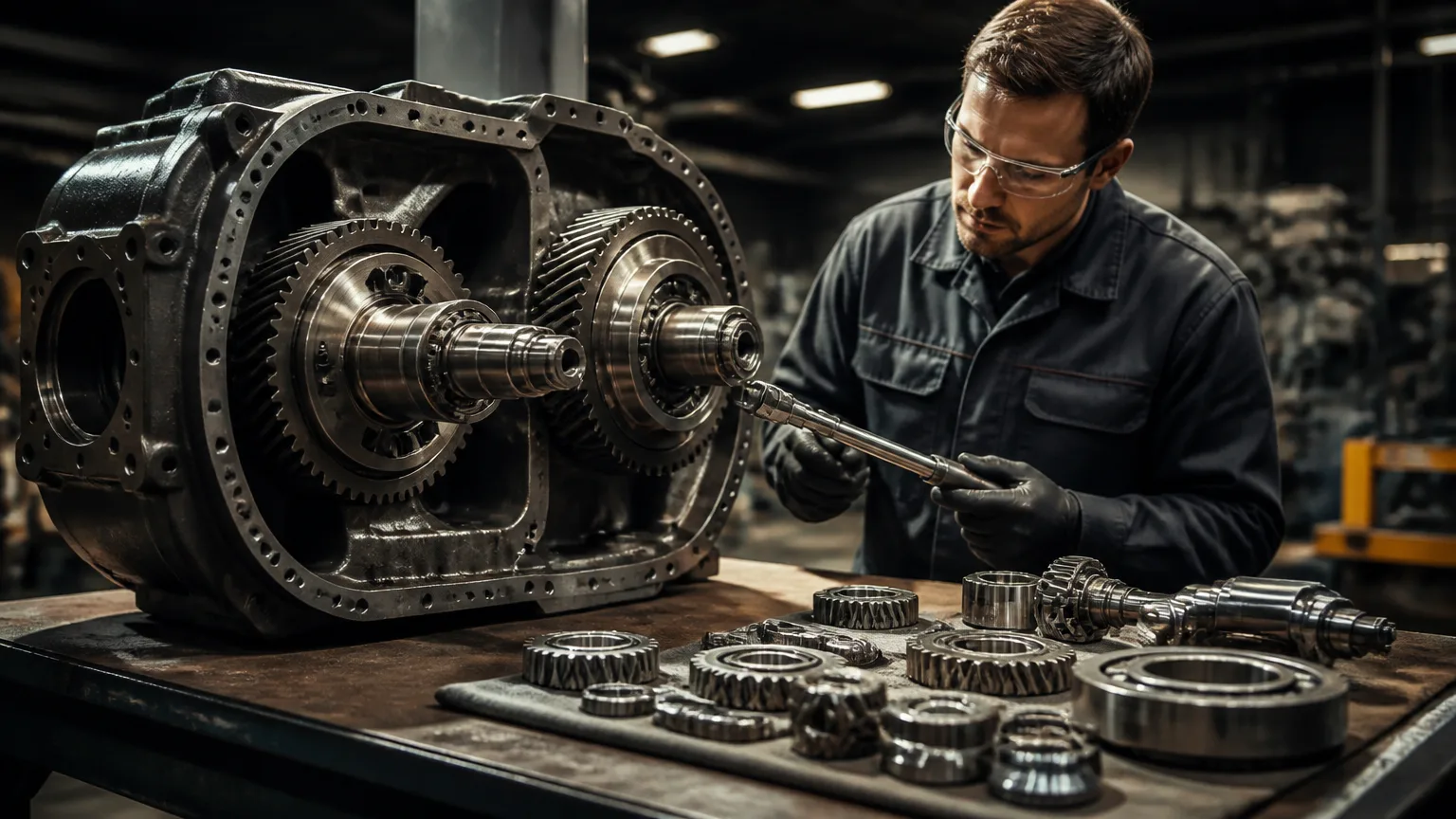
When a gearbox fails, production can stop without warning, affecting output, delivery schedules, and worker safety. Choosing the lowest initial quote for a gearbox rebuild service may create higher costs later through repeat failures, incomplete repairs, or extended downtime.
A rebuild is a strategic maintenance and reliability decision, not a simple repair transaction. The right provider must restore the gearbox to dependable operating condition while addressing the demands of your specific application. This requires proven technical capability, access to quality replacement parts, efficient turnaround, and testing that verifies performance before return to service.
Manufacturers should also evaluate warranty support, communication, and the provider’s experience with similar equipment. These factors help reduce risk and support broader strategies for minimizing gearbox-related downtime. This article explains how to compare rebuild services and select a partner that protects production, controls total cost, and delivers reliable gearbox performance.
Start With a Complete Failure Assessment
A reputable gearbox rebuild service should diagnose the unit before recommending repairs. The assessment should cover gears, bearings, shafts, seals, housings, lubrication systems, and mounting interfaces. Technicians should also review operating history, load changes, temperatures, maintenance records, and the specific failure symptoms.
The goal is to identify the root cause, not simply replace visibly damaged components. Overload, shaft misalignment, contamination, inadequate lubrication, and thermal stress can all create similar damage patterns. Correcting the underlying issue helps prevent repeat failures after the rebuild.
Request a documented inspection report with measured tolerances, condition photographs, and identified damage. The report should explain which components can be repaired, which require replacement, and whether rebuilding remains more practical than replacing the gearbox. Clear repair-versus-replacement guidance supports better maintenance and budgeting decisions.
Experience with specialized equipment and legacy units can also make a major difference. Original drawings, specifications, or replacement parts may be difficult to obtain. Providers familiar with expert gearbox repair and replacement solutions can often apply proven inspection methods and source suitable alternatives without compromising performance.
Verify Technical Expertise and Parts Capability
A qualified gearbox rebuild service should understand your specific equipment, not just industrial gearboxes generally. Confirm experience with the manufacturer, gearbox model, gear geometry, power rating, speed ratio, torque demands, and application-specific loading.
Ask how the provider evaluates operating conditions, including shock loads, duty cycle, temperature, contamination, and alignment. This expertise helps determine whether a rebuild will restore reliable performance or whether design changes are necessary. For example, Dodge gearbox repair expertise can be valuable when servicing equipment with established manufacturer requirements.
The provider should also have qualified machinists and access to gear-cutting or grinding equipment. Reverse engineering may be essential when drawings are unavailable, but every replacement component should undergo dimensional verification before assembly. Check whether the shop can inspect shafts, housings, gear tooth profiles, bearing fits, and backlash to the required tolerances.
Parts capability is equally important. Confirm access to quality replacement bearings, seals, gears, and approved materials for your operating environment. Ask whether the provider supports both common and discontinued gearboxes. A capable team can source or manufacture suitable alternatives while preserving material specifications, fit, load capacity, and service life. Request evidence of comparable rebuilds before approving the work.
Compare the Rebuild Process, Testing, and Quality Controls
A dependable gearbox rebuild service follows a controlled workflow, not a basic component swap. The process should include disassembly, cleaning, inspection, repair planning, component replacement or machining, reassembly, alignment, lubrication, and final testing. For a practical overview, review the gearbox repair process.
Ask how the provider documents each stage. Inspection should identify gear tooth damage, cracks, wear, corrosion, shaft condition, and housing distortion. Repair plans should explain which parts will be replaced, remanufactured, or machined, and why those decisions meet the operating requirements.
Quality controls should include backlash and gear contact patterns where applicable. Technicians should also verify shaft runout, bearing preload, sealing performance, alignment, and lubricant condition. These checks confirm that components operate correctly together, rather than simply fitting inside the housing.
Final validation may include vibration, temperature, noise, rotation, load, or no-load testing. Request written procedures, test results, inspection photographs, and traceability records for critical parts. Finally, obtain confirmation that the rebuilt unit meets the original specifications or approved upgraded specifications, including load capacity, speed, materials, and service requirements.
Evaluate Turnaround Time, Warranty, and Total Cost
Compare the quoted turnaround with your facility’s actual outage window. Ask whether the industrial gearbox repair solutions provider offers expedited inspection, repair, exchange units, or temporary replacements. Confirm scheduling, freight responsibilities, installation support, commissioning, and emergency response availability.
Compare total cost, not the headline price. Include teardown, machining, replacement parts, freight, installation, testing, and future maintenance planning. Also consider the production loss and emergency expense of another gearbox failure. Clear communication, progress updates, and documented milestones can prevent costly surprises.
Review warranty terms in writing. Confirm the coverage period, exclusions, workmanship guarantee, and responsibility for supplied parts. Ask how claims are handled, what evidence is required, and whether post-rebuild technical support is included. A dependable gearbox rebuild service should also recommend inspections, lubrication checks, and other maintenance actions that protect long-term performance.
Choose a Partner That Protects Long-Term Reliability
The right gearbox rebuild service delivers more than a repaired unit. Choose a partner that provides accurate diagnosis, application-specific engineering, documented quality control, realistic delivery commitments, and dependable post-installation support. The rebuild should correct the original failure mechanism, restore dependable production, and provide confidence in future operating performance.
Qualify providers before a failure occurs. Keep equipment records, drawings, operating data, and service contacts readily available to support faster decisions. Compare rebuilders on proven capability and lifecycle value—not price alone—to protect reliability, control total cost, and reduce future downtime.