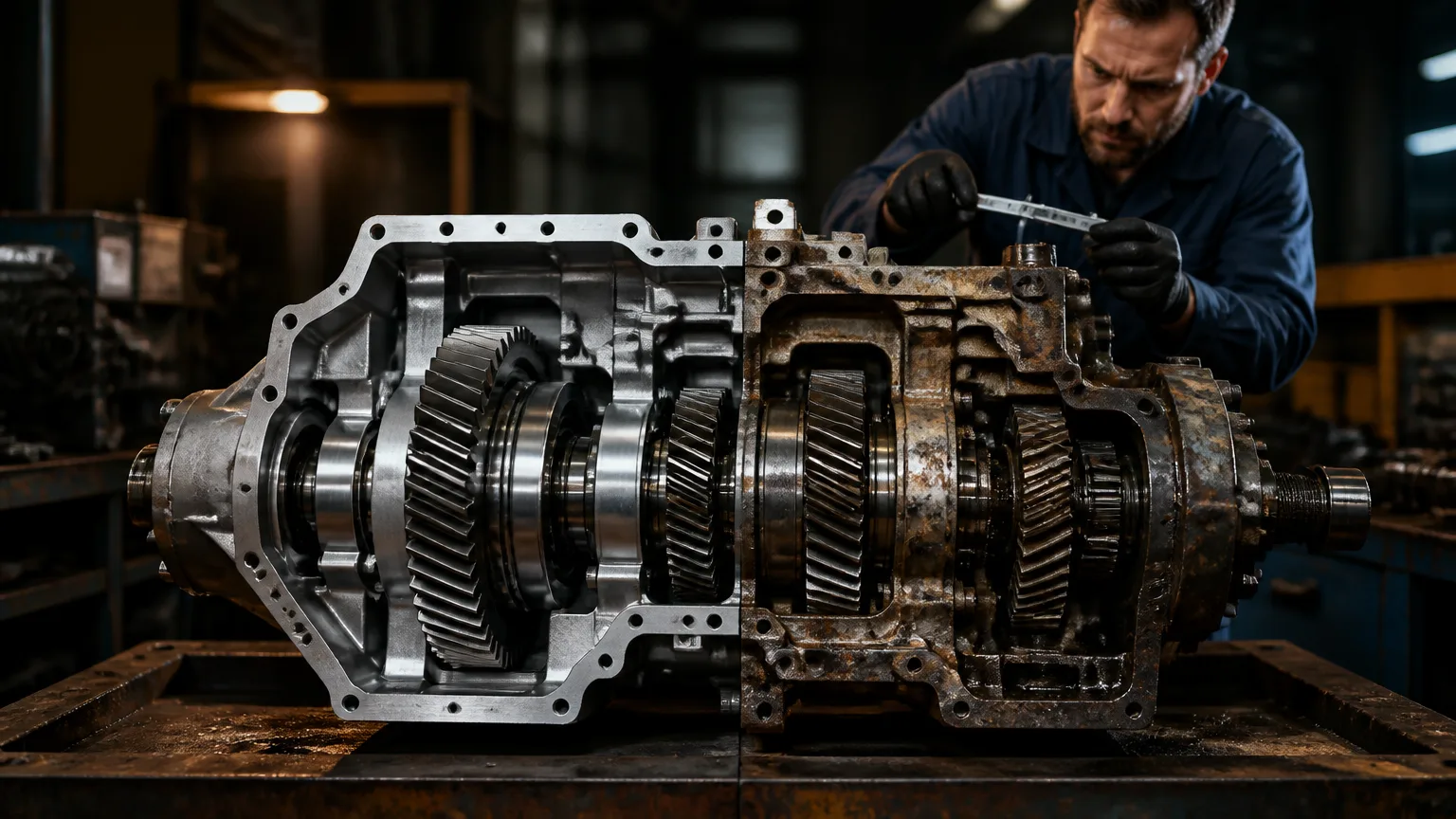
Gearbox refurbishment can restore dependable performance without the cost, lead time, and installation disruption of a new unit. For many industrial operations, it offers a practical way to extend equipment life while limiting production delays and protecting maintenance budgets.
However, refurbishment is not automatically the right choice. The decision should follow a professional inspection covering the gearbox’s condition, failure cause, remaining service life, and compatibility with the application. Experienced gearbox specialists can determine whether repair, refurbishment, or replacement delivers the lowest total cost of ownership. This article explains how to assess those options against operational risk, production demands, and long-term reliability.
When Refurbishment Is the More Practical Option
Gearbox refurbishment is often the practical choice when damage is localized and the housing remains structurally sound. Common examples include worn gears, damaged bearings, failed seals, flexible couplings, or compromised shafts. If the casing, mounting points, and major structural components remain serviceable, restoring these parts can cost less than replacing the complete unit.
Refurbishment is especially valuable for older, custom-built, or discontinued gearboxes. A direct replacement may be unavailable, forcing changes to shafts, mounts, controls, or connected equipment. Specialists can instead match replacement components to the existing design, reducing modification work, installation time, and production disruption.
However, refurbishment must address why the failure occurred. Replacing a damaged bearing alone will not prevent repeat failure if poor lubrication, misalignment, overloading, contamination, or thermal stress caused the damage. Inspection should therefore include load conditions, oil analysis, alignment, operating temperatures, and the condition of connected equipment.
Application-specific knowledge can also guide the decision. For example, facilities operating Eagle Iron Works equipment may benefit from Eagle Iron Works gearbox repair expertise that accounts for the machine’s duty cycle and original gearbox configuration. This knowledge helps determine whether targeted repairs can restore dependable service or whether replacement is the safer option.
The Cost, Downtime, and Lifecycle Case for Refurbishment
The financial case for gearbox refurbishment begins with its direct repair costs. These may include labor, bearings, seals, gears, shafts, machining, inspection, and testing. A new gearbox also carries purchase, freight, engineering, alignment, installation, and commissioning costs. When the existing housing and major components remain serviceable, refurbishment can deliver substantial savings.
Downtime often strengthens that advantage. Replacement gearboxes may have long manufacturing lead times, especially for custom industrial applications. They may also require changes to mounting arrangements, shafts, controls, couplings, or connected machinery. Refurbishment can return the existing unit to service faster while preserving established interfaces and alignment.
However, the lowest initial cost does not always produce the best long-term result. Evaluate the expected service life after refurbishment, warranty coverage, energy efficiency, parts availability, and future maintenance requirements. A specialist should confirm whether repaired components can support the gearbox’s duty cycle and production demands.
For example, targeted Raymond mill gearbox repair may restore reliable operation without redesigning the mill drive. Conversely, refurbishment becomes less economical when the repair scope approaches the cost of a new gearbox. Replacement may then provide higher efficiency, improved capacity, better controls, or stronger manufacturer support. Compare both options using total cost of ownership, not purchase price alone.
Inspection Findings That Should Guide the Decision
A reliable decision starts with a complete teardown inspection. Technicians check gear teeth for pitting, scoring, cracking, and abnormal wear, then perform dimensional checks against manufacturer tolerances. They also measure backlash and assess shafts, bearings, keys, and fits for distortion or excessive clearance.
Housing condition is equally important. Cracks, severe corrosion, damaged bores, or distorted mounting surfaces can make refurbishment unsafe. Oil analysis may reveal metal particles, contamination, oxidation, or overheating. Inspectors also look for heat discoloration, fatigue cracks, and repeated failure patterns that indicate deeper operating problems.
Replacement is usually safer when shafts are severely distorted, gears are irreparably damaged, or the gearbox lacks capacity for current loads. Obsolete designs, unavailable components, extensive corrosion, and repeated failures can also make a new unit more economical over its service life.
Quality gearbox refurbishment depends on more than replacing worn parts. The process requires precision machining, compatible materials, correct fits and tolerances, and upgraded seals or bearings where appropriate. Planetary gear repair is especially demanding because several gears, carriers, bearings, and load paths interact. Final backlash, alignment, vibration, temperature, and load testing should be documented before return to service.
When Replacement Is the Better Long-Term Investment
Replacement is often the stronger choice after catastrophic damage, recurring failures, or extensive internal wear. It may also be necessary when the existing gearbox cannot meet current torque, speed, duty-cycle, or environmental requirements. A properly specified replacement can reduce downtime and deliver more predictable long-term performance than repeated gearbox refurbishment.
Modern units may improve efficiency, controls integration, noise levels, washdown resistance, and maintainability. They can also provide better parts availability and stronger technical support. Replacement is especially valuable when the original design is obsolete, unsupported, or difficult to certify against current safety and production requirements. Facilities evaluating SEW Eurodrive gearbox alternatives should compare complete system benefits, not only purchase prices.
Do not treat replacement as a simple like-for-like purchase. Confirm compatibility, service factor, mounting dimensions, lubrication requirements, shaft arrangement, and output configuration. The selected gearbox must also suit the machine’s load profile, operating environment, controls, and maintenance strategy. Comparing properly specified alternatives helps ensure the new unit delivers measurable operational value.
Make the Decision Based on Reliability and Total Value
Gearbox refurbishment and replacement are complementary solutions, not competing defaults. Gearbox refurbishment is usually strongest when the core remains sound, damage is repairable, and preserving the existing design reduces cost or downtime.
Replacement is preferable when structural damage, repeated failures, obsolete technology, or changing production demands threaten long-term reliability. Before deciding, manufacturers should compare inspection findings, downtime, performance, warranty coverage, and lifecycle cost—not only the initial invoice.
Obtain a documented inspection and repair-versus-replacement comparison. This evidence supports a practical decision that protects production, reliability, and total value.