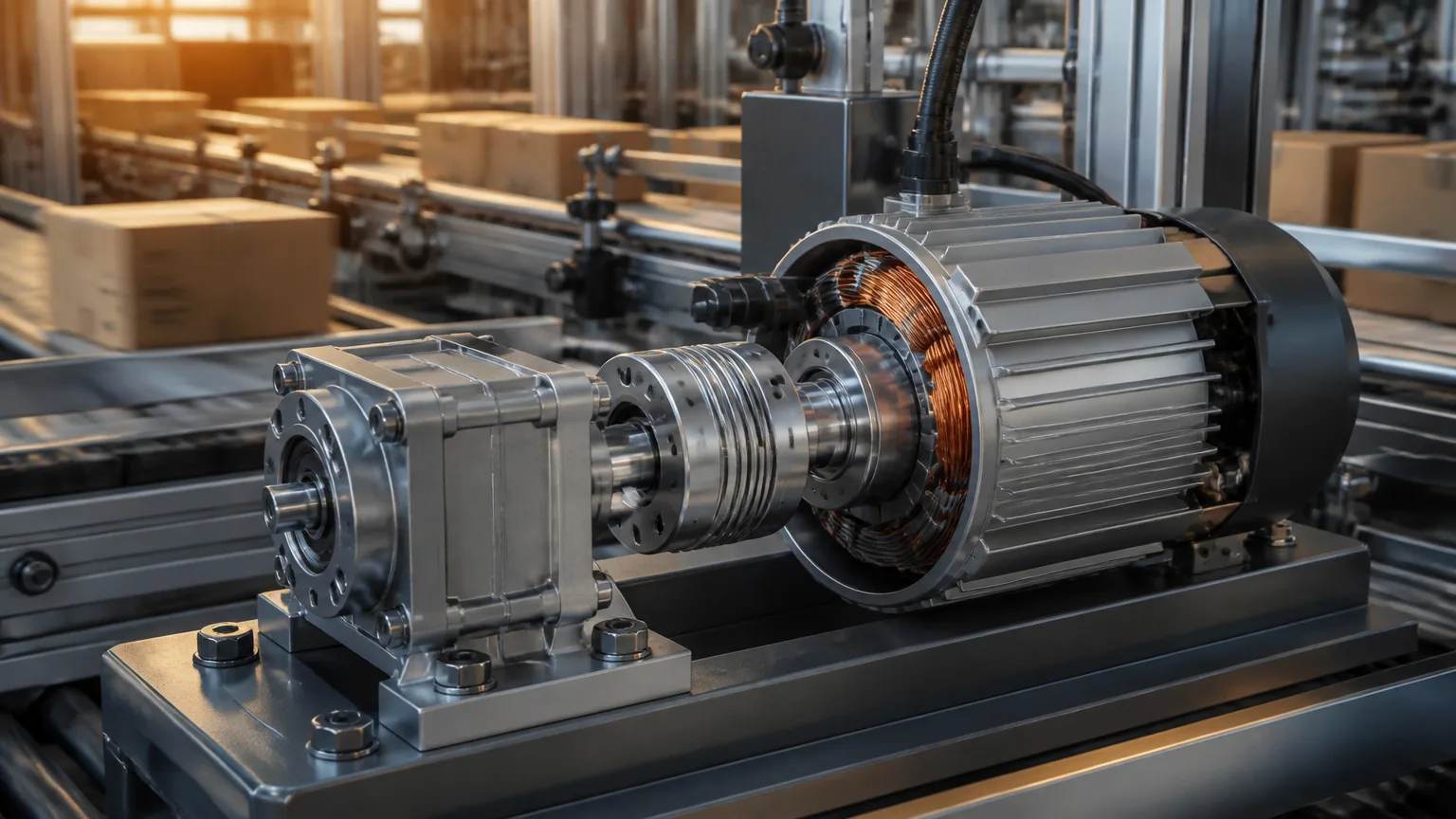
DC motors are controllable electromechanical devices that convert electrical energy into mechanical power. Their variable-speed control and high starting torque make them valuable in industrial drive systems, including packaging automation, where precise movement and dependable power transmission are essential.
However, motor performance alone does not determine system reliability. The motor, gearbox, coupling, and driven equipment operate as one connected system. An improperly matched or poorly maintained gearbox can increase load, vibration, and unplanned downtime. Selecting suitable gearboxes for packaging lines helps support consistent operation.
Motor maintenance focuses on electrical connections, bearings, cooling, and brushes where applicable. Gearbox service addresses lubrication, seals, gears, and alignment. This article explains common DC motor types, practical applications, and essential maintenance basics for improving equipment performance and service life.
Understanding the Main Types of DC Motors
Brushed DC motors use a straightforward design: a rotor, permanent magnets or field windings, brushes, and a commutator. They provide strong starting torque and simple speed control, making them useful for conveyors, hoists, and actuators. However, brushes and commutators wear during operation. Regular inspections should check for arcing, uneven wear, contamination, and reduced contact pressure.
Brushless DC motors replace mechanical commutation with electronic switching. This eliminates brush wear, reduces routine maintenance, and supports efficient operation at higher speeds. They depend on an electronic controller and, in some designs, position sensors. Controller compatibility, sensor condition, and cooling therefore become important maintenance considerations.
Wound-field motors are also selected according to load behavior. Series-wound motors deliver very high starting torque, but their speed can rise dangerously without sufficient load. Shunt-wound motors provide steadier speed regulation, while compound-wound motors combine useful starting torque with improved speed stability. These characteristics help match the motor to cranes, pumps, machine tools, or variable-load equipment.
Motor selection must also account for gearbox requirements. Confirm the needed speed reduction, output torque, duty cycle, and resistance to shock loading. Check that the gearbox input suits the motor shaft, keyway, coupling, and mounting arrangement. For demanding high-speed gearbox applications, verify rated speed, thermal capacity, and controller compatibility before installation.
Common Industrial Uses for DC Motors
DC motors remain valuable in equipment that requires adjustable speed and high starting torque. Common applications include conveyors, hoists, cranes, rolling equipment, extruders, machine tools, printing systems, and process lines.
Speed control supports smooth acceleration, accurate positioning, web tension control, and consistent production quality. It also helps equipment respond to loads that change during operation, reducing shock to the motor, gearbox, and driven machinery.
In cement, aggregate, and mineral-processing facilities, motors and gear reducers must withstand dust, heat, continuous duty, and high torque. Enclosures, cooling arrangements, sealing, lubrication, and gearbox capacity should match the operating environment. Proper selection reduces overheating, contamination, and premature wear.
Rotary kilns are a demanding example. Their drive systems operate under heavy loads and elevated thermal conditions, so alignment between the motor, coupling, and reducer is critical. Lubricant performance, gear capacity, and routine inspection directly affect uptime. Selecting suitable gearboxes for rotary kilns helps manage starting loads, continuous operation, and heat transfer through the drive train.
Before installation, confirm the motor and gearbox can handle the required torque, speed range, duty cycle, and shock loading. Controller compatibility and accessible maintenance points also support reliable long-term operation.
DC Motor Maintenance Basics for Reliable Operation
A preventive-maintenance program helps DC motors and connected gearboxes operate safely and efficiently. Set inspection intervals according to duty cycle, operating hours, load, temperature, dust, moisture, and other environmental conditions.
Always apply lockout/tagout before inspection or service. Follow manufacturer specifications rather than making improvised adjustments. Record baseline readings for current draw, speed, temperature, vibration, and noise. Compare future readings against these values to identify gradual changes.
Inspect brushes, commutators, bearings, cooling paths, terminals, insulation, and controller connections. Look for abnormal heat, noise, vibration, arcing, speed instability, or rising current draw. These symptoms can indicate electrical faults, brush wear, bearing damage, restricted cooling, or control problems.
Gearbox checks are equally important. Verify lubricant level and condition, use the specified lubricant grade, and inspect seals for leakage. Check backlash, mounting bolts, coupling condition, and shaft alignment. Keep breather points and cooling surfaces clear so pressure and heat do not build.
Maintenance teams should also review the complete drive train during scheduled service. For application-specific guidance on choosing the right Cone Drive gearbox, confirm the gearbox matches the motor’s torque, speed, and duty requirements. Document findings, corrective actions, and replacement parts to support reliable operation.
Diagnosing Failures and Deciding Between Repair and Replacement
When performance declines, map symptoms to likely causes before removing components. Overheating may result from overload or poor ventilation. Sparking often indicates worn brushes or a damaged commutator. Grinding, oil contamination, and output-shaft play more commonly point to gearbox damage.
Motor and gearbox failures can also interact. A seized reducer may overload the motor, while electrical faults, excessive vibration, or poor alignment can accelerate gear and bearing wear. Stop repeated restart attempts after suspected mechanical failure. Preserve failed components and operating data, including load, temperature, noise, and vibration readings, for professional inspection.
Choose repair, rebuild, or replacement based on the damage extent, parts availability, lead time, efficiency, equipment age, and downtime cost. Confirm that the existing gear ratio and torque capacity still suit the application. A rebuild may restore a valuable drive, while a replacement may reduce risk when parts are obsolete or damage is extensive. For urgent support, review emergency gearbox repair procedures before restarting the equipment.
Keeping DC Motor Drive Systems Productive
Reliable DC motor performance starts with matching the motor type to application demands, controls, and gearbox specifications. Confirm torque, speed, duty cycle, shock-load capacity, mounting, and controller compatibility before installation.
Trend monitoring and preventive service can identify overheating, vibration, lubrication loss, and wear early. These actions are typically less disruptive and less costly than responding to catastrophic failure.
When a gearbox requires evaluation, rebuilding, or replacement, work with an experienced repair partner. Their guidance can help restore productivity, control risk, and extend the service life of complete DC motor drive systems.