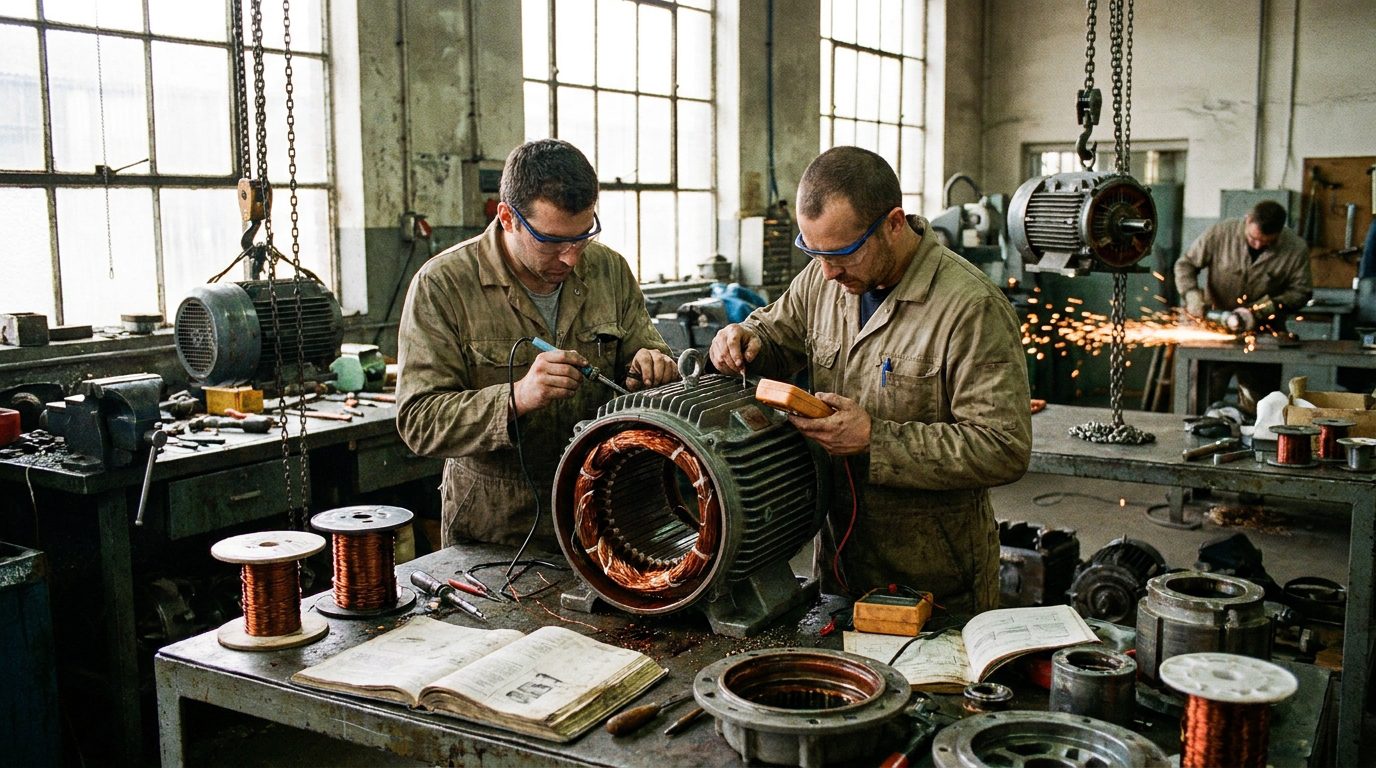
Electric Motor Repair Minnesota services are essential for manufacturers, food processors, mining operations, agricultural facilities, water treatment plants, warehouses, and other industrial businesses that rely on dependable electric motors every day.
Whether your operation is in Minneapolis, St. Paul, Rochester, Mankato, St. Cloud, Duluth, Moorhead, Bemidji, or anywhere else in Minnesota or the United States, a motor failure can quickly lead to costly downtime.
Industrial Gearbox Solutions provides professional repair services for AC motors, DC motors, pump motors, and gearmotors, including diagnostics, rewinding, rebuilding, bearing replacement, preventive maintenance, and emergency repairs.
We also offer industrial gearbox repair and complete drivetrain support to keep your critical equipment operating reliably.
Request a Minnesota Electric Motor Repair Quote
If your facility has a failed, noisy, overheating, vibrating, or underperforming electric motor, Industrial Gearbox Solutions is ready to help.
Our team can evaluate the problem, coordinate shipping if needed, and recommend the most practical repair solution to get your equipment back into reliable operation as quickly as possible.
Comprehensive Electric Motor Repair Services in Minnesota
Industrial electric motors operate under demanding conditions. Moisture, dust, vibration, heat, overload, bearing wear, electrical imbalance, contamination, and misalignment can all shorten service life. A thorough repair process identifies not only the visible failure, but also the root cause behind it.
Industrial Gearbox Solutions supports businesses needing repair services for a wide range of motor types, sizes, and applications. Our repair approach focuses on restoring mechanical and electrical integrity while helping customers avoid unnecessary downtime.
AC Motor Repair
AC motors are widely used throughout Minnesota industrial facilities because of their durability, efficiency, and compatibility with common plant power systems. They power conveyors, pumps, fans, blowers, compressors, mixers, packaging machinery, material handling systems, and production equipment.
Common AC motor issues include:
- Failed bearings
- Winding insulation breakdown
- Overheating
- Rotor damage
- Stator failure
- Shaft wear
- Vibration problems
- Contamination from dust, oil, or moisture
- Electrical imbalance
- Ground faults
- Reduced torque or efficiency
Professional AC motor repair begins with inspection and testing. This may include megger testing, surge comparison testing, resistance testing, vibration analysis, bearing inspection, shaft measurement, and mechanical evaluation. Once the issue is identified, technicians can determine whether the motor requires bearing replacement, cleaning, machining, rewinding, balancing, or full rebuilding.
For Minnesota facilities operating continuous production lines, HVAC systems, pump stations, grain handling systems, or processing machinery, AC motor repair can be a cost-effective way to restore equipment reliability while extending asset life.
DC Motor Repair
DC motors remain important in many industrial environments, especially where variable speed control, high starting torque, or specialized legacy equipment is required. Facilities using presses, cranes, hoists, extruders, paper converting equipment, rolling machinery, and older production systems may depend on DC motors for precise operation.
DC motor repair can involve:
- Armature testing and repair
- Commutator resurfacing
- Brush replacement
- Brush holder inspection
- Field coil repair
- Bearing replacement
- Insulation testing
- Dynamic balancing
- Cleaning and baking
- Rewinding
- Mechanical rebuilding
Because DC motors include components such as brushes and commutators that require routine inspection, preventive maintenance is especially important. Brush wear, carbon tracking, arcing, and commutator damage can quickly reduce motor performance and create more serious failures if not addressed.
Industrial Gearbox Solutions can support Minnesota businesses with DC motor repair solutions that help preserve existing equipment and reduce the need for expensive modernization or replacement projects.
Servo, Specialty, and Application-Specific Motor Support
Many facilities also rely on specialty motors used in automation, robotics, packaging, CNC machinery, food processing systems, and other precision equipment. While not every motor failure follows the same repair path, a qualified repair partner can help determine whether repair, rebuild, replacement, or upgrade is the best choice.
Specialty motor applications may require careful handling, detailed documentation, and attention to manufacturer specifications. When a motor is part of a larger drive system, it is also important to inspect couplings, gear reducers, alignment, and load conditions to prevent repeat failures.
This is where internal links to related gearbox repair services become valuable. For example, if a failed motor drives a gearbox, consider linking to your Industrial Gearbox Repair page, Gear Reducer Repair page, or Gearbox Rebuilding content so visitors can explore complete drivetrain repair options.
Sure, here is the sentence with the clickable link:
Learn more about Electric Motor Repair services.
Motor Rewinding and Electrical Restoration
Motor rewinding is one of the most important services in industrial electric motor repair. When windings fail due to heat, overload, voltage issues, contamination, or insulation breakdown, rewinding can restore the electrical function of the motor and extend its useful life.
Rather than replacing the entire motor, many Minnesota businesses choose rewinding when the motor frame, rotor, shaft, and core remain viable. This can be especially valuable for large motors, custom motors, obsolete motors, or motors with long replacement lead times.
When Motor Rewinding Is Needed
Motor rewinding may be recommended when testing reveals insulation failure, shorted turns, grounded windings, burned coils, or electrical imbalance. Symptoms that may indicate winding problems include:
- Motor trips overloads or breakers
- Burning smell from the motor
- Excessive heat during operation
- Loss of torque
- Unusual humming or buzzing
- Low insulation resistance
- Visible winding discoloration
- Repeated failures after restart
- Motor fails to start
Minnesota facilities operating in cold climates may also experience moisture-related insulation issues, especially when motors are exposed to condensation, washdown conditions, outdoor service, or seasonal temperature swings. Proper cleaning, drying, insulation testing, and rewinding can help restore reliability.
The Motor Rewinding Process
A professional rewinding process typically includes disassembly, documentation of winding data, removal of damaged coils, core testing, cleaning, installation of new coils, varnish treatment, baking, electrical testing, and final quality checks.
Important steps may include:
- Recording original winding configuration
- Testing the stator core for damage
- Removing failed windings carefully
- Cleaning slots and core laminations
- Installing new magnet wire
- Applying insulation systems
- Varnishing and curing the windings
- Performing resistance and insulation tests
- Reassembling the motor
- Running final performance checks
Quality is critical. Poor rewinding practices can reduce efficiency, increase heat, shorten motor life, and cause repeated failures. Industrial Gearbox Solutions focuses on connecting customers with repair processes designed for industrial-duty performance, not temporary fixes.
Rewinding vs. Replacing an Electric Motor
A common question is whether it is better to rewind or replace a motor. The answer depends on motor size, age, efficiency class, replacement availability, repair cost, application criticality, and downtime requirements.
Rewinding may be the right choice when:
- The motor is large or expensive to replace
- The motor is custom or obsolete
- Replacement lead time is too long
- The mechanical components are in good condition
- The motor is part of a specialized machine
- Repair cost is favorable compared to replacement
- The facility wants to preserve existing fit and compatibility
Replacement may be better when the motor is small, readily available, severely damaged, inefficient, or no longer suitable for the application. A knowledgeable repair provider can help evaluate the total cost of ownership, not just the immediate repair price.
If you’re interested in understanding the intricacies of electric motor repair in Minnesota, you might find it beneficial to explore related topics such as industrial gearbox repair. A comprehensive resource on this subject can be found in the article about industrial gearbox repair, which covers essential maintenance practices and troubleshooting techniques that can be applicable across various types of machinery. This knowledge can enhance your understanding of how electric motors and gearboxes work together in industrial settings.
Motor Rebuilding for Long-Term Reliability
Motor rebuilding goes beyond addressing one failed component. It is a more complete restoration process that may include electrical repair, mechanical repair, cleaning, balancing, machining, bearing replacement, shaft repair, housing work, and final testing.
For Minnesota businesses, motor rebuilding can be an excellent option when critical motors are showing signs of age, contamination, vibration, or repeated service issues.
What Is Included in a Motor Rebuild?
A motor rebuild may include:
- Complete disassembly and inspection
- Bearing and seal replacement
- Winding inspection or rewinding
- Rotor inspection
- Shaft repair or replacement
- Housing and end bell inspection
- Machining worn fits
- Dynamic balancing
- Cleaning and contamination removal
- Insulation treatment
- Painting and corrosion protection
- Final testing and documentation
A rebuild is often recommended when a motor has experienced severe mechanical stress, contamination, water intrusion, bearing failure, or extended operation under overload conditions.
Bearing and Shaft Repair
Bearings are among the most common causes of electric motor failure. In industrial environments, bearing problems may result from improper lubrication, contamination, misalignment, overloading, electrical fluting, vibration, or normal wear.
Symptoms of bearing failure include:
- Grinding, squealing, or rumbling noises
- Excessive vibration
- High operating temperature
- Shaft movement
- Grease leakage
- Motor trips or stalls
- Damage to connected equipment
If bearing failure is ignored, it can damage the shaft, rotor, end bells, seals, and windings. Repair may require bearing replacement, shaft journal repair, machining, metalizing, sleeve installation, or replacement components.
Because motors often operate with gearboxes, pumps, or couplings, bearing failures should be evaluated as part of the larger rotating equipment system. Internal linking to gearbox repair or gearbox bearing replacement content can help visitors understand the importance of complete drivetrain inspection.
Dynamic Balancing and Vibration Correction
Vibration reduces motor life and can damage connected machinery. During rebuilding, dynamic balancing helps ensure the rotor runs smoothly and reduces stress on bearings, housings, and couplings.
Common causes of motor vibration include:
- Rotor imbalance
- Misalignment
- Soft foot
- Worn bearings
- Bent shaft
- Loose mounting
- Coupling problems
- Gearbox issues
- Pump imbalance
- Structural resonance
A repaired motor should not simply run; it should run smoothly under expected operating conditions. Vibration correction helps improve reliability and reduce unplanned downtime.
If you’re interested in understanding more about the intricacies of industrial machinery maintenance, you might find the article on industrial gearbox repair in Utah particularly insightful. This resource provides valuable information on the repair processes that are essential for keeping equipment running smoothly, which is closely related to services like Minnesota Electric Motor Repair. You can read more about it in this article.
Pump Motor Repair for Minnesota Facilities
Pump motors are critical in many Minnesota industries, including municipal water systems, wastewater treatment, food processing, agriculture, chemical processing, mining, HVAC, power generation, and manufacturing. When a pump motor fails, the consequences can include process interruption, flooding, loss of pressure, product waste, environmental concerns, and emergency repair costs.
Industrial Gearbox Solutions supports pump motor repair needs for facilities that depend on reliable pumping systems.
Common Pump Motor Problems
Pump motor failures are often caused by both electrical and mechanical conditions. Common issues include:
- Water intrusion
- Seal failure
- Bearing contamination
- Overheating
- Overload from pump problems
- Misalignment between motor and pump
- Voltage imbalance
- Short cycling
- Corrosion
- Insulation failure
- Cavitation-related vibration
A pump motor repair should include evaluation of the motor and the driven equipment. If the pump is binding, misaligned, clogged, or operating outside its curve, the repaired motor may fail again.
Repairing Motors in Washdown and Wet Environments
Many Minnesota facilities operate in washdown, outdoor, or high-moisture environments. Food processing plants, dairies, breweries, wastewater plants, paper mills, and agricultural operations often expose motors to water, chemicals, and temperature changes.
Repair considerations for wet environments may include:
- Improved sealing
- Moisture-resistant insulation
- Corrosion-resistant coatings
- Bearing protection
- Proper drain placement
- Space heaters where applicable
- Enclosure evaluation
- Routine insulation testing
If a pump motor repeatedly fails due to moisture, upgrading the enclosure type, improving installation practices, or adding preventive maintenance checks may reduce downtime.
Pump Motor Repair vs. Full Pump System Repair
A failed pump motor may be only one part of the problem. Before reinstalling a repaired motor, facilities should inspect the pump, coupling, baseplate, alignment, piping strain, valves, and control system. This helps ensure the repaired motor is not returned to the same damaging operating conditions.
This section offers a natural internal linking opportunity to related pump repair, gearbox repair, coupling alignment, or rotating equipment maintenance content if available on your website.
Preventive Maintenance for Electric Motors
Preventive maintenance is one of the most effective ways to reduce emergency breakdowns and extend motor life. Minnesota businesses face demanding operating conditions, including cold winters, humid summers, dust, process contamination, and heavy-duty production schedules. A proactive maintenance plan helps identify problems before they become costly failures.
Key Preventive Maintenance Tasks
An effective electric motor maintenance program may include:
- Visual inspections
- Infrared temperature checks
- Vibration monitoring
- Lubrication management
- Insulation resistance testing
- Current and voltage measurements
- Bearing condition monitoring
- Cleaning and contamination control
- Coupling and alignment checks
- Mounting bolt inspection
- Ventilation and cooling checks
- Recordkeeping and trend analysis
The best maintenance programs are based on motor criticality. A small non-critical motor may only need periodic checks, while a large production-critical motor may require scheduled testing, spare planning, and condition monitoring.
Lubrication and Bearing Protection
Improper lubrication is a major cause of bearing failure. Too little grease causes friction and heat, while too much grease can damage seals, increase temperature, and contaminate windings. Using the wrong lubricant can also shorten bearing life.
A lubrication program should define:
- Grease type
- Quantity
- Frequency
- Application method
- Motor operating conditions
- Bearing type
- Cleanliness requirements
- Documentation procedures
For motors exposed to dust, moisture, or harsh process conditions, bearing seals and contamination controls are especially important.
Electrical Testing and Condition Monitoring
Electrical testing helps identify insulation degradation, winding problems, voltage imbalance, and developing faults. Over time, test results can be trended to predict when service is needed.
Useful testing may include:
- Megohmmeter testing
- Winding resistance testing
- Surge testing
- Polarization index testing
- Current analysis
- Power quality checks
- Ground fault testing
These tests are particularly valuable for critical motors where unexpected downtime could disrupt production or create safety concerns.
Emergency Electric Motor Repair in Minnesota
Even with strong maintenance practices, electric motors can fail unexpectedly. When a critical motor goes down, businesses need fast communication, practical repair options, and a clear plan for getting equipment back in service.
Industrial Gearbox Solutions supports emergency electric motor repair needs for Minnesota businesses by helping coordinate responsive repair services, expedited evaluation, and nationwide repair resources.
When Emergency Repair Is Needed
Emergency repair may be necessary when motor failure affects:
- Production lines
- Pumping systems
- Material handling equipment
- Food processing operations
- Mining or aggregate equipment
- HVAC or facility systems
- Wastewater or water treatment operations
- Power generation support systems
- Distribution and logistics operations
In these situations, speed matters, but quality still matters too. A rushed repair that ignores root cause can create repeat downtime. A good emergency repair process balances urgency with proper diagnostics and testing.
Information to Provide for Faster Service
To speed up the quote and repair process, provide as much information as possible, including:
- Motor horsepower
- Voltage and phase
- RPM
- Frame size
- Enclosure type
- Manufacturer and model number
- Application
- Symptoms before failure
- Photos of nameplate and damage
- Operating environment
- Urgency and downtime impact
- Location in Minnesota
- Whether pickup or shipping is needed
The more complete the information, the faster a repair provider can determine next steps.
Spare Motor Planning
Emergency downtime can often be reduced with a spare motor strategy. Critical assets should be reviewed to determine whether spare motors, spare bearings, or replacement components should be kept on hand.
A spare motor plan may include:
- Identifying critical motors
- Documenting specifications
- Standardizing motor types where possible
- Storing spares properly
- Rotating inventory
- Testing spare motors periodically
- Planning for obsolete motors
For large or custom motors, having a repair plan and shipping process in place before failure occurs can significantly reduce downtime.
Industries Served Across Minnesota
Minnesota’s economy includes a wide range of industries that depend on electric motors. Industrial Gearbox Solutions serves businesses across the state by providing repair support for motors used in demanding applications.
Manufacturing and Production
Manufacturing facilities rely on electric motors to keep lines moving. Motors drive conveyors, presses, mixers, fans, compressors, machine tools, packaging equipment, and automation systems.
Common manufacturing motor repair needs include:
- Conveyor motor repair
- Compressor motor repair
- Fan and blower motor repair
- Machine tool motor repair
- Packaging equipment motor repair
- Gearmotor repair
- Production line motor rebuilding
For manufacturers, downtime can quickly affect output, labor efficiency, and delivery schedules. Reliable repair support helps protect production capacity.
Food and Beverage Processing
Minnesota has a strong food and agricultural processing sector. Motors in these environments often face washdown, moisture, sanitation chemicals, temperature changes, and continuous operation.
Applications include:
- Mixers
- Pumps
- Conveyors
- Blenders
- Packaging lines
- Refrigeration systems
- Fans and blowers
- Grain handling equipment
Food-grade environments require careful attention to contamination control, corrosion resistance, sealing, and reliability.
Agriculture and Grain Handling
Agricultural operations and grain facilities use motors for augers, conveyors, dryers, pumps, fans, elevators, and processing equipment. Seasonal demand can make downtime especially costly during harvest or production peaks.
Motor repair for agriculture often focuses on:
- Dust contamination
- Bearing wear
- Overload damage
- Moisture exposure
- Fan motor repair
- Conveyor motor repair
- Pump motor repair
Preventive maintenance before peak season can help reduce unexpected failures.
Mining, Aggregate, and Heavy Industry
Northern Minnesota and other regions include mining, aggregate, and heavy-duty operations where motors face shock loads, abrasive dust, vibration, and demanding duty cycles.
Applications may include:
- Crushers
- Conveyors
- Screens
- Pumps
- Fans
- Hoists
- Material handling systems
- Gearbox-driven equipment
In these environments, motor failure can also be related to gearbox problems, coupling misalignment, or load issues. Internal links to industrial gearbox repair, gearbox rebuild services, and heavy-duty gearbox repair pages can help users find complete drivetrain support.
Water and Wastewater Treatment
Municipal and industrial water systems rely heavily on pump motors, blower motors, mixer motors, and control systems. Motor reliability is essential for public service, compliance, and environmental protection.
Common repair needs include:
- Pump motor rewinding
- Blower motor repair
- Bearing replacement
- Moisture damage repair
- Insulation testing
- Emergency rebuilds
Because many water and wastewater systems operate around the clock, preventive maintenance and spare planning are especially important.
Logistics, Warehousing, and Distribution
Minnesota distribution centers and warehouses depend on motors for conveyors, sortation systems, dock equipment, fans, compressors, and automated material handling systems.
Motor problems in these environments can delay shipments and affect customer commitments. Fast repair coordination and preventive maintenance help reduce operational disruptions.
Shipping Motors for Repair from Minnesota
Not every facility has immediate access to the right repair capability nearby, especially for large, specialized, obsolete, or heavily damaged motors. Industrial Gearbox Solutions works as a nationwide repair provider, making it possible for Minnesota companies to ship motors for inspection, repair, rewinding, or rebuilding.
Shipping a motor for repair can be a practical choice when the motor requires specialized equipment, advanced testing, machining, rewinding expertise, or complete rebuild capability.
Preparing an Electric Motor for Shipment
Proper preparation helps prevent additional damage during transit. Before shipping a motor, consider these steps:
- Take clear photos of the motor and nameplate
- Document symptoms and application details
- Drain oil or fluids if applicable
- Protect shafts and machined surfaces
- Secure loose components
- Use a sturdy pallet or crate
- Block and brace the motor to prevent movement
- Cover openings to prevent contamination
- Label the shipment clearly
- Include contact information and repair notes
Large motors should be lifted and secured using proper rigging practices. If the motor includes a coupling, brake, encoder, gearbox, or pump connection, document the configuration before removal.
What to Include With the Shipment
Including the right information can speed up evaluation. Send details such as:
- Company name and contact person
- Facility location
- Motor specifications
- Failure symptoms
- Application description
- Desired turnaround time
- Photos or videos if available
- Purchase order or quote reference
- Special testing requirements
- Any known history of previous repairs
A complete repair history is especially helpful for motors with repeated failures.
Nationwide Repair Support for Minnesota Businesses
Industrial Gearbox Solutions positions itself as a nationwide partner for electric motor repair and related rotating equipment services. That means Minnesota companies can access repair resources even when local options are limited, overloaded, or not equipped for a specific motor type or size.
For website SEO, this is a strong place to include an internal link to the Electric Motor Repair pillar page using anchor text such as “nationwide electric motor repair services.” You can also link to related content such as “industrial gearbox repair,” “gear reducer repair,” or “gearbox rebuilding” for customers dealing with complete drive system issues.
Why Choose Industrial Gearbox Solutions?
Choosing the right electric motor repair provider affects uptime, operating cost, and long-term equipment reliability. Industrial Gearbox Solutions is focused on serving industrial customers with practical repair solutions, nationwide support, and a deep understanding of rotating equipment.
Nationwide Capability With Industrial Focus
Minnesota businesses need more than a general repair shop. They need a provider that understands industrial duty cycles, production schedules, driven equipment, and the cost of downtime.
Industrial Gearbox Solutions supports customers nationwide, helping businesses access repair options for:
- AC motors
- DC motors
- Pump motors
- Large industrial motors
- Gearmotors
- Motors connected to gearboxes and reducers
- Motors used in severe-duty environments
- Rebuildable and obsolete motors
This nationwide approach gives customers flexibility when local capacity is limited or when specialized repair support is needed.
Repair Solutions That Consider the Whole System
Electric motor failures are often connected to other problems. A motor may fail because of a gearbox overload, misalignment, coupling wear, pump binding, poor ventilation, voltage imbalance, or process changes.
Industrial Gearbox Solutions understands the relationship between motors, gearboxes, reducers, shafts, couplings, pumps, and driven equipment. This system-level perspective helps identify root causes and reduce repeat failures.
Internal linking opportunities can include:
- Electric Motor Repair pillar page
- Industrial Gearbox Repair services
- Gearbox Rebuild and Reconditioning
- Gear Reducer Repair
- Gearbox Bearing Replacement
- Emergency Gearbox Repair
- Pump and Motor Drive System Repair
These links help visitors navigate related services and improve SEO relevance around industrial rotating equipment repair.
Conversion-Focused Support
When a motor fails, customers want clear answers. Industrial Gearbox Solutions emphasizes responsive communication, practical recommendations, and repair support aligned with business needs.
Customers can request help with:
- Repair quotes
- Emergency repair coordination
- Rewinding evaluation
- Rebuild recommendations
- Shipping instructions
- Failure analysis
- Preventive maintenance planning
- Gearbox and motor system repair
The objective is to help Minnesota businesses reduce downtime, control costs, and keep critical equipment operating.
FAQs About Minnesota Electric Motor Repair
How do I know if my electric motor can be repaired?
Many industrial electric motors can be repaired if the frame, core, shaft, and major components are still serviceable. Testing and inspection will determine whether bearing replacement, rewinding, rebuilding, machining, or replacement is the best option. Large, custom, or obsolete motors are often strong candidates for repair.
Is motor rewinding cost-effective?
Motor rewinding can be cost-effective for larger motors, specialty motors, long-lead-time motors, and motors that are expensive to replace. The decision depends on repair cost, motor efficiency, condition, availability, and downtime impact. A qualified repair provider can compare repair and replacement options.
What are common signs of electric motor failure?
Warning signs include excessive heat, vibration, unusual noise, tripped breakers, reduced torque, burning odor, bearing noise, hard starting, high current draw, and visible contamination. If these symptoms appear, shut down the equipment when safe and request inspection before additional damage occurs.
Do you repair both AC and DC motors?
Yes. Industrial electric motor repair services can include AC motor repair, DC motor repair, motor rewinding, motor rebuilding, bearing replacement, shaft repair, cleaning, balancing, and testing. The exact repair scope depends on the motor type and condition.
Can Minnesota companies ship motors for repair?
Yes. Businesses in Minnesota can ship motors for repair when specialized service, advanced testing, rewinding, or rebuilding is required. Proper packaging, documentation, and photos help speed up the repair process and prevent shipping damage.
How long does electric motor repair take?
Turnaround time depends on motor size, damage severity, parts availability, rewinding requirements, machining needs, and workload. Emergency repair options may be available for critical equipment. Providing complete motor information and failure details can help accelerate the quote and repair process.
What causes repeated motor failures?
Repeated failures may be caused by misalignment, overload, poor ventilation, incorrect lubrication, contamination, voltage imbalance, bearing currents, gearbox problems, pump issues, improper installation, or unsuitable motor selection. A root cause evaluation is important before reinstalling a repaired motor.
Should I repair the motor or replace it?
Repair may be best for large, custom, obsolete, or high-value motors. Replacement may be better for small, readily available, inefficient, or severely damaged motors. The right decision should consider total cost, downtime, energy efficiency, availability, and application requirements.
Do you provide emergency electric motor repair?
Industrial Gearbox Solutions supports emergency repair needs for industrial customers. If a critical motor failure is affecting production, pumping, material handling, or facility operations, request a quote and provide as much information as possible so the repair process can begin quickly.
Can you help if the motor is connected to a gearbox?
Yes. Motors and gearboxes often operate as part of the same drive system. If a motor failure is related to gearbox problems, coupling issues, bearing failure, or misalignment, Industrial Gearbox Solutions can help support broader repair needs. This is a strong reason to explore related gearbox repair services in addition to electric motor repair.
Building a Smarter Repair Strategy for Minnesota Businesses
Minnesota businesses depend on electric motors to power essential industrial processes. Whether your facility operates production equipment in Minneapolis, pump systems in Rochester, processing machinery in Mankato, mining equipment near the Iron Range, or agricultural systems across rural Minnesota, reliable motor performance is critical.
Electric motor repair is not just about restoring power to a machine. It is about protecting productivity, improving efficiency, reducing downtime, and extending the life of valuable equipment. AC motor repair, DC motor repair, motor rewinding, motor rebuilding, pump motor repair, preventive maintenance, and emergency repair services all play an important role in a complete reliability strategy.
Industrial Gearbox Solutions provides nationwide repair support for companies that need professional service, responsive communication, and industrial equipment expertise. By combining electric motor repair knowledge with broader drivetrain and gearbox repair experience, Industrial Gearbox Solutions helps customers address both the failed component and the larger system behind it.
If your Minnesota facility is dealing with motor failure, declining performance, excessive vibration, overheating, bearing noise, or repeated downtime, now is the time to act. Request a quote, provide your motor details, and explore repair options that can help restore efficiency and keep your operation moving.