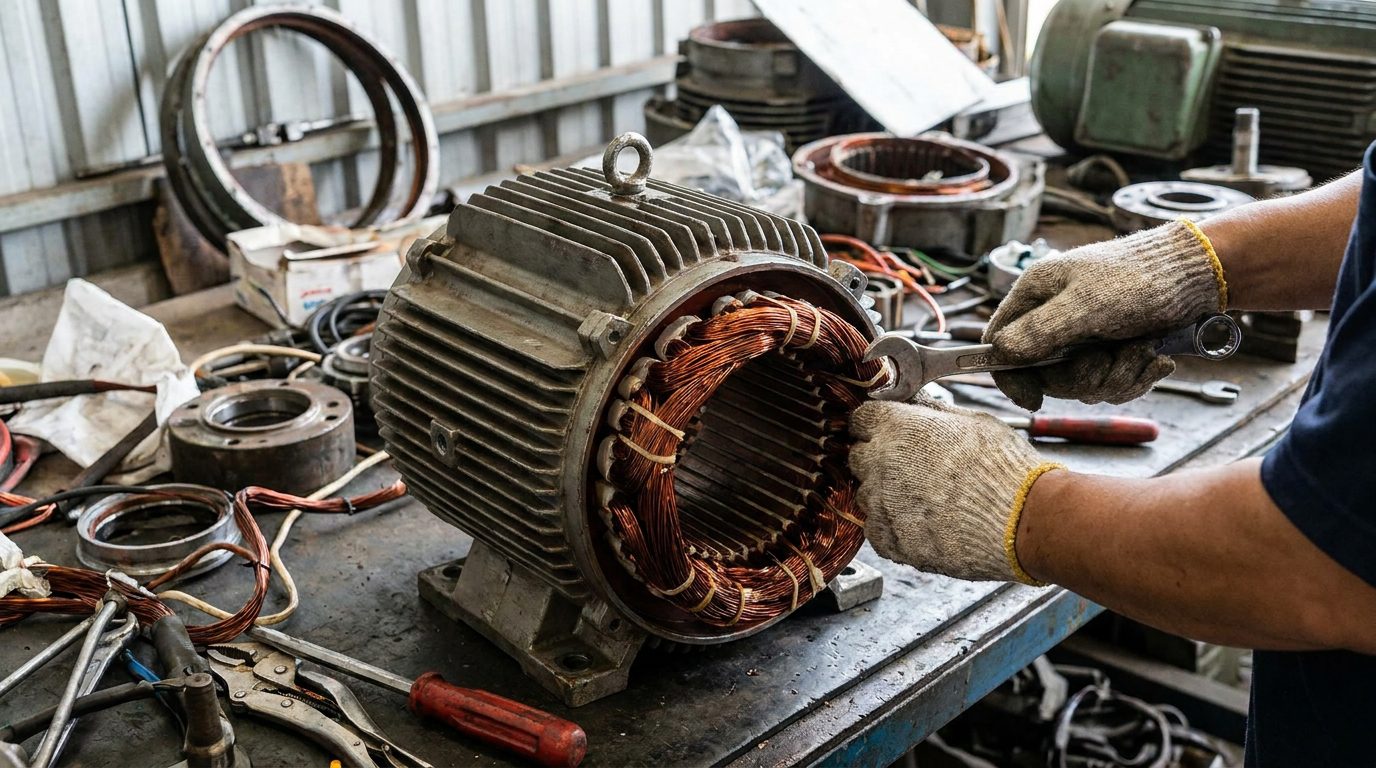
In the demanding landscape of industrial operations, electric motors are the unsung heroes, powering everything from conveyor belts to massive pumps. Their reliability is paramount, and when a motor begins to falter, a critical decision arises: repair or replace? This choice isn’t just about immediate cost; it’s a strategic one that impacts operational efficiency, long-term expenditure, and plant uptime. Understanding the nuances of both options, from the underlying causes of motor failure to the financial implications, is crucial for plant managers, maintenance teams, engineers, buyers, and operators. This article delves into the complexities of motor repair versus replacement, equipping you with the knowledge to make the most informed and cost-effective decision for your facility. We’ll dissect the factors influencing this decision, explore the warning signs, and guide you through the process of evaluating the true cost of keeping your industrial machinery running.
When considering whether to repair or replace an electric motor, it’s essential to evaluate the long-term costs and benefits associated with each option. A related article that delves into the intricacies of industrial machinery maintenance is available at Industrial Gearbox Repair in New York City. This resource provides insights into the repair processes, potential savings, and factors to consider when making maintenance decisions for industrial equipment, which can be beneficial for anyone facing similar dilemmas with electric motors.
Let Us Help You Decide: Upload Your Motor or Gearbox Nameplate Here
Understanding the True Cost: Beyond the Initial Invoice
The immediate price tag of a new electric motor can be alarming. However, simply comparing the cost of a new unit to a repair quote can be misleading. The “true cost” encompasses a much broader spectrum of financial and operational considerations. For plant managers and buyers, this means looking beyond the purchase order to the total cost of ownership (TCO). This involves factoring in not only the acquisition price but also installation, potential downtime during the transition, energy efficiency of the new unit, and the lifespan of both the repaired and replaced motor. For maintenance teams and engineers, understanding the TCO helps justify proactive maintenance and informed decisions about refurbishment versus outright purchase.
The Hidden Costs of Downtime
The most significant factor that often tips the scales in favor of repair, or conversely, necessitates rapid replacement, is unscheduled downtime. When a critical motor fails unexpectedly, the ripple effect across production can be devastating. Consider the cost of idle machinery, lost production output, potential penalties for missed deadlines, and the overtime required from maintenance staff to resolve the issue. A study by the Uptime Institute consistently highlights unplanned downtime as a major contributor to operational losses across various industries. The cost can range from thousands to millions of dollars per hour, depending on the scale of the operation.
Installation and Commissioning Expenses
Replacing an electric motor isn’t as simple as swapping out a lightbulb. Installation requires skilled labor, specialized tools, and potentially significant logistical efforts, especially for larger units. Commissioning, the process of testing and verifying the motor’s performance after installation, also demands time and expertise. These associated costs can add a substantial percentage to the overall expense of a replacement. Repair, on the other hand, often involves less disruption to the production line, potentially reducing installation and commissioning time and associated labor costs.
Energy Efficiency Gains and Losses
Modern electric motors are significantly more energy-efficient than older models. While a new, energy-efficient motor might have a higher upfront cost, the long-term savings on electricity bills can offset this initial investment over its lifespan. The U.S. Department of Energy (DOE) has been instrumental in promoting energy-efficient motor technologies, with standards like the NEMA Premium® efficiency rating becoming commonplace. When considering replacement, evaluating the energy savings potential of a new motor against the energy consumption of a repaired older unit is crucial for a comprehensive cost analysis. A repaired motor, while functional, may not achieve the same efficiency levels as a brand-new, technologically advanced model.
Lifespan and Reliability Considerations
The expected lifespan of an electric motor is a critical factor in the repair versus replacement decision. While a well-maintained motor can last for decades, the likelihood of repeated failures and increasing repair costs can escalate as it ages. Conversely, a new motor comes with a fresh warranty and the expectation of a full operational life. Maintenance teams need to assess the motor’s age, its operating environment, and its history of repairs to predict its remaining useful life.
Check out our blog for more articles on industrial gearbox solutions: more articles.
Common Causes of Electric Motor Failure
Understanding why electric motors fail is the first step in diagnosing problems and making informed decisions about repair or replacement. The causes are diverse, ranging from external environmental factors to internal electrical and mechanical issues.
Electrical Issues
Electrical faults are among the most frequent culprits behind motor failure. These can manifest in various ways, often leading to overheating and winding damage.
- Winding Insulation Breakdown: The insulation protecting the motor’s windings is crucial for preventing short circuits. Over time, heat, moisture, vibration, and chemical exposure can degrade this insulation, leading to premature failure. This is a common reason for motor rewinding.
- Overloading: Running a motor beyond its rated capacity places excessive stress on the windings, causing them to overheat. This can be due to an undersized motor for the application, blockages in the driven equipment, or improper control settings.
- Voltage Imbalances and Transients: Fluctuations in the power supply, such as single-phasing (loss of one phase), over-voltage, or under-voltage, can cause uneven current distribution within the windings, leading to overheating and eventual failure. Lightning strikes and switching surges are common sources of transients.
- Short Circuits: Internal short circuits between windings or between windings and the motor frame can cause rapid overheating and severe damage, often necessitating complete replacement.
Mechanical Issues
Mechanical problems can put strain on the motor’s internal components, leading to wear and tear or catastrophic failure.
- Bearing Failure: Bearings are critical for smooth rotor rotation. Contamination, improper lubrication, misalignment, overloading, or simply wear and tear can lead to bearing failure, causing increased vibration, noise, and potentially seizing the rotor. This is a very common and often repairable issue.
- Shaft Misalignment: If the motor shaft is not perfectly aligned with the driven equipment shaft, it creates significant stress on the bearings and couplings. This can lead to premature bearing wear, shaft damage, and increased vibration.
- Rotor Imbalance: If the rotor loses its balance due to damage, manufacturing defects, or accumulation of debris, it will cause excessive vibration and stress on the bearings and frame.
- Vibration and Shock: Constant exposure to excessive vibration, whether from the driven equipment or the environment, can accelerate wear on mechanical components and loosen electrical connections.
Environmental Factors
The operating environment plays a significant role in motor longevity. Harsh conditions can accelerate degradation.
- Heat: High ambient temperatures or inadequate ventilation around the motor can lead to overheating of windings and lubricants, reducing their lifespan.
- Moisture and Contamination: Water, dust, chemicals, and other contaminants can ingress into the motor, corroding internal components, degrading insulation, and damaging bearings.
- Corrosive Atmospheres: Exposure to corrosive gases or liquids can lead to premature degradation of motor housing and internal components.
When considering the financial implications of maintaining your machinery, it’s essential to weigh the options of electric motor repair versus replacement. A related article that delves into the intricacies of industrial gearbox repair can provide valuable insights into similar decision-making processes. For those interested in exploring this topic further, you can read more about it in this informative article. Understanding these factors can help you make a more informed choice that aligns with your operational budget and efficiency goals.
Warning Signs: Listening and Looking for Trouble
Proactive maintenance teams can often detect impending motor failure by paying close attention to subtle—and not-so-subtle—warning signs. Early detection is key to preventing catastrophic failures and making informed repair or replacement decisions.
Auditory Clues
Your ears can be a powerful diagnostic tool.
- Unusual Noises: Grinding, squealing, humming, or knocking sounds can indicate bearing issues, rotor rubbing, or imbalance. A new, consistent hum might suggest an electrical imbalance.
- Increased Noise Levels: A motor that suddenly becomes louder than usual is a strong indicator of developing mechanical problems.
Visual Indicators
A keen eye can spot tell-tale signs of distress.
- Overheating: Discoloration of the motor housing or windings, or a hot smell, signifies excessive heat. Infrared thermography is an excellent tool for detecting hot spots without direct contact.
- Vibration: Excessive shaking or trembling of the motor housing is a clear sign of mechanical imbalance or bearing issues.
- Oil Leaks: Leaking oil from bearing housings can indicate lubrication problems or worn seals.
- Dust or Debris Buildup: Excessive accumulation of dust or debris can impede cooling and indicate a problem with the motor’s enclosure or surrounding environment.
- Damage to Leads or Connectors: Frayed wires, burnt connectors, or loose connections are clear electrical hazards.
Performance Anomalies
Changes in how the motor operates are critical indicators.
- Reduced Speed or Torque: If the motor is struggling to maintain its rated speed or deliver sufficient power, it suggests internal issues like winding problems or bearing friction.
- Increased Current Draw: A motor drawing more current than usual for a given load can indicate winding faults, bearing friction, or voltage imbalances. Monitoring motor current with a clamp meter is a standard diagnostic practice.
- Frequent Tripping of Overload Protection: This is a direct indication that the motor is encountering excessive load or has internal issues causing it to draw too much current.
Diagnosing the Problem: Pinpointing the Root Cause
Once warning signs are identified, a systematic diagnostic approach is necessary to pinpoint the root cause of the motor issue. This ensures that the correct solution—repair or replacement—is chosen, and that the underlying problem is addressed to prevent recurrence.
Electrical Testing
A qualified technician will employ various electrical tests to assess the motor’s internal condition.
- Insulation Resistance (Megger) Test: This test measures the integrity of the winding insulation. Low readings indicate degradation and potential for short circuits.
- Winding Resistance Test: Comparing the resistance of each winding phase can reveal imbalances or open circuits within the windings.
- Surge Testing: This advanced test can detect turn-to-turn shorts within the windings that might not be evident with a standard megger test.
- Polarization Index (PI) Test: This is a more comprehensive insulation resistance test that helps assess the cleanliness and dryness of the insulation.
Mechanical Inspection and Testing
Mechanical issues are diagnosed through observation and specific tests.
- Bearing Inspection: Bearings can be visually inspected for wear, pitting, or damage. Lubrication samples can also be analyzed for contaminants.
- Vibration Analysis: Sophisticated vibration analysis equipment can identify specific frequencies associated with bearing defects, imbalance, misalignment, and looseness. This is a powerful predictive maintenance tool.
- Alignment Checks: Laser alignment tools are used to ensure precise alignment between the motor and driven equipment.
- Shaft Runout Measurement: Measuring any wobble or deviation in the shaft’s rotation can indicate shaft damage or bearing issues.
Thermal Imaging
Infrared cameras are invaluable for detecting heat anomalies without physical contact. This can quickly identify:
- Overheated Bearings: Hot spots around bearing housings.
- Overloaded Windings: Areas of excessive heat within the motor’s electrical components.
- Loose Connections: Hot spots at electrical terminals, indicating poor contact.
Repair or Replace: Evaluating the Options and Costs
The decision between repairing an existing motor or replacing it with a new unit is multifaceted, with each option presenting its own set of advantages, disadvantages, and associated costs.
Repair Options: Bringing Motors Back to Life
Repairing a motor typically involves addressing specific faulty components or performing a full rewind.
- Bearing Replacement: This is one of the most common and cost-effective repairs. Replacing worn or damaged bearings can restore smooth operation and significantly extend the motor’s life. This is generally a straightforward process for experienced technicians.
- Rewinding: When motor windings are damaged due to overheating, insulation breakdown, or short circuits, they can be rewound. This involves stripping the old windings and installing new ones. While effective, a rewind is a more involved and costly repair than bearing replacement and requires specialized facilities. The quality of the rewind is critical; a poor rewind can lead to premature failure.
- Shaft Repair or Replacement: If the motor shaft is bent, worn, or damaged, it can often be repaired through machining or replaced entirely. This is a more complex and expensive repair, often bordering on the cost of a new motor.
- Component Replacement: This can include replacing cooling fans, terminal boxes, seals, or other smaller parts as needed.
Cost Comparison for Repairs:
The cost of repair varies significantly based on the nature of the damage and the motor’s size and complexity.
- Bearing Replacement: Can range from a few hundred dollars for smaller motors to a few thousand for very large industrial units, including labor.
- Rewinding: Typically costs 50-70% of the price of a new motor, depending on the size, power rating, and complexity of the windings.
- Shaft Repair/Replacement: Can be as expensive as 70-90% of a new motor’s cost.
Replacement Options: A Fresh Start
Replacing a motor involves acquiring a new unit and installing it.
- Direct Replacement: This involves purchasing a new motor with the same specifications (frame size, horsepower, voltage, RPM, enclosure type) as the failed unit. This is the simplest replacement strategy, minimizing installation and integration challenges.
- Upgrade to a More Efficient Motor: This involves replacing the old motor with a new, higher-efficiency model, potentially with a slightly different frame size or mounting arrangement, requiring minor modifications. This offers long-term energy savings but may incur higher upfront costs and installation complexity.
- Variable Frequency Drive (VFD) Integration: Replacing a fixed-speed motor with a VFD-controlled motor allows for precise speed control, significant energy savings on variable torque loads, and reduced mechanical stress. This represents a substantial investment but offers considerable operational benefits.
Cost Comparison for Replacement:
The cost of replacement is primarily the purchase price of the new motor, plus installation labor and potential integration costs.
- New Motor Cost: Varies widely, from a few hundred dollars for small motors to tens of thousands or even hundreds of thousands for very large, specialized units.
- Installation Labor: Can add 10-30% to the motor’s purchase price, depending on motor size, accessibility, and the complexity of the installation.
- VFD Costs: A VFD adds a significant cost, potentially doubling or tripling the motor’s initial purchase price, but offers substantial energy savings and operational advantages.
The “Break-Even” Point: When Repair Becomes More Expensive
A crucial aspect of the repair vs. replacement decision is identifying the “break-even point.” This is the point at which the cumulative cost of repeated repairs on an aging motor exceeds the cost of purchasing a new one. Maintenance managers often use a rule of thumb: if the cost of a repair exceeds 50-70% of the cost of a new motor, replacement is usually the more economical choice. This calculation should also factor in the expected lifespan of the repaired motor versus a new one.
Risks Associated with Each Decision
Both repairing and replacing an electric motor come with inherent risks that need to be carefully considered.
Risks of Repair
- Incomplete Diagnosis: The initial diagnosis might miss a secondary issue, leading to a recurring problem and further repair costs.
- Substandard Workmanship: A poorly executed repair, especially a rewind, can result in a motor that is less reliable or has a shorter lifespan than expected.
- Limited Warranty: Repairs often come with a limited warranty, which may not cover the full scope of potential future failures.
- Further Degradation: Attempting to repair a motor that is at the end of its useful life can be like putting a band-aid on a serious wound; it might offer temporary relief but won’t address the fundamental issues.
Risks of Replacement
- Incorrect Specification: Choosing a motor with incorrect specifications can lead to performance issues, damage to driven equipment, or premature failure.
- Installation Errors: Improper installation can cause misalignment, vibration, and electrical problems, negating the benefits of a new motor.
- Integration Challenges: If upgrading to a different motor type or adding a VFD, unforeseen integration issues can arise, leading to delays and increased costs.
- Obsolescence: While less common, purchasing a motor that is soon to be superseded by a more advanced or standardized model could be a consideration for long-term strategic planning.
Prevention: The Most Cost-Effective Strategy
The adage “an ounce of prevention is worth a pound of cure” holds particularly true for electric motors. Implementing robust preventative maintenance (PM) programs is the most effective way to minimize failures, extend motor life, and avoid the costly decision between repair and replacement.
Key Preventative Maintenance Practices
- Regular Inspections: Routine visual and auditory inspections for signs of wear, leaks, or unusual noises.
- Lubrication Management: Ensuring proper lubrication of bearings with the correct type and amount of grease at recommended intervals.
- Electrical Testing: Periodic insulation resistance tests and motor current analysis to detect developing electrical issues.
- Vibration Analysis: Scheduled vibration monitoring to identify and address mechanical issues before they become critical.
- Cleaning and Environmental Control: Keeping motors clean and ensuring adequate ventilation to prevent overheating and contamination.
- Load Monitoring: Ensuring motors are operating within their specified load limits.
- Alignment Checks: Periodic verification of alignment between the motor and driven equipment.
By investing in a comprehensive PM program, organizations can significantly reduce the likelihood of unexpected motor failures, optimize repair decisions, and achieve a lower total cost of ownership.
Frequently Asked Questions
Q: When is a motor definitely beyond repair?
A: A motor is generally considered beyond economical repair when the cost of repair exceeds 70-80% of the cost of a new equivalent motor, or if there is significant structural damage to the motor frame or shaft that cannot be economically repaired.
Q: What is the average lifespan of an industrial electric motor?
A: The lifespan of an industrial electric motor can vary greatly depending on its size, design, application, operating environment, and maintenance practices. However, a well-maintained motor operating under ideal conditions can last for 15-20 years or even longer.
Q: How can I tell if a motor is inefficient?
A: Inefficient motors often draw more current than they should for a given load, generate excessive heat, and may have older efficiency ratings. Comparing the motor’s nameplate efficiency to current industry standards (e.g., NEMA Premium®) or conducting an energy audit can reveal inefficiencies.
Q: Is it always better to replace a motor with a VFD-compatible model?
A: Not always. VFDs are most beneficial for variable torque loads (like fans and pumps) where speed can be adjusted to match demand, leading to significant energy savings. For constant torque loads or applications where speed doesn’t need to be varied, the added cost and complexity of a VFD may not be justified.
Q: What should I look for in a motor repair shop?
A: Look for a reputable repair shop with experienced technicians, proper diagnostic equipment, quality parts, a good warranty on their work, and a strong track record in industrial motor repair.
Conclusion: Making the Smartest Choice for Your Operations
The decision to repair or replace an electric motor is rarely black and white. It’s a complex equation involving upfront costs, long-term savings, operational uptime, and risk assessment. By understanding the common causes of failure, recognizing warning signs, employing effective diagnostic techniques, and carefully evaluating the true cost of each option, plant managers, maintenance teams, engineers, buyers, and operators can make informed choices that optimize their plant’s efficiency and profitability.
Prioritizing preventative maintenance remains the cornerstone of reliable operations, significantly reducing the frequency of this critical decision. However, when failure does occur, a thorough analysis of repair costs versus replacement costs, coupled with an honest appraisal of the motor’s remaining useful life and the potential for energy savings with a new unit, will lead to the most strategically sound and financially advantageous outcome. For expert guidance in navigating this decision and ensuring the optimal performance of your industrial motor assets, IndustrialGearboxSolutions.com is your trusted partner.