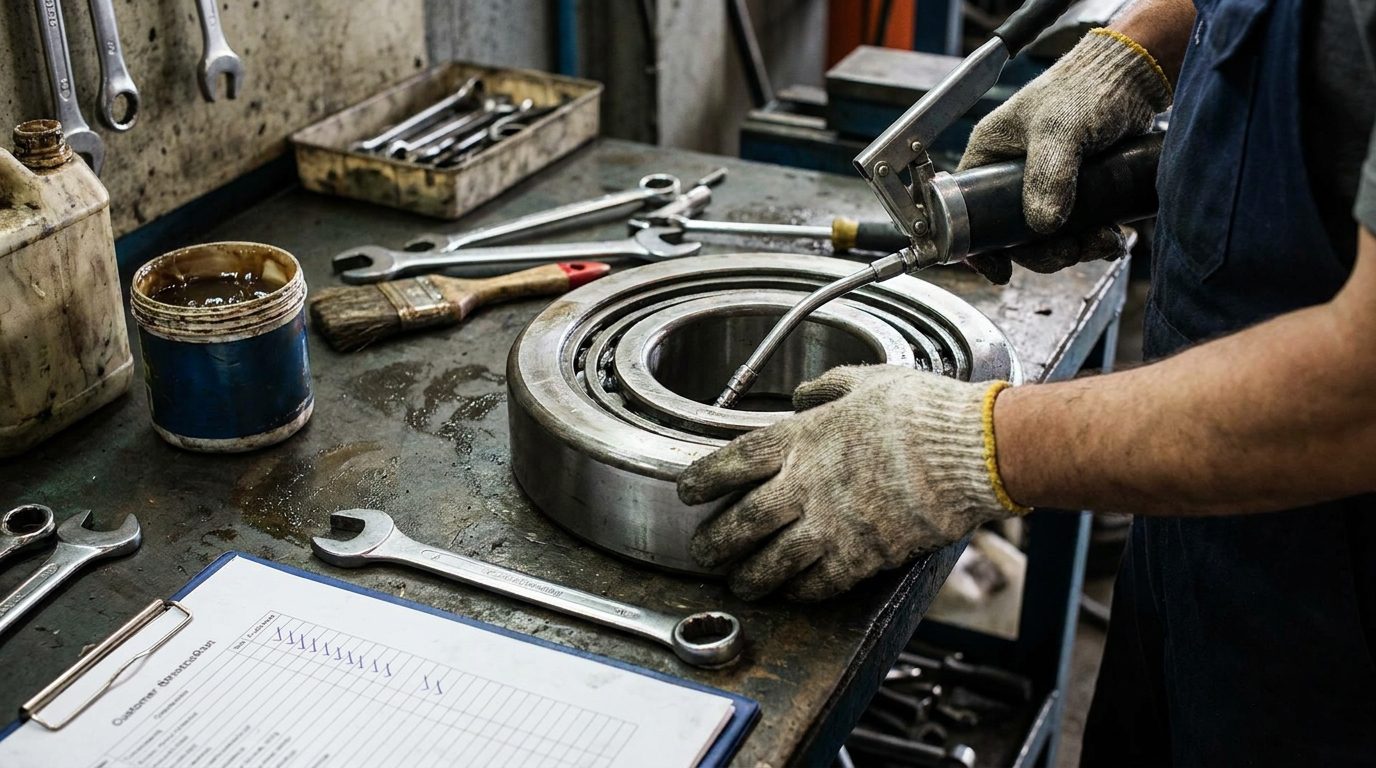
Industrial Gearbox Bearing Maintenance Checklist is one of the most important tools for preventing unplanned downtime, excessive vibration, lubrication failures, and catastrophic gearbox damage in industrial facilities. For maintenance managers, plant engineers, reliability engineers, mechanics, and purchasing professionals, bearing health directly affects gearbox reliability, production output, energy efficiency, and total cost of ownership. Bearings support rotating shafts, control load distribution, and help maintain gear mesh alignment. When they fail, the damage often spreads quickly to gears, seals, housings, and connected equipment. This guide provides a practical, field-focused checklist for inspection, troubleshooting, prevention, repair decisions, and long-term maintenance planning.
An industrial gearbox bearing maintenance checklist should include routine lubrication checks, vibration monitoring, temperature trending, oil analysis, seal inspection, shaft alignment verification, endplay and backlash checks, contamination control, torque verification, and documentation of operating conditions. The most common gearbox bearing failure causes are improper lubrication, contamination, overload, misalignment, excessive heat, incorrect installation, and fatigue. Maintenance teams should inspect bearings during scheduled shutdowns, monitor changes in noise and vibration, and use oil analysis and condition monitoring to detect early-stage failure before gear, shaft, or housing damage occurs.
For a comprehensive understanding of gearbox maintenance, it’s essential to consider not only the bearing maintenance checklist but also the implications of fluid leaks in industrial gearboxes. A related article that delves into this topic is titled “Understanding Gearbox Fluid Leaks,” which provides valuable insights into identifying and addressing leaks that can affect gearbox performance and longevity. You can read the article here: Understanding Gearbox Fluid Leaks.
Why Gearbox Bearing Maintenance Matters
Industrial gearbox bearings operate under demanding conditions: heavy radial and axial loads, shock loading, variable speeds, high temperatures, contamination risk, and continuous-duty operation. In many plants, gearboxes run around the clock in conveyors, mixers, crushers, cooling towers, extruders, kilns, pumps, agitators, and production lines.
A failed bearing can result in:
- Unplanned production downtime
- Gear tooth damage
- Shaft scoring or cracking
- Seal failure and lubricant leakage
- Housing bore wear
- Increased energy consumption
- Safety risks from overheating or seizure
- Expedited replacement costs
- Longer lead times for critical gearbox components
For purchasing professionals, a proactive checklist helps reduce emergency procurement and rush repair costs. For engineers and mechanics, it provides a repeatable process for identifying early warning signs before damage becomes severe.
If your gearbox is already showing signs of abnormal vibration, oil leakage, overheating, or metal contamination, Industrial Gearbox Solutions can help with industrial gearbox repair, gearbox rebuilding, and emergency gearbox services.
Industrial Gearbox Bearing Maintenance Checklist
Use this checklist during preventive maintenance inspections, shutdowns, rebuild evaluations, and reliability audits.
| Maintenance Task | What to Check | Recommended Frequency | Why It Matters |
|||:||
| Lubricant level | Correct oil level in sight glass or dipstick | Daily/Weekly | Low oil causes heat, friction, and bearing wear |
| Lubricant condition | Color, odor, foam, sludge, water, particles | Weekly/Monthly | Contamination accelerates bearing failure |
| Oil analysis | Wear metals, viscosity, water, particle count | Quarterly or condition-based | Detects early bearing and gear wear |
| Bearing temperature | Compare against baseline | Daily/Weekly | Rising temperature may indicate friction or overload |
| Vibration readings | Overall velocity, acceleration, bearing fault frequencies | Monthly/Continuous | Identifies early bearing defects |
| Noise inspection | Grinding, rumbling, whining, clicking | Weekly | Audible changes often precede failure |
| Seal condition | Leakage, hardening, cracking, wear grooves | Monthly | Failed seals allow contamination and oil loss |
| Breather condition | Clogged, damaged, non-desiccant, wet | Monthly | Poor breathing introduces moisture and particles |
| Shaft alignment | Coupling alignment and soft foot | Semiannual/After repair | Misalignment overloads bearings |
| Foundation and mounting | Loose bolts, cracked base, resonance | Quarterly | Movement causes misalignment and vibration |
| Endplay and axial float | Compare to OEM tolerance | Shutdown/Rebuild | Incorrect clearance causes heat and premature wear |
| Backlash and gear contact | Wear pattern, alignment, contact area | Shutdown/Rebuild | Poor gear mesh increases bearing loads |
| Fastener torque | Bearing caps, housing bolts, covers | Shutdown | Loose hardware changes bearing geometry |
| Cooling system | Fans, heat exchangers, oil coolers | Monthly | Heat degrades lubricant and bearing life |
| Documentation | Record readings and trends | Every inspection | Trend data enables predictive maintenance |
Daily and Weekly Checks
Daily and weekly checks should focus on obvious operating changes. Mechanics and operators should walk down critical gearboxes and document:
- Oil level changes
- New leaks around seals or inspection covers
- Abnormal noise
- Unusual vibration felt by hand or measured with a portable device
- Rising bearing housing temperature
- Loose guards, mounts, or coupling covers
- Changes in load, speed, or operating cycle
A basic walkdown is not a substitute for precision maintenance, but it is often the first line of defense against severe bearing damage.
Monthly and Quarterly Checks
Monthly and quarterly checks should include more detailed condition monitoring:
- Collect vibration data from defined measurement points
- Pull lubricant samples using consistent sampling methods
- Inspect breathers and seals
- Check for foam, sludge, or water in oil
- Verify oil cooler operation
- Confirm coupling alignment if symptoms are present
- Compare readings to established baselines
According to Noria, lubricant analysis is most effective when samples are taken consistently from the same location under similar operating conditions. Learn more from Noria’s lubrication and oil analysis resources at Noria.com.
Annual Shutdown Checks
During planned shutdowns, maintenance teams should inspect the gearbox more deeply:
- Remove inspection covers where applicable
- Check bearing endplay and shaft movement
- Inspect gear tooth contact patterns
- Inspect bearing cages, rollers, and races if accessible
- Check housing bores for fretting or looseness
- Inspect shaft journals for scoring or wear
- Verify lubrication delivery to all bearing locations
- Replace seals, breathers, and gaskets as needed
- Confirm correct fastener torque during reassembly
Annual inspections are especially important for gearboxes in critical production assets where failure would stop a line or create safety hazards.
Industrial gearbox bearing failure can lead to costly downtime and production losses, so it’s important to address the issue promptly. Industrial gearbox bearing failure
Common Causes of Industrial Gearbox Bearing Failure
Bearing failures are rarely random. Most are caused by one or more controllable maintenance, operating, or installation issues.
Improper Lubrication
Lubrication is the leading factor in many gearbox bearing failures. Problems include:
- Low oil level
- Wrong lubricant viscosity
- Incorrect additive package
- Oil oxidation
- Grease overpacking or underpacking
- Lubricant starvation
- Foam or aeration
- Incompatible lubricants
- Clogged oil passages
SKF emphasizes that proper lubrication reduces friction, wear, corrosion, and heat generation in rolling bearings. SKF bearing maintenance and lubrication guidance can be reviewed at SKF.com.
Contamination
Contaminants damage bearing surfaces and reduce lubricant film strength. Common contaminants include:
- Dirt and dust
- Water and condensation
- Process chemicals
- Metal wear particles
- Cleaning solvents
- Airborne abrasive material
- Paint, gasket material, or seal debris
Once contaminants enter the gearbox, they can circulate through bearings and gears, causing abrasive wear and surface fatigue.
Misalignment
Misalignment increases bearing loads and may distort the intended load zone. Sources include:
- Poor coupling alignment
- Soft foot
- Thermal growth
- Pipe strain on connected equipment
- Foundation movement
- Improper installation after gearbox repair
- Bent shafts
Even a high-quality bearing can fail prematurely if the shaft and coupling alignment are outside tolerance.
Overload and Shock Loading
Gearbox bearings are designed for specific load ratings. Excessive loading can occur from:
- Jammed conveyors
- Crusher impact loads
- Mixer overloads
- Frequent start-stop cycles
- Torque spikes
- Process upsets
- Incorrect gearbox selection
- Production increases beyond original design
If your operation has increased throughput since the gearbox was installed, a bearing failure may indicate the gearbox is now undersized for the application.
Incorrect Installation
Installation errors are a frequent cause of repeat failures. Common mistakes include:
- Using hammers directly on bearings
- Heating bearings unevenly
- Installing bearings with contaminated tools
- Incorrect fits or clearances
- Reusing damaged locknuts or washers
- Incorrect preload
- Mixing bearing components
- Failure to follow OEM procedures
Timken provides technical bearing resources and installation guidance at Timken.com, including information on bearing handling, lubrication, and failure analysis.
Heat and Lubricant Degradation
Excessive heat reduces lubricant viscosity and accelerates oxidation. Heat may result from:
- Overload
- Misalignment
- Incorrect oil viscosity
- Insufficient cooling
- High ambient temperature
- Excessive preload
- Bearing damage
- Gear mesh problems
A gearbox that “always runs hot” should not be ignored. Temperature trending can help identify whether heat is stable, load-related, or worsening over time.
When it comes to ensuring the longevity and efficiency of industrial gearboxes, a comprehensive bearing maintenance checklist is essential. Proper maintenance not only enhances performance but also reduces the risk of unexpected failures. For those looking to deepen their understanding of gearbox solutions, you might find this insightful article on gearbox manufacturers particularly helpful. It provides valuable information that complements the practices outlined in the bearing maintenance checklist, ultimately contributing to more reliable machinery operation.
Symptoms of Gearbox Bearing Problems
“`html
| Checklist Item | Description |
|---|---|
| Visual Inspection | Check for signs of wear, corrosion, or damage on the bearings. |
| Lubrication | Ensure proper lubrication levels and quality of lubricant. |
| Temperature | Monitor bearing temperature to detect overheating. |
| Vibration Analysis | Conduct regular vibration analysis to detect any abnormalities. |
| Noise | Listen for unusual noises that may indicate bearing issues. |
| Bearing Clearance | Check for proper bearing clearance and adjust if necessary. |
“`
Early bearing failure symptoms are often subtle. The key is to compare current conditions against normal baseline readings.
Noise Changes
Common bearing-related noises include:
- Rumbling
- Growling
- Grinding
- Clicking
- Squealing
- Intermittent knocking
A rumbling sound may suggest rolling element or raceway damage. Clicking may indicate spalling, cage damage, or debris passing through the bearing.
Vibration Increases
Vibration is one of the best indicators of bearing condition. Watch for:
- Rising overall vibration
- High-frequency vibration
- Bearing defect frequencies
- Sidebands around gear mesh frequency
- Increased axial vibration
- Changes after load or speed changes
For critical assets, consider continuous vibration monitoring or route-based data collection using consistent measurement points.
Temperature Rise
A gradual temperature increase may indicate lubrication breakdown, misalignment, bearing wear, or increased load. A sudden temperature spike may indicate severe lubrication loss, bearing seizure risk, or a major internal fault.
Oil Contamination
Warning signs in lubricant include:
- Metallic glitter
- Dark or burnt-smelling oil
- Milky appearance from water
- Sludge
- Foam
- Bronze, steel, or bearing alloy particles
- Elevated iron, chromium, or tin in oil analysis
Oil analysis can detect problems before they become visible during inspection.
Seal Leakage
A leaking seal is not just a housekeeping issue. Leakage may indicate:
- Excessive internal pressure
- Worn shaft seal surface
- Overfilled gearbox
- Failed breather
- Misalignment
- Excessive shaft movement
- Bearing wear
When seals fail, oil gets out and contamination gets in.
When it comes to ensuring the longevity and efficiency of industrial gearboxes, a comprehensive bearing maintenance checklist is essential. For those looking to deepen their understanding of gearbox maintenance, a related article can provide valuable insights and practical tips. You can explore more about the various types of industrial gearboxes and their applications by visiting this link. This resource not only highlights the importance of regular maintenance but also offers guidance on selecting the right gearbox for your specific needs.
Troubleshooting Gearbox Bearing Issues
Troubleshooting should follow a structured process. Replacing a bearing without correcting the root cause often leads to repeat failure.
Step-by-Step Troubleshooting Process
- Confirm the symptom
Verify whether the issue is noise, vibration, heat, oil contamination, leakage, or performance loss.
- Check lubricant level and condition
Confirm correct oil type, viscosity, level, and cleanliness.
- Review maintenance history
Look for recent oil changes, repairs, load changes, alignment work, or seal replacements.
- Collect vibration data
Compare readings to historical baselines and bearing fault frequencies.
- Inspect seals and breathers
Identify potential contamination entry points.
- Check alignment and mounting
Inspect coupling alignment, soft foot, base bolts, and foundation condition.
- Review operating load
Determine whether the gearbox is overloaded or exposed to shock loading.
- Conduct oil analysis
Look for wear metals, particle count, viscosity changes, and water contamination.
- Inspect internally during shutdown
Examine bearings, gears, shafts, and housing fits.
- Identify and correct root cause
Do not stop at replacing damaged parts.
Troubleshooting Table
| Symptom | Possible Bearing-Related Cause | Recommended Action |
||||
| Rising temperature | Low oil, wrong viscosity, overload, excessive preload | Check lubricant, load, alignment, and bearing clearance |
| Rumbling noise | Raceway spalling, rolling element damage | Perform vibration analysis and plan inspection |
| Oil with metal particles | Bearing wear, gear wear, cage damage | Conduct oil analysis and inspect internally |
| Repeated seal leakage | Shaft movement, failed breather, overfill | Check bearing endplay, breather, and oil level |
| High axial vibration | Misalignment, thrust bearing wear, gear thrust load | Check alignment and bearing condition |
| Foaming oil | Overfill, wrong oil, contamination, air entrainment | Correct oil level and verify lubricant compatibility |
| Short bearing life after rebuild | Installation error, contamination, incorrect fit | Review rebuild procedure and tolerances |
Inspection Methods for Industrial Gearbox Bearings
A strong maintenance program combines visual inspection, condition monitoring, lubricant analysis, and precision measurements.
Visual Inspection
Visual inspections should look for:
- Oil leaks
- Damaged seals
- Loose bolts
- Discolored paint from heat
- Cracked housings
- Rust or corrosion
- Damaged breathers
- Oil level changes
- Debris around magnetic plugs
During internal inspections, look for:
- Spalling
- Pitting
- Fluting
- Scoring
- Cage wear
- Roller discoloration
- Fretting
- False brinelling
- Uneven contact patterns
Vibration Analysis
Vibration analysis can detect bearing defects before failure. Reliability engineers should monitor:
- Overall vibration velocity
- Acceleration
- PeakVue or enveloping data
- Bearing defect frequencies
- Gear mesh frequency
- Sidebands
- Harmonics
- Changes under different loads
A single vibration reading is useful, but trend data is far more valuable.
Oil Analysis
Oil analysis should include:
- Viscosity at 40°C and/or 100°C
- Water content
- Particle count
- Acid number
- Oxidation
- Wear metals
- Additive depletion
- Ferrous density
- Analytical ferrography for critical units
Noria’s oil analysis guidance is a useful reference for developing lubricant sampling programs: Noria Oil Analysis Resources.
Temperature Monitoring
Temperature can be checked using:
- Infrared thermometers
- Thermal imaging cameras
- Permanently mounted RTDs
- Bearing housing temperature sensors
- Gearbox oil temperature sensors
Always measure from the same location and under comparable operating conditions.
Endplay and Clearance Measurement
During shutdown or rebuild, mechanics should measure:
- Bearing endplay
- Shaft axial movement
- Radial looseness
- Gear backlash
- Bearing fits
- Housing bore condition
- Shaft journal dimensions
Clearance and preload should be compared to OEM or engineering specifications.
Prevention Strategies for Longer Bearing Life
Preventive maintenance is less expensive than emergency gearbox failure. The following practices help extend bearing life and reduce total operating cost.
Use the Correct Lubricant
Select lubricant based on:
- Gearbox OEM recommendation
- Operating temperature
- Load
- Speed
- Gear type
- Bearing type
- Ambient conditions
- Contamination risk
Do not substitute lubricant based only on viscosity. Additive chemistry matters, especially for industrial gear drives.
AGMA provides standards and technical publications related to gear design, lubrication, and rating practices. Visit the American Gear Manufacturers Association at AGMA.org.
Control Contamination
Contamination control should include:
- Desiccant breathers
- Proper seals
- Filtered oil transfer carts
- Clean sampling bottles
- Dedicated lubricant containers
- Sealed storage areas
- Regular filter changes
- Avoiding open funnels and dirty containers
A clean lubricant program is one of the most cost-effective ways to improve gearbox bearing reliability.
Maintain Proper Alignment
Precision alignment should be performed:
- After gearbox installation
- After motor replacement
- After coupling replacement
- After foundation repairs
- After major gearbox rebuilds
- When vibration indicates misalignment
- After process piping or structural changes
Laser alignment is often preferred for critical equipment.
Avoid Overloading
To reduce overload-related bearing failures:
- Verify gearbox service factor
- Monitor torque and load
- Avoid frequent jam conditions
- Use soft starts or VFDs where appropriate
- Confirm gearbox is suitable for current production demands
- Inspect driven equipment for binding
- Review process changes that increase load
Improve Breather and Seal Reliability
A clogged breather can increase internal pressure and force oil past seals. A poor breather can also allow moisture and dirt into the gearbox. Consider upgrading to desiccant breathers in humid, dusty, or washdown environments.
Repair vs. Replacement: How to Decide
When bearing damage is found, the decision is not always as simple as replacing the bearing. The condition of gears, shafts, seals, bores, and housings must be evaluated.
When Bearing Repair or Replacement Is Usually Practical
Bearing replacement may be appropriate when:
- Damage is limited to bearings and seals
- Gear teeth are in good condition
- Shaft journals are within tolerance
- Housing bores are not worn or fretted
- No major cracking is present
- Replacement bearings are available
- Downtime window allows repair
- Root cause is identified and correctable
A professional gearbox repair facility can inspect, clean, measure, rebuild, and test the unit before return to service.
When Full Gearbox Replacement May Be Better
Replacement may be the better option when:
- Gear damage is severe
- Shafts are cracked or heavily worn
- Housing bores are distorted or cracked
- Obsolete parts are unavailable
- The gearbox is undersized for the application
- Multiple previous repairs have failed
- Lead time for repair exceeds production needs
- A modern gearbox offers better efficiency or capacity
Purchasing teams should consider total cost, not just purchase price. A lower-cost gearbox that fails repeatedly can be more expensive than a properly engineered replacement.
Cost Factors to Evaluate
| Factor | Repair | Replacement |
||||
| Upfront cost | Often lower | Often higher |
| Lead time | Shorter if parts are available | May be long for custom units |
| Reliability | High if root cause is corrected | High if correctly specified |
| Engineering changes | Limited unless upgraded | Can correct undersizing |
| Obsolete parts | May be challenging | Avoids obsolete components |
| Downtime impact | Depends on repair scope | Depends on availability |
| Long-term value | Good for rebuildable units | Better for severely damaged or outdated units |
For assistance evaluating the best path, review Industrial Gearbox Solutions’ gearbox inspection services or gearbox replacement support.
Maintenance Best Practices for Gearbox Bearings
The best maintenance programs are consistent, documented, and based on actual operating conditions.
Build a Baseline
Create baseline records for each gearbox:
- Normal operating temperature
- Normal vibration levels
- Lubricant type and viscosity
- Oil analysis results
- Gearbox speed and load
- Noise profile
- Seal condition
- Alignment values
- Historical failures
Without a baseline, it is difficult to determine whether a reading is normal or abnormal.
Standardize Lubrication Procedures
A lubrication procedure should specify:
- Lubricant brand and grade
- Fill volume
- Change interval
- Sampling interval
- Filtration requirements
- Storage method
- Transfer method
- Labeling system
- Contamination limits
- Responsible personnel
Use color-coded labels and dedicated transfer equipment to prevent lubricant cross-contamination.
Train Operators and Mechanics
Operators often notice small changes before instruments do. Train personnel to report:
- New noises
- Smells
- Oil leaks
- Excessive heat
- Vibration changes
- Loose guards or bolts
- Changes after process upsets
Mechanics should be trained in bearing handling, installation, cleanliness, torque practices, and precision alignment.
Use Predictive Maintenance Where Possible
Predictive maintenance tools include:
- Vibration analysis
- Oil analysis
- Thermography
- Ultrasonic inspection
- Online condition monitoring
- Motor current analysis
- Remote temperature sensors
Critical gearboxes should receive higher monitoring priority than non-critical assets.
Document Every Finding
Good documentation helps reliability engineers identify recurring issues and justify repairs or upgrades. Record:
- Inspection date
- Technician
- Operating conditions
- Temperature
- Vibration readings
- Oil level
- Oil analysis results
- Repairs completed
- Parts replaced
- Photos
- Recommendations
- Follow-up actions
Practical Bearing Inspection Checklist for Shutdowns
Use this shutdown checklist before returning a gearbox to service.
Pre-Inspection Preparation
- Review gearbox drawings and maintenance history
- Confirm lockout/tagout procedures
- Drain oil into a clean container for inspection
- Take an oil sample before draining, if possible
- Clean exterior surfaces before opening covers
- Prepare clean tools and work area
- Verify replacement seals, gaskets, and bearings
- Confirm torque specifications
Internal Inspection
- Inspect oil for metal, sludge, water, or burnt odor
- Check magnetic drain plugs
- Inspect gear tooth contact pattern
- Rotate shafts by hand if possible
- Check bearing smoothness
- Measure endplay
- Inspect bearing cages
- Look for discoloration from heat
- Inspect shaft journals
- Check housing bores
- Inspect seals and wear sleeves
- Verify oil passages are open
Reassembly and Startup
- Install bearings using approved methods
- Use correct fits and clearances
- Replace damaged seals and gaskets
- Torque fasteners to specification
- Fill with correct lubricant
- Verify breather condition
- Align connected equipment
- Rotate by hand before startup
- Start unloaded when possible
- Monitor temperature and vibration during break-in
- Recheck oil level after startup
Recommended Branded Images for This Article
Image 1: Mechanic Inspecting Gearbox Bearing During Shutdown
Alt text: Mechanic inspecting industrial gearbox bearing during planned maintenance shutdown
Caption: A planned shutdown inspection helps identify bearing wear, lubrication issues, and seal damage before catastrophic gearbox failure.
Image 2: Oil Sample With Metal Particles From Industrial Gearbox
Alt text: Oil sample showing metal particles from worn industrial gearbox bearing
Caption: Oil analysis can reveal bearing and gear wear before symptoms become visible during operation.
Image 3: Reliability Engineer Taking Vibration Readings on Gearbox
Alt text: Reliability engineer performing vibration analysis on industrial gearbox bearing housing
Caption: Vibration trending is one of the most effective methods for detecting early bearing defects.
Image 4: Desiccant Breather Installed on Industrial Gearbox
Alt text: Desiccant breather installed on industrial gearbox to prevent moisture contamination
Caption: Breather upgrades help protect gearbox bearings from moisture and airborne contamination.
Image 5: Rebuilt Industrial Gearbox Ready for Installation
Alt text: Rebuilt industrial gearbox after bearing replacement and inspection
Caption: A professionally rebuilt gearbox should be inspected, measured, sealed, and tested before returning to service.
Key Takeaways
- Bearing failures are often caused by lubrication problems, contamination, misalignment, overload, heat, or improper installation.
- A strong Industrial Gearbox Bearing Maintenance Checklist should include lubrication checks, vibration monitoring, oil analysis, seal inspection, alignment, and documentation.
- Temperature, vibration, oil condition, and noise trends are early indicators of bearing problems.
- Replacing a bearing without correcting the root cause often leads to repeat failure.
- Oil cleanliness, correct lubricant selection, and contamination control are essential for long bearing life.
- Repair is often practical when damage is limited, but replacement may be better for obsolete, undersized, or severely damaged gearboxes.
- Planned inspections cost less than emergency downtime and catastrophic gearbox failure.
FAQs About Industrial Gearbox Bearing Maintenance
How often should industrial gearbox bearings be inspected?
Basic visual checks should be performed daily or weekly on critical gearboxes. Vibration checks and lubricant inspections are commonly performed monthly or quarterly. Internal bearing inspections are typically performed during planned shutdowns, rebuilds, or when condition monitoring shows abnormal trends.
What is the most common cause of gearbox bearing failure?
Improper lubrication is one of the most common causes. This includes low oil level, wrong viscosity, contamination, degraded oil, blocked oil passages, and incompatible lubricants. Contamination and misalignment are also frequent contributors.
Can a gearbox bearing fail without warning?
Yes, especially in cases of sudden lubricant loss, severe contamination, overload, or cage failure. However, many bearing failures produce warning signs such as rising vibration, temperature increase, metal particles in oil, noise changes, or seal leakage.
What does a bad gearbox bearing sound like?
A failing gearbox bearing may produce rumbling, grinding, growling, clicking, or whining sounds. The sound may change with speed or load. Noise should always be investigated with vibration analysis, oil inspection, and mechanical checks.
Should bearings be replaced during every gearbox rebuild?
In many rebuilds, bearings are replaced as a standard reliability practice, especially if the gearbox has high operating hours or contamination history. However, the final decision should be based on inspection, measurements, criticality, bearing condition, and customer requirements.
What oil analysis results indicate bearing wear?
Elevated iron, chromium, tin, or other bearing-related metals may indicate bearing wear. High particle counts, water contamination, viscosity loss, oxidation, and ferrous debris are also warning signs. Analytical ferrography may help identify wear particle type and severity.
How do I know whether to repair or replace my gearbox?
Repair may be best if the housing, shafts, and gears are still serviceable. Replacement may be better if the gearbox is obsolete, undersized, cracked, severely worn, or repeatedly failing. A professional inspection can determine the most cost-effective option.
Can misalignment damage gearbox bearings?
Yes. Misalignment increases radial and axial loads, changes bearing load zones, creates vibration, and can shorten bearing life. Precision alignment should be performed after installation, repair, coupling replacement, or foundation work.
What role does the gearbox breather play in bearing maintenance?
The breather allows pressure equalization while helping control contamination. A clogged or poor-quality breather can allow moisture and particles into the gearbox or cause internal pressure that pushes oil past seals.
Is vibration analysis better than oil analysis?
Neither method replaces the other. Vibration analysis is excellent for detecting mechanical defects, while oil analysis identifies lubricant health, contamination, and wear debris. The best programs use both.
SEO Metadata
Suggested SEO Title
Industrial Gearbox Bearing Maintenance Checklist: Inspection, Troubleshooting, and Best Practices
Suggested Meta Description
Use this industrial gearbox bearing maintenance checklist to prevent failures, troubleshoot symptoms, inspect bearings, improve lubrication, and decide repair vs. replacement.
Primary Keyword
Industrial Gearbox Bearing Maintenance Checklist
Secondary Keywords
- gearbox bearing maintenance
- industrial gearbox bearing failure
- gearbox bearing inspection
- gearbox lubrication checklist
- gearbox vibration troubleshooting
- industrial gearbox repair
- gearbox preventive maintenance
- bearing failure symptoms
- gearbox oil analysis
- gearbox repair vs replacement
Suggested URL Slug
industrial-gearbox-bearing-maintenance-checklist
Suggested Internal Links
- Industrial Gearbox Repair
- Gearbox Rebuilding
- Emergency Gearbox Repair
- Gearbox Inspection Services
- Gearbox Replacement Support
Authoritative External Sources
- SKF bearing maintenance and lubrication resources: https://www.skf.com/
- Timken bearing engineering and service resources: https://www.timken.com/
- American Gear Manufacturers Association: https://www.agma.org/
- Noria lubrication and oil analysis resources: https://www.noria.com/
Conclusion
A well-built Industrial Gearbox Bearing Maintenance Checklist gives maintenance and reliability teams a repeatable process for identifying early warning signs, preventing avoidable failures, and making better repair or replacement decisions. Bearings may be small compared to the gearbox housing and gears, but their condition has a major impact on uptime, safety, energy efficiency, and production reliability. By combining lubrication control, vibration monitoring, oil analysis, precision alignment, contamination prevention, and thorough documentation, your plant can reduce emergency failures and extend gearbox service life.
If your gearbox is overheating, leaking, vibrating, producing abnormal noise, or showing signs of bearing wear, contact Industrial Gearbox Solutions for inspection, repair, rebuild, or replacement support.
FAQs
What is the purpose of a bearing maintenance checklist for industrial gearboxes?
A bearing maintenance checklist for industrial gearboxes is designed to ensure that the bearings in the gearbox are properly maintained and inspected on a regular basis to prevent failures and prolong the lifespan of the equipment.
What are some common items included in a bearing maintenance checklist for industrial gearboxes?
Common items included in a bearing maintenance checklist for industrial gearboxes may include checking for proper lubrication, monitoring for excessive vibration or noise, inspecting for signs of wear or damage, and ensuring that the bearings are properly aligned and mounted.
How often should a bearing maintenance checklist for industrial gearboxes be performed?
The frequency of performing a bearing maintenance checklist for industrial gearboxes may vary depending on the specific application and operating conditions. However, it is generally recommended to perform inspections and maintenance on a regular basis, such as monthly or quarterly, to ensure optimal performance and reliability.
What are the potential consequences of neglecting bearing maintenance for industrial gearboxes?
Neglecting bearing maintenance for industrial gearboxes can lead to a range of consequences, including increased risk of bearing failure, reduced equipment efficiency, higher energy consumption, increased maintenance costs, and potential downtime for repairs or replacements.
What are the benefits of implementing a bearing maintenance checklist for industrial gearboxes?
Implementing a bearing maintenance checklist for industrial gearboxes can help to improve equipment reliability, extend the lifespan of the bearings and gearbox, reduce the risk of unexpected failures, minimize maintenance costs, and ensure optimal performance of the equipment.