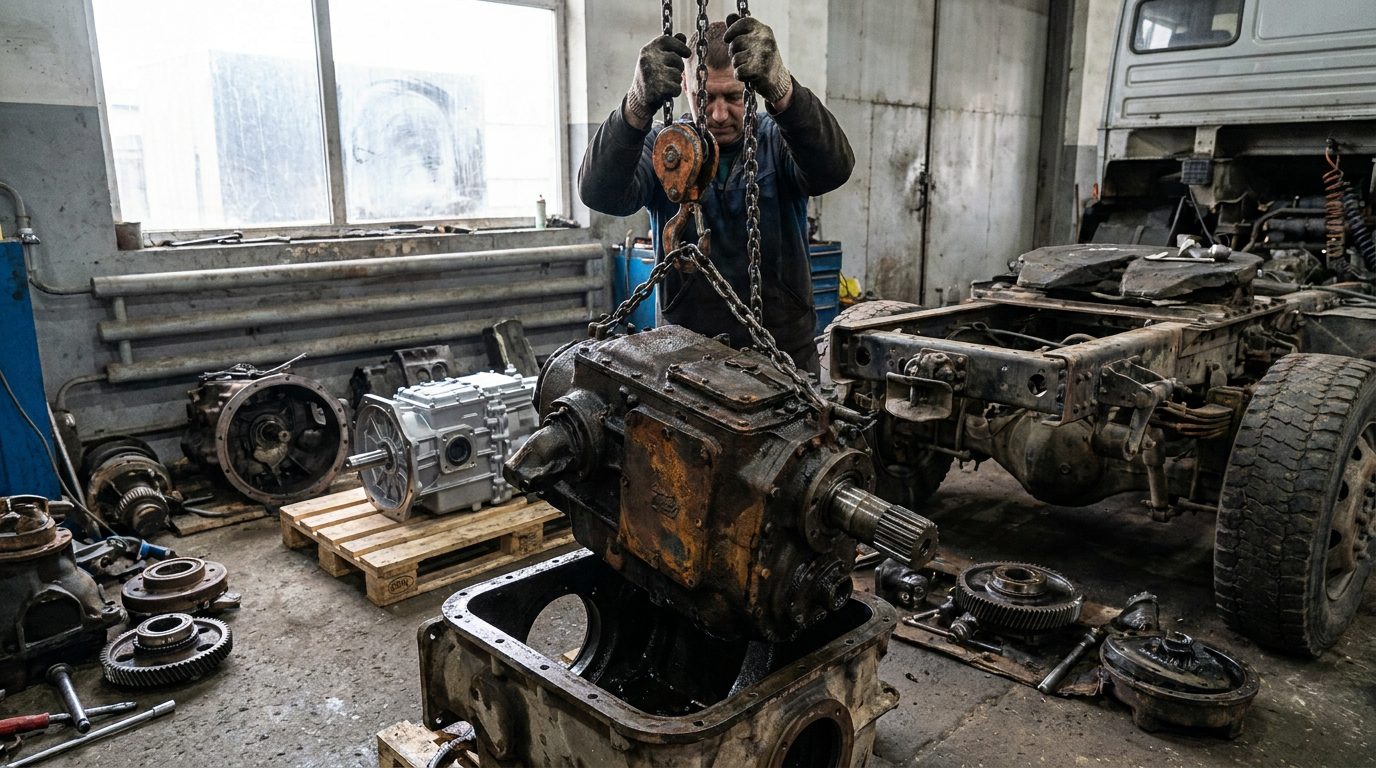
Obsolete gearboxes are a common challenge in industrial plants, especially in facilities running legacy conveyors, mixers, crushers, extruders, hoists, packaging lines, wastewater equipment, and process machinery. A gearbox may keep running for decades, but eventually the original equipment manufacturer may discontinue the model, stop supporting spare parts, or leave the market entirely.
For maintenance professionals, engineers, plant managers, OEMs, and industrial buyers, an obsolete gearbox replacement is not just a purchasing decision. It affects uptime, safety, production capacity, energy efficiency, maintenance planning, and total cost of ownership.
This buyer’s guide explains how to identify an obsolete gearbox, evaluate replacement options, gather the right technical data, avoid common mistakes, and choose a gearbox solution that fits your equipment and operating environment.
If your gearbox nameplate is missing, the manufacturer is no longer in business, or the model has been discontinued, Industrial Gearbox Solutions can help you identify replacement options, cross-reference legacy units, and determine whether repair, rebuild, retrofit, or replacement is the best path forward.
Submit your gearbox information, photos, dimensions, or application details below, and our team can help review your requirements.
When considering how to buy an obsolete gearbox replacement, it’s essential to understand the factors that can affect gearbox performance and longevity. A related article that delves into this topic is “Gearbox Vibration Analysis,” which provides insights into diagnosing issues that may arise in older gearboxes. By understanding vibration patterns, you can make more informed decisions about replacement options and maintenance strategies. For more information, you can read the article here: Gearbox Vibration Analysis.
What Is an Obsolete Gearbox?
An obsolete gearbox is a speed reducer, gear drive, or power transmission unit that is no longer actively manufactured or supported by the original manufacturer. In some cases, the gearbox may still be functioning, but replacement parts, drawings, seals, bearings, shafts, or complete drop-in units are unavailable.
Common Reasons Gearboxes Become Obsolete
Gearboxes become obsolete for several reasons:
- The manufacturer discontinued the product line
- The OEM merged with or was acquired by another company
- Spare parts are no longer stocked
- The gearbox was custom-built for a machine decades ago
- Original drawings or service documentation are unavailable
- The unit uses outdated materials, seals, bearings, or gear geometry
- The equipment was imported and local support is limited
- The gearbox was designed for older motors, speeds, or mounting standards
In many industrial environments, a gearbox may be considered obsolete long before it fails. If lead times for parts are unpredictable or technical support is unavailable, the unit represents an operational risk.
Obsolete vs. Discontinued vs. Hard-to-Find
These terms are often used interchangeably, but they are not always the same.
| Term | Meaning | Typical Buyer Concern |
||||
| Obsolete gearbox | No longer supported or manufactured | Replacement may require engineering review |
| Discontinued gearbox | Manufacturer stopped producing the model | A newer equivalent may exist |
| Hard-to-find gearbox | Limited availability or long lead time | Sourcing may still be possible |
| Custom legacy gearbox | Built specifically for an OEM machine | May require reverse engineering |
| Unsupported gearbox | No parts, drawings, or service help available | Higher downtime and maintenance risk |
Understanding which category your gearbox falls into helps determine whether you should search for a direct replacement, retrofit with a modern unit, rebuild the existing gearbox, or engineer a custom solution.
Why Obsolete Gearbox Replacement Matters
A gearbox failure can shut down an entire production line. When the unit is obsolete, the risk is greater because a standard replacement may not be readily available. What begins as a mechanical repair can quickly become a production emergency.
Downtime Can Be More Expensive Than the Gearbox
In many plants, the cost of downtime far exceeds the cost of the gearbox itself. For example, if a conveyor gearbox fails in a packaging facility, upstream and downstream equipment may also stop. A single failed reducer can affect labor utilization, order fulfillment, maintenance scheduling, and customer commitments.
When a gearbox is obsolete, downtime may be extended by:
- Long lead times for replacement parts
- Difficulty identifying the correct ratio or mounting style
- Lack of dimensional drawings
- Unknown torque requirements
- Custom shaft or flange configurations
- Incompatible replacement options
- Delays in machining adapters or baseplates
A proactive obsolete gearbox replacement plan can help reduce unplanned downtime and improve maintenance reliability.
Safety and Reliability Risks Increase Over Time
Older gearboxes may have worn gears, fatigued shafts, leaking seals, degraded lubrication systems, or outdated guarding arrangements. Even if the unit continues to run, it may be operating with reduced efficiency and increased vibration.
Warning signs include:
- Unusual noise or gear whine
- Excessive heat
- Oil leaks
- Metal particles in lubricant
- Increased vibration
- Shaft movement or misalignment
- Frequent seal or bearing failures
- Reduced output speed or torque
- Cracked housings or mounting feet
If these issues appear on a gearbox that is no longer supported, replacement planning should begin before a catastrophic failure occurs.
Check out our latest posts at https://industrialgearboxsolutions.com/blog/ for valuable industry insights.
Step 1: Identify the Existing Gearbox
The first step in obsolete gearbox replacement is identifying the existing unit as accurately as possible. Even when the nameplate is damaged or missing, useful information can often be gathered from the gearbox, motor, driven equipment, and application.
Information to Collect From the Nameplate
If the gearbox nameplate is readable, record or photograph:
- Manufacturer name
- Model number
- Serial number
- Gear ratio
- Input horsepower or kilowatts
- Input speed
- Output speed
- Service factor
- Lubrication type
- Mounting position
- Date of manufacture
- Any special codes or suffixes
Do not rely on partial model numbers if possible. Many gearbox manufacturers use suffixes to indicate shaft style, mounting arrangement, seal materials, lubrication configuration, or special modifications.
Measure Critical Dimensions
When replacing an obsolete gearbox, dimensional compatibility is often as important as torque capacity. A modern gearbox may meet the mechanical requirements but fail to fit the machine envelope.
Key dimensions include:
- Input shaft diameter and length
- Output shaft diameter and length
- Keyway size
- Shaft centerline height
- Mounting hole pattern
- Distance between shaft centers
- Overall housing dimensions
- Flange size and bolt circle
- Hollow bore diameter, if applicable
- Torque arm location, if used
- Baseplate or foot mounting dimensions
Accurate measurements help determine whether a drop-in replacement is possible or whether adapter plates, coupling changes, or machine modifications will be required.
Document the Application
The gearbox does not operate in isolation. A proper replacement must account for the full application.
Collect the following application details:
- Type of driven equipment
- Required output speed
- Required output torque
- Motor horsepower and speed
- Duty cycle
- Starts and stops per hour
- Shock loading
- Ambient temperature
- Washdown or corrosive exposure
- Outdoor or indoor installation
- Operating hours per day
- Direction of rotation
- Lubrication constraints
- Space limitations
For example, a gearbox on a lightly loaded fan has very different requirements than a gearbox on a rock crusher, mixer, extruder, or heavy-duty conveyor. Matching only the gear ratio and shaft size may not be enough.
When considering how to buy an obsolete gearbox replacement, it’s essential to understand the common pitfalls that engineers face during the specification process. A related article that delves into these challenges is available for those looking to enhance their knowledge on the subject. You can read more about these common gearbox specification mistakes by visiting this helpful resource. This information can guide you in making informed decisions and avoiding costly errors in your gearbox selection.
Step 2: Determine Whether to Repair, Rebuild, Retrofit, or Replace
Not every obsolete gearbox must be replaced immediately. In some cases, rebuilding the existing gearbox is practical. In others, replacement is the better long-term solution.
Option 1: Repair the Existing Gearbox
A repair may involve replacing seals, bearings, shims, gaskets, or lubrication components. This option is suitable when the gears and housing are in good condition and parts are available or can be sourced.
Best for:
- Minor leakage
- Bearing noise detected early
- Seal failure
- Routine wear
- Gearboxes with available parts
Limitations:
- May not address long-term obsolescence
- Replacement parts may still be difficult to find
- Hidden damage may increase cost
- Repairs can become repetitive if root causes are not corrected
Option 2: Rebuild or Recondition the Gearbox
A rebuild is more extensive than a repair. It may involve replacing bearings, seals, gears, shafts, and other internal components. In some cases, parts can be reverse engineered or machined.
Best for:
- Large industrial gearboxes
- Custom or highly integrated equipment
- Situations where replacement would require major modifications
- Critical assets with known performance history
Limitations:
- Requires skilled inspection and machining
- May involve longer lead times
- Not always economical for small reducers
- Housing damage can complicate the process
Option 3: Retrofit With a Modern Gearbox
A retrofit replaces the obsolete gearbox with a modern unit that performs the same function but may require adapters, couplings, guards, baseplate changes, or controls adjustments.
Best for:
- Discontinued standard gearboxes
- Machines with available space for modification
- Plants seeking improved efficiency or reliability
- Long-term maintenance planning
Limitations:
- May require engineering support
- Installation may take longer than a drop-in replacement
- Shaft alignment and mounting must be carefully managed
Option 4: Replace With a Drop-In Equivalent
A drop-in replacement is designed to match the existing gearbox as closely as possible. This may be a current production model, a cross-referenced equivalent, or a custom-engineered gearbox.
Best for:
- Critical equipment where downtime must be minimized
- Applications with limited installation space
- OEM machinery where modifications are difficult
- Repeat replacement programs across multiple assets
Limitations:
- True drop-in replacements are not always available
- Custom options may have longer lead times
- Verification of dimensions and ratings is essential
Step 3: Match the Technical Requirements
An obsolete gearbox replacement must match or exceed the technical requirements of the original unit. The goal is not simply to install a gearbox that fits. The goal is to install a gearbox that reliably performs under real operating conditions.
Gear Ratio and Output Speed
The gear ratio determines the relationship between input speed and output speed. If the ratio changes, the driven equipment speed will change unless compensated by a variable frequency drive, pulley ratio, chain drive, or motor speed adjustment.
For example:
| Motor Speed | Gear Ratio | Approximate Output Speed |
||:|:|
| 1,750 RPM | 10:1 | 175 RPM |
| 1,750 RPM | 25:1 | 70 RPM |
| 1,750 RPM | 50:1 | 35 RPM |
| 1,750 RPM | 100:1 | 17.5 RPM |
Even small speed changes can affect process quality, conveyor throughput, mixing performance, pump output, or machine timing.
Torque and Horsepower
Torque is one of the most important factors in gearbox selection. A replacement gearbox must handle the required output torque, not just the motor horsepower.
Torque depends on horsepower and speed. As output speed decreases, output torque increases. A gearbox with the correct ratio but insufficient torque capacity may fail prematurely.
When reviewing torque requirements, consider:
- Continuous operating torque
- Peak starting torque
- Shock loads
- Reversing loads
- Jam conditions
- Acceleration demands
- Overhung loads from sprockets, pulleys, or sheaves
Service Factor
Service factor accounts for the severity of the application. A gearbox used eight hours per day on a steady load does not need the same rating as a gearbox running 24/7 with shock loading.
Common service factor considerations include:
- Hours of operation per day
- Load uniformity
- Frequency of starts and stops
- Reversing operation
- Impact or shock loading
- Ambient temperature
- Maintenance conditions
For harsh applications, selecting a gearbox with a higher service factor can improve reliability and reduce failure risk.
Mounting Position and Lubrication
Gearboxes are designed to operate in specific mounting positions. The mounting position affects oil level, bearing lubrication, breather location, seal exposure, and thermal performance.
Common mounting arrangements include:
- Foot mounted
- Flange mounted
- Shaft mounted
- Hollow shaft
- Right-angle mounted
- Vertical input or output
- Torque arm mounted
A replacement gearbox must be configured for the actual mounting orientation. Installing a gearbox in the wrong orientation can cause lubrication starvation, overheating, and premature bearing or gear failure.
Shaft Loads and Overhung Loads
Many gearboxes drive equipment through sprockets, belts, pulleys, or gears. These components create radial loads on the output shaft, known as overhung loads.
If the replacement gearbox cannot handle the overhung load, bearing and shaft failures may occur even if torque capacity appears adequate.
Factors that affect overhung load include:
- Sprocket or pulley diameter
- Chain or belt tension
- Distance from bearing to load center
- Direction of pull
- Shock loading
- Duty cycle
For critical applications, overhung load calculations should be reviewed before final selection.
Step 4: Evaluate Replacement Gearbox Types
Obsolete gearbox replacement often creates an opportunity to improve the drive system. A modern gearbox may offer better efficiency, improved sealing, higher torque density, easier maintenance, or shorter future lead times.
Helical Gearboxes
Helical gearboxes are widely used in industrial applications because they offer good efficiency, smooth operation, and high load capacity. They are often used on conveyors, mixers, agitators, pumps, and process machinery.
Advantages:
- High efficiency
- Smooth and quiet operation
- Good torque capacity
- Available in many configurations
- Suitable for continuous duty
Considerations:
- May require precise alignment
- Footprint may differ from older worm reducers
- Higher initial cost than some basic reducer types
Bevel Gearboxes
Bevel gearboxes are commonly used where power must turn a corner, typically at 90 degrees. They are often found in right-angle drives, packaging equipment, material handling systems, and industrial machinery.
Advantages:
- Compact right-angle power transmission
- Good efficiency, especially with spiral bevel gearing
- Suitable for high-speed applications
- Multiple shaft arrangements available
Considerations:
- Proper alignment is critical
- Some configurations may require custom adapters
- Torque capacity must be carefully reviewed
Worm Gear Reducers
Worm gearboxes are common in older equipment because they are compact and provide high reduction ratios in a right-angle format. Many obsolete gearboxes are legacy worm reducers.
Advantages:
- Compact design
- High reduction ratios
- Simple right-angle configuration
- Often cost-effective for lower horsepower applications
Considerations:
- Lower efficiency than helical or bevel gearboxes
- Can generate more heat
- Some ratios may be self-locking or difficult to backdrive
- Replacement with another gearbox type may affect machine behavior
Planetary Gearboxes
Planetary gearboxes provide high torque density in a compact package. They are often used in heavy-duty applications, servo systems, mobile equipment, robotics, and high-torque industrial machinery.
Advantages:
- High torque capacity in a compact size
- Good efficiency
- Coaxial input and output
- Excellent for high shock loads when properly selected
Considerations:
- May not match legacy mounting dimensions
- Precision versions can be more expensive
- Application review is essential
Parallel Shaft Gear Drives
Parallel shaft gearboxes are used in heavy-duty industrial applications requiring high torque and robust service. They are common in mining, aggregate, steel, pulp and paper, and bulk material handling.
Advantages:
- Heavy-duty construction
- High torque capacity
- Suitable for continuous operation
- Strong option for large industrial drives
Considerations:
- Larger footprint
- May require foundation or baseplate modifications
- Lead times can vary for large units
Step 5: Compare Drop-In Replacement vs. Engineered Retrofit
One of the biggest decisions in obsolete gearbox replacement is whether to pursue a drop-in replacement or an engineered retrofit.
When a Drop-In Replacement Makes Sense
A drop-in replacement is ideal when the machine design cannot easily be changed or when downtime must be minimized. This is common in production lines where gearbox installation must happen during a short maintenance window.
A drop-in replacement may be preferred when:
- The gearbox is in a tight space
- Existing couplings and guards must be reused
- The baseplate cannot be modified
- OEM machine geometry must be preserved
- Multiple identical gearboxes are installed across the plant
- Maintenance teams need a fast swap-out procedure
However, buyers should verify that “drop-in” means more than a similar ratio and horsepower. True drop-in compatibility should include shaft dimensions, mounting pattern, centerline height, overall envelope, rotation, lubrication configuration, and torque rating.
When an Engineered Retrofit Is Better
A retrofit may be better when the obsolete gearbox has recurring failures, poor efficiency, excessive heat, or limited parts support. Retrofitting can also standardize equipment across a facility and reduce future spare parts complexity.
A retrofit may include:
- New gearbox selection
- Adapter baseplate
- Coupling changes
- Motor mount modification
- Shaft or bore adaptation
- Guarding updates
- Lubrication system changes
- VFD programming adjustments
- Alignment and installation support
Although a retrofit may require more planning, it can provide long-term reliability and sourcing advantages.
Step 6: Review Lead Time, Availability, and Spare Parts
For industrial buyers and plant managers, availability is often as important as technical fit. An excellent gearbox solution is not useful if it cannot be delivered in time to prevent downtime.
Ask About Standard Availability
Before purchasing, ask:
- Is the gearbox a standard catalog item?
- Is it stocked or built to order?
- What is the current lead time?
- Are critical spare parts available?
- Are seals and bearings standard sizes?
- Can replacement units be sourced in the future?
- Are drawings and documentation available?
If the original gearbox became a problem because parts were unavailable, avoid replacing it with another difficult-to-source solution unless there is a strong technical reason.
Consider Stocking a Spare
For critical equipment, stocking a spare gearbox may be the most cost-effective risk reduction strategy. This is especially true for gearboxes with long lead times or custom configurations.
A spare gearbox program should include:
- Proper storage environment
- Shaft rotation schedule for long-term storage
- Rust prevention
- Desiccant breathers or sealed packaging
- Documentation and tagging
- Periodic inspection
- Clear asset assignment
Having a spare on the shelf can turn a major outage into a planned maintenance task.
Step 7: Verify Installation Requirements
Even the right gearbox can fail early if installed incorrectly. Obsolete gearbox replacement should include an installation review, especially when changing gearbox types, mounting arrangements, or coupling designs.
Alignment and Baseplate Condition
Misalignment is a leading cause of gearbox failure. Before installation, inspect the baseplate, mounting surfaces, and driven equipment.
Check for:
- Soft foot
- Cracked baseplates
- Corroded mounting surfaces
- Loose anchor bolts
- Uneven shimming
- Coupling wear
- Shaft runout
- Poor machine foundation
A replacement gearbox installed on a damaged or distorted base may experience premature bearing, seal, or gear failure.
Couplings, Keys, and Fits
Couplings and keys are often overlooked during replacement. Reusing worn components can transfer old problems to the new gearbox.
Review:
- Coupling type and condition
- Keyway fit
- Shaft fit tolerance
- Set screw condition
- Hub installation method
- Proper torque values
- Guarding requirements
Avoid hammering couplings or sprockets onto shafts. Improper installation can damage bearings and seals before the gearbox is even placed into service.
Lubrication and Startup
Before startup, confirm the correct lubricant type, viscosity, fill level, and lubrication method. Some gearboxes ship dry, while others ship with oil. Always verify before operation.
Startup checklist:
- Confirm oil type and level
- Verify breather installation
- Check rotation direction
- Inspect seals and plugs
- Confirm mounting position
- Run unloaded if possible
- Monitor temperature
- Listen for abnormal noise
- Check vibration
- Recheck fasteners after initial operation
A controlled startup helps identify issues before full production load is applied.
Key Questions to Ask Before Buying an Obsolete Gearbox Replacement
A structured purchasing process helps avoid costly mistakes. Before issuing a purchase order, buyers should ask both technical and commercial questions.
Technical Questions
- What is the existing gearbox manufacturer and model?
- Is the nameplate data complete?
- What ratio is required?
- What torque and horsepower are required?
- What is the service factor?
- What is the mounting position?
- Are shaft dimensions and keyways verified?
- What is the duty cycle?
- Are there shock loads or reversing loads?
- Is the application indoor, outdoor, washdown, abrasive, or corrosive?
- Are drawings available?
- Is a drop-in replacement required?
- Are adapters or modifications acceptable?
Commercial and Support Questions
- What is the lead time?
- Is the gearbox stocked or made to order?
- What warranty is provided?
- Are spare parts available?
- Is technical documentation included?
- Can the supplier help with cross-referencing?
- Can the supplier support future replacements?
- Are expedited options available?
- Is field service or installation support available if needed?
The best suppliers will ask detailed questions before recommending a replacement. If a supplier recommends a gearbox based only on horsepower and ratio, proceed carefully.
Common Mistakes to Avoid
Obsolete gearbox replacement can be straightforward when properly planned, but several common mistakes can lead to downtime, rework, or premature failure.
Mistake 1: Matching Only Horsepower and Ratio
Horsepower and ratio are important, but they are not enough. Torque capacity, service factor, mounting, shaft loads, thermal rating, and application conditions must also be reviewed.
Mistake 2: Ignoring Mounting Position
A gearbox installed in the wrong orientation may not lubricate properly. This can quickly lead to overheating, bearing failure, or gear damage.
Mistake 3: Assuming All Shaft Dimensions Are Standard
Older gearboxes may use nonstandard shafts, keyways, tapers, splines, or hollow bores. Always measure and verify.
Mistake 4: Overlooking Thermal Capacity
A gearbox may be mechanically strong enough but unable to dissipate heat under continuous duty. Thermal rating is especially important for high-ratio worm reducers, enclosed spaces, and hot environments.
Mistake 5: Waiting Until Failure
The worst time to source an obsolete gearbox replacement is after a breakdown. Proactive planning allows time for identification, engineering review, procurement, and installation preparation.
Practical Example: Replacing an Obsolete Conveyor Gearbox
Consider a plant running an older shaft-mounted reducer on a heavy-duty conveyor. The gearbox has no readable nameplate, leaks oil, and replacement seals are no longer available. The conveyor runs 18 hours per day and experiences shock loads during startup.
Information Gathered
The maintenance team collects:
- Motor horsepower and speed
- Conveyor speed
- Shaft diameter and keyway size
- Gearbox mounting style
- Torque arm location
- Sprocket size
- Photos of the installation
- Approximate operating hours
- Load condition
- Space limitations
Replacement Review
After reviewing the application, the buyer determines that a direct replacement is unavailable. A modern shaft-mounted reducer with a similar ratio is selected, but the retrofit requires a new bushing, torque arm adjustment, and updated guard.
Result
The plant schedules the replacement during planned downtime, installs the new gearbox, verifies alignment and lubrication, and keeps the old unit as an emergency core for possible rebuilding. The modern replacement improves parts availability and reduces the risk of an extended outage.
This example shows why obsolete gearbox replacement is not just about finding a similar-looking reducer. It requires practical application review and installation planning.
How to Build an Obsolete Gearbox Replacement Plan
A proactive plan helps maintenance and purchasing teams move from emergency response to controlled asset management.
Create a Gearbox Asset List
Start by documenting all critical gearboxes in the facility. Include:
- Equipment name and location
- Gearbox manufacturer
- Model and serial number
- Ratio
- Motor horsepower
- Mounting style
- Lubricant type
- Spare parts availability
- Criticality rating
- Replacement status
This list helps prioritize which gearboxes need attention first.
Rank Gearboxes by Criticality
Not every gearbox requires the same level of planning. Rank units based on production impact, safety risk, lead time, and replacement complexity.
A simple ranking system may include:
| Criticality Level | Description | Recommended Action |
||||
| High | Failure stops production or creates safety risk | Identify replacement and consider stocking spare |
| Medium | Failure affects part of the process | Document replacement options |
| Low | Failure has limited impact | Replace as needed |
Pre-Qualify Replacement Options
For high-criticality obsolete gearboxes, identify replacement options before failure occurs. This may include drawings, quotes, lead times, adapter requirements, and spare unit recommendations.
Coordinate Maintenance, Engineering, and Purchasing
Successful gearbox replacement requires collaboration. Maintenance understands the equipment history, engineering verifies technical fit, and purchasing manages supplier communication, lead time, and cost.
Early coordination prevents last-minute surprises.
What to Look for in an Obsolete Gearbox Replacement Supplier
The right supplier can make the difference between a smooth replacement and an expensive troubleshooting project.
Technical Cross-Reference Capability
Look for a supplier that can help identify legacy gearboxes, cross-reference obsolete models, and review application requirements. This is especially important when documentation is incomplete.
Access to Multiple Gearbox Options
A supplier with access to multiple gearbox types and manufacturers can recommend the best solution rather than forcing a limited product line into the application.
Engineering Support
For complex replacements, engineering support may be needed for:
- Dimensional review
- Torque calculations
- Service factor selection
- Overhung load analysis
- Mounting adaptation
- Retrofit planning
- Custom gearbox evaluation
Industrial Application Experience
Experience matters. Gearboxes in industrial environments face real-world conditions that are not always obvious from a catalog page. A knowledgeable supplier will ask about load type, operating hours, shock, temperature, environment, lubrication, and installation constraints.
Conclusion: Replace Obsolete Gearboxes Before They Become Emergencies
Obsolete gearbox replacement is a critical part of industrial maintenance planning. Whether your facility operates conveyors, mixers, pumps, crushers, packaging equipment, or custom OEM machinery, unsupported gearboxes can create serious downtime and reliability risks.
The best approach is proactive: identify obsolete units, collect accurate technical data, evaluate repair versus replacement, verify torque and mounting requirements, and work with a supplier that understands industrial gearbox applications.
If you have an obsolete gearbox, discontinued reducer, missing nameplate, or hard-to-find gear drive, Industrial Gearbox Solutions can help you evaluate your options and move toward a reliable replacement.
Contact Industrial Gearbox Solutions today to identify your gearbox, request a replacement review, or plan a retrofit before downtime becomes an emergency.
FAQs
1. What is an obsolete gearbox replacement?
An obsolete gearbox replacement refers to a gearbox that is no longer in production or readily available for purchase from the original manufacturer. This could be due to the gearbox being outdated, discontinued, or replaced by a newer model.
2. How can I determine if I need an obsolete gearbox replacement?
You can determine if you need an obsolete gearbox replacement by assessing the condition of your current gearbox and checking with the original manufacturer or a qualified technician to see if the part is still available. If the gearbox is no longer in production or difficult to find, it may be considered obsolete.
3. Where can I buy an obsolete gearbox replacement?
Obsolete gearbox replacements can often be found through specialized suppliers, online marketplaces, or through aftermarket manufacturers who specialize in producing replacement parts for obsolete machinery. It’s important to do thorough research and ensure that the replacement part meets the necessary specifications for your equipment.
4. What factors should I consider when buying an obsolete gearbox replacement?
When buying an obsolete gearbox replacement, it’s important to consider factors such as compatibility with your existing equipment, the reputation and reliability of the supplier or manufacturer, warranty options, and the availability of technical support or installation assistance.
5. Are there any risks associated with buying an obsolete gearbox replacement?
There are potential risks associated with buying an obsolete gearbox replacement, such as the part not meeting the necessary specifications, compatibility issues, or limited availability of technical support. It’s important to thoroughly research the supplier or manufacturer and ensure that the replacement part is a suitable and reliable option for your equipment.