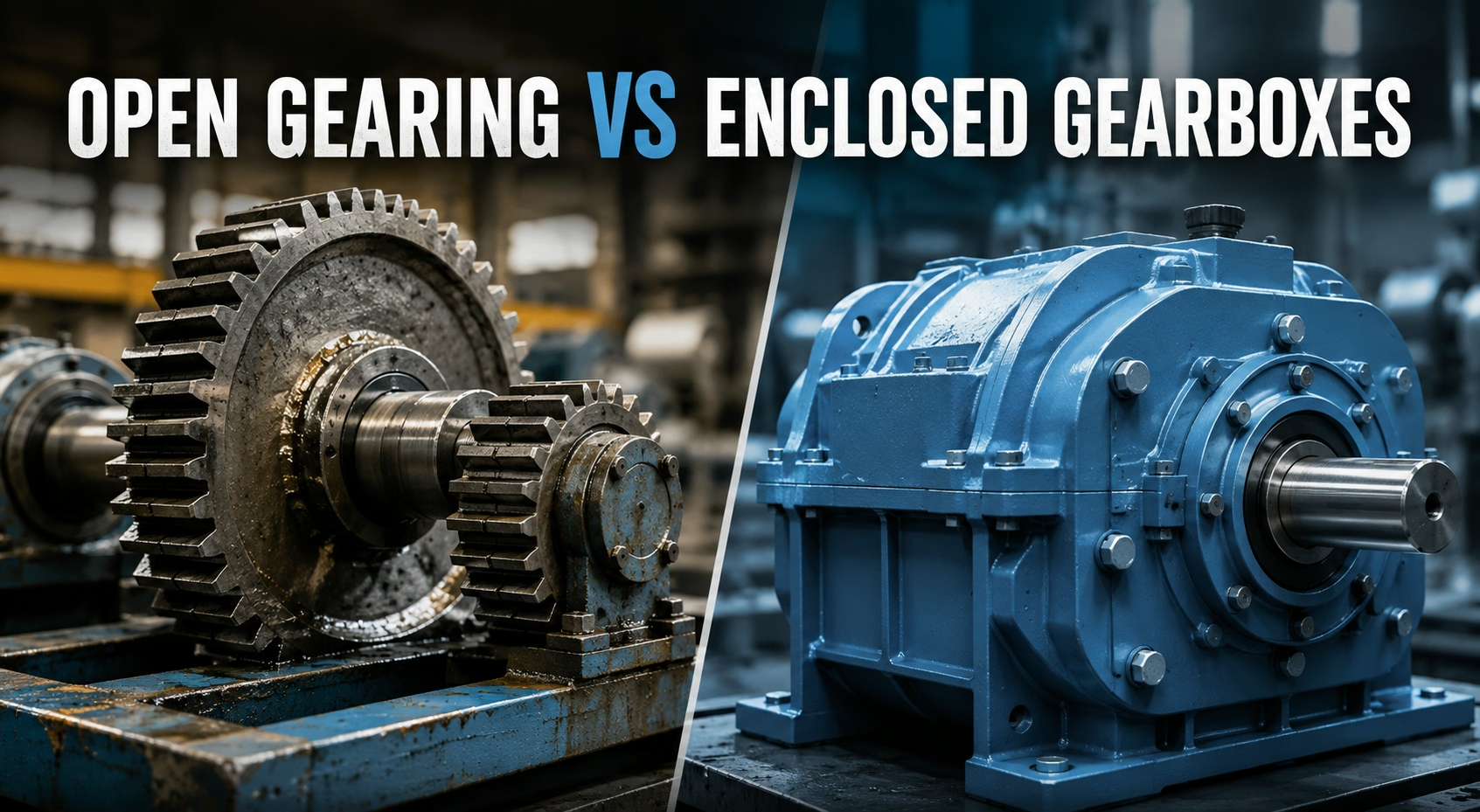
When you’re looking at power transmission systems, you’ll inevitably run into a classic choice: open gearing or enclosed gearboxes. So, what’s the real difference, and which one is the right fit for your project? In a nutshell, open gearing is exposed, simpler, and generally less expensive upfront, while enclosed gearboxes are protected, more complex, and offer better longevity and efficiency in many situations. Let’s dive into the nitty-gritty to figure out when each shines.
Before we get into the weeds, let’s clarify the terms.
Open Gearing Defined
Think of open gearing as the straightforward, no-frills approach. You’ve got a set of gears – often spur gears, but it could be bevel or worm gears too – that are just… out there, exposed to the elements. They transmit rotational motion and torque from one shaft to another. Because they’re not covered, they usually require regular manual lubrication, and they’re more susceptible to dirt, dust, and environmental factors.
Enclosed Gearboxes Defined
An enclosed gearbox is basically a housing that holds a set of gears, along with bearings and lubrication. This protective box shields the gears from the outside world. This setup typically involves more intricate designs, often incorporating multiple gear stages for significant speed reduction or torque multiplication. The enclosure is key to its operation, keeping everything clean and consistently lubricated.
When considering the advantages and disadvantages of open gearing versus enclosed gearboxes, it’s essential to explore various resources that provide in-depth analysis and comparisons. For instance, the article on Dodge gearbox replacement offers valuable insights into the performance and maintenance of different gearbox types, which can help inform your decision-making process. You can read more about it here: Dodge Gearbox Replacement.
When to Consider Open Gearing
Open gearing isn’t just a less sophisticated option; it has its own set of advantages and specific applications where it makes perfect sense. It’s often about cost-effectiveness and simplicity for less demanding environments.
Cost-Effectiveness
One of the biggest draws of open gearing is its lower upfront cost. You’re not paying for a sophisticated housing, seals, or the complex machining and assembly that goes into an enclosed unit. For prototypes, temporary setups, or situations where cost is a primary driver and the environmental conditions are mild, open gearing can be very appealing.
Simplicity and Accessibility
The design of open gearing is inherently simpler. This makes them easier to understand, inspect, and maintain, provided you have easy access. If you need to quickly swap out a gear or visually check the teeth, an open setup allows for that without much fuss. This simplicity can also translate to fewer potential points of failure.
Specific Applications for Open Gearing
- Agricultural Machinery: Think of the drives on older farm equipment, like PTO shafts or certain conveyor drives. They operate in dusty environments but are often designed for easy greasing and are readily accessible for maintenance. The cost savings can be significant when scaling up production.
- Conveyor Systems: Many industrial conveyor systems use open gears, especially in situations where the speeds are moderate and the environment isn’t overly harsh. They are often positioned to be easily lubricated during routine maintenance checks.
- Rotary Tables and Lifts: In applications where precision isn’t paramount and access for lubrication is frequent, open gears can be a practical choice.
- Prototyping and Experimental Setups: When you’re testing a new design or need a quick, low-cost solution for a short-term project, open gearing is often the go-to. The ability to quickly modify or replace components is a major plus here.
The Advantages of Enclosed Gearboxes
For most industrial and commercial applications, enclosed gearboxes are the workhorse. Their benefits go beyond just protection and lead to better performance and longevity.
Protection from the Environment
This is the most obvious benefit. The housing seals out dust, dirt, moisture, chemicals, and other contaminants that can wreak havoc on gears and bearings. This dramatically extends the lifespan of the components and reduces wear.
Integrated and Consistent Lubrication
Enclosed gearboxes are designed with internal lubrication systems. This can range from simple splash lubrication, where gears dip into an oil bath, to more complex systems with oil pumps and filters. This ensures consistent lubrication to all moving parts, reducing friction and heat buildup, and leading to more efficient operation.
Increased Efficiency and Longevity
Because of the controlled lubrication and protection from contaminants, enclosed gearboxes generally operate more efficiently and last much longer than their open counterparts. Reduced friction means less energy is lost as heat, and the absence of abrasive particles means less wear and tear on the teeth and bearings.
Noise Reduction
The enclosure of a gearbox also helps to dampen the noise produced by the meshing gears. This can be a significant advantage in environments where noise pollution is a concern.
Compactness and Integration
While they might appear bulkier due to the housing, enclosed gearboxes can be more compact in terms of the overall system. Because they contain all the necessary components in a single unit, they simplify mounting and integrate more cleanly into a machine design.
Sure, here is the sentence with the clickable link:
contact Industrial Gearbox Solutions for all your gearbox needs.
Key Differences in Design and Components
Understanding the physical differences between the two systems is crucial for making an informed decision.
Gear Types and Tooth Profiles
Both open and enclosed systems can utilize various gear types, including spur, helical, bevel, and worm gears. However, the design considerations for wear and noise integration often influence tooth profiles. For instance, a higher pressure angle might be chosen for open gears in high-torque, low-speed applications where robustness is key. In contrast, enclosed helical gears are often preferred for smooth, quiet operation at higher speeds due to their involute tooth profiles.
Bearings and Shaft Support
Open gearing often relies on external bearings mounted separately, which might be simpler but less integrated. Enclosed gearboxes typically feature integrated bearing systems that are precisely aligned and lubricated within the housing. This internal support system contributes to higher load capacities and greater precision.
Lubrication Systems
As mentioned, this is a critical differentiator.
- Open Gearing Lubrication: Typically relies on manual greasing or oil application. This can be done with brushes, oil cans, or specialized lubrication systems that are still external and require manual topping up or periodic refilling. The challenge here is ensuring consistent coverage and preventing contamination of the lubricant itself.
- Enclosed Gearbox Lubrication: Is largely automated once filled. This includes:
- Splash Lubrication: Gears dip into an oil sump, splashing oil onto other components.
- Forced Lubrication: Oil pumps circulate oil to critical areas like bearings and gear meshes, often through dedicated channels. This is common in high-speed or high-load applications.
- Oil Mist Lubrication: A fine mist of oil is delivered under pressure to lubricate parts.
Sealing and Housing
The housing in an enclosed gearbox plays a vital role. It’s not just a shell; it’s a carefully designed enclosure with seals that prevent lubricant leakage and contaminant ingress. The material of the housing (cast iron, aluminum, steel) is also chosen based on the operational environment, load, and heat dissipation requirements.
When considering the advantages and disadvantages of open gearing versus enclosed gearboxes, it’s essential to understand how gearbox performance can be affected by various factors, including vibration. For a deeper insight into this topic, you might find the article on gearbox vibration analysis particularly informative, as it explores how vibrations can impact the efficiency and longevity of different gearbox types. Understanding these dynamics can help in making an informed decision about which gearbox design is best suited for your specific application.
When to Opt for Enclosed Gearboxes
| Aspect | Open Gearing | Enclosed Gearboxes |
|---|---|---|
| Efficiency | Lower | Higher |
| Maintenance | Higher | Lower |
| Cost | Lower | Higher |
| Environmental Protection | Less | More |
Given the advantages, enclosed gearboxes are the default choice for many more applications. Here’s a breakdown of why and where they excel.
Demanding Industrial Environments
When your machinery operates in areas with significant dust, dirt, moisture, or chemical exposure, an enclosed gearbox is almost always the better option. This includes manufacturing plants, food processing facilities, mining operations, and outdoor industrial settings. The protection it offers prevents premature wear and costly breakdowns.
High Speed and High Load Applications
For applications that involve significant rotational speeds or heavy torque transmission, enclosed gearboxes offer superior durability and performance. The integrated lubrication and robust bearing systems can handle these stresses far better than exposed gears.
Requirements for Precision and Smooth Operation
Enclosed gearboxes, particularly those with helical or other precision-cut gears, are designed for smooth, quiet, and precise power transmission. This is essential in applications where backlash needs to be minimized and consistent motion is critical, such as in robotics, machine tools, and automated assembly lines.
Extended Maintenance Intervals and Reliability
If you’re looking for machinery that can run for long periods with minimal intervention, enclosed gearboxes are the way to go. Their sealed design and efficient lubrication reduce the need for frequent maintenance checks, leading to higher uptime and lower overall operating costs, despite a potentially higher initial investment.
Examples of Enclosed Gearbox Applications
- Automotive Transmissions: A prime example of complex, high-performance enclosed gearboxes.
- Industrial Automation: Used extensively in robotic arms, conveyor drive systems, and packaging machinery.
- Manufacturing Machinery: Found in CNC machines, presses, mixers, and extruders.
- Heavy Equipment: In applications like construction vehicles, cranes, and excavators, where they handle immense loads in harsh conditions.
- Elevators and Lifts: Providing reliable and safe power for vertical transportation.
Maintenance and Longevity Considerations
The long-term performance of any gearing system hinges on maintenance. Understanding the differences in maintenance needs is key to maximizing lifespan.
Open Gearing Maintenance: The Hands-On Approach
- Frequent Lubrication: This is paramount. Regular manual greasing or oiling is essential. The frequency depends on the operating conditions, load, and type of lubricant.
- Regular Cleaning: Dirt can be more than just a nuisance; it becomes an abrasive. Keeping open gears clean is vital to prevent excessive wear.
- Visual Inspections: Easy access allows for quick checks of gear teeth for signs of wear, damage, or debris buildup.
- Adjustment: Belt tension or gear mesh adjustments might be necessary as components wear.
Enclosed Gearbox Maintenance: Less Frequent, More Technical
- Oil Level Checks: While more automated, it’s still crucial to check the oil level periodically. Low oil levels can lead to catastrophic failure.
- Oil Changes: Over time, lubricant degrades. Scheduled oil changes are necessary to maintain performance and prevent wear. The frequency depends on the operating hours, load, and temperature.
- Seal Inspections: Seals are the guardians of the enclosure. Checking for leaks and damage to seals is important to prevent lubricant loss and contamination entry.
- Vibration and Temperature Monitoring: Modern enclosed gearboxes can be equipped with sensors to monitor these parameters, providing early warnings of potential issues.
- Professional Servicing: For complex issues or scheduled major overhauls, professional servicing is often recommended.
Predicting Lifespan
- Open Gearing Lifespan: Highly variable and heavily dependent on maintenance. In ideal, well-maintained conditions, they can last for years. However, in harsh environments with poor maintenance, their lifespan can be drastically reduced, sometimes to a matter of months.
- Enclosed Gearbox Lifespan: Generally much more predictable and significantly longer. With proper installation, operation within design limits, and adherence to a maintenance schedule, enclosed gearboxes can operate for tens of thousands of hours, often exceeding 10-20 years in many industrial settings. Factors like load cycles, operating temperature, and shock loads will influence this.
By weighing these factors, you can move beyond a simple cost comparison and make a choice that truly serves the long-term needs of your application.
FAQs
What is open gearing?
Open gearing refers to a system where the gears are exposed and not enclosed within a housing. This type of gearing is commonly used in applications where the gears are not exposed to contaminants and do not require protection from external elements.
What are enclosed gearboxes?
Enclosed gearboxes are gear systems that are housed within a protective casing or enclosure. This type of gearing is used in applications where the gears need to be protected from contaminants, moisture, and other external elements that could potentially damage the gears.
What are the advantages of open gearing?
Open gearing is often more cost-effective and easier to maintain compared to enclosed gearboxes. It also allows for easier visual inspection and monitoring of the gears, and can be more efficient in certain applications due to reduced friction and heat buildup.
What are the advantages of enclosed gearboxes?
Enclosed gearboxes provide superior protection for the gears, making them suitable for applications where the gears are exposed to contaminants, moisture, or harsh environmental conditions. They also offer better noise reduction and can be more versatile in terms of mounting and installation options.
When should open gearing be used over enclosed gearboxes?
Open gearing is typically used in applications where the gears are not exposed to contaminants and do not require protection from external elements. It is also preferred in applications where cost-effectiveness and ease of maintenance are important factors.