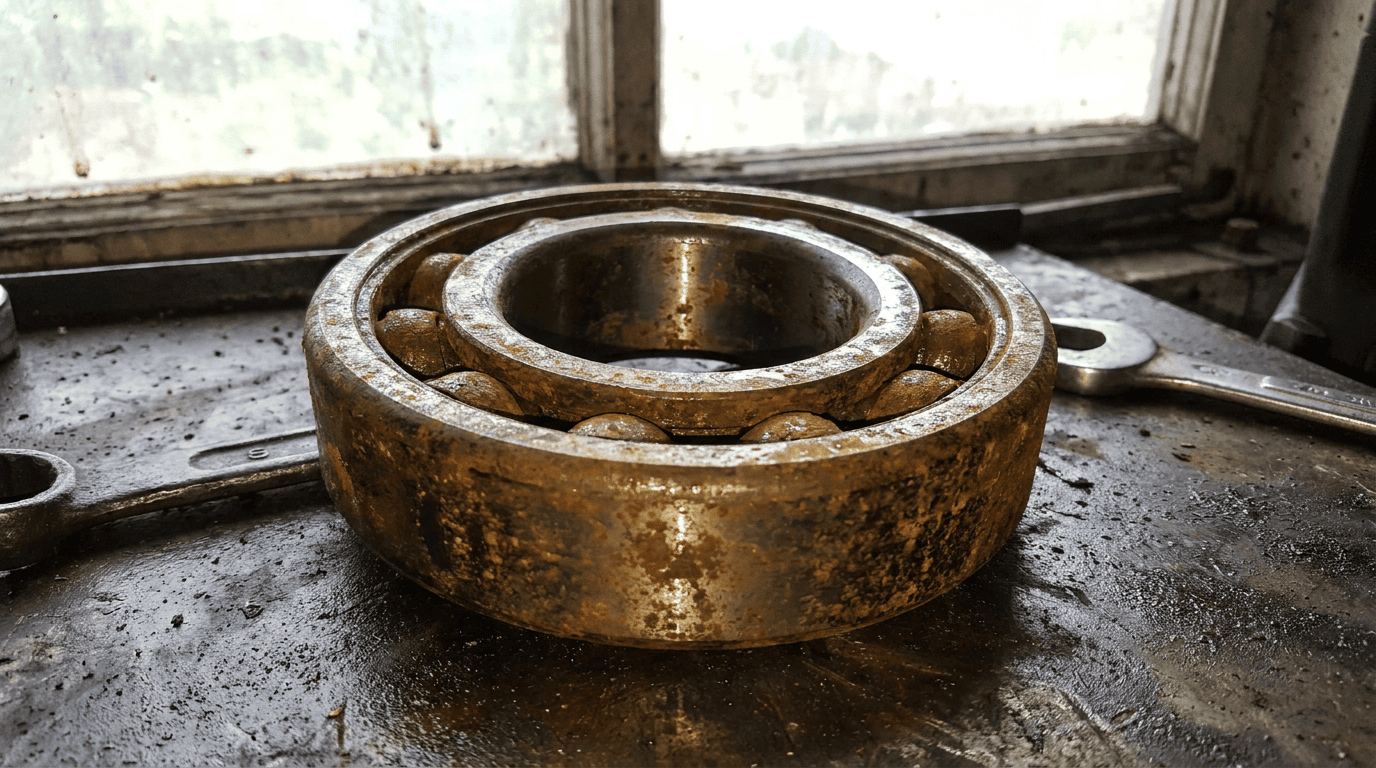
Preventing bearing corrosion in industrial gearboxes starts with controlling moisture, lubricant condition, contamination, storage practices, and electrical discharge before damage becomes visible. For maintenance managers, plant engineers, reliability engineers, mechanics, and purchasing teams, corrosion is not just a bearing issue; it is a gearbox reliability issue that can lead to vibration, overheating, pitting, lubricant breakdown, gear misalignment, shaft damage, unplanned downtime, and premature gearbox replacement. The best strategy combines root-cause analysis, oil analysis, proper sealing, desiccant breathers, correct lubricant selection, periodic inspections, and disciplined maintenance procedures designed around the gearbox’s operating environment.
Bearing corrosion in industrial gearboxes is prevented by keeping water, process chemicals, acidic lubricant byproducts, and airborne contaminants out of the gearbox while maintaining the right lubricant film and storage conditions. The most effective actions are installing high-quality seals and breathers, using the correct rust-inhibited lubricant, performing routine oil analysis, monitoring vibration and temperature, preventing condensation during shutdowns, grounding equipment where electrical discharge is possible, and inspecting bearings during planned outages. If corrosion is minor, bearings may sometimes be cleaned and monitored, but pitting, flaking, false brinelling, or raceway damage usually requires bearing replacement and a full gearbox contamination investigation.
Bearing corrosion in industrial gearboxes is a critical issue that can lead to significant operational failures and increased maintenance costs. For a deeper understanding of related challenges, you may find it beneficial to explore the article on gearbox fluid leaks, which discusses how fluid loss can exacerbate wear and corrosion in gearbox components. This article provides insights into prevention strategies and maintenance practices that can help mitigate these issues. For more information, visit this article on gearbox leaking fluid.
Why Bearing Corrosion Matters in Industrial Gearboxes
Bearing corrosion is one of the most preventable causes of industrial gearbox failure. Bearings support shafts, maintain gear mesh alignment, and absorb radial and axial loads. When corrosion attacks rolling elements, raceways, cages, or bearing fits, the gearbox can quickly lose smooth rotation and proper load distribution.
In many facilities, corrosion begins long before a technician hears noise or sees high vibration. A gearbox may sit idle during a seasonal shutdown, operate in a washdown area, breathe humid air through an open vent, or run with lubricant that contains dissolved water. Over time, water and oxygen initiate rust, acids form inside degraded oil, and microscopic pits become stress risers. Once the bearing surface is damaged, rolling contact fatigue accelerates.
Corrosion can affect:
- Bearing rolling elements
- Inner and outer raceways
- Bearing cages
- Shaft journals and bearing seats
- Housing bores
- Oil passages and reservoirs
- Gear tooth surfaces
- Seals, breathers, and lubrication systems
For help evaluating corrosion-related gearbox damage, see Industrial Gearbox Solutions’ services for industrial gearbox repair, gearbox inspection and failure analysis, and gearbox rebuild services.
Common Causes of Bearing Corrosion in Industrial Gearboxes
Bearing corrosion usually has more than one contributing cause. A gearbox operating in a humid paper mill, mining facility, wastewater plant, steel mill, food processing line, or marine terminal may face several corrosion drivers at the same time.
Water Contamination
Water is the leading cause of bearing corrosion in gearboxes. It can enter through failed seals, open breathers, washdown spray, condensation, leaky cooling coils, or improper oil handling.
Water contamination appears in three forms:
| Water Form | Description | Risk Level |
||||
| Dissolved water | Water chemically held in the oil and not visible | Moderate to high |
| Emulsified water | Cloudy or milky oil caused by suspended water droplets | High |
| Free water | Water separated at the bottom of the sump | Severe |
Even small amounts of water reduce lubricant film strength, promote rust, accelerate additive depletion, and increase the risk of micropitting.
According to lubrication reliability guidance from Noria, water contamination is one of the most damaging contaminants in lubricated machinery because it attacks both the lubricant and machine surfaces. Reference: https://www.noria.com
Condensation During Shutdowns
Gearboxes breathe as internal temperature changes. When a gearbox cools after operation, humid air may be drawn into the housing. If the internal temperature drops below the dew point, moisture condenses on bearings, shafts, and housing walls.
Condensation is common in:
- Outdoor gearboxes
- Intermittently operated drives
- Standby equipment
- Gearboxes in unheated buildings
- Applications with frequent start-stop cycles
- Gearboxes near steam, water, or washdown zones
A gearbox that runs daily may evaporate some moisture. A gearbox that sits idle may allow corrosion to form directly on stationary bearing elements.
Failed or Inadequate Seals
Radial shaft seals, labyrinth seals, V-rings, taconite seals, and bearing isolators are the gearbox’s first line of defense against contamination. When seals wear, harden, crack, or are installed incorrectly, contaminants can enter and lubricant can escape.
Seal-related corrosion risks include:
- Grooved shaft seal surfaces
- Excessive shaft runout
- Misaligned seal installation
- Incorrect seal material for temperature or chemicals
- Overpressurized gearbox housing
- Damaged seal lips
- Improper grease purging practices
In severe-duty environments, upgrading to non-contact bearing isolators or advanced labyrinth sealing may significantly reduce water ingress.
Poor Breather Selection
A standard open vent allows air exchange but does little to stop moisture or fine particles. In humid or dirty environments, open vents can act like contamination entry points.
A desiccant breather helps remove moisture from incoming air and filters particles before they enter the gearbox. This is especially valuable for outdoor drives, washdown areas, bulk material handling conveyors, and gearboxes exposed to temperature cycling.
Lubricant Degradation and Acid Formation
Gear oil oxidizes over time, especially when exposed to heat, water, metals, and air. As oxidation progresses, acidic byproducts form. These acids attack bearing surfaces, yellow metals, seals, and other internal components.
Lubricant degradation may be accelerated by:
- Excessive operating temperature
- Wrong viscosity grade
- Incompatible lubricant mixing
- Overextended oil drain intervals
- Water contamination
- Aeration or foaming
- Dirt and wear metals
- Inadequate filtration
Authoritative resources from SKF and Timken also emphasize the importance of proper lubrication, contamination control, and mounting practices in bearing life. References: https://www.skf.com and https://www.timken.com
Chemical and Process Contamination
Some plants expose gearboxes to corrosive vapors, cleaning chemicals, acids, alkalis, saltwater, fertilizers, solvents, or process fluids. These contaminants may enter through seals, breathers, inspection covers, or poor oil transfer practices.
Industries with elevated chemical corrosion risk include:
- Food and beverage
- Pulp and paper
- Wastewater treatment
- Chemical processing
- Mining and aggregate
- Marine and port operations
- Fertilizer production
- Steel and metals processing
Electrical Discharge and Fluting
Although not traditional rust corrosion, electrical discharge can damage bearing raceways and create fluting patterns that are sometimes mistaken for corrosion or mechanical pitting. Variable frequency drives, poor grounding, and stray currents can cause electrical erosion across bearing surfaces.
Prevention may require:
- Shaft grounding rings
- Insulated bearings
- Proper motor grounding
- VFD output filtering
- Electrical bonding checks
- Bearing current testing
Industrial gearbox bearing failure can lead to costly downtime and repairs, so it’s important to address the issue promptly. Industrial gearbox bearing failure
Symptoms of Bearing Corrosion in Gearboxes
Corrosion symptoms may appear gradually or suddenly depending on the severity of contamination and the gearbox load. Early detection is essential because bearing corrosion can rapidly progress into spalling, cage damage, gear misalignment, and catastrophic failure.
Visual Signs
During inspection, technicians may observe:
- Rust staining on bearing surfaces
- Brown, orange, or black deposits
- Etching on raceways
- Pitting or frosting
- Discolored oil
- Milky or cloudy lubricant
- Sludge or varnish
- Water droplets inside the housing
- Corroded shaft journals
- Rust near breathers, seals, or inspection covers
Operational Symptoms
Corroded bearings often produce measurable changes before complete failure.
| Symptom | Possible Meaning | Recommended Action |
||||
| Increased vibration | Raceway pitting, spalling, looseness, or false brinelling | Perform vibration analysis and inspect lubricant |
| Rising temperature | Lubricant breakdown, friction, misalignment, or bearing distress | Check oil level, viscosity, load, and bearing condition |
| Unusual noise | Surface damage, cage wear, or rolling element defects | Use ultrasound or vibration diagnostics |
| Oil discoloration | Water, oxidation, wear debris, or contamination | Send oil sample for lab analysis |
| Seal leakage | Overfilled oil, pressure buildup, worn seals, or shaft damage | Inspect seals and breather |
| Frequent lubricant changes | Recurring contamination or wrong lubricant selection | Perform root-cause analysis |
Lubrication Warning Signs
Oil condition often reveals corrosion risk before bearings fail. Watch for:
- Milky or hazy oil
- Rust-colored sediment
- High water content in oil analysis
- Increasing acid number
- Reduced viscosity
- Elevated iron, chromium, or copper
- High particle count
- Additive depletion
- Foam or aeration
- Sludge formation
For lubricant sampling and contamination strategy, Noria’s lubrication reliability resources are useful: https://www.noria.com
Bearing corrosion in industrial gearboxes is a critical issue that can lead to significant operational failures and increased maintenance costs. Understanding the factors that contribute to this problem is essential for effective prevention and repair strategies. For those interested in exploring comprehensive solutions for gearbox maintenance, a related article on industrial gearbox repair in Arkansas provides valuable insights. You can read more about it here. This resource highlights the importance of regular inspections and timely repairs to mitigate the risks associated with bearing corrosion.
Inspection Methods for Detecting Bearing Corrosion
| Industry | Corrosion Rate | Impact |
|---|---|---|
| Automotive | 0.5 mm/year | Increased maintenance costs |
| Manufacturing | 0.3 mm/year | Reduced equipment lifespan |
| Energy | 0.8 mm/year | Unplanned downtime |
A strong inspection program combines visual checks, condition monitoring, oil analysis, and planned internal inspections. No single test catches every corrosion mechanism.
Routine External Inspection
Maintenance teams should inspect the gearbox exterior during normal rounds. A quick walkdown can identify contamination entry points and early warning signs.
Check for:
- Damaged or missing breathers
- Water accumulation around gearbox foundations
- Seal leakage
- Oil level changes
- Broken cooling lines
- Loose inspection covers
- Rust around housing seams
- Condensation on the gearbox
- Abnormal sound or heat
- Blocked drain plugs
- Evidence of washdown spray hitting seals
Use an infrared thermometer or thermal camera to compare gearbox temperature trends. Temperature increases may suggest lubrication loss, bearing distress, or contamination.
Oil Analysis
Oil analysis is one of the best tools for preventing bearing corrosion in industrial gearboxes. It provides objective data about lubricant health and contamination.
Important oil analysis tests include:
| Test | What It Reveals |
|||
| Karl Fischer water test | Accurate water concentration in ppm |
| Acid number | Oxidation and acidic degradation |
| Viscosity at 40°C | Oil thickening, thinning, or wrong lubricant |
| Particle count | Solid contamination level |
| Ferrous density | Iron wear debris concentration |
| Spectrometric analysis | Wear metals and additive health |
| FTIR analysis | Oxidation, nitration, water, and contamination |
| Patch test | Visual evidence of particles, sludge, and varnish |
Oil samples should be taken from a live zone when possible, not from the bottom drain after the gearbox has been sitting. Sampling consistency matters. Use clean bottles, dedicated sampling ports, and documented procedures.
Vibration Analysis
Corrosion creates pits that disturb rolling contact. Vibration analysis can detect bearing defects before they become audible.
Common vibration indicators include:
- Bearing defect frequencies
- High-frequency impacting
- Increased noise floor
- Sidebands around bearing frequencies
- Harmonic patterns
- Changes in acceleration or enveloping data
Reliability engineers should trend data over time rather than rely only on one-time readings. A sudden increase after a shutdown may indicate corrosion that formed while the gearbox was idle.
Borescope Inspection
A borescope allows technicians to inspect internal gearbox components without complete disassembly. It can reveal rust staining, oil condition, gear tooth damage, bearing discoloration, and internal condensation.
Borescope inspections are useful for:
- Large gearboxes
- Critical drives
- Gearboxes with limited access
- Post-shutdown inspections
- Pre-outage planning
- Verifying internal contamination
Bearing Inspection During Rebuild
When a gearbox is opened, bearings should be carefully inspected and documented. Do not discard failed bearings before a failure analysis is completed.
Inspect for:
- Corrosion pits
- Spalling
- False brinelling marks
- Fretting corrosion
- Cage damage
- Etching
- Discoloration
- Smearing
- Overheating marks
- Electrical fluting
- Lubricant starvation patterns
AGMA standards and technical resources provide guidance on gear drive rating, operation, and failure considerations. Reference: https://www.agma.org
Troubleshooting Bearing Corrosion: Step-by-Step Process
When bearing corrosion is suspected, avoid simply replacing the bearing and restarting the gearbox. If the root cause remains, the new bearing may fail quickly.
Step 1: Confirm the Failure Mode
Determine whether the bearing damage is truly corrosion or another issue such as overload, misalignment, electrical discharge, lubricant starvation, or contamination-related abrasion.
Ask:
- Is the damage reddish-brown rust, black oxide, or polished fretting?
- Are pits randomly distributed or aligned with rolling paths?
- Is there evidence of water in the oil?
- Is the bearing damaged only in the loaded zone?
- Are stationary contact marks present from vibration during idle periods?
- Are fluting marks visible across raceways?
Step 2: Review Operating Environment
Document the gearbox’s surroundings and duty cycle.
Important questions include:
- Is the gearbox indoors or outdoors?
- Is it exposed to washdown, steam, rain, or salt air?
- Does it run continuously or intermittently?
- Is it near chemicals or process vapors?
- Are there large temperature swings?
- Is the unit stored before installation?
- Are breathers exposed to high humidity?
Step 3: Check Lubricant Condition
Pull an oil sample before draining the gearbox, if possible. Look for water, particles, oxidation, and additive depletion.
If oil is milky, rusty, or sludged, the system may need flushing before new lubricant is installed. Adding fresh oil to a contaminated gearbox does not remove corrosion risk.
Step 4: Inspect Seals and Breathers
Examine every potential entry point:
- Input and output shaft seals
- Inspection covers
- Breather ports
- Dipsticks
- Sight glasses
- Drain plugs
- Oil fill caps
- Cooling coils
- Housing joints
- Lubrication lines
Replace damaged seals and consider upgrades if the application is severe.
Step 5: Determine Corrective Action
Corrective action may include:
- Bearing replacement
- Gearbox cleaning or flushing
- Seal upgrade
- Breather upgrade
- Oil change and filtration
- Housing repair
- Shaft repair or sleeve installation
- Lubricant change
- Storage procedure improvement
- Electrical grounding correction
- Environmental shielding
For complex failures, contact Industrial Gearbox Solutions for gearbox troubleshooting and emergency gearbox repair.
Prevention Strategies for Bearing Corrosion
The most cost-effective corrosion strategy is prevention. Once corrosion pits bearing surfaces, damage is usually permanent.
Control Water Ingress
To prevent water from entering the gearbox:
- Install properly selected shaft seals
- Use bearing isolators in wet or dirty areas
- Avoid direct washdown spray at seals and breathers
- Shield outdoor gearboxes from rain and snow
- Repair cooling coil leaks immediately
- Use sealed oil transfer containers
- Keep fill caps closed
- Avoid leaving inspection covers open
- Install desiccant breathers
- Drain free water from low points when safe and appropriate
Use Desiccant Breathers
Desiccant breathers are highly effective for gearboxes exposed to humidity and temperature cycling. They dry incoming air and filter airborne particles.
Best practices include:
- Size the breather for gearbox volume and airflow
- Replace when desiccant color indicates saturation
- Use check-valve breathers for intermittent operation
- Mount breathers vertically
- Protect breathers from direct water spray
- Document breather change intervals
Maintain the Right Lubricant
The correct gear oil provides film strength, corrosion inhibition, oxidation resistance, and load-carrying capacity. Always confirm lubricant selection against OEM requirements and operating conditions.
Consider:
- Viscosity grade
- Base oil type
- Extreme pressure additive compatibility
- Rust and oxidation inhibitors
- Demulsibility
- Water separation performance
- Operating temperature
- Gear type
- Bearing type
- Seal compatibility
- Food-grade requirements where applicable
Do not mix lubricants unless compatibility is confirmed by the lubricant supplier.
Improve Oil Storage and Handling
Many gearbox contamination problems begin before the oil reaches the machine.
Use these practices:
- Store drums indoors or under cover
- Keep containers sealed
- Use dedicated transfer equipment
- Filter new oil before use
- Label containers clearly
- Use color-coded lubricant systems
- Avoid open funnels
- Use clean, sealed top-up containers
- Train technicians on contamination control
New oil is not always clean enough for critical gearboxes. Filtration before filling can reduce particle contamination and extend bearing life.
Prevent Corrosion During Storage and Standby
Gearboxes and spare bearings can corrode while sitting in storage. Purchasing professionals and maintenance planners should treat storage as part of reliability.
Storage best practices include:
- Store gearboxes indoors in a dry, temperature-controlled area
- Keep units off the floor
- Use vapor corrosion inhibitors when appropriate
- Rotate shafts periodically according to OEM recommendations
- Maintain protective coatings on machined surfaces
- Seal openings
- Use desiccant packs or dry-air preservation
- Avoid vibration from nearby equipment
- Inspect stored units periodically
- Document preservation dates and actions
False brinelling and fretting corrosion can occur when stationary bearings are exposed to vibration. Standby equipment should be included in preventive maintenance routes.
Repair vs. Replacement: When Corroded Bearings Are Found
A common question is whether corroded bearings can be cleaned and reused. In most industrial gearbox applications, bearing replacement is recommended if corrosion has reached the rolling contact surfaces.
When Cleaning May Be Acceptable
Cleaning and continued use may be considered only when:
- Corrosion is superficial and not on raceways or rolling elements
- The bearing is non-critical
- There is no pitting, flaking, or roughness
- Vibration levels are normal
- Oil analysis is acceptable
- Engineering approves the decision
- The gearbox can be monitored closely
Even then, the root cause must be corrected.
When Replacement Is Required
Replace bearings when inspection shows:
- Pitted raceways
- Spalling or flaking
- Rough rolling elements
- Cage corrosion or distortion
- Fretting corrosion at fits
- Electrical fluting
- Overheating discoloration
- Excessive vibration
- Contaminated lubricant with wear debris
- Loss of internal clearance control
- Rust on loaded contact surfaces
Gearbox Rebuild Considerations
If corrosion is widespread, a bearing replacement alone may not be enough. The gearbox may require a full rebuild.
A proper rebuild may include:
- Complete disassembly
- Cleaning and flushing
- Bearing replacement
- Seal replacement
- Gear inspection
- Shaft inspection and repair
- Housing bore measurement
- Contact pattern verification
- Backlash measurement
- Lubrication system service
- Test run under controlled conditions
Industrial Gearbox Solutions can support gearbox bearing replacement, gearbox reconditioning, and industrial gearbox failure analysis.
Maintenance Best Practices for Long-Term Bearing Protection
A successful corrosion prevention program requires consistency. The following best practices help maintenance and reliability teams reduce bearing failures across multiple gearbox assets.
Recommended Maintenance Schedule
| Frequency | Maintenance Task | Purpose |
||||
| Daily or weekly | Check for leaks, noise, vibration, and temperature | Catch early warning signs |
| Monthly | Inspect breathers, seals, oil level, and exterior corrosion | Prevent contamination entry |
| Quarterly | Perform oil sampling on critical gearboxes | Track water, oxidation, and wear |
| Semiannually | Inspect lubricant handling equipment and storage areas | Reduce human-introduced contamination |
| Annually | Review PM tasks, failure history, and lubricant specifications | Improve reliability strategy |
| During outage | Borescope, inspect bearings, verify seals, and clean housing | Confirm internal condition |
Adjust intervals based on criticality, environment, operating hours, and historical failure data.
Condition Monitoring Program
For critical gearboxes, combine multiple technologies:
- Vibration analysis
- Oil analysis
- Infrared thermography
- Ultrasound
- Motor current analysis
- Visual inspections
- Borescope inspections
- Online particle monitoring
- Temperature sensors
- Humidity monitoring for stored gearboxes
The goal is not just to detect failure, but to identify the conditions that cause corrosion before damage occurs.
Technician Inspection Checklist
Use a standard checklist to improve consistency:
- Is the breather clean, dry, and correctly installed?
- Is there any sign of water around the gearbox?
- Are seals leaking or damaged?
- Is the oil level correct?
- Is the oil clear and bright?
- Is the gearbox hotter than normal?
- Are there new noises?
- Is vibration trending upward?
- Are mounting bolts tight?
- Are cooling systems functioning?
- Are inspection covers sealed?
- Has the gearbox been idle for an extended period?
Purchasing Specifications That Reduce Corrosion Risk
Purchasing professionals can help prevent corrosion by specifying the right components and accessories at the time of procurement.
Consider specifying:
- Corrosion-resistant coatings
- Severe-duty sealing packages
- Desiccant breathers
- Stainless or coated hardware where appropriate
- Proper lubricant compatibility
- Storage preservation requirements
- Factory test documentation
- OEM-approved bearing brands
- Shaft grounding provisions for VFD applications
- Washdown-duty designs for food and beverage plants
- Documentation for lubrication and maintenance intervals
Lowest purchase price is rarely the lowest lifecycle cost if the gearbox operates in a corrosive environment.
Tables: Corrosion Causes, Symptoms, and Corrective Actions
| Cause | Typical Symptom | Corrective Action |
||||
| Water ingress through seals | Milky oil, rust staining, seal leakage | Replace or upgrade seals, change oil, inspect bearings |
| Humid air through open vent | Condensation, internal rust, oil oxidation | Install desiccant breather and reduce temperature cycling |
| Poor lubricant condition | Acidic oil, sludge, bearing distress | Change oil, flush if needed, improve oil analysis program |
| Improper storage | Rust before installation, false brinelling | Improve storage controls and rotate shafts periodically |
| Chemical exposure | Etched parts, seal degradation, dark deposits | Upgrade seals/materials and shield gearbox |
| Electrical discharge | Fluting, noise, high-frequency vibration | Install grounding or insulated bearings |
| Washdown contamination | Water in oil, repeated seal failures | Add guards, avoid direct spray, use washdown-duty seals |
| Incompatible lubricants | Additive dropout, sludge, corrosion | Verify compatibility and flush before changing lubricant type |
Authoritative Resources for Bearing and Gearbox Reliability
Useful technical references include:
- SKF bearing maintenance and lubrication resources: https://www.skf.com
- Timken bearing damage analysis and lubrication guidance: https://www.timken.com
- AGMA gear drive standards and technical publications: https://www.agma.org
- Noria lubrication and contamination control articles: https://www.noria.com
These sources support best practices for bearing handling, lubrication cleanliness, gear drive reliability, contamination control, and failure analysis.
Suggested Branded Images for IndustrialGearboxSolutions.com
Image 1: Corroded Bearing Raceway Close-Up
Alt text: Corroded industrial gearbox bearing raceway with rust and pitting
Caption: Bearing corrosion often begins as small pits that accelerate rolling contact fatigue and gearbox vibration.
Image 2: Technician Inspecting Gearbox Oil Sample
Alt text: Maintenance technician inspecting industrial gearbox oil sample for water contamination
Caption: Oil analysis helps detect water contamination, oxidation, and wear metals before bearing failure occurs.
Image 3: Desiccant Breather Installed on Gearbox
Alt text: Desiccant breather installed on industrial gearbox to prevent moisture ingress
Caption: Desiccant breathers reduce humid air and particle contamination inside industrial gearboxes.
Image 4: Gearbox Borescope Inspection
Alt text: Borescope inspection of industrial gearbox bearings and gears
Caption: Borescope inspections allow maintenance teams to identify internal corrosion without full disassembly.
Image 5: Rebuilt Industrial Gearbox Assembly
Alt text: Rebuilt industrial gearbox with new bearings seals and inspected gears
Caption: When corrosion damages bearing raceways, a controlled gearbox rebuild may be the most reliable repair option.
FAQs About Preventing Bearing Corrosion in Industrial Gearboxes
What is the main cause of bearing corrosion in industrial gearboxes?
The main cause is water contamination. Water can enter through seals, breathers, condensation, washdown spray, cooling system leaks, or poor lubricant handling. Once inside, it promotes rust, reduces oil film strength, and accelerates additive depletion.
Can a small amount of water in gearbox oil damage bearings?
Yes. Even low levels of water can reduce bearing life, especially in heavily loaded gearboxes. Dissolved water may not be visible but can still contribute to corrosion, oxidation, and micropitting.
How do I know if gearbox oil contains water?
Visual signs include cloudy, milky, or hazy oil. However, the most reliable method is laboratory oil analysis, especially Karl Fischer testing, which measures water concentration in parts per million.
Should corroded gearbox bearings always be replaced?
If corrosion is present on raceways or rolling elements, replacement is usually recommended. Surface rust on non-contact areas may be evaluated, but pitting or roughness on load-carrying surfaces is permanent damage.
Do desiccant breathers really help prevent corrosion?
Yes. Desiccant breathers help remove moisture from incoming air and filter particles before they enter the gearbox. They are especially valuable in humid, outdoor, washdown, and intermittent-duty applications.
What lubricant is best for preventing bearing corrosion?
The best lubricant is the OEM-recommended gear oil with the correct viscosity, rust and oxidation inhibitors, demulsibility, and load-carrying performance for the application. The lubricant should also be compatible with seals, metals, and operating temperatures.
How often should gearbox oil be tested?
Critical gearboxes are often tested quarterly, but the ideal interval depends on operating severity, environment, oil volume, failure history, and asset criticality. Severe applications may need monthly testing.
Can corrosion happen while a gearbox is not running?
Yes. Idle gearboxes are vulnerable to condensation, false brinelling, and fretting corrosion. Stored or standby gearboxes should be preserved, sealed, periodically rotated, and protected from humidity and vibration.
What is false brinelling?
False brinelling is damage caused by small vibration movements while a bearing is stationary. It can remove lubricant film and create wear marks that may lead to corrosion and premature bearing failure.
When should I call a gearbox repair specialist?
Call a specialist when oil analysis shows water or high wear metals, vibration increases rapidly, bearings show pitting, seals repeatedly fail, or the gearbox is critical to production. Early expert inspection can prevent secondary damage to gears, shafts, and housings.
Key Takeaways
- Bearing corrosion in industrial gearboxes is usually caused by water, humidity, chemical contamination, lubricant degradation, poor storage, or electrical discharge.
- Water contamination may be dissolved, emulsified, or free; all forms can shorten bearing and gear life.
- Early warning signs include milky oil, rising vibration, increased temperature, rust staining, abnormal noise, and high wear metals.
- Oil analysis, vibration analysis, borescope inspections, and routine walkdowns are essential detection tools.
- Desiccant breathers, upgraded seals, clean lubricant handling, and proper storage are among the most effective prevention methods.
- Corroded bearings with pitted raceways or rolling elements should generally be replaced, not reused.
- A gearbox repair should include root-cause analysis so the same corrosion problem does not return.
- Purchasing teams can reduce lifecycle cost by specifying severe-duty seals, breathers, coatings, and preservation requirements.
SEO Metadata
Meta title: Preventing Bearing Corrosion in Industrial Gearboxes
Meta description: Learn how to prevent bearing corrosion in industrial gearboxes with expert tips on water contamination, oil analysis, seals, breathers, inspections, repair, and maintenance.
Primary keyword: preventing bearing corrosion in industrial gearboxes
Secondary keywords: gearbox bearing corrosion, industrial gearbox maintenance, water contamination in gearbox oil, gearbox oil analysis, desiccant breather for gearbox, gearbox bearing failure, industrial gearbox repair
Suggested URL slug: preventing-bearing-corrosion-industrial-gearboxes
Search intent: Informational and commercial investigation for maintenance, reliability, engineering, and purchasing teams seeking prevention methods, troubleshooting guidance, and repair support.
Conclusion
Preventing bearing corrosion in industrial gearboxes requires more than replacing damaged bearings. It requires a reliability-focused program that controls moisture, protects lubricant health, improves sealing and breathing, monitors oil and vibration trends, and addresses storage and operating conditions. For maintenance managers and plant engineers, the payoff is fewer emergency shutdowns, longer bearing and gear life, safer operation, and lower lifecycle cost. For purchasing professionals, specifying the right protection up front can prevent expensive failures later.
If your gearbox shows signs of water contamination, rust, vibration, overheating, or recurring bearing failure, Industrial Gearbox Solutions can inspect, troubleshoot, repair, rebuild, and help identify the root cause before production is affected.
FAQs
What causes bearing corrosion in industrial gearboxes?
Bearing corrosion in industrial gearboxes can be caused by a variety of factors, including moisture, inadequate lubrication, chemical exposure, and high operating temperatures.
How does moisture contribute to bearing corrosion in industrial gearboxes?
Moisture can lead to bearing corrosion in industrial gearboxes by promoting the formation of rust and oxidation on the bearing surfaces. This can occur due to environmental conditions or improper sealing of the gearbox.
What role does inadequate lubrication play in bearing corrosion in industrial gearboxes?
Inadequate lubrication can lead to increased friction and heat generation within the bearings, which can accelerate corrosion. Insufficient or degraded lubricant can also fail to provide adequate protection against moisture and contaminants.
How can chemical exposure impact bearing corrosion in industrial gearboxes?
Chemical exposure can cause corrosion in industrial gearbox bearings by reacting with the metal surfaces and degrading the protective properties of the lubricant. This can occur due to exposure to harsh operating environments or chemical contaminants.
What measures can be taken to prevent bearing corrosion in industrial gearboxes?
Preventive measures to reduce bearing corrosion in industrial gearboxes include proper sealing to prevent moisture ingress, regular lubrication maintenance, monitoring operating temperatures, and implementing protective coatings or materials to resist chemical exposure. Regular inspection and maintenance can also help identify and address potential corrosion issues early.