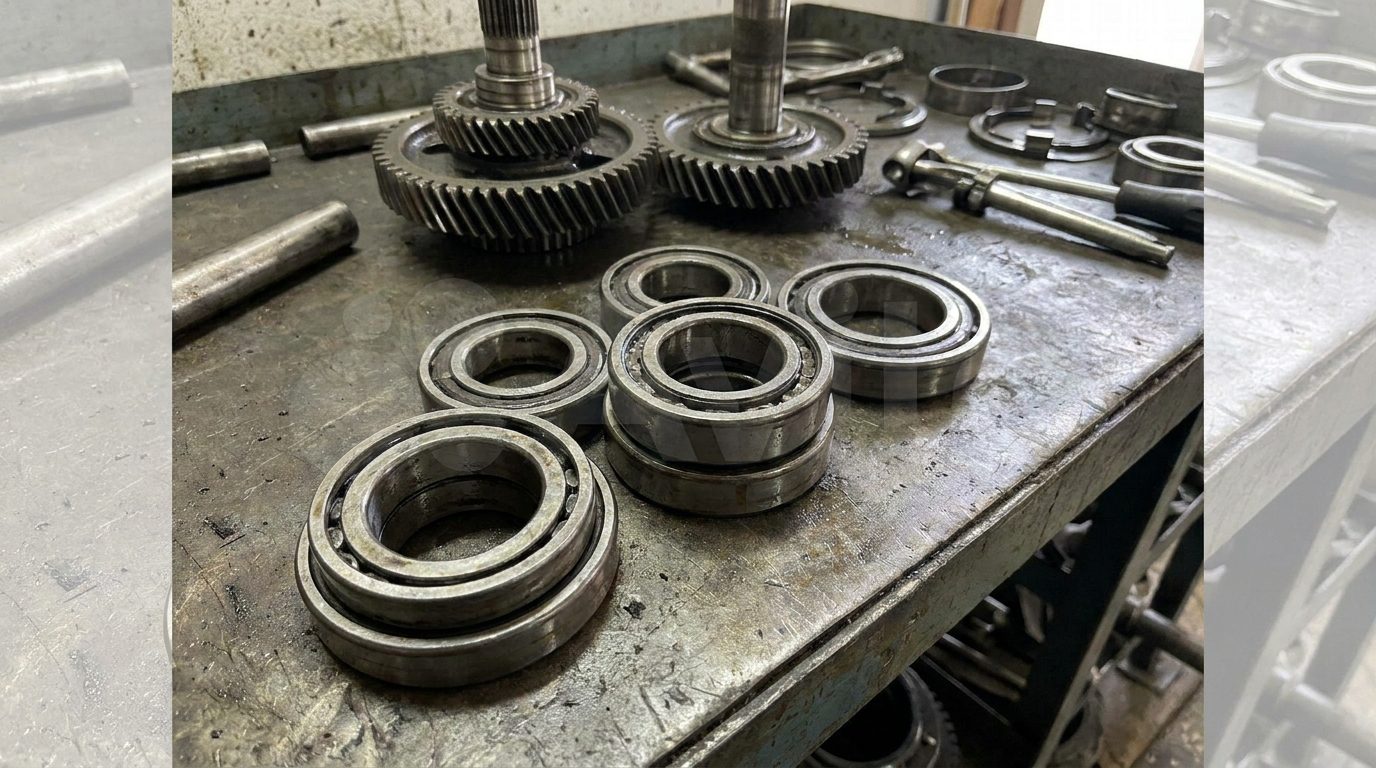
Failed gearbox bearings are one of the most common causes of industrial gearbox downtime, oil contamination, abnormal vibration, and catastrophic gear damage. For maintenance managers, plant engineers, reliability teams, mechanics, and purchasing professionals, the decision to repair or replace a bearing failure is rarely simple. The right answer depends on the bearing condition, shaft and housing damage, contamination level, operating criticality, lead time, and total cost of downtime. This guide explains how to evaluate failed gearbox bearings, identify root causes, troubleshoot symptoms, choose repair versus replacement, and prevent repeat failures through better lubrication, alignment, inspection, and maintenance practices.
In most cases, failed gearbox bearings should be replaced, not reused, because bearing damage typically progresses from microscopic surface fatigue to spalling, overheating, cage failure, shaft damage, and gear misalignment. However, the gearbox itself may not always need full replacement. If gears, shafts, bores, seals, and housings remain within tolerance, a professional gearbox repair with new bearings, seals, cleaning, inspection, and root-cause correction is usually the most cost-effective option. Full gearbox replacement is recommended when there is severe housing damage, major gear tooth failure, obsolete components, repeated bearing failures, excessive downtime risk, or when repair costs approach the price of a new or upgraded unit.
When considering the options of repairing or replacing failed gearbox bearings, it’s essential to understand the broader context of gearbox maintenance and manufacturer reliability. A related article that provides valuable insights into gearbox solutions is available at Andantex Gearbox Solutions. This resource discusses various gearbox manufacturers and their products, helping you make informed decisions about your gearbox needs and the implications of repair versus replacement.
Understanding Failed Gearbox Bearings
Gearbox bearings support rotating shafts, maintain gear mesh alignment, absorb radial and axial loads, and reduce friction between moving components. When a bearing fails, the problem is rarely isolated to the bearing alone. Bearing distress often changes shaft position, increases backlash, disrupts gear contact patterns, damages seals, contaminates oil, and accelerates wear throughout the gearbox.
For industrial gearboxes used in conveyors, mixers, crushers, extruders, cooling towers, kilns, pumps, agitators, and heavy-duty process equipment, bearing failure can quickly become a production-critical event. A single bearing replacement may cost a fraction of the total downtime cost, especially when failure stops a production line.
What Happens When a Gearbox Bearing Fails?
A gearbox bearing typically fails in stages:
- Lubrication film breaks down or contamination enters the bearing.
- Rolling elements and raceways experience surface distress.
- Microscopic cracks, smearing, or false brinelling begin.
- Vibration, heat, and noise increase.
- Spalling or flaking appears on raceways or rolling elements.
- Metal particles contaminate the lubricant.
- Bearing clearance increases or the cage fails.
- Shaft alignment shifts and gear mesh deteriorates.
- Gears, shafts, seals, and housings may become damaged.
By the time a bearing is noisy or hot enough to be noticed without instruments, internal damage may already be advanced.
Why Bearing Failure Decisions Matter
The repair-versus-replace decision affects:
- Production uptime
- Maintenance budget
- Spare parts planning
- Safety risk
- Gearbox reliability
- Energy efficiency
- Asset lifecycle cost
- Warranty and vendor accountability
A low-cost bearing swap without root-cause analysis may restart the gearbox quickly, but it can also lead to repeat failure. On the other hand, replacing an entire gearbox when a quality rebuild would restore reliability can waste capital and extend lead times.
For related service support, see Industrial Gearbox Solutions’ resources on industrial gearbox repair, gearbox rebuild services, and gearbox inspection and failure analysis.
Common Causes of Failed Gearbox Bearings
Bearing failure is usually the result of operating conditions, lubrication issues, installation errors, or mechanical damage. According to bearing manufacturers such as SKF and Timken, a large percentage of bearing failures are linked to lubrication, contamination, improper mounting, or overload rather than normal fatigue life.
Lubrication Failure
Lubrication failure is one of the leading causes of gearbox bearing damage. Bearings need the correct oil viscosity, additive package, cleanliness level, and flow rate to maintain an adequate film between surfaces.
Common lubrication-related causes include:
- Low oil level
- Incorrect oil viscosity
- Oil oxidation or thermal breakdown
- Incompatible lubricants
- Additive depletion
- Foam or air entrainment
- Restricted oil passages
- Poor splash lubrication
- Overgreasing or undergreasing, where applicable
- Water contamination
- Solid particle contamination
Noria Corporation provides extensive lubrication guidance for industrial machinery, including oil analysis, contamination control, and lubricant selection. Their resources are useful for reliability teams building lubrication programs: Noria lubrication resources.
Contamination
Contamination accelerates bearing wear by interrupting the lubricant film and creating abrasive contact. Even small particles can dent raceways and initiate fatigue cracks.
Common contaminants include:
- Dirt and dust
- Metal wear debris
- Water
- Process chemicals
- Rust particles
- Seal fragments
- Paint flakes
- Fibers from poor-quality rags or filters
Water contamination is especially harmful because it reduces lubricant film strength, causes corrosion, promotes hydrogen embrittlement, and accelerates additive depletion.
Misalignment and Improper Gear Mesh
Gearbox bearings are designed for specific radial and axial loads. When shafts, couplings, baseplates, or gear meshes are misaligned, bearing load zones change. This can lead to edge loading, uneven raceway contact, overheating, and premature fatigue.
Misalignment can result from:
- Soft foot
- Foundation movement
- Thermal growth
- Improper coupling alignment
- Worn bearing fits
- Distorted housings
- Incorrect shim packs
- Poor installation practices
- Gear tooth damage
For precision alignment support, visit Industrial Gearbox Solutions’ gearbox alignment services.
Overloading and Shock Loading
Gearbox bearings can fail prematurely when loads exceed design limits. Shock loading is common in crushers, mills, shredders, presses, bucket elevators, and conveyor drives with frequent starts and stops.
Overload sources include:
- Jammed equipment
- Sudden torque spikes
- Process upsets
- Improper gear reducer selection
- Motor horsepower increases without gearbox review
- Excess belt or chain tension
- Incorrect speed or load application
- Repeated start-stop cycling
AGMA standards and technical publications are useful for understanding gear rating, load capacity, and gearbox application factors. Visit the American Gear Manufacturers Association at AGMA.
Improper Bearing Installation
A new bearing can fail quickly if it is installed incorrectly. Common installation errors include:
- Hammering directly on bearing rings
- Applying force through rolling elements
- Incorrect heating temperature
- Contaminating the bearing during installation
- Improper fit on shaft or in housing
- Incorrect preload or endplay
- Reusing damaged locknuts, sleeves, or spacers
- Failing to verify shaft and bore dimensions
Timken provides useful bearing installation and maintenance information for industrial applications: Timken engineering resources.
Electrical Fluting
Gearboxes connected to variable frequency drives, motors, or generators may experience electrical discharge through bearings. This can create washboard-like fluting, pitting, and lubricant degradation.
Symptoms of electrical bearing damage include:
- High-frequency vibration
- Gray, frosted raceway appearance
- Parallel lines across raceways
- Premature lubricant darkening
- Repeat failures after replacement
Solutions may include grounding rings, insulated bearings, shaft grounding brushes, improved VFD grounding, or bearing current mitigation.
Poor Storage and Handling
Bearings can be damaged before installation if they are stored improperly. Humidity, vibration, dust, and poor packaging can lead to corrosion or false brinelling.
Best practices include:
- Store bearings in original packaging
- Keep in clean, dry, temperature-controlled areas
- Avoid vibration exposure
- Do not open packaging until installation
- Rotate stored spare gearboxes periodically if recommended
- Protect spare gearboxes with desiccant breathers or vapor corrosion inhibitors
Industrial gearbox bearing failure can lead to costly downtime and repairs, so it’s important to address the issue promptly. Industrial gearbox bearing failure
Symptoms of Failed Gearbox Bearings
Bearing failure symptoms vary depending on the bearing type, load, speed, lubricant, and damage stage. Early symptoms may only be visible through condition monitoring, while advanced symptoms are obvious during operation.
Common Warning Signs
Maintenance teams should investigate gearbox bearings when they observe:
- Increased vibration
- Rumbling, grinding, clicking, or whining noise
- Rising gearbox temperature
- Oil leaks near seals
- Metallic particles in oil
- Burnt oil smell
- Increased motor amperage
- Excessive backlash
- Shaft movement
- Gear tooth wear pattern changes
- Frequent seal failure
- Oil foaming or discoloration
- Alarm trends from vibration or temperature sensors
Bearing Failure Symptom Table
| Symptom | Possible Bearing Issue | Recommended Action |
||||
| Low-frequency rumbling | Race damage, looseness, spalling | Perform vibration analysis and inspect oil |
| High-pitched squeal | Lubrication starvation or excessive preload | Check oil level, viscosity, and bearing fit |
| Rapid temperature rise | Lubrication failure, overload, misalignment | Stop equipment if temperature exceeds limits |
| Metallic oil debris | Spalling, cage damage, gear wear | Conduct oil analysis and inspect magnetic plug |
| Repeated seal leaks | Shaft movement, worn bearing, overpressure | Inspect bearings, breathers, and shaft condition |
| High axial vibration | Thrust bearing damage or misalignment | Check axial float, coupling alignment, gear thrust |
| Dark or burnt oil | Overheating or oxidation | Sample oil and inspect bearing surfaces |
Early-Stage vs. Late-Stage Symptoms
Early-stage symptoms:
- Slight increase in vibration amplitude
- Bearing defect frequencies in vibration data
- Small wear particles in oil analysis
- Minor temperature trend increase
- Subtle sound changes detected by ultrasound
Late-stage symptoms:
- Audible grinding
- Hot gearbox housing
- Visible oil contamination
- Severe vibration
- Shaft looseness
- Gear tooth distress
- Bearing cage failure
- Sudden lockup or shaft seizure
Reliability teams should avoid waiting for late-stage symptoms. Once bearing damage becomes audible, the repair scope often expands beyond bearing replacement.
When considering the best course of action for failed gearbox bearings, it’s essential to weigh the benefits of repair against the potential need for replacement. A related article discusses the intricacies of gearbox repair options and can provide valuable insights for those facing similar dilemmas. For more information on this topic, you can read the article on industrial gearbox repair in Battle Creek, MI. Understanding these factors can help in making an informed decision that balances cost and efficiency.
Troubleshooting Failed Gearbox Bearings
| Repair vs. Replace: Failed Gearbox Bearings | |
|---|---|
| Metrics | Data |
| Number of failed gearbox bearings | 25 |
| Cost of repairing a gearbox bearing | 200 |
| Cost of replacing a gearbox bearing | 500 |
| Downtime for repair | 2 days |
| Downtime for replacement | 5 days |
A structured troubleshooting process helps determine whether the gearbox needs a bearing replacement, a full rebuild, or complete replacement.
Step-by-Step Troubleshooting Process
- Document operating conditions
Record load, speed, temperature, oil type, duty cycle, ambient conditions, and recent maintenance history.
- Review failure history
Determine whether this is a first-time failure or a repeat issue. Repeat bearing failures indicate unresolved root causes.
- Check lubrication
Verify lubricant type, viscosity, level, condition, cleanliness, and oil change history.
- Inspect breathers and seals
Failed breathers and worn seals allow contamination into the gearbox.
- Perform vibration analysis
Look for bearing defect frequencies, gear mesh abnormalities, looseness, imbalance, and misalignment.
- Conduct oil analysis
Evaluate viscosity, particle count, water content, acid number, oxidation, wear metals, and ferrous debris.
- Check operating temperature
Compare current temperature with baseline readings and manufacturer limits.
- Inspect coupling and foundation
Check alignment, soft foot, base looseness, pipe strain, and coupling condition.
- Inspect internal components
If the gearbox is opened, inspect bearings, gears, shafts, seals, housing bores, and contact patterns.
- Perform root-cause analysis
Identify why the bearing failed before installing replacements.
Questions to Ask Before Repair or Replacement
- Did the bearing fail from normal fatigue or premature damage?
- Is the lubricant correct for the load, speed, and temperature?
- Is there water or particle contamination?
- Are shaft fits and housing bores within tolerance?
- Are gears still usable?
- Is there evidence of misalignment or overloading?
- Is the gearbox obsolete?
- Are replacement parts available?
- What is the cost of downtime?
- How critical is the asset to production?
- Is an upgraded bearing or seal arrangement available?
When to Stop the Gearbox Immediately
Shut down the gearbox as soon as safely possible if you observe:
- Rapidly increasing temperature
- Sudden vibration spike
- Loud grinding or knocking
- Smoke or burnt oil smell
- Oil loss below safe level
- Visible metal chunks in oil
- Shaft movement or coupling instability
- Gearbox case cracking
- Motor overload trips related to mechanical drag
Continuing to operate with a severely failed bearing can turn a repairable gearbox into a scrap housing.
When considering the best approach for dealing with failed gearbox bearings, it’s essential to weigh the options of repair versus replacement carefully. A related article that delves deeper into the intricacies of gearbox bearings can provide valuable insights for those facing this decision. You can explore more about this topic by visiting this informative article, which discusses the various factors that influence whether to repair or replace bearings in industrial applications. Understanding these nuances can help in making a more informed choice that aligns with operational needs and budget constraints.
Inspection Methods for Gearbox Bearing Failure
Effective inspection combines visual examination, measurement, condition monitoring, and lubricant analysis.
Visual Inspection
During disassembly, inspect:
- Bearing raceways
- Rolling elements
- Bearing cages
- Inner and outer ring fits
- Shaft journals
- Housing bores
- Locknuts and retaining hardware
- Spacers and shoulders
- Seals and sealing surfaces
- Oil passages
- Gear tooth contact patterns
Look for discoloration, scoring, smearing, spalling, corrosion, fretting, cracks, and cage deformation.
Bearing Damage Pattern Analysis
Bearing damage patterns provide clues to root cause.
| Damage Pattern | Common Cause | What to Check |
||||
| Spalling on raceway | Fatigue, overload, contamination | Load, alignment, oil cleanliness |
| Smearing | Lubrication starvation, sliding | Oil viscosity, speed, preload |
| Corrosion | Water contamination, poor storage | Seals, breathers, oil analysis |
| Fretting | Loose fits or vibration | Shaft fit, housing fit, standby vibration |
| False brinelling | Vibration while stationary | Storage, transport, idle equipment |
| Fluting | Electrical discharge | VFD grounding, shaft currents |
| Cage wear | Poor lubrication, misalignment | Oil flow, bearing load, fit |
| Blue discoloration | Overheating | Lubrication, preload, overload |
SKF’s bearing damage and failure analysis resources are excellent references for identifying bearing distress modes: SKF bearing failure analysis.
Vibration Analysis
Vibration analysis is one of the best tools for detecting early bearing defects. Analysts can identify bearing defect frequencies associated with:
- Ball pass frequency outer race
- Ball pass frequency inner race
- Ball spin frequency
- Fundamental train frequency
- Gear mesh frequency sidebands
- Looseness or misalignment patterns
Use vibration trending rather than one-time readings whenever possible. A rising trend is often more useful than a single alarm value.
Oil Analysis
Oil analysis helps detect bearing failure before catastrophic damage occurs.
Key oil analysis tests include:
- Particle count
- Ferrous density
- Spectrometric wear metals
- Viscosity
- Water content
- Acid number
- Oxidation
- FTIR analysis
- Analytical ferrography
- Patch testing
A sudden increase in iron, chromium, or bearing alloy metals may indicate bearing distress. Large ferrous particles or chunks on a magnetic plug often indicate advanced damage.
Dimensional Inspection
A professional gearbox repair shop should measure:
- Shaft journal diameter
- Shaft roundness and taper
- Housing bore diameter
- Housing roundness
- Shoulder squareness
- Endplay
- Bearing seats
- Gear backlash
- Gear contact pattern
- Shaft runout
- Seal journal condition
If bearing fits are loose, simply installing new bearings may not solve the problem. Shaft repair, sleeving, metalizing, machining, or housing bore restoration may be required.
Repair vs. Replace: How to Decide
The main question is not only whether the failed bearing should be replaced. In most cases, it should. The bigger question is whether the gearbox should be repaired, rebuilt, upgraded, or replaced entirely.
Replace the Bearing When
Bearing replacement may be sufficient when:
- Damage is limited to the bearing
- Gears are in good condition
- Shafts are within tolerance
- Housing bores are not worn
- Lubrication system is clean and functional
- Root cause is understood and corrected
- Replacement bearings are available
- Gearbox has no history of repeat failure
- Downtime window allows controlled repair
A proper bearing replacement should include new seals, lubricant change, cleaning, inspection, and verification of preload or endplay.
Rebuild the Gearbox When
A gearbox rebuild is often the best option when multiple wear items are affected but the housing and major rotating components are salvageable.
Rebuild scope may include:
- New bearings
- New seals
- Shaft repair or replacement
- Gear repair or replacement
- Housing bore repair
- Seal journal restoration
- New gaskets
- Oil passage cleaning
- Breather replacement
- Backlash and contact pattern adjustment
- Test run under controlled conditions
This option often provides the best balance of cost, lead time, and reliability for critical industrial gearboxes.
Replace the Gearbox When
Full gearbox replacement may be the best decision when:
- Housing is cracked or severely distorted
- Bearing bores are beyond economical repair
- Gear teeth are severely damaged
- Shafts are broken or extensively worn
- Unit is obsolete and parts are unavailable
- Repair cost is close to replacement cost
- Downtime risk is unacceptable
- A modern upgraded gearbox improves reliability
- The gearbox is undersized for the application
- Repeat failures indicate design limitations
Purchasing professionals should evaluate both purchase price and lifecycle cost. A cheaper replacement gearbox may not be the best option if it has lower service factor, longer lead time, poor parts availability, or no technical support.
Repair vs. Replace Decision Table
| Decision Factor | Repair/Rebuild Favored | Full Replacement Favored |
||||
| Bearing damage only | Yes | No |
| Gear damage | Minor repairable wear | Severe tooth failure |
| Housing condition | Bores repairable | Cracked or distorted |
| Parts availability | Bearings/seals/gears available | Obsolete or no parts |
| Lead time | Repair faster than new | New unit available immediately |
| Cost | Repair under 50–70% of replacement | Repair near replacement cost |
| Asset criticality | Spare or planned outage available | Failure risk unacceptable |
| Design adequacy | Properly rated gearbox | Undersized or misapplied |
| Failure history | First-time failure | Repeated failures |
| Upgrade opportunity | Rebuild with improvements | New design needed |
Cost Considerations for Failed Gearbox Bearings
The bearing itself is often one of the least expensive components in the failure event. The real cost includes labor, downtime, collateral damage, expedited freight, crane service, lost production, and risk.
Direct Costs
Direct costs may include:
- Replacement bearings
- Seals and gaskets
- Lubricant
- Labor
- Machining
- Gear or shaft repair
- Housing repair
- Coupling alignment
- Condition monitoring
- Freight
- Outside repair services
Indirect Costs
Indirect costs are often much higher:
- Production downtime
- Missed shipments
- Overtime labor
- Emergency contractor rates
- Product loss
- Safety risk
- Reduced equipment efficiency
- Secondary equipment damage
- Customer penalties
Example Cost Comparison
| Cost Item | Bearing Swap | Gearbox Rebuild | Gearbox Replacement |
||:|:|:|
| Parts cost | Low | Moderate to high | High |
| Labor | Low to moderate | Moderate | Moderate |
| Downtime | Short if planned | Moderate | Depends on lead time |
| Reliability improvement | Limited unless root cause fixed | High | High if properly specified |
| Risk of repeat failure | Higher if inspection is limited | Lower | Lower if application is correct |
| Best use case | Minor, isolated bearing failure | Repairable gearbox with wear | Severe damage or obsolete unit |
The lowest initial cost option is not always the lowest total cost option. For critical assets, a controlled rebuild with documented inspection may prevent far more expensive repeat downtime.
Prevention: How to Avoid Repeat Bearing Failures
Preventing repeat bearing failure requires root-cause correction and disciplined maintenance.
Improve Lubrication Practices
Lubrication best practices include:
- Use the correct OEM-recommended oil viscosity and type
- Verify lubricant compatibility before switching oils
- Maintain oil at the proper level
- Use desiccant breathers in humid or dusty environments
- Filter new oil before use
- Keep transfer containers clean and sealed
- Perform scheduled oil analysis
- Control water and particle contamination
- Maintain lubrication system pumps and filters
- Avoid overfilling, which can cause churning and heat
Control Contamination
Contamination control steps include:
- Install high-quality seals
- Replace worn shaft seals promptly
- Use proper breathers
- Keep inspection covers sealed
- Clean around fill ports before opening
- Use dedicated lubricant handling equipment
- Avoid open buckets and dirty funnels
- Store lubricants indoors
- Repair leaking cooling coils or water ingress points
Verify Alignment and Installation
After bearing replacement or gearbox installation:
- Perform precision coupling alignment
- Check soft foot
- Verify baseplate flatness
- Confirm bolt torque
- Check shaft endplay
- Verify bearing preload if applicable
- Confirm gear contact pattern
- Check oil level after startup
- Monitor temperature and vibration during run-in
Monitor Operating Conditions
Reliability teams should trend:
- Gearbox temperature
- Vibration
- Oil analysis results
- Motor current
- Oil level
- Seal leakage
- Breather condition
- Noise changes
- Load changes
- Start-stop cycles
Condition-based maintenance helps identify bearing problems before they become emergency failures.
Maintenance Best Practices for Gearbox Bearings
A strong maintenance program combines inspections, lubrication discipline, predictive technologies, and proper documentation.
Recommended Inspection Schedule
| Frequency | Inspection Task |
|||
| Daily/Shift | Check noise, leaks, temperature, oil level, and unusual vibration |
| Weekly | Inspect breathers, seals, mounting bolts, and coupling guards |
| Monthly | Record temperature and vibration trends; inspect oil condition visually |
| Quarterly | Perform oil sampling and review particle count/wear metals |
| Semiannual | Check alignment on critical assets; inspect foundation and fasteners |
| Annual | Review gearbox performance history, inspect borescope access points if available |
| Outage | Open inspection covers, check gear contact, inspect bearings if accessible |
Schedules should be adjusted based on asset criticality, load, environment, duty cycle, and historical failure rates.
Startup Best Practices After Bearing Replacement
After installing new bearings or completing a rebuild:
- Confirm correct lubricant before startup
- Rotate shafts by hand when possible
- Verify oil flow or splash lubrication
- Start unloaded if the process allows
- Monitor temperature every 15–30 minutes during initial run
- Take baseline vibration readings
- Check for leaks
- Recheck oil level after shutdown
- Inspect magnetic plugs or filters after initial operation
- Schedule follow-up oil analysis
Documentation Requirements
Keep records of:
- Bearing manufacturer and part number
- Internal clearance class
- Fit measurements
- Preload or endplay settings
- Lubricant type and batch
- Oil analysis reports
- Vibration data
- Failure photos
- Gear contact pattern
- Alignment readings
- Repair scope
- Test-run results
Good documentation improves troubleshooting accuracy and supports warranty claims.
Purchasing Considerations for Replacement Bearings and Gearboxes
Purchasing professionals play an important role in reliability. A bearing is not just a commodity item when it supports a critical gearbox.
What to Specify When Buying Bearings
Specify:
- Bearing type and number
- Manufacturer
- Internal clearance
- Cage material
- Precision class
- Heat stabilization requirements
- Lubrication compatibility
- Seals or shields if applicable
- Load and speed requirements
- Application environment
- Documentation requirements
Avoid substituting bearings without engineering review. Differences in clearance, cage design, material, or load rating can affect gearbox performance.
OEM vs. Equivalent Bearings
OEM-specified bearings are often the safest choice, but high-quality equivalents may be acceptable when verified by engineering. Work with reputable suppliers and avoid counterfeit bearings, especially for critical assets.
When to Consider Upgrades
Bearing or gearbox upgrades may include:
- Higher capacity bearings
- Improved cage materials
- Enhanced sealing systems
- Synthetic lubricants
- Oil filtration systems
- Desiccant breathers
- Condition monitoring sensors
- Improved cooling
- Housing modifications
- Gear material or tooth profile upgrades
Before modifying bearing arrangements, consult qualified gearbox engineers or bearing application specialists.
Authoritative Resources for Bearing and Gearbox Reliability
Useful external references include:
- SKF bearing failure analysis and bearing maintenance resources: SKF
- Timken engineering and bearing installation guidance: Timken
- Gear rating standards and technical publications: AGMA
- Lubrication and oil analysis education: Noria
These resources support best practices in bearing selection, mounting, lubrication, and failure analysis.
Suggested Branded Images
Image 1: Failed Gearbox Bearing Close-Up
Alt text: Failed gearbox bearing with spalling and metal fatigue on raceway
Caption: Close-up inspection of a failed gearbox bearing helps identify root cause before repair or replacement.
Image 2: Gearbox Bearing Inspection by Technician
Alt text: Industrial gearbox technician inspecting bearing and shaft during rebuild
Caption: Professional bearing inspection includes shaft measurements, housing bore checks, and gear contact pattern review.
Image 3: Repair vs. Replace Decision Flowchart
Alt text: Repair vs replace gearbox bearing failure decision flowchart
Caption: A structured decision process helps maintenance and purchasing teams choose the most cost-effective gearbox solution.
Image 4: Oil Analysis Sample from Industrial Gearbox
Alt text: Gearbox oil analysis sample showing contamination and wear debris
Caption: Oil analysis detects early bearing wear, contamination, and lubricant degradation before catastrophic failure.
Image 5: Rebuilt Industrial Gearbox Test Run
Alt text: Rebuilt industrial gearbox on test stand after bearing replacement
Caption: Test running a rebuilt gearbox verifies bearing performance, temperature stability, and proper assembly.
SEO Metadata
Suggested SEO Title
Repair vs. Replace Failed Gearbox Bearings: Industrial Maintenance Guide
Suggested Meta Description
Learn when to repair, rebuild, or replace failed gearbox bearings. Causes, symptoms, inspection methods, troubleshooting, prevention, and maintenance best practices.
Primary Keyword
failed gearbox bearings
Secondary Keywords
- gearbox bearing failure
- industrial gearbox repair
- gearbox bearing replacement
- gearbox rebuild
- bearing failure analysis
- gearbox troubleshooting
- gearbox maintenance
- repair vs replace gearbox
Suggested URL Slug
repair-vs-replace-failed-gearbox-bearings
Suggested Internal Links
- Industrial Gearbox Repair
- Gearbox Rebuild Services
- Gearbox Inspection
- Gearbox Alignment
- Emergency Gearbox Repair
Key Takeaways
- Failed gearbox bearings should almost always be replaced, but the entire gearbox may not need replacement.
- Bearing failures are commonly caused by lubrication problems, contamination, misalignment, overload, improper installation, or electrical discharge.
- Early warning signs include vibration changes, oil contamination, temperature rise, noise, and seal leakage.
- Vibration analysis and oil analysis are essential tools for detecting bearing damage before catastrophic failure.
- A gearbox rebuild is often the best choice when bearings, seals, and minor components are damaged but the housing, gears, and shafts are repairable.
- Full gearbox replacement is recommended when the unit is obsolete, severely damaged, undersized, or uneconomical to repair.
- Root-cause analysis is critical. Replacing the bearing without correcting the underlying problem can lead to repeat failure.
- Lubrication cleanliness, alignment, contamination control, and documented inspections are the foundation of bearing reliability.
FAQs About Failed Gearbox Bearings
Can a failed gearbox bearing be repaired?
In most industrial applications, a failed gearbox bearing should not be repaired or reused. Bearings are precision components, and once raceways, rolling elements, or cages are damaged, replacement is the reliable option. However, the gearbox itself may be repairable through bearing replacement, seal replacement, cleaning, inspection, and correction of the root cause.
How do I know if my gearbox bearing has failed?
Common signs include increased vibration, abnormal noise, rising temperature, oil contamination, metallic debris, seal leakage, and changes in gear mesh sound. Vibration analysis and oil analysis can confirm bearing distress before the failure becomes obvious.
Is it better to repair or replace a gearbox with failed bearings?
If the damage is limited to bearings and seals, repair or rebuild is usually more cost-effective. If the housing is cracked, gears are severely damaged, parts are obsolete, or repair costs approach replacement cost, full gearbox replacement may be the better option.
What causes gearbox bearings to fail repeatedly?
Repeat failures often result from unresolved root causes such as misalignment, incorrect lubricant, contamination, overload, poor bearing fits, improper installation, electrical discharge, or undersized gearbox design.
How long should gearbox bearings last?
Bearing life depends on load, speed, lubrication, contamination, alignment, and duty cycle. Properly selected and maintained bearings can operate for many years, but contamination, lubrication failure, or overload can reduce life dramatically.
Should I replace all bearings in a gearbox if one fails?
Often, yes. If one bearing has failed, contamination and abnormal loading may have affected other bearings. During a rebuild, replacing all bearings and seals is commonly recommended, especially for critical gearboxes or when downtime is costly.
Can oil analysis detect bearing failure?
Yes. Oil analysis can identify wear metals, particle contamination, viscosity changes, water ingress, oxidation, and ferrous debris associated with bearing distress. It is most effective when used as part of a trending program.
What is the risk of running a gearbox with a bad bearing?
Continuing to run a gearbox with a bad bearing can cause gear tooth damage, shaft wear, seal failure, housing bore damage, overheating, lubricant breakdown, and sudden gearbox seizure. The repair cost can increase significantly.
Are aftermarket bearings acceptable for gearbox repair?
High-quality aftermarket bearings may be acceptable if they meet or exceed OEM specifications for load rating, clearance, cage design, precision, and operating conditions. Avoid unverified substitutions and counterfeit bearings.
When should I call a gearbox repair specialist?
Call a specialist when the gearbox is critical, vibration is increasing, oil contains metal debris, bearing failure repeats, internal inspection is needed, or repair-versus-replacement decisions require dimensional inspection and root-cause analysis.
Conclusion
Failed gearbox bearings are more than a maintenance inconvenience; they are a warning that lubrication, contamination control, alignment, loading, installation, or gearbox condition may need immediate attention. The best decision is usually not a simple choice between replacing a bearing and buying a new gearbox. Instead, maintenance and engineering teams should inspect the entire gearbox, identify the root cause, evaluate collateral damage, compare repair and replacement economics, and consider production risk.
For many industrial facilities, a professional gearbox rebuild with new bearings, seals, inspection, cleaning, alignment verification, and documented testing delivers the best value. Full replacement becomes the smarter choice when damage is severe, parts are unavailable, the gearbox is undersized, or the repair cost is too close to replacement cost.
If your facility is dealing with failed gearbox bearings, repeated bearing failures, abnormal vibration, or urgent gearbox downtime, Industrial Gearbox Solutions can help evaluate the unit and recommend the most practical repair, rebuild, or replacement path.
FAQs
1. What are gearbox bearings and their function?
Gearbox bearings are components that support the shafts and gears within a gearbox, allowing them to rotate smoothly. They reduce friction and wear, and help to maintain the proper alignment of the gearbox components.
2. What are the signs of failed gearbox bearings?
Signs of failed gearbox bearings include unusual noises such as grinding, whining, or rumbling, as well as vibration or excessive heat coming from the gearbox. Additionally, if there is noticeable play or movement in the gearbox shafts, it may indicate bearing failure.
3. Can failed gearbox bearings be repaired?
In some cases, failed gearbox bearings can be repaired by replacing the damaged bearings with new ones. However, the extent of the damage and the overall condition of the gearbox will determine whether repair is a viable option.
4. When should gearbox bearings be replaced instead of repaired?
Gearbox bearings should be replaced instead of repaired when they are severely damaged, worn beyond repair, or if the cost of repair is not justified by the remaining lifespan of the gearbox. Additionally, if the gearbox has experienced significant contamination or other forms of damage, replacement may be the best option.
5. What are the benefits of repairing gearbox bearings instead of replacing them?
Repairing gearbox bearings can be a cost-effective solution, especially if the damage is minor and the gearbox is otherwise in good condition. It can also minimize downtime and extend the lifespan of the gearbox, as well as reduce the environmental impact of disposing of the entire gearbox.