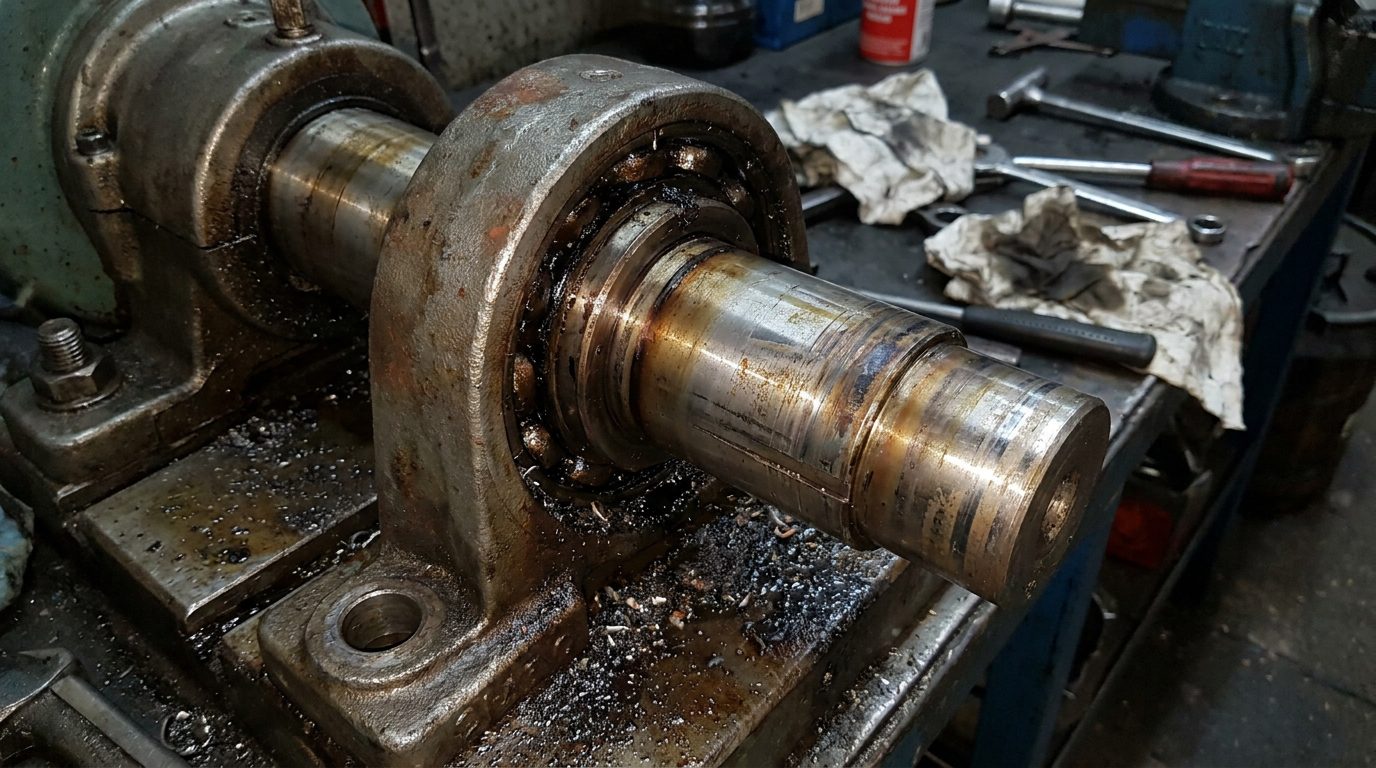
Lubrication failure in gearbox bearings is one of the fastest ways to turn a routine maintenance issue into an expensive production outage. In industrial gearboxes, bearings carry radial and axial loads, maintain shaft alignment, control gear mesh stability, and support continuous torque transmission. When the lubricant film breaks down, metal-to-metal contact, heat, vibration, contamination, and surface fatigue can escalate quickly. For maintenance managers, plant engineers, reliability engineers, mechanics, and purchasing teams, understanding the causes, symptoms, inspection methods, and prevention strategies for bearing lubrication failure is essential to protecting uptime, safety, and operating budgets.
Lubrication failure in gearbox bearings occurs when oil or grease can no longer create a protective film between rolling elements, races, cages, and adjacent gearbox components. Common causes include low oil level, wrong viscosity, contamination, overheating, lubricant degradation, foaming, poor relubrication practices, clogged breathers, seal failure, and misalignment. Symptoms often include rising temperature, abnormal noise, vibration, oil discoloration, metallic debris, bearing wear, and eventual seizure. The best prevention strategy combines correct lubricant selection, routine oil analysis, contamination control, proper filtration, temperature monitoring, vibration analysis, and disciplined inspection intervals.
Understanding the implications of lubrication failure on gearbox bearings is crucial for maintaining the efficiency and longevity of industrial machinery. For further insights into this topic, you can explore the article on industrial gearbox repair, which discusses common issues and solutions related to gearbox maintenance. This resource can be found at Industrial Gearbox Repair in Wyoming.
Why Gearbox Bearing Lubrication Matters
Gearbox bearings operate under demanding conditions: heavy loads, variable speeds, shock loading, high temperatures, and constant exposure to oil, contaminants, and wear particles. Their purpose is not only to allow shafts to rotate but also to maintain precise gear alignment. If a bearing begins to fail because of lubrication loss, the entire gearbox can be affected.
A healthy lubricant performs several critical functions:
- Separates metal surfaces with a hydrodynamic or elastohydrodynamic film
- Reduces friction and heat generation
- Carries wear particles away from contact zones
- Protects against corrosion and oxidation
- Dampens vibration and shock loading
- Supports seals and prevents ingress of contaminants
- Extends bearing, gear, shaft, and seal life
When lubrication fails, the damage is rarely isolated. Bearing distress can lead to gear tooth misalignment, increased backlash, shaft deflection, seal leakage, housing damage, and catastrophic gearbox failure.
For related service support, see Industrial Gearbox Solutions’ resources on industrial gearbox repair, gearbox rebuilding, and preventive gearbox maintenance.
Common Causes of Lubrication Failure in Gearbox Bearings
Lubrication failure usually develops from a combination of mechanical, operational, and maintenance-related factors. Identifying the root cause is critical because replacing a bearing without correcting the lubrication problem often results in repeat failure.
Low Oil Level
Low oil level is one of the most common and preventable causes of bearing damage. If the oil level falls below the manufacturer’s recommended range, bearings may receive insufficient splash, bath, or circulating lubrication.
Common reasons for low oil level include:
- Leaking shaft seals
- Loose drain plugs
- Improper fill procedures
- Oil consumption from overheating
- Incorrect sight glass readings
- Failure to top off after maintenance
- Foaming that creates a false level indication
Low oil can rapidly increase bearing temperature and cause surface distress, scoring, smearing, and eventual seizure.
Incorrect Lubricant Viscosity
Viscosity is the lubricant’s resistance to flow. If viscosity is too low, the oil film may be too thin to separate bearing surfaces under load. If viscosity is too high, the oil may not flow properly, especially during cold starts, causing starvation and excessive churning losses.
Improper viscosity may result from:
- Selecting the wrong ISO VG grade
- Using automotive oil instead of industrial gear oil
- Mixing incompatible oils
- Operating outside the gearbox’s intended temperature range
- Ignoring OEM recommendations
- Using the same oil across unlike gearboxes for convenience
SKF and Timken both emphasize the importance of lubricant viscosity in bearing life calculations and operating performance. For technical guidance, refer to SKF bearing lubrication resources and Timken lubrication guidance.
Oil Contamination
Contamination is a leading contributor to premature gearbox bearing failure. Even small particles can indent bearing raceways, disrupt lubricant film formation, and initiate fatigue cracks.
Common contaminants include:
- Dirt and dust
- Metal wear debris
- Water
- Process chemicals
- Coolant
- Cleaning solvents
- Degraded oil byproducts
- Fibers from rags or filters
Water contamination is especially dangerous because it can reduce film strength, promote rust, accelerate oxidation, and cause additive depletion.
Lubricant Oxidation and Thermal Degradation
Gearbox oil ages over time. Heat, oxygen, metal catalysts, and contamination accelerate oxidation. As oil oxidizes, it becomes thicker, darker, more acidic, and less effective at lubricating bearing surfaces.
Signs of oxidized oil include:
- Dark brown or black color
- Burnt odor
- Sludge or varnish deposits
- Increased acid number
- Increased viscosity
- Sticky residue inside the gearbox
- Filter plugging
Noria provides extensive lubrication education and oil analysis guidance at Noria Corporation, especially for contamination control, lubricant selection, and condition-based maintenance.
Foaming and Air Entrapment
Foaming reduces the lubricant’s ability to carry load and remove heat. Air bubbles collapse under pressure, causing micro-dieseling, oxidation, and unstable lubrication.
Foaming may be caused by:
- Overfilling the gearbox
- Wrong oil type
- Incompatible oil mixing
- High-speed agitation
- Air leaks in circulating systems
- Poor reservoir design
- Contaminated oil
- Depleted anti-foam additives
Foam can create the illusion of proper oil level while bearings are actually starved of effective lubricant.
Seal and Breather Failure
Gearbox seals and breathers are part of the lubrication system. When seals fail, oil escapes and contaminants enter. When breathers clog or allow moisture ingress, the internal environment becomes hostile to bearings.
Common issues include:
- Hardened or cracked seals
- Worn shaft sealing surfaces
- Plugged breathers
- Open pipe vents in dusty environments
- Missing desiccant breathers
- Pressure buildup inside the housing
- Water ingress from washdowns or outdoor exposure
For facilities operating in aggregate, mining, food processing, chemical, pulp and paper, and wastewater environments, contamination control is especially important.
Industrial gearbox bearing failure can lead to costly downtime and production losses, so it’s important to address the issue promptly. Industrial gearbox bearing failure
Symptoms of Gearbox Bearing Lubrication Failure
Early detection is the difference between a planned bearing replacement and an emergency gearbox rebuild. The symptoms of lubrication failure often appear in stages.
Temperature Increase
A bearing that is not properly lubricated generates more friction. This usually causes the gearbox housing, bearing caps, or oil sump to run hotter than normal.
Temperature warning signs include:
- Rising trend over several operating shifts
- Hot spots near bearing locations
- Oil temperature above OEM limits
- Thermal camera readings that differ from similar units
- Burnt oil smell near the gearbox
- Discoloration of paint around bearing housings
Temperature alone does not confirm lubrication failure, but it is a strong indicator when combined with vibration, oil analysis, or visual inspection findings.
Abnormal Noise
Lubrication-starved bearings often produce distinct sounds:
- Whining
- Growling
- Rumbling
- Clicking
- Squealing
- Grinding
- Intermittent knocking
Mechanics may notice that noise changes with load, speed, or temperature. A bearing that is dry or contaminated may sound worse after startup or during heavy load cycles.
Increased Vibration
Bearing defects create vibration patterns that can be detected through route-based vibration analysis or permanently installed sensors. Lubrication failure may initially show as elevated high-frequency vibration before visible damage appears.
Vibration analysis can detect:
- Outer race defects
- Inner race defects
- Rolling element damage
- Cage defects
- Shaft misalignment
- Looseness
- Gear mesh changes caused by bearing wear
Oil Discoloration and Metallic Debris
Oil condition is one of the best indicators of gearbox bearing health. If oil is dark, milky, gritty, burnt, or contains visible metal particles, lubrication failure may already be underway.
Metallic debris can appear as:
- Fine glitter-like particles
- Ferrous sludge on magnetic plugs
- Bronze or brass cage material
- Large flakes from spalling
- Dark paste on drain plugs
- Silver streaks in oil samples
Bearing Wear, Smearing, and Spalling
If the gearbox is opened for inspection, lubrication-related damage may appear as:
- Polished raceways
- Blue or straw-colored heat discoloration
- Scoring
- Smearing
- Micropitting
- Flaking or spalling
- Cage wear
- Roller end wear
- Corrosion staining
- False brinelling during standby vibration
These conditions indicate that the lubricant film was either inadequate, contaminated, degraded, or interrupted.
Understanding the impact of lubrication failure on gearbox bearings is crucial for maintaining the efficiency and longevity of industrial machinery. For those interested in exploring further, a related article discusses the importance of proper maintenance and replacement strategies for gearboxes in wind turbines. This resource provides valuable insights into how timely interventions can prevent costly failures and enhance performance. You can read more about it in this article.
Troubleshooting Lubrication Failure in Gearbox Bearings
| Types of Damage | Effects |
|---|---|
| Wear | Reduction in bearing life |
| Corrosion | Surface pitting and spalling |
| Scoring | Increased friction and heat generation |
| Fatigue | Cracking and eventual failure |
Troubleshooting should be systematic. Do not assume the bearing is the root cause simply because it failed. Bearings often fail because another condition disrupted lubrication.
Step-by-Step Troubleshooting Checklist
| Step | Inspection Area | What to Look For | Possible Cause |
|||||
| 1 | Oil level | Below sight glass mark or inconsistent readings | Leak, underfill, improper level check |
| 2 | Oil condition | Dark, milky, foamy, burnt, gritty | Oxidation, water, contamination, overheating |
| 3 | Seals | Leakage, hardening, shaft wear | Seal failure, pressure buildup, contamination |
| 4 | Breather | Clogged, wet, missing, dirty | Moisture ingress, pressure imbalance |
| 5 | Filters | Plugging, bypass condition | Excess debris, wrong filter, degraded oil |
| 6 | Temperature | Rising trend or hot bearing cap | Friction, oil starvation, overload |
| 7 | Vibration | High-frequency bearing signatures | Surface distress, contamination, film failure |
| 8 | Alignment | Coupling or shaft misalignment | Excess bearing load |
| 9 | Load | Shock loading, overload, process changes | Insufficient lubricant film under load |
| 10 | Lubricant type | Wrong ISO grade or additive package | Incorrect specification or oil mixing |
Questions Maintenance Teams Should Ask
- Was the correct lubricant used?
- Was the oil changed at the proper interval?
- Was the gearbox recently topped off with a different oil?
- Has the operating load changed?
- Has the ambient temperature changed?
- Is the gearbox exposed to water, dust, chemicals, or washdowns?
- Are breathers and seals functioning properly?
- Is the gearbox overfilled or underfilled?
- Are oil analysis results trending in the wrong direction?
- Was the bearing installed correctly during the last repair?
Differentiating Lubrication Failure from Other Bearing Failures
Not all bearing failures are caused by lubricant problems. However, lubrication failure often overlaps with other issues.
| Failure Mode | Typical Evidence | Lubrication Connection |
||||
| Misalignment | Uneven raceway wear, edge loading | Increases contact stress and film breakdown |
| Overload | Subsurface fatigue, spalling | Requires higher viscosity or load capacity |
| Contamination | Dents, scratches, abrasive wear | Dirty oil disrupts bearing film |
| Corrosion | Rust, staining, pitting | Water-contaminated oil or poor storage |
| Electrical damage | Fluting, washboard pattern | Not directly lubricant-related |
| Improper installation | Brinelling, cracked rings | Lubrication may not prevent mechanical damage |
| Oil starvation | Heat discoloration, smearing, seizure | Direct lubrication failure |
For guidance on gear and gearbox standards, the American Gear Manufacturers Association is an authoritative resource for gear drive design, rating, and maintenance standards.
Inspection Methods for Gearbox Bearing Lubrication Problems
A strong inspection program combines visual, sensory, analytical, and predictive technologies. No single method catches every problem.
Visual Inspection
Routine visual checks are simple but valuable. Maintenance personnel should inspect:
- Sight glass oil level
- Oil color and clarity
- Foam in the sight glass
- Seal leakage
- Breather condition
- Housing cracks
- Loose fasteners
- Paint discoloration
- Oil residue around inspection covers
- Magnetic drain plug debris
Visual inspection should be documented with photos and trend notes. A “normal” gearbox baseline is extremely useful.
Oil Analysis
Oil analysis is one of the most effective ways to detect lubrication failure before catastrophic damage occurs.
Recommended oil analysis tests include:
- Viscosity at 40°C
- Acid number
- Water content by Karl Fischer
- Particle count
- Ferrous density
- Spectrometric metals
- FTIR oxidation and nitration
- Additive depletion
- Insolubles
- Patch test or membrane analysis
Oil analysis can detect lubricant degradation, contamination, wear metals, and incorrect oil. The key is trending results over time, not relying on one sample.
Vibration Analysis
Vibration analysis helps identify bearing defects long before they are visible. High-frequency envelope analysis, acceleration readings, and bearing fault frequencies can reveal early-stage lubrication distress.
Use vibration analysis to monitor:
- Bearing defect frequencies
- Gear mesh frequency sidebands
- Overall vibration amplitude
- High-frequency energy
- Looseness
- Imbalance
- Misalignment
- Resonance
Infrared Thermography
Thermal imaging provides a fast way to compare gearbox bearing temperatures across similar assets. A thermal camera can identify abnormal heat patterns related to lubrication starvation, overload, or misalignment.
Best practices include:
- Capture images under similar load conditions
- Compare drive-end and non-drive-end bearings
- Trend temperatures over time
- Record ambient temperature
- Verify emissivity settings
- Use thermal data with vibration and oil analysis
Borescope Inspection
A borescope allows internal inspection without a full teardown. It may reveal:
- Oil distribution problems
- Sludge buildup
- Rust
- Gear tooth wear
- Bearing cage damage
- Oil channel blockage
- Foaming
- Internal debris
Borescope inspections are especially useful during planned outages when time is limited.
Prevention Strategies for Lubrication Failure
Prevention requires more than changing oil on a calendar. The best programs use a reliability-centered lubrication strategy.
Choose the Correct Lubricant
Always confirm the lubricant specification against the gearbox OEM recommendation, operating temperature, speed, load, and environment.
Important selection factors include:
- ISO viscosity grade
- Base oil type: mineral, PAO synthetic, PAG synthetic
- Extreme pressure additives
- Anti-wear properties
- Oxidation stability
- Demulsibility
- Foam resistance
- Rust and corrosion protection
- Compatibility with seals and paints
- Compatibility with existing lubricant
Do not substitute lubricants without engineering review. Mixing incompatible oils can cause additive dropout, foaming, sludge, and reduced film strength.
Control Contamination
Contamination control is one of the highest-return maintenance practices for gearbox reliability.
Best practices include:
- Use desiccant breathers
- Store oil drums indoors or under cover
- Use sealed transfer containers
- Filter new oil before use
- Avoid open funnels and dirty fill containers
- Maintain seals and shaft surfaces
- Install quick-connect filtration ports
- Use proper filter beta ratings
- Keep sampling ports clean
- Prevent water spray from contacting breathers and seals
Maintain Proper Oil Level
Oil level should be checked under the correct conditions. Some gearboxes require level checks while stopped, while others require checks during operation or after a drain-back period.
Avoid:
- Overfilling
- Underfilling
- Checking level immediately after shutdown if oil has not settled
- Ignoring foaming
- Assuming a stained sight glass means proper oil level
- Using the wrong dipstick or level plug
Use Condition-Based Oil Change Intervals
Calendar-based oil changes may be too frequent or not frequent enough. Oil analysis allows maintenance teams to change oil based on actual condition.
Condition-based intervals consider:
- Oxidation level
- Viscosity change
- Water contamination
- Particle count
- Additive depletion
- Wear metal trends
- Operating temperature
- Duty cycle
- Criticality of the asset
Train Maintenance Personnel
Many lubrication failures are human-factor failures. Training should cover lubricant identification, storage, handling, transfer, sampling, contamination control, and correct fill practices.
Helpful practices include:
- Color-coded lubricant tags
- Dedicated transfer containers
- Written lubrication procedures
- Standardized oil sampling methods
- Operator inspection routes
- Lubrication maps
- Clear gearbox nameplates
- PM compliance tracking
Repair vs. Replacement: What to Do After Lubrication Failure
When gearbox bearing lubrication failure occurs, the decision to repair, rebuild, or replace depends on damage severity, lead time, criticality, and cost.
When Repair May Be Enough
Repair may be appropriate if:
- Damage is limited to bearings and seals
- Gear teeth are still within tolerance
- Shafts are not scored or bent
- Housing bores are not worn
- No severe overheating occurred
- Replacement bearings are available
- Root cause is clearly identified and corrected
Common repair work includes:
- Bearing replacement
- Seal replacement
- Shaft journal polishing or sleeving
- Oil flush
- Filter replacement
- Breather upgrade
- Coupling alignment
- Lubricant change
- Inspection of gear tooth contact pattern
When a Full Gearbox Rebuild Is Recommended
A full rebuild may be necessary when lubrication failure has caused widespread internal damage.
Rebuild indicators include:
- Spalled or pitted gears
- Damaged shafts
- Worn bearing fits
- Housing bore damage
- Severe contamination
- Heat distortion
- Repeated bearing failures
- Excessive backlash
- Misalignment caused by internal wear
Industrial Gearbox Solutions can support inspection, reverse engineering, bearing replacement, seal upgrades, gear repair, and complete gearbox rebuilding. See gearbox rebuild services for more information.
When Replacement Makes More Sense
Replacement may be the better choice when:
- Repair cost approaches replacement cost
- OEM parts are obsolete
- Housing is cracked or distorted
- Lead time for custom repair is too long
- The gearbox is undersized for the application
- Production risk is unacceptable
- A newer gearbox design offers better efficiency or reliability
Purchasing professionals should compare not only purchase price but also lifecycle cost, downtime exposure, energy efficiency, spare parts availability, and warranty support.
Maintenance Best Practices for Gearbox Bearing Lubrication
A disciplined maintenance program reduces failure risk and improves asset life.
Recommended Maintenance Schedule
| Frequency | Task | Purpose |
||||
| Daily/Shift | Check noise, temperature, leaks, oil level | Detect early abnormalities |
| Weekly | Inspect breathers, seals, sight glass, mounting bolts | Prevent contamination and looseness |
| Monthly | Take temperature readings and review vibration trends | Identify developing bearing issues |
| Quarterly | Perform oil analysis on critical gearboxes | Monitor lubricant and wear condition |
| Semiannual | Inspect filters, sample ports, alignment, coupling | Reduce stress on bearings |
| Annual | Drain/flush if condition requires, inspect internals if accessible | Remove degraded oil and debris |
| Outage-Based | Borescope, bearing clearance checks, seal replacement | Prevent major failures |
Storage and Handling of Lubricants
Lubricant cleanliness begins before the oil enters the gearbox.
Best practices:
- Store drums horizontally with bungs at 3 and 9 o’clock if outdoors
- Keep containers sealed
- Use first-in, first-out inventory
- Label all lubricants clearly
- Use dedicated pumps for each oil type
- Filter oil during transfer
- Keep fill tools clean and capped
- Avoid galvanized containers with certain additives
- Do not use open buckets or improvised containers
Proper Oil Sampling Technique
Poor sampling can produce misleading oil analysis results.
Sampling tips:
- Sample from a live zone, not the drain pan
- Use consistent sampling location and method
- Flush sample tubing before collecting
- Use clean, approved bottles
- Label samples immediately
- Record operating hours, oil hours, temperature, and recent maintenance
- Sample while oil is warm and circulating when possible
Consequences of Ignoring Lubrication Failure
Ignoring lubrication failure can be extremely costly. Gearbox bearings may be relatively inexpensive compared to the total consequences of failure.
Potential consequences include:
- Unplanned downtime
- Secondary gear damage
- Shaft and housing damage
- Emergency repair premiums
- Expedited freight costs
- Production loss
- Safety hazards
- Contamination of connected equipment
- Motor overload
- Coupling failure
- Increased energy consumption
- Reduced asset life
- Warranty disputes
- Higher spare inventory costs
Business Impact Example
| Failure Scenario | Likely Cost Impact | Operational Risk |
||:||
| Early oil contamination detected | Low | Planned maintenance |
| Bearing noise ignored for weeks | Medium | Short outage likely |
| Bearing seizure during production | High | Emergency shutdown |
| Bearing failure damages gears and shafts | Very high | Full rebuild or replacement |
| Critical gearbox unavailable with long OEM lead time | Extreme | Extended production loss |
For critical production assets, a lubrication failure should be treated as a reliability event, not just a maintenance task.
Branded Image Suggestions
Image 1: Technician Inspecting Gearbox Sight Glass
Alt text: Technician checking oil level in an industrial gearbox sight glass for bearing lubrication failure prevention
Caption: Routine oil level checks help prevent lubrication starvation in gearbox bearings.
Image 2: Damaged Gearbox Bearing Close-Up
Alt text: Close-up of gearbox bearing damage caused by lubrication failure and contamination
Caption: Smearing, discoloration, and spalling are common signs of lubrication-related bearing failure.
Image 3: Oil Sampling on Industrial Gearbox
Alt text: Maintenance technician collecting gearbox oil sample for condition monitoring and oil analysis
Caption: Oil analysis helps detect contamination, oxidation, and wear metals before catastrophic gearbox failure.
Image 4: Desiccant Breather Installed on Gearbox
Alt text: Desiccant breather installed on industrial gearbox to prevent moisture and particle contamination
Caption: Contamination control is essential for extending gearbox bearing and lubricant life.
Image 5: Thermal Imaging of Gearbox Bearing Housing
Alt text: Infrared thermal image of gearbox bearing housing showing elevated temperature from lubrication failure
Caption: Thermal inspections can identify abnormal bearing heat trends before failure occurs.
SEO Metadata Suggestions
Meta title: The Dangers of Lubrication Failure in Gearbox Bearings
Meta description: Learn the causes, symptoms, troubleshooting steps, inspection methods, prevention strategies, and repair options for lubrication failure in gearbox bearings.
Primary keyword: lubrication failure in gearbox bearings
Secondary keywords:
- gearbox bearing lubrication failure
- industrial gearbox bearing failure
- gearbox oil contamination
- gearbox bearing overheating
- gearbox lubrication best practices
- oil analysis for gearboxes
- gearbox repair and rebuild
- bearing failure troubleshooting
Suggested URL slug: lubrication-failure-gearbox-bearings
Suggested internal links:
- Industrial Gearbox Repair
- Gearbox Rebuilding Services
- Preventive Gearbox Maintenance
- Emergency Gearbox Repair
- Gearbox Inspection Services
Authoritative external sources:
- SKF for bearing lubrication and condition monitoring references
- Timken for bearing selection, lubrication, and failure analysis resources
- AGMA for gear drive standards and technical publications
- Noria for lubrication best practices, oil analysis, and contamination control
FAQs
What is the most common cause of lubrication failure in gearbox bearings?
The most common causes are low oil level, oil contamination, incorrect viscosity, and degraded lubricant. In many plants, contamination from dirt, water, or wear particles is the primary factor that shortens bearing life.
How quickly can a gearbox bearing fail without proper lubrication?
A bearing can fail very quickly if lubrication is severely restricted. Under heavy load or high speed, oil starvation can cause overheating, smearing, and seizure in hours or even minutes. Mild lubrication problems may develop over weeks or months.
Can oil analysis detect bearing failure before it happens?
Yes. Oil analysis can detect wear metals, water contamination, oxidation, viscosity changes, and particle contamination before catastrophic failure occurs. It is most effective when samples are taken consistently and trended over time.
Why does water in gearbox oil damage bearings?
Water reduces lubricant film strength, promotes corrosion, accelerates oxidation, and can cause hydrogen embrittlement or surface fatigue. Even small amounts of water can significantly reduce bearing life.
Is synthetic oil better for gearbox bearings?
Synthetic oil can offer better oxidation stability, wider temperature performance, improved film strength, and longer service life. However, it must be compatible with the gearbox design, seals, paints, and existing lubricant. Always confirm with OEM recommendations or a lubrication specialist.
Should a gearbox be flushed after bearing failure?
In most cases, yes. Bearing failure releases metal debris and degraded oil byproducts into the gearbox. A proper flush helps remove contaminants that could damage new bearings and gears.
What does milky gearbox oil mean?
Milky oil usually indicates water contamination or severe aeration. Water contamination should be addressed immediately by identifying the source, removing the water, and determining whether bearings or gears have already been damaged.
Can overfilling a gearbox cause lubrication failure?
Yes. Overfilling can cause churning, foaming, heat generation, seal leakage, and aerated oil. Aerated oil does not protect bearings as effectively as clean, stable oil.
How often should gearbox oil be changed?
Oil change intervals depend on operating conditions, oil type, contamination level, temperature, and gearbox criticality. Condition-based oil changes using oil analysis are more reliable than fixed calendar intervals.
When should I repair or replace a gearbox after lubrication failure?
Repair may be suitable if damage is limited to bearings and seals. A rebuild is often needed if gears, shafts, or housing fits are damaged. Replacement may be best if the gearbox is obsolete, severely damaged, or undersized for the application.
Key Takeaways
- Lubrication failure in gearbox bearings can rapidly lead to overheating, vibration, bearing seizure, gear damage, and unplanned downtime.
- Common causes include low oil level, wrong viscosity, contamination, oxidation, foaming, seal leakage, and breather failure.
- Early warning signs include abnormal noise, elevated temperature, vibration changes, oil discoloration, metallic debris, and leakage.
- Oil analysis, vibration monitoring, thermography, visual inspections, and borescope inspections are powerful detection tools.
- Contamination control, correct lubricant selection, proper oil level, and trained maintenance personnel are essential for prevention.
- Bearing replacement alone is not enough unless the root cause of lubrication failure is corrected.
- Repair, rebuild, or replacement decisions should consider damage severity, downtime risk, lead time, asset criticality, and lifecycle cost.
Conclusion
Lubrication failure in gearbox bearings is preventable, but only when maintenance teams treat lubrication as a critical reliability function rather than a routine consumable task. The lubricant inside a gearbox is a diagnostic tool, a protective barrier, a cooling medium, and a key factor in bearing and gear life. When oil level, viscosity, cleanliness, temperature, and contamination control are neglected, bearing damage can escalate into a full gearbox failure.
For maintenance managers, engineers, mechanics, and purchasing professionals, the best approach is proactive: select the right lubricant, keep it clean and dry, monitor condition, inspect regularly, and respond quickly to early warning signs. If your gearbox is showing signs of overheating, abnormal noise, vibration, oil contamination, or bearing distress, Industrial Gearbox Solutions can help evaluate repair, rebuild, or replacement options before failure disrupts production.
FAQs
What is lubrication failure in gearbox bearings?
Lubrication failure in gearbox bearings occurs when there is a lack of proper lubrication, leading to increased friction and heat generation within the bearings. This can result in accelerated wear and potential damage to the bearings.
What are the common causes of lubrication failure in gearbox bearings?
Common causes of lubrication failure in gearbox bearings include inadequate lubricant quantity, improper lubricant viscosity, contamination of the lubricant with dirt or debris, and ineffective lubricant distribution within the bearing system.
What are the consequences of lubrication failure in gearbox bearings?
The consequences of lubrication failure in gearbox bearings can include increased friction, heat generation, wear, and potential damage to the bearings. This can lead to decreased efficiency, increased maintenance costs, and ultimately, gearbox failure.
How can lubrication failure be prevented in gearbox bearings?
Lubrication failure in gearbox bearings can be prevented by ensuring proper lubricant selection, adequate lubricant quantity, regular lubricant analysis and maintenance, effective lubricant distribution, and protection of the lubricant from contamination.
What are the signs of lubrication failure in gearbox bearings?
Signs of lubrication failure in gearbox bearings may include increased operating temperature, abnormal noise or vibration, accelerated wear of the bearings, and decreased equipment performance. Regular monitoring and maintenance can help identify and address lubrication issues before they lead to significant damage.