
Industrial gearbox bearing failure is one of the leading causes of unplanned downtime, costly repairs, and reduced equipment reliability.
When a bearing begins to wear, it can quickly affect gears, shafts, seals, and lubrication systems, turning a minor maintenance issue into a complete gearbox failure.
Understanding the causes, warning signs, inspection methods, and prevention strategies helps maintenance teams reduce downtime and extend gearbox life.
This guide explains how to identify bearing failure, diagnose the root cause, prevent repeat failures, and determine whether repair or replacement is the best solution.
Quick Answer
Industrial gearbox bearing failure is most commonly caused by poor lubrication, contamination, shaft misalignment, overload, or improper installation. Early warning signs include increased vibration, grinding noises, overheating, and metal particles in the lubricant. Detecting these problems early through vibration analysis and oil analysis can prevent catastrophic gearbox damage and significantly reduce downtime.
Need Help Identifying Your Gearbox?
If your gearbox is making unusual noise, running hot, vibrating excessively, or showing signs of bearing failure, our gearbox specialists can help.
Upload a clear photo of your gearbox nameplate, and we’ll help identify your gearbox, bearings, seals, and replacement options.
Or call 1-877-465-9108 to speak with an industrial gearbox specialist.
Why Industrial Gearbox Bearing Failure Matters
Bearings are among the most critical components inside an industrial gearbox. Their job is to support rotating shafts while allowing gears to remain precisely aligned under constantly changing loads and operating conditions. When bearings perform correctly, they reduce friction, support smooth power transmission, and help maximize gearbox efficiency.
When a bearing begins to deteriorate, however, the effects rarely remain isolated. Increased internal clearance, excessive vibration, rising temperatures, and lubrication breakdown can quickly affect every major component inside the gearbox.
A failed bearing may result in:
- Gear tooth misalignment
- Increased vibration
- Excessive operating temperatures
- Premature seal failure
- Shaft damage
- Housing bore wear
- Gear pitting and scoring
- Broken gear teeth
- Lubricant contamination
- Complete gearbox seizure
- Unplanned production downtime
- Higher maintenance costs
In many situations, replacing a worn bearing during scheduled maintenance costs only a fraction of what a complete gearbox rebuild or replacement would require. Detecting bearing problems early allows maintenance teams to schedule repairs before catastrophic failures occur.
What Is an Industrial Gearbox Bearing?
An industrial gearbox bearing is a precision-machined component designed to support rotating shafts while minimizing friction and maintaining accurate shaft alignment. Bearings allow gears to rotate smoothly under heavy radial and axial loads while distributing forces evenly throughout the gearbox.
Depending on the gearbox design, bearings may include:
- Ball bearings
- Cylindrical roller bearings
- Tapered roller bearings
- Spherical roller bearings
- Needle bearings
- Thrust bearings
Industrial gearbox bearings are manufactured to precise engineering tolerances and are selected based on load capacity, speed, operating environment, and expected service life. Industry standards published by the American Gear Manufacturers Association help engineers specify and evaluate gearbox performance, while bearing manufacturers publish detailed application and maintenance guidance to maximize reliability.
What Causes Industrial Gearbox Bearing Failure?
Although bearings are designed to operate reliably for many years, they rarely fail without an underlying cause. In most cases, bearing failure is the result of operating conditions or maintenance issues rather than defects in the bearing itself.
The most common causes include:
| Cause | Typical Result |
|---|---|
| Poor lubrication | Metal-to-metal contact and overheating |
| Oil contamination | Abrasive wear and surface fatigue |
| Water contamination | Corrosion and lubricant breakdown |
| Shaft misalignment | Uneven loading and premature wear |
| Excessive loading | Brinelling, fatigue, and cage failure |
| Improper installation | Reduced bearing life from installation |
| Electrical discharge | Fluting and raceway damage |
| Excessive heat | Lubricant degradation and wear |
| Incorrect bearing selection | Reduced load capacity and shortened life |
| Housing or shaft damage | Abnormal bearing loading |
One of the biggest misconceptions is that the bearing itself is the problem. In reality, bearings are often the first component to fail because they react to problems elsewhere in the drivetrain. Contaminated lubricant, improper alignment, excessive loads, damaged shafts, and poor installation practices all place additional stress on the bearing until failure eventually occurs.
Successful repairs focus on identifying and correcting the root cause—not simply replacing the failed bearing.
The Cost of Ignoring Bearing Problems
A small bearing defect can become a major gearbox failure surprisingly quickly. As the bearing deteriorates, metal particles contaminate the lubricant, vibration levels increase, and gear mesh alignment begins to change. Eventually, secondary damage affects gears, shafts, seals, housings, and couplings.
Ignoring early warning signs can lead to:
- Emergency shutdowns
- Costly production interruptions
- Damaged gears and shafts
- Higher repair costs
- Extended replacement lead times
- Reduced equipment reliability
- Increased safety risks
Facilities that implement vibration analysis, oil analysis, infrared thermography, and routine inspections often identify bearing problems months before catastrophic failure occurs. This proactive approach significantly reduces maintenance costs while improving overall equipment reliability.
Common Causes of Industrial Gearbox Bearing Failure
Industrial gearbox bearings are designed to operate for years under demanding conditions, but they depend on proper lubrication, correct loading, precise alignment, and clean operating environments. Most bearing failures are not caused by manufacturing defects—they result from conditions that gradually damage the bearing until failure occurs.
Understanding these root causes helps maintenance teams eliminate recurring failures and improve gearbox reliability.
Lubrication Failure
Lubrication failure is the leading cause of industrial gearbox bearing failure. Bearings rely on a thin oil film to separate rolling elements from the raceways. When that protective film breaks down, metal surfaces begin contacting one another, generating excessive heat, friction, and wear.
Common lubrication problems include:
- Low oil level
- Incorrect oil viscosity
- Using the wrong lubricant
- Oxidized or degraded oil
- Oil starvation
- Excessive grease
- Mixing incompatible lubricants
- Foaming oil
- Blocked lubrication passages
- Poor oil circulation
- Excessive operating temperatures
As lubrication deteriorates, bearings begin developing surface damage that accelerates wear throughout the gearbox.
Proper lubricant selection is critical to bearing life. Leading bearing manufacturers such as SKF and Timken recommend selecting lubricants based on operating temperature, load, speed, and contamination risk rather than using a one-size-fits-all approach. Their technical resources provide additional guidance on lubricant selection and bearing maintenance.
Signs of Lubrication Failure
Watch for these common warning signs:
- Blue or brown discoloration
- Burnt oil odor
- Rising operating temperatures
- Increased vibration
- Metallic particles in the lubricant
- Scored or smeared raceways
- Premature bearing fatigue
- Heavy varnish or sludge deposits
Regular oil analysis is one of the most effective ways to identify lubrication problems before they result in catastrophic failure.
Oil Contamination
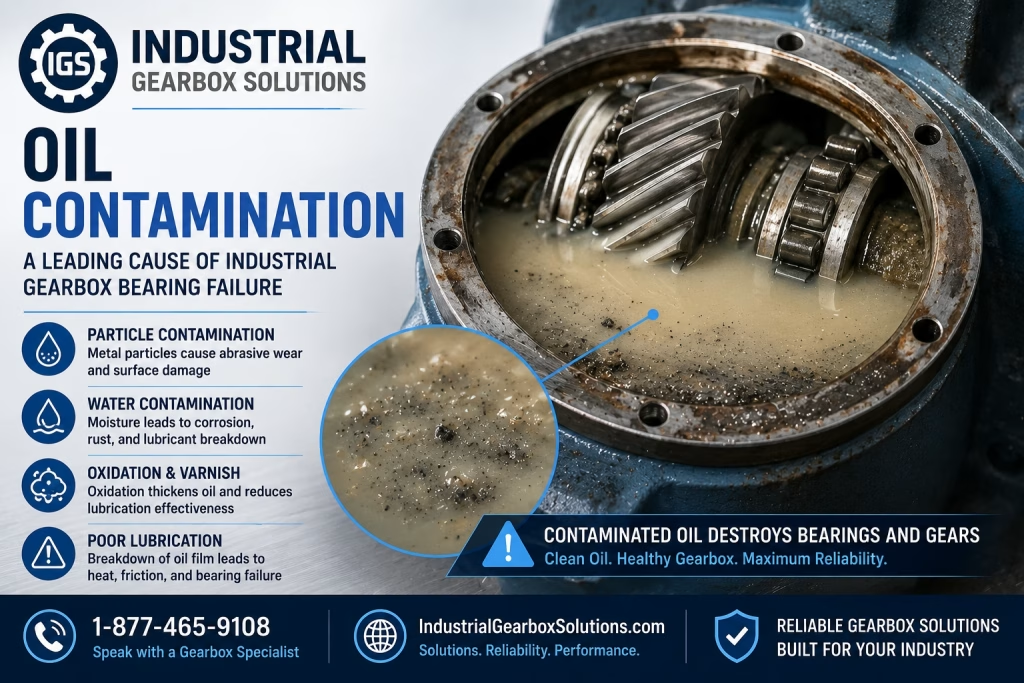
Contaminated lubricant is another leading cause of premature bearing failure. Even microscopic particles can create permanent dents in bearing raceways because rolling elements generate extremely high contact pressures.
Common contaminants include:
- Dirt
- Sand
- Metal particles
- Water
- Dust
- Rust
- Fibers
- Process chemicals
- Coolant
- Paint chips
Once contamination enters the gearbox, it circulates continuously through bearings and gears, accelerating wear on every lubricated component.
Particle Contamination
Hard particles become trapped between the rolling elements and raceways, creating microscopic dents that eventually develop into fatigue cracks and spalling.
Typical sources include:
- Dirty oil containers
- Open fill ports
- Failed breathers
- Damaged seals
- Wear debris from gears
- Improper maintenance practices
Maintaining clean lubricant is one of the highest-return investments any maintenance program can make.
Water Contamination
Water is especially damaging because it reduces lubricant film strength while promoting corrosion and oxidation.
Water commonly enters gearboxes through:
- Failed shaft seals
- Damaged breathers
- Condensation
- Washdown operations
- Outdoor storage
- Flooding
- Improper handling during maintenance
Even relatively small amounts of water can significantly reduce bearing life.
Symptoms of Contaminated Oil
Contaminated lubricant often produces several warning signs:
- Milky or cloudy oil
- Rust-colored lubricant
- High particle counts
- Increased bearing temperatures
- Abrasive wear
- Pitting
- Surface corrosion
- Premature spalling
Routine oil sampling provides valuable information about contamination levels long before visible damage occurs.
Shaft Misalignment
Proper shaft alignment allows bearings to distribute loads evenly across their rolling elements. When shafts become misaligned, loads concentrate on one side of the bearing, dramatically increasing stress and reducing service life.
Misalignment may result from:
- Improper installation
- Soft foot
- Foundation movement
- Thermal expansion
- Coupling misalignment
- Shaft deflection
- Housing distortion
- Incorrect shimming
- Pipe strain
Even minor alignment errors can reduce bearing life by several hundred percent.
Symptoms of Misalignment
Common indicators include:
- High vibration
- Uneven bearing wear
- Coupling wear
- Repeated seal failures
- Elevated bearing temperatures
- Abnormal gear tooth contact
- Increased operating noise
Laser alignment should be performed whenever a gearbox is installed, rebuilt, or moved to a new foundation.
Overloading and Shock Loads
Industrial gearboxes frequently operate in demanding applications where loads fluctuate throughout the production cycle. Sudden torque spikes can overload bearings even when average operating loads appear normal.
Common overload conditions include:
- Equipment jams
- Heavy startups
- Frequent reversing
- Process surges
- Incorrect motor sizing
- Improper service factors
- Shock loading
- Overloaded conveyors
- Crusher impacts
- Extruder surges
Repeated overload conditions shorten bearing life by creating excessive contact stresses inside the bearing.
Damage Caused by Overloading
Excessive loading may result in:
- Brinelling
- Raceway deformation
- Cage failure
- Rolling element damage
- Fatigue cracking
- Excessive heat
- Gear tooth damage
- Shaft deflection
When overload conditions are suspected, the entire application should be evaluated rather than simply replacing the failed bearing.
Improper Bearing Installation
Even premium-quality bearings can fail prematurely if they are installed incorrectly.
Common installation mistakes include:
- Hammering directly on the bearing
- Applying force through rolling elements
- Incorrect shaft fits
- Dirty installation environments
- Improper heating methods
- Excessive mounting force
- Incorrect internal clearance
- Damaged bearing seats
- Burrs on shafts
- Incorrect locknut torque
Many repeat failures can be traced back to installation practices rather than bearing quality.
Installation Best Practices
Proper installation should include:
- Using induction bearing heaters
- Verifying shaft and housing dimensions
- Checking bearing fits and clearances
- Maintaining a clean work area
- Using the correct installation tools
- Following manufacturer specifications
- Recording installation measurements
- Rotating the shaft by hand before startup
Careful installation helps ensure the bearing reaches its full expected service life.
Bearing Fatigue
Every bearing has a finite fatigue life. Over millions of load cycles, microscopic cracks naturally develop beneath the raceway surface. As these cracks grow, small pieces of material break away, producing the flaking commonly known as spalling.
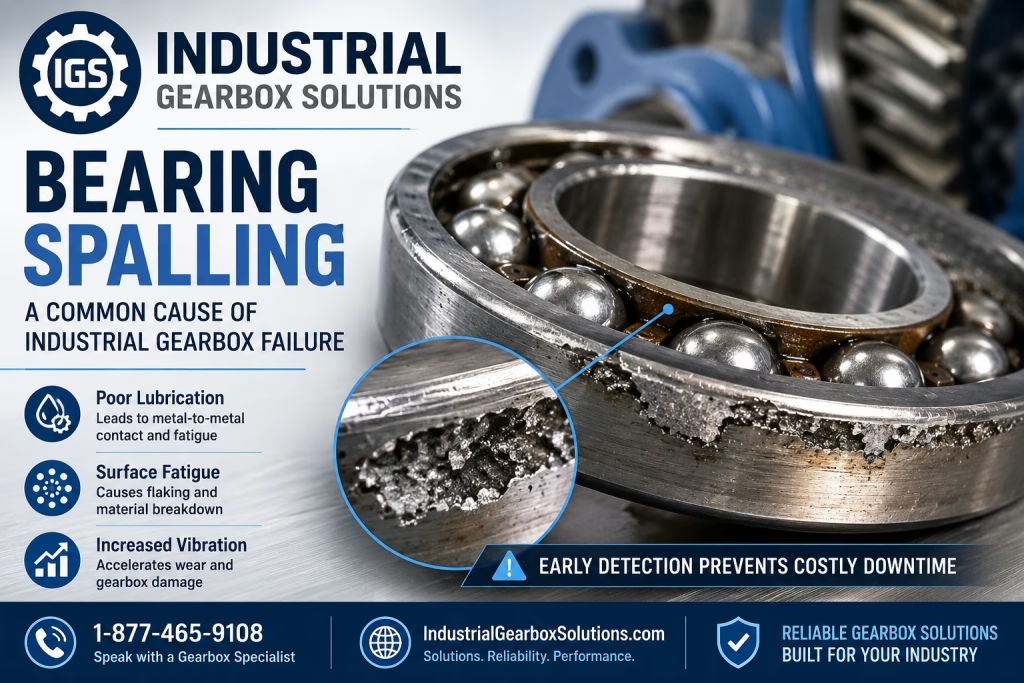
Although fatigue is inevitable over time, most industrial gearbox bearings fail well before reaching their calculated life because of lubrication problems, contamination, overload, or misalignment.
Electrical Discharge Damage
Variable frequency drives (VFDs) and improper electrical grounding can allow current to pass through gearbox bearings. Electrical discharge damages raceways by creating microscopic arcs that melt small portions of the bearing surface.
Typical signs include:
- Fluted raceways
- Frosted bearing surfaces
- Fine pitting
- Increased operating noise
- Darkened grease
- Repeated failures near electric motors
Installing shaft grounding devices, insulated bearings, and proper motor grounding can significantly reduce electrical bearing damage.
Signs and Symptoms of Industrial Gearbox Bearing Failure
Industrial gearbox bearings rarely fail without warning. In most cases, the bearing gradually deteriorates while producing measurable changes in vibration, temperature, noise, and lubricant condition. Recognizing these early warning signs allows maintenance teams to schedule repairs before secondary damage affects gears, shafts, seals, and housings.
Successful predictive maintenance programs rely on identifying these symptoms early rather than waiting for catastrophic failure.
Common Bearing Failure Symptoms
| Symptom | Possible Cause | Recommended Action |
|---|---|---|
| Increased vibration | Bearing wear, misalignment, imbalance | Perform vibration analysis |
| Rising temperature | Poor lubrication, overload | Check oil condition and operating load |
| Rumbling or grinding noise | Spalling or raceway damage | Inspect bearings immediately |
| Metallic debris in oil | Bearing or gear wear | Perform oil analysis |
| Seal leakage | Bearing looseness or shaft wear | Inspect seals and shaft movement |
| Milky oil | Water contamination | Identify and eliminate moisture source |
| Burnt oil smell | Overheating or lubricant breakdown | Replace lubricant and inspect gearbox |
| Increased motor current | Excessive friction or overload | Evaluate drivetrain loading |
Maintenance teams should always evaluate multiple symptoms together. A single indicator rarely identifies the root cause on its own.
Gearbox Bearing Noise
Unusual noise is often one of the first symptoms operators notice. While every gearbox produces some normal operating sound, changes in noise characteristics often indicate developing bearing problems.
Common bearing noises include:
- Rumbling
- Growling
- Grinding
- Clicking
- Knocking
- High-pitched whining
- Squealing under load
Noise generally becomes louder as bearing damage progresses. Bearings with spalling or raceway damage often produce a rough, rumbling sound that increases with shaft speed.
Whenever unusual noise develops, combine sound observations with vibration analysis and lubricant inspection before determining the cause.
Excessive Vibration
Vibration analysis remains one of the most effective tools for detecting bearing defects long before visible damage occurs.
Damaged bearings create characteristic vibration frequencies that allow reliability teams to identify defects while the gearbox is still operating.
Common vibration indicators include:
- Increased high-frequency vibration
- Outer race defect frequencies
- Inner race defect frequencies
- Rolling element frequencies
- Cage frequencies
- Sidebands around gear mesh frequencies
- Broadband vibration increases
- Impact events in time waveform data
Trending vibration levels over time often provides more valuable information than a single measurement.
Rising Operating Temperature
Bearing friction generates heat during normal operation, but excessive temperatures usually indicate an underlying problem.
Possible causes include:
- Low oil level
- Incorrect lubricant viscosity
- Contaminated lubricant
- Bearing overload
- Shaft misalignment
- Internal damage
- Restricted oil flow
- Excessive preload
Rather than focusing on one temperature reading, maintenance personnel should monitor temperature trends.
For example, if a gearbox normally operates at 150°F (66°C) and gradually increases to 185°F (85°C) under the same operating conditions, the change warrants immediate investigation.
Infrared thermography makes it easy to monitor bearing temperatures during routine inspections without shutting down equipment.
Changes in Lubricant Condition
Lubricant provides valuable information about the health of the gearbox.
During routine inspections, look for:
- Darkened oil
- Burnt odor
- Milky appearance
- Foaming
- Metal particles
- Rust discoloration
- Sludge
- Excessive varnish
Even before bearings become noisy, lubricant analysis may reveal increasing wear metals or contamination that indicates early bearing deterioration.
Seal Leakage
A leaking seal does not always indicate a seal problem.
Excessive shaft movement caused by bearing wear frequently damages seals, allowing lubricant to escape and contaminants to enter the gearbox.
Common causes include:
- Worn bearings
- Shaft runout
- Misalignment
- Excessive internal pressure
- Damaged shaft surfaces
- Plugged breathers
Repairing the seal without correcting the failed bearing usually results in another leak within a short period.
Visual Warning Signs
During planned shutdowns, technicians should inspect the gearbox for visible evidence of bearing distress.
Common visual indicators include:
- Heat discoloration
- Oil leaks
- Rust around seals
- Excessive shaft movement
- Loose couplings
- Burnt lubricant
- Damaged breathers
- Housing cracks
- Excessive corrosion
External symptoms often provide valuable clues about conditions developing inside the gearbox.
Common Industrial Gearbox Bearing Failure Modes
Understanding how bearings fail helps maintenance teams identify root causes instead of simply replacing damaged components.
Bearing Spalling
Spalling is one of the most common bearing failure modes. It occurs when repeated stress causes small pieces of material to flake away from the raceway or rolling elements.
Once spalling begins, the damaged area grows rapidly, increasing vibration, noise, and metal contamination throughout the gearbox.
Common causes include:
- Fatigue
- Lubrication failure
- Contamination
- Misalignment
- Overloading
- Improper installation
Typical symptoms include:
- Rumbling noise
- Increased vibration
- Metal flakes in oil
- Rough raceways
- Rising temperatures
Brinelling
Brinelling occurs when rolling elements permanently indent the bearing raceways.
True Brinelling
True brinelling results from excessive static or impact loading.
Common causes include:
- Heavy impacts
- Improper installation
- Equipment drops
- Severe shock loads
False Brinelling
False brinelling develops when equipment experiences small oscillating movements without adequate lubrication.
Typical causes include:
- Long-term storage
- Transportation vibration
- Idle standby equipment
- Machinery located near vibrating equipment
Both conditions reduce bearing life by creating stress concentrations that eventually develop into fatigue cracks.
Bearing Fatigue
Bearing fatigue occurs naturally after millions of load cycles.
As microscopic cracks grow beneath the raceway surface, material eventually separates from the bearing, producing spalling.
Fatigue life depends on several factors, including:
- Load
- Speed
- Lubrication quality
- Alignment
- Contamination
- Installation quality
Improving these conditions can dramatically extend bearing service life.
Corrosion Damage
Moisture and chemical contamination can corrode bearing surfaces, reducing load capacity and accelerating fatigue.
Corrosion commonly results from:
- Water contamination
- Condensation
- Washdown procedures
- Improper storage
- Chemical exposure
Even light surface corrosion can shorten bearing life significantly.
Cage Failure
Bearing cages maintain proper spacing between rolling elements.
Cage failures often result from:
- Excessive speed
- Lubrication failure
- Misalignment
- Shock loading
- Manufacturing damage
- Severe vibration
Once the cage begins deteriorating, complete bearing failure usually follows quickly.
Why Identifying the Failure Mode Matters
Replacing a failed bearing without determining why it failed often leads to another failure within months.
Successful repairs should always identify the underlying cause before installing new components.
Ask questions such as:
- Was lubrication adequate?
- Was the oil clean?
- Was shaft alignment verified?
- Was the gearbox overloaded?
- Were proper installation procedures followed?
- Has the operating environment changed?
- Are seals preventing contamination?
Correcting these underlying issues dramatically improves gearbox reliability while reducing future maintenance costs.
Bearing Inspection Methods
Identifying bearing damage before it causes catastrophic gearbox failure is the foundation of an effective predictive maintenance program. Rather than relying on a single inspection technique, reliability teams should combine visual inspections, oil analysis, vibration monitoring, thermography, and dimensional measurements to build a complete picture of gearbox health.
The earlier bearing damage is detected, the greater the opportunity to schedule repairs during planned maintenance instead of emergency shutdowns.
Visual Inspection
Visual inspection is often the first step in diagnosing bearing problems during planned maintenance or gearbox disassembly. While some defects require laboratory analysis or vibration monitoring to identify, many failures leave obvious physical evidence.
Inspect bearings for:
- Spalling or flaking
- Scoring and scratching
- Blue or brown heat discoloration
- Corrosion or rust
- Pitting
- Smearing
- Broken cages
- Cracked rolling elements
- Excessive wear patterns
Also inspect nearby components, including gears, shafts, seals, and housings. Damage to these components often points to the underlying cause of the bearing failure.
Oil Analysis
Oil analysis is one of the most cost-effective predictive maintenance tools available. Because lubricant circulates throughout the gearbox, it carries valuable information about internal wear long before problems become visible.
A comprehensive oil analysis can identify:
| Test | What It Detects |
|---|---|
| Viscosity | Lubricant breakdown or incorrect oil |
| Particle Count | Dirt and contamination levels |
| Water Content | Moisture contamination |
| Wear Metals | Bearing and gear wear |
| Acid Number (AN) | Oil oxidation |
| FTIR Analysis | Oxidation, contamination, and additive depletion |
| Ferrous Debris | Active steel wear |
Trending oil analysis results over time is more valuable than reviewing a single report. A gradual increase in wear metals or contamination often signals developing bearing damage months before failure occurs.
Vibration Analysis
Vibration analysis is considered the gold standard for detecting early bearing defects in critical industrial gearboxes. Specialized instruments can identify defects while the gearbox remains in normal operation, allowing maintenance teams to plan repairs before production is affected.
Common vibration techniques include:
- Overall vibration trending
- FFT spectrum analysis
- Envelope analysis
- Time waveform analysis
- Phase analysis
- Bearing defect frequency analysis
These tests help identify damage to the inner race, outer race, rolling elements, or bearing cage with remarkable accuracy.
Facilities that perform routine vibration monitoring typically experience fewer unexpected failures and lower maintenance costs than those relying solely on scheduled inspections.
Infrared Thermography
Infrared thermography detects abnormal heat patterns that may indicate bearing distress.
Possible causes of elevated temperatures include:
- Lubrication failure
- Excessive friction
- Bearing overload
- Shaft misalignment
- Cooling system problems
- Restricted oil flow
Temperature readings should always be compared against historical operating data. A gradual increase in operating temperature often provides a more reliable warning than a single high reading.
Borescope Inspection
Modern borescopes allow technicians to inspect internal gearbox components without complete disassembly.
Depending on gearbox design, a borescope can be used to examine:
- Bearing surfaces
- Gear teeth
- Internal contamination
- Lubricant condition
- Foreign material
- Wear patterns
Because borescope inspections are minimally invasive, they can reduce maintenance costs and minimize downtime while still providing valuable diagnostic information.
Magnetic Drain Plug Inspection
Magnetic drain plugs collect ferrous particles generated by normal wear and component failure.
During routine maintenance, inspect the magnetic plug for:
- Fine metallic paste
- Small steel flakes
- Large chips
- Needle-like fragments
- Sharp particles
- Unusual increases in debris
A small amount of metallic paste may be normal during break-in, but larger particles or a sudden increase in debris usually indicates active wear requiring immediate investigation.
Dimensional Inspection
Whenever a gearbox is disassembled, critical dimensions should be measured before installing replacement bearings.
Inspect and measure:
- Shaft bearing journals
- Housing bores
- Bearing fits
- Shaft runout
- Endplay
- Backlash
- Spacer thickness
- Housing flatness
- Gear contact patterns
Installing new bearings into worn shafts or oversized housing bores often results in repeat failures, even when high-quality replacement bearings are used.
Building a Complete Inspection Program
No single inspection method can identify every developing bearing problem. The most successful maintenance programs combine several condition-monitoring techniques to create a comprehensive picture of gearbox health.
A typical predictive maintenance program includes:
- Daily visual inspections
- Weekly oil level checks
- Monthly vibration monitoring
- Quarterly oil analysis
- Annual alignment verification
- Infrared thermography during routine inspections
- Internal inspections during scheduled outages
By combining these inspection methods, maintenance teams can detect bearing wear early, extend gearbox service life, reduce emergency repairs, and significantly lower the total cost of ownership.
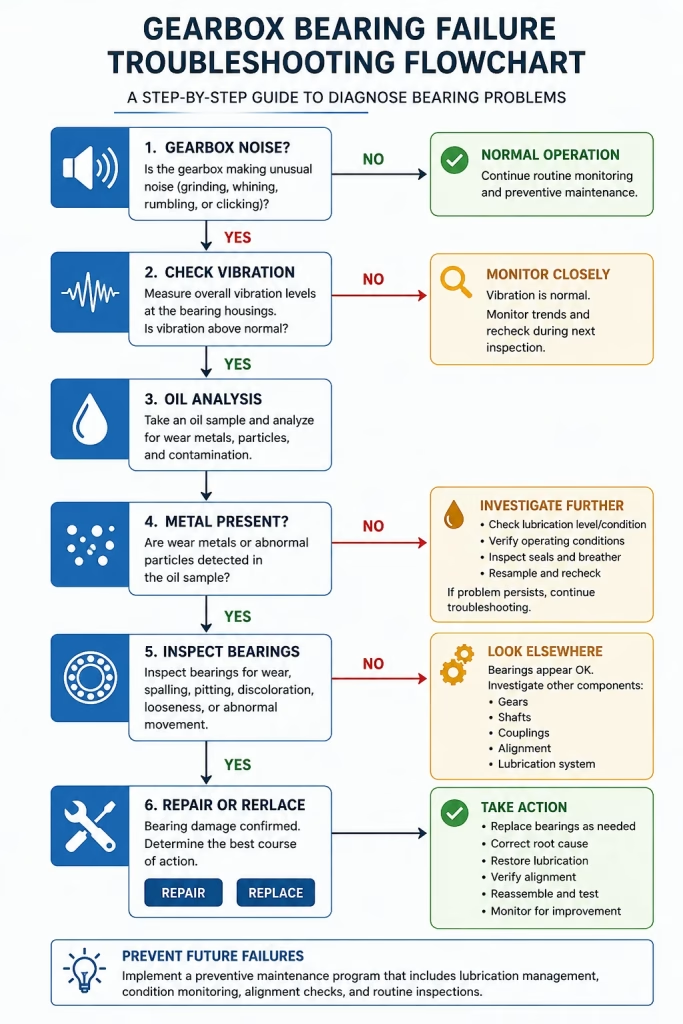
Industrial Gearbox Bearing Failure Troubleshooting Flowchart
The following troubleshooting flowchart provides a simple step-by-step process for identifying the most common causes of industrial gearbox bearing failure. While every application is different, this workflow can help maintenance personnel determine whether additional inspection, oil analysis, or bearing replacement is needed before more extensive gearbox damage occurs.
How to Prevent Industrial Gearbox Bearing Failure
While some bearing failures are unavoidable over the life of a gearbox, the vast majority result from preventable issues such as poor lubrication, contamination, misalignment, or improper maintenance. A proactive maintenance strategy can dramatically increase bearing life, reduce downtime, and lower repair costs.
The following best practices are recommended for nearly every industrial gearbox application.
Use the Correct Lubricant
Selecting the proper lubricant is one of the most important decisions affecting gearbox reliability. Using the wrong oil viscosity or additive package can reduce the protective oil film, increase operating temperatures, and accelerate bearing wear.
When selecting a lubricant, consider:
- OEM recommendations
- Operating temperature
- Bearing type
- Gear type
- Input and output speeds
- Load conditions
- Ambient environment
- Food-grade or specialty requirements
Never assume one gear oil can replace another. Even lubricants with similar viscosity ratings may contain different additives designed for specific applications.
Maintain Proper Oil Levels
Both low and high oil levels can shorten bearing life.
Low oil levels may cause:
- Oil starvation
- Excessive friction
- Heat buildup
- Premature bearing failure
Overfilled gearboxes can cause:
- Oil churning
- Foaming
- Increased operating temperatures
- Oxidation
- Reduced lubrication efficiency
Inspect oil levels regularly using the manufacturer’s recommended procedure, and repair leaks as soon as they are discovered.
Keep Lubricants Clean
Clean oil is essential for long bearing life.
Best practices include:
- Filter new oil before filling
- Store lubricants in sealed containers
- Use dedicated transfer equipment
- Keep fill ports clean
- Replace damaged breathers
- Avoid using open buckets or funnels
- Install filtration systems on critical gearboxes
Many new lubricants are not clean enough for industrial gearbox applications without additional filtration.
Prevent Moisture Contamination
Water is one of the most destructive contaminants found in industrial gearboxes.
Prevent moisture intrusion by:
- Installing quality shaft seals
- Using desiccant breathers
- Protecting gearboxes during washdowns
- Repairing leaks promptly
- Storing spare gearboxes indoors
- Eliminating condensation whenever possible
Even small amounts of water can significantly reduce lubricant performance and bearing life.
Perform Precision Shaft Alignment
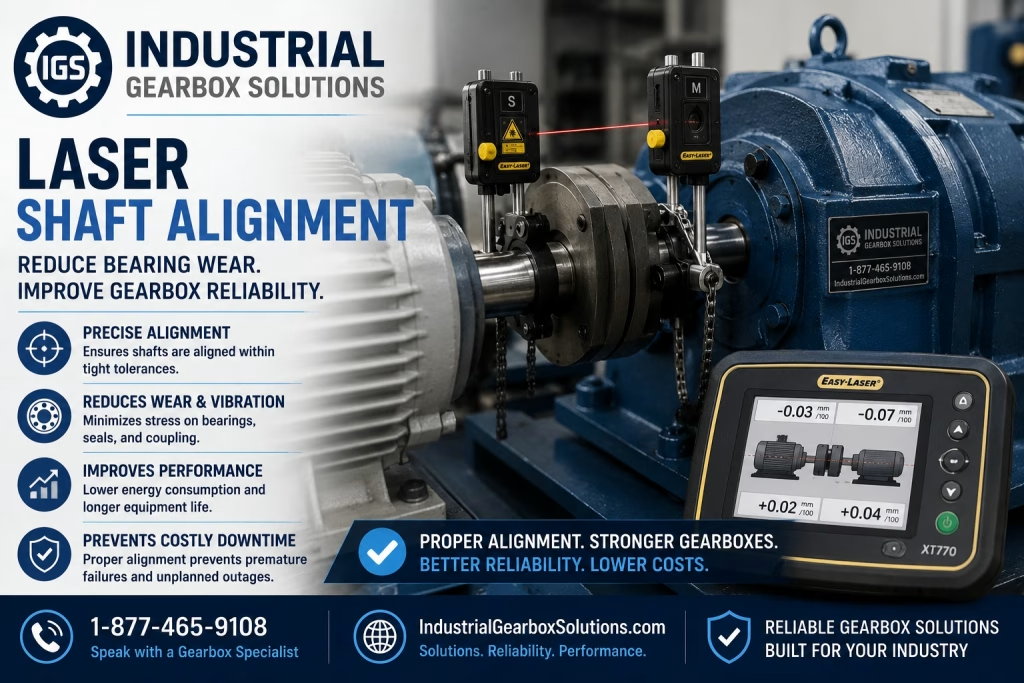
Misalignment places abnormal loads on bearings and gears, often leading to repeated failures.
Best practices include:
- Perform laser alignment after installation
- Correct soft foot before alignment
- Recheck alignment after startup
- Account for thermal growth
- Inspect foundations and baseplates
- Verify coupling condition
Proper alignment not only extends bearing life but also reduces vibration, seal wear, and energy consumption.
Install Bearings Correctly
Many premature failures occur because bearings are damaged during installation.
Always:
- Verify the correct bearing part number
- Inspect shafts and housing bores
- Maintain a clean work environment
- Use induction heaters when required
- Press only on the appropriate bearing ring
- Check internal clearance
- Follow OEM torque specifications
- Rotate the shaft after assembly
Taking extra care during installation can add years to bearing service life.
Monitor Vibration Regularly
Routine vibration analysis allows maintenance teams to identify developing problems before they become catastrophic failures.
Track trends for:
- Overall vibration
- Bearing defect frequencies
- Gear mesh frequencies
- Shaft imbalance
- Misalignment
- Looseness
Trend data is far more valuable than isolated readings because it shows how quickly conditions are changing.
Schedule Routine Oil Analysis
Oil analysis provides early warning of wear, contamination, and lubricant degradation.
For critical gearboxes, establish a regular sampling schedule based on:
- Operating hours
- Equipment criticality
- Environmental conditions
- Manufacturer recommendations
Combining oil analysis with vibration monitoring provides one of the most effective predictive maintenance strategies available.
Organizations such as Noria Corporation recommend trending oil analysis data over time rather than relying on a single sample because long-term trends often identify bearing wear before catastrophic damage occurs.
Control Shock Loads
Unexpected torque spikes place tremendous stress on bearings.
Reduce shock loading by:
- Eliminating equipment jams
- Using proper service factors
- Installing torque limiters where appropriate
- Using soft starters or VFDs
- Avoiding repeated hard starts
- Monitoring process loads
If repeated overload conditions occur, evaluate whether the gearbox is properly sized for the application.
Train Maintenance Personnel
Even the best maintenance program depends on knowledgeable technicians.
Training should include:
- Bearing failure recognition
- Proper lubrication practices
- Oil sampling procedures
- Bearing handling and storage
- Alignment techniques
- Inspection methods
- Safe installation procedures
- Root cause failure analysis
Well-trained maintenance teams identify problems earlier and make more informed repair decisions.
Preventive Maintenance Checklist
Use the following checklist to reduce the likelihood of premature bearing failure.
| Maintenance Task | Recommended Frequency |
|---|---|
| Check oil level | Weekly |
| Inspect for leaks | Weekly |
| Listen for abnormal noise | Weekly |
| Monitor operating temperature | Monthly |
| Perform vibration analysis | Monthly or Quarterly |
| Collect oil sample | Quarterly |
| Inspect breathers | Quarterly |
| Verify shaft alignment | Annually or after repairs |
| Inspect internally | During planned shutdowns |
Following a consistent preventive maintenance schedule helps maximize bearing life while minimizing costly production interruptions.
Repair vs. Replacement: Which Is the Better Option?
When an industrial gearbox bearing fails, one of the first questions maintenance managers and purchasing professionals ask is whether the gearbox should be repaired or replaced. The answer depends on the extent of the damage, the age of the gearbox, replacement lead times, and the overall cost of returning the equipment to reliable service.
In many cases, a failed bearing does not mean the gearbox needs to be replaced. If the damage is identified early, a professional rebuild can restore the gearbox to like-new operating condition at a significantly lower cost than purchasing a new unit.
When Gearbox Repair Is the Best Option
Repair is typically the most economical solution when the bearing failure has not caused extensive secondary damage.
Repair is often recommended when:
- The gearbox housing is still in good condition.
- Gear teeth show little or no damage.
- Shafts remain within specification.
- Bearing journals can be restored.
- Replacement parts are readily available.
- The gearbox is obsolete or has long replacement lead times.
- Downtime must be minimized.
Professional gearbox repair generally includes:
- Bearing replacement
- Seal replacement
- Shaft inspection and repair
- Gear inspection
- Housing inspection
- Alignment verification
- Complete cleaning
- Performance testing before shipment
A properly rebuilt gearbox can often provide many additional years of reliable service.
When Replacement Makes More Sense
Sometimes replacing the gearbox is the more practical long-term investment.
Replacement should be considered when:
- The housing is cracked or severely damaged.
- Multiple gears have failed.
- Shafts are heavily worn or bent.
- Repair costs approach the price of a new gearbox.
- The gearbox is undersized for the application.
- Replacement lead times are acceptable.
- Improved efficiency or capacity is needed.
New gearboxes may also offer improved sealing systems, higher torque ratings, better bearing designs, and greater energy efficiency compared to older equipment.
When an Upgrade Is Worth Considering
A bearing failure can also be an opportunity to improve the reliability of the entire drivetrain.
Consider upgrading if:
- Bearings have failed repeatedly.
- Production loads have increased.
- The operating environment has become more severe.
- The gearbox regularly runs hot.
- Contamination is difficult to control.
- Downtime is especially expensive.
Possible upgrades include:
- Higher-capacity bearings
- Improved shaft seals
- Desiccant breathers
- Enhanced lubrication systems
- Offline filtration
- Oil coolers
- Higher service factor gearboxes
- Condition monitoring sensors
Although these upgrades increase the initial investment, they often reduce maintenance costs and extend equipment life.
Repair vs. Replacement Comparison
| Factor | Repair | Replacement |
|---|---|---|
| Bearing failure only | ✓ Best option | Usually unnecessary |
| Housing cracked | Not recommended | ✓ Best option |
| Gears in good condition | ✓ Recommended | Usually unnecessary |
| Multiple gear failures | Possible, depending on cost | Often preferred |
| Obsolete gearbox | ✓ Often best choice | May not be available |
| Faster turnaround needed | ✓ Usually faster | Depends on inventory |
| Improved efficiency desired | Limited improvements | ✓ New technology available |
| Cost | Lower in many cases | Higher initial investment |
Every gearbox should be evaluated individually. A professional inspection often reveals that a repair is both technically feasible and financially advantageous.
Choosing Replacement Bearings
Not all industrial bearings offer the same performance. Selecting the correct replacement bearing is essential for maximizing service life and preventing repeat failures.
Before ordering replacement bearings, verify:
- Bearing manufacturer
- Part number
- Internal clearance
- Load rating
- Speed rating
- Lubrication requirements
- Seal configuration
- Shaft dimensions
- Housing dimensions
- Operating environment
Purchasing a bearing based solely on physical dimensions can lead to premature failure if internal specifications do not match the application.
Whenever possible, replace bearings with high-quality products from reputable manufacturers that meet or exceed the original equipment specifications.
Common Purchasing Mistakes
Many repeat bearing failures result from purchasing decisions rather than maintenance practices.
Avoid these common mistakes:
- Selecting bearings based only on price
- Ignoring internal clearance requirements
- Using incorrect lubricant
- Choosing incompatible seal materials
- Reusing damaged locknuts or spacers
- Installing bearings without inspecting shafts and housings
- Mixing bearing brands within the same assembly
- Skipping root cause failure analysis
Investing in quality components and proper installation procedures almost always reduces the total cost of ownership over the life of the gearbox.
Common Bearing Failure Symptoms at a Glance
| If You Notice… | Likely Cause | Recommended Action |
|---|---|---|
| Grinding noise | Bearing spalling | Inspect bearings |
| High vibration | Bearing wear or misalignment | Perform vibration analysis |
| Rising temperature | Lubrication problem | Check oil level and condition |
| Metal flakes in oil | Bearing or gear wear | Perform oil analysis |
| Oil leakage | Worn bearings or seals | Inspect shaft and seals |
| Repeated failures | Root cause unresolved | Complete failure analysis |
Need Help Choosing the Right Repair Solution?
Whether you need replacement bearings, a complete gearbox rebuild, or a new industrial gearbox, our specialists can help you identify the most cost-effective solution for your application.
Upload a clear photo of your gearbox nameplate below, and we’ll help identify your gearbox, locate replacement bearings, and recommend the best repair or replacement option.
Or call 1-877-465-9108 to speak with an industrial gearbox specialist.
Key Takeaways
- Most industrial gearbox bearing failures are preventable with proper maintenance.
- Poor lubrication and contamination are the leading causes of premature bearing damage.
- Vibration analysis and oil analysis provide the earliest warning signs of developing failures.
- Correcting the root cause is essential to preventing repeat bearing failures.
- Preventive maintenance is significantly less expensive than emergency gearbox replacement.
Frequently Asked Questions About Industrial Gearbox Bearing Failure
What is the most common cause of industrial gearbox bearing failure?
Poor lubrication is the leading cause of industrial gearbox bearing failure. When the protective oil film breaks down because of low oil levels, incorrect viscosity, contamination, or degraded lubricant, metal-to-metal contact occurs. This increases friction, operating temperatures, and wear, eventually leading to premature bearing failure.
Can a gearbox continue running with a bad bearing?
A gearbox may continue operating for a short period with a damaged bearing, but doing so significantly increases the risk of catastrophic failure. As the bearing deteriorates, metal debris contaminates the lubricant, gear alignment changes, and additional components—including gears, shafts, and seals—can become damaged. Whenever possible, schedule repairs as soon as bearing problems are detected.
How do I know if a gearbox bearing is failing?
Common warning signs include:
- Increased vibration
- Grinding or rumbling noise
- Rising operating temperatures
- Metallic particles in the lubricant
- Oil leaks
- Burnt or discolored lubricant
- Increased motor current
- Shaft movement or excessive endplay
Using vibration analysis and oil analysis together provides the earliest indication of developing bearing problems.
Can oil analysis detect bearing problems early?
Yes. Oil analysis is one of the most effective predictive maintenance tools available. Laboratory testing can identify wear metals, contamination, water intrusion, viscosity changes, oxidation, and additive depletion long before visible damage occurs.
Regular oil sampling helps maintenance teams plan repairs before catastrophic failures develop.
What causes repeated bearing failures?
Repeated bearing failures usually indicate that the root cause has not been corrected.
Common causes include:
- Shaft misalignment
- Contaminated lubricant
- Incorrect bearing installation
- Improper bearing fits
- Worn housing bores
- Excessive loading
- Electrical discharge
- Incorrect lubricant selection
Replacing the bearing alone rarely solves the problem if the underlying issue remains.
How long should industrial gearbox bearings last?
Bearing life depends on many variables, including:
- Operating load
- Shaft speed
- Lubrication quality
- Contamination control
- Alignment accuracy
- Installation quality
- Operating environment
Properly maintained bearings can operate reliably for many years, while contaminated lubricant or severe overloads can cause failure within a relatively short period.
Should bearings always be replaced in pairs?
Not always. The decision depends on gearbox design, bearing condition, operating hours, and manufacturer recommendations. However, if one bearing has experienced significant wear, inspecting the remaining bearings is strongly recommended to avoid another shutdown shortly after the repair.
Can a failed bearing damage gears?
Yes. As bearing clearance increases, shafts move out of their intended position. This changes the gear contact pattern, increasing stress on the gear teeth.
If left uncorrected, bearing failure may lead to:
- Gear pitting
- Scoring
- Broken gear teeth
- Shaft damage
- Housing wear
- Complete gearbox failure
Early intervention often prevents these costly secondary failures.
What lubricant is best for industrial gearbox bearings?
There is no single lubricant that is best for every gearbox. The correct lubricant depends on:
- Gearbox manufacturer
- Bearing type
- Gear type
- Operating temperature
- Load
- Speed
- Environmental conditions
Always follow the gearbox manufacturer’s lubrication recommendations or consult a gearbox specialist before changing lubricant types or viscosities.
Is vibration always caused by bearing failure?
No. Although damaged bearings commonly produce elevated vibration, other conditions can create similar symptoms.
Possible causes include:
- Shaft misalignment
- Gear wear
- Rotor imbalance
- Loose mounting bolts
- Coupling problems
- Foundation movement
For this reason, vibration analysis should always be combined with other diagnostic methods before repairs begin.
When should a gearbox be removed from service?
A gearbox should be inspected immediately if it exhibits:
- Rapid temperature increases
- Severe vibration
- Loud grinding noises
- Heavy metal contamination in the oil
- Excessive shaft movement
- Major oil leaks
- Evidence of imminent seizure
Continuing to operate under these conditions can dramatically increase repair costs.
Final Thoughts
Industrial gearbox bearing failure is rarely a random event. In most cases, bearings fail because of lubrication problems, contamination, misalignment, overload, or improper installation—not because the bearing itself is defective.
By implementing a comprehensive predictive maintenance program that includes routine inspections, oil analysis, vibration monitoring, thermography, and precision alignment, facilities can dramatically extend bearing life while reducing downtime and maintenance costs.
If your gearbox is producing unusual noise, excessive vibration, overheating, or showing signs of bearing wear, addressing the problem early can prevent thousands of dollars in secondary damage and unplanned production losses.
Whether you need help identifying a gearbox, sourcing replacement bearings, evaluating repair options, or selecting a replacement unit, our specialists are ready to help.
Upload a clear photo of your gearbox nameplate using the form below, and we’ll help identify your gearbox and recommend the most cost-effective solution.
Or call 1-877-465-9108 to speak with an industrial gearbox specialist.
Related Articles
Continue learning with these helpful resources:
- Industrial Gearbox Repair Guide
- Industrial Gearbox Replacement Guide
- Gearbox Oil Selection Guide
- Gearbox Lubrication Best Practices
- Gearbox Vibration Analysis Guide
- Shaft Misalignment Troubleshooting Guide
- Industrial Gearbox Maintenance Checklist
- Industrial Gearbox Troubleshooting Guide
- Signs Your Industrial Gearbox Needs Repair
- How to Identify an Unknown Industrial Gearbox
These articles provide additional guidance for troubleshooting, maintenance planning, lubrication, repair decisions, and selecting the right replacement gearbox for your application.
About the Author

Chandra Dhopatkar is Director of Marketing and Technology at Industrial Gearbox Solutions, where he specializes in industrial gearboxes, electric motors, predictive maintenance, repair, replacement, and power transmission equipment. He has extensive experience creating technical resources that help maintenance professionals, engineers, and purchasing teams improve equipment reliability and reduce downtime.