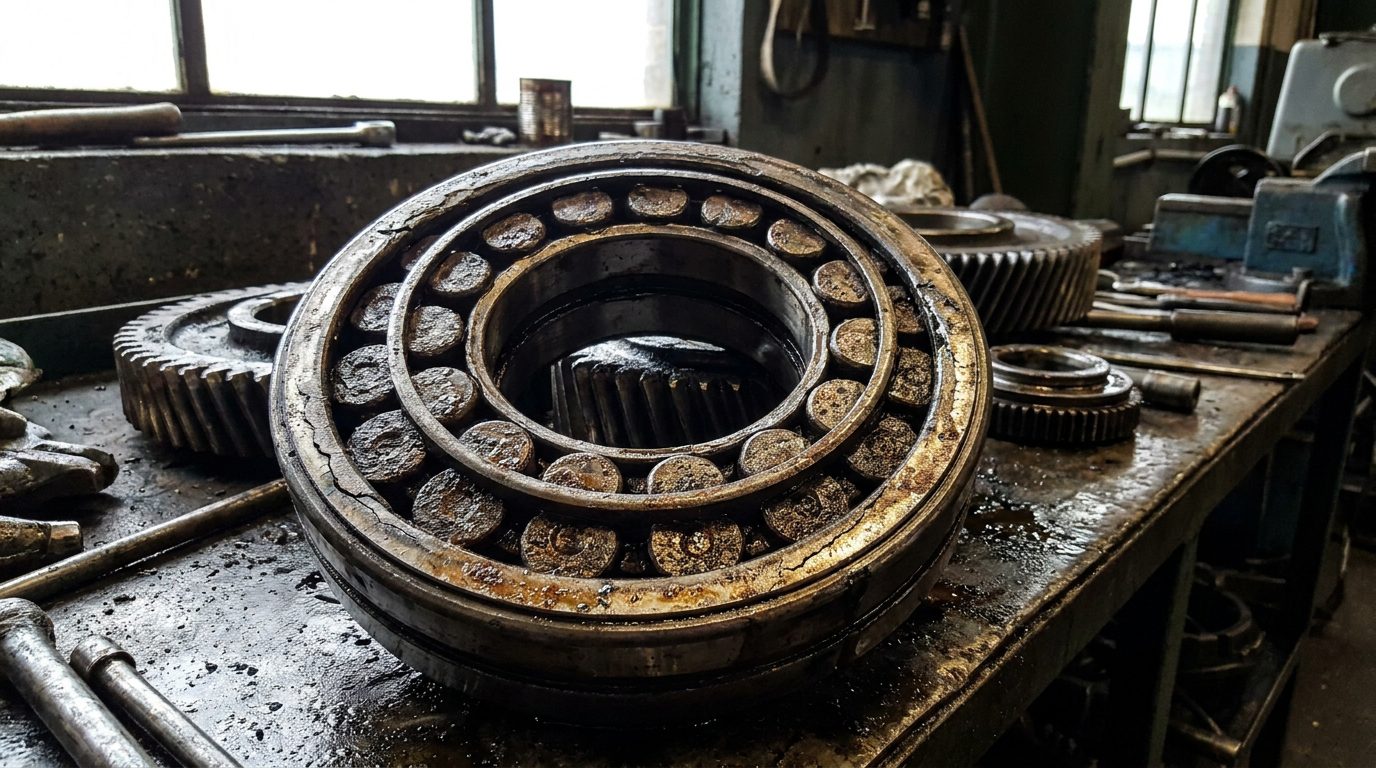
Troubleshooting industrial gearbox bearing failures starts with confirming the failure mode, separating bearing damage from gear mesh or lubrication problems, and using evidence from vibration, temperature, oil analysis, and physical inspection to identify the true root cause. For maintenance managers, plant engineers, reliability engineers, mechanics, and purchasing teams, bearing failures are more than a repair issue—they affect uptime, safety, production quality, and operating cost. A failed bearing can quickly damage shafts, housings, seals, gears, and couplings if the gearbox continues running under load. This guide explains how to diagnose symptoms, identify causes, inspect components, prevent repeat failures, and decide when repair or replacement is the right move.
Industrial gearbox bearing failures are commonly caused by poor lubrication, contamination, overload, misalignment, improper installation, electrical damage, excessive heat, and fatigue. The fastest troubleshooting path is to document symptoms, check lubricant condition and level, review vibration and temperature trends, inspect seals and breathers, verify alignment and loading, and examine the failed bearing for wear patterns such as spalling, smearing, brinelling, corrosion, cage damage, or fluting. If bearing damage is localized and the gearbox housing, shafts, and gears are still within tolerance, repair or rebuild may be cost-effective. If major housing distortion, shaft damage, gear failure, or repeated failures exist, replacement or engineered upgrade may be required.
Understanding the common causes of industrial gearbox bearing failure is crucial for maintaining optimal performance in machinery. For those looking to enhance their knowledge on related topics, an insightful article on how to properly size a gearbox can be found at this link. Proper sizing can significantly reduce the risk of bearing failure by ensuring that the gearbox operates within its designed parameters, ultimately leading to improved efficiency and longevity of the equipment.
Why Industrial Gearbox Bearings Fail
Bearings inside industrial gearboxes carry radial and axial loads while maintaining shaft position and gear mesh accuracy. When a bearing begins to degrade, the entire gearbox becomes vulnerable. Gear tooth contact patterns change, shaft deflection increases, seals may leak, and lubrication films can break down. A small bearing defect can become a catastrophic gearbox failure if it is not found early.
For critical assets such as conveyors, mixers, crushers, extruders, cooling towers, paper mill drives, steel mill gearboxes, and mining equipment, bearing failure troubleshooting should always focus on root cause—not just replacing the bearing.
Common Bearing Failure Causes
| Cause | What Happens | Common Evidence |
||||
| Lubrication starvation | Rolling elements lose oil film protection | Heat, discoloration, scoring, smeared raceways |
| Contamination | Dirt, water, process debris, or metal particles enter the gearbox | Abrasive wear, corrosion, cloudy oil, elevated particle count |
| Misalignment | Shafts and bearings carry uneven loads | Edge loading, abnormal vibration, uneven contact patterns |
| Overload | Bearing load exceeds design limits | Spalling, fatigue cracks, high vibration under load |
| Improper installation | Bearing is damaged during mounting or fitted incorrectly | Brinelling, cracked rings, early-life failure |
| Electrical discharge | Current passes through bearing | Fluting, pitting, washboard raceway patterns |
| Excessive heat | Lubricant thins or oxidizes, metal expands | Dark oil, varnish, seal hardening, blue/brown bearing discoloration |
| Incorrect bearing selection | Wrong internal clearance, cage, material, or load rating | Repeat failures despite replacement |
| Poor shaft or housing fit | Bearing creeps, slips, or runs loose | Fretting, wear marks, looseness, temperature rise |
Useful references for failure mode comparison include SKF’s bearing damage and failure analysis resources, Timken’s bearing damage analysis guides, AGMA standards for gear drives, and Noria’s lubrication best practices.
Authoritative external resources:
- SKF bearing damage and failure analysis: https://www.skf.com
- Timken bearing damage analysis: https://www.timken.com
- AGMA gear standards and technical resources: https://www.agma.org
- Noria lubrication reliability articles: https://www.noria.com
Symptoms of Industrial Gearbox Bearing Failure
Bearing failures rarely appear without warning. Most develop gradually, and the earliest symptoms are often measurable before they are obvious to operators. The challenge is distinguishing bearing-related symptoms from gear tooth damage, coupling issues, motor defects, or lubrication problems.
Audible Noise Changes
A healthy gearbox should have a consistent operating sound. Bearing defects can create:
- Rumbling or growling
- Clicking or ticking
- High-frequency whining
- Grinding sounds
- Intermittent knocking
- Increased noise during load changes
A growling sound often points to advanced raceway or rolling element damage. High-pitched tones may indicate lubrication starvation, excessive preload, or high-speed bearing distress.
Increased Vibration
Vibration analysis is one of the best ways to detect bearing defects early. Bearing-related vibration may appear as:
- High-frequency peaks
- Bearing defect frequencies
- Sidebands around gear mesh frequency
- Increasing broadband vibration
- Impacts in acceleration or enveloping data
- Changes between loaded and unloaded operation
Reliability engineers should trend vibration over time instead of relying only on one measurement. A sudden increase in vibration after a repair may indicate improper installation, misalignment, soft foot, incorrect bearing preload, or coupling problems.
Rising Temperature
Bearing temperature increases when friction increases. Possible causes include lubrication failure, overloading, excessive grease, incorrect oil viscosity, tight bearing fits, misalignment, or internal bearing damage.
Temperature checks can be performed using:
- Infrared thermometers
- Thermal imaging cameras
- Installed RTDs or thermocouples
- Online condition monitoring systems
A gearbox that runs hotter than its historical baseline deserves immediate attention, especially if temperature rise is combined with noise, vibration, or oil degradation.
Oil Leaks and Seal Damage
Bearing failure and seal failure often happen together. Excessive shaft movement caused by worn bearings can damage seals and allow lubricant to escape or contaminants to enter.
Look for:
- Oil around input or output shafts
- Dust buildup around leakage points
- Hardened or cracked seals
- Shaft grooves at seal contact areas
- Plugged breathers causing pressure buildup
- Water ingress around exposed gearbox locations
If your team is dealing with recurring leakage, Industrial Gearbox Solutions’ gearbox inspection and repair support can help identify whether the root cause is seals, shaft wear, bearing clearance, housing distortion, or ventilation problems. See related service information at IndustrialGearboxSolutions.com/industrial-gearbox-repair/.
Industrial gearbox bearing failure can lead to costly downtime and repairs, so it’s important to address the issue promptly. Industrial gearbox bearing failure
Troubleshooting Process for Gearbox Bearing Failures
A disciplined troubleshooting process prevents guesswork and reduces repeat failures. The goal is to preserve evidence, collect data, and connect symptoms to a root cause.
Step 1: Confirm Operating Conditions
Start by documenting the gearbox’s actual operating environment. Many bearing failures occur because the gearbox is being used outside its original design conditions.
Record:
- Motor horsepower and speed
- Gear ratio and output speed
- Operating load and duty cycle
- Start/stop frequency
- Shock loading or reversing operation
- Ambient temperature
- Process conditions
- Lubricant type, viscosity, and change interval
- Recent repairs or modifications
- History of overload trips or jams
Purchasing professionals should also verify that any replacement bearing, seal, or lubricant matches the gearbox manufacturer’s specifications or an approved engineering upgrade.
Step 2: Review Maintenance History
Look for patterns. Repeat bearing failures in the same location often indicate a systemic issue.
Review:
- Previous bearing replacement dates
- Lubricant change records
- Oil analysis reports
- Vibration trends
- Alignment reports
- Repair invoices
- Operator complaints
- Work orders for overheating or leakage
- Spare parts substitutions
If the same bearing position fails repeatedly, do not assume the bearing is the problem. The cause may be an out-of-round housing bore, bent shaft, soft foot, misalignment, incorrect internal clearance, contaminated oil, or overloaded application.
Step 3: Inspect Lubrication System
Lubrication is one of the most common causes of gearbox bearing failure. Even premium bearings fail quickly when oil is dirty, depleted, aerated, oxidized, or the wrong viscosity.
Check:
- Oil level
- Oil viscosity grade
- Additive condition
- Water contamination
- Particle contamination
- Foaming or aeration
- Filter condition
- Breather condition
- Oil delivery to bearings
- Sump condition
- Magnetic plug debris
For splash-lubricated gearboxes, verify that oil level is correct at operating condition. Too little oil causes starvation; too much oil can cause churning, heat, foam, and energy loss.
Noria is a strong reference for lubrication reliability, contamination control, and oil analysis practices. Their articles are useful for building plant lubrication programs.
Step 4: Analyze Vibration Data
Vibration analysis can identify early bearing defects before visible failure. Common techniques include:
- Overall vibration trending
- FFT spectral analysis
- Time waveform analysis
- Acceleration enveloping
- PeakVue or similar high-frequency methods
- Phase analysis
- Load comparison testing
Bearing defects may appear at calculated frequencies related to the bearing geometry:
| Defect Location | Typical Vibration Indicator |
|||
| Outer race defect | Repeating impact at outer race defect frequency |
| Inner race defect | Impacts modulated by shaft speed |
| Rolling element defect | Complex impact pattern, often with harmonics |
| Cage defect | Low-frequency instability or modulation |
| Lubrication distress | High-frequency noise floor increase |
| Looseness | Harmonics of running speed, unstable phase |
Vibration findings should be combined with oil analysis and inspection. A vibration signature may identify a bearing issue, but it may not reveal why the bearing failed.
Step 5: Perform Oil Analysis
Oil analysis is valuable because it can detect problems inside the gearbox without disassembly.
Recommended tests include:
- Viscosity at 40°C and 100°C
- Water content
- Particle count
- Ferrous debris analysis
- Spectrometric wear metals
- Acid number
- Oxidation
- Additive depletion
- ISO cleanliness code
- Patch test microscopy
Common oil analysis clues:
| Oil Analysis Finding | Possible Meaning |
|||
| High iron | Gear or bearing wear |
| High chromium | Bearing race or rolling element wear |
| High tin/copper | Cage or bushing wear, depending on design |
| High silicon | Dirt ingress |
| Water contamination | Seal, breather, washdown, condensation issue |
| High particle count | Filtration or contamination control failure |
| Increased viscosity | Oxidation, contamination, wrong oil |
| Decreased viscosity | Shear, fuel/process contamination, wrong oil |
If oil analysis shows rising wear metals and vibration also increases, plan inspection before catastrophic failure occurs.
Understanding the common causes of industrial gearbox bearing failure is crucial for maintaining operational efficiency. For those looking to delve deeper into the topic, a related article discusses the importance of timely repairs and maintenance in preventing such failures. You can read more about effective gearbox repair strategies in this insightful piece on industrial gearbox repair. By addressing these issues proactively, businesses can significantly extend the lifespan of their equipment and reduce downtime.
Bearing Failure Modes and What They Mean
| Cause | Description |
|---|---|
| Improper lubrication | Lack of lubrication or using the wrong type of lubricant can lead to increased friction and wear on the bearings. |
| Contamination | Foreign particles such as dirt, dust, or metal shavings can enter the gearbox and cause damage to the bearings. |
| Overloading | Exceeding the recommended load capacity of the gearbox can put excessive stress on the bearings and lead to failure. |
| Misalignment | If the gearbox components are not properly aligned, it can cause uneven pressure on the bearings and result in premature failure. |
| Incorrect installation | Improper installation of the gearbox can lead to misalignment, overloading, or other issues that can affect the bearings. |
A failed bearing tells a story. Mechanics and reliability engineers should inspect the bearing carefully before disposal. Clean, photograph, label, and preserve the failed components when possible.
Fatigue Spalling
Spalling appears as flaked or pitted areas on the raceway or rolling elements. It may result from normal fatigue at end of life, but premature spalling often indicates overload, misalignment, poor lubrication, contamination, or incorrect bearing selection.
Symptoms may include:
- Increasing vibration
- Metallic debris in oil
- Rumbling noise
- Localized pitting
- Progressive raceway damage
Smearing and Scuffing
Smearing occurs when sliding contact, heat, or lubrication failure damages the bearing surfaces. It is common in high-speed bearings, heavily loaded bearings, or applications with inadequate oil film.
Possible causes:
- Oil viscosity too low
- Oil starvation
- Excessive acceleration or deceleration
- Skidding rolling elements
- Improper bearing clearance
- Excessive preload
Brinelling and False Brinelling
True brinelling is permanent indentation caused by overload or impact. False brinelling is wear caused by small oscillating movements, often during transport, standby vibration, or idle equipment exposed to external vibration.
Signs include:
- Evenly spaced indentations
- Polished depressions
- Wear marks at rolling element spacing
- Noise immediately after startup
Prevention may involve proper handling, storage, transport locking, shaft rotation during storage, and vibration isolation.
Corrosion and Etching
Rust or etching indicates moisture or chemical contamination. Even small corrosion spots can initiate fatigue failure.
Common causes:
- Water ingress
- Condensation
- Washdown exposure
- Failed seals
- Improper storage
- Contaminated lubricant
- Inadequate breathers
Desiccant breathers, improved seals, oil filtration, and better storage practices can significantly reduce corrosion-related bearing failures.
Cage Damage
Bearing cages maintain rolling element spacing. Cage failure can quickly become catastrophic.
Possible causes:
- Lubrication starvation
- High vibration
- Misalignment
- Excessive speed
- Shock loading
- Improper installation
- Contamination
- Bearing instability
Look for cracked cage pockets, broken rivets, discoloration, rubbing, and missing cage fragments in the gearbox sump.
Electrical Fluting
Electrical discharge damage occurs when current passes through the bearing. It may be seen in motor-driven gearboxes, VFD applications, or poorly grounded systems.
Evidence includes:
- Fluted raceways
- Frosted appearance
- Micro-pitting
- Washboard-like patterns
- High-frequency vibration
- Repeat bearing failures
Solutions may include shaft grounding, insulated bearings, ceramic rolling elements, proper motor grounding, VFD cable improvements, and electrical system review.
Inspection Methods for Gearbox Bearings
Inspection should be systematic, documented, and performed with safety controls in place. Lockout/tagout procedures are essential before opening or working on a gearbox.
External Inspection
Before disassembly, inspect the gearbox in its installed condition.
Check:
- Foundation bolts
- Soft foot
- Baseplate condition
- Coupling alignment
- Guard interference
- Oil leaks
- Breather condition
- Cooling system function
- External cracks
- Shaft movement
- Abnormal heat patterns
- Unusual noise during coast-down
A coast-down noise test can be helpful. If noise changes as load is removed, the issue may involve gear mesh, bearing load zones, or shaft alignment.
Endplay and Shaft Movement Checks
Excessive shaft movement may indicate bearing wear, incorrect bearing adjustment, worn fits, or internal damage.
Measurements may include:
- Axial endplay
- Radial shaft movement
- Bearing preload
- Gear backlash
- Contact pattern
- Shaft runout
Use dial indicators and compare readings to OEM specifications or engineering tolerances.
Borescope Inspection
Borescopes allow inspection through access covers, breathers, inspection ports, or drain openings. They are useful when downtime is limited.
Look for:
- Spalled bearing raceways
- Metallic debris
- Gear tooth distress
- Oil discoloration
- Cage damage
- Rust
- Cracked components
- Seal fragments
Borescope inspection can help decide whether a gearbox can remain in service until a planned outage or needs immediate removal.
Disassembly Inspection
During teardown, preserve the evidence. Do not immediately clean all components before documenting wear patterns.
Best practices:
- Photograph bearing location and orientation
- Mark components by shaft and position
- Record bearing part numbers
- Inspect shaft fits and housing bores
- Measure clearances
- Check gear contact patterns
- Inspect seals and wear sleeves
- Examine lubricant residue and debris
- Look for fretting, creep, and heat discoloration
For critical gearboxes, consider professional inspection through a gearbox repair specialist. Industrial Gearbox Solutions can support gearbox teardown analysis, reverse engineering, bearing replacement, shaft repair, gear inspection, and complete rebuilds. Relevant service pages may include IndustrialGearboxSolutions.com/gearbox-rebuilds/ and IndustrialGearboxSolutions.com/emergency-gearbox-repair/.
Troubleshooting Table: Symptoms, Causes, and Corrective Actions
| Symptom | Likely Cause | Inspection Method | Corrective Action |
|||||
| Bearing running hot | Low oil, wrong viscosity, preload, overload | Temperature trend, oil check, endplay measurement | Correct oil level/viscosity, adjust preload, verify load |
| Rumbling noise | Spalling, contamination, wear | Vibration analysis, oil debris, teardown | Replace bearing, clean gearbox, identify contamination source |
| Sudden vibration increase | Bearing defect, looseness, misalignment | FFT, phase, alignment check | Inspect bearing, correct alignment, tighten foundation |
| Oil leaking at shaft | Bearing looseness, seal wear, pressure buildup | Seal inspection, shaft movement, breather check | Replace seal, repair shaft, correct bearing issue |
| Metallic particles in oil | Bearing or gear wear | Oil analysis, magnetic plug inspection | Plan shutdown, inspect internal components |
| Repeat bearing failure | Misfit, overload, wrong bearing, contamination | Root cause analysis, measurements, load review | Correct design or installation issue |
| Cage fragments found | Severe bearing distress | Drain inspection, borescope, teardown | Remove gearbox from service and rebuild |
| Fluted raceways | Electrical discharge | Bearing inspection, electrical testing | Improve grounding, consider insulated bearing |
Repair vs. Replacement: How to Decide
The decision to repair, rebuild, or replace an industrial gearbox depends on asset criticality, lead time, damage severity, budget, and long-term reliability goals.
When Repair Makes Sense
Repair or rebuild is often the best choice when:
- Housing is structurally sound
- Shafts can be reused or repaired
- Gears are within tolerance
- Bearing fits can be restored
- Replacement gearbox lead time is long
- Gearbox is obsolete or custom
- Root cause is understood and correctable
- Repair cost is significantly lower than replacement
- Downtime can be scheduled
Typical bearing-related gearbox repairs include bearing replacement, seal replacement, shaft journal repair, housing bore restoration, gear inspection, backlash adjustment, contact pattern correction, and lubrication system upgrades.
When Replacement May Be Better
Replacement may be preferred when:
- Housing is cracked or severely distorted
- Multiple shafts and gears are damaged
- Repair cost approaches replacement cost
- Gearbox is undersized for the application
- Repeated failures show a design limitation
- OEM parts are unavailable and reverse engineering is not practical
- A modern gearbox offers better efficiency or reliability
- Production needs justify a complete drop-in spare
Purchasing teams should compare not only purchase price, but total cost of ownership. A cheaper replacement may not be better if it has weaker service factor, poor parts support, longer lead time, or lower rebuildability.
Cost Factors to Consider
| Factor | Repair/Rebuild | Replacement |
||||
| Initial cost | Often lower | Often higher |
| Lead time | Usually shorter for common repairs | May be long for custom gearboxes |
| Reliability improvement | High if root cause is corrected | High if properly specified |
| Fitment risk | Low if original housing reused | Possible base/coupling modifications |
| Engineering flexibility | Can upgrade bearings/seals/lube system | Can redesign entire drive package |
| Best for obsolete units | Often yes | Sometimes difficult |
| Best for severe damage | Depends on condition | Often yes |
If you need help evaluating repair vs. replacement, a gearbox specialist can inspect the asset and provide a practical recommendation based on measurements, failure evidence, and production requirements.
Prevention: How to Reduce Bearing Failures
Preventing gearbox bearing failures requires a maintenance strategy that combines lubrication control, condition monitoring, precision installation, and operational discipline.
Improve Lubrication Practices
Lubrication improvements often produce the fastest reliability gains.
Best practices include:
- Use the correct oil viscosity and specification
- Maintain proper oil level
- Avoid mixing incompatible lubricants
- Filter new oil before adding it
- Use dedicated transfer containers
- Install desiccant breathers where appropriate
- Perform routine oil analysis
- Control water and particle contamination
- Replace oil based on condition, not only calendar intervals
- Keep fill and drain areas clean
SKF, Timken, and Noria all emphasize that lubrication quality and contamination control are central to bearing life.
Control Contamination
Contamination causes abrasive wear, corrosion, and premature fatigue. Gearboxes in dusty, wet, hot, or chemically aggressive environments need extra protection.
Recommended actions:
- Upgrade breathers
- Improve seals
- Use labyrinth or contact seal upgrades where appropriate
- Install offline filtration
- Keep inspection covers sealed
- Avoid pressure washing near seals
- Store lubricants properly
- Use clean sampling ports
- Maintain positive housekeeping around gearboxes
Use Precision Alignment
Misalignment increases bearing and gear loads. Even small alignment errors can shorten bearing life.
Alignment best practices:
- Check soft foot before alignment
- Use laser alignment tools when possible
- Align at operating temperature if thermal growth is significant
- Verify coupling condition
- Recheck alignment after foundation repairs
- Document final readings
- Avoid using coupling flexibility as a substitute for alignment
Install Bearings Correctly
Many early-life bearing failures are caused during installation.
Avoid:
- Hammering directly on bearings
- Applying force through rolling elements
- Heating bearings unevenly
- Contaminating bearings during installation
- Reusing damaged locknuts or sleeves
- Ignoring shaft and housing fit tolerances
- Setting incorrect preload or clearance
Use proper induction heaters, clean work surfaces, calibrated tools, and manufacturer procedures. Timken and SKF provide detailed mounting guidance that can help maintenance teams avoid installation-related damage.
Monitor Gearbox Health
A strong condition monitoring program includes:
- Monthly or route-based vibration checks
- Routine oil sampling
- Infrared temperature inspections
- Visual leak inspections
- Breather and seal checks
- Baseline data after rebuilds
- Alarm limits based on actual operating history
- Shutdown triggers for severe changes
Reliability engineers should integrate vibration, oil analysis, and maintenance history into one asset health record. This helps distinguish one-time events from developing failure trends.
Maintenance Best Practices for Gearbox Bearings
Bearing life is strongly influenced by daily maintenance decisions. A gearbox can be well-designed but still fail early if maintenance practices are inconsistent.
Recommended Maintenance Schedule
| Interval | Maintenance Task |
|||
| Daily/shiftly | Listen for unusual noise, check leaks, observe temperature changes |
| Weekly | Verify oil level, inspect breathers, check for abnormal vibration |
| Monthly | Inspect seals, foundation bolts, coupling guards, and external condition |
| Quarterly | Perform vibration route, collect oil sample if asset is critical |
| Semiannual | Review oil analysis trends, inspect alignment if symptoms exist |
| Annual | Inspect gearbox internals where practical, verify mounting and lubrication program |
| After repair | Establish new vibration and temperature baseline |
Spare Parts Planning
Purchasing professionals can reduce downtime by stocking critical gearbox components or arranging rebuild support before failure occurs.
Consider stocking:
- Bearings
- Seals
- Breathers
- Oil filters
- Gaskets
- Locknuts and washers
- Sight glasses
- Lubricant
- Coupling elements
- Complete spare gearbox for critical assets
For obsolete gearboxes, a rebuild plan may include reverse-engineered gears, shafts, bearing upgrades, and improved sealing. Industrial Gearbox Solutions can assist with inspection, repair planning, and rebuild recommendations for critical industrial gear drives.
Documentation and Root Cause Analysis
Every bearing failure should be documented. A basic root cause analysis can prevent repeat failures and reduce emergency repair spending.
Record:
- Date of failure
- Runtime since last repair
- Bearing manufacturer and part number
- Lubricant type and condition
- Operating load
- Vibration readings
- Temperature readings
- Photos of damage
- Installation method
- Measurements of shaft and housing fits
- Corrective action taken
The goal is to answer: Did the bearing reach its normal life, or did something force it to fail early?
Branded Image Suggestions
Image 1: Failed Industrial Gearbox Bearing Close-Up
Suggested alt text: Failed industrial gearbox bearing with spalling and raceway damage during troubleshooting inspection
Suggested caption: Close inspection of bearing raceways can reveal root causes such as spalling, contamination, overload, or lubrication failure.
Image 2: Mechanic Inspecting Gearbox with Dial Indicator
Suggested alt text: Industrial mechanic checking gearbox shaft endplay with dial indicator
Suggested caption: Shaft endplay and radial movement checks help identify bearing wear, loose fits, and internal gearbox problems.
Image 3: Reliability Engineer Reviewing Vibration Data
Suggested alt text: Reliability engineer analyzing vibration data for industrial gearbox bearing failure
Suggested caption: Vibration analysis is one of the most effective tools for detecting bearing defects before catastrophic gearbox failure.
Image 4: Oil Sample from Industrial Gearbox
Suggested alt text: Industrial gearbox oil sample showing contamination during bearing failure investigation
Suggested caption: Oil analysis can detect wear metals, water, dirt, and lubricant degradation linked to bearing failures.
Image 5: Rebuilt Industrial Gearbox in Shop
Suggested alt text: Rebuilt industrial gearbox after bearing replacement and precision inspection
Suggested caption: A professional gearbox rebuild should correct the root cause of bearing failure, not just replace damaged parts.
SEO Metadata
SEO title: Troubleshooting Industrial Gearbox Bearing Failures | Causes, Symptoms, and Repair
Meta description: Learn how to troubleshoot industrial gearbox bearing failures, identify symptoms, inspect damage, prevent repeat failures, and decide between repair and replacement.
Primary keyword: troubleshooting industrial gearbox bearing failures
Secondary keywords:
- industrial gearbox bearing failure
- gearbox bearing troubleshooting
- gearbox bearing damage
- industrial gearbox repair
- gearbox vibration analysis
- gearbox oil analysis
- bearing failure causes
- gearbox maintenance best practices
- repair vs replacement gearbox
- gearbox bearing inspection
Suggested URL slug: troubleshooting-industrial-gearbox-bearing-failures
Search intent: Informational and commercial investigation
Recommended internal links:
- Industrial gearbox repair: IndustrialGearboxSolutions.com/industrial-gearbox-repair/
- Gearbox rebuilds: IndustrialGearboxSolutions.com/gearbox-rebuilds/
- Emergency gearbox repair: IndustrialGearboxSolutions.com/emergency-gearbox-repair/
- Contact Industrial Gearbox Solutions: IndustrialGearboxSolutions.com/contact/
- Gearbox inspection services: IndustrialGearboxSolutions.com/gearbox-inspection-services/
Key Takeaways
- Most industrial gearbox bearing failures are caused by lubrication problems, contamination, misalignment, overload, improper installation, electrical damage, or excessive heat.
- The best troubleshooting approach combines vibration analysis, oil analysis, temperature trending, visual inspection, and teardown evidence.
- Bearing damage patterns such as spalling, smearing, brinelling, corrosion, cage damage, and fluting can point to the root cause.
- Replacing the bearing without correcting the cause often leads to repeat failure.
- Repair is often practical when housings, shafts, and gears are reusable or restorable.
- Replacement may be better when damage is severe, the gearbox is undersized, or reliability upgrades justify a new unit.
- Lubrication control, contamination prevention, precision alignment, proper installation, and condition monitoring are the strongest prevention methods.
Frequently Asked Questions
What is the most common cause of industrial gearbox bearing failure?
Lubrication failure is one of the most common causes. This includes low oil level, wrong viscosity, oil contamination, additive depletion, foaming, and poor oil delivery. Contamination from dirt or water is also a leading contributor.
How do you know if a gearbox bearing is failing?
Common signs include increased vibration, rumbling or grinding noise, rising temperature, metallic debris in the oil, seal leakage, shaft movement, and abnormal oil analysis results. Vibration analysis can often detect bearing defects before they become audible.
Can a gearbox run with a bad bearing?
It may continue running for a short time, but doing so is risky. A failing bearing can damage gears, shafts, seals, and the housing. If vibration, heat, or debris levels are increasing rapidly, the gearbox should be inspected immediately.
What does spalling on a bearing mean?
Spalling is flaking or pitting on the raceway or rolling elements. It may indicate fatigue, overload, contamination, misalignment, or poor lubrication. The location and pattern of spalling help determine the root cause.
Why do replacement bearings fail quickly?
Early-life bearing failure is often caused by improper installation, incorrect bearing clearance, contaminated lubricant, misalignment, shaft or housing fit problems, overload, or failure to correct the original root cause.
How often should gearbox oil be analyzed?
For critical gearboxes, oil should often be analyzed quarterly or based on operating severity. Less critical assets may be sampled semiannually or annually. The best interval depends on load, environment, failure history, and production criticality.
Is vibration analysis enough to diagnose bearing failure?
Vibration analysis is powerful, but it should not be used alone. It works best when combined with oil analysis, temperature monitoring, visual inspection, operating history, and physical bearing inspection after disassembly.
When should a gearbox be rebuilt instead of repaired in place?
A rebuild is recommended when internal damage is suspected, bearing failure is advanced, debris has circulated through the gearbox, shaft or housing fits need restoration, or gear contact patterns must be corrected. In-place bearing replacement may not solve deeper issues.
Can electrical discharge damage gearbox bearings?
Yes. Electrical currents from VFD-driven motors or grounding problems can pass through bearings and create pitting or fluting. Solutions may include shaft grounding, insulated bearings, ceramic rolling elements, and electrical system improvements.
Who should inspect a failed industrial gearbox bearing?
Plant mechanics and reliability engineers can perform initial inspections, but critical or repeat failures should be reviewed by a gearbox repair specialist. A specialist can measure fits, evaluate gears and shafts, interpret damage patterns, and recommend repair or replacement.
Conclusion
Troubleshooting industrial gearbox bearing failures requires more than identifying a noisy or damaged bearing. The real value comes from determining why the bearing failed and correcting the conditions that caused it. Maintenance managers, plant engineers, reliability professionals, mechanics, and purchasing teams should use a structured process that includes operating history, lubrication review, vibration analysis, oil analysis, alignment checks, and physical inspection. When damage is caught early, bearing replacement or gearbox repair may restore reliable operation. When damage is severe or recurring, a full rebuild, engineered upgrade, or replacement may be the smarter investment.
If your facility is facing gearbox noise, overheating, oil contamination, vibration alarms, repeat bearing failures, or an urgent breakdown, Industrial Gearbox Solutions can help evaluate the asset, identify the root cause, and recommend the most practical repair or replacement path.
FAQs
What are the common causes of industrial gearbox bearing failure?
Some common causes of industrial gearbox bearing failure include inadequate lubrication, contamination, misalignment, overloading, and improper installation.
How does inadequate lubrication contribute to industrial gearbox bearing failure?
Inadequate lubrication can lead to increased friction and heat, causing premature wear and eventual failure of the gearbox bearings. Proper lubrication is essential for reducing friction and maintaining the integrity of the bearings.
What types of contamination can lead to industrial gearbox bearing failure?
Contaminants such as dirt, dust, metal particles, and water can infiltrate the gearbox and cause damage to the bearings. Contamination can accelerate wear and corrosion, leading to premature failure of the bearings.
How does misalignment impact industrial gearbox bearing failure?
Misalignment of the gearbox components can cause uneven loading on the bearings, leading to increased stress and premature wear. Proper alignment is crucial for ensuring the bearings are subjected to uniform forces and minimizing the risk of failure.
What role does overloading play in industrial gearbox bearing failure?
Overloading the gearbox can exceed the load capacity of the bearings, leading to excessive stress and potential failure. It is important to operate the gearbox within its specified load limits to prevent premature bearing failure.