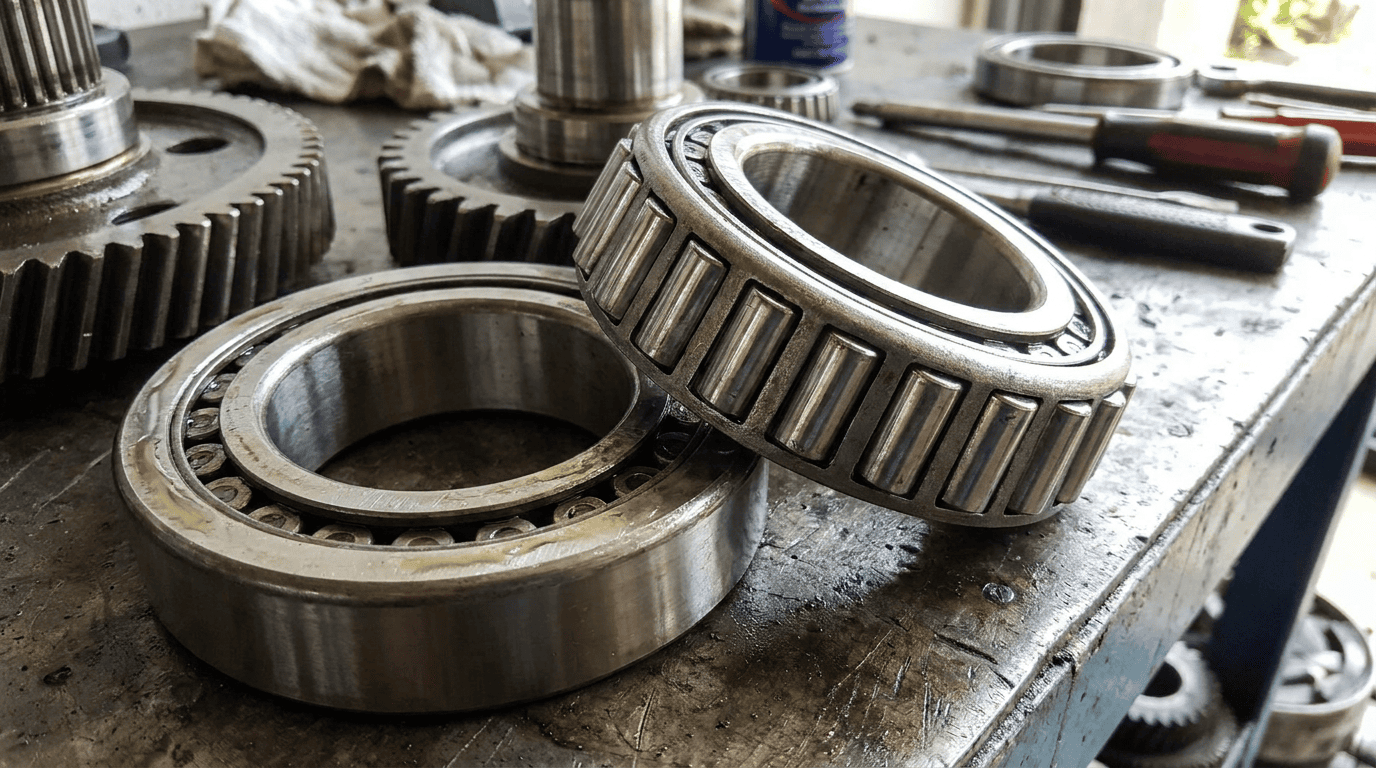
Premature gearbox bearing failure is one of the most common and costly causes of unplanned downtime in industrial power transmission systems. When bearings fail early, the gearbox often experiences rising vibration, heat, noise, contamination, gear misalignment, lubrication breakdown, and eventually catastrophic damage to shafts, seals, gears, and housings. For maintenance managers, plant engineers, reliability engineers, mechanics, and purchasing teams, understanding why gearbox bearings fail before reaching their expected service life is essential for improving reliability, reducing emergency repair costs, and extending asset life across conveyors, mixers, crushers, extruders, agitators, cooling towers, and other critical equipment.
Premature gearbox bearing failure is usually caused by lubrication problems, contamination, overload, misalignment, improper installation, excessive vibration, electrical damage, poor storage practices, or operating conditions beyond the gearbox design limits. Common symptoms include abnormal noise, elevated temperature, metal particles in the oil, vibration changes, seal leakage, shaft movement, and reduced gearbox efficiency. The best way to prevent early bearing failure is to combine proper lubrication, contamination control, precision alignment, routine oil analysis, vibration monitoring, correct installation, and timely gearbox inspection.
Understanding the reasons behind premature gearbox bearing failure is crucial for maintaining industrial machinery efficiency. For a deeper insight into this topic, you can refer to a related article that discusses the importance of regular maintenance and the common signs of wear and tear in gearbox systems. This resource provides valuable information for operators looking to extend the lifespan of their equipment. To learn more, visit this article.
Why Gearbox Bearings Fail Before Their Expected Service Life
Industrial gearbox bearings are designed to support radial and axial loads, maintain shaft alignment, reduce friction, and allow gears to mesh correctly. In a well-designed and properly maintained gearbox, bearings can operate for many years. However, real-world conditions often reduce bearing life dramatically.
Bearing life is affected by:
- Load magnitude and direction
- Speed and duty cycle
- Lubricant type, viscosity, and cleanliness
- Operating temperature
- Gear mesh forces
- Shaft alignment
- Housing condition
- Installation practices
- Contamination exposure
- Maintenance quality
A bearing that should last 50,000 hours may fail in 5,000 hours if lubrication is poor, loads are excessive, or contaminants enter the gearbox. In many cases, premature failure is not caused by a defective bearing. Instead, the bearing is the component that reveals deeper problems in the gearbox system.
For related gearbox reliability support, see Industrial Gearbox Solutions’ resources on gearbox repair, inspection, and rebuilding at IndustrialGearboxSolutions.com.
Common Causes of Premature Gearbox Bearing Failure
Lubrication Failure
Lubrication-related issues are among the leading causes of premature gearbox bearing failure. Bearings require the correct lubricant film thickness to separate rolling elements from raceways. If the oil film is too thin, metal-to-metal contact occurs, producing friction, wear, heat, and surface fatigue.
Common lubrication problems include:
- Incorrect oil viscosity
- Low oil level
- Overfilled gearbox
- Degraded oil
- Wrong lubricant type
- Poor additive compatibility
- Foam formation
- Sludge or varnish buildup
- Inadequate oil flow
- Blocked oil passages
- Grease incompatibility in grease-lubricated units
According to lubrication guidance from Noria Corporation, lubricant cleanliness, viscosity, and proper application are central to bearing and gearbox reliability. A lubricant that is too thin may not support the load, while one that is too thick can cause heat, churning losses, and poor flow.
Contamination
Contamination is another major cause of early bearing failure. Even small particles can damage bearing raceways and rolling elements. Dirt, dust, metal particles, water, process chemicals, and degraded oil byproducts can all reduce bearing life.
Common contamination sources include:
- Failed shaft seals
- Dirty breathers
- Improper oil transfer practices
- Open inspection covers
- Washdown water intrusion
- Condensation
- Wear debris from gears or bearings
- Poor storage of replacement bearings
- Contaminated oil drums or containers
Once contamination enters a gearbox, particles can become trapped between the rolling elements and raceways. This causes denting, abrasion, and fatigue cracks that grow into spalling.
Overload and Shock Loading
Gearbox bearings are selected based on calculated loads, service factors, speeds, and operating conditions. If the gearbox is overloaded, the bearings may experience stresses beyond their design limits.
Overload can result from:
- Increased production demands
- Jammed conveyors
- Frequent starts and stops
- Impact loading
- Reversing loads
- Improper gearbox selection
- Process changes after installation
- Torque spikes from driven equipment
- Incorrect motor or drive settings
Shock loading is especially destructive because it can cause brinelling, raceway deformation, cage damage, and rapid fatigue. Equipment such as crushers, mills, mixers, presses, and heavy conveyors often require special attention because bearing loads can vary significantly during operation.
Misalignment
Misalignment between the motor, coupling, gearbox, and driven equipment can place abnormal loads on gearbox bearings. Even slight misalignment can create additional radial or axial forces that the bearings were not designed to handle.
Types of misalignment include:
- Angular misalignment
- Parallel offset misalignment
- Soft foot
- Shaft runout
- Coupling imbalance
- Baseplate distortion
- Thermal growth misalignment
Misalignment can also affect gear mesh. When gears do not mesh properly, tooth contact patterns shift, causing uneven load distribution and additional bearing stress.
Improper Bearing Installation
Even high-quality bearings from manufacturers such as SKF or Timken can fail quickly if they are installed incorrectly. Bearing installation requires clean conditions, proper tools, correct fits, and controlled force.
Common installation mistakes include:
- Hammering directly on the bearing
- Applying force through rolling elements
- Incorrect heating methods
- Contaminating the bearing during installation
- Using damaged shafts or housings
- Incorrect bearing clearance
- Improper preload
- Mixing incompatible components
- Reusing damaged locknuts, spacers, or seals
SKF bearing installation guidance emphasizes proper mounting tools, cleanliness, and correct fit selection to avoid early damage. A bearing may look normal after installation but already contain microscopic dents or stress damage that shortens its service life.
Industrial gearbox bearing failure can lead to costly downtime and production losses, so it’s important to address the issue promptly. Industrial gearbox bearing failure
Symptoms of Premature Gearbox Bearing Failure
Noise Changes
A failing gearbox bearing often produces a change in sound. Operators and mechanics may notice:
- Grinding
- Rumbling
- Whining
- Clicking
- Knocking
- Growling
- High-pitched squealing
Noise alone does not always identify the exact fault, but it is often an early warning sign. A change from the normal gearbox sound signature should trigger inspection.
Rising Operating Temperature
Excessive bearing heat can indicate lubrication failure, overload, misalignment, or excessive internal clearance. A gearbox that normally operates at a stable temperature but begins trending upward should be investigated.
Possible causes of high temperature include:
- Low oil level
- Wrong oil viscosity
- Excessive bearing preload
- Gear mesh problems
- Contaminated oil
- Plugged cooling system
- Overload
- Misalignment
Temperature guns and thermal imaging cameras can help identify hot spots around bearing housings, seals, and oil sumps.
Vibration Increases
Vibration analysis is one of the best tools for detecting early bearing damage. Defects on the inner race, outer race, rolling elements, or cage often produce identifiable vibration frequencies.
Vibration symptoms may include:
- Increased overall vibration
- High-frequency bearing fault frequencies
- Sidebands around gear mesh frequency
- Impacts or repetitive pulses
- Changes in axial or radial vibration
- Increased noise floor
Reliability teams should trend vibration data over time instead of relying on one-time readings.
Oil Contamination and Metal Debris
Oil analysis can reveal bearing failure long before catastrophic damage occurs. Warning signs include:
- Elevated iron
- Increased particle count
- Copper, chromium, or tin depending on bearing metallurgy
- Water contamination
- Low viscosity
- Oxidation
- Additive depletion
- High acid number
- Ferrous debris
Magnetic drain plugs, oil sampling ports, and filter debris analysis are useful for identifying abnormal wear.
Seal Leakage
Seal leakage may be a symptom or a cause of bearing failure. A leaking seal can allow oil to escape and contaminants to enter. Bearing damage can also cause shaft movement, which damages seals and creates leakage.
Warning signs include:
- Oil around shaft seals
- Dust buildup near wet areas
- Grease purging
- Foaming oil
- Milky oil
- Abnormal shaft movement
Understanding why gearbox bearings fail prematurely is crucial for maintaining the efficiency and longevity of machinery. A related article that delves into the various factors affecting gearbox performance is available for those interested in exploring this topic further. It discusses common issues such as noise, which can be a warning sign of underlying problems. You can read more about these causes and potential solutions in the article on gearbox noise found here.
Troubleshooting Premature Gearbox Bearing Failure
| Reasons for Premature Gearbox Bearing Failure | Impact |
|---|---|
| Lack of lubrication | Increased friction and heat leading to wear and tear |
| Contamination | Dirt, debris, or moisture causing damage to the bearings |
| Improper installation | Misalignment or overloading leading to premature failure |
| Overloading | Excessive load causing stress and failure |
| Poor maintenance | Failure to detect and address issues in a timely manner |
Step-by-Step Troubleshooting Checklist
When a gearbox bearing fails early, do not simply replace the bearing and restart the equipment. Identify the root cause first.
| Troubleshooting Step | What to Check | Why It Matters |
||||
| Review operating history | Loads, speed, starts, stops, process changes | Confirms whether gearbox is operating within design limits |
| Inspect lubricant | Level, viscosity, contamination, odor, color | Lubrication failure is a leading cause of bearing damage |
| Check vibration data | Bearing frequencies, gear mesh, imbalance | Helps identify bearing, gear, and alignment faults |
| Inspect seals and breathers | Leakage, plugged breathers, water entry | Prevents contamination and pressure-related seal failure |
| Verify alignment | Motor, coupling, gearbox, driven machine | Misalignment causes abnormal bearing loads |
| Inspect mounting base | Soft foot, looseness, cracked foundation | Structural issues create vibration and distortion |
| Examine failed bearing | Spalling, brinelling, smearing, corrosion | Failure pattern helps identify root cause |
| Check gear contact pattern | Uneven wear, pitting, edge loading | Poor gear mesh transfers abnormal loads to bearings |
| Measure shaft and housing fits | Wear, ovality, looseness | Incorrect fits cause creep, heat, and vibration |
Questions to Ask After a Bearing Failure
Maintenance and reliability teams should document the failure and ask:
- How long did the bearing run before failure?
- Was this a repeat failure?
- Was the gearbox recently repaired or rebuilt?
- Was the oil recently changed?
- Was the lubricant changed to a different product?
- Did operating loads increase?
- Were there recent process upsets or jams?
- Was the gearbox aligned after installation?
- Were seals or breathers replaced?
- Was vibration or oil analysis trending abnormal?
- Was the replacement bearing stored correctly?
- Were proper installation tools used?
Repeat failures usually indicate that the root cause was never corrected.
Inspection Methods for Gearbox Bearings
Visual Inspection
Visual inspection is useful during shutdowns, oil changes, rebuilds, and failure analysis. Inspect:
- Bearing raceways
- Rolling elements
- Cages
- Shaft journals
- Housing bores
- Locknuts and retaining components
- Seals
- Gear teeth
- Oil channels
- Breathers
- Magnetic plugs
Common visible bearing damage includes pitting, spalling, scoring, discoloration, rust, cage cracking, and smearing.
Vibration Analysis
Vibration analysis can detect bearing faults before they are visible. Common techniques include:
- Overall vibration trending
- FFT spectrum analysis
- Time waveform analysis
- Envelope detection
- Acceleration measurements
- Phase analysis
- Gear mesh frequency monitoring
For critical gearboxes, continuous vibration monitoring may be justified. For less critical assets, route-based vibration monitoring may be sufficient.
Oil Analysis
Oil analysis is essential for industrial gearbox reliability. A proper oil analysis program should include:
- Viscosity testing
- Particle count
- Water content
- Wear metals
- Additive levels
- Oxidation
- Acid number
- Ferrous density
- Analytical ferrography when needed
Noria provides extensive guidance on oil sampling and lubrication best practices. For gearbox applications, samples should be taken from a live zone whenever possible, not from the bottom drain after the gearbox has been sitting idle.
Thermography
Infrared thermography helps detect abnormal heat patterns. Inspect:
- Bearing housings
- Shaft seal areas
- Gearbox casing
- Oil cooler lines
- Motor and coupling areas
- Driven equipment bearings
Temperature trends are more valuable than single readings. A small increase over time may indicate developing friction, lubrication breakdown, or misalignment.
Endplay and Shaft Movement Checks
Excessive shaft movement can indicate bearing clearance problems, worn fits, loose retaining hardware, or internal damage. Mechanics should check:
- Axial endplay
- Radial movement
- Coupling movement
- Seal wear patterns
- Shaft runout
- Bearing seating
Precision measurements should be compared with OEM specifications or rebuild standards.
Bearing Failure Patterns and What They Mean
Spalling
Spalling appears as flakes or pits on the raceway or rolling elements. It is often caused by fatigue, overload, contamination, or improper lubrication.
Brinelling
True brinelling is permanent indentation caused by excessive static or shock loads. False brinelling is wear caused by small oscillating movements, often during transport, standby vibration, or poor storage.
Smearing
Smearing occurs when sliding contact and insufficient lubrication generate heat and surface damage. It may indicate low viscosity, excessive speed, poor lubricant film, or skidding.
Corrosion
Rust or corrosion is usually caused by water contamination, condensation, poor storage, or chemical exposure.
Cage Damage
Bearing cage failure may result from vibration, poor lubrication, misalignment, excessive speed, or debris. Cage failure can rapidly lead to catastrophic bearing collapse.
Electrical Fluting
Electrical discharge through bearings can create fluting or washboard-like raceway patterns. This is more common in motor-driven systems with variable frequency drives if shaft grounding or insulation is inadequate.
| Failure Pattern | Likely Cause | Recommended Action |
||||
| Spalling | Fatigue, overload, contamination | Check loads, oil cleanliness, bearing selection |
| Brinelling | Shock load, improper handling | Review installation, transport, operating shocks |
| Smearing | Poor lubrication, skidding | Verify viscosity, oil flow, load conditions |
| Corrosion | Water or chemical contamination | Improve seals, breathers, storage, oil handling |
| Cage fracture | Vibration, misalignment, lubrication failure | Inspect alignment, vibration, lubricant condition |
| Fluting | Electrical discharge | Install shaft grounding, insulated bearings, VFD mitigation |
Prevention Strategies for Longer Gearbox Bearing Life
Use the Correct Lubricant
The lubricant must match gearbox speed, load, temperature, gear type, and bearing requirements. Always verify:
- ISO viscosity grade
- Base oil type
- Additive package
- Compatibility with seals
- Compatibility with existing oil
- Operating temperature range
- OEM requirements
Authoritative resources from SKF, Timken, AGMA, and Noria emphasize that correct lubrication is fundamental to bearing and gear life. AGMA standards and technical documents are often used for gear drive rating, lubrication, and application guidance.
Maintain Oil Cleanliness
Clean oil extends bearing life. Best practices include:
- Use desiccant breathers
- Filter new oil before filling
- Use dedicated transfer containers
- Keep fill ports sealed
- Install proper filtration
- Use quick-connect sampling ports
- Replace damaged seals
- Avoid open buckets and funnels
- Monitor ISO particle count
Controlling contamination is often one of the fastest ways to reduce repeat gearbox failures.
Improve Sealing and Breather Systems
Gearboxes need to breathe as temperature changes. However, standard vent plugs may allow moisture and dust into the unit. Upgrading to desiccant breathers can reduce water and particle contamination.
Seal improvements may include:
- Labyrinth seals
- V-ring seals
- Taconite seals
- Bearing isolators
- Improved shaft surface finish
- Correct seal material for the environment
Align Equipment Precisely
Precision alignment reduces bearing loads and improves coupling, seal, and gear life. Recommended practices include:
- Laser shaft alignment
- Soft foot correction
- Thermal growth compensation
- Proper coupling installation
- Baseplate inspection
- Rechecking alignment after startup
Do not assume a gearbox is aligned because it was aligned months ago. Foundations settle, bolts loosen, and thermal conditions change.
Control Loads and Operating Conditions
Prevent overload by reviewing:
- Motor horsepower and service factor
- VFD settings
- Startup ramp rates
- Torque limit settings
- Driven equipment condition
- Process jams
- Material buildup
- Coupling selection
- Gearbox rating
If production requirements changed since the gearbox was installed, the original bearing selection may no longer be adequate.
Repair vs. Replacement: What Makes Sense?
When Gearbox Bearing Repair Is Practical
Bearing replacement and gearbox repair may be practical when:
- Gear teeth are in good condition
- Shafts are within tolerance
- Housing bores are not damaged
- Failure was detected early
- Replacement bearings are available
- Root cause can be corrected
- Downtime window allows rebuild
- Gearbox is custom, obsolete, or expensive to replace
A professional gearbox repair facility can inspect bearing fits, shafts, gears, housings, seals, and lubrication systems before rebuilding the unit.
For service support, see Industrial Gearbox Solutions’ gearbox repair and rebuild capabilities at IndustrialGearboxSolutions.com.
When Gearbox Replacement May Be Better
Replacement may be the better option when:
- Housing is cracked or distorted
- Gear sets are severely damaged
- Shafts are bent or worn beyond repair
- Replacement parts are unavailable
- The gearbox is undersized for current duty
- Repair cost approaches replacement cost
- Lead time for repair exceeds production needs
- Efficiency upgrade is justified
- The unit has repeated failures despite repair
Purchasing professionals should compare total cost of ownership, not just purchase price. A cheaper replacement gearbox may cost more long-term if it has lower service factor, inferior sealing, poor parts availability, or inadequate bearing capacity.
Cost Factors to Consider
| Factor | Repair | Replacement |
||||
| Initial cost | Often lower | Often higher |
| Lead time | Can be faster for large or obsolete units | Depends on availability |
| Reliability | High if rebuilt correctly | High if properly specified |
| Custom fit | Existing footprint retained | May require modifications |
| Root cause correction | Must be included | Must still be addressed |
| Long-term value | Strong for critical units | Strong for standardized units |
Maintenance Best Practices for Gearbox Bearings
Build a Preventive Maintenance Schedule
A practical maintenance schedule should include daily, monthly, quarterly, and annual tasks.
| Frequency | Maintenance Task |
|||
| Daily/shiftly | Listen for abnormal noise, check leaks, monitor temperature |
| Weekly | Inspect breather, oil level, mounting bolts, coupling guard area |
| Monthly | Record vibration and temperature trends, inspect seals |
| Quarterly | Pull oil sample, inspect magnetic plug if accessible |
| Semiannually | Verify alignment on critical assets, inspect base and coupling |
| Annually | Perform detailed inspection, review oil analysis and vibration history |
Use Condition-Based Maintenance
Time-based maintenance alone may miss developing failures. Condition-based maintenance uses data to plan repairs before breakdowns occur.
Useful condition-monitoring tools include:
- Vibration analysis
- Oil analysis
- Thermography
- Ultrasound
- Motor current analysis
- Visual inspections
- Online sensors for critical gearboxes
Store Bearings Properly
Replacement bearings can be damaged before installation if stored incorrectly. Follow these practices:
- Keep bearings in original packaging
- Store in a clean, dry environment
- Avoid vibration exposure
- Protect from temperature swings
- Do not open packaging until installation
- Rotate stock properly
- Avoid stacking heavy items on bearings
False brinelling can occur when bearings are exposed to vibration while stationary, especially near running equipment.
Document Every Failure
Failure documentation helps prevent repeat problems. Record:
- Date of failure
- Operating hours
- Load conditions
- Bearing part numbers
- Lubricant used
- Oil analysis results
- Vibration readings
- Photos of damage
- Installation details
- Alignment data
- Corrective actions
Documentation supports better purchasing decisions, improved repair specifications, and stronger reliability programs.
Purchasing Considerations for Replacement Bearings and Gearbox Repairs
Purchasing professionals play an important role in preventing premature gearbox bearing failure. The lowest-cost bearing or repair quote is not always the best value.
Consider:
- Bearing brand and quality
- Correct bearing internal clearance
- Precision class
- Cage material
- Seal compatibility
- Lubricant requirements
- Availability of documentation
- Repair facility experience
- Warranty terms
- Inspection and test procedures
- Dynamic testing after rebuild
- Root cause analysis support
For critical applications, specify recognized bearing manufacturers and require documentation for bearing fits, clearances, preload, backlash, contact pattern, and test run results.
FAQs About Premature Gearbox Bearing Failure
What is the most common cause of premature gearbox bearing failure?
Lubrication failure is one of the most common causes. This includes wrong viscosity, low oil level, contaminated oil, degraded oil, poor oil flow, and incompatible lubricants.
Can a gearbox bearing fail even if the oil level looks correct?
Yes. The oil level may be correct, but the oil could be contaminated, oxidized, too thin, too thick, foaming, or incompatible with the application.
How do I know if a gearbox bearing is failing?
Common warning signs include abnormal noise, increased vibration, higher temperature, oil leaks, metal debris in oil, and changes in gearbox performance.
Should bearings always be replaced during a gearbox rebuild?
In most rebuilds, bearings are replaced because they are wear components and may have hidden damage. Reusing bearings can be risky unless inspection confirms they are suitable for continued service.
Can misalignment cause bearing failure?
Yes. Misalignment creates additional radial and axial loads, which can shorten bearing life and also damage seals, couplings, gears, and shafts.
How often should gearbox oil be analyzed?
Critical gearboxes may require quarterly or even monthly oil analysis. Less critical units may be sampled semiannually or annually. Sampling frequency should depend on asset criticality, environment, and failure history.
What does water in gearbox oil do to bearings?
Water reduces lubricant film strength, promotes rust, accelerates oxidation, damages additives, and can cause corrosion fatigue on bearing surfaces.
Is vibration analysis better than oil analysis?
Neither is universally better. Vibration analysis is excellent for detecting mechanical faults, while oil analysis identifies lubricant condition and wear debris. The best reliability programs use both.
Can variable frequency drives cause bearing damage?
Yes. VFDs can contribute to electrical discharge through bearings, especially in motor bearings, and may affect connected equipment. Shaft grounding, insulated bearings, and proper electrical design can reduce risk.
When should I call a gearbox repair specialist?
Call a specialist when you see repeat bearing failures, metal debris, abnormal vibration, overheating, seal leakage, gear tooth damage, or uncertainty about whether to repair or replace the gearbox.
Key Takeaways
- Premature gearbox bearing failure is usually caused by lubrication issues, contamination, overload, misalignment, improper installation, or harsh operating conditions.
- Symptoms include noise, heat, vibration, oil contamination, leakage, and metal debris.
- Oil analysis, vibration monitoring, thermography, and visual inspection are essential diagnostic tools.
- Replacing a failed bearing without root cause analysis often leads to repeat failure.
- Prevention depends on clean oil, correct lubricant selection, precision alignment, proper installation, and contamination control.
- Repair may be cost-effective when gears, shafts, and housings are reusable; replacement may be better for severely damaged or undersized units.
- Maintenance, reliability, engineering, and purchasing teams should work together to specify quality parts and repair standards.
Suggested Branded Images
Image 1: Failed Gearbox Bearing Close-Up
Alt text: Premature gearbox bearing failure showing spalling and raceway damage
Caption: Spalling and raceway damage can indicate overload, contamination, or lubrication failure in an industrial gearbox bearing.
Image 2: Technician Performing Gearbox Oil Sampling
Alt text: Maintenance technician taking an oil sample from an industrial gearbox
Caption: Routine oil analysis helps detect contamination, lubricant degradation, and early bearing wear.
Image 3: Gearbox Vibration Analysis in a Manufacturing Plant
Alt text: Reliability engineer using vibration analysis equipment on an industrial gearbox
Caption: Vibration analysis can identify bearing faults before catastrophic gearbox failure occurs.
Image 4: Industrial Gearbox Rebuild Inspection
Alt text: Industrial gearbox disassembled for bearing, gear, and shaft inspection
Caption: A complete gearbox inspection should include bearings, gears, shafts, seals, housings, and lubrication systems.
Image 5: Desiccant Breather Installed on Gearbox
Alt text: Desiccant breather installed on industrial gearbox to prevent contamination
Caption: Desiccant breathers reduce moisture and particle contamination that can shorten bearing life.
Authoritative External Sources
- SKF bearing installation and maintenance resources: https://www.skf.com
- Timken bearing damage analysis and lubrication guidance: https://www.timken.com
- AGMA gear standards and technical publications: https://www.agma.org
- Noria lubrication and oil analysis best practices: https://www.noria.com
Suggested SEO Metadata
Meta title: Causes of Premature Gearbox Bearing Failure | Industrial Gearbox Solutions
Meta description: Learn the causes, symptoms, troubleshooting steps, inspection methods, and prevention strategies for premature gearbox bearing failure in industrial gearboxes.
Primary keyword: premature gearbox bearing failure
Secondary keywords:
- gearbox bearing failure causes
- industrial gearbox bearing damage
- gearbox lubrication failure
- gearbox vibration analysis
- gearbox oil contamination
- bearing spalling in gearbox
- gearbox repair vs replacement
- gearbox maintenance best practices
Suggested URL slug: /causes-of-premature-gearbox-bearing-failure
Suggested internal links:
- Industrial gearbox repair services: IndustrialGearboxSolutions.com/gearbox-repair
- Gearbox rebuild services: IndustrialGearboxSolutions.com/gearbox-rebuild
- Emergency gearbox repair: IndustrialGearboxSolutions.com/emergency-gearbox-repair
- Gearbox inspection services: IndustrialGearboxSolutions.com/gearbox-inspection
- Industrial gearbox maintenance: IndustrialGearboxSolutions.com/gearbox-maintenance
Conclusion
Premature gearbox bearing failure is rarely random. It is usually the result of correctable issues such as poor lubrication, contamination, misalignment, overload, improper installation, seal failure, or inadequate maintenance practices. The most reliable plants treat bearing failure as a symptom of a system problem, not just a parts problem. By combining oil analysis, vibration monitoring, precision alignment, contamination control, proper lubrication, and expert gearbox inspection, maintenance and reliability teams can extend gearbox life and reduce unplanned downtime.
If your facility is dealing with repeat bearing failures, abnormal gearbox noise, overheating, metal debris, or urgent repair decisions, Industrial Gearbox Solutions can help identify the root cause and recommend the right repair or replacement path.
FAQs
What are gearbox bearings?
Gearbox bearings are components within a gearbox that support the shafts and gears, allowing them to rotate smoothly and transmit power.
What causes gearbox bearings to fail prematurely?
There are several factors that can contribute to premature gearbox bearing failure, including inadequate lubrication, contamination, improper installation, overloading, and misalignment.
How can inadequate lubrication lead to premature gearbox bearing failure?
Inadequate lubrication can lead to increased friction and heat, causing the bearings to wear out more quickly. It can also lead to corrosion and pitting, further compromising the integrity of the bearings.
What role does contamination play in premature gearbox bearing failure?
Contamination, such as dirt, dust, or metal particles, can infiltrate the bearings and cause abrasion, leading to premature wear and failure. It can also disrupt the lubrication film, increasing friction and heat.
How can gearbox bearing failure be prevented?
To prevent premature gearbox bearing failure, it is important to ensure proper lubrication, minimize contamination, follow correct installation procedures, avoid overloading, and maintain proper alignment of the gearbox components. Regular inspection and maintenance are also crucial in identifying and addressing potential issues before they lead to failure.