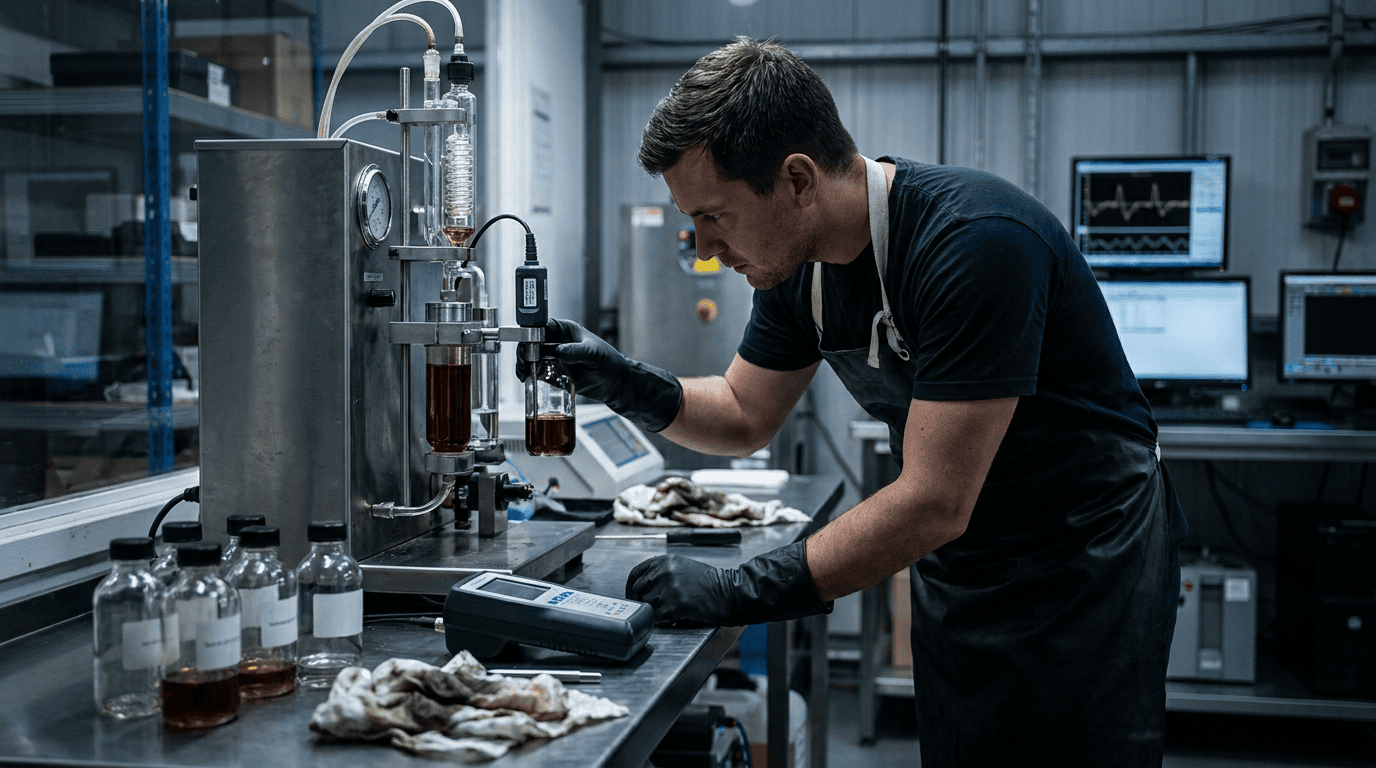
Detecting Bearing Problems through Oil Analysis is one of the most effective ways to identify early-stage gearbox wear before vibration, heat, noise, or catastrophic failure occur. For maintenance managers, plant engineers, reliability teams, mechanics, and purchasing professionals, oil analysis provides a data-driven view of bearing health, lubricant condition, contamination, and internal machine wear. In industrial gearboxes, bearings are critical to shaft alignment, gear mesh stability, load distribution, and overall asset reliability. When bearing defects are caught early, plants can plan repairs, avoid unplanned downtime, reduce spare parts costs, and extend gearbox service life.
Oil analysis detects bearing problems by identifying wear metals, particle size and morphology, lubricant degradation, contamination, and additive depletion. Elevated iron, chromium, copper, tin, lead, or alloy-specific metals can indicate bearing wear, while particle count, ferrous density, analytical ferrography, and filter debris analysis help determine whether the wear is normal, abnormal, or severe. The most reliable programs trend results over time and combine oil analysis with vibration analysis, temperature monitoring, inspection history, and operating conditions.
In the realm of predictive maintenance, understanding the health of machinery is crucial, and oil analysis plays a significant role in detecting bearing problems. For those interested in expanding their knowledge on related topics, an insightful article on the importance of gearboxes in wastewater treatment plants can be found at this link. This article discusses how proper maintenance and monitoring of gearboxes, much like bearing analysis, can prevent costly failures and enhance operational efficiency.
Why Oil Analysis Matters for Bearing Reliability
Industrial gearbox bearings operate under demanding conditions: high loads, variable speeds, shock loading, thermal cycling, misalignment, and contamination exposure. Because bearings are lubricated by the same oil that circulates through the gearbox, the lubricant becomes a carrier of evidence. It contains microscopic clues about what is happening inside the machine.
Oil analysis can help identify:
- Early bearing wear before audible noise or vibration alarms
- Lubricant breakdown that may lead to bearing distress
- Water, dirt, or process contamination
- Overheating and oxidation
- Additive depletion
- Gear and bearing wear interaction
- Improper lubricant selection
- Poor filtration or breathers
- Root causes of recurring gearbox failures
For facilities that rely on critical conveyors, mixers, extruders, cooling towers, crushers, kilns, paper machines, or steel mill drives, oil analysis is not just a maintenance tool. It is a reliability strategy.
If your facility is already experiencing gearbox overheating, vibration, metallic debris, or repeated bearing failures, Industrial Gearbox Solutions can support root cause inspection, rebuild planning, and precision repair. Learn more about our industrial gearbox repair services at IndustrialGearboxSolutions.com/industrial-gearbox-repair.
How Bearing Problems Show Up in Oil Analysis
Bearing failures rarely happen instantly. Most develop through progressive stages. Oil analysis helps detect these stages by monitoring the lubricant and the particles suspended within it.
Wear Metals
Bearings are commonly made from hardened steel, but they may also include cages, retainers, coatings, or backing materials that introduce additional metals into the oil. When bearing surfaces fatigue, spall, rub, smear, or corrode, microscopic particles are released into the lubricant.
Common bearing-related wear metals include:
| Wear Metal | Possible Source | Bearing Concern |
||||
| Iron | Bearing races, rolling elements, gears, shafts | Fatigue, spalling, abrasive wear, overload |
| Chromium | Alloy bearing steel or plated components | Bearing race or roller wear |
| Nickel | Alloy steel components | Advanced wear or alloy-specific deterioration |
| Copper | Bearing cages, thrust washers, bronze components | Cage wear, bushing wear, thrust component wear |
| Tin | Bronze or babbitt materials | Bearing overlay or cage wear |
| Lead | Babbitt or bearing overlay materials | Soft metal bearing distress |
| Aluminum | Housings, cages, contamination, some bearing materials | Cage wear or environmental contamination |
A single abnormal reading does not always confirm bearing failure. The key is trend analysis. A steady increase in bearing-related metals over multiple samples is more meaningful than one isolated spike.
Particle Count and ISO Cleanliness
Particle count measures the number and size of particles in the oil. For bearings, particle contamination is a major concern because even small hard particles can indent raceways and accelerate fatigue.
ISO 4406 cleanliness codes are often used to classify fluid cleanliness. A gearbox with rolling element bearings typically benefits from cleaner oil than many plants realize. Excessive particle counts may indicate:
- Ineffective filtration
- Dirty oil transfer practices
- Failed breathers
- Internal wear generation
- Poor sealing
- Contaminated new oil
- Maintenance-induced contamination
SKF notes that contamination and poor lubrication are major contributors to bearing damage. Their bearing damage guidance emphasizes the importance of lubrication condition, cleanliness, and proper mounting practices. Reference: SKF Bearing Damage and Failure Analysis, https://www.skf.com.
Ferrous Density
Ferrous density testing measures the concentration of magnetic iron particles in the oil. This is especially useful for gearboxes because many critical components, including bearings and gears, are ferrous.
High ferrous density may indicate:
- Bearing race spalling
- Roller or ball wear
- Gear tooth wear
- Shaft wear
- Severe rubbing or adhesion
- Active fatigue failure
Ferrous density is often more sensitive than standard elemental spectroscopy for larger wear particles because spectroscopy may not fully detect particles above approximately 5–10 microns, depending on the laboratory method.
Analytical Ferrography
Analytical ferrography is one of the most powerful tools for detecting bearing problems through oil analysis. It separates wear particles and allows a trained analyst to examine particle size, shape, color, and morphology under a microscope.
Bearing wear particles may appear as:
- Fine rubbing wear particles
- Fatigue platelets
- Laminar particles
- Spherical particles from thermal distress
- Chunky spall particles
- Oxidized or heat-discolored particles
- Cutting wear particles from abrasive contamination
Noria Corporation frequently emphasizes that particle morphology can reveal the type and severity of wear, not just the amount of wear. Reference: Noria oil analysis resources, https://www.noria.com.
Filter Debris Analysis
When a gearbox has a filtration system, the filter element can contain valuable evidence. Filter debris analysis involves cutting open the filter, extracting debris, and analyzing particle composition and morphology.
This method is useful when:
- Oil samples appear normal but symptoms persist
- Large particles are trapped before reaching the sample port
- A gearbox has a history of sudden failures
- A post-failure root cause analysis is needed
- Magnetic plugs or filter media show visible debris
Industrial gearbox bearing failure can lead to costly downtime and production losses, so it’s important to address the issue promptly. Industrial gearbox bearing failure
Common Causes of Bearing Problems Detected by Oil Analysis
Oil analysis is most valuable when it helps identify why the bearing is failing. Replacing a bearing without correcting the root cause often leads to repeat failure.
Lubricant Contamination
Contamination is one of the most common causes of bearing wear in industrial gearboxes. Dirt, metal particles, water, process chemicals, and cleaning fluids can all degrade bearing performance.
Common contamination sources include:
- Open or damaged breathers
- Worn shaft seals
- Improper oil storage
- Dirty transfer containers
- Contaminated top-off oil
- Water washdown
- Outdoor exposure
- Process leaks
- Maintenance activities
Particles can create abrasive wear, while water can reduce film strength, promote corrosion, and accelerate oxidation. In rolling element bearings, particle dents can become initiation points for fatigue spalling.
Lubricant Degradation
Oil does not last forever. Heat, oxidation, contamination, and additive depletion reduce its ability to protect bearings.
Oil degradation indicators include:
| Oil Analysis Test | What It Measures | Bearing Risk |
||||
| Viscosity | Oil thickness at a given temperature | Too low causes metal contact; too high causes heat and poor flow |
| Acid Number | Oxidation and acidic byproducts | Corrosion, sludge, varnish |
| FTIR Oxidation | Chemical degradation | Reduced lubricant life, deposits |
| RULER | Antioxidant remaining useful life | Loss of oxidation protection |
| Water by Karl Fischer | Water concentration | Corrosion, hydrogen embrittlement, poor film strength |
| Particle Count | Cleanliness | Abrasive wear and fatigue acceleration |
When viscosity changes significantly, bearings may no longer receive the correct oil film. Low viscosity can result in boundary lubrication and metal-to-metal contact. High viscosity can cause churning, heat buildup, and starvation in some systems.
Incorrect Lubricant Selection
Using the wrong oil can shorten bearing life even when the gearbox appears to operate normally. Incorrect lubricant selection may involve the wrong:
- ISO viscosity grade
- Additive chemistry
- Base oil type
- Extreme pressure formulation
- Demulsibility characteristics
- Foam resistance
- Compatibility with seals or paints
- Temperature performance range
AGMA provides guidance on enclosed industrial gear lubricants and viscosity selection for gear drives. Reference: American Gear Manufacturers Association, https://www.agma.org.
For a gearbox lubrication review, see Industrial Gearbox Solutions’ maintenance resources at IndustrialGearboxSolutions.com/gearbox-maintenance.
Misalignment and Overload
Misalignment and overload produce abnormal stress on bearings. Oil analysis may show increasing wear metals, especially iron and chromium, but vibration analysis is often needed to confirm the mechanical condition.
Causes include:
- Soft foot
- Poor baseplate condition
- Coupling misalignment
- Improper shaft alignment
- Excessive belt or chain tension
- Thermal growth
- Foundation movement
- Overhung loads
- Incorrect bearing preload
- Shock loading
Oil analysis can detect the resulting wear, while precision alignment and mechanical inspection identify the source.
Inadequate Lubricant Flow
Bearings can fail even when the gearbox contains the correct volume of oil. Lubricant may not reach the bearing properly due to:
- Plugged oil passages
- Incorrect oil level
- Foaming
- High viscosity during cold starts
- Failed oil pump
- Restricted spray nozzles
- Incorrect sump design
- Excessive sludging
- Aeration
Oil starvation often generates heat, oxidation, darkened oil, and wear particles. If left unresolved, bearing surfaces can smear, scuff, or spall.
In the realm of predictive maintenance, understanding how oil analysis detects bearing problems is crucial for ensuring the longevity of machinery. For those interested in exploring related topics, an insightful article on industrial gearbox repair can provide valuable information on maintaining and troubleshooting gear systems. You can read more about it here. This resource highlights the importance of regular maintenance and the role of oil analysis in identifying potential issues before they escalate.
Symptoms That Support Oil Analysis Findings
| Oil Analysis Metric | Explanation |
|---|---|
| Wear Metals | Increased levels of wear metals such as iron, copper, and lead indicate bearing wear. |
| Particle Count | High particle counts can indicate abrasive wear on bearings. |
| Viscosity | Changes in oil viscosity can indicate thermal breakdown due to bearing overheating. |
| Water Content | Excessive water in the oil can lead to corrosion and bearing damage. |
| Acid Number | Increased acid number can indicate oil oxidation due to bearing overheating. |
Oil analysis should not be interpreted in isolation. The best reliability decisions come from combining laboratory data with field symptoms.
Mechanical Symptoms
Bearing issues may produce:
- Rising vibration amplitude
- High-frequency vibration signatures
- Audible rumbling, whining, or clicking
- Increased gearbox temperature
- Shaft movement or endplay
- Seal leakage
- Coupling wear
- Gear mesh instability
- Intermittent operation problems
Lubrication Symptoms
Lubricant-related signs include:
- Dark or burnt-smelling oil
- Foam in sight glass
- Milky appearance from water
- Sludge or varnish deposits
- Metallic flakes on magnetic plugs
- Clogged filters
- Frequent filter bypass alarms
- Abnormal oil consumption
- Sticky residue in inspection ports
Operational Symptoms
Plant teams may also notice:
- Increased amperage draw
- Reduced output speed stability
- Elevated process variation
- More frequent nuisance trips
- Higher operating temperatures during peak load
- Recurring failures after bearing replacement
When these symptoms align with abnormal oil analysis results, the probability of a true bearing problem increases significantly.
In the realm of predictive maintenance, understanding how oil analysis detects bearing problems is crucial for ensuring machinery longevity and efficiency. A related article discusses the significance of gearbox vibration analysis, which complements oil analysis by providing insights into the mechanical health of gear systems. By integrating these diagnostic tools, maintenance teams can proactively address issues before they escalate. For more information on this topic, you can read the article on gearbox vibration analysis.
Troubleshooting Bearing Problems with Oil Analysis
A structured troubleshooting process prevents unnecessary rebuilds and helps maintenance teams make defensible decisions.
Step 1: Confirm Sampling Quality
Poor sampling practices can create misleading results. Before acting on abnormal data, confirm:
- The sample was taken from the correct location
- The gearbox was operating or recently shut down
- The sample port was flushed
- Clean bottles and tubing were used
- The sample was not taken from the drain pan
- The correct asset ID and oil type were listed
- The lab received the sample promptly
Best practice is to sample from a live zone, preferably upstream of filters when monitoring machine wear and downstream when monitoring filter performance.
Step 2: Compare to Baseline and Trends
Oil analysis is most powerful when compared to historical data. Review:
- Last 3–6 sample results
- Wear metal trends
- Particle count trends
- Viscosity changes
- Water trends
- Acid number changes
- Recent oil changes
- Operating hours
- Load changes
- Maintenance activities
A single high iron result may indicate a sampling issue, lab variation, or recent maintenance disturbance. A rising iron trend combined with increasing ferrous density and abnormal vibration is much more serious.
Step 3: Identify Wear Mode
Use test combinations to identify the likely wear mode.
| Oil Analysis Pattern | Likely Issue | Recommended Action |
||||
| High particle count, normal wear metals | External contamination | Inspect breathers, seals, storage, transfer practices |
| Rising iron and ferrous density | Active ferrous wear | Inspect bearings, gears, magnetic plugs, filters |
| High water and rising iron | Corrosion or water-induced fatigue | Find water source, dehydrate oil, inspect bearings |
| Low viscosity and rising metals | Film failure | Verify oil grade, contamination, overheating, fuel/solvent ingress |
| High oxidation, high acid number | Oil degradation | Change oil, inspect for varnish/sludge, review temperature |
| Large fatigue particles in ferrography | Advanced bearing or gear fatigue | Plan shutdown inspection or rebuild |
| Copper/tin/lead increase | Cage, thrust, or soft metal wear | Inspect bearing cages, thrust components, bushings |
Step 4: Correlate with Vibration and Temperature
Oil analysis detects the debris and lubricant condition. Vibration detects dynamic mechanical behavior. Thermography identifies heat patterns. Used together, they create a clearer picture.
For example:
- Oil analysis shows rising ferrous particles.
- Vibration shows bearing defect frequencies.
- Temperature trends show a 15°F increase.
- Magnetic plug shows fine metallic fuzz.
This combination strongly supports planned inspection before catastrophic failure.
Step 5: Decide Whether to Continue, Monitor, or Shut Down
The response depends on severity, criticality, and risk.
Consider immediate shutdown when:
- Large metallic chunks are found
- Oil analysis shows severe wear debris
- Vibration reaches danger alarm levels
- Temperature rises rapidly
- Bearing noise is severe
- The gearbox is critical and has no redundancy
- Filter bypass alarms occur repeatedly
- Oil pressure or flow is lost
Consider increased monitoring when:
- Wear metals are mildly elevated
- Particle count increased but no severe symptoms exist
- A recent oil change may have disturbed deposits
- Vibration remains normal
- The asset is non-critical or has redundancy
Inspection Methods After Abnormal Oil Analysis
Once oil analysis indicates possible bearing problems, inspection confirms the severity and supports maintenance planning.
Magnetic Plug Inspection
Magnetic plugs are simple but valuable. Inspect them for:
- Fine metallic paste
- Long slivers
- Large flakes
- Spherical particles
- Bronze or yellow metal particles
- Sudden debris increase since last inspection
Photograph debris before cleaning and document the inspection date.
Borescope Inspection
A borescope can inspect internal gearbox components without full disassembly. Use it to look for:
- Bearing race discoloration
- Spalling
- Cage damage
- Roller or ball surface defects
- Gear tooth distress
- Oil sludge
- Corrosion
- Blocked oil passages
Borescope images are helpful for repair planning and purchase approval.
Filter Element Inspection
If the gearbox has filtration, inspect the used filter for metallic debris. Coordinate with your oil lab or reliability team for debris analysis. This may reveal large particles not captured in standard oil analysis.
Shaft and Bearing Clearance Checks
During planned outages, mechanics should check:
- Shaft endplay
- Radial movement
- Bearing fit
- Housing bore condition
- Locknut condition
- Seal wear
- Coupling alignment
- Gear backlash
- Contact pattern
Timken provides technical resources on bearing damage modes, lubrication, and handling practices. Reference: Timken bearing resources, https://www.timken.com.
Prevention: How to Reduce Bearing Failures Through Better Lubrication Control
Prevention is less expensive than emergency repair. A strong lubrication program reduces bearing wear and extends gearbox life.
Set Cleanliness Targets
Define target ISO cleanliness codes based on gearbox criticality, bearing type, and operating conditions. Work with your lubricant supplier, oil analysis lab, or reliability consultant to determine realistic targets.
Typical improvements include:
- Desiccant breathers
- Offline kidney-loop filtration
- Portable filter carts
- Sealed oil transfer containers
- Quick-connect sampling ports
- Dedicated oil storage
- Color-coded lubricant handling
- Filtered top-off oil
- Routine particle count monitoring
Control Water Contamination
Water is especially harmful to bearings. It reduces lubricant film strength, causes corrosion, accelerates oxidation, and may contribute to hydrogen-related damage.
Water control methods include:
- Desiccant breathers
- Shaft seal upgrades
- Improved washdown procedures
- Oil dehydration
- Vacuum dehydration for critical systems
- Headspace management
- Regular Karl Fischer water testing
- Outdoor gearbox covers
- Condensation control
Maintain Correct Oil Level
Too little oil causes starvation. Too much oil can cause churning, heat, and aeration. Verify oil level with the gearbox stopped or running according to the manufacturer’s instructions.
Check:
- Sight glass accuracy
- Level plug location
- Breather condition
- Oil return flow
- Pump operation
- Splash lubrication path
- Oil ring function, if applicable
Improve Storage and Handling
Many plants contaminate oil before it ever reaches the gearbox. New oil is not always clean enough for precision equipment.
Best practices include:
- Store drums indoors
- Use sealed, labeled containers
- Filter new oil before use
- Avoid open funnels
- Use dedicated transfer pumps
- Keep fill points clean
- Use quick-connect fittings
- Train mechanics on lubricant handling
Use Condition-Based Oil Change Intervals
Calendar-based oil changes can be wasteful or risky. Oil analysis helps determine when oil is still fit for service and when it must be changed.
Condition-based intervals consider:
- Viscosity
- Oxidation
- Acid number
- Water
- Particle count
- Additive levels
- Wear metals
- Operating temperature
- Duty cycle
Repair vs. Replacement: Making the Right Decision
Oil analysis helps determine whether a gearbox can continue operating, needs a bearing replacement, or requires a full rebuild.
When Bearing Repair or Replacement May Be Enough
A localized bearing replacement may be appropriate when:
- Wear is limited to one bearing
- Gear teeth are in good condition
- Shaft fits are within tolerance
- Housing bores are not worn
- Lubrication issues are corrected
- Contamination has not damaged other components
- Vibration and oil data support limited damage
However, bearing replacement without root cause correction often leads to repeat failure.
When a Gearbox Rebuild Is Recommended
A full rebuild may be the better option when:
- Oil analysis shows severe ferrous debris
- Gear tooth wear is present
- Multiple bearings show damage
- Shafts or housings are worn
- Oil passages are clogged
- Vibration is severe
- Metallic debris circulated through the gearbox
- The gearbox has a history of repeated failures
- Downtime risk is high
Industrial Gearbox Solutions provides inspection, reverse engineering, rebuild, and emergency repair support. Visit IndustrialGearboxSolutions.com/gearbox-rebuild-services for more information.
When Replacement May Be the Best Choice
Replacement may be preferred when:
- The gearbox is obsolete and parts are unavailable
- Repair cost approaches replacement cost
- Lead time for rebuild is too long
- The application has changed
- The existing unit is undersized
- Housing damage is extensive
- Upgrading improves reliability or efficiency
Purchasing professionals should compare total cost of ownership, not just upfront cost. A low-cost replacement that fails prematurely can cost far more than a properly rebuilt or upgraded gearbox.
Maintenance Best Practices for Oil Analysis Programs
A successful oil analysis program requires consistency, documentation, and actionable limits.
Build a Sampling Plan
Every critical gearbox should have a defined sampling plan that includes:
- Sample frequency
- Sample port location
- Required tests
- Alarm limits
- Baseline sample
- Oil type and viscosity
- Asset criticality ranking
- Responsible personnel
- Escalation procedure
Suggested sampling frequencies:
| Gearbox Criticality | Suggested Sampling Frequency | Notes |
||||
| Critical, continuous duty | Monthly or quarterly | Add vibration and temperature trending |
| High-value production asset | Quarterly | Increase frequency if abnormal trends appear |
| Moderate criticality | Semiannually | Use trend-based alarms |
| Low criticality | Annually | Consider basic testing only |
| Newly rebuilt gearbox | After break-in, then quarterly | Establish new baseline |
Select the Right Oil Analysis Tests
A bearing-focused gearbox oil analysis package should include:
- Elemental spectroscopy
- Viscosity at 40°C and/or 100°C
- Particle count
- Karl Fischer water
- Acid number
- FTIR oxidation
- Ferrous density or PQ index
- Analytical ferrography when abnormal
- Filter debris analysis when needed
- Additive analysis
- Appearance and odor notes
Set Meaningful Alarms
Avoid relying only on generic lab alarms. Alarm limits should consider:
- Gearbox type
- Oil type
- Bearing metallurgy
- Operating speed
- Load
- Oil capacity
- Filtration
- Sampling location
- Historical trends
- Criticality
Use a combination of absolute limits, rate-of-change alarms, and statistical alarms.
Document Corrective Actions
Oil analysis only delivers value when results drive action. For every abnormal result, document:
- Inspection findings
- Oil changes
- Filtration performed
- Bearing replacements
- Seal repairs
- Breather changes
- Alignment corrections
- Operating changes
- Follow-up sample results
This creates a reliability history that improves future decision-making.
Tables for Maintenance and Purchasing Teams
Bearing Problem Detection Matrix
| Finding | Possible Bearing Issue | Supporting Evidence | Recommended Next Step |
|||||
| Rising iron and chromium | Race or rolling element wear | Vibration bearing frequencies | Increase monitoring, inspect magnetic plug |
| Large ferrous particles | Spalling or fatigue | Ferrography confirms platelets | Plan shutdown inspection |
| High copper | Cage wear or bronze component wear | Yellow metal debris | Inspect cage, thrust washers, bushings |
| High water | Corrosion, lubricant film loss | Milky oil, rust particles | Remove water source, dehydrate or change oil |
| High particle count | Abrasive contamination | Dirty breather, seal leakage | Improve filtration and sealing |
| Low viscosity | Lubricant film failure | Heat, metal wear | Confirm oil grade and contamination |
| High oxidation | Degraded oil | Dark oil, sludge | Change oil, review temperature control |
| Foam or air release issue | Lubrication starvation | Erratic temperature, aeration | Check oil level, additive compatibility, return flow |
Oil Analysis Response Levels
| Severity | Typical Findings | Maintenance Response |
||||
| Normal | Stable trends, oil within limits | Continue routine monitoring |
| Caution | Slight increase in wear or contamination | Resample, inspect breathers/seals, check oil level |
| Alert | Consistent upward wear trend | Add vibration review, inspect magnetic plug/filter |
| Serious | High ferrous density, abnormal particles | Plan outage inspection or bearing replacement |
| Critical | Large particles, severe vibration, heat | Shut down or operate only under controlled risk plan |
Common Mistakes to Avoid
Sampling from the Wrong Location
Samples from drains often contain settled debris that may not represent circulating oil. Samples from dead zones can exaggerate or hide problems. Install proper sampling ports where possible.
Ignoring Trend Data
A “normal” report can still be concerning if wear metals are rising steadily. Always compare current results to historical data.
Changing Oil Without Investigating Wear
Changing oil may temporarily reduce wear metal readings, but it does not correct a damaged bearing, contamination source, or lubrication problem.
Overlooking Large Particles
Standard spectroscopy may miss larger particles. If a gearbox shows symptoms but lab metals appear normal, request ferrous density, ferrography, or filter debris analysis.
Treating Oil Analysis as a Standalone Tool
Oil analysis should be integrated with vibration, thermography, ultrasound, inspections, and operating data.
Suggested Branded Images
Image 1: Oil Sampling from an Industrial Gearbox
Alt text: Technician collecting an oil sample from an industrial gearbox to detect bearing problems through oil analysis
Caption: Proper oil sampling from a live zone improves the accuracy of bearing wear detection.
Image 2: Microscopic Bearing Wear Particles
Alt text: Microscopic ferrous bearing wear particles identified during gearbox oil analysis
Caption: Analytical ferrography helps identify particle shape, size, and severity of bearing wear.
Image 3: Gearbox Magnetic Plug Inspection
Alt text: Industrial gearbox magnetic drain plug showing metallic debris from bearing wear
Caption: Magnetic plugs provide quick visual evidence of ferrous wear inside gearboxes.
Image 4: Reliability Team Reviewing Oil Analysis Trends
Alt text: Plant reliability engineers reviewing gearbox oil analysis trend data for bearing failure prevention
Caption: Trending oil analysis results helps maintenance teams plan repairs before failure occurs.
Image 5: Rebuilt Industrial Gearbox Bearings
Alt text: Rebuilt industrial gearbox with new precision-installed bearings
Caption: Bearing replacement should include root cause correction to prevent repeat failures.
Authoritative External Resources
For additional technical reference, maintenance teams may consult:
- SKF Bearing Damage and Failure Analysis: https://www.skf.com
- Timken Bearing Damage Analysis and Lubrication Resources: https://www.timken.com
- AGMA Gear Lubrication Standards and Technical Publications: https://www.agma.org
- Noria Oil Analysis and Lubrication Best Practices: https://www.noria.com
These sources provide valuable guidance on bearing failure modes, lubrication practices, gear drive standards, and oil analysis interpretation.
Contextual Internal Links
Recommended internal links for IndustrialGearboxSolutions.com:
- Industrial gearbox repair: IndustrialGearboxSolutions.com/industrial-gearbox-repair
- Gearbox rebuild services: IndustrialGearboxSolutions.com/gearbox-rebuild-services
- Gearbox maintenance resources: IndustrialGearboxSolutions.com/gearbox-maintenance
- Emergency gearbox repair: IndustrialGearboxSolutions.com/emergency-gearbox-repair
- Gearbox inspection services: IndustrialGearboxSolutions.com/gearbox-inspection
- Gearbox failure analysis: IndustrialGearboxSolutions.com/gearbox-failure-analysis
FAQs About Detecting Bearing Problems through Oil Analysis
Can oil analysis detect bearing failure before vibration analysis?
Yes, in some cases. Oil analysis can detect early wear particles and lubricant problems before vibration levels become severe. However, vibration analysis may detect certain bearing defect frequencies earlier depending on speed, load, sensor location, and failure mode. The best approach is to use both methods together.
Which oil analysis test is best for bearing wear?
No single test is best in every situation. Elemental spectroscopy, particle count, ferrous density, analytical ferrography, and filter debris analysis all provide useful information. For active bearing wear, ferrous density and ferrography are especially valuable because they help identify larger ferrous particles and wear modes.
What metals indicate bearing problems?
Iron and chromium often point to steel bearing race or rolling element wear. Copper, tin, and lead may indicate cage, thrust, bronze, or soft metal bearing component wear. The exact interpretation depends on bearing design, metallurgy, gearbox construction, and oil analysis trends.
How often should gearbox oil be analyzed?
Critical industrial gearboxes are often sampled monthly or quarterly. Moderate-risk gearboxes may be sampled semiannually, while low-criticality assets may be sampled annually. Newly rebuilt gearboxes should be sampled after break-in to establish a baseline.
Can oil analysis tell the difference between gear wear and bearing wear?
Sometimes, but not always through elemental metals alone because gears and bearings may both produce iron. Analytical ferrography, particle morphology, vibration analysis, inspection findings, and component metallurgy help distinguish between gear and bearing wear.
What does high iron in gearbox oil mean?
High iron may indicate bearing wear, gear wear, shaft wear, corrosion, or contamination with ferrous debris. Trend direction, particle size, ferrous density, and vibration data are needed to determine severity and source.
Is water in gearbox oil dangerous for bearings?
Yes. Water reduces lubricant film strength, promotes corrosion, accelerates oxidation, and can contribute to premature bearing fatigue. Even small amounts of water can be harmful in critical gearboxes.
Should we change the oil if bearing wear metals are high?
An oil change may be necessary, but it should not be the only action. High wear metals mean something is generating debris. Inspect magnetic plugs, filters, vibration data, oil condition, seals, breathers, and bearing condition before assuming an oil change solves the problem.
Can contaminated new oil cause bearing problems?
Yes. New oil may contain more particles than precision bearings should tolerate. For critical gearboxes, filter new oil before use and store it in sealed, clean containers.
When should a gearbox be shut down after abnormal oil analysis?
Consider shutdown when oil analysis shows severe ferrous debris, large fatigue particles, rapid wear increases, extreme contamination, or when abnormal results coincide with high vibration, rising temperature, noise, or loss of lubrication flow.
Key Takeaways
- Detecting Bearing Problems through Oil Analysis helps identify early bearing wear, lubricant degradation, and contamination before catastrophic gearbox failure.
- The most useful indicators include wear metals, particle count, ferrous density, analytical ferrography, water content, viscosity, oxidation, and acid number.
- Trend analysis is more reliable than isolated sample results.
- Oil analysis should be combined with vibration, thermography, magnetic plug inspection, borescope inspection, and operating data.
- Contamination, wrong lubricant selection, water ingress, misalignment, overload, and poor oil flow are common root causes of bearing problems.
- Repair decisions should be based on severity, criticality, inspection findings, gearbox condition, and total cost of ownership.
- A disciplined lubrication program with clean oil storage, filtration, sampling, and documentation can significantly extend bearing and gearbox life.
SEO Metadata
SEO title: Detecting Bearing Problems through Oil Analysis | Industrial Gearbox Reliability
Meta description: Learn how oil analysis detects industrial gearbox bearing problems through wear metals, particle count, ferrography, contamination testing, and lubricant condition monitoring.
Primary keyword: Detecting Bearing Problems through Oil Analysis
Secondary keywords: gearbox oil analysis, bearing wear detection, industrial gearbox bearing failure, oil analysis for bearings, ferrous debris analysis, gearbox lubrication maintenance, bearing failure symptoms, analytical ferrography
Suggested URL slug: detecting-bearing-problems-through-oil-analysis
Search intent: Informational and commercial investigation for maintenance, reliability, engineering, and purchasing teams evaluating gearbox bearing condition monitoring and repair options.
Conclusion
Oil analysis is one of the most valuable condition-monitoring tools for identifying bearing problems in industrial gearboxes. By tracking wear metals, ferrous debris, particle contamination, water, viscosity, oxidation, and additive health, maintenance teams can detect early warning signs and make better decisions about inspections, repairs, rebuilds, and replacements. The strongest programs combine oil analysis with vibration monitoring, thermal data, visual inspections, and root cause analysis.
If your oil analysis report shows abnormal wear metals, high particle counts, water contamination, or ferrous debris, do not wait for a failure. Industrial Gearbox Solutions can help evaluate your gearbox, identify the root cause, and recommend the right repair or rebuild strategy.
FAQs
What is oil analysis?
Oil analysis is a predictive maintenance technique used to monitor the condition of lubricants and the equipment they are used in. It involves analyzing oil samples to detect any signs of wear, contamination, or other issues that could indicate potential problems with the equipment.
How does oil analysis detect bearing problems?
Oil analysis can detect bearing problems by identifying abnormal wear metals, such as iron, copper, and lead, in the oil sample. These metals are indicative of bearing wear and can signal the need for further inspection or maintenance.
What are the benefits of using oil analysis to detect bearing problems?
Using oil analysis to detect bearing problems can help prevent unexpected equipment failures, reduce downtime, and extend the life of the bearings. It also allows for proactive maintenance planning and can help identify underlying issues that may be causing the bearing problems.
When should oil analysis be performed to detect bearing problems?
Oil analysis should be performed regularly as part of a proactive maintenance program. The frequency of oil analysis depends on factors such as equipment type, operating conditions, and the criticality of the equipment. In general, oil analysis should be performed at regular intervals to monitor the condition of the lubricant and detect any potential bearing problems.
What are some common techniques used in oil analysis to detect bearing problems?
Common techniques used in oil analysis to detect bearing problems include elemental analysis, viscosity measurement, particle counting, and infrared spectroscopy. These techniques can provide valuable insights into the condition of the oil and the equipment it is used in, helping to identify potential bearing problems.