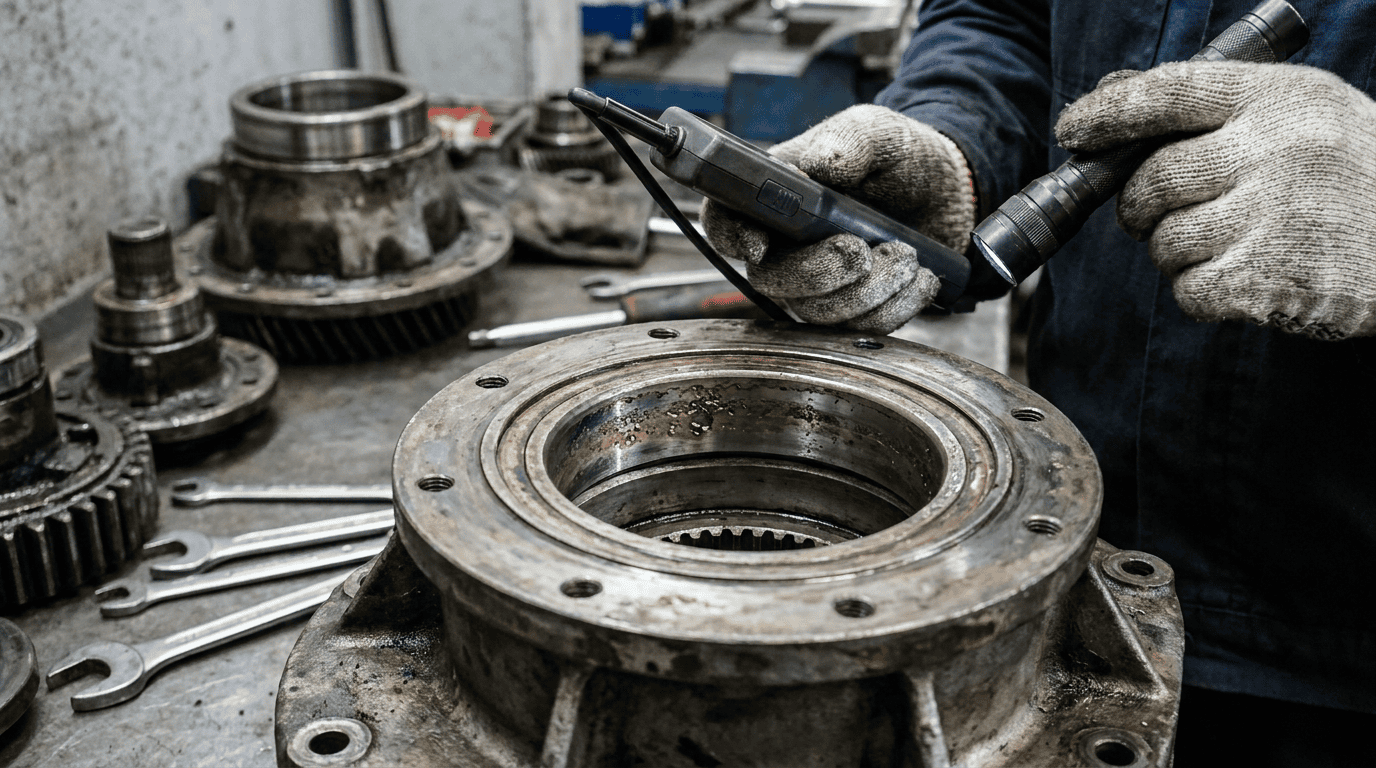
Prevent Gearbox Bearing Failures with a disciplined inspection checklist that catches lubrication problems, contamination, misalignment, overload, and early bearing damage before they become unplanned downtime. In industrial gearboxes, bearings support rotating shafts, control gear mesh alignment, and absorb radial and axial loads. When they fail, the result can be catastrophic: damaged gears, cracked housings, seal failure, production loss, and expensive emergency rebuilds. This guide is written for maintenance managers, plant engineers, reliability engineers, mechanics, and purchasing teams who need a practical, field-ready process for inspecting gearbox bearings, troubleshooting symptoms, and deciding when to repair, rebuild, or replace a gearbox.
To prevent gearbox bearing failures, inspect lubrication condition, oil level, contamination, vibration, temperature, shaft alignment, seal condition, bearing clearances, mounting fits, and operating loads on a scheduled basis. The most effective checklist combines visual inspection, oil analysis, vibration analysis, thermography, ultrasonic testing, borescope inspection, and maintenance history review. Most bearing failures are caused by poor lubrication, contamination, misalignment, overload, improper installation, or fatigue. Catching early symptoms such as elevated temperature, abnormal vibration, metallic debris, oil discoloration, noise, and seal leakage allows teams to plan corrective action before gears and shafts are damaged.
For those interested in understanding the intricacies of gearbox maintenance, the article on industrial gearbox repair in Jonesboro, Arkansas, provides valuable insights into common issues and solutions. It complements the Gearbox Bearing Failure Inspection Checklist by offering a comprehensive overview of repair techniques and preventative measures that can extend the lifespan of gearboxes. You can read more about it here: Industrial Gearbox Repair in Jonesboro, Arkansas.
Why Gearbox Bearing Inspections Matter
Gearbox bearings are precision components operating under heavy loads, variable speeds, shock loading, and challenging plant conditions. Even a small lubrication issue or misalignment condition can quickly turn into pitting, spalling, cage failure, or total bearing seizure.
For critical assets such as conveyors, mixers, crushers, extruders, cooling tower drives, agitators, kilns, pumps, and rolling mill gearboxes, bearing failure can stop an entire production line. A proactive inspection checklist helps your team:
- Reduce unplanned downtime
- Extend gearbox service life
- Improve reliability and uptime
- Lower emergency repair costs
- Protect gears, shafts, seals, and housings
- Improve maintenance planning and spare parts purchasing
- Support predictive maintenance programs
- Document asset condition for audits and capital planning
If your facility is already seeing repeated bearing issues, review related service options such as industrial gearbox repair, gearbox rebuild services, and gearbox failure analysis from Industrial Gearbox Solutions.
Common Causes of Gearbox Bearing Failure
Understanding the root cause is essential. Replacing a failed bearing without correcting the underlying problem usually results in another failure.
Lubrication Failure
Lubrication is one of the most common causes of gearbox bearing damage. Bearings need the correct lubricant type, viscosity, additive package, quantity, and cleanliness level.
Common lubrication-related issues include:
- Low oil level
- Incorrect oil viscosity
- Overfilled gearbox causing churning and heat
- Oil oxidation
- Water contamination
- Particulate contamination
- Incompatible lubricant mixing
- Blocked oil lines or spray nozzles
- Failed oil pump or filtration system
- Wrong grease for grease-lubricated bearings
According to lubrication reliability guidance from Noria, oil cleanliness and moisture control are major factors in rotating equipment life. Even microscopic particles can initiate surface damage and accelerate wear.
Contamination
Contamination enters gearboxes through failed breathers, worn seals, poor storage practices, open inspection covers, dirty oil transfer containers, and washdown exposure.
Typical contaminants include:
- Dirt and dust
- Metal particles
- Water
- Process chemicals
- Cleaning fluids
- Wear debris
- Sludge and varnish
Contamination damages bearing raceways, rolling elements, and cages. Once abrasive particles circulate through the oil, they can also damage gear teeth, bushings, and oil pumps.
Misalignment
Bearing loads increase dramatically when shafts, couplings, or gear mesh are misaligned. Misalignment can be caused by poor installation, soft foot, foundation movement, thermal growth, worn couplings, or housing distortion.
Symptoms of misalignment often include:
- High axial vibration
- Elevated bearing temperature
- Coupling wear
- Uneven gear tooth contact
- Premature seal leakage
- Repeated bearing failures on the same shaft
Overload and Shock Loading
Industrial gearboxes may experience loads beyond their design rating due to jams, frequent starts and stops, process changes, increased production rates, or incorrect motor upgrades.
Overload can cause:
- Bearing brinelling
- Raceway fatigue
- Roller skidding
- Cage fracture
- Excessive heat
- Gear tooth damage
For gear rating and application considerations, reference organizations such as the American Gear Manufacturers Association, which provides standards and technical publications for gear design and performance.
Improper Installation
A bearing can fail early if it is installed incorrectly. Installation errors include hammering bearings onto shafts, using incorrect heating methods, damaging seals, failing to seat bearings properly, or using improper fits and tolerances.
Common installation mistakes:
- Applying force through rolling elements
- Overheating bearings during mounting
- Incorrect shaft or housing fits
- Reusing damaged locknuts or washers
- Incorrect endplay or preload
- Contaminating bearings during installation
- Mixing bearing components
Manufacturers such as SKF and Timken provide detailed guidance on proper bearing mounting, lubrication, storage, and handling.
Bearing Fatigue
Even properly installed and lubricated bearings have a finite service life. Fatigue occurs as repeated stress cycles create subsurface cracks that eventually lead to spalling.
Fatigue may be accelerated by:
- High loads
- Poor lubrication film thickness
- Contamination
- Misalignment
- Excessive temperature
- Incorrect bearing selection
- Variable-speed operation
- Electrical discharge damage
Industrial gearbox bearing failure can lead to costly downtime and production losses, so it’s important to address the issue promptly. Industrial gearbox bearing failure
Symptoms of Gearbox Bearing Problems
Early bearing failure signs are often subtle. Maintenance teams should look for changes from baseline rather than waiting for obvious failure.
Audible Symptoms
Abnormal sound is one of the first clues mechanics notice during route inspections.
Listen for:
- Grinding
- Rumbling
- Clicking
- Whining
- Growling
- Intermittent knocking
- High-pitched squealing
A stethoscope, ultrasonic probe, or acoustic sensor can help identify whether the noise is coming from the bearing, gear mesh, coupling, or motor.
Vibration Symptoms
Vibration analysis is one of the most effective tools for detecting bearing defects. Changes in vibration amplitude, frequency, and pattern can indicate inner race, outer race, rolling element, or cage defects.
Possible vibration indicators:
- Increased overall vibration
- Bearing defect frequencies
- High-frequency acceleration spikes
- Sidebands around gear mesh frequency
- Axial vibration from misalignment
- Looseness signatures
- Impacts from spalling
For facilities with critical gearboxes, consider routine gearbox vibration analysis as part of your predictive maintenance program.
Temperature Symptoms
Heat is both a symptom and an accelerator of bearing failure. Elevated temperature may indicate insufficient lubrication, excess lubricant, misalignment, overload, friction, or internal bearing damage.
Temperature warning signs:
- Sudden increase from normal operating baseline
- Hot bearing caps
- Heat near seals
- Oil temperature trending upward
- Thermal asymmetry between bearing locations
- Discoloration of paint near bearing housing
Lubricant Symptoms
Oil condition provides a direct view into internal gearbox health.
Watch for:
- Darkened oil
- Burnt odor
- Milky appearance from water contamination
- Foam
- Sludge
- Visible metal particles
- Rapid viscosity change
- High particle counts
- Elevated iron, chromium, copper, or tin in oil analysis
Physical Symptoms
During shutdown inspections, physical signs may reveal developing bearing problems.
Look for:
- Seal leakage
- Loose bolts
- Cracked housings
- Shaft movement
- Endplay changes
- Worn coupling components
- Breather contamination
- Oil leaks around inspection covers
- Evidence of overheating
- Metallic debris on magnetic plugs
When conducting a thorough inspection of gearbox bearing failures, it is essential to understand the broader context of gear systems. A related article that delves into the intricacies of gear racks can provide valuable insights into the overall performance and maintenance of gear assemblies. For more information, you can explore the article on gear racks at gear rack systems, which discusses their importance in ensuring smooth operation and longevity of gearboxes.
Gearbox Bearing Inspection Checklist
| Inspection Item | Criteria |
|---|---|
| Vibration Analysis | Check for abnormal vibration levels |
| Lubrication | Inspect for proper lubricant levels and condition |
| Temperature | Measure operating temperature |
| Noise | Listen for unusual or excessive noise |
| Visual Inspection | Look for signs of wear, corrosion, or damage |
Use this checklist during routine inspections, planned shutdowns, and after abnormal operating events. Customize intervals based on gearbox criticality, operating environment, speed, load, and historical failure patterns.
Daily or Shift-Based Inspection Checklist
These quick checks can often be performed while the gearbox is operating, provided proper safety procedures are followed.
| Inspection Item | What to Check | Warning Sign | Action |
|||||
| Oil level | Sight glass, dipstick, level gauge | Low or high level | Correct level and investigate leaks or overfill |
| Noise | Listen near bearing locations | Grinding, knocking, rumbling | Schedule vibration or ultrasonic inspection |
| Temperature | Touch-free infrared reading | Rising trend or hot spot | Compare to baseline and inspect lubrication |
| Leaks | Seals, covers, drain plugs | Oil around shaft or housing | Identify leak source and repair |
| Vibration | Operator observation or sensor | New vibration or looseness | Escalate to reliability team |
| Breather | Condition and cleanliness | Plugged, dirty, missing | Replace with correct breather |
| Foundation | Baseplate and bolts | Looseness or movement | Tighten and inspect alignment |
Weekly Inspection Checklist
Weekly checks should be more detailed and documented.
- Record gearbox operating temperature
- Check oil color and clarity
- Inspect shaft seals for leakage
- Inspect coupling guard area for oil spray or debris
- Check mounting bolts and baseplate condition
- Review operator comments for abnormal noise
- Check for signs of misalignment or soft foot
- Inspect oil filter differential pressure if applicable
- Verify oil pump operation on forced-lubrication systems
- Inspect cooling fans, heat exchangers, and cooling water flow
Monthly Inspection Checklist
Monthly inspections should combine visual checks with simple condition monitoring.
| Area | Inspection Method | Normal Condition | Abnormal Condition |
|||||
| Bearing housings | Infrared thermometer or thermal camera | Stable temperature trend | Rising temperature or hot spots |
| Lubricant | Visual sample | Clear, correct color | Dark, milky, foamy, contaminated |
| Vibration | Portable vibration meter | Within baseline | Increasing velocity or acceleration |
| Seals | Visual inspection | Dry or light film | Active leakage or contamination ingress |
| Breather | Visual inspection | Clean and installed | Clogged, wet, missing, damaged |
| Coupling | Visual inspection | No dust or abnormal wear | Rubber dust, metal particles, misalignment signs |
| Oil filter | Gauge or inspection | Normal pressure | High differential pressure or bypass |
Quarterly or Semiannual Inspection Checklist
These inspections are more comprehensive and may require scheduled downtime.
- Pull oil sample for laboratory analysis
- Inspect magnetic drain plug for metallic debris
- Perform vibration analysis with bearing fault frequencies
- Perform ultrasonic inspection
- Inspect gearbox alignment and coupling condition
- Check shaft endplay if accessible
- Inspect backlash and gear tooth contact if possible
- Verify lubricant type against specification
- Check oil reservoir cleanliness
- Inspect internal surfaces with borescope
- Verify bearing lubrication paths are open
- Check for housing cracks or fretting
- Review load history and process changes
Annual Shutdown Inspection Checklist
During a planned outage, inspect the gearbox thoroughly.
- Drain and inspect oil
- Remove inspection covers
- Inspect gear tooth contact pattern
- Inspect visible bearing surfaces where accessible
- Check shaft radial and axial movement
- Inspect bearing retainers, locknuts, and spacers
- Inspect seals and replace if worn
- Flush gearbox if contamination is present
- Inspect housing bores and bearing fits
- Check gear backlash and shaft alignment
- Replace breathers, filters, and gaskets
- Review oil analysis and vibration history
- Decide whether to continue operation, repair, or rebuild
For critical equipment, Industrial Gearbox Solutions can assist with planned gearbox rebuilds and emergency gearbox repair to reduce outage risk.
Inspection Methods for Preventing Bearing Failure
A good checklist uses multiple inspection technologies. No single method catches every failure mode.
Visual Inspection
Visual inspection remains essential. Mechanics should be trained to identify oil leaks, seal damage, looseness, discoloration, contamination, cracked paint, and unusual wear.
Best practices:
- Use a flashlight and inspection mirror
- Compare both sides of the gearbox
- Photograph abnormal conditions
- Record changes from previous inspections
- Inspect surrounding equipment, not just the gearbox
- Look for clues such as oil mist, dust buildup, and loose hardware
Oil Analysis
Oil analysis is one of the most valuable predictive tools for industrial gearboxes. It can detect wear, contamination, lubricant degradation, and incorrect lubricant use.
Recommended oil analysis tests include:
| Test | What It Reveals | Bearing Failure Connection |
||||
| Viscosity | Oil thickness and degradation | Incorrect viscosity reduces film strength |
| Particle count | Cleanliness level | Particles cause abrasive wear |
| Water content | Moisture contamination | Water promotes corrosion and lubricant breakdown |
| Ferrous density | Iron wear debris | Indicates bearing or gear wear |
| Spectrometric analysis | Elemental wear metals | Tracks bearing, gear, and bushing wear |
| Acid number | Oxidation and degradation | Oxidized oil loses protective properties |
| FTIR | Oxidation, additives, contamination | Confirms lubricant health |
Oil sampling should be performed from a live zone whenever possible, not from the bottom drain after debris has settled. Use clean bottles and consistent sampling procedures.
Vibration Analysis
Vibration analysis detects mechanical faults before they become visible. It is especially useful for identifying bearing defects, gear mesh issues, imbalance, looseness, and misalignment.
For bearing inspections, vibration analysts may evaluate:
- Overall velocity
- Acceleration
- Demodulation or enveloping
- Bearing defect frequencies
- Gear mesh frequency
- Sidebands
- Time waveform impacts
- Trend changes over time
Vibration routes should be set by asset criticality. High-value or production-critical gearboxes may justify continuous monitoring.
Thermography
Infrared thermography identifies abnormal heat patterns. It is fast, non-contact, and useful during operating inspections.
Thermography can detect:
- Hot bearings
- Low oil levels
- Overfilled housings
- Blocked cooling passages
- Misalignment-related heat
- Oil pump problems
- Uneven loading
Always compare thermal images against normal operating baselines. A gearbox in a hot area may run warm normally, while a sudden change from baseline is more meaningful.
Ultrasonic Inspection
Ultrasound can detect early friction, impacting, and lubrication issues. It is especially useful for slow-speed bearings where traditional vibration analysis may be less sensitive.
Ultrasound can help identify:
- Lack of lubrication
- Overlubrication in grease applications
- Bearing defects
- Seal leakage
- Airborne leaks near lubrication systems
- Early-stage friction changes
Borescope Inspection
A borescope allows internal inspection without complete disassembly. It is useful during shutdowns or when oil is drained.
Use borescope inspection to check:
- Bearing raceway condition where visible
- Gear tooth wear
- Debris in the housing
- Oil distribution
- Sludge deposits
- Corrosion
- Cage damage
- Cracks or spalling
Troubleshooting Gearbox Bearing Problems
When symptoms appear, use a structured troubleshooting process instead of guessing.
Step 1: Confirm the Symptom
Start by verifying the reported issue.
Ask:
- Is the noise constant or intermittent?
- Did vibration increase suddenly or gradually?
- Is temperature high at one bearing or throughout the gearbox?
- Has the load or process changed?
- Was maintenance recently performed?
- Is the oil level correct?
- Is the gearbox operating at design speed?
Step 2: Check Lubrication First
Because lubrication problems are common, inspect lubricant condition early.
Check:
- Correct oil type and viscosity
- Oil level
- Oil color and odor
- Foaming
- Water contamination
- Filter condition
- Oil pump operation
- Lubrication lines
- Breather condition
- Recent oil changes or top-offs
If the wrong lubricant was added, isolate the gearbox and consult engineering before continued operation.
Step 3: Compare Temperature and Vibration Trends
A single reading is useful, but a trend is better. Compare current data to:
- Baseline readings
- Similar gearboxes
- Historical vibration trends
- Oil analysis reports
- Recent maintenance records
- Production changes
Step 4: Inspect Coupling and Alignment
Bearing symptoms are often caused by external alignment problems.
Inspect:
- Coupling wear
- Coupling insert condition
- Soft foot
- Motor alignment
- Driven equipment alignment
- Baseplate looseness
- Pipe strain or structural strain
- Thermal growth effects
Step 5: Evaluate Load Conditions
Confirm whether the gearbox is operating within its design envelope.
Review:
- Motor horsepower changes
- Variable frequency drive settings
- Start-stop frequency
- Shock loads
- Jam events
- Process material changes
- Torque limiter operation
- Overhung loads from belts or sprockets
Step 6: Decide Immediate Risk
If symptoms indicate advanced failure, continued operation may destroy gears and shafts.
High-risk warning signs include:
- Rapidly rising temperature
- Loud grinding or knocking
- Heavy metallic debris
- Oil with bronze or steel particles
- Sudden vibration spike
- Smoke or burnt oil smell
- Shaft movement
- Seal blowout
- Loss of oil pressure
In these cases, shut down the equipment if safe and consult a gearbox specialist.
Prevention Best Practices
Preventing bearing failures requires a complete reliability program, not just occasional inspections.
Maintain Lubricant Cleanliness
Clean oil dramatically improves bearing and gear life.
Best practices:
- Use desiccant breathers in humid or dusty areas
- Filter new oil before adding it to the gearbox
- Use dedicated, sealed oil transfer containers
- Store lubricants indoors
- Label all lubricant containers clearly
- Avoid mixing lubricant brands or types without approval
- Install offline filtration on critical gearboxes
- Sample oil at consistent intervals
- Maintain target ISO cleanliness levels based on gearbox criticality
Control Moisture
Water damages bearings by reducing oil film strength, causing corrosion, and accelerating oxidation.
Prevention methods:
- Use high-quality shaft seals
- Install desiccant breathers
- Avoid direct washdown spray on seals and breathers
- Repair cooling water leaks quickly
- Monitor water content in oil analysis
- Use water-removal filtration when needed
- Keep gearboxes sealed during outages
Improve Alignment Practices
Precision alignment reduces bearing load and improves gearbox life.
Recommended practices:
- Use laser alignment tools
- Check soft foot before alignment
- Account for thermal growth
- Recheck alignment after base repairs
- Inspect coupling condition
- Align motor, gearbox, and driven equipment as a system
- Document final alignment readings
Avoid Overload
Protect gearboxes from operating conditions beyond their design limits.
Strategies include:
- Verify service factor for the application
- Use torque limiters or overload protection
- Review VFD acceleration and deceleration settings
- Avoid sudden reversing unless gearbox is designed for it
- Monitor amperage and torque trends
- Investigate recurring jams
- Reassess gearbox selection after production changes
Train Maintenance Personnel
Proper training prevents installation and lubrication errors.
Training should cover:
- Bearing handling and storage
- Clean installation practices
- Lubricant selection
- Oil sampling
- Seal installation
- Precision alignment
- Torque procedures
- Inspection documentation
- Failure mode recognition
Repair vs. Replacement: How to Decide
When gearbox bearing damage is found, the next decision is whether to repair, rebuild, or replace the unit.
When Repair May Be Enough
A targeted repair may be suitable when:
- Bearing damage is minor and caught early
- Gears and shafts are undamaged
- Housing fits are within tolerance
- Replacement bearings are available
- Root cause is understood and corrected
- Downtime window is limited
- Gearbox is otherwise in good condition
Typical repair work may include bearing replacement, seal replacement, cleaning, oil flush, alignment correction, and lubrication system repair.
When a Full Rebuild Is Better
A rebuild is often recommended when multiple components show wear or when reliability is critical.
A rebuild may include:
- Complete disassembly
- Bearing replacement
- Seal replacement
- Gear inspection and repair
- Shaft inspection
- Housing bore inspection
- Gear backlash verification
- Contact pattern checks
- Cleaning and flushing
- Reassembly to specification
- No-load testing when available
Explore industrial gearbox rebuild services if your unit has repeated bearing failures or unknown internal damage.
When Replacement Makes Sense
Replacement may be the best option when:
- Housing is cracked or distorted
- Replacement parts are obsolete
- Gear damage is severe
- Shaft journals are beyond repair
- Downtime cost exceeds replacement cost
- The gearbox is undersized for the application
- Lead time for rebuild is too long
- Reliability requirements have changed
Repair vs. Replacement Comparison
| Factor | Repair | Rebuild | Replace |
|||||
| Best for | Isolated bearing or seal issues | Widespread wear or planned outage | Obsolete, undersized, or severely damaged units |
| Cost | Usually lowest | Moderate to high | Highest upfront |
| Downtime | Short to moderate | Moderate | Depends on availability |
| Reliability improvement | Limited if root cause is not corrected | High when properly performed | High if correctly specified |
| Risk | Hidden damage may remain | Lower after full inspection | Application mismatch if not engineered |
| Recommended when | Damage is caught early | Critical asset needs renewed life | Existing gearbox is no longer viable |
Maintenance Best Practices for Long Bearing Life
A strong maintenance program combines preventive, predictive, and corrective maintenance.
Build an Asset-Specific Maintenance Plan
Do not use the same maintenance interval for every gearbox. Base the plan on:
- Criticality
- Load
- Speed
- Duty cycle
- Environment
- Lubrication type
- Failure history
- Replacement lead time
- Safety and production impact
Document Baselines
Baseline data helps teams identify small changes before failure.
Record:
- Normal operating temperature
- Normal vibration readings
- Oil analysis results
- Alignment readings
- Gearbox speed and load
- Lubricant type
- Oil change dates
- Bearing replacement dates
- Seal replacement dates
- Photos from inspections
Use the Right Lubricant
The correct lubricant depends on gear type, bearing type, speed, load, temperature, and OEM requirements.
Confirm:
- ISO viscosity grade
- Additive type
- Compatibility with seals
- Compatibility with existing lubricant
- Operating temperature range
- EP requirements
- Synthetic vs. mineral oil suitability
- Food-grade requirements if applicable
Store Bearings Correctly
Bearings can be damaged before installation if stored improperly.
Storage best practices:
- Keep bearings in original packaging
- Store indoors in a clean, dry area
- Avoid vibration exposure during storage
- Rotate stock using FIFO practices
- Protect from humidity and temperature swings
- Do not open packaging until installation
Install Bearings Properly
Correct installation is critical.
Key practices:
- Use induction heaters when appropriate
- Never hammer directly on bearing components
- Use proper sleeves and mounting tools
- Apply force only to the ring being fitted
- Verify shaft and housing dimensions
- Maintain cleanliness
- Follow torque specifications
- Set preload or endplay correctly
- Lubricate according to specification
Sample Gearbox Bearing Failure Inspection Form
Use the following format as a starting point for your maintenance program.
| Field | Entry |
|||
| Asset ID | |
| Gearbox manufacturer | |
| Model/ratio | |
| Location | |
| Inspector | |
| Date/time | |
| Operating condition | Running / stopped / loaded / unloaded |
| Oil level | Normal / low / high |
| Oil condition | Clear / dark / milky / foamy / debris |
| Bearing temperature | |
| Vibration reading | |
| Noise condition | Normal / abnormal |
| Seal condition | Dry / seepage / active leak |
| Breather condition | Clean / dirty / missing / wet |
| Magnetic plug debris | None / light / moderate / heavy |
| Coupling condition | Normal / worn / misaligned |
| Corrective action | |
| Follow-up date | |
Recommended Inspection Frequency by Gearbox Criticality
| Criticality Level | Example Equipment | Inspection Frequency | Recommended Technologies |
|||||
| High | Main production conveyor, kiln drive, mill gearbox | Daily visual, monthly vibration, monthly oil analysis or as justified | Oil analysis, vibration, thermography, ultrasound, borescope |
| Medium | Process pumps, mixers, secondary conveyors | Weekly visual, quarterly vibration, quarterly oil analysis | Oil analysis, vibration, thermography |
| Low | Non-critical auxiliary drives | Monthly visual, semiannual oil analysis | Visual inspection, oil analysis, temperature checks |
| Severe environment | Dusty, wet, hot, shock-loaded applications | Increase all inspection frequencies | Add filtration, desiccant breathers, frequent sampling |
Branded Image Suggestions
Image 1: Gearbox Bearing Inspection in Progress
Alt text: Industrial Gearbox Solutions technician inspecting gearbox bearing housing with infrared thermometer
Caption: A technician checks bearing housing temperature as part of a preventive gearbox inspection checklist.
Suggested placement: Near “Gearbox Bearing Inspection Checklist”
Image 2: Oil Sample Showing Contamination
Alt text: Contaminated industrial gearbox oil sample with metallic debris and discoloration
Caption: Oil analysis helps identify contamination, wear particles, and lubricant degradation before bearing failure occurs.
Suggested placement: Near “Oil Analysis”
Image 3: Failed Gearbox Bearing Close-Up
Alt text: Close-up of spalled gearbox bearing raceway after lubrication failure
Caption: Spalling and raceway damage are common results of lubrication failure, contamination, or overload.
Suggested placement: Near “Common Causes of Gearbox Bearing Failure”
Image 4: Technician Performing Vibration Analysis
Alt text: Reliability technician collecting vibration data from industrial gearbox bearing location
Caption: Vibration analysis can detect bearing defects, misalignment, looseness, and gear mesh problems.
Suggested placement: Near “Vibration Analysis”
Image 5: Rebuilt Industrial Gearbox
Alt text: Rebuilt industrial gearbox prepared for installation by Industrial Gearbox Solutions
Caption: A professionally rebuilt gearbox can restore reliability when bearing failure has affected multiple internal components.
Suggested placement: Near “Repair vs. Replacement”
FAQs About Preventing Gearbox Bearing Failures
What is the most common cause of gearbox bearing failure?
The most common causes are lubrication failure and contamination. Low oil level, incorrect viscosity, water contamination, dirty oil, and degraded lubricant can all reduce the protective oil film between bearing surfaces, leading to wear, heat, and eventual failure.
How often should gearbox bearings be inspected?
Critical gearboxes should receive daily or shift-based visual checks, monthly condition monitoring, and routine oil analysis. Less critical gearboxes may be inspected weekly or monthly. Inspection frequency should be based on asset criticality, operating environment, load, speed, and failure history.
What are the early warning signs of bearing failure in a gearbox?
Early warning signs include abnormal noise, increased vibration, rising temperature, oil discoloration, metallic particles in oil, seal leakage, and changes in oil analysis results. A sudden increase in temperature or vibration should be investigated immediately.
Can a gearbox keep running with a noisy bearing?
It may continue running temporarily, but operation with a noisy bearing is risky. Noise can indicate spalling, lubrication failure, cage damage, or misalignment. Continued operation may damage gears, shafts, seals, and housings. Perform vibration analysis and oil inspection as soon as possible.
How does oil analysis prevent bearing failure?
Oil analysis identifies lubricant degradation, contamination, water, particle count, and wear metals. By trending these results, maintenance teams can detect bearing and gear wear before catastrophic failure occurs.
What temperature is too hot for a gearbox bearing?
There is no universal temperature limit because acceptable temperature depends on gearbox design, lubricant, ambient conditions, and load. The most important factor is a change from baseline. A sudden or continuous temperature increase at a bearing location should trigger inspection.
Should all bearings be replaced during a gearbox rebuild?
In most complete gearbox rebuilds, bearings are replaced as a best practice, especially if the gearbox has high operating hours, contamination history, or known bearing damage. However, the final decision depends on inspection results, criticality, and customer requirements.
What is the difference between bearing repair and gearbox rebuild?
Bearing repair usually addresses a specific failed or worn bearing, often with seals and lubrication corrections. A gearbox rebuild involves full disassembly, cleaning, inspection, bearing and seal replacement, gear and shaft evaluation, reassembly, and testing where available.
How can I reduce repeat bearing failures?
To reduce repeat failures, perform root cause analysis. Check lubrication, contamination, alignment, load, installation procedures, bearing fits, shaft condition, housing bores, and operating history. Replacing the bearing without correcting the root cause often leads to another failure.
When should I call a gearbox repair specialist?
Call a specialist if you see heavy metal debris, rapid temperature rise, severe vibration, repeated bearing failures, oil contamination, gear tooth damage, shaft movement, or if the gearbox is critical to production. Early expert evaluation can prevent a minor repair from becoming a major rebuild.
Key Takeaways
- Gearbox bearing failures are often preventable with routine inspection and condition monitoring.
- The most common root causes are poor lubrication, contamination, misalignment, overload, improper installation, and fatigue.
- Early symptoms include abnormal noise, vibration, heat, oil contamination, seal leakage, and metallic debris.
- A complete inspection checklist should include oil level, oil condition, temperature, vibration, seals, breathers, alignment, mounting, and load conditions.
- Oil analysis, vibration analysis, thermography, ultrasound, and borescope inspection provide the strongest early warning system.
- Repair may be enough for isolated bearing damage, while a full rebuild is better when internal wear is widespread.
- Preventive maintenance works best when based on gearbox criticality, operating environment, and documented baseline trends.
- Root cause analysis is essential. Do not simply replace bearings without correcting the condition that caused failure.
Suggested SEO Metadata
Meta title: Prevent Gearbox Bearing Failures: Inspection Checklist
Meta description: Learn how to prevent gearbox bearing failures with a practical inspection checklist covering lubrication, contamination, vibration, temperature, troubleshooting, repair, and replacement decisions.
Primary keyword: Prevent Gearbox Bearing Failures
Secondary keywords: gearbox bearing inspection checklist, industrial gearbox bearing failure, gearbox maintenance checklist, gearbox vibration analysis, gearbox oil analysis, bearing failure troubleshooting, industrial gearbox repair
Suggested URL slug: /prevent-gearbox-bearing-failures-inspection-checklist/
Suggested internal links:
- Industrial Gearbox Repair
- Gearbox Rebuild Services
- Emergency Gearbox Repair
- Gearbox Failure Analysis
- Gearbox Vibration Analysis
- Industrial Gearbox Maintenance
Authoritative external sources to reference:
- SKF Bearing Maintenance and Lubrication Resources
- Timken Bearing Engineering Resources
- AGMA Gear Standards and Technical Publications
- Noria Lubrication and Oil Analysis Resources
Conclusion
Preventing gearbox bearing failures requires consistent inspection, clean lubrication, accurate alignment, proper installation, and data-driven maintenance decisions. For maintenance managers and reliability teams, the goal is not just to find failed bearings faster; it is to detect the conditions that cause bearing failure before production is affected. A practical checklist supported by oil analysis, vibration monitoring, thermography, ultrasound, and good documentation can significantly extend gearbox life and reduce emergency downtime.
If your gearbox is showing signs of bearing distress, repeated failures, overheating, vibration, or contamination, Industrial Gearbox Solutions can help inspect, troubleshoot, repair, or rebuild the unit before failure escalates.
FAQs
What is a gearbox bearing failure inspection checklist?
A gearbox bearing failure inspection checklist is a comprehensive list of steps and criteria used to inspect gearbox bearings for signs of wear, damage, or potential failure. It helps maintenance personnel identify potential issues and take corrective actions to prevent unexpected breakdowns.
Why is a gearbox bearing failure inspection checklist important?
A gearbox bearing failure inspection checklist is important because it helps prevent unexpected downtime and costly repairs by identifying potential issues with gearbox bearings before they lead to failure. Regular inspections using a checklist can help extend the lifespan of gearbox bearings and improve overall equipment reliability.
What are some common signs of gearbox bearing failure?
Common signs of gearbox bearing failure include unusual noises such as grinding, squealing, or knocking, excessive vibration, increased operating temperatures, and visible signs of wear or damage on the bearing components. These signs should prompt immediate inspection and potential replacement of the bearings.
What are some key components of a gearbox bearing failure inspection checklist?
Key components of a gearbox bearing failure inspection checklist may include checking for proper lubrication, monitoring bearing temperatures, inspecting for signs of wear or damage, checking for proper alignment, and assessing the overall condition of the gearbox housing and components.
How often should gearbox bearings be inspected using the checklist?
The frequency of gearbox bearing inspections using the checklist may vary depending on the operating conditions, manufacturer recommendations, and equipment usage. However, it is generally recommended to inspect gearbox bearings at regular intervals, such as during scheduled maintenance or as part of a predictive maintenance program.