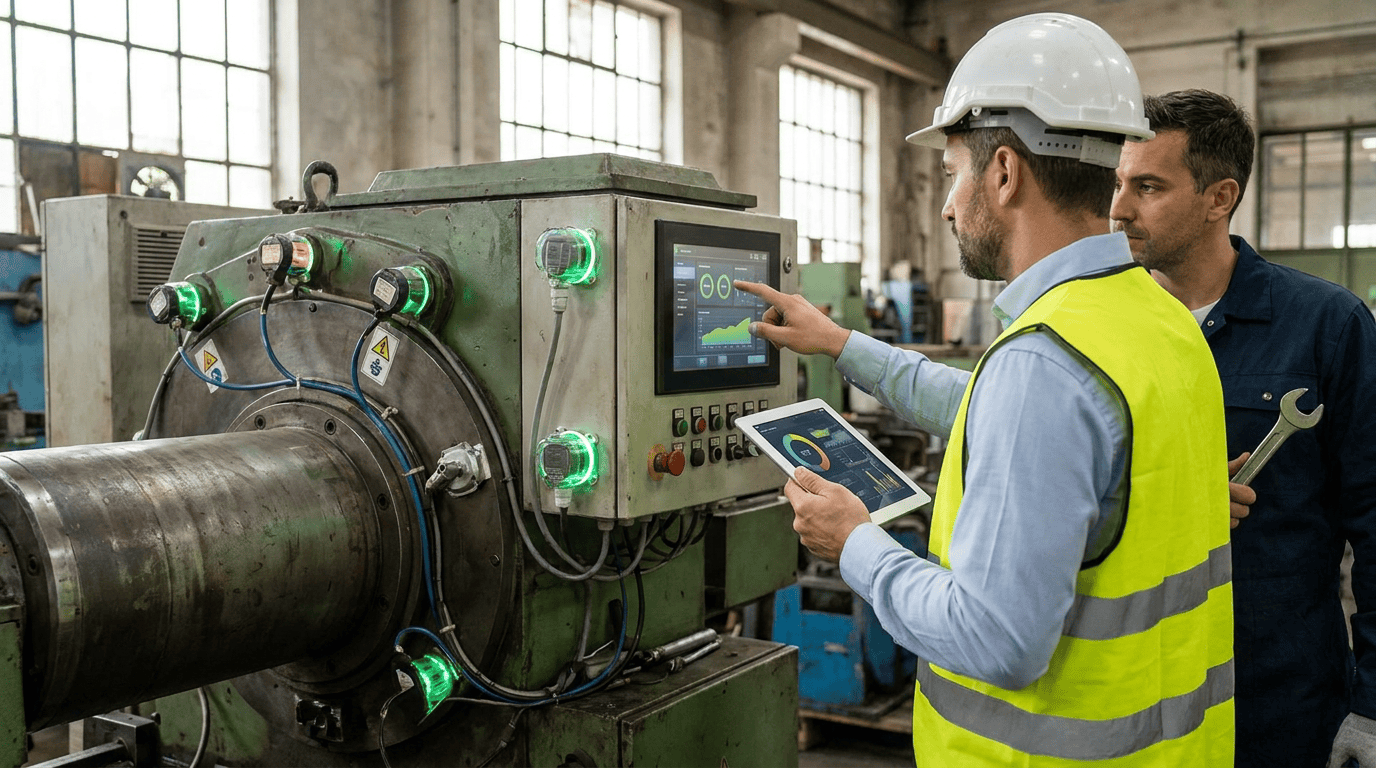
Predictive maintenance for gearbox bearings helps industrial teams reduce unplanned downtime, extend gearbox life, and control maintenance spending by identifying bearing distress before it becomes catastrophic failure. In high-load industrial gearboxes, bearings support shafts, maintain gear mesh alignment, absorb radial and axial forces, and directly affect vibration, heat, lubrication performance, and overall drivetrain reliability. For maintenance managers, plant engineers, reliability engineers, mechanics, and purchasing professionals, the goal is not simply to “monitor bearings,” but to turn condition data into timely decisions: inspect, lubricate, align, repair, rebuild, or replace. This guide explains practical methods, symptoms, troubleshooting steps, prevention strategies, and best practices for maximizing gearbox efficiency through predictive bearing maintenance.
Predictive maintenance for gearbox bearings uses vibration analysis, oil analysis, temperature monitoring, ultrasound, visual inspection, and operating data to detect early bearing defects before failure occurs. The most effective programs combine routine condition monitoring with lubrication control, alignment checks, load verification, and documented inspection procedures. Common warning signs include rising vibration, abnormal heat, metal particles in oil, noise, lubricant degradation, and shaft misalignment. When implemented correctly, predictive maintenance reduces emergency repairs, improves gearbox efficiency, extends bearing and gear life, and helps teams decide whether to repair, rebuild, or replace a gearbox at the right time.
Predictive maintenance for gearbox bearings is an essential strategy for enhancing the reliability and efficiency of industrial machinery. By utilizing advanced monitoring techniques, organizations can foresee potential failures and address them proactively, thereby minimizing downtime and repair costs. For further insights into the importance of maintenance and repair in industrial gearboxes, you can explore a related article on industrial gearbox repair in Kentucky at this link.
Why Gearbox Bearing Health Matters to Industrial Efficiency
Gearbox bearings are small compared to housings, shafts, and gears, but they are critical to the mechanical health of the entire gearbox. A bearing defect can cause shaft movement, gear tooth misalignment, seal failure, overheating, lubrication breakdown, and secondary damage to gears, couplings, motors, and driven equipment.
For facilities running conveyors, mixers, crushers, extruders, cooling towers, pumps, kilns, paper machines, or heavy-duty process equipment, gearbox bearing failure often leads to:
- Emergency downtime
- Missed production targets
- Expedited freight costs
- Overtime labor
- Collateral gear and shaft damage
- Increased energy consumption
- Safety risks during failure or emergency repair
- Higher total cost of ownership
A predictive maintenance approach gives your team the time needed to plan repairs, order parts, schedule downtime, and prevent a bearing issue from becoming a full gearbox failure.
For additional gearbox reliability guidance, see Industrial Gearbox Solutions resources on industrial gearbox repair, gearbox inspection services, and gearbox rebuild solutions.
Common Causes of Gearbox Bearing Failure
Understanding why bearings fail is the foundation of predictive maintenance. Condition monitoring can detect symptoms, but long-term reliability depends on correcting root causes.
Lubrication Problems
Lubrication failure is one of the most common causes of gearbox bearing damage. Bearings require the correct lubricant type, viscosity, additive package, cleanliness, and delivery method.
Common lubrication-related causes include:
- Low oil level
- Wrong lubricant viscosity
- Lubricant oxidation
- Water contamination
- Dirt or particulate contamination
- Incompatible grease or oil
- Foaming or aeration
- Overgreasing or undergreasing
- Blocked lubrication lines
- Poor oil filtration
According to lubrication reliability principles supported by organizations such as Noria, clean, dry, properly selected lubricants are essential for extending bearing and gearbox life.
Misalignment and Soft Foot
Misalignment between the motor, gearbox, coupling, and driven equipment can create excessive radial or axial loads on bearings. Even if the gearbox internals are in good condition, external misalignment can overload bearings and shorten service life.
Common contributors include:
- Improper coupling alignment
- Foundation movement
- Thermal growth
- Pipe strain
- Soft foot on motor or gearbox base
- Loose mounting bolts
- Improper shimming
Misalignment often appears as elevated vibration at 1x and 2x running speed, coupling wear, seal leakage, and bearing temperature rise.
Overloading and Shock Loading
Gearbox bearings are designed for specific load conditions. If actual operating loads exceed design limits, bearing fatigue accelerates.
Examples include:
- Frequent starts and stops
- Jammed conveyors
- Crusher tramp events
- Reversing loads
- Process surges
- Incorrect gearbox selection
- Increased production rates without drivetrain review
Shock loading can produce brinelling, spalling, cracked races, and cage damage.
Contamination
Contamination is especially damaging because hard particles can indent rolling elements and raceways. Water contamination can cause rust, lubricant breakdown, hydrogen embrittlement, and reduced film strength.
Typical contamination sources include:
- Failed seals
- Breathers without desiccant filtration
- Washdown spray
- Dirty oil transfer containers
- Open inspection ports
- Dusty plant environments
- Improper storage of replacement bearings
SKF and Timken both emphasize the importance of proper bearing handling, mounting, sealing, and lubrication cleanliness to prevent premature bearing failure.
Improper Installation
Bearings can be damaged before the gearbox is ever placed into service. Installation errors often lead to early-life failures.
Common installation mistakes include:
- Hammering directly on bearing rings
- Incorrect heating methods
- Wrong fit or clearance
- Contaminated assembly environment
- Improper preload
- Incorrect bearing orientation
- Reusing damaged locknuts or sleeves
- Poor shaft or housing condition
Precision mounting is especially important for tapered roller bearings, spherical roller bearings, cylindrical roller bearings, and angular contact bearings used in industrial gearboxes.
Industrial gearbox bearing failure can lead to costly downtime and production losses, so it’s important to address the issue promptly. Industrial gearbox bearing failure
Symptoms of Failing Gearbox Bearings
Predictive maintenance depends on recognizing early indicators and separating bearing faults from gear mesh, coupling, motor, or process-related issues.
Vibration Changes
Vibration analysis is one of the most powerful tools for gearbox bearing condition monitoring. Bearing defects often generate high-frequency vibration long before audible noise or heat becomes obvious.
Warning signs include:
- Increased overall vibration
- Peaks at bearing defect frequencies
- Rising acceleration or enveloping values
- Sidebands around gear mesh frequency
- Changes in vibration trend over time
- Impacts or repetitive shock pulses
- Elevated axial vibration
A single vibration reading may not tell the full story. Trending is essential.
Excessive Heat
Heat indicates friction, load, lubrication breakdown, or misalignment. A gradual temperature rise may suggest lubricant degradation or increasing bearing friction. A sudden rise may indicate severe damage, oil starvation, or overloading.
Potential heat-related warning signs:
- Gearbox housing temperature increase
- Bearing cap hot spots
- Oil temperature rise
- Discoloration of paint near bearing areas
- Burnt oil smell
- Thermal camera anomalies
Unusual Noise
Mechanics often detect problems through sound before other teams notice performance changes. Bearing noises may include:
- Rumbling
- Growling
- Clicking
- Popping
- High-pitched whining
- Cyclic knocking
- Grinding sounds
Noise should be documented with operating conditions, load, speed, and location.
Oil Contamination and Wear Debris
Bearing damage often produces metal particles in the lubricant. Oil analysis can detect early wear metals, contamination, viscosity changes, oxidation, and additive depletion.
Common indicators include:
- Increased iron
- Increased chromium
- Increased nickel
- High particle count
- Water contamination
- Abnormal ferrous debris
- Darkened or burnt oil
- Sludge formation
Seal Leakage
Bearing problems and seal problems often occur together. A failing bearing can allow shaft movement that damages seals. A failed seal can allow contamination that damages bearings.
Look for:
- Oil leaks around shaft seals
- Grease purging
- Dust stuck to oil residue
- Water entry near seals
- Worn shaft seal surfaces
- Breather clogging causing pressure buildup
In the realm of predictive maintenance for gearbox bearings, understanding the intricacies of industrial gearbox repair is crucial for optimizing performance and extending equipment lifespan. A related article that delves into effective strategies for maintaining gearbox integrity can be found at this link. By implementing predictive maintenance techniques, industries can significantly reduce downtime and enhance operational efficiency, ultimately leading to cost savings and improved productivity.
Predictive Maintenance Technologies for Gearbox Bearings
| Metrics | Value |
|---|---|
| Mean Time Between Failures (MTBF) | 1200 hours |
| Mean Time to Repair (MTTR) | 4 hours |
| Failure Rate | 0.83% per month |
| Overall Equipment Effectiveness (OEE) | 92% |
A strong predictive maintenance program uses multiple technologies. No single method detects every failure mode.
Vibration Analysis
Vibration analysis is the primary predictive tool for rotating equipment. It can identify bearing defects, gear mesh problems, imbalance, misalignment, looseness, resonance, and electrical motor issues.
Key vibration methods include:
- Overall vibration trending
- FFT spectrum analysis
- Time waveform analysis
- Acceleration enveloping
- PeakVue or shock pulse methods
- Phase analysis
- Route-based monitoring
- Online continuous monitoring
| Vibration Indicator | Possible Meaning | Recommended Action |
||||
| Rising high-frequency acceleration | Early bearing defect or lubrication issue | Inspect lubrication, trend closely, perform ultrasound check |
| Peaks at bearing defect frequency | Inner race, outer race, rolling element, or cage fault | Schedule inspection and plan bearing replacement |
| Sidebands around gear mesh | Gear or bearing modulation | Review gear mesh, bearing condition, and load variation |
| High axial vibration | Misalignment, thrust loading, bearing wear | Check alignment, coupling, and bearing preload |
| Random impacts in waveform | Spalling, looseness, contamination | Inspect oil and plan teardown if trend worsens |
For best results, establish baseline readings after installation, rebuild, or known-good operation.
Oil Analysis
Oil analysis provides insight into lubricant health and internal gearbox wear. It is especially useful because gearbox bearings operate inside a shared lubrication environment with gears, shafts, and seals.
Recommended oil analysis tests may include:
- Viscosity at 40°C and/or 100°C
- Particle count
- Karl Fischer water test
- Spectrometric wear metals
- Ferrous density
- Analytical ferrography
- Acid number
- Oxidation and nitration
- Additive levels
- Patch test or membrane analysis
| Oil Analysis Result | Possible Cause | Maintenance Response |
||||
| High iron | Gear or bearing wear | Compare with vibration data and inspect magnetic plug |
| High water | Seal failure, condensation, washdown | Identify water source, filter or change oil |
| High particle count | Ingress or poor filtration | Improve breathers, seals, and transfer practices |
| Low viscosity | Wrong oil or contamination | Verify lubricant specification and replace oil |
| High oxidation | Overheating or extended oil life | Check temperature, change oil, review lubricant selection |
Noria provides extensive lubricant analysis education and reliability guidance for industrial oil systems.
Ultrasound Monitoring
Ultrasound is useful for detecting early bearing friction, lubrication problems, and high-frequency impacts. It is also practical for mechanics because it can be used during route-based inspections.
Ultrasound can help identify:
- Lack of lubrication
- Overlubrication
- Early bearing distress
- Electrical discharge damage
- Air leaks near pneumatic systems that may contaminate areas
- Changes in friction before temperature increases
Thermography
Infrared thermography helps identify abnormal heat patterns in gearbox housings, bearing caps, seals, couplings, and lubrication systems.
Thermography is best used for:
- Comparing similar gearboxes
- Locating bearing hot spots
- Detecting oil cooler problems
- Identifying overloaded gearboxes
- Finding misalignment-related heat
- Checking for blocked oil flow
Temperature data should always be interpreted with load, ambient temperature, speed, and lubricant condition.
Online Sensors and IIoT Monitoring
For critical gearboxes, continuous online monitoring can provide early warnings and automated alerts. This is especially valuable for equipment that is difficult to access or runs continuously.
Common sensor types include:
- Accelerometers
- Temperature sensors
- Oil condition sensors
- Particle counters
- Speed sensors
- Torque/load sensors
- Wireless vibration sensors
AI-assisted analytics can help prioritize assets, identify abnormal patterns, and reduce alarm fatigue. However, human expertise remains essential for confirming diagnoses and planning corrective actions.
In the realm of predictive maintenance for gearbox bearings, understanding the intricacies of gearbox repair is essential for optimizing performance and extending equipment lifespan. A comprehensive approach to maintenance not only involves regular inspections but also the implementation of advanced monitoring techniques. For insights into effective gearbox repair strategies, you can explore this informative article on industrial gearbox repair in Montgomery, Alabama, which highlights the importance of timely interventions and expert services in maintaining operational efficiency.
Gearbox Bearing Inspection Methods
Predictive data should be supported by structured inspection. A disciplined inspection routine helps maintenance teams verify findings and prevent avoidable failures.
External Visual Inspection
During routine rounds, inspect the gearbox exterior for:
- Oil leaks
- Loose mounting bolts
- Damaged guards
- Cracked housings
- Rust or corrosion
- Breather condition
- Paint discoloration from heat
- Coupling wear
- Unusual movement
- Foundation damage
Use a checklist and document findings with photos.
Lubrication System Inspection
Inspect lubrication systems carefully because bearing life depends on lubricant delivery.
Check:
- Oil level
- Oil color and clarity
- Oil pressure
- Filter differential pressure
- Oil cooler operation
- Pump condition
- Breather condition
- Grease lines
- Sight glasses
- Magnetic plugs
- Sampling ports
For help with lubrication-related gearbox problems, see Industrial Gearbox Solutions’ guidance on gearbox lubrication maintenance.
Borescope Inspection
A borescope can inspect internal components without full disassembly. While bearing raceways may be difficult to see depending on gearbox design, borescopes can still detect:
- Gear tooth wear
- Debris
- Oil sludge
- Rust
- Broken cage fragments
- Housing contamination
- Oil starvation marks
- Damage near bearing seats
Magnetic Plug and Filter Inspection
Magnetic plugs and filters can reveal early signs of wear. Inspect for:
- Fine metallic paste
- Large flakes
- Bearing cage fragments
- Bronze or brass particles
- Shiny spalls
- Dark sludge
- Non-metallic contamination
If abnormal debris is found, preserve a sample for analysis.
Internal Bearing Inspection During Teardown
When a gearbox is opened, inspect bearings for:
- Spalling
- Fluting
- Brinelling
- False brinelling
- Smearing
- Scoring
- Cage wear
- Corrosion
- Overheating discoloration
- Uneven raceway patterns
- Excessive clearance
- Improper contact pattern
Photograph and label each bearing location. This supports root cause analysis and helps purchasing teams specify correct replacement parts.
Troubleshooting Gearbox Bearing Problems
Troubleshooting should be systematic. Avoid replacing bearings without identifying the cause of failure.
Step-by-Step Troubleshooting Process
- Confirm the complaint: vibration, heat, noise, leakage, or oil condition.
- Review operating data: speed, load, temperature, duty cycle, and recent process changes.
- Compare current readings to baseline data.
- Perform vibration analysis.
- Collect and analyze oil sample.
- Inspect seals, breathers, and oil level.
- Check alignment and soft foot.
- Review lubrication type and maintenance history.
- Inspect magnetic plugs and filters.
- Plan corrective action based on severity and production risk.
Common Problems and Likely Causes
| Symptom | Likely Causes | Corrective Actions |
||||
| Bearing area running hot | Low oil, wrong viscosity, overload, misalignment | Check oil level, verify lubricant, inspect load and alignment |
| High vibration at bearing frequencies | Bearing race or rolling element defect | Trend severity, schedule repair, inspect lubrication |
| Gearbox growling noise | Bearing wear, gear damage, oil starvation | Perform vibration and oil analysis |
| Oil leaking at seal | Shaft movement, seal wear, overfilled gearbox, clogged breather | Check bearing condition, replace seal, inspect breather |
| Metal debris in oil | Bearing spalling, gear wear, cage damage | Analyze debris, inspect gearbox, plan teardown |
| Repeated bearing failures | Misalignment, contamination, wrong bearing, improper installation | Conduct root cause failure analysis |
Severity-Based Response
Not every bearing fault requires immediate shutdown, but every confirmed defect requires a plan.
| Severity Level | Condition | Recommended Response |
||||
| Normal | Stable vibration, clean oil, normal temperature | Continue routine monitoring |
| Watch | Slight upward trend, minor oil contamination | Increase monitoring frequency |
| Alert | Defect frequency present, rising debris, abnormal heat | Plan repair during scheduled outage |
| Alarm | Rapid vibration increase, large debris, high heat | Prepare for immediate shutdown or controlled stop |
| Critical | Severe noise, unstable operation, oil loss | Shut down if safe and inspect immediately |
Prevention Strategies for Longer Gearbox Bearing Life
Predictive maintenance is most valuable when combined with proactive prevention.
Control Lubricant Cleanliness
Clean oil is essential for bearing life. Best practices include:
- Use sealed oil transfer containers
- Filter new oil before use
- Install desiccant breathers
- Maintain proper seals
- Use dedicated fill equipment by lubricant type
- Keep drums sealed and stored indoors
- Use kidney-loop filtration for critical gearboxes
- Set oil cleanliness targets based on bearing and gearbox requirements
Maintain Proper Alignment
Precision alignment reduces bearing loads and improves energy efficiency.
Recommended practices:
- Use laser alignment tools
- Correct soft foot before alignment
- Account for thermal growth
- Recheck alignment after foundation repairs
- Inspect coupling condition
- Document alignment results
Avoid Overloading
Work with operations and engineering teams to understand actual process loads. If production rates increase, verify that the gearbox, bearings, shafts, and lubrication system can handle the new conditions.
Improve Sealing and Breathing
Gearboxes need to breathe without ingesting contamination. Upgrade where appropriate:
- Desiccant breathers
- Labyrinth seals
- V-ring seals
- Improved shaft sealing surfaces
- Proper drain and fill plugs
- Contamination-resistant inspection covers
Use Correct Bearings and Fit
Purchasing professionals play a major role in reliability. Replacement bearings must match application requirements, not just dimensions.
Consider:
- Bearing type
- Load rating
- Internal clearance
- Cage material
- Precision class
- Lubrication compatibility
- Operating temperature
- Manufacturer quality
- Authentic sourcing
SKF and Timken provide technical bearing selection and mounting resources that can help teams verify correct bearing choices.
Repair vs. Replacement: Making the Right Decision
When predictive maintenance detects bearing damage, the next decision is whether to repair, rebuild, or replace the gearbox.
When Bearing Replacement May Be Enough
A targeted bearing replacement may be appropriate when:
- Damage is limited to one bearing
- Gear teeth are in good condition
- Shaft journals are within tolerance
- Housing bores are not worn
- Lubrication system is clean
- No major contamination event occurred
- Root cause is identified and corrected
This approach can reduce cost and downtime if the gearbox is otherwise healthy.
When a Full Gearbox Rebuild Is Better
A rebuild is usually recommended when bearing damage has affected multiple components.
Consider a rebuild if you find:
- Gear tooth pitting or spalling
- Shaft wear or cracking
- Housing bore wear
- Multiple bearing failures
- Severe contamination
- Seal surface damage
- Excessive backlash
- Damaged lubrication components
A professional rebuild should include cleaning, inspection, dimensional checks, bearing replacement, seal replacement, gear inspection, contact pattern verification, and test run when possible.
Learn more about industrial gearbox rebuild services from Industrial Gearbox Solutions.
When Replacement Is the Best Option
Complete gearbox replacement may be the best choice when:
- The housing is cracked or distorted
- Parts are obsolete
- Lead time for repair exceeds production needs
- The gearbox is undersized for current loads
- Repair cost approaches replacement cost
- Multiple failures have occurred
- Efficiency upgrades are available
- Safety risk is unacceptable
Repair vs. Replacement Decision Table
| Factor | Repair Bearings | Rebuild Gearbox | Replace Gearbox |
|||||
| Lowest upfront cost | Usually | Sometimes | Rarely |
| Best for minor damage | Yes | Sometimes | No |
| Best for widespread damage | No | Yes | Sometimes |
| Best for obsolete units | Maybe | Maybe | Often |
| Shortest lead time | Often | Depends | Depends on availability |
| Best long-term reliability | If root cause corrected | Usually | Usually |
| Requires engineering review | Sometimes | Yes | Yes |
Maintenance Best Practices for Gearbox Bearings
A predictive program works best when maintenance practices are standardized, documented, and continuously improved.
Build an Asset Criticality Ranking
Not every gearbox needs the same monitoring intensity. Rank assets based on:
- Production impact
- Safety risk
- Repair cost
- Spare availability
- Failure history
- Accessibility
- Environmental severity
Critical gearboxes may justify continuous monitoring, while lower-criticality units may only need route-based inspections.
Establish Baselines
Baseline data should be collected when equipment is known to be healthy. Capture:
- Vibration spectrum
- Time waveform
- Temperature
- Oil condition
- Load
- Speed
- Lubricant type
- Alignment data
- Photos and inspection notes
Without baselines, teams are forced to rely on generic alarm limits.
Use Condition-Based Work Orders
Predictive maintenance should trigger action. Integrate findings into your CMMS with clear work orders:
- Inspect bearing housing temperature
- Pull oil sample
- Change filter
- Check alignment
- Inspect breather
- Schedule rebuild
- Order replacement bearings
- Verify oil level
Train Mechanics and Inspectors
Technology cannot replace skilled people. Train teams to recognize:
- Abnormal sounds
- Lubricant contamination
- Seal failure
- Improper greasing
- Soft foot symptoms
- Bearing mounting errors
- Coupling problems
- Safety concerns
Document Failure Modes
Each bearing failure should be treated as a learning opportunity. Record:
- Bearing manufacturer and part number
- Operating hours
- Lubricant used
- Failure appearance
- Vibration history
- Oil analysis data
- Installation method
- Load conditions
- Root cause
- Corrective action
This documentation improves future purchasing, maintenance planning, and engineering decisions.
Recommended Predictive Maintenance Schedule
The best schedule depends on gearbox criticality, speed, load, environment, and failure history. The table below offers a practical starting point.
| Task | Critical Gearboxes | Standard Gearboxes | Severe Environment |
|||||
| Operator visual check | Daily | Weekly | Daily |
| Temperature check | Daily or online | Monthly | Weekly |
| Vibration monitoring | Online or monthly | Quarterly | Monthly |
| Oil analysis | Monthly to quarterly | Semiannual | Monthly |
| Breather inspection | Monthly | Quarterly | Monthly |
| Alignment check | Annual or after disturbance | Annual | Annual |
| Borescope inspection | Annual | As needed | Annual |
| Full internal inspection | Based on condition | During outage | Based on condition |
Key Metrics to Track
Maintenance managers and reliability engineers should track measurable indicators that connect bearing health to business performance.
Useful KPIs include:
- Mean time between failures
- Mean time to repair
- Planned vs. unplanned maintenance ratio
- Gearbox availability
- Lubricant cleanliness level
- Number of bearing-related failures
- Emergency repair cost
- Vibration alarm frequency
- Oil analysis abnormality rate
- Spare gearbox inventory value
- Repair lead time
- Energy consumption trend
Tracking these metrics helps justify investments in sensors, training, filtration, alignment tools, and professional gearbox repair.
Authoritative Standards and Resources
Use recognized technical resources to strengthen your predictive maintenance program:
- SKF bearing maintenance and failure analysis resources: https://www.skf.com
- Timken bearing selection, lubrication, and damage analysis resources: https://www.timken.com
- AGMA gearbox standards and technical publications: https://www.agma.org
- Noria lubrication and oil analysis education: https://www.noria.com
AGMA standards are especially relevant for gear design, rating, lubrication, and enclosed drive reliability. SKF and Timken are valuable for bearing-specific installation, failure analysis, and lubrication guidance.
Branded Image Suggestions
Image 1: Technician Performing Vibration Analysis
Alt text: Technician using a vibration analyzer on an industrial gearbox bearing housing
Caption: Predictive vibration monitoring helps detect gearbox bearing defects before catastrophic failure.
Suggested placement: Near the “Vibration Analysis” section.
Image 2: Oil Sampling from Industrial Gearbox
Alt text: Maintenance mechanic collecting an oil sample from an industrial gearbox for bearing wear analysis
Caption: Oil analysis can reveal bearing wear particles, contamination, and lubricant degradation.
Suggested placement: Near the “Oil Analysis” section.
Image 3: Gearbox Bearing Inspection During Rebuild
Alt text: Industrial Gearbox Solutions technician inspecting gearbox bearings during rebuild
Caption: Internal inspection confirms bearing condition and helps identify root causes of failure.
Suggested placement: Near the “Repair vs. Replacement” section.
Image 4: Thermal Image of Gearbox Bearing Housing
Alt text: Infrared thermal scan showing elevated temperature at gearbox bearing housing
Caption: Thermography identifies abnormal heat patterns related to lubrication, load, or bearing distress.
Suggested placement: Near the “Thermography” section.
Image 5: Clean Lubrication Storage Area
Alt text: Organized industrial lubricant storage area with sealed transfer containers and filtration equipment
Caption: Clean lubricant handling is one of the most effective ways to extend gearbox bearing life.
Suggested placement: Near the “Prevention Strategies” section.
Key Takeaways
- Gearbox bearings are critical to gear alignment, shaft stability, energy efficiency, and overall gearbox reliability.
- Predictive maintenance combines vibration analysis, oil analysis, ultrasound, thermography, and inspection data.
- Common bearing failure causes include lubrication problems, misalignment, contamination, overloading, and improper installation.
- Early symptoms include rising vibration, abnormal heat, unusual noise, metal debris, oil degradation, and seal leakage.
- Clean lubrication, precision alignment, contamination control, and correct bearing installation are essential prevention strategies.
- Repair, rebuild, or replacement decisions should be based on condition data, root cause analysis, cost, lead time, and production risk.
- The most successful programs turn predictive data into planned work orders and measurable reliability improvements.
FAQs
What is predictive maintenance for gearbox bearings?
Predictive maintenance for gearbox bearings is the use of condition monitoring tools and inspection data to identify bearing problems before failure. Common methods include vibration analysis, oil analysis, ultrasound, thermography, and online sensors.
How often should gearbox bearings be monitored?
Critical gearboxes may require continuous monitoring or monthly vibration checks, while standard gearboxes may be monitored quarterly. Oil analysis is commonly performed monthly, quarterly, or semiannually depending on criticality and operating conditions.
What is the most common cause of gearbox bearing failure?
Lubrication-related failure is one of the most common causes. This includes incorrect lubricant, low oil level, contamination, water ingress, oxidation, and poor filtration.
Can a gearbox run with a damaged bearing?
Sometimes a gearbox can continue operating with an early-stage bearing defect, but it should be closely monitored and scheduled for repair. Severe bearing damage can quickly cause gear, shaft, seal, and housing failure.
What does bearing failure sound like in a gearbox?
Failing gearbox bearings may produce rumbling, growling, clicking, grinding, knocking, or high-pitched whining. Noise should be confirmed with vibration analysis and inspection.
How does oil analysis detect bearing wear?
Oil analysis detects wear metals, particle contamination, water, viscosity changes, oxidation, and ferrous debris. Bearing wear may appear as elevated iron, chromium, nickel, or abnormal particle counts depending on bearing material and failure mode.
Is vibration analysis better than oil analysis?
Neither method is universally better. Vibration analysis is excellent for detecting mechanical defects, while oil analysis identifies lubricant health and internal wear debris. The best programs use both.
When should gearbox bearings be replaced?
Bearings should be replaced when condition monitoring confirms progressing defects, abnormal clearance, spalling, overheating damage, contamination-related distress, or when replacement is required during a planned rebuild.
Should bearings always be replaced during a gearbox rebuild?
In most industrial gearbox rebuilds, bearings are replaced to restore reliability and avoid rework. However, the final decision depends on inspection results, bearing condition, operating hours, and criticality.
How can Industrial Gearbox Solutions help?
Industrial Gearbox Solutions can support gearbox inspection, troubleshooting, bearing replacement, rebuild planning, emergency repair, reverse engineering, and replacement recommendations for industrial gearboxes.
SEO Metadata
Meta title: Predictive Maintenance for Gearbox Bearings | Maximize Gearbox Efficiency
Meta description: Learn how predictive maintenance for gearbox bearings reduces downtime, improves efficiency, and helps maintenance teams detect failures early using vibration, oil analysis, thermography, and inspections.
Primary keyword: predictive maintenance for gearbox bearings
Secondary keywords: gearbox bearing failure, industrial gearbox maintenance, gearbox vibration analysis, gearbox oil analysis, bearing inspection, gearbox repair, gearbox rebuild, condition monitoring for gearboxes
Suggested URL slug: predictive-maintenance-gearbox-bearings
Search intent: Informational and commercial investigation
Recommended internal links:
- Industrial gearbox repair: https://industrialgearboxsolutions.com/industrial-gearbox-repair/
- Gearbox rebuild services: https://industrialgearboxsolutions.com/gearbox-rebuild/
- Gearbox inspection: https://industrialgearboxsolutions.com/gearbox-inspection/
- Gearbox lubrication: https://industrialgearboxsolutions.com/gearbox-lubrication/
- Emergency gearbox repair: https://industrialgearboxsolutions.com/emergency-gearbox-repair/
Recommended external links:
- SKF bearing maintenance resources: https://www.skf.com
- Timken bearing damage analysis: https://www.timken.com
- AGMA standards: https://www.agma.org
- Noria lubrication reliability: https://www.noria.com
Conclusion
Maximizing gearbox efficiency starts with protecting the bearings that support shaft alignment, gear mesh accuracy, and smooth power transmission. Predictive maintenance for gearbox bearings gives maintenance and reliability teams the visibility needed to act before small defects become major failures. By combining vibration analysis, oil analysis, ultrasound, thermography, inspections, lubrication control, and root cause analysis, your facility can reduce unplanned downtime, extend asset life, and make smarter repair-versus-replacement decisions.
For purchasing professionals, predictive maintenance also improves planning by identifying parts, rebuild windows, and replacement needs before an emergency occurs. For mechanics and engineers, it provides the evidence needed to correct lubrication, alignment, contamination, and loading issues at the source.
If your gearbox is showing signs of bearing distress, rising vibration, heat, noise, oil contamination, or repeated failures, now is the time to act. Industrial Gearbox Solutions can help inspect, diagnose, repair, rebuild, or replace your industrial gearbox before production is at risk.
FAQs
What is predictive maintenance for gearbox bearings?
Predictive maintenance for gearbox bearings is a proactive maintenance strategy that uses data and analytics to predict when a bearing is likely to fail. By monitoring various parameters such as temperature, vibration, and lubrication, maintenance can be scheduled before a failure occurs, reducing downtime and maintenance costs.
What are the benefits of using predictive maintenance for gearbox bearings?
The benefits of using predictive maintenance for gearbox bearings include increased equipment reliability, reduced downtime, lower maintenance costs, and improved safety. By identifying potential issues before they lead to a failure, predictive maintenance can also extend the lifespan of gearbox bearings.
What are the common techniques used in predictive maintenance for gearbox bearings?
Common techniques used in predictive maintenance for gearbox bearings include vibration analysis, oil analysis, thermography, and ultrasonic testing. These techniques help to identify abnormal conditions and potential failures in gearbox bearings, allowing for timely maintenance and repairs.
How does predictive maintenance for gearbox bearings differ from preventive maintenance?
Predictive maintenance for gearbox bearings differs from preventive maintenance in that it is based on the actual condition of the bearings, rather than a predetermined schedule. Preventive maintenance involves regularly scheduled maintenance tasks, regardless of the actual condition of the equipment, while predictive maintenance uses real-time data to determine when maintenance is needed.
What are some best practices for implementing predictive maintenance for gearbox bearings?
Some best practices for implementing predictive maintenance for gearbox bearings include establishing a baseline for normal operating conditions, using advanced monitoring technologies, training personnel in data analysis and interpretation, and integrating predictive maintenance into overall maintenance and reliability strategies. It is also important to regularly review and update predictive maintenance programs to ensure effectiveness.