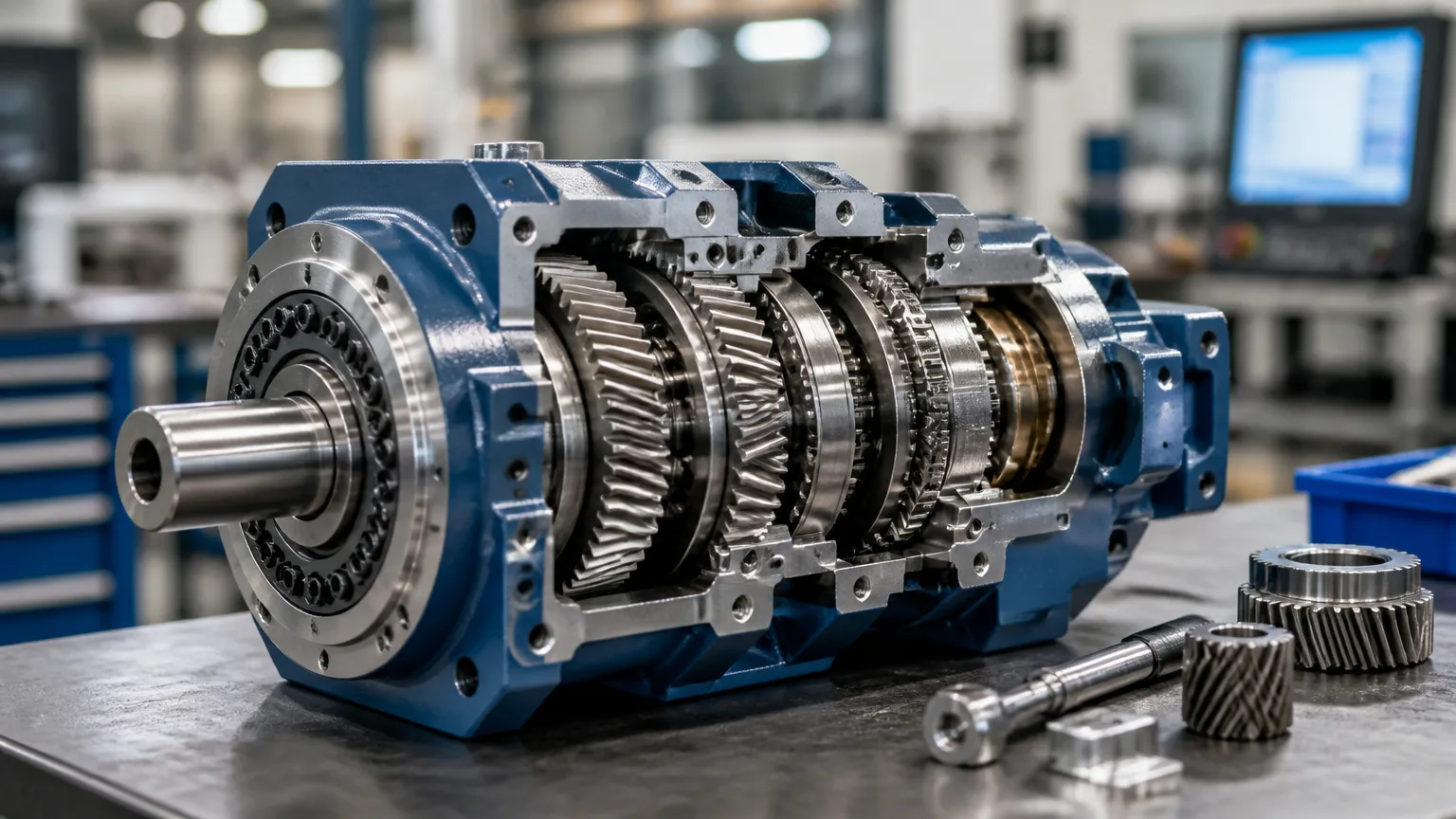
In today’s rapidly evolving manufacturing landscape, flexibility is paramount. As industries face increasing demands for customization and efficiency, adaptable solutions are essential. One such solution is the modular gearbox, a versatile component designed to enhance operational agility.
Modular gearboxes stand out for their unique ability to be configured and reconfigured to meet specific application needs. This adaptability allows manufacturers to respond swiftly to changing production requirements, making them a crucial asset in flexible manufacturing environments.
For example, as production lines shift from one product to another, modular gearboxes can be easily modified or replaced without extensive downtime. This not only streamlines operations but also reduces costs associated with equipment changes.
By integrating modular gearboxes, manufacturers can optimize performance while minimizing disruptions. The importance of this adaptability cannot be overstated, as it directly impacts productivity and competitiveness in a fast-paced market. In the following sections, we will explore the specific advantages of modular gearboxes and how they contribute to modern manufacturing success.
1. Enhanced Customization Options
Modular gearboxes offer unparalleled customization, allowing manufacturers to tailor solutions to their unique operational needs. By combining different modules, businesses can create gearboxes that precisely match their specifications, enhancing performance and efficiency.
For instance, a leading automotive manufacturer utilized modular gearboxes to streamline their production line. By selecting specific modules for torque and speed, they achieved a 20% increase in productivity. This customization enabled them to adapt quickly to changing production demands without overhauling their entire system.
Another case involves a packaging company that integrated modular gearboxes to optimize their machinery for various product sizes. This flexibility not only reduced downtime but also improved their ability to respond to market trends swiftly.
These examples illustrate how the ability to mix and match components in a modular gearbox can lead to significant operational advantages, ensuring that manufacturers remain competitive in a dynamic landscape.
2. Simplified Maintenance and Repair
The modular design of gearboxes significantly simplifies maintenance and repair processes. With interchangeable components, manufacturers can quickly replace only the faulty parts, minimizing the time machinery is out of operation. This quick component replacement not only streamlines repairs but also reduces the need for extensive inventory management.
For example, a manufacturer experiencing a gearbox failure can swap out a single module rather than replacing the entire unit. This targeted approach often results in substantial cost savings. A study found that companies utilizing modular gearboxes reduced their downtime by up to 50%, leading to savings of thousands of dollars in lost production.
Moreover, with fewer parts needing attention, maintenance schedules become more predictable. This predictability allows for better resource allocation and planning, further enhancing operational efficiency. Ultimately, the modular gearbox design empowers manufacturers to maintain high productivity levels while minimizing repair costs.
3. Scalability for Diverse Applications
Modular gearboxes offer remarkable scalability, allowing manufacturers to easily adapt their machinery to meet varying production demands. This flexibility is crucial in industries where market needs can change rapidly, enabling companies to reconfigure their systems without significant downtime or investment.
For instance, a modular gearbox can be customized with different gear ratios or motor configurations to suit various applications, from assembly lines to packaging machines. This adaptability means that manufacturers can respond swiftly to new product lines or changes in production volume.
Furthermore, the ability to scale operations helps businesses optimize their resources. When demand surges, modular systems can be expanded with minimal disruption. Conversely, during slower periods, they can be downsized efficiently, reducing costs while maintaining efficiency.
Ultimately, the scalability of modular gearboxes not only enhances operational flexibility but also strengthens a manufacturer’s competitive edge in a fast-changing market landscape.
4. Improved Efficiency and Performance
Modular gearboxes significantly enhance operational efficiency and machine performance in manufacturing. Their adaptable design allows manufacturers to optimize energy use, resulting in lower operational costs. Studies have shown that companies implementing modular gearboxes reported energy savings of up to 30%, highlighting the efficiency gains achieved through tailored configurations.
By allowing for quick adjustments and upgrades, modular gearboxes facilitate improved performance metrics. For instance, a leading automotive manufacturer noted a 15% increase in production speed after integrating modular systems. This increase was attributed to the ability to fine-tune gear ratios to suit specific tasks, ensuring machines operate at peak efficiency.
Moreover, the modular design streamlines maintenance, as interchangeable parts simplify repairs and reduce downtime. This predictability in maintenance schedules enables manufacturers to allocate resources more effectively, further enhancing overall productivity. As a result, the implementation of modular gearboxes is reshaping the landscape of flexible manufacturing, driving both efficiency and performance improvements.
5. Cost-Effectiveness Over Time
Investing in modular gearboxes offers substantial long-term cost benefits for manufacturers. While the initial investment may appear higher compared to traditional gear systems, the return on investment (ROI) becomes evident over time. Modular gearboxes simplify repairs and upgrades, reducing maintenance costs and downtime.
For instance, a leading automotive manufacturer reported a 30% reduction in operational costs after switching to modular gearboxes. By easily replacing only the affected components, they minimized the need for extensive repairs, allowing them to keep production lines running smoothly.
Additionally, modular designs enable manufacturers to adapt their systems to varying production demands without incurring significant costs. This flexibility further enhances ROI, as companies can scale operations up or down without the need for complete gearbox replacements.
In summary, while modular gearboxes require a thoughtful upfront investment, the long-term savings and operational efficiencies they provide make them a cost-effective choice for modern manufacturing environments.
The Future of Modular Gearboxes in Manufacturing
As we have explored, modular gearboxes offer unparalleled flexibility and adaptability for manufacturers. Their ability to mix and match components allows for quick adjustments to changing production demands, ultimately enhancing efficiency and reducing downtime. This adaptability not only meets immediate needs but also positions manufacturers for future growth.
Investing in modular gearbox systems can lead to significant long-term gains. By improving operational efficiency and reducing costs, manufacturers can stay competitive in an ever-evolving market. As the manufacturing landscape continues to change, embracing modular gearboxes will be essential for those looking to thrive. Consider making this strategic shift to ensure your operations remain agile and economically viable.