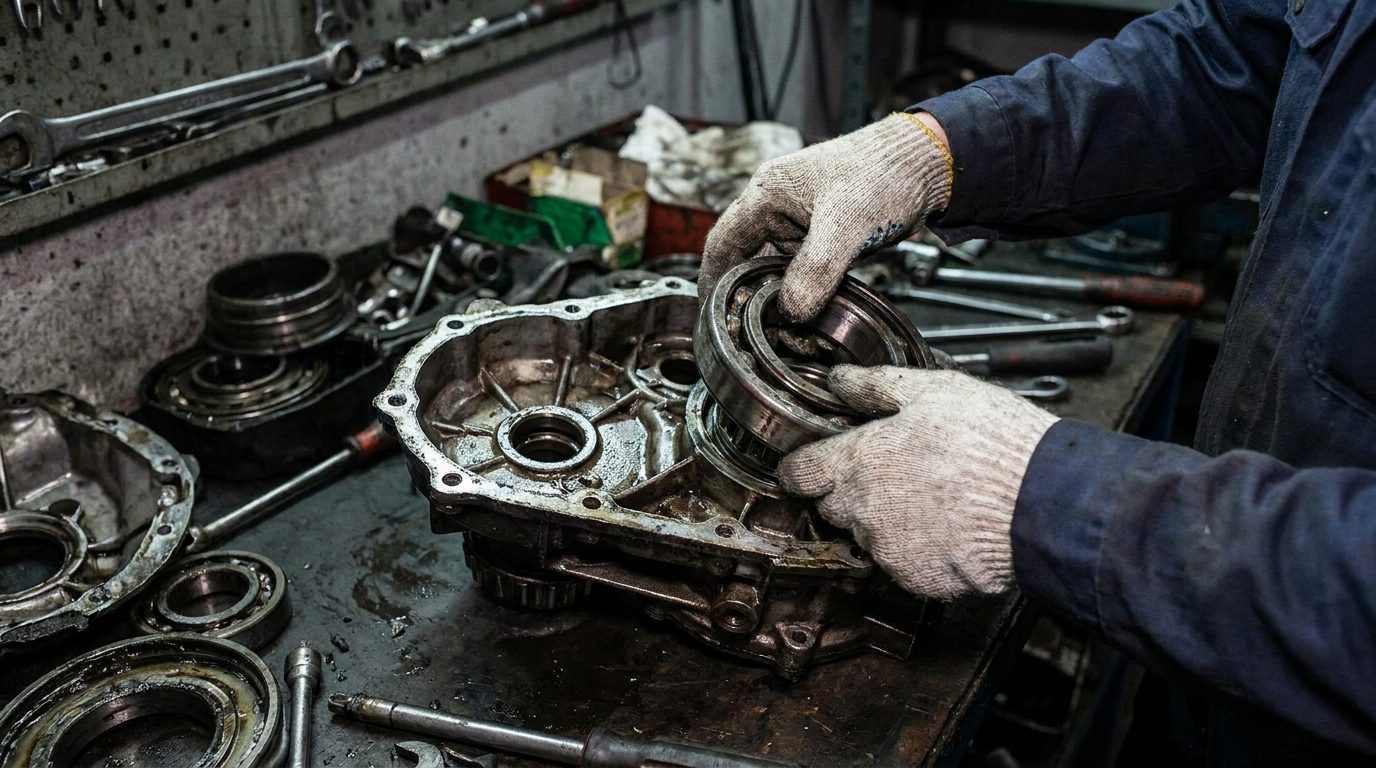
Industrial gearbox bearing replacement is one of the most important maintenance decisions affecting gearbox reliability, uptime, vibration levels, heat generation, and total lifecycle cost. When bearings wear, spall, overheat, loosen, or lose proper lubrication, the entire gearbox can quickly suffer secondary damage to gears, shafts, seals, housings, and couplings. For maintenance managers, plant engineers, reliability teams, mechanics, and purchasing professionals, knowing when and how to replace gearbox bearings helps prevent catastrophic failure, reduce unplanned downtime, and make better repair-versus-replacement decisions. This guide explains bearing failure causes, warning signs, inspection methods, troubleshooting steps, replacement best practices, and long-term prevention strategies for industrial gearboxes.
Industrial gearbox bearings should be replaced when inspection, vibration analysis, oil analysis, temperature trends, or operating symptoms indicate wear, spalling, excessive clearance, contamination damage, overheating, or lubrication failure. The replacement process typically includes locking out equipment, draining oil, disassembling the gearbox, inspecting gears and shafts, removing the failed bearing, checking fits and housings, installing the correct replacement bearing, setting proper clearances or preload, reassembling, refilling with clean lubricant, and performing startup checks. Always identify the root cause of bearing failure before returning the gearbox to service.
For those looking to deepen their understanding of industrial gearbox maintenance, the article on industrial gearbox repair in Yuma, Arizona provides valuable insights and practical tips. This resource can complement your knowledge gained from the Industrial Gearbox Bearing Replacement Guide, ensuring that you are well-equipped to handle various repair and replacement tasks. To explore this informative article, visit Industrial Gearbox Repair in Yuma, Arizona.
Why Industrial Gearbox Bearing Replacement Matters
Bearings support rotating shafts, maintain gear alignment, control axial and radial loads, and allow the gearbox to transmit power efficiently. In heavy-duty industrial applications, bearings are exposed to high loads, shock, vibration, heat, contamination, and continuous operation. A small bearing defect can quickly become a gearbox-wide failure if not addressed.
Common industries affected include:
- Mining and aggregate processing
- Cement and lime plants
- Pulp and paper mills
- Food and beverage manufacturing
- Steel and metals processing
- Wastewater treatment
- Chemical processing
- Power generation
- Packaging and converting
- Bulk material handling
A failed bearing can lead to:
- Gear tooth misalignment
- Shaft scoring or bending
- Seal failure and lubricant leakage
- Excessive gearbox temperature
- Increased power consumption
- Unplanned production shutdowns
- Catastrophic gearbox damage
For critical assets, replacing a bearing at the right time is often far less expensive than replacing an entire gearbox. If your unit is already showing signs of distress, consider a professional industrial gearbox inspection or gearbox repair evaluation before operating it further.
Common Causes of Industrial Gearbox Bearing Failure
Bearing failure is rarely random. Most failures result from operating conditions, installation errors, lubrication issues, contamination, overload, or misalignment. Identifying the cause is essential because simply installing a new bearing without correcting the underlying issue often results in repeat failure.
Lubrication Failure
Lubrication is one of the leading causes of bearing damage in industrial gearboxes. Oil or grease must create a protective film between rolling elements and raceways. When that film breaks down, metal-to-metal contact occurs.
Common lubrication-related causes include:
- Low oil level
- Wrong lubricant viscosity
- Contaminated lubricant
- Oxidized or degraded oil
- Incorrect grease type
- Over-greasing or under-greasing
- Foaming or aeration
- Blocked oil passages
- Poor lubricant filtration
- Excessive operating temperature
According to lubrication reliability resources such as Noria, proper lubricant selection, contamination control, and oil analysis are central to extending gearbox bearing life. Learn more from Noria at https://www.noria.com.
Contamination
Contaminants accelerate wear and damage bearing surfaces. In many industrial plants, gearboxes operate in dusty, wet, abrasive, or chemically aggressive environments.
Typical contaminants include:
- Dirt and dust
- Metal particles
- Water
- Process chemicals
- Cleaning fluids
- Sand or aggregate fines
- Paint chips or gasket material
- Degraded seal particles
Water contamination is especially damaging because it reduces lubricant film strength, promotes corrosion, and can cause hydrogen embrittlement in bearing components.
Misalignment
Misalignment can overload bearings and cause uneven load distribution. Even if gears appear to operate, poor alignment can create abnormal forces that shorten bearing life.
Misalignment sources include:
- Improper motor-to-gearbox alignment
- Soft foot
- Foundation movement
- Thermal growth
- Incorrect shaft installation
- Housing distortion
- Worn coupling components
- Improper shimming
Plant teams should include alignment checks as part of gearbox installation and post-repair commissioning. Laser alignment is strongly recommended for critical drives.
Overload and Shock Loading
Industrial gearboxes are often exposed to torque spikes, jam-ups, emergency stops, reversed loading, and process upsets. Bearings may fail prematurely when actual operating loads exceed design assumptions.
Examples include:
- Crusher jams
- Conveyor plugging
- Mixer batch overloads
- Kiln drive shock
- Hoist overloads
- Reciprocating load cycles
- Frequent starts and stops
Shock loading can create brinelling, raceway dents, cage damage, and rolling element deformation.
Improper Bearing Installation
A new bearing can fail quickly if installed incorrectly. Installation errors include:
- Hammering directly on bearing rings
- Heating bearings unevenly
- Contaminating parts during assembly
- Installing bearings on damaged shafts
- Incorrect preload or endplay
- Using the wrong bearing type
- Reusing damaged locknuts or washers
- Improper torque on retaining components
- Failing to check shaft and housing fits
SKF and Timken both provide detailed guidance on proper mounting, bearing handling, lubrication, and failure analysis. Reference resources are available at https://www.skf.com and https://www.timken.com.
Fatigue and Normal Wear
Even properly installed and lubricated bearings eventually reach the end of their service life. Rolling contact fatigue may appear as spalling, flaking, pitting, or surface cracking. Predictive maintenance tools can help detect these issues before catastrophic failure occurs.
Industrial gearbox bearing failure can lead to costly downtime and production losses, so it’s important to address the issue promptly. Industrial gearbox bearing failure
Symptoms of Failing Gearbox Bearings
Early detection is critical. A gearbox with a failing bearing often provides multiple warning signs before complete failure.
Audible Noise
Unusual gearbox noise is one of the most common symptoms. Listen for:
- Grinding
- Rumbling
- Growling
- Clicking
- Whining
- Knocking
- Intermittent metallic sounds
Noise that increases with load or speed may indicate bearing surface damage, lubrication failure, or looseness.
Excessive Vibration
Bearing defects often produce distinct vibration patterns. Reliability engineers can identify early-stage bearing faults through vibration analysis before symptoms are visible.
Possible vibration indicators include:
- Increased overall vibration
- High-frequency bearing defect frequencies
- Sidebands around gear mesh frequency
- Axial vibration increase
- Impacts or looseness signatures
- Resonance amplification
For critical gearboxes, vibration monitoring should be part of a planned predictive maintenance program.
High Operating Temperature
Bearings generate heat when friction increases. Temperature rise may indicate lubrication problems, excessive load, misalignment, preload issues, or bearing damage.
Common warning signs include:
- Gearbox housing too hot to touch
- Rising oil temperature
- Localized hot spots near bearing locations
- Thermal camera abnormalities
- Oil oxidation or burnt odor
Temperature trends are more useful than one-time readings. A sudden increase should be investigated immediately.
Oil Contamination or Metallic Debris
Bearing damage may release metal particles into the lubricant. During oil sampling or drain inspections, look for:
- Metallic flakes
- Dark or burnt oil
- Milky oil from water contamination
- Brass or bronze particles
- Magnetic debris
- Sludge or varnish
Oil analysis can help distinguish between bearing wear, gear wear, contamination, and lubricant degradation.
Shaft Movement or Seal Leakage
A worn bearing may allow shaft movement, which can damage seals and cause lubricant leaks. Symptoms include:
- Oil leaking from input or output seals
- Coupling movement
- Shaft endplay
- Gear misalignment
- Uneven seal wear
- Abnormal backlash
If shaft movement is present, do not simply replace the seal. Inspect the bearing, shaft fit, and housing bore.
For those looking to enhance their understanding of industrial gearbox maintenance, a comprehensive resource can be found in the article on gearbox repair services in Memphis, Tennessee. This guide not only covers essential aspects of gearbox repair but also provides insights into the importance of timely bearing replacement. You can read more about these crucial maintenance practices by visiting this article.
Troubleshooting Industrial Gearbox Bearing Problems
| Industrial Gearbox | Bearing Type | Replacement Interval | Lubrication |
|---|---|---|---|
| Helical Gearbox | Roller Bearings | 5 years | Grease |
| Worm Gearbox | Ball Bearings | 3 years | Oil |
| Bevel Gearbox | Thrust Bearings | 7 years | Grease |
Troubleshooting should be systematic. The goal is to confirm the failure mode, determine severity, and identify root cause before repair.
Step-by-Step Troubleshooting Checklist
| Step | What to Check | Why It Matters |
||||
| 1 | Operating temperature | Identifies heat-related lubrication or load issues |
| 2 | Noise pattern | Helps distinguish bearing, gear, or coupling problems |
| 3 | Vibration data | Detects bearing defects, looseness, and misalignment |
| 4 | Oil level and condition | Confirms lubrication adequacy |
| 5 | Oil analysis results | Reveals contamination, wear metals, and degradation |
| 6 | Shaft movement | Indicates bearing clearance or fit problems |
| 7 | Seal condition | Shows signs of misalignment or internal pressure |
| 8 | Coupling alignment | Prevents external forces from damaging bearings |
| 9 | Load history | Identifies overload or shock events |
| 10 | Maintenance history | Reveals recurring issues or improper practices |
Distinguishing Bearing Problems from Gear Problems
Gearbox bearing problems can sometimes resemble gear tooth defects. The table below can help narrow the source.
| Symptom | Likely Bearing Issue | Likely Gear Issue |
||||
| Rumbling noise | Spalling, inadequate lubrication | Less common |
| Rhythmic knocking | Severe bearing defect or looseness | Broken gear tooth |
| Whining noise | Possible preload or lubrication issue | Gear mesh wear or misalignment |
| High-frequency vibration | Bearing defect | Gear mesh harmonics |
| Metal flakes in oil | Bearing or gear damage | Gear tooth pitting or scuffing |
| Shaft movement | Bearing wear or fit issue | Usually secondary |
| Overheating | Bearing friction or lubricant issue | Gear friction or overloading |
When to Shut Down the Gearbox
Immediate shutdown may be necessary if you observe:
- Rapidly rising temperature
- Severe vibration
- Loud grinding or knocking
- Loss of oil pressure or oil level
- Large metallic particles in oil
- Visible shaft movement
- Smoke or burnt lubricant smell
- Gearbox housing cracks
- Coupling instability
Running a gearbox to failure may turn a bearing replacement into a complete gearbox rebuild or emergency replacement.
For those looking to deepen their understanding of industrial gearbox maintenance, the article on gearbox lubrication techniques provides valuable insights that complement the Industrial Gearbox Bearing Replacement Guide. Proper lubrication is essential for extending the lifespan of gearboxes and ensuring optimal performance, making it a crucial aspect to consider alongside bearing replacement.
Inspection Methods for Gearbox Bearings
A proper inspection combines visual checks, precision measurements, lubricant analysis, and condition monitoring.
Visual Inspection
During disassembly, inspect all bearing components and surrounding parts. Look for:
- Spalling or flaking
- Pitting
- Scoring
- Blue or black heat discoloration
- Corrosion
- Cage cracks
- Roller skewing
- Brinelling marks
- False brinelling
- Fretting on shaft fits
- Housing bore wear
- Seal wear grooves
- Metal debris patterns
Document findings with photos before cleaning parts. These images support root cause analysis and repair decisions.
Vibration Analysis
Vibration analysis is one of the most effective non-destructive methods for detecting bearing defects. It can identify:
- Inner race defects
- Outer race defects
- Rolling element defects
- Cage defects
- Looseness
- Misalignment
- Imbalance
- Gear mesh issues
For best results, collect baseline data when the gearbox is healthy and compare changes over time.
Oil Analysis
Oil analysis provides insight into internal gearbox condition without disassembly. Useful tests include:
- Particle count
- Wear metal analysis
- Ferrous density
- Viscosity
- Water content
- Acid number
- Oxidation
- Additive depletion
- Debris morphology
If bearing wear is suspected, ferrography can help identify particle type, size, and wear mechanism.
Thermography
Infrared inspections can reveal abnormal heat at bearing locations, seals, and lubrication lines. Thermography is especially useful for comparing similar gearboxes under similar load conditions.
Dimensional Inspection
When replacing bearings, always inspect shaft journals and housing bores. A new bearing installed on a worn shaft or oversized housing may fail prematurely.
Check:
- Shaft diameter
- Housing bore diameter
- Roundness
- Taper
- Surface finish
- Shoulder squareness
- Keyway condition
- Bearing seat fretting
- Endplay or preload
- Gear contact pattern
Precision measurements should be performed using calibrated micrometers, bore gauges, dial indicators, and other appropriate tools.
How to Replace Industrial Gearbox Bearings
The exact procedure depends on gearbox design, bearing type, size, load arrangement, and OEM requirements. However, the following process applies to many industrial gearboxes.
Preparation and Safety
Before any work begins:
- Review OEM manuals and drawings
- Identify bearing part numbers and specifications
- Confirm replacement bearing availability
- Lock out and tag out all energy sources
- Secure driven equipment
- Drain lubricant safely
- Clean the work area
- Prepare lifting equipment
- Document existing conditions
- Mark component orientation
For large gearboxes, planning is critical. Confirm crane access, rigging points, tooling, seals, shims, gaskets, fasteners, and lubricant before shutdown.
Disassembly
During disassembly:
- Remove guards, couplings, and accessories
- Drain oil and collect a sample
- Remove inspection covers
- Mark bearing caps and housings
- Record shim packs and locations
- Check shaft endplay before disassembly
- Remove shafts and gear assemblies carefully
- Protect gear teeth and machined surfaces
- Keep components organized
Avoid mixing bearing caps, shims, spacers, and retaining components. Their original positions matter.
Bearing Removal
Bearing removal methods may include:
- Mechanical pullers
- Hydraulic pullers
- Bearing splitters
- Induction heating
- Press removal
- Controlled cutting for damaged bearings
Never damage the shaft journal, gear, shoulder, or housing bore during bearing removal. If a bearing is seized, use controlled heat or specialized tooling rather than excessive force.
Shaft and Housing Inspection
Before installing the replacement bearing, inspect all mating surfaces.
| Component | Inspection Focus | Possible Corrective Action |
||||
| Shaft journal | Wear, scoring, fretting, undersize | Repair, sleeve, metalize, or replace shaft |
| Housing bore | Oversize, out-of-round, cracking | Machine, sleeve, or replace housing |
| Bearing shoulder | Squareness, burrs, damage | Stone, machine, or repair |
| Locknut threads | Wear or galling | Replace nut or repair threads |
| Spacers | Wear, distortion, incorrect thickness | Replace or remachine |
| Seals | Hardening, grooves, cuts | Replace seals and repair shaft surface |
| Gears | Pitting, scoring, broken teeth | Repair or replace gears |
If dimensional issues are found, do not proceed with simple bearing replacement until they are corrected.
Bearing Installation
Best practices include:
- Keep bearings clean and packaged until installation
- Verify part number and internal clearance
- Use proper heating methods when required
- Heat bearings evenly, typically using an induction heater
- Do not overheat bearings
- Apply force only to the ring being fitted
- Use clean tools and gloves
- Confirm bearing is fully seated
- Install retaining components correctly
- Set preload or endplay according to specifications
For tapered roller bearings, preload and endplay are especially important. Incorrect settings can cause overheating, looseness, or rapid failure. Timken provides useful technical guidance for tapered roller bearing handling and installation at https://www.timken.com.
Reassembly and Startup
After bearing installation:
- Reinstall shafts and gear assemblies
- Verify gear contact pattern
- Confirm backlash
- Install new seals and gaskets
- Torque fasteners to specification
- Refill with correct lubricant
- Rotate shafts by hand if possible
- Check for binding or abnormal resistance
- Reinstall couplings and guards
- Perform alignment
- Run unloaded if possible
- Monitor temperature, vibration, and noise during startup
Initial startup monitoring is essential. A newly repaired gearbox should not be returned to full load without observation.
Bearing Types Used in Industrial Gearboxes
Different gearbox applications use different bearing styles depending on load, speed, shaft arrangement, and design.
Common Bearing Types
| Bearing Type | Common Use | Key Advantage |
||||
| Tapered roller bearings | Heavy radial and axial loads | High load capacity and adjustable preload |
| Cylindrical roller bearings | High radial loads | Good for heavy-duty applications |
| Spherical roller bearings | Misalignment tolerance | Handles heavy radial loads and some axial load |
| Deep groove ball bearings | Light to moderate loads | Low friction and cost-effective |
| Angular contact ball bearings | Combined radial and axial loads | Good for higher-speed applications |
| Thrust bearings | Axial load control | Supports axial shaft forces |
Matching Bearings to Application Requirements
When selecting replacement bearings, consider:
- Load type and magnitude
- Shaft speed
- Operating temperature
- Lubricant type
- Required internal clearance
- Axial load direction
- Shock loading
- Contamination exposure
- Housing and shaft fits
- OEM specifications
- Availability and lead time
Purchasing professionals should avoid substituting bearings based only on dimensions. Internal clearance, cage design, material, precision class, and load rating may differ.
Repair vs. Replacement: What Is the Right Decision?
Not every gearbox bearing issue requires a complete gearbox replacement. However, not every gearbox is worth repairing either. The best decision depends on asset criticality, damage extent, lead time, cost, and reliability expectations.
When Bearing Replacement Is Usually Practical
Bearing replacement may be the best option when:
- Gears are in good condition
- Shafts are within tolerance
- Housing bores are not damaged
- Failure was detected early
- Replacement bearings are available
- Downtime window allows repair
- Gearbox is expensive or long lead time
- Root cause is correctable
A planned bearing replacement can extend gearbox life significantly when performed correctly.
When a Full Gearbox Rebuild Is Better
A rebuild may be necessary when inspection reveals:
- Gear tooth pitting or cracking
- Shaft scoring or bending
- Housing bore wear
- Multiple bearing failures
- Seal surface damage
- Contaminated oil system
- Excessive backlash
- Worn keyways or splines
- Damaged lubrication components
A professional industrial gearbox rebuild can restore the gearbox to reliable operating condition and reduce the risk of repeat failures.
When Replacement Gearbox Sourcing Makes Sense
Complete gearbox replacement may be preferable when:
- Housing is cracked beyond repair
- Gear set is obsolete or severely damaged
- Repair cost approaches replacement cost
- Downtime cost exceeds replacement cost
- Upgrade efficiency is desired
- OEM parts are unavailable
- The unit is undersized for the application
- Repeated failures indicate poor design fit
If replacement is needed, consider working with a supplier that can support custom gearbox solutions and reverse engineering.
Repair vs. Replacement Comparison
| Decision Factor | Bearing Replacement | Full Rebuild | Complete Gearbox Replacement |
|||||
| Cost | Lowest if damage is limited | Moderate to high | Highest upfront |
| Downtime | Short to moderate | Moderate | Short if unit is in stock, long if custom |
| Reliability | Good if root cause corrected | Very good | Excellent if properly specified |
| Best for | Early-stage bearing failure | Multi-component wear | Severe damage or obsolete units |
| Risk | Hidden damage if inspection is incomplete | Lower if fully inspected | Fit and lead-time risks |
Maintenance Best Practices to Extend Gearbox Bearing Life
Prevention is more cost-effective than emergency repair. A disciplined maintenance program improves bearing reliability and reduces downtime.
Lubrication Best Practices
Follow these guidelines:
- Use the lubricant specified by the OEM or engineer
- Maintain proper oil level
- Use the correct viscosity for speed, load, and temperature
- Filter oil during transfer
- Store lubricants properly
- Use dedicated, sealed containers
- Avoid mixing incompatible lubricants
- Replace breathers with desiccant breathers where appropriate
- Perform regular oil analysis
- Change oil based on condition, not just calendar intervals
SKF provides bearing lubrication and maintenance guidance at https://www.skf.com, and AGMA offers standards and technical resources related to gear drive design and lubrication at https://www.agma.org.
Contamination Control
To reduce contamination:
- Improve shaft seals
- Install high-quality breathers
- Keep inspection covers sealed
- Use filtered fill carts
- Avoid open buckets and funnels
- Clean around fill ports before opening
- Protect gearboxes during washdowns
- Use proper gasket materials
- Maintain positive lubrication system integrity
Contamination control is especially important in dusty industries such as cement, mining, grain handling, and aggregate processing.
Alignment and Installation Best Practices
Proper installation reduces bearing loads and extends gearbox life.
Recommended practices include:
- Perform precision laser alignment
- Check soft foot
- Verify baseplate flatness
- Inspect coupling condition
- Confirm proper torque on mounting bolts
- Account for thermal growth
- Avoid pipe strain from connected equipment
- Recheck alignment after startup
- Monitor vibration after installation
Condition Monitoring
For critical gearboxes, use predictive technologies such as:
- Vibration analysis
- Oil analysis
- Infrared thermography
- Ultrasonic inspection
- Online temperature sensors
- Oil debris monitoring
- Motor current analysis
- Periodic borescope inspection
The goal is to move from reactive repair to planned reliability.
Maintenance Frequency Recommendations
| Maintenance Task | Suggested Frequency | Notes |
||||
| Visual leak inspection | Daily or weekly | Check seals, breathers, and oil level |
| Temperature check | Weekly or continuous | Trend readings over time |
| Vibration monitoring | Monthly to quarterly | More often for critical assets |
| Oil sampling | Quarterly to semiannual | Adjust based on severity |
| Breather inspection | Monthly | Replace saturated desiccant |
| Alignment check | During installation and after major work | Also check after foundation movement |
| Internal inspection | During planned outage | Use borescope where possible |
| Full rebuild evaluation | Based on condition | Do not wait for catastrophic failure |
Bearing Replacement Mistakes to Avoid
Even experienced maintenance teams can make errors under downtime pressure. Avoid these common mistakes:
- Replacing bearings without identifying root cause
- Installing bearings in a dirty environment
- Using incorrect bearing clearance or type
- Reusing worn seals or locknuts
- Ignoring shaft or housing wear
- Failing to measure endplay or preload
- Mixing shims or bearing caps
- Using impact tools improperly
- Overheating bearings during installation
- Refilling with contaminated oil
- Skipping post-repair alignment
- Returning to full load without startup monitoring
A fast repair is not always a reliable repair. Precision and cleanliness matter.
Recommended Documentation for Gearbox Bearing Replacement
Maintenance managers and reliability engineers should maintain detailed records for each gearbox. Documentation supports future troubleshooting and improves purchasing decisions.
Include:
- Gearbox make, model, ratio, and serial number
- Bearing part numbers and manufacturers
- Seal part numbers
- Lubricant brand, viscosity, and specification
- Oil analysis reports
- Vibration reports
- Temperature trends
- Photos of failed components
- Shaft and housing measurements
- Gear contact pattern records
- Endplay or preload settings
- Alignment readings
- Torque values
- Root cause analysis findings
- Repair date and technician notes
Good documentation helps identify recurring problems and supports asset reliability planning.
Authoritative Resources for Gearbox Bearing Reliability
For additional technical guidance, consult reputable industry sources:
- SKF bearing maintenance and failure analysis resources: https://www.skf.com
- Timken tapered roller bearing and power transmission resources: https://www.timken.com
- American Gear Manufacturers Association standards and education: https://www.agma.org
- Noria lubrication and oil analysis resources: https://www.noria.com
These sources provide valuable reference material, but site-specific conditions and OEM requirements should always be considered.
Suggested Branded Images for This Article
Image 1: Technician Inspecting Industrial Gearbox Bearings
Alt text: Technician inspecting industrial gearbox bearings during gearbox rebuild
Caption: Detailed inspection helps identify bearing wear, contamination, and root cause before replacement.
Image 2: Failed Gearbox Bearing with Spalling
Alt text: Failed industrial gearbox bearing showing raceway spalling and metal fatigue
Caption: Bearing spalling is a warning sign of fatigue, overload, or lubrication failure.
Image 3: Gearbox Oil Analysis Sample and Magnetic Debris
Alt text: Gearbox oil sample with metallic debris from bearing wear
Caption: Oil analysis can detect bearing damage before catastrophic gearbox failure.
Image 4: Industrial Gearbox Bearing Installation with Induction Heater
Alt text: Industrial gearbox bearing being heated with induction heater before installation
Caption: Proper bearing installation reduces the risk of premature failure.
Image 5: Maintenance Team Performing Laser Alignment
Alt text: Maintenance team using laser alignment on gearbox and motor coupling
Caption: Precision alignment helps prevent excessive bearing loads and vibration.
SEO Metadata Suggestions
SEO Title
Ultimate Guide to Industrial Gearbox Bearing Replacement
Meta Description
Learn how to identify, troubleshoot, inspect, and replace industrial gearbox bearings. Includes failure causes, symptoms, repair vs. replacement guidance, maintenance best practices, and FAQs.
Primary Keyword
industrial gearbox bearing replacement
Secondary Keywords
- gearbox bearing failure
- industrial gearbox repair
- gearbox bearing inspection
- gearbox bearing replacement procedure
- gearbox maintenance best practices
- gearbox vibration analysis
- gearbox oil analysis
- gearbox rebuild services
Suggested URL Slug
ultimate-guide-industrial-gearbox-bearing-replacement
Search Intent
Informational and commercial investigation. The reader wants to understand bearing failure, determine whether repair is needed, and find a qualified gearbox repair partner.
Key Takeaways
- Industrial gearbox bearing replacement should always include root cause analysis.
- Common bearing failure causes include lubrication failure, contamination, misalignment, overload, improper installation, and fatigue.
- Symptoms include noise, vibration, overheating, oil contamination, seal leakage, and shaft movement.
- Vibration analysis, oil analysis, thermography, and dimensional inspection are essential diagnostic tools.
- New bearings should not be installed on worn shafts or damaged housing bores.
- Proper bearing preload, endplay, cleanliness, lubrication, and alignment are critical to long-term reliability.
- Repair may be practical when damage is limited, while full rebuild or replacement may be needed for severe gearbox damage.
- Preventive maintenance and condition monitoring reduce emergency downtime and lifecycle cost.
FAQs About Industrial Gearbox Bearing Replacement
How do I know if my industrial gearbox bearings need replacement?
Common signs include abnormal noise, excessive vibration, overheating, oil contamination, metal debris, shaft movement, and seal leakage. Vibration analysis and oil analysis can confirm bearing defects before complete failure occurs.
Can I replace only the failed bearing?
Sometimes, but it depends on the condition of the gears, shafts, housing bores, seals, and lubricant. If contamination or secondary damage is present, a more complete gearbox rebuild may be necessary.
What causes gearbox bearings to fail prematurely?
The most common causes are lubrication failure, contamination, misalignment, overload, improper installation, incorrect bearing selection, and operating conditions beyond the gearbox design limits.
Should gearbox bearings be replaced in sets?
In many cases, yes. If one bearing has failed, related bearings may have been exposed to the same contamination, loading, heat, or lubrication conditions. The decision should be based on inspection findings and criticality.
How long do industrial gearbox bearings last?
Bearing life depends on load, speed, lubrication, contamination control, alignment, temperature, and duty cycle. Some bearings may last many years in clean, stable conditions, while others fail quickly in severe service.
What is the difference between bearing endplay and preload?
Endplay is controlled axial movement in a bearing arrangement. Preload is an intentional load applied to remove internal clearance and increase stiffness. Incorrect endplay or preload can cause overheating, vibration, and premature failure.
Can vibration analysis detect bearing failure early?
Yes. Vibration analysis can identify bearing defect frequencies and impact patterns long before severe damage is visible. It is one of the best predictive maintenance tools for critical gearboxes.
Is oil analysis useful for gearbox bearing problems?
Yes. Oil analysis can detect wear metals, contamination, viscosity changes, oxidation, water, and particle counts. It helps identify lubrication-related bearing problems and internal wear trends.
What should be inspected during bearing replacement?
Inspect bearings, shafts, housing bores, gears, seals, spacers, shims, locknuts, lubrication passages, gear contact patterns, backlash, and alignment. Measuring shaft and housing fits is especially important.
When should I replace the entire gearbox instead of replacing bearings?
Consider gearbox replacement when the housing is cracked, gears are severely damaged, shafts are beyond repair, parts are obsolete, repair cost is too high, or the gearbox is undersized for the application.
Conclusion
Industrial gearbox bearing replacement is more than a parts change; it is a reliability decision that affects production uptime, equipment life, safety, and maintenance cost. The best results come from accurate diagnosis, clean and precise installation, proper lubrication, dimensional inspection, alignment verification, and post-repair monitoring. Whether your gearbox needs a single bearing replacement, a complete rebuild, or a replacement unit, the key is to correct the root cause before the equipment returns to service. If your plant is experiencing gearbox noise, vibration, overheating, leakage, or repeated bearing failures, schedule a professional evaluation before minor damage becomes a major outage.
FAQs
What is an industrial gearbox bearing?
An industrial gearbox bearing is a component that supports the rotating shafts of the gearbox, allowing them to rotate with minimal friction. These bearings are crucial for the smooth operation of the gearbox and the machinery it is connected to.
When should industrial gearbox bearings be replaced?
Industrial gearbox bearings should be replaced when they show signs of wear, such as increased noise, vibration, or heat generation. Regular maintenance and inspection can help identify when bearings are reaching the end of their service life and need to be replaced.
What are the steps for replacing industrial gearbox bearings?
The steps for replacing industrial gearbox bearings typically include disassembling the gearbox, removing the old bearings, cleaning the housing and shaft, installing the new bearings, and reassembling the gearbox. Proper alignment and lubrication are also crucial during the replacement process.
What are the common types of industrial gearbox bearings?
Common types of industrial gearbox bearings include ball bearings, roller bearings, and tapered roller bearings. The specific type of bearing used in a gearbox depends on factors such as load capacity, speed, and operating conditions.
Why is proper bearing replacement important for industrial gearboxes?
Proper bearing replacement is important for industrial gearboxes because it ensures the continued smooth and efficient operation of the machinery. Improperly replaced bearings can lead to increased wear, reduced efficiency, and potential damage to the gearbox and connected equipment.