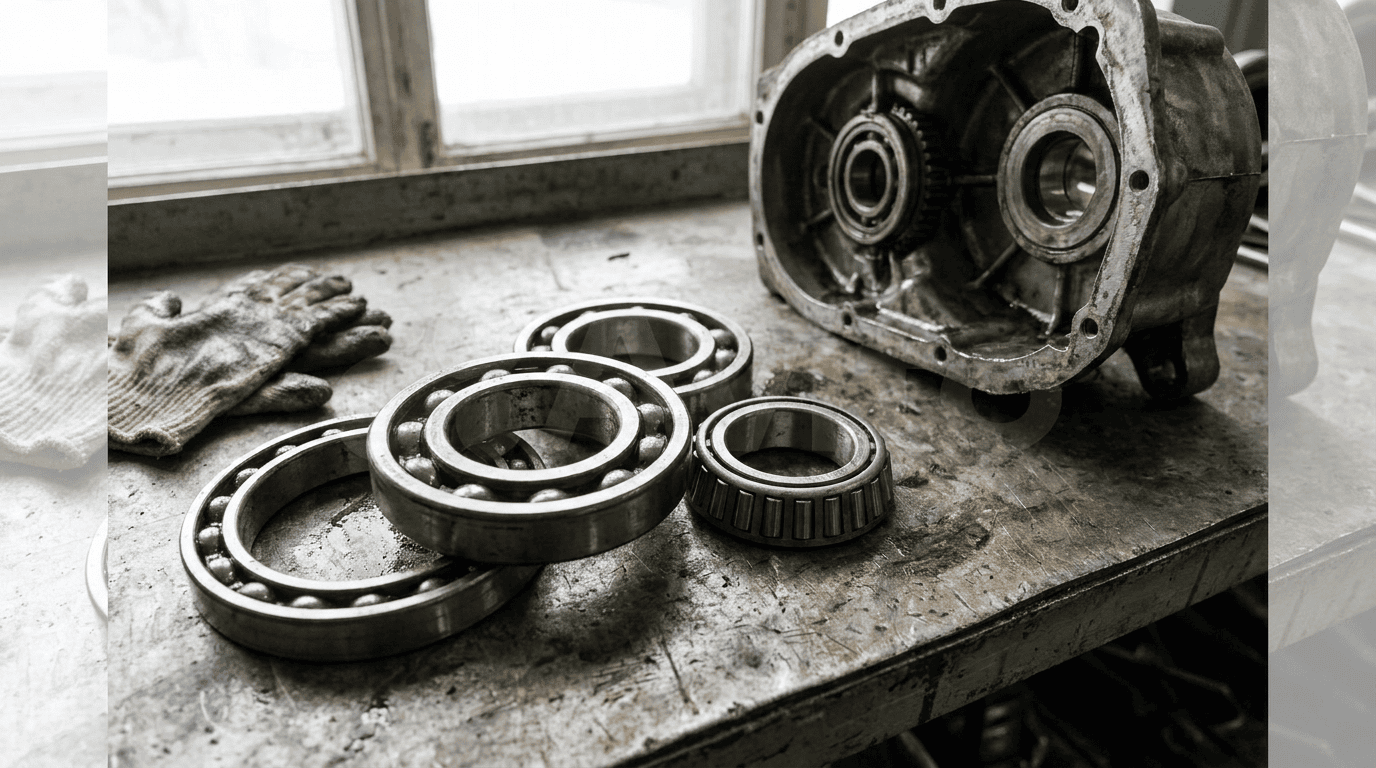
Can you replace gearbox bearings without replacing the gearbox? Yes—in many industrial applications, gearbox bearings can be replaced without replacing the entire gearbox, provided the housing, shafts, gears, fits, lubrication system, and sealing surfaces remain within specification. For maintenance managers, plant engineers, reliability teams, mechanics, and purchasing professionals, the key is determining whether the bearing failure is isolated or a symptom of deeper gearbox damage. A proper inspection can prevent unnecessary capital spend, reduce downtime, and extend gearbox service life. However, replacing bearings without correcting root causes such as misalignment, contamination, overload, or lubrication failure can lead to repeat failures.
Yes, you can often replace gearbox bearings without replacing the gearbox if the gearbox housing, shafts, gears, bores, shoulders, seals, and lubrication system are still serviceable. Bearing replacement is commonly performed during industrial gearbox repair, rebuilds, and preventive maintenance shutdowns. However, if the bearing failure has damaged the gear mesh, shaft journals, bearing seats, or housing bores, a more extensive gearbox rebuild—or full replacement—may be required.
If you’re considering the feasibility of replacing gearbox bearings without the need to replace the entire gearbox, you might find it helpful to read a related article on industrial gearbox repair. This resource provides insights into various repair options and maintenance strategies that can extend the life of your gearbox. For more information, you can visit this link: Industrial Gearbox Repair in Midland, TX.
When Can Gearbox Bearings Be Replaced Without Replacing the Gearbox?
Replacing gearbox bearings without replacing the gearbox is practical when the failure is limited to the bearings and related wear components. This is common in gear reducers, parallel shaft gearboxes, right-angle gearboxes, worm gear reducers, planetary gearboxes, and heavy-duty industrial drives.
A gearbox bearing replacement may be the right solution when:
- The gearbox housing is not cracked, distorted, or severely worn
- Shaft journals are within tolerance
- Bearing seats and bores are not spun, fretted, or oversized
- Gear teeth show normal wear patterns
- Gear backlash and contact pattern remain acceptable
- Lubrication passages are clean and functional
- Seals can be replaced to restore contamination control
- The gearbox has strategic value or long lead time
In many cases, bearing replacement is part of a broader gearbox rebuild that also includes seals, gaskets, inspection, cleaning, and alignment verification.
For related service information, see Industrial Gearbox Solutions’ resources on industrial gearbox repair, gearbox rebuilding, and gearbox failure analysis.
When Bearing Replacement Is Usually Feasible
Bearing replacement is usually feasible when the gearbox has not experienced catastrophic failure. For example, a gearbox with elevated vibration, moderate bearing noise, or rising oil temperature may only require bearing and seal replacement if caught early.
Common repairable conditions include:
- Early-stage bearing fatigue
- Minor spalling on bearing raceways
- Bearing cage wear
- Seal leakage causing low lubricant levels
- Contaminated lubricant with no gear tooth damage
- Normal end-of-life bearing wear
- Misalignment-related bearing distress corrected during repair
When the Gearbox May Need Replacement Instead
Replacing only the bearings may not be cost-effective if the gearbox has suffered structural or dimensional damage. In these cases, replacing the gearbox may reduce long-term risk and downtime.
Full gearbox replacement may be necessary when:
- Housing bores are damaged beyond repair
- Shafts are cracked, bent, or heavily worn
- Gear teeth are broken, pitted, or severely worn
- Bearing seats have spun and cannot be restored economically
- Lubrication failure caused widespread internal damage
- Replacement parts are obsolete or unavailable
- Repair cost approaches or exceeds replacement cost
- The gearbox is undersized for the application
Common Causes of Gearbox Bearing Failure
Gearbox bearing failure is rarely random. Bearings typically fail because operating conditions exceed their design limits or because maintenance practices allow contamination, inadequate lubrication, or misalignment to progress.
Authoritative sources such as SKF, Timken, AGMA, and Noria consistently emphasize that lubrication, contamination control, load management, and alignment are central to bearing reliability.
Lubrication Problems
Lubrication is one of the most common reasons gearbox bearings fail. Bearings require the correct lubricant type, viscosity, additive package, cleanliness, and volume.
Lubrication-related causes include:
- Low oil level
- Incorrect lubricant viscosity
- Oxidized or degraded oil
- Water contamination
- Particulate contamination
- Incompatible lubricant mixing
- Blocked oil passages
- Foaming or aeration
- Overgreasing in grease-lubricated gearbox bearings
A bearing running without proper oil film protection may overheat, discolor, spall, or seize. Noria provides excellent guidance on oil analysis and lubrication best practices for industrial equipment at Noria.com.
Contamination
Contamination accelerates bearing wear and can also damage gears, seals, and shafts. Dirt, dust, metal particles, process material, washdown water, and moisture can enter through worn seals, poor breathers, open inspection covers, or improper filling practices.
Typical contamination sources include:
- Damaged oil seals
- Missing or clogged breathers
- Improper lubricant transfer containers
- Open gearbox fill ports
- Water ingress from washdown
- Condensation during idle periods
- Wear debris from gears or bearings
Misalignment
Misalignment between the motor, coupling, gearbox, and driven equipment can create excessive radial and axial loads. Even small alignment errors can shorten bearing life significantly.
Misalignment may result from:
- Soft foot
- Improper coupling installation
- Foundation movement
- Thermal growth
- Pipe strain on connected equipment
- Incorrect shaft height
- Worn motor or gearbox mounting pads
Overload and Shock Loading
Bearings are designed for specific load ratings. If a gearbox is routinely overloaded, subjected to shock loads, or used outside its intended service factor, bearing fatigue can accelerate.
Examples include:
- Conveyor jams
- Crusher impacts
- Mixer surges
- Reversing loads
- Frequent starts and stops
- High torque spikes from VFD settings
- Process changes that increase load
Improper Installation
Even high-quality bearings from manufacturers such as SKF or Timken can fail prematurely if installed incorrectly.
Installation errors include:
- Hammering bearings onto shafts
- Heating bearings unevenly
- Installing bearings with contamination present
- Incorrect bearing orientation
- Improper preload or endplay
- Reusing damaged locknuts or washers
- Failing to verify shaft and bore fits
- Not following manufacturer torque specifications
Industrial gearbox bearing failure can lead to costly downtime and production losses, so it’s important to address the issue promptly. Industrial gearbox bearing failure
Symptoms That Gearbox Bearings Need Replacement
Recognizing bearing failure symptoms early can prevent gear damage and avoid full gearbox replacement. Maintenance and reliability teams should combine operator observations with condition monitoring data.
Noise Changes
Bearing wear often creates a noticeable change in gearbox sound. Depending on bearing type and failure mode, the sound may be:
- Rumbling
- Grinding
- Whining
- Clicking
- Growling
- Metallic
- Intermittent at certain speeds
A sudden noise change should trigger inspection before continued operation causes secondary damage.
Vibration Increases
Vibration analysis is one of the most effective ways to detect bearing defects before catastrophic failure. Defects on the inner race, outer race, rolling elements, or cage create characteristic vibration frequencies.
Common vibration indicators include:
- Increased overall vibration
- Bearing defect frequencies
- Sidebands around gear mesh frequency
- High-frequency acceleration peaks
- Changes in axial vibration
- Increased vibration during load changes
For critical assets, route-based or online vibration monitoring can support predictive maintenance decisions.
Elevated Temperature
Bearing distress often increases friction, which raises gearbox temperature. High temperature can also degrade lubricant, creating a failure cycle.
Possible causes of elevated temperature include:
- Bearing wear
- Excessive preload
- Low oil level
- Incorrect oil viscosity
- Overload
- Misalignment
- Blocked cooling system
- Contaminated lubricant
Oil Contamination or Metal Debris
Oil condition can reveal internal gearbox problems. Metal particles, bearing fragments, bronze debris, or dark oxidized oil may indicate progressing failure.
Oil inspection signs include:
- Silver flakes
- Magnetic debris
- Burnt odor
- Milky appearance from water
- Excessive foam
- Darkened oil
- High particle count
- Abnormal iron, chromium, or copper in oil analysis
Seal Leakage
A leaking seal can be both a symptom and a cause of bearing failure. If oil escapes, bearings may starve. If seals allow contaminants in, bearing surfaces can abrade or corrode.
If you’re considering whether you can replace gearbox bearings without replacing the entire gearbox, you might find it helpful to read about the various repair options available. A related article discusses the intricacies of gearbox repair and maintenance, providing insights into when it’s feasible to replace just the bearings. You can explore more about this topic in detail by visiting this link, which offers valuable information on industrial gearbox repair services in Collinsville, Illinois.
Troubleshooting Gearbox Bearing Problems
| Question | Answer |
|---|---|
| Can You Replace Gearbox Bearings Without Replacing the Gearbox? | Yes, it is possible to replace gearbox bearings without replacing the entire gearbox. However, it requires specialized tools and expertise to disassemble the gearbox, remove the old bearings, and install new ones without causing damage to the gearbox components. |
A structured troubleshooting process helps determine whether bearing replacement alone is sufficient or whether the gearbox requires a broader rebuild.
Initial Field Checks
Before removing the gearbox, maintenance teams should document operating conditions and visible symptoms.
Recommended field checks:
- Record gearbox model, serial number, ratio, and service factor
- Check oil level and lubricant type
- Inspect for external leaks
- Measure operating temperature
- Listen for abnormal noise
- Check vibration readings
- Inspect coupling alignment
- Confirm motor current and load
- Look for loose mounting bolts
- Review recent process changes
Root Cause Questions
Ask these questions before deciding on repair scope:
- Did the bearing reach normal service life, or was failure premature?
- Has the gearbox been overloaded?
- Was the correct lubricant used?
- Is oil analysis available?
- Are seals or breathers compromised?
- Has alignment been verified recently?
- Are vibration trends increasing?
- Is the gearbox exposed to water, dust, heat, or chemicals?
- Are multiple bearings failing or only one?
- Is there evidence of gear tooth damage?
Troubleshooting Table
| Symptom | Possible Bearing-Related Cause | Recommended Action |
||||
| Rumbling noise | Rolling element fatigue | Perform vibration analysis and inspect bearings |
| High temperature | Low oil, excessive preload, contamination | Check lubricant, bearing fits, and endplay |
| Metal in oil | Bearing spalling or cage failure | Stop operation and inspect gearbox internally |
| Oil leak | Worn seal or shaft surface damage | Replace seals and inspect shaft journals |
| High axial vibration | Thrust bearing distress or misalignment | Check coupling alignment and bearing condition |
| Repeat bearing failure | Root cause not corrected | Conduct failure analysis before reinstalling |
| Milky oil | Water contamination | Drain, flush, replace seals/breather, inspect bearings |
| Gearbox trip or seizure | Advanced bearing failure | Disassemble and evaluate repair vs. replacement |
Inspection Methods Before Replacing Gearbox Bearings
A high-quality inspection determines whether the gearbox can be repaired with new bearings or requires additional work.
Visual Inspection
After disassembly, inspect all internal components under clean conditions. Look for:
- Bearing discoloration
- Spalling or pitting
- Cage damage
- Scoring on shafts
- Fretting corrosion
- Gear tooth pitting
- Cracked housing areas
- Worn seal surfaces
- Damaged shims or spacers
- Loose or spun bearing fits
Photograph findings for documentation, purchasing approval, and reliability records.
Dimensional Inspection
Dimensional checks are critical. New bearings will not perform correctly if installed on worn shafts or in oversized housing bores.
Measure:
- Shaft journal diameters
- Housing bore diameters
- Shoulder squareness
- Bearing seat roundness
- Shaft runout
- Gear backlash
- Gear contact pattern
- Endplay or preload
- Seal journal diameter
If bearing fits are out of tolerance, options may include shaft repair, sleeving, metalizing, machining, or housing bore restoration.
Oil Analysis
Oil analysis helps identify contamination, wear metals, and lubricant degradation.
Useful oil analysis tests include:
- Particle count
- Karl Fischer water test
- Viscosity
- Acid number
- Spectrometric analysis
- Ferrous density
- Analytical ferrography
- FTIR oxidation and additive depletion
Noria’s lubrication resources are especially useful for maintenance teams building oil analysis programs.
Vibration Analysis
Vibration analysis can identify bearing defects while the gearbox is still operating. This helps plan shutdowns and avoid emergency repairs.
Useful vibration methods include:
- Overall vibration trending
- FFT spectrum analysis
- Time waveform analysis
- Envelope analysis
- High-frequency acceleration
- Gear mesh frequency review
Bearing Failure Pattern Analysis
Bearing condition can reveal the root cause. SKF and Timken both provide detailed bearing damage reference materials that help identify failure modes.
| Bearing Damage Pattern | Likely Cause |
|||
| Flaking or spalling | Fatigue, overload, poor lubrication |
| Blue or brown discoloration | Overheating or lubricant breakdown |
| False brinelling | Vibration while stationary |
| Electrical fluting | Stray electrical current |
| Rust or corrosion | Water contamination |
| Smearing | Sliding, poor lubrication, rapid acceleration |
| Cage fracture | Misalignment, vibration, inadequate lubrication |
| Fretting | Loose fit or micro-movement |
Gearbox Bearing Replacement Process
The exact procedure varies by gearbox type, manufacturer, bearing arrangement, and application. However, professional gearbox bearing replacement generally follows a disciplined workflow.
Safe Removal and Disassembly
Before disassembly:
- Lock out and tag out equipment
- Drain lubricant into a clean container for inspection
- Mark component orientation
- Remove coupling or drive components properly
- Support shafts and heavy components
- Avoid damaging machined surfaces
- Document shim packs and bearing positions
Never assume that a bearing can simply be swapped without checking preload, endplay, and fits.
Cleaning and Preparation
All components should be cleaned before inspection and reassembly.
Preparation steps include:
- Remove sludge, varnish, and debris
- Clean oil passages
- Inspect breathers and lubrication hardware
- Deburr non-critical edges as needed
- Clean housing interiors
- Verify magnetic plugs are clean
- Prepare a clean assembly area
Contamination introduced during repair can shorten the life of new bearings.
Bearing Selection
Replacement bearings should match the original design requirements unless an engineering review supports an upgrade.
Consider:
- Bearing type
- Internal clearance
- Load rating
- Speed rating
- Cage material
- Lubrication method
- Temperature range
- Sealing or shielding
- Manufacturer quality
- Application environment
Common gearbox bearing types include tapered roller bearings, spherical roller bearings, cylindrical roller bearings, ball bearings, and thrust bearings.
Installation Best Practices
Proper installation is essential. Use manufacturer-approved methods and tools.
Best practices include:
- Heat bearings evenly using an induction heater
- Do not exceed recommended heating temperatures
- Press only on the ring being fitted
- Avoid hammer impacts
- Use clean gloves and tools
- Verify bearing seating
- Set preload or endplay correctly
- Replace seals, gaskets, and locking hardware
- Use correct torque values
- Confirm shaft rotation after assembly
Reassembly and Testing
After reassembly:
- Fill with the correct lubricant
- Check for leaks
- Rotate shafts by hand if possible
- Verify endplay and backlash
- Confirm gear contact pattern
- Run unloaded when practical
- Monitor temperature and vibration
- Recheck oil level after startup
- Collect baseline vibration and oil data
Repair vs. Replacement: How to Decide
The decision to replace gearbox bearings, rebuild the gearbox, or replace the entire unit should consider cost, downtime, risk, lead time, and asset criticality.
Bearing Replacement Only
Bearing replacement only may be appropriate when:
- Damage is limited to bearings and seals
- Gears are in good condition
- Fits are within tolerance
- The gearbox is accessible
- Replacement parts are available
- Downtime window is limited
- Root cause is understood and corrected
Complete Gearbox Rebuild
A rebuild may be better when multiple components show wear but the housing and major gears remain salvageable.
A gearbox rebuild may include:
- Bearings
- Seals
- Gaskets
- Shims
- Shaft repair
- Gear inspection or replacement
- Housing bore repair
- Lubrication system cleaning
- Paint and corrosion protection
- Test run and documentation
For more on rebuild decisions, see gearbox rebuild services from Industrial Gearbox Solutions.
Full Gearbox Replacement
Replacement may be the best option when reliability risk is too high or repair economics are unfavorable.
| Decision Factor | Bearing Replacement | Rebuild | Replacement |
||:|:|:|
| Lowest upfront cost | Yes | Sometimes | No |
| Fastest turnaround | Often | Sometimes | Depends on stock |
| Best for isolated bearing failure | Yes | Yes | Usually no |
| Best for widespread internal damage | No | Sometimes | Yes |
| Best when parts are obsolete | Sometimes | Sometimes | Yes |
| Best for upgraded capacity | No | Sometimes | Yes |
| Lowest long-term risk for severe damage | No | Sometimes | Yes |
Cost Considerations for Purchasing Teams
Purchasing professionals should compare more than the price of bearings. Consider total cost of ownership.
Cost factors include:
- Bearing cost
- Labor hours
- Seals and gaskets
- Machining or bore repair
- Gear replacement
- Freight and emergency shipping
- Crane or rigging costs
- Production downtime
- Warranty
- Lead time
- Risk of repeat failure
A low-cost bearing replacement can become expensive if root cause analysis is skipped.
Prevention: How to Extend Gearbox Bearing Life
Preventing bearing failure is usually less expensive than emergency repair. A reliability-centered maintenance program can significantly improve gearbox uptime.
Lubrication Best Practices
Follow lubrication recommendations from the gearbox OEM, lubricant supplier, and reliability standards.
Best practices include:
- Use the correct lubricant viscosity and type
- Maintain proper oil level
- Filter new oil before use
- Use dedicated, sealed transfer containers
- Install desiccant breathers where appropriate
- Schedule oil analysis
- Avoid mixing incompatible lubricants
- Control lubricant storage conditions
- Flush contaminated gearboxes
- Monitor oil temperature
AGMA provides standards and technical publications related to gear drive design, lubrication, and performance at AGMA.org.
Contamination Control
Contamination control is one of the fastest ways to improve gearbox bearing life.
Recommended actions:
- Replace worn seals during bearing service
- Upgrade breathers in dusty or humid environments
- Keep fill ports closed
- Use quick-connect filtration fittings
- Maintain clean lubricant storage areas
- Inspect inspection covers and gaskets
- Prevent washdown spray from entering vents
- Use magnetic drain plugs
- Install offline filtration for critical gearboxes
Alignment and Installation Controls
Proper alignment reduces bearing load and improves gear mesh performance.
Maintenance teams should:
- Use laser alignment tools
- Correct soft foot
- Verify coupling condition
- Account for thermal growth
- Inspect bases and foundations
- Torque mounting bolts correctly
- Recheck alignment after startup
- Document alignment results
Condition Monitoring
Condition monitoring helps detect bearing problems before failure.
Recommended monitoring methods:
- Vibration analysis
- Oil analysis
- Infrared thermography
- Ultrasonic inspection
- Motor current analysis
- Visual leak inspections
- Temperature trending
- Operator rounds
Operating Discipline
Even well-maintained gearboxes fail early if abused.
Avoid:
- Repeated overloads
- Shock loading
- Running with low oil
- Ignoring leaks
- Frequent starts beyond design limits
- Operating with severe misalignment
- Running after abnormal noise begins
- Delaying planned bearing replacement
Maintenance Best Practices for Industrial Gearboxes
A practical gearbox maintenance plan should combine inspections, scheduled maintenance, and predictive technologies.
Recommended Maintenance Checklist
| Frequency | Maintenance Task |
|||
| Daily/Shift | Listen for abnormal noise, check leaks, observe temperature |
| Weekly | Inspect oil level, breather condition, mounting bolts |
| Monthly | Record vibration and temperature trends |
| Quarterly | Inspect seals, coupling, foundation, lubricant condition |
| Semiannual | Oil analysis, alignment verification on critical drives |
| Annual | Internal inspection where practical, review failure history |
| Shutdown | Replace bearings/seals if condition data supports it |
Documentation to Keep
Reliable decisions require accurate records.
Maintain records for:
- Gearbox model and serial number
- Lubricant type and change dates
- Oil analysis results
- Vibration reports
- Thermal readings
- Alignment reports
- Bearing part numbers
- Seal part numbers
- Repair history
- Failure photos
- Operating load changes
- Spare gearbox inventory
Spare Parts Strategy
For critical production assets, purchasing and maintenance teams should define a spare parts strategy before failure occurs.
Recommended spares:
- Bearings
- Seals
- Gaskets
- Breathers
- Coupling components
- Lubricant
- Shim stock
- Locknuts and washers
- Complete spare gearbox for critical assets
Risks of Replacing Bearings Without Root Cause Analysis
Replacing gearbox bearings without understanding why they failed can lead to repeat breakdowns. The bearing may be the failed component, but not the root cause.
Common Mistakes
Avoid these common repair mistakes:
- Installing new bearings into worn bores
- Reusing contaminated oil
- Ignoring gear tooth damage
- Failing to replace seals
- Skipping alignment
- Not checking lubricant viscosity
- Reusing damaged shafts
- Overlooking electrical discharge damage
- Setting preload incorrectly
- Failing to test run after repair
Repeat Failure Scenario
A plant replaces noisy gearbox bearings during a shutdown. The gearbox returns to service, but vibration rises again within three months. A later inspection finds water contamination from a failed breather and a worn input seal. The original bearing failure was not caused by bearing quality; it was caused by contamination. In this case, replacing bearings alone did not solve the problem.
Suggested Branded Images for This Article
Use original, branded images from Industrial Gearbox Solutions whenever possible to improve EEAT, user engagement, and AI search visibility.
Image 1: Technician Inspecting Gearbox Bearings
Alt text: Industrial gearbox technician inspecting worn gearbox bearings during rebuild
Caption: A detailed bearing inspection helps determine whether the gearbox can be repaired without full replacement.
Image 2: Worn Bearing Race Close-Up
Alt text: Close-up of spalled gearbox bearing race showing fatigue damage
Caption: Bearing spalling can indicate fatigue, overload, contamination, or lubrication failure.
Image 3: Gearbox Oil Sample with Metal Debris
Alt text: Gearbox oil sample showing metallic debris from bearing wear
Caption: Oil analysis and visual inspection can reveal early signs of bearing and gear damage.
Image 4: Laser Alignment on Gearbox and Motor
Alt text: Laser alignment setup on industrial gearbox and motor coupling
Caption: Correct alignment reduces bearing loads and prevents premature gearbox failure.
Image 5: Rebuilt Industrial Gearbox Ready for Installation
Alt text: Rebuilt industrial gearbox with new bearings seals and fresh coating
Caption: A properly rebuilt gearbox can restore reliability without the cost of full replacement.
FAQs About Replacing Gearbox Bearings Without Replacing the Gearbox
Can gearbox bearings be replaced in the field?
Sometimes. Field replacement may be possible for accessible, simpler gearboxes with known bearing arrangements. However, many industrial gearboxes require shop repair because proper bearing replacement often involves disassembly, cleaning, dimensional inspection, controlled heating, preload setting, and test running.
How do I know if only the bearings need replacement?
You need inspection data. If gears, shafts, housing bores, bearing seats, and lubrication systems are within specification, bearing and seal replacement may be enough. If there is gear damage, cracked housing, spun fits, or shaft wear, additional repair or replacement may be required.
Should seals be replaced when gearbox bearings are replaced?
Yes. Seals are typically replaced during bearing service because they are inexpensive compared with downtime and bearing damage. Worn seals can allow oil leakage and contamination ingress, both of which shorten bearing life.
What happens if a gearbox is run with bad bearings?
Running a gearbox with failing bearings can cause gear misalignment, shaft damage, seal failure, overheating, metal contamination, broken gear teeth, housing damage, and eventual seizure. Early repair is usually much less expensive than catastrophic failure.
Are premium bearings worth it for industrial gearboxes?
Often, yes. High-quality bearings from reputable manufacturers such as SKF, Timken, NTN, NSK, Schaeffler, and others can improve reliability when correctly selected and installed. However, even premium bearings will fail early if lubrication, alignment, contamination, or load problems are not corrected.
Can bearing failure damage the gears?
Yes. Bearings support shafts and maintain gear mesh alignment. If bearings wear or loosen, gears may run out of position, creating abnormal contact patterns, pitting, scoring, or tooth breakage.
How long should gearbox bearings last?
Bearing life depends on load, speed, lubrication, contamination, temperature, alignment, duty cycle, and installation quality. Some industrial gearbox bearings last many years, while overloaded or contaminated bearings may fail in months.
Is it cheaper to rebuild a gearbox or replace it?
It depends on the condition, lead time, and criticality of the asset. Bearing replacement or rebuilding is often cheaper than replacement when major components are reusable. Replacement may be better if the gearbox is obsolete, undersized, severely damaged, or too costly to repair reliably.
Should oil analysis be done before bearing replacement?
Yes, when possible. Oil analysis can reveal contamination, wear metals, lubricant degradation, and water ingress. This information helps identify root causes and prevent repeat bearing failures.
Can a gearbox bearing be upgraded?
Sometimes. Bearing upgrades may be possible if operating conditions have changed or the original bearing is not optimal. Any upgrade should be reviewed by a qualified gearbox repair provider or engineer to confirm fit, load capacity, lubrication, speed, and thermal performance.
Key Takeaways
- Gearbox bearings can often be replaced without replacing the gearbox.
- The decision depends on the condition of the housing, shafts, gears, fits, seals, and lubrication system.
- Bearing failure is commonly caused by lubrication problems, contamination, misalignment, overload, or installation errors.
- Symptoms include noise, vibration, heat, oil contamination, metal debris, and leaks.
- Proper inspection should include visual checks, dimensional measurements, oil analysis, and vibration review.
- Seals, gaskets, and contaminated lubricant should usually be replaced during bearing service.
- Replacing bearings without correcting the root cause can lead to repeat failure.
- A full rebuild or gearbox replacement may be necessary when damage extends beyond the bearings.
- Preventive maintenance, alignment, contamination control, and condition monitoring extend bearing and gearbox life.
SEO Metadata
SEO title: Can You Replace Gearbox Bearings Without Replacing the Gearbox?
Meta description: Yes, gearbox bearings can often be replaced without replacing the gearbox. Learn causes, symptoms, inspection steps, repair vs. replacement decisions, and prevention tips.
Primary keyword: replace gearbox bearings without replacing the gearbox
Secondary keywords: gearbox bearing replacement, industrial gearbox repair, gearbox rebuild, gearbox bearing failure, gearbox maintenance, gearbox troubleshooting, gearbox repair vs replacement
Suggested URL slug: /replace-gearbox-bearings-without-replacing-gearbox/
Suggested internal links:
- Industrial gearbox repair
- Gearbox rebuild services
- Gearbox failure analysis
- Industrial gearbox maintenance
- Emergency gearbox repair
Suggested external references:
- SKF bearing knowledge and failure analysis
- Timken bearing engineering resources
- AGMA gear industry standards
- Noria lubrication and oil analysis resources
Conclusion
You can replace gearbox bearings without replacing the gearbox in many industrial situations, but the repair must be based on evidence—not guesswork. If bearing damage is isolated and the gears, shafts, housing bores, fits, seals, and lubrication system are still within specification, bearing replacement can restore reliable operation at a lower cost than full gearbox replacement. However, if the failure caused secondary damage or resulted from unresolved root causes such as contamination, misalignment, overload, or lubrication breakdown, a more complete rebuild may be required.
For maintenance managers, plant engineers, reliability engineers, mechanics, and purchasing teams, the best decision comes from a structured inspection and repair-versus-replacement evaluation. Industrial Gearbox Solutions can help assess bearing failure, inspect gearbox components, recommend the right repair scope, and restore your gearbox with reliability in mind.
FAQs
1. Can gearbox bearings be replaced without replacing the entire gearbox?
Yes, it is possible to replace gearbox bearings without replacing the entire gearbox. This process involves disassembling the gearbox, removing the old bearings, and installing new ones.
2. What are the signs that gearbox bearings need to be replaced?
Signs that gearbox bearings need to be replaced include unusual noises coming from the gearbox, vibrations, and difficulty shifting gears. These symptoms may indicate that the bearings are worn out or damaged.
3. What are the benefits of replacing gearbox bearings?
Replacing gearbox bearings can help restore smooth operation of the gearbox, reduce noise and vibrations, and prevent further damage to the gearbox components. It can also extend the lifespan of the gearbox.
4. Can gearbox bearings be replaced by a non-professional individual?
While it is possible for a non-professional individual to replace gearbox bearings, it is recommended to have this task performed by a qualified mechanic or technician with experience in gearbox maintenance. This ensures that the replacement is done correctly and safely.
5. What is the typical cost of replacing gearbox bearings?
The cost of replacing gearbox bearings can vary depending on the make and model of the vehicle, the extent of the damage, and the labor rates of the service provider. It is advisable to obtain quotes from different mechanics or repair shops to compare costs.