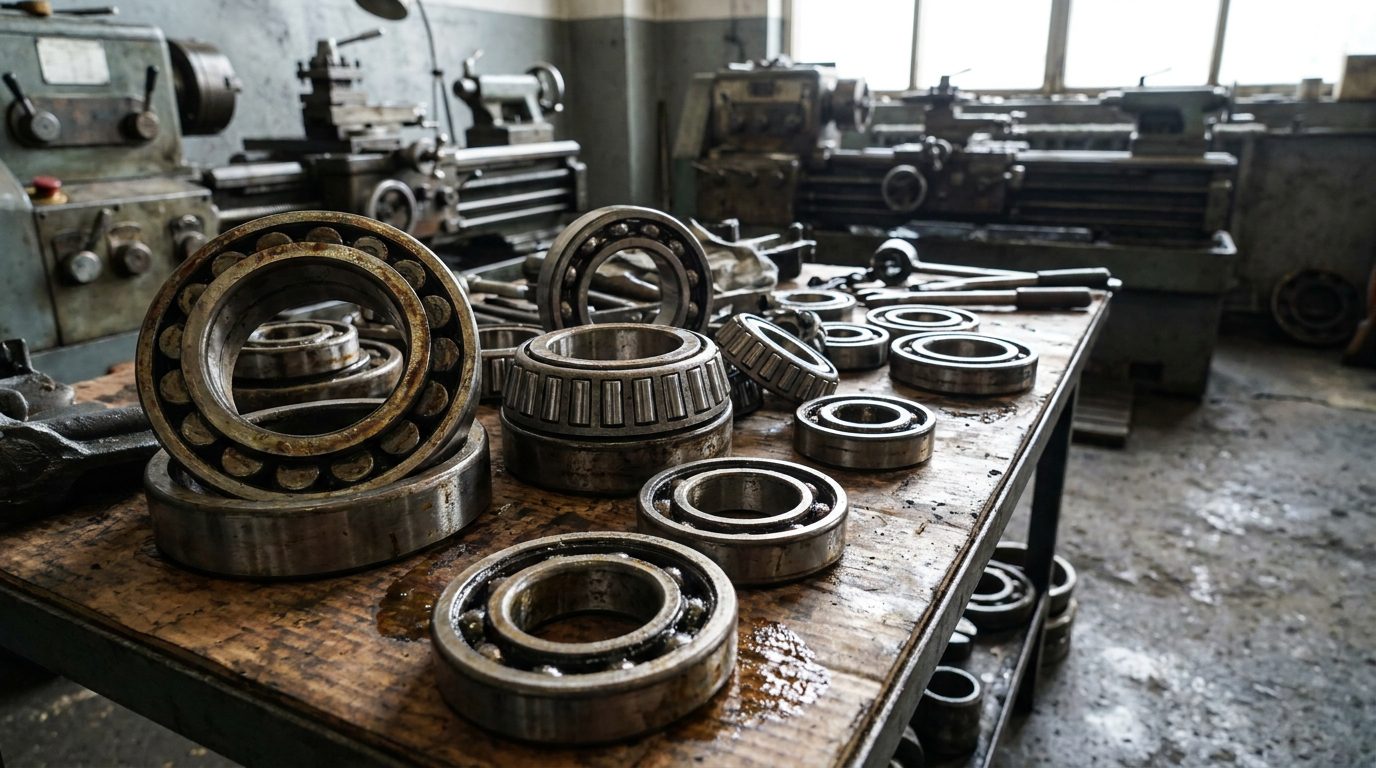
ISO standards for industrial bearings help maintenance managers, plant engineers, reliability engineers, mechanics, and purchasing teams specify, inspect, install, lubricate, and replace bearings with measurable quality requirements instead of guesswork. In industrial gearboxes, conveyors, mixers, crushers, pumps, fans, and process equipment, bearing quality directly affects uptime, vibration, heat generation, energy efficiency, and asset life. When ISO tolerances, load ratings, cleanliness codes, failure classifications, and inspection practices are understood and applied correctly, facilities can reduce premature bearing failures, improve supplier consistency, and make better repair-versus-replacement decisions. This guide explains the most important ISO bearing standards, how they apply in real plants, and how to use them to improve reliability.
ISO standards ensure quality in industrial bearings by defining consistent requirements for dimensions, tolerances, load ratings, internal clearance, lubrication cleanliness, vibration evaluation, and failure analysis. For industrial gearboxes and rotating equipment, the most relevant standards often include ISO 492 for rolling bearing tolerances, ISO 281 for dynamic load ratings and rating life, ISO 76 for static load ratings, ISO 5753-1 for internal clearance, ISO 15243 for bearing damage classification, and ISO 4406 for oil cleanliness. Using these standards helps maintenance and purchasing teams select the right bearing, verify supplier quality, diagnose failures, and prevent repeat breakdowns.
ISO standards play a crucial role in ensuring the reliability and performance of industrial bearings, which are essential components in various machinery and equipment. For those interested in understanding the importance of maintaining these components, a related article can be found at Industrial Gearbox Repair in San Diego, CA. This article discusses the significance of proper maintenance and repair practices in extending the lifespan of industrial gearboxes, which often rely on high-quality bearings that meet ISO standards.
Why ISO Standards Matter for Industrial Bearing Quality
Industrial bearings operate under demanding loads, speeds, temperatures, and contamination risks. A bearing may look like a simple component, but small deviations in geometry, metallurgy, cage construction, internal clearance, lubrication, or installation can create major reliability problems.
ISO standards matter because they create a shared technical language between:
- Maintenance managers planning downtime and spares
- Plant engineers specifying equipment upgrades
- Reliability engineers investigating repeat failures
- Mechanics installing and aligning rotating assets
- Purchasing professionals evaluating suppliers and equivalents
- Gearbox repair shops documenting rebuild quality
- OEMs designing gear drives, pumps, motors, and process equipment
Without standards, one supplier’s “premium bearing” may not match another supplier’s dimensional accuracy, load capacity, or clearance class. ISO requirements help reduce ambiguity and improve repeatability.
For gearbox-specific reliability support, see Industrial Gearbox Solutions’ resources on industrial gearbox repair, gearbox inspection services, and gearbox bearing failure analysis.
The Role of ISO in Reliability and Procurement
ISO standards help purchasing teams avoid buying bearings based on price alone. A lower-cost bearing that does not meet the correct tolerance class, clearance, load rating, or material requirements may cause:
- Reduced gearbox life
- Increased vibration
- Premature spalling
- Overheating
- Shaft and housing damage
- Unplanned shutdowns
- Higher total cost of ownership
For reliability engineers, ISO standards provide a framework for root cause analysis. Instead of saying a bearing “failed,” teams can classify failure modes, review lubrication cleanliness, confirm load ratings, and compare installation conditions against accepted practices.
ISO Standards Do Not Replace Application Engineering
ISO standards define requirements and test methods, but they do not automatically guarantee that a bearing is correct for every application. A bearing can comply with ISO tolerances and still fail if it is:
- Undersized for the actual load
- Installed with incorrect fit
- Contaminated during mounting
- Lubricated with the wrong oil or grease
- Exposed to misalignment or electrical fluting
- Operated beyond its temperature range
- Stored improperly before installation
The best results come from combining ISO standards with field experience, OEM recommendations, vibration analysis, oil analysis, and gearbox inspection data.
Key ISO Standards for Industrial Bearings
Several ISO standards are especially important for industrial bearings used in gearboxes and heavy rotating equipment. Maintenance and purchasing teams do not need to memorize every clause, but they should understand what each standard controls.
| ISO Standard | Main Subject | Why It Matters in Industrial Bearings |
||:||
| ISO 492 | Rolling bearing tolerances | Defines dimensional and running accuracy for bearing quality classes |
| ISO 281 | Dynamic load ratings and rating life | Helps estimate fatigue life under applied load and speed |
| ISO 76 | Static load ratings | Evaluates bearing capacity under stationary or slow-moving load |
| ISO 5753-1 | Internal clearance | Helps prevent overheating, looseness, and preload problems |
| ISO 15 | Boundary dimensions for radial bearings | Supports interchangeability across manufacturers |
| ISO 355 | Metric tapered roller bearings | Important for heavy gearboxes and axial/radial load applications |
| ISO 15243 | Bearing damage and failure modes | Provides a common language for failure analysis |
| ISO 4406 | Fluid cleanliness coding | Helps control oil contamination, a major cause of bearing failure |
| ISO 15242 | Bearing vibration measurement | Supports quality evaluation of bearing vibration characteristics |
| ISO 20816 | Machine vibration evaluation | Used for rotating machine condition monitoring |
Authoritative references can be reviewed through organizations and bearing manufacturers such as ISO, SKF, Timken, AGMA, and lubrication knowledge resources like Noria.
ISO 492: Bearing Tolerances
ISO 492 is one of the most important standards for rolling bearing accuracy. It defines dimensional tolerances and running accuracy for radial bearings. Tolerances may include bore diameter, outside diameter, width, radial runout, and axial runout.
For industrial gearboxes, tolerance control affects:
- Gear mesh alignment
- Shaft concentricity
- Vibration levels
- Heat generation
- Seal performance
- Bearing load distribution
A bearing with poor running accuracy can introduce vibration even if gears, shafts, and housings are in good condition.
ISO 281: Dynamic Load Rating and Bearing Life
ISO 281 defines methods for calculating dynamic load ratings and basic rating life. In practical terms, it helps engineers estimate how long a bearing may operate before fatigue damage occurs under defined load and speed conditions.
However, calculated life is not the same as actual life. Real-world conditions such as contamination, poor lubrication, shock loading, misalignment, and incorrect mounting can dramatically reduce service life.
When evaluating gearbox bearings, ISO 281 should be combined with:
- Actual operating loads
- Duty cycle
- Lubricant viscosity
- Oil cleanliness
- Operating temperature
- Shock or overload history
- Shaft and housing fits
ISO 76: Static Load Rating
ISO 76 applies to static load ratings. This is important for bearings exposed to heavy loads at rest, slow rotation, indexing movement, or shock loading.
Applications where static rating matters include:
- Crushers
- Kilns
- Hoists
- Slewing equipment
- Heavily loaded conveyors
- Low-speed gear drives
- Presses and rolling mills
If static loads exceed bearing capacity, the bearing can develop brinelling or permanent deformation at the raceways. This often appears later as vibration, noise, and early fatigue.
ISO 5753-1: Internal Clearance
Internal clearance is the total distance that one bearing ring can move relative to the other before mounting. Common clearance classes include normal clearance and increased clearances such as C3 or C4.
Clearance affects:
- Operating temperature
- Load zone
- Shaft fit selection
- Thermal expansion allowance
- Lubricant film formation
- Noise and vibration behavior
For gearboxes, C3 clearance is often used when interference fits or elevated temperatures reduce operating clearance. However, using increased clearance without engineering justification can create looseness, vibration, or edge loading.
ISO 15243: Bearing Damage Classification
ISO 15243 is highly useful for failure analysis. It classifies bearing damage modes such as fatigue, wear, corrosion, electrical erosion, plastic deformation, and fracture.
This standard helps teams move beyond vague descriptions and identify what likely caused the failure. For example:
- Spalling may indicate rolling contact fatigue or overload.
- False brinelling may indicate vibration while stationary.
- Smearing may indicate sliding, poor lubrication, or acceleration issues.
- Electrical fluting may indicate stray shaft current.
- Corrosion may indicate water contamination or poor storage.
For deeper diagnosis, request a professional gearbox failure analysis before replacing the same bearing again.
Industrial gearbox bearing failure can lead to costly downtime and production losses, so it’s important to address the issue promptly. Industrial gearbox bearing failure
Common Causes of Bearing Quality and Reliability Problems
ISO-compliant bearings can still fail prematurely when application, installation, lubrication, or maintenance practices are poor. Understanding root causes is essential for preventing repeat failures.
Incorrect Bearing Selection
Bearing selection errors are common when replacements are chosen only by dimensions or part number interchange. Two bearings may have similar dimensions but different:
- Load capacity
- Internal clearance
- Cage design
- Heat treatment
- Precision class
- Seal or shield design
- Lubrication compatibility
- Speed rating
A purchasing substitution may appear acceptable on paper but fail quickly in a high-load gearbox if dynamic capacity, clearance, or cage strength is inadequate.
Poor Lubrication or Contaminated Oil
Lubrication is one of the largest contributors to bearing life. According to lubrication reliability principles widely discussed by Noria, contamination control and correct viscosity are essential for rotating equipment reliability.
Common lubrication problems include:
- Wrong oil viscosity
- Incompatible grease
- Overgreasing
- Undergreasing
- Water contamination
- Dirt ingress
- Oxidized lubricant
- Foam or aeration
- Blocked oil passages
- Poor filtration
ISO 4406 cleanliness codes are often used to define acceptable particle contamination levels. Cleaner oil generally supports longer bearing and gear life.
Improper Mounting and Fits
Even a high-quality bearing can be ruined during installation. Common mounting problems include:
- Hammering directly on bearing rings
- Applying force through rolling elements
- Incorrect heating temperature
- Dirty work surfaces
- Burrs on shafts or housings
- Incorrect interference fit
- Misaligned bearing seats
- Over-tightened locknuts
- Improper preload settings
For large industrial bearings, induction heating, controlled hydraulic mounting, and documented fit measurements should be standard practice.
Misalignment and Housing Distortion
Misalignment changes the load distribution inside the bearing. Instead of the rolling elements carrying load evenly, stress becomes concentrated at raceway edges.
Common causes include:
- Soft foot
- Poor foundation condition
- Warped gearbox housings
- Improper shimming
- Shaft deflection
- Thermal growth
- Coupling misalignment
- Worn bearing seats
Industrial Gearbox Solutions can help evaluate gearbox alignment and rebuild concerns when bearings show repeated edge loading.
Overload, Shock Loading, and Application Changes
Bearings originally selected for one operating condition may become inadequate after process changes. Increased throughput, higher horsepower motors, variable frequency drive changes, or production overloads can increase bearing stress.
Symptoms of overload may include:
- Subsurface fatigue
- Premature spalling
- Cage cracking
- Excessive heat
- High vibration at bearing frequencies
- Gear mesh abnormalities
ISO standards play a crucial role in ensuring the quality and reliability of industrial bearings, which are essential components in various machinery. For those looking to understand the broader context of industrial components, a related article provides valuable insights into gearbox interchange and replacement. This guide can help professionals navigate the complexities of selecting the right gearbox for their applications. You can read more about it in this gearbox interchange replacement guide.
Symptoms of Bearing Problems in Industrial Equipment
| ISO Standard | Description |
|---|---|
| ISO 15 | Specifies the boundary dimensions and tolerances for self-aligning ball bearings |
| ISO 76 | Specifies the boundary dimensions and tolerances for tapered roller bearings |
| ISO 492 | Specifies the boundary dimensions and tolerances for radial bearings |
| ISO 5593 | Specifies the boundary dimensions and tolerances for needle roller bearings |
Early symptoms should never be ignored. Bearings rarely fail without warning, especially in gearboxes and rotating assets with condition monitoring.
Common Field Symptoms
| Symptom | Possible Bearing-Related Cause | Recommended Action |
||||
| Rising vibration | Defect on inner race, outer race, rolling element, or cage | Perform vibration analysis and trend bearing frequencies |
| Increased temperature | Lubrication issue, preload, clearance loss, overload | Check lubricant, fits, load, and cooling system |
| Unusual noise | Spalling, contamination, looseness, poor lubrication | Use ultrasound and inspect lubricant |
| Metallic debris in oil | Bearing or gear wear | Conduct oil analysis and inspect magnetic plugs |
| Seal leakage | Shaft movement, overheating, housing pressure | Inspect bearing condition, seals, and breathers |
| Repeated failures | Wrong selection, misalignment, contamination, poor installation | Perform root cause failure analysis |
| Discolored bearing surfaces | Heat, lubrication breakdown, electrical current | Inspect oil condition, grounding, and operating temperature |
Warning Signs During Operation
Maintenance teams should investigate when they observe:
- Sudden vibration increase
- A new whining, rumbling, or growling sound
- Hot bearing housings
- Burnt oil smell
- Grease purging abnormally
- Oil sight glass discoloration
- Increased power consumption
- Frequent coupling or seal issues
Warning Signs During Shutdown Inspection
During planned outages, mechanics should look for:
- Rust or corrosion
- Fretting on shafts or housings
- Spalled raceways
- Cage wear
- Loose fits
- Cracked inner or outer rings
- Uneven contact patterns
- Contaminated lubricant
- Blocked breathers or filters
Troubleshooting Industrial Bearing Problems Using ISO-Based Thinking
Troubleshooting should be systematic. Replacing the bearing without identifying the cause often leads to repeated downtime.
Step 1: Confirm the Bearing Specification
Start by verifying:
- Bearing type and designation
- Manufacturer
- ISO tolerance class
- Internal clearance class
- Cage material and design
- Seal or shield configuration
- Load rating
- Speed rating
- Lubrication requirements
- Any OEM-specific modifications
Purchasing teams should maintain documentation for approved bearing equivalents. If a substitution was made, confirm that it matches the required performance, not just the dimensions.
Step 2: Review Operating Conditions
Compare the original design assumptions to current operation:
- Actual horsepower
- Actual speed
- Radial and axial load
- Shock loading
- Duty cycle
- Ambient temperature
- Process contamination
- Washdown exposure
- VFD use
- Start-stop frequency
Many bearing failures occur after production changes that were never reviewed by engineering.
Step 3: Inspect Lubricant and Cleanliness
Use oil analysis or grease analysis where applicable. Important tests include:
- Particle count using ISO 4406 cleanliness code
- Water content
- Viscosity
- Acid number
- Oxidation
- Wear metals
- Additive depletion
- Ferrous debris analysis
If the lubricant is dirty, the bearing is likely operating in an abrasive environment. Filtration, breathers, seals, and oil handling practices should be reviewed.
Step 4: Analyze Vibration and Ultrasound Data
Vibration analysis can identify bearing fault frequencies and distinguish bearing defects from imbalance, misalignment, looseness, and gear mesh problems.
Useful condition monitoring tools include:
- Route-based vibration data collection
- Online vibration monitoring
- Ultrasound inspection
- Thermography
- Motor current signature analysis
- Oil debris monitoring
ISO 20816 can support machine vibration evaluation, while bearing-specific vibration standards and manufacturer guidance can help assess bearing quality and condition.
Step 5: Conduct a Failure Analysis
If the bearing has failed, preserve the evidence. Do not clean, grind, or discard components before documentation.
A proper bearing failure analysis should include:
- Photographs before disassembly
- Bearing orientation marking
- Lubricant sample collection
- Shaft and housing measurements
- Race and rolling element inspection
- Cage inspection
- Seal inspection
- Hardness checks if needed
- Review using ISO 15243 damage categories
Inspection Methods for ISO-Quality Bearing Programs
Inspection should occur before installation, during operation, and after removal. A strong bearing quality program uses multiple inspection points.
Incoming Bearing Inspection
For critical assets, inspect new bearings when received. Purchasing and storeroom teams should confirm:
- Correct part number and suffixes
- Manufacturer authenticity
- Packaging condition
- Corrosion protection
- Certificate or quality documentation when required
- Country of origin if specified
- Shelf life for sealed or greased bearings
- No signs of mishandling or impact
Counterfeit bearings remain a risk in industrial supply chains. Buy from authorized distributors and approved suppliers.
Pre-Installation Inspection
Before mounting, mechanics should inspect:
- Shaft diameter
- Housing bore
- Roundness
- Taper
- Surface finish
- Shoulder squareness
- Fillet radius
- Keyways and burrs
- Cleanliness of work area
- Bearing storage condition
Documented measurements are especially important for critical gearboxes. A bearing built to ISO quality standards cannot perform properly if installed on a worn shaft or distorted housing.
In-Service Inspection
During operation, inspect and trend:
- Vibration
- Temperature
- Lubricant condition
- Noise
- Oil level
- Filter differential pressure
- Breather condition
- Seal leakage
- Bolt tightness
- Foundation condition
Reliability teams should define alarm limits and action limits. Trending is often more useful than one-time readings.
Post-Removal Inspection
After removal, inspect the bearing and surrounding components. Look for patterns that indicate root cause.
| Observed Damage | Possible Cause |
|||
| Even fatigue spalling after long service | Normal fatigue life reached |
| Edge loading | Misalignment, shaft deflection, housing distortion |
| Polished abrasive wear | Dirt contamination or inadequate filtration |
| Rust staining | Water contamination or poor storage |
| Fluting pattern | Electrical current passage |
| Brinell marks | Shock load or improper mounting |
| False brinelling | Vibration while stationary |
| Blue discoloration | Overheating or lubrication failure |
| Cracked cage | Overload, vibration, poor lubrication, misalignment |
Prevention: How to Extend Bearing Life with ISO-Aligned Practices
The best bearing failure is the one that never occurs. ISO standards support prevention, but facilities need disciplined maintenance practices.
Specify Bearings Correctly
Create a bearing specification process for critical assets. Include:
- Bearing type and size
- ISO tolerance class
- Internal clearance
- Load rating requirements
- Cage material
- Lubrication type
- Operating temperature limits
- Approved manufacturers
- Storage requirements
- Inspection requirements
- Documentation requirements
For gearbox applications, coordinate bearing selection with gear geometry, shaft design, housing stiffness, and lubrication method.
Control Lubricant Cleanliness
Oil cleanliness is one of the most cost-effective reliability improvements. Use ISO 4406 targets for critical gearboxes and rotating equipment.
Best practices include:
- Filter new oil before use
- Use desiccant breathers
- Keep transfer containers sealed and clean
- Install proper filtration
- Monitor particle counts
- Control water ingress
- Maintain seals and breathers
- Use dedicated lubricant handling equipment
Improve Storage and Handling
Bearings should be stored in clean, dry, temperature-stable environments. Poor storage can introduce corrosion before the bearing ever reaches the machine.
Storage best practices:
- Keep bearings in original packaging
- Avoid high humidity
- Rotate inventory using first-in, first-out methods
- Protect from vibration
- Do not open packaging until installation
- Avoid storing bearings near chemicals
- Keep greased or sealed bearing shelf life in mind
Train Installation Teams
Mechanics should be trained on bearing mounting methods. Critical topics include:
- Correct heating practices
- Induction heater use
- Hydraulic mounting
- Cleanliness control
- Measuring fits
- Avoiding force through rolling elements
- Setting clearance or preload
- Locknut and retaining method procedures
- Post-installation rotation checks
Use Condition Monitoring
Condition monitoring supports early detection and planned maintenance. A strong program may include:
- Monthly vibration routes
- Continuous monitoring on critical gearboxes
- Oil analysis at defined intervals
- Infrared temperature checks
- Ultrasonic lubrication optimization
- Visual inspections
- Filter and breather inspections
Repair vs. Replacement: Making the Right Decision
When a bearing fails, teams must decide whether to replace only the bearing, repair related components, rebuild the gearbox, or replace the entire unit. The right decision depends on damage extent, criticality, lead time, and cost of downtime.
When Bearing Replacement May Be Enough
Bearing replacement may be appropriate when:
- Failure is isolated to the bearing
- Shaft and housing fits are within tolerance
- Gears show acceptable contact pattern
- Lubrication system is clean
- Root cause is understood
- No secondary damage is present
- Replacement bearing meets correct ISO and OEM requirements
Even then, the failed bearing should be inspected to prevent recurrence.
When Gearbox Repair Is Recommended
A full gearbox repair or rebuild may be needed when:
- Bearing seats are worn
- Shaft journals are damaged
- Housing bores are oversized or out-of-round
- Gears show pitting or abnormal wear
- Oil contains significant metallic debris
- Seals repeatedly fail
- Misalignment is present
- The gearbox has a history of repeat failures
Industrial Gearbox Solutions can evaluate whether a unit is a candidate for gearbox repair or gearbox rebuilding.
When Replacement May Be Better
Complete gearbox or bearing assembly replacement may be better when:
- Repair cost approaches replacement cost
- Lead time for repair is too long
- Obsolete parts are unavailable
- Housing damage is severe
- A design upgrade is needed
- The existing gearbox is undersized
- Safety or production risk is high
Repair vs. Replacement Decision Table
| Situation | Recommended Direction |
|||
| Bearing failed but shaft/housing are good | Replace bearing and correct root cause |
| Bearing failed due to contamination | Replace bearing, flush system, improve filtration |
| Bearing seat is loose or fretted | Repair shaft/housing or rebuild gearbox |
| Repeated bearing failures | Conduct root cause analysis before replacement |
| Gear damage plus bearing damage | Full gearbox inspection and rebuild |
| Obsolete gearbox with long downtime risk | Evaluate replacement or engineered upgrade |
| Critical production asset | Consider rebuilt spare or drop-in replacement strategy |
Maintenance Best Practices for ISO-Compliant Bearing Reliability
A bearing quality program should be practical, documented, and repeatable. The goal is not paperwork for its own sake, but predictable reliability.
Build a Critical Bearing Register
Create a database of critical bearings with:
- Equipment ID
- Bearing location
- Bearing designation
- Manufacturer and approved alternatives
- Clearance class
- Lubricant type
- Lubrication interval
- Installation date
- Failure history
- Vibration baseline
- Oil analysis baseline
- Spare inventory status
This helps maintenance and purchasing teams avoid emergency substitutions.
Standardize Lubrication Procedures
Lubrication procedures should define:
- Lubricant brand and grade
- Viscosity
- Grease quantity
- Grease frequency
- Oil change interval
- Filtration requirements
- Cleanliness target
- Sampling method
- Storage and handling practices
For gearboxes, lubricant selection should also consider gear type, load, operating temperature, and additive compatibility. AGMA guidance is often relevant for industrial gear lubrication practices.
Document Installation Data
After bearing installation, record:
- Date installed
- Technician
- Bearing manufacturer
- Lot or serial data if available
- Shaft and housing measurements
- Mounting method
- Heating temperature
- Clearance or preload settings
- Lubricant used
- Initial vibration and temperature
This creates traceability and supports future troubleshooting.
Set Alarm and Action Limits
Condition monitoring works best when limits are defined in advance. Consider limits for:
- Overall vibration
- Bearing defect frequencies
- Temperature rise
- Particle count
- Water contamination
- Iron or wear metals
- Filter differential pressure
- Oil level and pressure
Audit Suppliers
Purchasing professionals should evaluate bearing suppliers based on more than price. Supplier criteria may include:
- Authorized distribution status
- Manufacturer traceability
- Technical support
- Availability of certificates
- Counterfeit prevention controls
- Emergency support
- Consistent lead times
- Experience with industrial gearbox bearings
Tables for Maintenance and Purchasing Teams
ISO Bearing Standards Reference Table
| Maintenance Question | ISO Standard or Reference Area | Practical Use |
||||
| Is this bearing dimensionally accurate? | ISO 492 | Verify tolerance class |
| Will this bearing fit across manufacturers? | ISO 15, ISO 355 | Confirm boundary dimensions |
| Can this bearing handle operating load? | ISO 281 | Estimate dynamic fatigue life |
| Can this bearing tolerate static or shock load? | ISO 76 | Check static rating |
| Is clearance correct for temperature and fits? | ISO 5753-1 | Select normal, C3, C4, etc. |
| What caused the bearing damage? | ISO 15243 | Classify failure mode |
| Is the oil clean enough? | ISO 4406 | Set and monitor cleanliness targets |
| Is machine vibration acceptable? | ISO 20816 | Evaluate operating vibration severity |
Bearing Failure Troubleshooting Checklist
| Checkpoint | What to Verify | Why It Matters |
||||
| Bearing designation | Full suffix and clearance class | Avoid wrong substitution |
| Shaft fit | Diameter, roundness, taper | Prevent creep and looseness |
| Housing fit | Bore size and geometry | Prevent outer ring movement |
| Lubricant | Correct type and viscosity | Maintain film thickness |
| Cleanliness | ISO 4406 particle count | Reduce abrasive wear |
| Alignment | Coupling, shaft, housing | Prevent edge loading |
| Load | Actual vs. design load | Prevent overload fatigue |
| Temperature | Normal vs. rising trend | Detect lubrication or fit problems |
| Vibration | Bearing frequencies | Identify defects early |
| Electrical current | Shaft grounding, VFD effects | Prevent fluting |
Authoritative Resources for Further Reading
For technical depth and independent verification, maintenance and engineering teams can consult:
- SKF technical bearing resources: https://www.skf.com/
- Timken engineering resources: https://www.timken.com/
- ISO standards catalog: https://www.iso.org/standards.html
- AGMA standards and gearbox resources: https://www.agma.org/
- Noria lubrication and oil analysis articles: https://www.noria.com/
Suggested Branded Images for IndustrialGearboxSolutions.com
Image 1: ISO Bearing Inspection on a Gearbox Rebuild Bench
Alt text: Technician inspecting ISO-compliant industrial gearbox bearing during rebuild
Caption: Proper inspection verifies bearing condition, fits, cleanliness, and installation readiness before gearbox assembly.
Image 2: Bearing Failure Modes Comparison
Alt text: Industrial bearing raceways showing spalling, corrosion, brinelling, and electrical fluting
Caption: ISO 15243 helps classify bearing damage so teams can identify the root cause instead of replacing parts blindly.
Image 3: Oil Cleanliness and Bearing Life
Alt text: Maintenance technician sampling gearbox oil for ISO 4406 cleanliness analysis
Caption: Clean oil is essential for bearing and gear life, especially in critical industrial gearboxes.
Image 4: Precision Bearing Installation
Alt text: Mechanic using induction heater to install industrial gearbox bearing
Caption: Controlled mounting practices protect bearing geometry and reduce premature failure risk.
Image 5: Gearbox Bearing Vibration Monitoring
Alt text: Reliability engineer collecting vibration data from industrial gearbox bearing housing
Caption: Vibration monitoring helps detect bearing defects before catastrophic failure occurs.
SEO Metadata
Meta title: ISO Standards for Industrial Bearings: Quality, Inspection, and Reliability
Meta description: Learn how ISO standards ensure quality in industrial bearings, including tolerances, load ratings, clearance, lubrication cleanliness, inspection, failure analysis, and gearbox reliability.
Primary keyword: ISO standards for industrial bearings
Secondary keywords:
- industrial bearing quality standards
- ISO bearing tolerances
- ISO 492 bearing standards
- ISO 281 bearing life
- ISO 15243 bearing failure analysis
- ISO 4406 oil cleanliness
- gearbox bearing inspection
- industrial gearbox bearing failure
- bearing repair vs replacement
- bearing maintenance best practices
Suggested URL slug: iso-standards-industrial-bearings
Search intent: Informational and commercial investigation for teams specifying, maintaining, purchasing, or troubleshooting industrial bearings in gearboxes and rotating equipment.
Key Takeaways
- ISO standards for industrial bearings create consistent requirements for tolerances, load ratings, internal clearance, oil cleanliness, vibration evaluation, and failure classification.
- Important standards include ISO 492, ISO 281, ISO 76, ISO 5753-1, ISO 15243, ISO 4406, and ISO 20816.
- ISO compliance improves quality control, but correct application, mounting, lubrication, and maintenance are still essential.
- Many bearing failures are caused by contamination, poor lubrication, incorrect fits, misalignment, overload, or improper installation.
- Failure analysis using ISO 15243 helps identify root causes and prevent repeat breakdowns.
- Purchasing teams should evaluate bearing suppliers based on traceability, authorization, technical support, and performance—not price alone.
- For critical gearboxes, bearing replacement should be paired with shaft, housing, lubricant, and vibration inspection.
FAQs
What ISO standard covers rolling bearing tolerances?
ISO 492 covers dimensional and running accuracy tolerances for rolling bearings. It helps define bore, outside diameter, width, and runout requirements that affect fit, vibration, and performance.
What ISO standard is used for bearing life calculations?
ISO 281 is used for dynamic load ratings and basic rating life calculations. It helps estimate fatigue life under defined load and speed conditions, but actual bearing life depends heavily on lubrication, contamination, alignment, and installation.
What does ISO 4406 mean for industrial bearings?
ISO 4406 defines a cleanliness coding system for fluid contamination. In gearbox and circulating oil systems, ISO 4406 particle counts help teams measure and control contamination that can damage bearings and gears.
Which ISO standard helps identify bearing failure modes?
ISO 15243 classifies rolling bearing damage and failure modes, including fatigue, wear, corrosion, electrical erosion, plastic deformation, and fracture. It is valuable for root cause failure analysis.
Are ISO-compliant bearings always interchangeable?
Not always. Bearings may share the same boundary dimensions but differ in clearance, cage design, load rating, precision class, materials, seals, and application suitability. Always verify the full bearing designation and performance requirements.
What causes repeated bearing failures in industrial gearboxes?
Common causes include contaminated oil, incorrect lubricant viscosity, misalignment, improper shaft or housing fits, overload, poor installation practices, electrical fluting, and incorrect bearing substitution.
Should I replace a bearing after it overheats?
An overheated bearing should be inspected carefully. If there is discoloration, lubricant breakdown, hardness change, cage damage, or abnormal vibration, replacement is usually recommended. The root cause of overheating must also be corrected.
How do I know if a bearing failure is caused by contamination?
Signs of contamination include abrasive wear, dull or polished raceways, scratches, increased particle counts, dirty oil, damaged seals, and debris embedded in grease. Oil analysis and ISO 4406 particle counts can confirm contamination severity.
Can bearing quality standards reduce downtime?
Yes. When used correctly, ISO standards improve bearing selection, supplier quality, inspection consistency, lubrication control, and failure analysis. This reduces repeat failures and supports planned maintenance instead of emergency repairs.
When should I call a gearbox repair specialist?
Call a gearbox repair specialist when bearing failures repeat, vibration rises quickly, oil contains metal, shaft or housing fits are questionable, gear wear is present, or downtime risk is high. A full inspection can prevent costly secondary damage.
Conclusion
ISO standards play a critical role in ensuring quality in industrial bearings, but their greatest value comes when they are applied as part of a complete reliability program. For maintenance managers, plant engineers, reliability engineers, mechanics, and purchasing professionals, standards such as ISO 492, ISO 281, ISO 5753-1, ISO 15243, and ISO 4406 provide a practical framework for specifying the right bearing, inspecting incoming parts, controlling lubrication cleanliness, diagnosing failures, and preventing repeat problems.
In industrial gearboxes, bearing quality affects far more than the bearing itself. A failing bearing can damage gears, shafts, seals, housings, couplings, and production schedules. By combining ISO-based specifications with expert installation, clean lubrication, condition monitoring, and professional failure analysis, facilities can extend equipment life and reduce total maintenance cost.
If your plant is dealing with repeated gearbox bearing failures, rising vibration, overheating, or uncertainty about repair versus replacement, Industrial Gearbox Solutions can help inspect, diagnose, rebuild, and support your critical rotating assets.
FAQs
What are ISO standards for industrial bearings?
ISO standards for industrial bearings are a set of guidelines and specifications developed by the International Organization for Standardization (ISO) to ensure the quality, performance, and interchangeability of bearings used in industrial applications.
Why are ISO standards important for industrial bearings?
ISO standards are important for industrial bearings because they help manufacturers, suppliers, and users ensure that the bearings meet specific requirements for dimensions, load capacity, speed, and other performance characteristics. This helps to improve the reliability and safety of machinery and equipment.
How do ISO standards for industrial bearings benefit manufacturers?
ISO standards for industrial bearings benefit manufacturers by providing a common set of specifications and testing methods that help ensure the quality and performance of their products. This can lead to increased customer satisfaction, reduced product returns, and improved market competitiveness.
What are some common ISO standards for industrial bearings?
Some common ISO standards for industrial bearings include ISO 15 for radial bearings, ISO 76 for thrust bearings, ISO 492 for rolling bearings, and ISO 5593 for needle roller bearings. These standards cover various aspects of bearing design, dimensions, and performance.
How can users identify bearings that meet ISO standards?
Users can identify bearings that meet ISO standards by looking for the ISO designation on the product packaging or documentation. This designation indicates that the bearings have been manufactured and tested according to the specific ISO standard, ensuring their quality and performance.