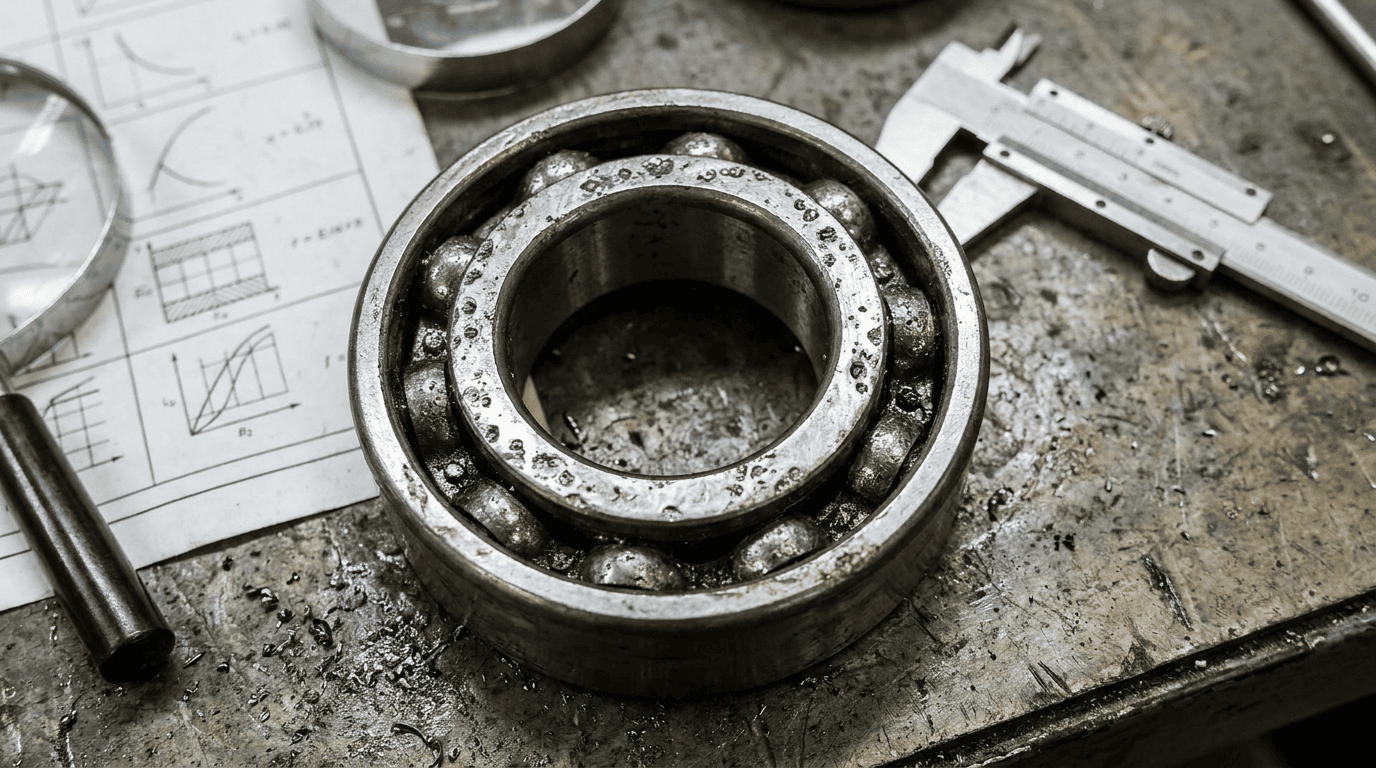
AGMA bearing failure standards help maintenance and reliability teams evaluate bearing damage in industrial gearboxes, identify likely root causes, and make better repair, replacement, and prevention decisions. In heavy-duty gearbox applications, a failed bearing is rarely an isolated event; it can be the result of lubrication breakdown, overload, misalignment, contamination, electrical discharge, improper installation, or gear mesh issues. For maintenance managers, plant engineers, reliability engineers, mechanics, and purchasing teams, understanding how AGMA guidance fits with ISO, SKF, Timken, and Noria best practices can reduce repeat failures, improve uptime, and support more accurate gearbox rebuild specifications.
AGMA does not provide a single “bearing failure standard” in the way ISO 15243 classifies bearing damage modes, but AGMA standards and technical documents are highly relevant to bearing failure analysis in gear drives. AGMA guidance addresses gearbox design, lubrication, rating, alignment, service factors, inspection, and condition assessment—all of which influence bearing life. In practice, teams often combine AGMA standards with ISO 15243 bearing damage classifications, OEM requirements, SKF and Timken bearing analysis resources, and lubrication best practices from Noria to determine why a bearing failed and how to prevent recurrence.
For those looking to deepen their understanding of AGMA Bearing Failure Standards, it may be beneficial to explore related topics such as the impact of operating patterns on gearbox longevity. A comprehensive article titled “Gearbox Duty Cycles Explained: How Operating Patterns Affect Gearbox Life” provides valuable insights into how different duty cycles can influence the performance and lifespan of gearboxes. You can read the article here: Gearbox Duty Cycles Explained.
What Are AGMA Bearing Failure Standards?
AGMA, the American Gear Manufacturers Association, develops technical standards and information sheets for gears, enclosed gear drives, lubrication, gear rating, inspection, and failure analysis. While AGMA is best known for gear-related standards, its documents also support bearing failure evaluation because bearings are critical components inside gearboxes.
In industrial gearboxes, bearing performance is affected by:
- Gear tooth loads
- Shaft deflection
- Housing rigidity
- Lubrication viscosity and cleanliness
- Operating speed
- Thermal conditions
- Alignment
- Shock loading
- Service factor selection
- Installation practices
- Maintenance intervals
Because bearings support shafts and maintain gear mesh alignment, a bearing failure can quickly lead to gear tooth damage, seal failure, coupling vibration, and catastrophic gearbox failure.
AGMA’s Role in Bearing Failure Analysis
AGMA standards generally do not replace bearing manufacturer manuals or ISO bearing damage standards. Instead, they help define the operating environment that contributes to bearing life or bearing failure.
AGMA-related guidance may help answer questions such as:
- Was the gearbox properly selected for the application?
- Was the service factor adequate for shock loading?
- Was the lubrication system suitable for the operating speed and load?
- Were gears and bearings operating within acceptable temperature limits?
- Was the gear drive installed and aligned correctly?
- Did gear tooth distress contribute to abnormal bearing loads?
- Were inspection and maintenance procedures adequate?
For gearbox failure investigations, AGMA guidance is especially useful when the bearing failure may be connected to gear design, gearbox selection, lubrication, or operating conditions.
AGMA and ISO Bearing Failure Classification
The most widely referenced bearing damage classification system is ISO 15243, which defines common rolling bearing damage modes such as fatigue, wear, corrosion, electrical erosion, plastic deformation, and fracture. SKF and Timken both publish extensive bearing failure analysis guides that align closely with ISO terminology.
A practical gearbox bearing failure analysis often uses:
| Reference Source | Best Used For | Relevance to Gearbox Bearing Failure |
||||
| AGMA standards and information sheets | Gear drive design, rating, lubrication, inspection, and application factors | Helps evaluate whether gearbox operating conditions contributed to bearing failure |
| ISO 15243 | Bearing damage classification | Helps identify failure mode based on physical damage patterns |
| SKF bearing failure resources | Visual damage analysis, lubrication, mounting issues | Useful for field inspection and root cause analysis |
| Timken bearing damage analysis | Tapered roller bearing and industrial bearing failure modes | Valuable for heavy gearbox bearing diagnostics |
| Noria lubrication resources | Oil analysis, contamination control, lubricant selection | Helps prevent lubrication-related bearing failure |
For additional guidance, maintenance teams can review resources from SKF at skf.com, Timken at timken.com, AGMA at agma.org, and lubrication reliability resources from Noria at noria.com.
Why AGMA Guidance Matters for Industrial Gearboxes
Bearing failures inside industrial gearboxes are expensive because they often trigger secondary damage. A damaged bearing may allow shaft movement, which can alter gear mesh contact patterns and cause pitting, scuffing, broken teeth, seal damage, or housing wear.
For facilities operating conveyors, mixers, crushers, kilns, cooling towers, extruders, paper machines, mining equipment, wastewater drives, and heavy manufacturing systems, a bearing failure can cause hours or days of downtime.
Bearing Failures Are Often System Failures
A common mistake is to treat a failed bearing as a standalone component problem. In reality, bearing damage often reflects a broader gearbox or system issue.
Common system-level contributors include:
- Undersized gearbox for actual duty cycle
- Frequent starts and stops
- Overhung loads from belts, chains, or sprockets
- Shaft misalignment
- Soft foot at the motor or gearbox base
- Inadequate foundation stiffness
- Improper oil viscosity
- Excessive oil temperature
- Water contamination
- Airborne dust or process contamination
- Incorrect breather or seal arrangement
- Poor installation practices
- Electrical fluting from VFD-driven motors
AGMA guidance helps evaluate whether the gear drive was properly applied, installed, lubricated, and maintained.
How AGMA Supports Reliability Programs
For reliability engineers and maintenance managers, AGMA-based thinking improves asset management by connecting design intent with real-world operating conditions.
AGMA-informed reliability programs typically include:
- Gearbox application review
- Service factor verification
- Lubrication specification review
- Load and speed validation
- Vibration monitoring
- Oil analysis
- Temperature trending
- Visual inspection during shutdowns
- Bearing damage documentation
- Root cause failure analysis
- Repair specification control
If your plant needs help evaluating whether a gearbox is properly selected or whether a bearing failure is related to the drive application, see Industrial Gearbox Solutions’ resources on gearbox repair and rebuild services at IndustrialGearboxSolutions.com/gearbox-repair.
Industrial gearbox bearing failure can lead to costly downtime and repairs, so it’s important to address the issue promptly. Industrial gearbox bearing failure
Common Bearing Failure Causes in Gearboxes
Understanding the root cause of a bearing failure is essential. Replacing the bearing without correcting the cause usually results in repeat failure.
Lubrication Failure
Lubrication is one of the most common causes of bearing failure. In gearboxes, bearings may be lubricated by splash lubrication, forced oil circulation, grease, or oil mist depending on the gearbox design.
Lubrication-related failure can result from:
- Incorrect viscosity
- Wrong lubricant type
- Oxidized oil
- Low oil level
- Excessive oil level causing churning and heat
- Inadequate additive package
- Foaming
- Grease incompatibility
- Starved bearing zones
- Plugged oil passages
- Failed oil pump
- Contaminated lubricant
Symptoms may include discoloration, scoring, smearing, heat tinting, cage wear, and rapid temperature rise.
Noria’s lubrication reliability guidance is especially useful for building contamination control and oil analysis programs. For gearbox lubrication support, you can also review Industrial Gearbox Solutions’ lubrication and maintenance services at IndustrialGearboxSolutions.com/gearbox-maintenance.
Contamination
Contamination can enter a gearbox through seals, breathers, inspection covers, poor maintenance practices, or degraded lubricant handling procedures.
Common contaminants include:
- Dirt and dust
- Metal wear particles
- Water
- Process chemicals
- Coolant
- Cleaning solvent
- Grease from incompatible systems
- Airborne particulates
Hard particles can dent rolling elements and raceways, creating stress risers that lead to spalling. Water can cause corrosion, hydrogen embrittlement risks, additive depletion, and reduced lubricant film strength.
Misalignment and Shaft Deflection
Misalignment places uneven loads on bearings and may cause localized raceway stress. In gearboxes, misalignment may occur between the motor and gearbox, gearbox and driven equipment, or internally due to housing wear or shaft bending.
Possible causes include:
- Improper coupling alignment
- Soft foot
- Thermal growth
- Worn mounting surfaces
- Distorted baseplate
- Excessive belt or chain tension
- Gear mesh errors
- Bent shaft
- Damaged housing bores
Misalignment-related bearing failures often show uneven wear patterns, edge loading, abnormal contact paths, and elevated vibration.
Overload and Shock Loading
AGMA service factors are intended to account for application severity, including shock loads, operating hours, and driven machine characteristics. If the gearbox is undersized or exposed to loads beyond design assumptions, bearings may experience reduced life.
Common overload sources include:
- Jammed conveyors
- Crusher tramp events
- Mixer viscosity changes
- Frequent starts under load
- Process upsets
- Reverse loading
- Torque spikes
- Improper motor upgrades
- VFD programming issues
- High inertia loads
Overload may cause plastic deformation, brinelling, cage damage, cracked races, or accelerated fatigue spalling.
Improper Installation
Even high-quality bearings can fail quickly if installed incorrectly. Installation damage is common after rushed shutdowns or field repairs without proper tooling.
Installation-related causes include:
- Hammering directly on races
- Pressing through rolling elements
- Incorrect heating method
- Excessive mounting force
- Improper bearing clearance
- Wrong shaft or housing fit
- Contaminated assembly environment
- Reusing damaged locknuts or spacers
- Incorrect preload
- Improper torque on bearing retainers
Maintenance teams should follow OEM procedures, bearing manufacturer instructions, and proper mechanical fitting practices.
Electrical Damage
Gearboxes connected to VFD-driven motors may be exposed to shaft currents. Electrical discharge through bearings can produce fluting, frosting, or pitting on raceways and rolling elements.
Common indicators include:
- Washboard-like fluting patterns
- Gray or frosted raceway appearance
- Increased noise
- Rapid lubricant degradation
- Repeated bearing failures despite correct lubrication
Prevention may require shaft grounding rings, insulated bearings, proper motor grounding, improved VFD cable practices, or electrical testing.
Understanding AGMA Bearing Failure Standards is crucial for maintaining the efficiency and longevity of machinery. For those interested in exploring related topics, you might find the article on sanitary gearboxes particularly insightful, as it discusses the price range and specifications that can impact performance and reliability in various applications. By familiarizing yourself with both AGMA standards and the nuances of gearboxes, you can better ensure optimal operation in your equipment.
Symptoms of Gearbox Bearing Failure
| Failure Mode | AGMA Standard |
|---|---|
| Surface distress | AGMA 1010-E98 |
| Subsurface fatigue | AGMA 1010-E98 |
| Plastic deformation | AGMA 1010-E98 |
| Wear | AGMA 1010-E98 |
| Corrosion | AGMA 1010-E98 |
Early identification of bearing distress can prevent catastrophic gearbox damage. Symptoms vary depending on the failure mode and severity.
Operational Symptoms
Maintenance and operations teams should watch for:
- Increased vibration
- Rising gearbox temperature
- Unusual noise, rumbling, whining, or clicking
- Increased motor current
- Oil leaks caused by shaft movement
- Reduced output speed stability
- Coupling wear
- Seal failure
- Metal particles in oil
- Increased oil filter differential pressure
- Burning smell
- Frequent lubricant degradation
- Gear tooth contact pattern changes
A bearing failure may begin subtly, so trending is more valuable than one-time readings.
Visual Symptoms During Inspection
When a gearbox is opened, mechanics and reliability engineers should document:
- Spalling on inner or outer raceways
- Pitting or micropitting
- Scoring or smearing
- Discoloration from heat
- Cage deformation
- Roller skewing
- Cracked races
- Corrosion staining
- Brinell marks
- False brinelling
- Fretting on shaft seats
- Loose fits or spun bearing races
- Metal debris in the sump
- Plugged oil passages
Photographs should be taken before cleaning components. If root cause analysis is required, avoid polishing, grinding, or discarding damaged parts before documentation.
Vibration and Oil Analysis Symptoms
Condition monitoring can detect bearing distress long before complete failure.
| Method | What It Detects | Useful Indicators |
||||
| Vibration analysis | Bearing defects, imbalance, misalignment, gear mesh issues | BPFO, BPFI, BSF, FTF frequencies, high-frequency acceleration |
| Oil analysis | Wear debris, contamination, lubricant health | Particle count, water ppm, viscosity, TAN, oxidation, ferrous density |
| Thermography | Heat from friction or lubrication problems | Hot bearing zones, abnormal housing temperature |
| Ultrasound | Early friction and lubrication distress | High-frequency sound changes |
| Visual inspection | Surface damage and contamination | Spalling, wear, corrosion, debris, discoloration |
For critical gearboxes, combining vibration analysis with oil analysis provides stronger evidence than either method alone.
Troubleshooting AGMA-Related Bearing Failures
A structured troubleshooting process helps separate symptoms from root causes. AGMA-informed troubleshooting considers the bearing, gear drive, lubrication system, and application.
Step 1: Collect Operating Data
Before disassembly, document the actual operating conditions.
Gather:
- Gearbox make, model, ratio, and serial number
- Input horsepower and speed
- Output torque and speed
- Driven equipment type
- Operating hours per day
- Load profile
- Start/stop frequency
- Ambient temperature
- Oil type and viscosity
- Oil change history
- Vibration trends
- Oil analysis history
- Recent process changes
- Recent repairs or component replacements
Compare the application to the original gearbox selection. If the gearbox was selected for a lighter duty cycle than the current operation, bearing life may be compromised.
Step 2: Review Service Factor and Load Assumptions
AGMA service factors help account for application severity. A gearbox used on a steady conveyor may not require the same service factor as one used on a rock crusher, agitator, or reciprocating pump.
Questions to ask:
- Has production increased since the gearbox was installed?
- Was the motor horsepower increased?
- Is the gearbox exposed to shock loading?
- Does the driven machine jam or stall?
- Are starts occurring under full load?
- Is the gearbox operating 24/7?
- Does the duty cycle match original design assumptions?
If actual service conditions exceed the design basis, bearing failures may continue even with premium bearings.
Step 3: Inspect Lubrication System
Lubrication inspection should include both lubricant condition and delivery method.
Check:
- Correct oil viscosity at operating temperature
- Oil level at rest and during operation
- Oil foaming
- Water contamination
- Sludge or varnish
- Plugged lines or spray nozzles
- Pump operation
- Filter condition
- Breather condition
- Seal condition
- Oil sampling method
- Storage and transfer procedures
A clean, dry, properly selected lubricant is one of the most effective ways to extend bearing life.
Step 4: Evaluate Alignment and Mounting
Inspect alignment at the complete machine train level.
Important checks include:
- Laser alignment between motor and gearbox
- Alignment between gearbox and driven equipment
- Soft foot inspection
- Baseplate flatness
- Foundation looseness
- Coupling condition
- Belt or chain tension
- Shaft runout
- Housing bore condition
- Bearing seat fits
- Endplay or preload settings
Even small alignment errors can create high bearing loads in heavily loaded gearboxes.
Step 5: Classify Bearing Damage
Use ISO 15243-style terminology, bearing manufacturer guidance, and AGMA application review to classify the damage.
| Damage Appearance | Possible Cause | Recommended Follow-Up |
||||
| Spalling on raceway | Rolling contact fatigue, overload, contamination | Check load, alignment, oil cleanliness |
| Smearing or scoring | Lubrication starvation, sliding, overheating | Verify viscosity, oil level, flow |
| Rust or corrosion | Water ingress, poor storage, condensation | Improve seals, breathers, oil handling |
| Brinelling | Static overload or impact | Check handling, shock loads, mounting |
| False brinelling | Vibration while stationary | Improve storage, rotate shafts, isolate vibration |
| Fluting | Electrical discharge | Install shaft grounding or insulated bearings |
| Cage damage | Poor lubrication, vibration, misalignment, high speed | Inspect fit, oil delivery, operating speed |
| Fretting on fits | Loose shaft or housing fit, micro-movement | Restore fits, repair housing bore |
Inspection Methods for Bearing Failure Analysis
Effective inspection is disciplined and evidence-based. The goal is not simply to identify what broke, but why it broke.
Pre-Disassembly Inspection
Before opening the gearbox:
- Record noise, vibration, and temperature
- Photograph installation and surrounding equipment
- Check oil level
- Take an oil sample while oil is warm and agitated
- Inspect breathers and seals
- Check coupling condition
- Measure shaft movement if safe
- Record motor current
- Review alarm history
This information may be lost once the unit is removed or cleaned.
Internal Gearbox Inspection
After opening the gearbox:
- Photograph all components before cleaning
- Inspect oil sump for debris
- Check gear tooth contact patterns
- Inspect bearing raceways and rolling elements
- Check shaft fits and housing bores
- Inspect seals, retainers, spacers, and locknuts
- Measure endplay and backlash
- Look for signs of overheating
- Verify oil delivery paths are open
If the gearbox is being sent to a repair facility, include operating history and failure observations with the unit. For rebuild support, see Industrial Gearbox Solutions’ gearbox inspection services at IndustrialGearboxSolutions.com/gearbox-inspection.
Laboratory and Advanced Testing
For high-value failures, advanced testing may be justified.
Common methods include:
- Metallurgical analysis
- Hardness testing
- Dimensional inspection
- Surface roughness measurement
- Ferrography
- Particle analysis
- Oil chemistry testing
- Scanning electron microscopy
- Crack detection
- Bearing material verification
These methods are especially useful when failures repeat, when warranty decisions are involved, or when a critical asset causes major production losses.
Prevention Strategies Based on AGMA and Industry Best Practices
Preventing bearing failure requires a complete reliability strategy, not just better bearings.
Improve Lubrication Reliability
Best practices include:
- Select lubricant based on OEM and AGMA guidance
- Confirm viscosity at actual operating temperature
- Use desiccant breathers in humid or dusty environments
- Filter oil during transfer
- Use dedicated sealed transfer containers
- Maintain target ISO cleanliness levels
- Test oil regularly
- Monitor water contamination
- Avoid mixing incompatible lubricants
- Keep oil at correct level
- Inspect forced lubrication systems
SKF, Timken, and Noria all emphasize that lubricant film integrity and cleanliness are critical to bearing life.
Strengthen Contamination Control
Contamination control improvements may include:
- Upgrading seals
- Installing high-quality breathers
- Adding filtration
- Improving washdown protection
- Sealing inspection covers
- Using quick-connect oil sampling ports
- Storing lubricants indoors
- Training mechanics on clean assembly practices
- Using lint-free wipes and clean tools
- Keeping rebuild areas clean
Even small particles can significantly reduce bearing life in heavily loaded gearboxes.
Control Alignment and Mechanical Loads
Recommended practices:
- Perform precision laser alignment
- Correct soft foot
- Verify baseplate integrity
- Inspect coupling condition
- Avoid excessive belt or chain tension
- Check shaft runout
- Verify driven equipment is not binding
- Monitor torque spikes
- Review VFD ramp settings
- Confirm gearbox service factor
For applications with repeated overloads, purchasing professionals should consider whether a higher-rated gearbox or redesigned drive package is more economical than repeated repairs.
Use Condition Monitoring
Condition monitoring should match asset criticality.
For critical gearboxes:
- Monthly or continuous vibration monitoring
- Routine oil analysis
- Periodic thermography
- Ultrasound lubrication checks
- Annual borescope inspections
- Alarm limits based on trends
- Documented inspection routes
For less critical assets:
- Regular oil checks
- Temperature measurement
- Basic vibration screening
- Visual inspections
- Scheduled lubricant changes
Repair vs. Replacement: How to Decide
When a gearbox bearing fails, the decision is not always simple. Repair may be cost-effective, but replacement may be justified when damage is extensive or the gearbox is undersized.
When Repair Makes Sense
Repair is often the best option when:
- Gear teeth are reusable or repairable
- Housing bores can be restored
- Shafts are not severely damaged
- Replacement gearbox lead time is long
- The gearbox is custom or obsolete
- Root cause can be corrected
- Repair cost is significantly lower than replacement
- Upgraded bearings or seals can improve reliability
A quality rebuild should include bearing replacement, seal replacement, dimensional inspection, gear inspection, lubrication system review, and corrective action for the original failure cause.
When Replacement May Be Better
Replacement may be more practical when:
- Housing is cracked or distorted beyond repair
- Multiple gear sets are severely damaged
- Shaft journals are destroyed
- The gearbox is undersized for current duty
- Repair cost approaches replacement cost
- Efficiency upgrades are available
- The gearbox design is obsolete
- Repeated failures indicate chronic application mismatch
- Spare parts are unavailable
Purchasing teams should evaluate total cost of ownership, not just purchase price. Downtime, lead time, reliability, installation changes, and future maintenance costs all matter.
Repair vs. Replacement Decision Table
| Factor | Repair Favored | Replacement Favored |
||||
| Lead time | Replacement has long lead time | New unit available quickly |
| Damage extent | Bearings/seals and minor fits damaged | Gears, shafts, and housing severely damaged |
| Application fit | Gearbox properly sized | Gearbox undersized or misapplied |
| Cost | Repair much lower than new | Repair near cost of new |
| Obsolescence | Custom unit worth preserving | Standard modern replacement available |
| Reliability | Root cause identified and correctable | Chronic failures persist |
| Upgrade potential | Bearing/seal/lube upgrades possible | New design offers major improvement |
For help comparing rebuild and replacement options, visit Industrial Gearbox Solutions’ replacement gearbox support page at IndustrialGearboxSolutions.com/gearbox-replacement.
Maintenance Best Practices for Gearbox Bearings
A proactive maintenance program can dramatically reduce bearing failures.
Recommended Maintenance Schedule
| Frequency | Maintenance Task | Purpose |
||||
| Daily/Shift | Listen for abnormal noise, check leaks, verify temperature | Detect early changes |
| Weekly | Inspect oil level, breather, seals, and mounting bolts | Prevent lubrication and contamination issues |
| Monthly | Record vibration and temperature trends | Identify developing faults |
| Quarterly | Pull oil sample for analysis | Monitor lubricant health and wear debris |
| Semiannual | Check alignment, coupling, and foundation | Control mechanical stress |
| Annual | Borescope or internal inspection if critical | Verify gear and bearing condition |
| Shutdown | Inspect bearings, gears, seals, fits, and oil delivery | Prevent repeat failures |
Maintenance intervals should be adjusted based on environment, criticality, operating hours, and OEM guidance.
Documentation Best Practices
Good documentation improves root cause analysis and purchasing decisions.
Track:
- Bearing manufacturer and part number
- Installation date
- Lubricant type and batch
- Oil analysis reports
- Vibration trends
- Alignment reports
- Repair history
- Failure photographs
- Load changes
- Process changes
- Corrective actions
Without documentation, each failure investigation starts from zero.
Training and Standard Procedures
Mechanics and technicians should be trained in:
- Bearing handling
- Clean assembly practices
- Heating and mounting methods
- Torque procedures
- Lubrication practices
- Oil sampling
- Contamination control
- Seal installation
- Failure documentation
- Safe gearbox inspection
Standardized procedures reduce variability and improve reliability across shifts and sites.
Key AGMA Concepts That Affect Bearing Life
Although AGMA documents are not simply bearing manuals, several AGMA-related concepts directly influence bearing reliability.
Gear Drive Rating
Gear drive rating determines whether the gearbox can handle the required speed, torque, and duty. If gear loads exceed design assumptions, bearings may also be overloaded.
Service Factor
Service factor accounts for operating severity. A low service factor in a high-shock application can lead to premature gear and bearing failures.
Lubrication Selection
AGMA lubrication guidance helps determine appropriate oil viscosity and type for enclosed gear drives. Incorrect lubricant selection can reduce bearing and gear life.
Thermal Capacity
Excess heat reduces oil viscosity, accelerates oxidation, damages seals, and shortens bearing life. Thermal capacity must match the application environment.
Installation and Alignment
Proper installation affects gear mesh and bearing loading. Poor alignment can cause edge loading, increased vibration, and early failure.
FAQs About AGMA Bearing Failure Standards
Does AGMA Have a Specific Bearing Failure Standard?
AGMA does not have one universal standard titled “bearing failure standard.” Instead, AGMA standards and technical documents address gear drive rating, lubrication, design, inspection, and application factors that influence bearing failures. Bearing damage classification is commonly performed using ISO 15243, SKF resources, Timken guidance, and OEM documentation.
How Are AGMA Standards Used in Gearbox Bearing Failure Analysis?
AGMA guidance helps determine whether the gearbox was correctly selected, lubricated, installed, and operated. It is especially useful when bearing failure may be related to overload, service factor, gear mesh problems, thermal conditions, or lubrication issues.
What Is the Most Common Cause of Gearbox Bearing Failure?
Lubrication failure and contamination are among the most common causes. Incorrect viscosity, low oil level, water contamination, dirty oil, blocked oil passages, and degraded lubricant can all cause premature bearing damage.
How Can I Tell If a Bearing Failed From Overload?
Overload may cause heavy spalling, plastic deformation, brinelling, cracked races, or abnormal contact patterns. A full analysis should include load history, service factor review, alignment inspection, and bearing damage classification.
Should Bearings Always Be Replaced During a Gearbox Rebuild?
In most industrial gearbox rebuilds, bearings are replaced because they are critical wear components and relatively inexpensive compared with downtime or repeat failure. However, the decision should be based on inspection, criticality, cost, and OEM requirements.
Can Oil Analysis Detect Bearing Failure?
Yes. Oil analysis can detect wear particles, water contamination, viscosity changes, oxidation, and additive depletion. Ferrography and particle analysis can provide additional insight into bearing and gear wear.
What External Sources Are Helpful for Bearing Failure Analysis?
Useful sources include AGMA for gear drive standards, SKF for bearing damage analysis, Timken for bearing troubleshooting, ISO 15243 for bearing damage classification, and Noria for lubrication and oil analysis best practices.
How Do I Prevent Repeat Bearing Failures?
Prevent repeat failures by identifying the root cause, not just replacing the bearing. Review lubrication, contamination, alignment, loading, service factor, installation practices, vibration data, and oil analysis results.
Key Takeaways
- AGMA bearing failure standards are best understood as AGMA gear drive guidance combined with bearing-specific failure classification from ISO, SKF, Timken, and OEM resources.
- Bearing failures in gearboxes are often caused by lubrication problems, contamination, misalignment, overload, improper installation, or electrical discharge.
- A failed bearing can damage gears, shafts, seals, housings, and couplings if not addressed quickly.
- AGMA concepts such as service factor, gear drive rating, lubrication selection, and thermal capacity are essential to root cause analysis.
- Vibration analysis, oil analysis, thermography, ultrasound, and visual inspection are all valuable tools for detecting bearing distress.
- Repair is often practical when the gearbox housing, shafts, and gears are salvageable; replacement may be better when the gearbox is obsolete, undersized, or severely damaged.
- Preventive maintenance should include clean lubrication practices, contamination control, alignment checks, oil analysis, and condition monitoring.
- Documentation and failure photography improve troubleshooting and reduce repeat failures.
Suggested Branded Images
Image 1: Bearing Failure Inspection in an Industrial Gearbox
Alt text: Mechanic inspecting failed gearbox bearing using AGMA-informed failure analysis process
Caption: A structured inspection helps determine whether bearing failure was caused by lubrication, contamination, overload, or alignment issues.
Image 2: Gearbox Oil Sampling for Bearing Failure Prevention
Alt text: Technician taking oil sample from industrial gearbox to detect bearing wear particles
Caption: Oil analysis is one of the most effective ways to identify bearing distress before catastrophic gearbox failure.
Image 3: Comparison of Bearing Damage Modes
Alt text: Close-up examples of spalling, corrosion, brinelling, and electrical fluting on gearbox bearings
Caption: Bearing damage patterns provide critical clues during root cause failure analysis.
Image 4: Precision Alignment of Motor and Gearbox
Alt text: Reliability technician performing laser alignment on motor and gearbox coupling
Caption: Proper alignment reduces bearing loads and helps extend gearbox service life.
Image 5: Rebuilt Industrial Gearbox with New Bearings and Seals
Alt text: Rebuilt industrial gearbox with replacement bearings, seals, and inspected gear sets
Caption: A quality gearbox rebuild should correct the root cause of bearing failure, not just replace damaged components.
Suggested SEO Metadata
SEO Title
Understanding AGMA Bearing Failure Standards for Industrial Gearboxes
Meta Description
Learn how AGMA bearing failure standards, ISO classifications, lubrication best practices, and gearbox inspections help prevent repeat bearing failures in industrial gear drives.
Suggested URL Slug
understanding-agma-bearing-failure-standards
Primary Keyword
AGMA bearing failure standards
Secondary Keywords
- gearbox bearing failure
- AGMA gearbox standards
- industrial gearbox bearing failure
- bearing failure analysis
- gearbox lubrication failure
- gearbox repair vs replacement
- bearing inspection methods
- industrial gearbox maintenance
- AGMA service factor
- gearbox root cause failure analysis
Suggested Internal Links
- Gearbox Repair Services: IndustrialGearboxSolutions.com/gearbox-repair
- Gearbox Rebuild Services: IndustrialGearboxSolutions.com/gearbox-rebuild
- Gearbox Inspection Services: IndustrialGearboxSolutions.com/gearbox-inspection
- Gearbox Maintenance Services: IndustrialGearboxSolutions.com/gearbox-maintenance
- Replacement Gearbox Support: IndustrialGearboxSolutions.com/gearbox-replacement
- Emergency Gearbox Repair: IndustrialGearboxSolutions.com/emergency-gearbox-repair
Suggested External References
- AGMA: agma.org
- SKF Bearing Damage and Failure Analysis: skf.com
- Timken Bearing Damage Analysis: timken.com
- Noria Lubrication and Oil Analysis Resources: noria.com
- ISO 15243 Rolling Bearing Damage Classification: iso.org
Conclusion
Understanding AGMA bearing failure standards means looking beyond the damaged bearing and evaluating the entire gearbox system. AGMA guidance helps maintenance managers, plant engineers, reliability engineers, mechanics, and purchasing professionals assess whether gearbox rating, service factor, lubrication, thermal conditions, installation, and operating loads contributed to the failure. When combined with ISO 15243 damage classification, SKF and Timken bearing analysis resources, and Noria lubrication best practices, AGMA-informed troubleshooting provides a practical path to fewer repeat failures and better asset reliability.
The best results come from disciplined inspection, accurate documentation, clean lubrication practices, alignment control, condition monitoring, and repair specifications that address root cause—not just visible damage. Whether your facility needs emergency gearbox repair, a planned rebuild, bearing failure analysis, or replacement gearbox sourcing, a systematic approach can reduce downtime and improve long-term performance.
FAQs
What are AGMA bearing failure standards?
AGMA (American Gear Manufacturers Association) bearing failure standards are a set of guidelines and criteria used to evaluate and classify the different types of bearing failures that can occur in mechanical systems.
What is the purpose of AGMA bearing failure standards?
The purpose of AGMA bearing failure standards is to provide a standardized method for identifying, categorizing, and analyzing bearing failures in order to improve the reliability and performance of mechanical systems.
How are AGMA bearing failure standards used?
AGMA bearing failure standards are used by engineers, maintenance professionals, and manufacturers to assess the root causes of bearing failures, determine appropriate corrective actions, and prevent future failures.
What are the different types of bearing failures covered by AGMA standards?
AGMA standards cover a wide range of bearing failures, including but not limited to: fatigue failure, wear, corrosion, lubrication issues, misalignment, and overloading.
Where can I find more information about AGMA bearing failure standards?
More information about AGMA bearing failure standards can be found on the official AGMA website, in industry publications, and through training courses and seminars offered by AGMA and other professional organizations.