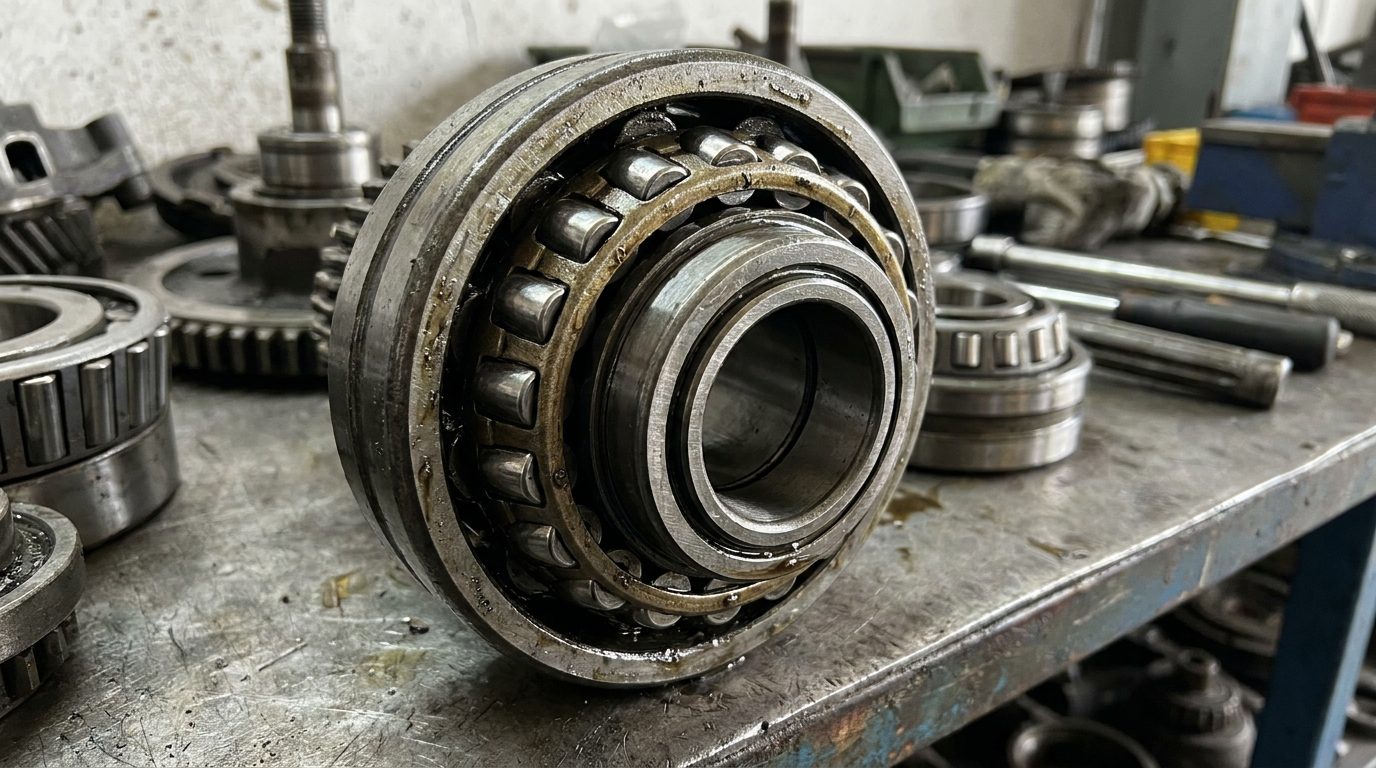
Troubleshooting Hot Gearbox Bearings is a critical maintenance task because excessive bearing temperature can quickly lead to lubricant breakdown, bearing seizure, gear damage, unplanned downtime, and costly gearbox replacement. For maintenance managers, plant engineers, reliability engineers, mechanics, and purchasing teams, a hot bearing is not just a temperature reading—it is an early warning sign that the gearbox may be experiencing lubrication failure, misalignment, overload, contamination, improper fit, or internal wear. This guide explains how to identify hot gearbox bearing symptoms, isolate root causes, inspect components, prevent recurrence, and decide whether repair or replacement is the best path forward.
Hot gearbox bearings are usually caused by inadequate lubrication, incorrect lubricant viscosity, overfilling, contamination, excessive load, shaft misalignment, improper bearing fit, failing seals, blocked breathers, poor heat dissipation, or advanced bearing wear. Start troubleshooting by confirming the temperature with a calibrated infrared thermometer or contact probe, comparing readings to baseline data, checking oil level and condition, inspecting seals and breathers, reviewing vibration trends, and verifying alignment and operating load. If temperature continues rising, shut down the gearbox safely and inspect the bearings, lubrication system, and gear mesh before restarting.
If you’re experiencing issues with your gearbox bearing running hot, it may be beneficial to explore related topics that can help you understand the underlying causes and potential solutions. One such resource is an article on gearbox replacement, which provides insights into the maintenance and care of gearboxes to prevent overheating and other related problems. You can read more about this in the article titled “Hub City Gearbox Replacement” available at Hub City Gearbox Replacement.
Why Hot Gearbox Bearings Require Immediate Attention
Gearbox bearings support rotating shafts, maintain gear alignment, control axial and radial loads, and help preserve proper gear mesh. When a bearing runs hot, the problem can quickly spread throughout the gearbox. Heat thins the lubricant, reduces film strength, accelerates oxidation, hardens seals, increases internal clearances, and can cause metal-to-metal contact.
A gearbox bearing that is only “slightly warm” may be operating normally depending on speed, load, ambient conditions, and lubricant type. However, a bearing that is significantly hotter than other bearings on the same gearbox, trending upward, or exceeding manufacturer limits should be treated as a serious reliability concern.
For help with complete gearbox evaluation, see Industrial Gearbox Solutions’ services for industrial gearbox repair: https://industrialgearboxsolutions.com/gearbox-repair/
What Temperature Is Too Hot for a Gearbox Bearing?
There is no single temperature limit that applies to every gearbox. Acceptable bearing temperature depends on:
- Bearing type and size
- Gearbox speed and load
- Lubricant type and viscosity
- Ambient temperature
- Housing design
- Cooling system design
- Application severity
- Manufacturer specifications
As a general field guideline:
| Bearing Condition | Typical Temperature Range | Recommended Action |
||:||
| Normal operation | 120°F–160°F | Continue monitoring and compare to baseline |
| Elevated but stable | 160°F–180°F | Inspect lubrication, load, and cooling |
| Concerning | 180°F–200°F | Perform immediate troubleshooting |
| Critical | Above 200°F | Consider shutdown and detailed inspection |
| Rapid temperature rise | Any range | Treat as urgent regardless of absolute temperature |
Always compare current readings to historical baseline data. A bearing running at 175°F may be normal in one application and abnormal in another.
Why Temperature Trend Matters More Than One Reading
A single temperature reading is helpful, but a trend is more valuable. A bearing temperature that increases 20°F over a few days may indicate developing failure even if the absolute temperature is still within the expected range. Reliability engineers should monitor:
- Rate of temperature increase
- Temperature difference between similar bearings
- Changes after lubrication
- Changes after load increases
- Temperature during startup versus steady operation
- Temperature during peak production
- Seasonal ambient temperature effects
Common Causes of Hot Gearbox Bearings
Hot gearbox bearings are usually the result of one or more mechanical, lubrication, operating, or environmental issues. Identifying the true root cause is essential because simply replacing the bearing may not solve the problem.
Inadequate Lubrication
Insufficient lubrication is one of the most common causes of hot bearings. Without adequate lubricant film, rolling elements and raceways experience excessive friction. This generates heat and accelerates wear.
Common lubrication-related issues include:
- Low oil level
- Plugged oil passages
- Failed oil pump
- Incorrect grease quantity
- Starved splash lubrication
- Improper oil distribution
- Blocked spray nozzles
- Leaking seals
- Wrong relubrication interval
For best practices on lubrication management, Noria provides excellent technical resources on oil analysis and lubricant reliability: https://www.noria.com/
Incorrect Lubricant Viscosity
Using oil that is too light may not provide adequate film thickness under load. Using oil that is too heavy may generate excessive churning, friction, and heat. Both conditions can produce hot gearbox bearings.
Viscosity selection should consider:
- Gearbox speed
- Load
- Operating temperature
- Ambient temperature
- Gear type
- Bearing type
- OEM recommendations
- Additive requirements
A lubricant that worked well in winter may run too thin during summer if operating temperatures rise significantly.
Overfilled Gearbox
Too much oil can be just as damaging as too little. An overfilled gearbox causes churning, aeration, foaming, and excess heat. Bearings may become hot because the lubricant is full of entrained air and cannot maintain film strength.
Symptoms of overfilling include:
- Foamy oil in the sight glass
- Oil leakage from seals or breathers
- Higher-than-normal housing temperature
- Increased motor amperage
- Unstable oil level readings
- Excessive oxidation
Contaminated Lubricant
Contamination causes abrasive wear, corrosion, reduced lubricant performance, and heat generation. Common contaminants include:
- Water
- Dust
- Metal particles
- Process chemicals
- Cleaning fluids
- Coolant
- Degraded oil byproducts
Water contamination is especially damaging because it reduces oil film strength, promotes rust, and can cause micro-pitting in rolling element bearings.
Bearing Misalignment
Bearings are designed to carry specific radial and axial loads. If shafts are misaligned, bearings may experience uneven loading. This produces localized heat, cage stress, raceway damage, and premature failure.
Misalignment may be caused by:
- Improper installation
- Soft foot
- Foundation movement
- Thermal growth
- Pipe strain
- Worn bearing seats
- Distorted housings
- Improper shimming
- Coupling misalignment
For detailed inspection and diagnosis, visit: https://industrialgearboxsolutions.com/gearbox-inspection/
Excessive Load or Shock Loading
Gearboxes operating above design load generate more bearing heat. Overload may result from process changes, jams, improper equipment sizing, increased production rates, or driven equipment problems.
Shock loading can produce sudden bearing damage that later appears as heat, vibration, and noise. Examples include:
- Crusher jams
- Conveyor starts under load
- Mixer overloads
- Rolling mill impacts
- Pump cavitation
- Sudden reversals
- Emergency stops
Improper Bearing Fit or Installation
A bearing mounted too tightly can have reduced internal clearance, causing excessive heat. A bearing mounted too loosely can creep on the shaft or in the housing, also generating heat and wear.
Installation errors include:
- Hammering directly on bearing rings
- Heating bearings above recommended limits
- Installing bearings cocked
- Using incorrect tools
- Mixing incompatible components
- Reusing damaged locknuts or sleeves
- Incorrect preload setting
- Improper clearance selection
SKF offers useful technical guidance on bearing mounting, lubrication, and condition monitoring: https://www.skf.com/
Failing Seals and Breathers
Seals and breathers protect the lubricant from contamination and help maintain proper gearbox pressure. A failed seal can allow oil loss or contaminant ingress. A clogged breather can cause pressure buildup, pushing oil past seals and reducing lubrication reliability.
Check for:
- Hardened seals
- Cracked seal lips
- Oil seepage
- Dirt buildup around seals
- Breather blockage
- Missing desiccant breathers
- Water entry points
- Excessive internal pressure
Industrial gearbox bearing failure can lead to costly downtime and production losses, so it’s important to address the issue promptly. Industrial gearbox bearing failure
Symptoms of Hot Gearbox Bearing Problems
Hot bearings rarely occur in isolation. Usually, they appear with other symptoms that help identify the root cause.
Temperature-Related Symptoms
Common temperature symptoms include:
- Bearing cap hotter than surrounding housing
- One bearing location hotter than others
- Rapid temperature rise after startup
- Temperature spike under load
- Temperature increase after lubrication change
- Heat discoloration on bearing components
- Oil darkening or burning smell
- Paint discoloration near bearing housing
Vibration and Noise Symptoms
A hot bearing often produces vibration changes before complete failure. Mechanics and reliability engineers should look for:
- Increased overall vibration
- High-frequency bearing fault frequencies
- Grinding, growling, or rumbling noise
- Clicking or spalling sounds
- Increased axial vibration
- Modulation patterns in vibration data
- Changes in gear mesh frequency
Vibration analysis can help distinguish bearing problems from gear mesh issues, imbalance, looseness, and misalignment.
Lubricant Symptoms
Oil condition often tells the story. Inspect for:
- Dark or burnt oil
- Foaming
- Cloudiness
- Metallic particles
- Sludge
- Water separation
- Acidic odor
- Abnormal viscosity
- Additive depletion
- Filter debris
Timken provides bearing and lubrication engineering resources that can support root cause analysis: https://www.timken.com/
Mechanical Symptoms
Hot bearing issues may also produce mechanical signs such as:
- Seal leakage
- Shaft movement
- Coupling wear
- Loose hold-down bolts
- Cracked housing
- Uneven gear contact pattern
- Abnormal backlash
- High motor current
- Reduced gearbox efficiency
If you’re concerned about your gearbox bearing running hot, it may be beneficial to explore related topics that address common issues in gearbox maintenance. One such article discusses the importance of regular inspections and timely repairs to prevent overheating and other complications. You can read more about effective maintenance strategies in this informative piece on industrial gearbox repair. Understanding these aspects can help you keep your machinery in optimal condition and avoid costly downtime.
Step-by-Step Troubleshooting for Hot Gearbox Bearings
| Reasons for Hot Gearbox Bearing | Possible Solutions |
|---|---|
| Lubrication issues | Check and replenish lubricant, ensure proper viscosity and quantity |
| Contamination | Implement better sealing, clean and inspect regularly |
| Overloading | Review load capacity, reduce load or upgrade bearing |
| Misalignment | Align components properly, check for shaft and housing misalignment |
| Poor installation | Ensure correct installation, use proper tools and techniques |
A systematic approach prevents guesswork and helps maintenance teams avoid replacing parts unnecessarily.
Step 1: Confirm the Temperature Reading
Before taking corrective action, verify that the bearing is actually hot.
Use:
- Infrared thermometer
- Thermal imaging camera
- Contact temperature probe
- Permanently mounted RTD or thermocouple
- Bearing temperature sensor from the control system
Avoid common measurement mistakes:
- Measuring shiny metal surfaces without correcting emissivity
- Comparing readings from different distances
- Measuring near external heat sources
- Ignoring ambient temperature
- Taking only one reading
- Measuring oil temperature and assuming it equals bearing temperature
Best practice: record temperature at the same location, using the same method, under similar operating conditions.
Step 2: Compare Against Baseline and Similar Assets
Ask:
- Has this bearing always run at this temperature?
- Is the opposite bearing cooler?
- Did temperature increase after maintenance?
- Did the process load change?
- Did the lubricant brand or viscosity change?
- Is ambient temperature higher than normal?
- Are similar gearboxes running cooler?
Baseline comparison is one of the most effective ways to separate normal operating heat from developing failure.
Step 3: Check Oil Level and Lubricant Condition
Inspect oil level while the gearbox is operating or stopped according to OEM instructions. Some gearboxes require level checks after oil has drained back to the sump.
Look for:
- Low oil level
- High oil level
- Oil aeration
- Water contamination
- Sludge
- Metal debris
- Incorrect oil color
- Burnt smell
- Blocked filters
- Recent lubricant changes
If available, pull an oil sample and send it for analysis. Oil analysis should include viscosity, water content, particle count, acid number, oxidation, additive levels, and wear metals.
Step 4: Inspect Cooling and Ventilation
Some gearboxes rely on natural convection, while others use fans, cooling coils, oil coolers, or forced lubrication systems. If heat cannot escape, bearing temperatures rise.
Check:
- Cooling fan operation
- Fan guard blockage
- Oil cooler cleanliness
- Cooling water flow
- Heat exchanger fouling
- Airflow around gearbox
- Dirty housing fins
- Ambient heat sources
- Insulation or guards trapping heat
- Oil pump operation
Step 5: Review Load and Operating Conditions
A gearbox may run hot because the process has changed. Maintenance and operations teams should verify:
- Actual load versus design load
- Motor amperage trend
- Startup torque
- Frequency of starts and stops
- Shock loads
- Jam events
- Product density changes
- Conveyor loading changes
- Pump or fan operating point
- VFD speed changes
If the gearbox is undersized for the current duty cycle, repair alone may not solve the problem.
Step 6: Check Alignment and Soft Foot
Misalignment can overload bearings and create heat. Perform a precision alignment check on the motor, gearbox, and driven equipment.
Inspect for:
- Angular misalignment
- Parallel misalignment
- Soft foot
- Baseplate distortion
- Loose anchor bolts
- Thermal growth
- Coupling wear
- Pipe strain on connected equipment
Laser alignment is preferred for critical rotating equipment.
Step 7: Perform Vibration Analysis
Vibration analysis can identify bearing defects before they are visible. Useful vibration indicators include:
- Bearing defect frequencies
- High-frequency acceleration
- Envelope analysis
- Gear mesh frequency
- Sidebands
- Looseness signatures
- Misalignment patterns
- Imbalance patterns
A hot bearing with rising vibration should be treated as a high-risk condition.
Step 8: Inspect Bearing Fit, Clearance, and Preload
If recent maintenance occurred, installation error should be considered. Incorrect bearing mounting can cause immediate heat after startup.
Review:
- Bearing part number
- Internal clearance class
- Shaft tolerance
- Housing tolerance
- Mounting method
- Bearing heater temperature
- Locknut torque
- Endplay measurement
- Preload setting
- Spacer dimensions
- Lubrication during assembly
If the bearing was replaced and the gearbox ran hot immediately afterward, suspect fit, clearance, preload, or lubricant selection.
Inspection Methods for Hot Gearbox Bearings
Hot bearing troubleshooting should combine multiple inspection methods. No single test tells the entire story.
Thermal Imaging
Thermal imaging quickly identifies hot spots and temperature patterns. It is especially useful for comparing multiple bearing locations on the same gearbox.
Thermal imaging can reveal:
- Hot bearing caps
- Restricted cooling
- Uneven housing temperatures
- Oil cooler problems
- Coupling heat
- Motor bearing heat
- External heat sources
Recommended image idea: Branded thermal image of an industrial gearbox bearing housing.
Alt text: “Thermal image showing hot gearbox bearing housing during troubleshooting inspection”
Caption: “Thermal imaging helps maintenance teams identify abnormal bearing heat before failure.”
Oil Analysis
Oil analysis is one of the most valuable tools for gearbox reliability. A good oil analysis program can detect lubricant degradation, contamination, and wear metals before catastrophic failure.
Important tests include:
| Oil Analysis Test | What It Reveals |
|||
| Viscosity | Wrong oil, oxidation, thermal breakdown |
| Karl Fischer water | Moisture contamination |
| Particle count | Cleanliness level and filtration effectiveness |
| Ferrous density | Steel wear debris |
| Analytical ferrography | Wear particle type and severity |
| Acid number | Oxidation and oil degradation |
| FTIR | Oxidation, nitration, contamination |
| Additive analysis | Additive depletion or wrong oil |
Noria’s lubrication and oil analysis resources are useful for developing a condition-based maintenance program: https://www.noria.com/
Vibration Analysis
Vibration analysis can identify early bearing defects such as:
- Inner race defects
- Outer race defects
- Rolling element defects
- Cage defects
- Lubrication-related distress
- Looseness
- Misalignment
- Gear tooth damage
When combined with temperature and oil analysis, vibration data provides strong evidence for repair planning.
Borescope Inspection
A borescope allows mechanics to inspect internal gearbox components without full disassembly. It can reveal:
- Bearing discoloration
- Spalling
- Cage damage
- Gear tooth wear
- Oil sludge
- Rust
- Debris
- Lubrication distribution problems
- Cracked components
Borescope inspections are useful when shutdown time is limited but a hot bearing needs investigation.
Physical Bearing Inspection
If the gearbox is disassembled, inspect bearings carefully. Look for:
- Blue or straw-colored heat marks
- Spalling
- Brinelling
- False brinelling
- Smearing
- Scoring
- Fluting
- Cage wear
- Rust
- Pitting
- Peeling
- Cracked rings
- Roller end wear
Document findings with photographs and measurements. This supports root cause analysis and purchasing decisions.
Troubleshooting Table: Symptoms, Causes, and Corrective Actions
| Symptom | Probable Cause | Corrective Action |
||||
| Bearing hot immediately after rebuild | Incorrect preload, tight fit, wrong clearance | Verify bearing fit, endplay, preload, and part number |
| Bearing temperature rises slowly over weeks | Lubricant degradation or contamination | Perform oil analysis and change/filter oil |
| Hot bearing plus foamy oil | Overfilled gearbox or air entrainment | Correct oil level and inspect return paths |
| Hot bearing plus oil leakage | Failed seal or blocked breather | Replace seal and clean/upgrade breather |
| Hot bearing plus high vibration | Bearing defect, misalignment, gear damage | Conduct vibration analysis and inspect internals |
| Hot bearing after production increase | Overload | Verify load and gearbox service factor |
| Hot bearing after lubricant change | Wrong viscosity or incompatible lubricant | Confirm oil specification and flush if needed |
| Hot bearing near coupling end | Misalignment or coupling issue | Perform precision alignment and coupling inspection |
| Hot bearing with water in oil | Contamination ingress | Repair seals, upgrade breathers, remove water |
| Hot bearing and high motor amps | Mechanical overload or churning | Check load, oil level, and driven equipment |
Prevention: How to Stop Gearbox Bearings from Overheating
Preventing hot gearbox bearings requires disciplined lubrication, alignment, inspection, and operating practices.
Establish Lubrication Standards
Create a lubrication program that defines:
- Correct lubricant type
- ISO viscosity grade
- Additive requirements
- Oil change intervals
- Grease type and quantity
- Relubrication frequency
- Sampling locations
- Filtration targets
- Storage and handling procedures
- Contamination control requirements
Label lubricant containers and fill points clearly to prevent cross-contamination.
Use Oil Analysis and Condition Monitoring
Condition-based maintenance helps detect problems before failure. Recommended monitoring tools include:
- Oil analysis
- Vibration analysis
- Temperature trending
- Ultrasound
- Motor current analysis
- Visual inspections
- Breather inspections
- Filter debris analysis
For critical gearboxes, consider permanent temperature and vibration sensors.
Maintain Proper Alignment
Precision alignment should be performed:
- After gearbox installation
- After motor replacement
- After coupling replacement
- After baseplate repair
- After major rebuilds
- When vibration increases
- When bearing temperatures rise
- When foundation movement is suspected
Document alignment values before and after correction.
Control Contamination
Contamination control is one of the highest-return maintenance practices for industrial gearboxes.
Best practices include:
- Use desiccant breathers
- Filter new oil before adding it
- Use sealed transfer containers
- Keep fill ports clean
- Repair leaking seals promptly
- Avoid open funnels
- Store lubricants indoors
- Use dedicated pumps for each oil type
- Keep washdown water away from vents and seals
Avoid Overloading the Gearbox
Review gearbox load when production conditions change. A gearbox designed for one duty cycle may overheat under increased throughput or higher torque demand.
Purchasing and engineering teams should verify:
- Service factor
- Thermal rating
- Mechanical rating
- Start-stop frequency
- Shock load allowance
- Ambient temperature rating
- Lubrication method
- Cooling requirements
AGMA provides standards and technical resources related to gear design, rating, and application practices: https://www.agma.org/
Repair vs. Replacement: How to Decide
When a gearbox bearing runs hot, the decision to repair or replace depends on severity, downtime risk, gearbox age, parts availability, and total cost of ownership.
When Repair Is Usually the Best Option
Repair may be appropriate when:
- Gearbox housing is in good condition
- Gears are reusable or repairable
- Bearing seats are within tolerance
- Replacement gearbox lead time is long
- Root cause is correctable
- Repair cost is significantly lower than replacement
- The gearbox is custom or obsolete
- Failure is limited to bearings and seals
Common repair work includes:
- Bearing replacement
- Seal replacement
- Shaft repair
- Housing bore repair
- Gear inspection and reconditioning
- Cleaning and flushing
- Backlash adjustment
- Contact pattern verification
- Reassembly with correct preload/endplay
- Test run and temperature verification
Learn more about rebuild options here: https://industrialgearboxsolutions.com/gearbox-rebuilds/
When Replacement May Be the Better Choice
Replacement may be justified when:
- Housing is cracked or distorted
- Gears are severely damaged
- Multiple failures have occurred
- Bearing bores are beyond repair
- Gearbox is undersized for the application
- Replacement improves reliability or efficiency
- Downtime cost exceeds replacement cost
- OEM parts are unavailable
- Safety risk is high
For replacement planning, see: https://industrialgearboxsolutions.com/replacement-gearboxes/
Cost Factors to Consider
Purchasing professionals should evaluate more than the bearing price. Consider:
| Cost Factor | Why It Matters |
|||
| Downtime cost | Lost production often exceeds repair cost |
| Expedited freight | Emergency parts can be expensive |
| Crane and rigging | Removal and installation may require special equipment |
| Labor | Internal and external labor costs add up |
| Root cause correction | Alignment, lubrication, or cooling fixes may be needed |
| Future reliability | A low-cost repair may fail again if root cause remains |
| Lead time | Replacement units may take weeks or months |
| Warranty | Rebuild quality and documentation matter |
For emergency support, visit: https://industrialgearboxsolutions.com/emergency-gearbox-repair/
Maintenance Best Practices for Gearbox Bearing Reliability
A reliable gearbox program combines preventive, predictive, and corrective maintenance.
Daily and Weekly Checks
Operators and mechanics should regularly check:
- Abnormal noise
- Bearing temperature
- Oil level
- Oil leaks
- Breather condition
- Vibration changes
- Cooling fan operation
- Unusual odor
- Loose guards
- Foundation bolts
Monthly Checks
Monthly inspections should include:
- Temperature trend review
- Vibration route data
- Oil sample review, if scheduled
- Coupling inspection
- Seal inspection
- Breather inspection
- Fastener torque checks
- Visual inspection of oil condition
- Cooling system inspection
Annual or Shutdown Checks
During planned outages, perform:
- Borescope inspection
- Alignment verification
- Oil drain and flush if needed
- Internal gear inspection
- Bearing endplay checks
- Seal replacement if worn
- Housing inspection
- Foundation inspection
- Lubrication system cleaning
- Test run after service
Recommended Gearbox Bearing Maintenance Checklist
| Task | Frequency | Responsible Role |
||||
| Record bearing temperature | Daily/weekly | Operator or mechanic |
| Check oil level | Weekly | Mechanic |
| Inspect seals and breathers | Weekly/monthly | Mechanic |
| Review vibration trends | Monthly | Reliability engineer |
| Pull oil sample | Monthly/quarterly | Reliability or lubrication tech |
| Verify alignment | Annually or after maintenance | Maintenance team |
| Inspect cooling system | Monthly | Mechanic |
| Borescope inspection | Annual outage | Reliability/maintenance |
| Review load and motor amps | Monthly | Plant engineer |
| Update failure history | After each event | Maintenance manager |
Branded Image Suggestions
Image 1: Technician Measuring Gearbox Bearing Temperature
Alt text: “Maintenance technician measuring hot gearbox bearing temperature with infrared thermometer”
Caption: “Accurate temperature readings are the first step in troubleshooting hot gearbox bearings.”
Image 2: Gearbox Bearing Inspection During Rebuild
Alt text: “Industrial gearbox bearing inspection during repair and rebuild process”
Caption: “Bearing inspection helps identify heat damage, lubrication failure, and improper fit.”
Image 3: Oil Sample from Overheated Gearbox
Alt text: “Oil sample showing contaminated lubricant from overheated industrial gearbox”
Caption: “Oil analysis can reveal contamination, oxidation, and wear metals linked to hot bearings.”
Image 4: Thermal Imaging of Gearbox Housing
Alt text: “Thermal camera image showing elevated temperature at gearbox bearing housing”
Caption: “Thermal imaging helps compare bearing temperatures across gearbox locations.”
Image 5: Precision Alignment of Motor and Gearbox
Alt text: “Laser alignment of motor and industrial gearbox to prevent bearing overheating”
Caption: “Precision alignment reduces bearing load, vibration, and heat generation.”
Internal and External Resources
Suggested Internal Links
- Industrial gearbox repair: https://industrialgearboxsolutions.com/gearbox-repair/
- Gearbox inspection services: https://industrialgearboxsolutions.com/gearbox-inspection/
- Gearbox rebuilds: https://industrialgearboxsolutions.com/gearbox-rebuilds/
- Gearbox failure analysis: https://industrialgearboxsolutions.com/gearbox-failure-analysis/
- Emergency gearbox repair: https://industrialgearboxsolutions.com/emergency-gearbox-repair/
- Replacement gearboxes: https://industrialgearboxsolutions.com/replacement-gearboxes/
- Industrial gearbox maintenance: https://industrialgearboxsolutions.com/industrial-gearbox-maintenance/
Authoritative External Sources
- SKF bearing knowledge and maintenance resources: https://www.skf.com/
- Timken bearing engineering resources: https://www.timken.com/
- AGMA gear standards and technical publications: https://www.agma.org/
- Noria lubrication and oil analysis resources: https://www.noria.com/
Frequently Asked Questions
What causes gearbox bearings to run hot?
Gearbox bearings commonly run hot due to low oil level, incorrect lubricant viscosity, overfilled oil, contamination, misalignment, overload, improper bearing fit, blocked breathers, seal failure, poor cooling, or advanced bearing wear. The most effective troubleshooting approach is to verify temperature, inspect lubrication, check alignment, review load, analyze vibration, and examine oil condition.
Is a hot gearbox bearing always failing?
Not always. Some bearings operate warm under normal load, especially in high-speed or heavily loaded gearboxes. However, a bearing that is hotter than similar locations, trending upward, noisy, leaking, or producing vibration changes should be investigated immediately.
Can too much oil make gearbox bearings hot?
Yes. Overfilling a gearbox can cause oil churning, foaming, aeration, and heat generation. Aerated oil has reduced film strength and may not protect bearings properly. Always fill to the correct level according to the gearbox manufacturer’s instructions.
What is the best way to measure gearbox bearing temperature?
Use a calibrated contact probe, infrared thermometer, thermal camera, or permanently installed temperature sensor. For trending, measure the same location under similar operating conditions and document the reading. Be careful when using infrared tools on shiny surfaces because emissivity can affect accuracy.
Should I grease a hot bearing?
Not automatically. Adding grease to a hot bearing can make the problem worse if the bearing is already overgreased. First determine whether the bearing is grease-lubricated or oil-lubricated, confirm the correct lubricant, and inspect for contamination, leakage, and vibration. Overgreasing can increase heat and damage seals.
How do I know if the lubricant is causing the hot bearing?
Lubricant-related overheating may be indicated by low oil level, foaming, dark oil, burnt smell, water contamination, high particle counts, wrong viscosity, or recent lubricant changes. Oil analysis can confirm viscosity, contamination, oxidation, additive depletion, and wear metals.
Can misalignment cause a gearbox bearing to overheat?
Yes. Misalignment creates uneven bearing loading and increases friction, vibration, and heat. Coupling misalignment, soft foot, thermal growth, foundation movement, and pipe strain can all contribute to hot gearbox bearings.
When should a gearbox be shut down for a hot bearing?
Shutdown should be considered if bearing temperature exceeds OEM limits, rises rapidly, is accompanied by high vibration or abnormal noise, or if oil shows severe contamination or metal debris. Safety and production risk should guide the decision, but continued operation with a failing bearing can cause catastrophic gearbox damage.
Can a hot bearing damage gears?
Yes. A failing bearing can allow shaft movement and gear misalignment. This can cause poor tooth contact, pitting, scuffing, broken teeth, and gear mesh failure. Bearing problems should be corrected before they damage the entire gearbox.
Is it better to rebuild or replace a gearbox with hot bearing problems?
If the damage is limited to bearings, seals, and minor wear, rebuilding is often cost-effective. Replacement may be better if the housing is damaged, gears are severely worn, the gearbox is undersized, or repeated failures have occurred. A professional inspection and failure analysis should guide the decision.
Key Takeaways
- Hot gearbox bearings are warning signs of lubrication, alignment, load, contamination, cooling, installation, or wear problems.
- Temperature trends are more useful than one-time readings.
- Always verify temperature with reliable measurement tools before making decisions.
- Low oil, wrong viscosity, overfilling, and contamination are among the most common causes.
- Vibration analysis, oil analysis, thermal imaging, and borescope inspection provide strong diagnostic value.
- Misalignment and overload can make new bearings run hot and fail prematurely.
- Replacing bearings without correcting the root cause often leads to repeat failure.
- Repair may be best when damage is limited; replacement may be better when the gearbox is undersized or severely damaged.
- A strong maintenance program should include lubrication standards, contamination control, alignment, oil analysis, and temperature trending.
Suggested SEO Metadata
SEO Title
Troubleshooting Hot Gearbox Bearings: Causes, Symptoms, Inspection & Repair
Meta Description
Learn how to troubleshoot hot gearbox bearings, identify causes, inspect lubrication and alignment, prevent failure, and decide between gearbox repair or replacement.
Primary Keyword
Troubleshooting Hot Gearbox Bearings
Secondary Keywords
- hot gearbox bearings
- gearbox bearing overheating
- industrial gearbox bearing temperature
- gearbox bearing failure symptoms
- gearbox lubrication problems
- gearbox repair
- gearbox inspection
- gearbox overheating causes
- bearing temperature troubleshooting
- industrial gearbox maintenance
Suggested URL Slug
troubleshooting-hot-gearbox-bearings
Search Intent
Informational and commercial investigation for maintenance and engineering professionals who need to diagnose overheating gearbox bearings and determine whether inspection, repair, rebuild, or replacement is required.
Conclusion
Hot gearbox bearings should never be ignored. While some warmth is normal, abnormal or rising bearing temperature can indicate lubrication failure, contamination, overload, misalignment, poor installation, cooling problems, or internal bearing damage. The safest and most cost-effective approach is to troubleshoot systematically: confirm the temperature, compare against baseline data, inspect oil level and condition, check cooling and ventilation, review operating load, verify alignment, analyze vibration, and inspect internal components when needed.
For maintenance managers, plant engineers, mechanics, reliability engineers, and purchasing teams, the goal is not simply to cool the bearing—it is to eliminate the root cause and protect the gearbox from repeat failure. Whether your facility needs emergency troubleshooting, planned inspection, gearbox repair, rebuild support, or replacement recommendations, Industrial Gearbox Solutions can help you make the right decision and reduce downtime.
FAQs
1. What are the common reasons for a gearbox bearing running hot?
Common reasons for a gearbox bearing running hot include lack of lubrication, overloading, misalignment, and improper installation.
2. How does lack of lubrication contribute to a gearbox bearing running hot?
Lack of lubrication can cause increased friction and heat generation within the bearing, leading to overheating. Proper lubrication is essential for reducing friction and maintaining the bearing’s temperature.
3. What role does overloading play in causing a gearbox bearing to run hot?
Overloading the gearbox can put excessive stress on the bearing, leading to increased friction and heat generation. This can result in the bearing running hot and potentially failing prematurely.
4. How does misalignment affect the temperature of a gearbox bearing?
Misalignment can cause uneven distribution of forces within the bearing, leading to increased friction and heat generation. This can result in the bearing running hot and experiencing accelerated wear.
5. What steps can be taken to prevent a gearbox bearing from running hot?
To prevent a gearbox bearing from running hot, it is important to ensure proper lubrication, avoid overloading, maintain proper alignment, and ensure correct installation. Regular maintenance and monitoring of the bearing’s temperature can also help identify and address any issues before they escalate.