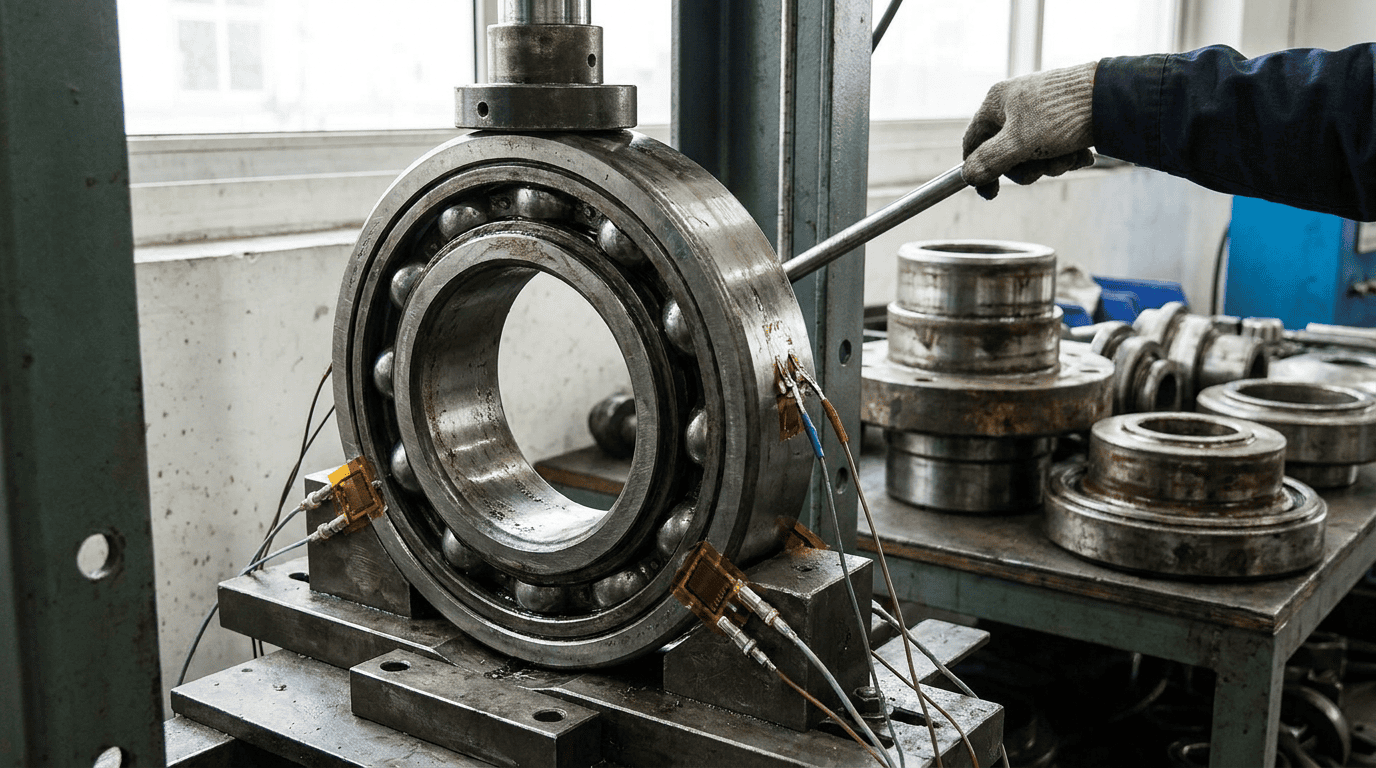
Bearing load ratings are one of the most important factors in selecting, maintaining, and troubleshooting bearings in industrial gearboxes, conveyors, mixers, crushers, pumps, and heavy rotating equipment. For maintenance managers, plant engineers, reliability engineers, mechanics, and purchasing teams, understanding these ratings helps prevent premature bearing failure, unplanned downtime, shaft damage, gear misalignment, and costly rebuilds. Load ratings are not just catalog numbers; they are engineering values tied to fatigue life, operating conditions, lubrication quality, speed, temperature, contamination, mounting accuracy, and shock loading. This guide explains what bearing load ratings mean, how they are applied, and how to use them to make better repair, replacement, and reliability decisions.
Bearing load ratings define how much load a bearing can support under specified conditions. The two most common ratings are the dynamic load rating, used to estimate bearing fatigue life while rotating, and the static load rating, used to determine resistance to permanent deformation when stationary or under slow movement. In industrial gearboxes, these ratings must be evaluated alongside radial load, axial thrust load, combined loading, speed, lubrication, temperature, contamination, alignment, vibration, and shock loads. A bearing with the correct catalog rating can still fail early if installed incorrectly, under-lubricated, overloaded, misaligned, or exposed to contamination.
For those looking to deepen their understanding of bearing load ratings and their implications in industrial applications, a related article can be found at Industrial Gearbox Repair in Portage, Michigan. This article provides insights into the importance of proper gearbox maintenance and repair, which is crucial for ensuring optimal performance and longevity of machinery that relies on bearings and load ratings.
What Bearing Load Ratings Mean
Bearing load ratings are standardized values used to compare bearings and estimate service life. They are especially important in industrial gearbox applications, where bearings support shafts, gears, couplings, and rotating elements under continuous mechanical stress.
A bearing does not simply “hold” a load until it breaks. Instead, most rolling element bearings fail gradually due to fatigue, lubrication breakdown, contamination, mounting errors, excessive heat, or improper load distribution. Load ratings help engineers predict how long a bearing should operate before fatigue damage becomes statistically likely.
Authoritative organizations and manufacturers such as SKF, Timken, and standards bodies like AGMA provide engineering guidance for bearing selection, gear drive design, lubrication, and reliability practices.
Useful references include:
- SKF bearing selection and life calculation resources: https://www.skf.com
- Timken engineering manuals and bearing application data: https://www.timken.com
- AGMA gear drive standards and technical publications: https://www.agma.org
- Noria lubrication and contamination control resources: https://www.noria.com
Dynamic Load Rating
The dynamic load rating, often represented as C, is the constant radial load a bearing can theoretically endure for a specified rating life, usually one million revolutions for rolling bearings under standard laboratory conditions.
In practical terms, dynamic load rating is used when the bearing rotates under load. It is a core input in bearing life calculations.
Common applications include:
- Gearbox input, intermediate, and output shaft bearings
- Conveyor drive bearings
- Pump and fan bearings
- Crusher and mill drive bearings
- Mixer and agitator gearbox bearings
A higher dynamic load rating typically means the bearing can support greater rotating loads or provide longer fatigue life under the same operating conditions.
Static Load Rating
The static load rating, often represented as C0, defines the load that can be applied to a stationary or very slowly rotating bearing before permanent deformation occurs at the contact points between rolling elements and raceways.
Static load ratings matter when equipment experiences:
- Heavy startup loads
- Intermittent rotation
- Shock loading
- Vibration while idle
- Slow oscillating motion
- Equipment storage with shaft loading
- High belt tension before startup
Static overloading can cause brinelling, raceway dents, and early noise or vibration once the machine begins operating.
Equivalent Bearing Load
Many industrial gearbox bearings experience both radial and axial forces. The equivalent bearing load converts these combined loads into a single theoretical load used for life calculations.
Typical load types include:
| Load Type | Description | Common Gearbox Source |
||||
| Radial load | Load perpendicular to the shaft | Gear mesh forces, belt pull, chain tension |
| Axial load | Thrust load parallel to the shaft | Helical gears, bevel gears, worm gears |
| Combined load | Radial and axial forces together | Most industrial gearboxes |
| Shock load | Sudden impact or load spike | Crushers, mixers, reversing drives |
| Moment load | Tilting or bending force | Overhung sprockets, misaligned couplings |
For gearbox applications, equivalent load calculations should account for real operating conditions, not just nameplate horsepower.
Why Bearing Load Ratings Matter in Industrial Gearboxes
Bearings are among the most failure-prone components inside industrial gearboxes. When a bearing fails, it can damage shafts, gears, seals, housings, and lubrication systems. In severe cases, a relatively inexpensive bearing failure can escalate into a complete gearbox rebuild or replacement.
For support with gearbox inspection, repair, or replacement planning, see Industrial Gearbox Solutions’ services for industrial gearbox repair, gearbox rebuilding, and emergency gearbox repair.
Impact on Reliability and Downtime
Incorrect bearing load selection can lead to:
- Unplanned shutdowns
- Repeated bearing replacements
- Gear tooth damage
- Shaft scoring or fretting
- Seal failure
- Lubricant contamination
- Excessive vibration
- Increased operating temperature
- Reduced gearbox efficiency
Reliability engineers often evaluate bearing load ratings during root cause analysis because recurring failures are frequently linked to overload, misalignment, poor lubrication, or incorrect bearing selection.
Impact on Purchasing Decisions
Purchasing professionals should avoid selecting bearings based on price alone. Two bearings may have the same dimensions but different internal geometry, cage design, material quality, clearance class, precision grade, heat treatment, and load ratings.
Important purchasing considerations include:
- OEM part number
- Bearing type and series
- Dynamic load rating
- Static load rating
- Internal clearance
- Cage material
- Sealing or shielding
- Lubrication compatibility
- Operating temperature rating
- Manufacturer traceability
- Application-specific modifications
A low-cost bearing with inadequate load capacity can increase total cost of ownership through downtime, labor, collateral damage, and expedited shipping.
Industrial gearbox bearing failure can lead to costly downtime and repairs, so it’s important to address the issue promptly. Industrial gearbox bearing failure
Common Bearing Types and Their Load Capabilities
Different bearing designs handle loads differently. Selecting the right bearing type is just as important as selecting the correct size.
Deep Groove Ball Bearings
Deep groove ball bearings are common, versatile, and cost-effective. They handle moderate radial loads and limited axial loads in both directions.
Best suited for:
- Electric motors
- Light-duty gearboxes
- Fans
- Pumps
- General rotating machinery
Limitations:
- Lower shock load capacity than roller bearings
- Limited axial capacity in heavy thrust applications
- Sensitive to misalignment
Cylindrical Roller Bearings
Cylindrical roller bearings provide high radial load capacity and are commonly used in industrial gearboxes.
Best suited for:
- Heavy radial loads
- High-speed gearbox shafts
- Applications requiring shaft thermal expansion accommodation
- Parallel shaft gear drives
Limitations:
- Limited axial load capacity unless specially designed
- Requires precise alignment
- Sensitive to edge loading if misapplied
Tapered Roller Bearings
Tapered roller bearings can handle high radial and axial loads simultaneously. They are widely used in gearboxes with helical, bevel, or heavily loaded shafts.
Best suited for:
- Combined radial and thrust loads
- Helical gearboxes
- Bevel gear drives
- Heavy-duty reducers
- Applications requiring adjustable preload
Limitations:
- Requires correct preload or endplay
- Generates heat if over-preloaded
- Installation accuracy is critical
Spherical Roller Bearings
Spherical roller bearings tolerate heavy radial loads, moderate to high axial loads, and some misalignment. They are used in demanding industrial equipment.
Best suited for:
- Crushers
- Mills
- Conveyors
- Mining gearboxes
- Heavy shock loading
- Misalignment-prone applications
Limitations:
- May require more space
- Higher cost than simpler bearings
- Lubrication and clearance selection are critical
Angular Contact Ball Bearings
Angular contact bearings support combined radial and axial loads and are often installed in pairs.
Best suited for:
- High-speed shafts
- Precision gearboxes
- Pump drives
- Applications with controlled axial positioning
Limitations:
- Directional thrust capacity
- Requires correct mounting arrangement
- Sensitive to preload errors
Understanding bearing load ratings is crucial for ensuring the longevity and efficiency of machinery. For those looking to delve deeper into related topics, you might find the article on industrial gearbox repair in Montgomery, Alabama particularly insightful, as it discusses how proper maintenance and repair can significantly impact the performance of gearboxes and bearings alike.
Causes of Bearing Overload and Premature Failure
| Bearing Type | Dynamic Load Rating (C) | Static Load Rating (Co) |
|---|---|---|
| Radial Ball Bearings | The maximum load a bearing can carry under dynamic conditions | The maximum load a bearing can carry under static conditions |
| Thrust Ball Bearings | The maximum load a bearing can carry in the axial direction under dynamic conditions | The maximum load a bearing can carry in the axial direction under static conditions |
| Roller Bearings | The maximum load a bearing can carry under dynamic conditions | The maximum load a bearing can carry under static conditions |
A bearing may be rated correctly on paper but still fail early because actual operating conditions differ from the assumptions used during selection.
Excessive Radial Load
Radial overload often occurs when external forces exceed the original design assumptions.
Common causes include:
- Over-tightened belts
- High chain tension
- Overhung loads
- Misaligned couplings
- Increased production load
- Incorrect pulley or sprocket placement
- Gear mesh problems
In gearboxes, high radial load can also result from worn gear teeth, improper backlash, shaft deflection, or distorted housings.
Excessive Axial Thrust
Axial load is especially important in helical, bevel, and worm gearboxes.
Common causes include:
- Incorrect gear geometry
- Excessive helical thrust
- Improper bearing arrangement
- Incorrect preload
- Thermal expansion constraints
- Thrust washer or spacer errors
- Reverse loading beyond design limits
When axial loads exceed the static or dynamic capacity of the bearing arrangement, symptoms often appear as high temperature, axial vibration, endplay changes, or rapid lubricant degradation.
Shock Loading and Impact
Shock loads can exceed normal operating loads by several times. Even brief overload events can damage bearing raceways.
Common sources include:
- Crushers processing tramp metal
- Mixers encountering heavy slugs
- Conveyors starting under load
- Frequent reversing
- Jammed equipment
- Emergency stops
- Torque spikes from VFD settings
- Coupling lockups
Shock loading should be considered during bearing selection and gearbox design. Service factors and application factors are commonly used in gearbox engineering to account for these conditions.
Poor Lubrication
Even a properly rated bearing will fail if lubrication is inadequate. Lubricant film separates rolling elements from raceways. When that film breaks down, metal-to-metal contact accelerates wear and fatigue.
Lubrication-related causes include:
- Wrong oil viscosity
- Low oil level
- Overfilled housing
- Grease incompatibility
- Oxidized lubricant
- Water contamination
- Particle contamination
- Incorrect relubrication interval
- Plugged oil lines
- Failed lubrication pump
Noria’s lubrication resources are especially useful for understanding oil analysis, contamination control, and lubrication best practices.
Misalignment and Improper Mounting
Misalignment changes load distribution inside the bearing. Instead of spreading load across the intended contact area, the bearing may experience edge loading.
Common mounting issues include:
- Cocked bearing installation
- Incorrect shaft fits
- Damaged housing bores
- Improper bearing heating
- Hammer impact during installation
- Incorrect use of locknuts
- Spacer stack-up errors
- Improper preload or endplay
- Soft foot or base distortion
Precision installation is critical in gearbox bearing reliability. For more information on diagnosing alignment-related gearbox problems, see gearbox failure analysis.
Symptoms of Incorrect Bearing Load Ratings or Overloaded Bearings
Bearing overload symptoms often appear gradually, but severe applications may fail suddenly.
Operational Symptoms
Watch for:
- Rising operating temperature
- Unusual rumbling, whining, clicking, or growling
- Increased vibration amplitude
- Higher motor current draw
- Reduced gearbox efficiency
- Oil foaming or darkening
- Seal leakage
- Excessive shaft movement
- Irregular gear contact patterns
- Repeated bearing failures in the same position
Inspection Findings
During teardown or borescope inspection, overloaded bearings may show:
| Symptom | Possible Meaning |
|||
| Spalling on raceways | Fatigue from excessive load or contamination |
| Brinelling | Static overload or impact |
| False brinelling | Vibration while stationary |
| Blue or straw discoloration | Excessive heat |
| Cage wear or fracture | Skewing, poor lubrication, overload |
| Smearing | Lubricant film failure or sliding |
| Flaking | Rolling contact fatigue |
| Edge wear | Misalignment or shaft deflection |
| Fretting | Loose fits or micro-movement |
| Pitting | Contamination, electrical damage, or fatigue |
Vibration and Sound Clues
Vibration analysis can identify bearing defects before catastrophic failure. Common indicators include:
- Bearing defect frequencies
- Increased high-frequency vibration
- Sidebands around gear mesh frequency
- Broadband noise increase
- Impacting or repetitive pulses
- Changes in acceleration enveloping data
Ultrasound inspection can also detect early lubrication distress and surface fatigue.
Troubleshooting Bearing Load Rating Problems
Troubleshooting should combine operating data, inspection evidence, lubrication analysis, and engineering review. Replacing a failed bearing without understanding why it failed often leads to repeat failure.
Step-by-Step Troubleshooting Process
Use this structured approach:
- Document the failed bearing location and part number.
- Record operating speed, load, temperature, and duty cycle.
- Review recent process changes or increased production demands.
- Inspect lubrication condition, viscosity, and contamination levels.
- Check shaft and housing fits.
- Measure shaft runout and endplay.
- Inspect gear tooth contact patterns.
- Review coupling alignment and base condition.
- Analyze vibration data and trend history.
- Compare actual loads to bearing dynamic and static load ratings.
- Evaluate shock loads, starts, stops, and reversing frequency.
- Confirm correct bearing type, clearance, and mounting arrangement.
Troubleshooting Table
| Problem | Likely Cause | Recommended Action |
||||
| Bearing runs hot after installation | Excessive preload, wrong clearance, poor lubrication | Verify preload/endplay, check lubricant viscosity, inspect fits |
| Repeated output shaft bearing failure | Overhung load, coupling misalignment, shock load | Check pulley/sprocket location, align coupling, review service factor |
| Axial movement or thrust failure | Incorrect bearing arrangement, excessive helical thrust | Review gear forces and thrust bearing selection |
| Spalling on one side of raceway | Misalignment or shaft deflection | Inspect housing bore, shaft straightness, gear mesh |
| Brinelling marks | Static overload or impact | Review startup loads, storage practices, shock events |
| Cage failure | Lubrication starvation, vibration, skewing | Improve lubrication delivery and inspect bearing fit |
| False brinelling | Idle vibration | Rotate standby equipment, isolate vibration, improve storage |
When to Involve a Gearbox Repair Specialist
Contact a gearbox repair specialist when:
- The same bearing fails repeatedly
- Gear tooth damage is visible
- Shaft fits are worn or undersized
- Housing bores are distorted
- Bearing temperatures exceed normal trends
- Load calculations are uncertain
- The gearbox is obsolete or critical to production
- Emergency repair is required
Industrial Gearbox Solutions can support inspection, reverse engineering, bearing upgrades, and rebuild planning through gearbox inspection services and custom gearbox repair.
Inspection Methods for Bearing Load and Condition
Effective inspection combines several methods. No single technique tells the entire story.
Visual Inspection
Visual inspection during teardown can reveal load patterns, contamination, heat damage, and mounting issues.
Inspect:
- Raceways
- Rolling elements
- Cages
- Seals
- Locknuts
- Spacers
- Shaft shoulders
- Housing bores
- Lubricant condition
- Gear contact pattern
Photograph all findings before cleaning components. Failure evidence is often removed during washing.
Dimensional Inspection
Measure critical fits and geometry:
- Shaft journal diameter
- Housing bore diameter
- Shaft runout
- Shoulder squareness
- Bearing seat roundness
- Spacer thickness
- Endplay
- Gear backlash
- Gear tooth contact
- Coupling alignment
Out-of-tolerance fits can create excessive looseness, fretting, preload changes, or uneven load distribution.
Lubricant Analysis
Oil analysis can reveal early warning signs before visible bearing damage occurs.
Key tests include:
- Particle count
- Water content
- Viscosity
- Acid number
- Ferrous wear debris
- Spectrometric metals
- Oxidation
- Additive depletion
- Patch testing
High iron, chromium, or tin may indicate bearing or gear wear. Water and particle contamination are major contributors to reduced bearing life.
Vibration Analysis
Vibration monitoring is one of the most effective predictive maintenance tools for loaded bearings.
Useful measurements include:
- Overall vibration velocity
- Acceleration
- Enveloped acceleration
- Time waveform
- Fast Fourier Transform analysis
- Bearing fault frequency identification
- Gear mesh frequency tracking
Trend changes are often more valuable than one-time readings. Establish baseline vibration signatures after rebuilds or new installations.
Thermography
Infrared thermography can identify hot bearings, lubrication starvation, misalignment, or excessive preload. However, surface temperature readings should be interpreted with caution because housing temperature may not equal internal bearing temperature.
Prevention and Maintenance Best Practices
Preventing bearing load-related failure requires correct selection, installation, lubrication, and monitoring.
Bearing Selection Best Practices
When selecting bearings, verify:
- Dynamic load rating
- Static load rating
- Equivalent radial and axial load
- Operating speed
- Lubricant type
- Temperature range
- Internal clearance
- Mounting arrangement
- Shock load factor
- Desired L10 life
- Environmental contamination
- Shaft and housing fits
- Manufacturer recommendations
Do not assume that the same bearing size always provides the same performance across manufacturers or series.
Installation Best Practices
Proper installation can dramatically improve bearing life.
Recommended practices:
- Use clean tools and clean work areas.
- Heat bearings with induction heaters when appropriate.
- Never apply force through rolling elements.
- Verify shaft and housing dimensions.
- Use correct mounting sleeves and locknuts.
- Follow torque specifications.
- Confirm preload or endplay.
- Protect bearings from contamination.
- Use proper lifting and handling methods.
- Document installation measurements.
Lubrication Best Practices
Lubrication should be matched to the bearing, speed, load, temperature, and gearbox design.
Best practices include:
- Use the correct viscosity grade.
- Maintain proper oil level.
- Use compatible grease when applicable.
- Filter oil during filling.
- Control water ingress.
- Use desiccant breathers where appropriate.
- Sample oil routinely.
- Avoid over-greasing.
- Monitor lubricant temperature.
- Follow OEM and lubricant supplier recommendations.
For lubrication strategy support, review Noria’s guidance at https://www.noria.com and consult gearbox OEM documentation.
Storage and Handling Best Practices
Bearings can be damaged before installation.
Prevent storage-related issues by:
- Keeping bearings in original packaging
- Storing in clean, dry areas
- Avoiding vibration exposure
- Rotating shafts periodically in stored gearboxes
- Preventing corrosion
- Maintaining temperature stability
- Avoiding direct floor storage
- Using first-in, first-out inventory control
False brinelling can occur when stored equipment is exposed to vibration while stationary.
Repair vs. Replacement: How Load Ratings Influence the Decision
When a bearing fails, the decision is not only whether to replace the bearing. The larger question is whether the gearbox can be restored reliably without design or application changes.
When Bearing Replacement May Be Enough
Bearing replacement may be appropriate when:
- Failure was caused by lubricant contamination that has been corrected
- Shaft and housing fits are within tolerance
- Gear teeth are undamaged
- Load conditions have not changed
- The correct bearing was originally installed
- No repeat failure history exists
- Endplay and preload can be restored properly
Even in these cases, the root cause should be documented.
When Gearbox Repair Is Recommended
A broader gearbox repair may be necessary when:
- Shaft journals are worn
- Housing bores are oversized or out-of-round
- Gears show pitting, scoring, or abnormal contact
- Seals have failed repeatedly
- Debris has circulated through the gearbox
- Bearing seats have fretting damage
- Alignment cannot be maintained
- Oil passages are clogged
- The gearbox has recurring failures
Professional repair may include machining, sleeving, metalizing, re-boring, gear replacement, bearing upgrade, seal improvement, and lubrication system correction.
When Replacement or Redesign Makes Sense
Complete gearbox replacement or redesign may be justified when:
- Actual loads exceed the original gearbox rating
- Production demands have increased significantly
- The gearbox is obsolete and parts are unavailable
- The housing is cracked or severely distorted
- Rebuild cost approaches replacement cost
- Repeated failures create unacceptable downtime
- A higher service factor is required
- Safety or regulatory risk is elevated
Purchasing teams should compare total lifecycle cost, lead time, reliability risk, and availability of spare parts before deciding.
Bearing Life Calculations and Practical Limitations
Bearing life calculations are useful, but they are only as accurate as the assumptions behind them.
L10 Bearing Life
L10 life is the estimated life at which 90% of a group of identical bearings operating under identical conditions are expected to survive without fatigue failure. It does not guarantee that every bearing will last that long.
Factors that affect actual life include:
- Load variation
- Lubricant cleanliness
- Viscosity ratio
- Operating temperature
- Contamination
- Material quality
- Installation accuracy
- Misalignment
- Shock loading
- Electrical current passage
- Maintenance quality
Why Catalog Ratings Are Not Enough
Catalog ratings are based on standardized test conditions. Industrial gearboxes rarely operate under perfect lab conditions. A bearing with adequate catalog load capacity may still fail if exposed to dirty oil, misalignment, heat, or shock.
Practical engineering must consider:
- Real-world duty cycle
- Start-stop frequency
- Peak torque
- Process upsets
- Environmental contamination
- Maintenance intervals
- Lubricant degradation
- Operator practices
- Coupling and foundation condition
Safety Factors and Application Factors
AGMA and gearbox manufacturers use service factors to account for application severity. A lightly loaded fan drive has very different bearing demands than a rock crusher, steel mill conveyor, or reversing mixer.
Typical severity factors include:
| Application Condition | Bearing Risk Level |
|||
| Smooth, continuous load | Low |
| Moderate load variation | Medium |
| Frequent starts and stops | Medium to high |
| Shock loading | High |
| Reversing loads | High |
| Contaminated environment | High |
| High temperature | High |
| Poor lubrication access | High |
Key Takeaways
- Bearing load ratings help determine whether a bearing can support expected rotating and stationary loads.
- Dynamic load rating applies to rotating fatigue life, while static load rating relates to permanent deformation under stationary or slow loading.
- Industrial gearbox bearings often experience combined radial, axial, shock, and moment loads.
- A correctly rated bearing can still fail from poor lubrication, contamination, misalignment, improper mounting, or unexpected process loads.
- Repeated bearing failures should trigger root cause analysis, not just another replacement.
- Vibration analysis, oil analysis, thermography, visual inspection, and dimensional checks provide the best reliability picture.
- Purchasing decisions should consider bearing quality, rating, clearance, fit, and application requirements, not just price.
- Repair vs. replacement decisions should include gearbox condition, load requirements, downtime risk, and lifecycle cost.
Frequently Asked Questions
What is the difference between dynamic and static bearing load rating?
Dynamic load rating estimates a bearing’s ability to operate under rotating load for a defined fatigue life. Static load rating estimates the load a stationary or slowly moving bearing can withstand before permanent deformation occurs.
Can I replace a bearing with another bearing of the same dimensions?
Not always. Bearings with the same bore, outside diameter, and width may have different load ratings, internal clearances, cage designs, precision grades, and material quality. Always verify the full specification.
Why do gearbox bearings fail even when the load rating looks correct?
Common reasons include contamination, low oil level, wrong viscosity, misalignment, excessive preload, shock loading, shaft deflection, worn housings, poor installation, and operating conditions that exceed the original design assumptions.
How do I know if a bearing is overloaded?
Signs include high temperature, increased vibration, abnormal noise, raceway spalling, brinelling, cage damage, axial movement, and repeated failures in the same gearbox location. Load calculations and inspection evidence should be reviewed together.
Are higher load-rated bearings always better?
No. A higher-rated bearing may have different internal geometry, speed limits, clearance requirements, or mounting needs. The best bearing is the one matched to the application’s load, speed, lubrication, temperature, and fit requirements.
What role does lubrication play in bearing load capacity?
Lubrication creates a protective film between rolling elements and raceways. Poor lubrication reduces effective bearing life and can cause wear, heat, smearing, scoring, and premature fatigue even if the bearing’s load rating is adequate.
When should I upgrade gearbox bearings?
Consider an upgrade when operating loads have increased, failures are recurring, shock loads are severe, lubrication has been improved but failures continue, or engineering analysis shows the current bearing is undersized.
Who should perform bearing failure analysis?
Maintenance teams can perform initial inspections, but recurring or critical failures should be reviewed by experienced gearbox repair specialists, bearing manufacturers, or reliability engineers with access to vibration, oil analysis, and dimensional inspection data.
Suggested Branded Images
Image 1: Bearing Load Diagram for Industrial Gearboxes
Alt text: Bearing load ratings diagram showing radial load, axial load, and combined load on an industrial gearbox shaft
Caption: Understanding radial, axial, and combined loads is essential for proper gearbox bearing selection.
Image 2: Failed Gearbox Bearing Inspection
Alt text: Industrial gearbox bearing with raceway spalling caused by overload and lubrication distress
Caption: Bearing raceway damage can reveal overload, contamination, misalignment, or lubrication failure.
Image 3: Technician Measuring Gearbox Shaft Journal
Alt text: Maintenance technician using a micrometer to inspect gearbox shaft bearing fit
Caption: Dimensional inspection helps confirm whether shaft and housing fits can support reliable bearing operation.
Image 4: Oil Sampling from Industrial Gearbox
Alt text: Reliability technician collecting oil sample from industrial gearbox for lubricant analysis
Caption: Routine oil analysis can detect contamination and wear particles before bearing failure becomes catastrophic.
Image 5: Rebuilt Industrial Gearbox with New Bearings
Alt text: Rebuilt industrial gearbox with upgraded bearings and inspected gear components
Caption: Proper bearing selection, installation, and lubrication improve gearbox reliability after rebuild.
SEO Metadata
Meta title: Demystifying Bearing Load Ratings for Industrial Gearboxes
Meta description: Learn how bearing load ratings affect gearbox reliability, bearing selection, troubleshooting, inspection, lubrication, repair vs. replacement, and maintenance planning.
Suggested URL slug: demystifying-bearing-load-ratings
Primary keyword: bearing load ratings
Secondary keywords:
- dynamic load rating
- static load rating
- gearbox bearing failure
- industrial gearbox bearings
- bearing troubleshooting
- bearing load capacity
- bearing life calculation
- gearbox repair
- bearing inspection
- bearing maintenance
Search intent: Informational and commercial investigation for maintenance, engineering, reliability, and purchasing professionals evaluating bearing performance in industrial gearboxes.
Recommended internal links:
- Industrial Gearbox Repair
- Gearbox Rebuilding
- Emergency Gearbox Repair
- Gearbox Failure Analysis
- Gearbox Inspection
- Custom Gearbox Repair
Recommended external references:
- SKF: https://www.skf.com
- Timken: https://www.timken.com
- AGMA: https://www.agma.org
- Noria: https://www.noria.com
Conclusion
Bearing load ratings are essential for selecting the right bearing, diagnosing gearbox problems, and preventing premature equipment failure. However, dynamic and static ratings are only part of the reliability equation. Real-world gearbox performance depends on accurate load evaluation, proper installation, clean and correctly selected lubrication, alignment, contamination control, vibration monitoring, and disciplined maintenance practices.
For maintenance managers, plant engineers, reliability professionals, mechanics, and purchasing teams, the best results come from combining engineering data with field inspection and failure analysis. If a gearbox bearing has failed repeatedly, runs hot, vibrates excessively, or shows signs of overload, do not rely on replacement alone. Investigate the root cause, verify the bearing selection, and evaluate the entire gearbox system.
Industrial Gearbox Solutions can help inspect, repair, rebuild, and improve industrial gearboxes so your facility can reduce downtime and extend equipment life.
FAQs
What are bearing load ratings?
Bearing load ratings are measurements used to determine the maximum load a bearing can withstand before it deforms or fails. These ratings are crucial for selecting the right bearing for a specific application.
What are the different types of bearing load ratings?
There are two main types of bearing load ratings: dynamic load rating and static load rating. The dynamic load rating is the maximum load a bearing can handle while rotating at a constant speed, while the static load rating is the maximum load a bearing can handle when stationary.
How are bearing load ratings calculated?
Bearing load ratings are calculated using standardized testing procedures that involve applying loads to the bearing and measuring its performance under various conditions. These calculations take into account factors such as material strength, geometry, and lubrication.
Why are bearing load ratings important?
Bearing load ratings are important because they help ensure the safety and reliability of machinery and equipment. By selecting bearings with appropriate load ratings, the risk of premature failure and downtime can be minimized.
How can bearing load ratings be used in practical applications?
When selecting bearings for a specific application, engineers and designers can use load ratings to determine the appropriate size and type of bearing to use based on the expected loads and operating conditions. This helps optimize the performance and longevity of the equipment.