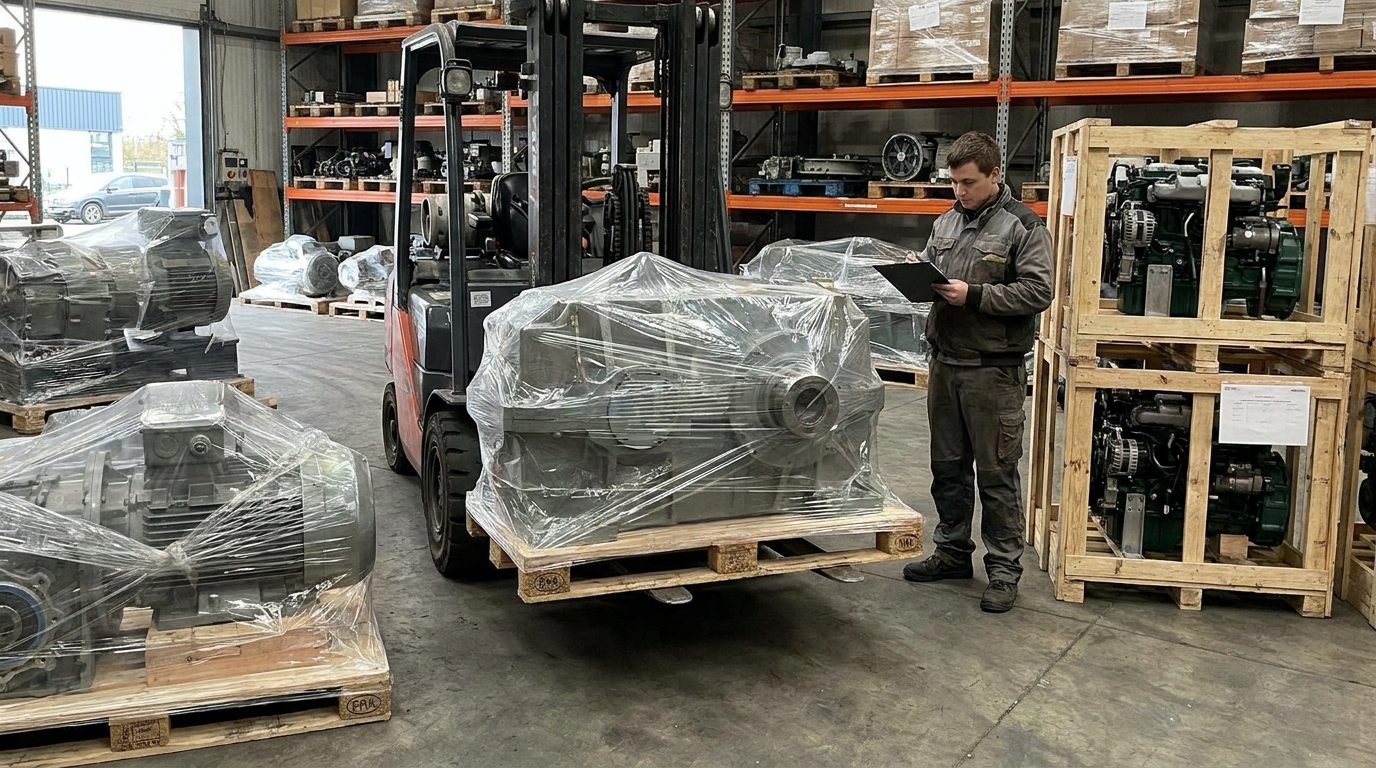
Industrial gearbox lead times can make or break a maintenance plan, capital project, or emergency repair. When a reducer fails unexpectedly or an OEM build is waiting on a custom gearbox, every day of delay can affect production schedules, labor planning, spare parts budgets, and customer commitments.
For maintenance professionals, engineers, plant managers, OEMs, and industrial buyers, understanding what drives industrial gearbox lead times is essential. Some gearboxes can ship from stock in days, while engineered replacements, drop-in reducers, or custom-built units may require weeks or months depending on design complexity, materials, machining capacity, testing requirements, and supply chain conditions.
This guide explains how industrial gearbox lead times are determined, why they vary, how to reduce delays, and what information suppliers need to quote and deliver the right gearbox as quickly as possible.
If you are trying to replace a failed reducer, cross-reference an obsolete model, or determine whether a gearbox can be repaired instead of replaced, Industrial Gearbox Solutions can help. Providing clear nameplate data, photos, dimensions, and application details can significantly speed up the quoting and sourcing process.
Use the form below to request assistance with gearbox identification, replacement options, lead time estimates, or emergency support.
In the context of understanding industrial gearbox lead times, it is also essential to consider the importance of maintenance and repair services to ensure optimal performance and longevity of gearboxes. For insights into effective repair solutions, you can refer to the article on industrial gearbox repair in Meridian, Idaho, which discusses various aspects of maintenance and the impact it has on lead times. For more information, visit Industrial Gearbox Repair in Meridian, Idaho.
What Are Industrial Gearbox Lead Times?
Industrial gearbox lead times refer to the amount of time required between placing an order and receiving the finished gearbox, reducer, gear drive, or replacement assembly. This timeline may include engineering review, material procurement, machining, assembly, inspection, testing, painting, packaging, and shipping.
Lead time is not simply the time it takes to put a gearbox in a crate. It reflects the entire process of confirming that the selected unit will fit the application, perform reliably, and meet operational requirements.
Typical Lead Time Ranges
Lead times vary widely depending on whether the gearbox is standard, modified, custom, or obsolete.
| Gearbox Type | Typical Lead Time | Common Situation |
||:||
| Stock standard reducer | 1–10 business days | Common ratios, sizes, and mounting styles |
| Modified standard gearbox | 2–6 weeks | Shaft changes, special seals, paint, or accessories |
| Drop-in replacement gearbox | 4–12 weeks | Matched dimensions for existing equipment |
| Custom-engineered gearbox | 10–24+ weeks | Unique torque, speed, mounting, or duty requirements |
| Large mill or heavy-duty gearbox | 16–40+ weeks | Large castings, forgings, and extensive testing |
| Gearbox repair or rebuild | 1–10+ weeks | Depends on damage, parts availability, and machining |
These ranges are general guidelines. Actual industrial gearbox lead times depend on supplier backlog, component availability, complexity, and whether emergency service is available.
Why Lead Times Matter
Gearboxes are critical components in industries such as mining, food processing, power generation, pulp and paper, wastewater treatment, steel, cement, packaging, and material handling. A delayed gearbox can result in:
- Extended equipment downtime
- Lost production revenue
- Expedited freight costs
- Overtime labor expenses
- Missed project deadlines
- Temporary rental equipment needs
- Increased risk of secondary equipment damage
For this reason, lead time should be evaluated alongside price, quality, warranty, and technical fit.
Key Factors That Affect Industrial Gearbox Lead Times
No two gearbox requirements are exactly the same. Even when two units look similar externally, internal gearing, shaft arrangements, materials, and application demands can create very different production schedules.
Gearbox Availability and Stock Status
The fastest lead times usually apply to gearboxes that are already in stock. Standard worm reducers, helical gearboxes, bevel gear drives, and shaft-mounted reducers may be available from inventory if they are common sizes and ratios.
However, stock availability changes quickly. A unit that is available today may be sold tomorrow, especially during seasonal shutdowns, plant outages, or industry-wide supply shortages.
Common stock variables include:
- Gear ratio
- Input and output shaft size
- Mounting configuration
- Motor frame size
- Housing style
- Service factor
- Lubrication type
- Seal material
- Backstop or brake requirements
A standard gearbox with a non-standard shaft or mounting arrangement may no longer qualify as a stock item.
Customization Requirements
Customization is one of the biggest drivers of longer industrial gearbox lead times. Many industrial applications require gearboxes with specific physical or performance characteristics.
Examples of gearbox customization include:
- Custom output shafts
- Double extended shafts
- Vertical or horizontal mounting modifications
- Special bore sizes
- Food-grade coatings
- Stainless steel housings
- High-temperature seals
- Explosion-proof motor adapters
- Custom baseplates
- Special lubrication systems
- Non-standard gear ratios
- Drop-in footprint matching
Even minor modifications can add days or weeks if new drawings, machining, or inspection steps are required.
Material Availability
Gearboxes often require cast iron, ductile iron, steel forgings, bronze components, bearings, seals, shafts, and precision-machined gears. If any of these materials or components are delayed, the entire gearbox lead time can increase.
Large gearboxes are especially sensitive to casting and forging availability. Heavy-duty housings, bull gears, pinions, and shafts may need to be manufactured from scratch, inspected, heat treated, and finish machined.
Engineering Review and Application Verification
For critical equipment, a reputable supplier will not simply match a model number and ship a gearbox without reviewing the application. Engineering review helps confirm that the gearbox can handle the required torque, speed, duty cycle, environment, and mounting loads.
This process can include:
- Horsepower verification
- Output torque calculations
- Service factor review
- Overhung load analysis
- Thermal capacity review
- Ratio confirmation
- Shaft orientation review
- Lubrication and mounting position verification
- Compatibility with existing motor or driven equipment
Engineering review may add time upfront, but it helps prevent costly failures later.
Manufacturing Capacity and Supplier Backlog
Industrial gearbox manufacturers and repair shops operate with finite machining, assembly, and testing capacity. During busy periods, even standard production work may face longer queues.
Backlogs can be influenced by:
- Major plant outage seasons
- Increased demand in mining, energy, or infrastructure
- Labor shortages
- Machine shop capacity
- Foundry delays
- Global supply chain disruptions
- Large OEM project orders
When requesting a quote, always ask whether the lead time is based on current production capacity or only estimated availability.
Check out our latest posts at https://industrialgearboxsolutions.com/blog/ for valuable industry insights.
Standard vs. Custom Gearbox Lead Times
Understanding the difference between standard, modified, and fully custom units helps buyers set realistic expectations.
Standard Gearboxes
Standard gearboxes are catalog units built in common configurations. They are typically available faster because manufacturers produce them regularly and may keep inventory on the shelf.
Examples include:
- Inline helical reducers
- Right-angle bevel gearboxes
- Worm gear reducers
- Shaft-mounted reducers
- Parallel shaft reducers
- Planetary gearboxes in standard ratios
Standard units are often the best choice when footprint, shaft size, and mounting requirements are flexible.
Modified Standard Gearboxes
A modified standard gearbox starts with a catalog design but includes changes to meet application needs. These units often provide a balance between speed, cost, and fit.
Common modifications include:
- Special output bore
- Non-standard seals
- Different mounting base
- Added backstop
- Special paint system
- Modified motor adapter
- High-temperature lubricant
- Custom shaft extension
Modified standard reducers usually have shorter lead times than fully custom gearboxes, but longer lead times than stock units.
Drop-In Replacement Gearboxes
A drop-in replacement gearbox is designed to fit existing equipment with little or no modification. It is especially useful when the original gearbox is obsolete, no longer supported, or too expensive to source from the original manufacturer.
Drop-in replacements may match:
- Shaft centerline height
- Bolt hole pattern
- Input and output shaft locations
- Shaft diameters and keyways
- Overall envelope dimensions
- Ratio and speed requirements
- Torque rating
- Mounting orientation
Drop-in gearbox lead times vary depending on how closely an existing standard model can be adapted. If new engineering drawings and custom machining are required, lead times can increase.
Fully Custom Gearboxes
Fully custom industrial gearboxes are engineered for applications where no standard design is suitable. These units may be required for high torque, unusual speeds, harsh environments, space constraints, or specialized machinery.
Custom units often require:
- Detailed engineering calculations
- New drawings and approval cycles
- Finite element analysis or advanced modeling
- Custom gears and shafts
- Special housings or fabricated cases
- Heat treatment
- Precision machining
- Load testing or witness testing
- Documentation packages
Because every step may be unique, custom gearbox lead times are typically the longest.
Understanding the complexities of industrial gearbox lead times can be crucial for businesses relying on timely repairs and replacements. For those interested in exploring the intricacies of gearbox repair services, a related article on industrial gearbox repair in Hilo, Hawaii provides valuable insights into the factors affecting turnaround times. You can read more about it here. This information can help companies make informed decisions when planning their maintenance schedules.
Common Causes of Gearbox Lead Time Delays
Lead time delays often occur when technical details are missing, specifications change midstream, or critical components are unavailable. Many delays can be prevented with better planning and communication.
Missing Nameplate Information
Nameplate data is one of the fastest ways to identify an existing gearbox. Unfortunately, plates are often painted over, damaged, corroded, or missing entirely.
Useful nameplate information includes:
- Manufacturer
- Model number
- Serial number
- Ratio
- Input speed
- Output speed
- Horsepower rating
- Service factor
- Lubrication details
- Mounting position
If the nameplate is unreadable, photos and measurements become even more important.
Incomplete Dimensional Data
When replacing a gearbox, dimensional accuracy is critical. A gearbox may have the correct ratio and torque rating but still fail to fit the machine if shaft height, bolt pattern, or coupling location is wrong.
Key dimensions include:
- Shaft diameters
- Shaft lengths
- Keyway sizes
- Distance between shaft centers
- Base mounting hole pattern
- Overall length, width, and height
- Centerline height
- Input and output orientation
- Coupling or pulley location
- Clearance around the housing
Providing a sketch, drawing, or photos with a tape measure can reduce back-and-forth communication.
Application Changes After Quoting
Lead times can change if the scope changes after the quote is issued. For example, adding a backstop, changing the ratio, requiring special coatings, or switching the mounting orientation may require re-engineering.
To avoid delays, confirm the following before ordering:
- Actual motor horsepower and speed
- Required output RPM
- Load type and shock conditions
- Operating hours per day
- Ambient temperature
- Mounting position
- Lubrication preference
- Environmental exposure
- Required delivery date
Clear upfront requirements help suppliers quote accurately.
Bearing, Seal, and Gear Component Shortages
Even when a gearbox housing is available, internal components may create delays. Bearings, seals, gears, shafts, and lubrication accessories may have independent lead times.
This is especially true for:
- Large spherical roller bearings
- Specialty seals
- Imported bearings
- Stainless steel shafts
- Hardened and ground gears
- Custom pinions
- Mechanical backstops
- Cooling coils or lubrication pumps
A supplier may be able to offer alternate components, but engineering approval is often required.
Approval Drawing Delays
For custom and drop-in gearboxes, approval drawings are often required before manufacturing begins. If drawing reviews are delayed, the production clock may not start.
Best practice is to assign a technical decision-maker before ordering. This person should be able to review and approve:
- Dimensions
- Shaft details
- Mounting arrangements
- Rotation direction
- Lubrication ports
- Accessories
- Paint and coating requirements
Fast approval can save days or weeks.
How to Reduce Industrial Gearbox Lead Times
While some factors are outside your control, buyers and maintenance teams can take practical steps to shorten industrial gearbox lead times.
Provide Complete Technical Information Early
The more complete your request, the faster a supplier can respond. A strong gearbox inquiry should include both technical and operational details.
Recommended information to provide:
- Manufacturer and model number
- Serial number, if available
- Gear ratio or output speed
- Motor horsepower and input RPM
- Service factor, if known
- Mounting position
- Shaft dimensions and orientation
- Photos of all sides of the gearbox
- Photos of the nameplate
- Application description
- Operating schedule
- Environment, temperature, and washdown exposure
- Required delivery date
- Failure symptoms, if replacing a failed unit
A complete inquiry reduces the need for multiple clarification emails.
Consider Repair, Rebuild, or Exchange Options
A new gearbox is not always the fastest solution. Depending on the condition of the existing unit, repair or rebuild may offer a shorter lead time.
Repair options may include:
- Bearing replacement
- Seal replacement
- Gear and pinion replacement
- Shaft repair or replacement
- Housing repair
- Re-machining fits
- Reconditioning lubrication systems
- Complete teardown and inspection
In some cases, a gearbox repair shop can rebuild an existing reducer faster than a manufacturer can deliver a new one. However, the final lead time depends on damage severity and part availability.
Use Standard Units Where Possible
If your system allows flexibility, selecting a standard gearbox can dramatically reduce lead time. Engineers can sometimes adapt the surrounding equipment with minor changes to accommodate a standard reducer.
For example, it may be faster to modify a baseplate or coupling guard than to wait several months for a custom gearbox with an exact obsolete footprint.
Potential adaptations include:
- Changing a coupling hub
- Using an adapter plate
- Modifying mounting holes
- Adjusting motor position
- Replacing a belt pulley
- Changing shaft connection hardware
This approach requires engineering review but can reduce downtime.
Pre-Plan Critical Spares
The best way to avoid emergency lead time problems is to identify critical gearboxes before they fail. Plants should maintain a critical spare strategy for equipment that would stop production if a gearbox failed.
A critical spare review should evaluate:
- Production impact of failure
- Current gearbox condition
- Replacement availability
- Repair feasibility
- Historical failure rate
- Installation complexity
- Cost of downtime
- Storage requirements
For high-risk gearboxes, keeping a spare unit on-site may be far less expensive than waiting weeks during an outage.
Request Multiple Lead Time Options
Suppliers may be able to offer different lead time options depending on budget and urgency.
Examples include:
- Standard production lead time
- Expedited assembly
- Premium freight
- Alternate brand cross-reference
- Modified stock unit
- Repair instead of replacement
- Temporary replacement unit
- Emergency machining
Ask your supplier to separate standard, expedited, and emergency options so you can make an informed decision.
Industrial Gearbox Lead Times by Industry and Application
Different industries experience different gearbox lead time pressures. A gearbox for a conveyor may be easier to replace than one for a kiln, mill, mixer, or crane.
Mining and Aggregate
Mining gearboxes often operate under heavy shock loads, abrasive dust, outdoor exposure, and continuous duty. Crushers, conveyors, feeders, and mills may require rugged gear drives with high service factors.
Lead time challenges in mining include:
- Large shaft-mounted reducers
- Severe-duty sealing requirements
- High torque ratings
- Remote installation sites
- Heavy freight logistics
- Urgent downtime costs
Planning spare reducers for critical conveyors can reduce major production interruptions.
Food and Beverage Processing
Food processing facilities often require washdown-rated gearboxes, stainless steel housings, food-grade lubricants, and corrosion-resistant coatings.
Lead time considerations include:
- Sanitary design requirements
- USDA or FDA-related lubricant needs
- Stainless steel availability
- Special seals
- Frequent cleaning exposure
- Production line scheduling
A standard painted gearbox may be available quickly, but a stainless or washdown-duty version may take longer.
Wastewater Treatment
Wastewater treatment plants use gearboxes on clarifiers, aerators, mixers, screw pumps, and sludge handling equipment. Many of these units operate continuously and may be exposed to moisture, chemicals, and outdoor conditions.
Lead time challenges include:
- Aging infrastructure
- Obsolete gearbox models
- Large slow-speed drives
- Corrosion-related damage
- Custom mounting arrangements
Because many wastewater gearboxes are older, reverse engineering may be required when original drawings are unavailable.
Steel, Cement, and Heavy Processing
Steel mills, cement plants, and heavy processing facilities often use large, high-torque gearboxes with long manufacturing cycles. These may include mill drives, kiln drives, cooling bed drives, and rolling equipment reducers.
Longer lead times are common due to:
- Large cast housings
- Heavy-duty gears
- Custom bearings
- Heat treatment requirements
- Extensive testing
- Complex lubrication systems
For these applications, proactive maintenance and condition monitoring are especially important.
OEM Machinery Builders
OEMs must manage gearbox lead times as part of their own production schedules. A delayed gearbox can affect machine delivery, customer acceptance, and final commissioning.
OEM buyers should confirm:
- Production availability
- Forecast requirements
- Blanket order options
- Engineering documentation
- Repeatability of supply
- Approved alternates
- Standardization across machine models
Standardizing gearbox families across multiple machine designs can improve purchasing leverage and reduce lead time risk.
Emergency Gearbox Replacement: What to Do First
When a gearbox fails unexpectedly, the first few hours matter. A structured response can reduce downtime and help suppliers determine the fastest solution.
Step 1: Document the Failed Gearbox
Before removing the gearbox, collect as much information as possible.
Take photos of:
- Nameplate
- Input side
- Output side
- Mounting base
- Shaft connections
- Lubrication ports
- Motor adapter
- Coupling arrangement
- Any visible damage
If possible, measure shaft dimensions and mounting holes before the unit is disassembled.
Step 2: Identify the Failure Mode
Understanding the failure can help determine whether repair or replacement is best.
Common gearbox failure symptoms include:
- Excessive vibration
- Overheating
- Oil leakage
- Bearing noise
- Broken gear teeth
- Shaft movement
- Contaminated oil
- Loss of output torque
- Metal particles in lubricant
If the gearbox failed due to overload, misalignment, lubrication failure, or contamination, simply installing a new unit may not solve the root problem.
Step 3: Determine Whether the Unit Is Repairable
A gearbox repair evaluation may reveal that the housing, shafts, or gears can be salvaged. If so, rebuilding may be faster than sourcing a new custom unit.
However, replacement may be better if:
- The housing is cracked beyond repair
- Critical gears are destroyed
- The unit is undersized for the application
- The gearbox is obsolete and repeatedly failing
- Repair cost approaches replacement cost
- Lead time for repair parts is too long
A qualified gearbox supplier can help compare options.
Step 4: Ask for a Cross-Reference
If the original gearbox manufacturer no longer supports the model, a cross-reference may identify a compatible replacement from another brand.
A successful cross-reference requires:
- Ratio match
- Torque capacity match
- Shaft size compatibility
- Mounting compatibility
- Rotation direction verification
- Service factor review
- Application suitability
Avoid selecting a replacement based only on horsepower. Torque, speed, service factor, and mounting loads are equally important.
How Suppliers Estimate Gearbox Lead Times
Industrial gearbox suppliers estimate lead times by reviewing technical requirements, inventory, manufacturing steps, and shipping logistics. Understanding this process helps buyers interpret quotes more accurately.
Inventory Check
The supplier first determines whether the gearbox or a close equivalent is available from stock. This may involve checking multiple warehouses, factory inventory, or distribution partners.
If a unit is available, the quoted lead time may depend mostly on:
- Order processing
- Inspection
- Configuration verification
- Painting or lubrication changes
- Packaging
- Freight scheduling
Engineering and Configuration Review
If the gearbox is not a direct stock match, engineering may review whether a standard unit can be modified. This stage determines whether the lead time is closer to a stock shipment or a custom build.
Engineering may evaluate:
- Gear rating
- Shaft loads
- Thermal limits
- Housing configuration
- Mounting constraints
- Lubrication method
- Accessory compatibility
The more complex the review, the more important it is to provide accurate application details.
Component Procurement
If components are not in stock, the supplier must source or manufacture them. Long-lead components often define the overall delivery schedule.
Examples include:
- Gear blanks
- Forged shafts
- Bearings
- Seals
- Cast housings
- Couplings
- Backstops
- Lubrication pumps
- Cooling systems
A single delayed component can affect the full assembly date.
Assembly, Inspection, and Testing
After components are available, the gearbox must be assembled and inspected. Depending on size and specification, testing may include:
- Backlash inspection
- Contact pattern verification
- Shaft runout inspection
- No-load run testing
- Leak testing
- Temperature monitoring
- Vibration testing
- Noise inspection
- Documentation review
For critical gearboxes, customers may require witness testing, certified inspection reports, or special documentation, which can add lead time.
Freight and Logistics
Large industrial gearboxes require careful shipping planning. Freight lead time depends on weight, dimensions, destination, carrier availability, and whether special handling is needed.
Logistics considerations include:
- LTL or full truckload freight
- Flatbed transport
- Oversized load permits
- Export documentation
- Crating requirements
- Moisture protection
- Delivery appointment scheduling
- Jobsite unloading equipment
For urgent projects, expedited freight may reduce transit time but increase cost.
Questions to Ask Before Ordering an Industrial Gearbox
A well-structured purchasing process helps avoid surprises. Before placing an order, ask clear questions about lead time, scope, and technical assumptions.
Lead Time and Availability Questions
Ask your supplier:
- Is the quoted gearbox in stock?
- Is the lead time guaranteed or estimated?
- When does the lead time begin?
- Are approval drawings required before production?
- Are any components currently on backorder?
- Is expedited service available?
- What shipping method is included?
- Can the unit ship partial or pre-configured?
- What could cause the lead time to change?
These questions help clarify whether the delivery date is realistic.
Technical Fit Questions
Confirm the replacement will meet your application requirements.
Important questions include:
- Does the gearbox match the required ratio?
- Is the torque rating sufficient?
- What service factor is applied?
- Is the mounting position correct?
- Are shaft dimensions confirmed?
- Is the rotation direction correct?
- Is the unit suitable for the environment?
- What lubrication is required?
- Are thermal limits acceptable?
- Are there any installation restrictions?
A fast delivery is not valuable if the gearbox does not fit or fails prematurely.
Documentation and Warranty Questions
For industrial buyers and OEMs, documentation can be just as important as hardware.
Ask about:
- Warranty period
- Installation instructions
- Lubrication manual
- Dimensional drawings
- Test reports
- Material certifications
- Paint specifications
- Spare parts list
- Maintenance recommendations
Documentation requirements should be specified early to avoid shipment delays.
Planning Ahead: Building a Gearbox Lead Time Strategy
Reducing downtime risk requires more than reacting to failures. Plants and OEMs should build a proactive gearbox lead time strategy that combines asset data, spare planning, and supplier relationships.
Create a Gearbox Asset List
A gearbox asset list gives maintenance and purchasing teams a central source of information. It should include every critical reducer in the facility.
Recommended fields include:
| Asset Data | Why It Matters |
|||
| Equipment location | Helps identify production impact |
| Gearbox manufacturer | Speeds sourcing and support |
| Model and serial number | Enables accurate identification |
| Ratio and horsepower | Supports replacement selection |
| Shaft dimensions | Helps verify fit |
| Mounting orientation | Prevents installation errors |
| Lubrication type | Supports maintenance planning |
| Spare availability | Identifies risk |
| Last rebuild date | Tracks lifecycle |
| Condition notes | Prioritizes inspections |
This information can save valuable time during emergencies.
Rank Gearboxes by Criticality
Not every gearbox requires an on-site spare. Criticality ranking helps prioritize spending.
Consider ranking gearboxes based on:
- Production impact
- Safety impact
- Environmental impact
- Replacement lead time
- Repair complexity
- Failure history
- Redundancy
- Accessibility
- Cost of downtime
A gearbox with a 20-week replacement lead time and no process redundancy may justify a spare even if it is expensive.
Standardize Where Practical
Standardization reduces inventory complexity and improves sourcing options. Plants with many different gearbox brands, ratios, and configurations may face longer lead times and higher spare parts costs.
Standardization opportunities include:
- Using common reducer families
- Aligning motor frame sizes
- Reducing ratio variation
- Standardizing lubrication types
- Selecting common shaft sizes
- Consolidating approved suppliers
OEMs can also benefit by designing equipment around readily available gearbox platforms.
Build Relationships with Gearbox Specialists
Working with a knowledgeable gearbox supplier before an emergency can reduce response time when problems occur. A specialist who already understands your equipment, industry, and preferred brands can move faster when a replacement is needed.
Strong supplier relationships may provide access to:
- Faster cross-referencing
- Emergency repair support
- Stock recommendations
- Drop-in replacement design
- Alternate sourcing options
- Preventive maintenance guidance
- Failure analysis support
For critical applications, supplier responsiveness can be as important as price.
Cost vs. Lead Time: Making the Right Decision
Industrial gearbox buyers often face a tradeoff between price and delivery speed. The lowest-cost option may not be the best choice if it extends downtime or delays production.
Evaluate Total Cost of Downtime
When comparing lead time options, calculate the cost of downtime. A gearbox that costs less but arrives weeks later may be far more expensive in total.
Downtime costs may include:
- Lost production
- Idle labor
- Missed shipments
- Scrap or product loss
- Overtime maintenance work
- Equipment rental
- Expedited installation
- Contract penalties
For high-value production lines, paying for expedited service can be financially justified.
Compare Repair, Replacement, and Upgrade Options
The best solution depends on urgency, budget, and long-term reliability.
| Option | Best For | Potential Drawback |
||||
| Repair | Fast recovery when housing/gears are salvageable | May not solve undersizing issues |
| Rebuild | Extending life of existing gearbox | Parts may be unavailable |
| Stock replacement | Fastest new-unit option | May require installation modifications |
| Drop-in replacement | Obsolete or hard-to-find units | Requires accurate dimensional data |
| Custom gearbox | Unique applications | Longest lead time |
| Upgrade | Chronic failures or overload conditions | Higher upfront engineering cost |
A gearbox specialist can help compare these options based on real lead time and lifecycle cost.
Avoid False Economy
Choosing an undersized or poorly matched gearbox because it is available quickly can create repeat failures. Always verify service factor, torque rating, mounting loads, and environmental suitability.
A rushed decision may lead to:
- Premature bearing failure
- Gear tooth damage
- Overheating
- Seal failure
- Excessive vibration
- Coupling misalignment
- Safety hazards
Speed matters, but reliability matters more.
Conclusion: Plan Early to Control Industrial Gearbox Lead Times
Understanding industrial gearbox lead times helps maintenance teams, engineers, plant managers, OEMs, and buyers make better decisions under both planned and emergency conditions. Lead times are affected by stock availability, customization, engineering review, material supply, manufacturing capacity, testing, and freight logistics.
The most effective way to reduce delays is to prepare before a failure occurs. Maintain accurate gearbox records, identify critical spares, standardize where possible, and work with an experienced gearbox supplier who can support repairs, replacements, cross-references, and custom solutions.
If you need help identifying a gearbox, replacing an obsolete reducer, evaluating repair options, or estimating lead time for a critical application, contact Industrial Gearbox Solutions today. Our team can help you find the fastest practical path to reliable operation.
FAQs
What factors can affect industrial gearbox lead times?
Lead times for industrial gearboxes can be affected by various factors such as the complexity of the gearbox, availability of raw materials, production capacity of the manufacturer, and any customization or special requirements.
How long are typical lead times for industrial gearboxes?
Lead times for industrial gearboxes can vary depending on the manufacturer and the specific requirements of the gearbox. However, typical lead times can range from a few weeks to several months, especially for custom or highly specialized gearboxes.
What can be done to expedite industrial gearbox lead times?
To expedite industrial gearbox lead times, customers can work closely with the manufacturer to provide clear and detailed specifications, minimize customization, and ensure timely communication throughout the ordering and production process.
Are there any industry standards for industrial gearbox lead times?
There are no specific industry standards for industrial gearbox lead times, as lead times can vary widely depending on the manufacturer, the type of gearbox, and the specific requirements of the customer.
How can customers plan for industrial gearbox lead times in their projects?
Customers can plan for industrial gearbox lead times in their projects by factoring in the potential lead times early in the project planning phase, working closely with the manufacturer to understand the production schedule, and considering any potential delays in their overall project timeline.