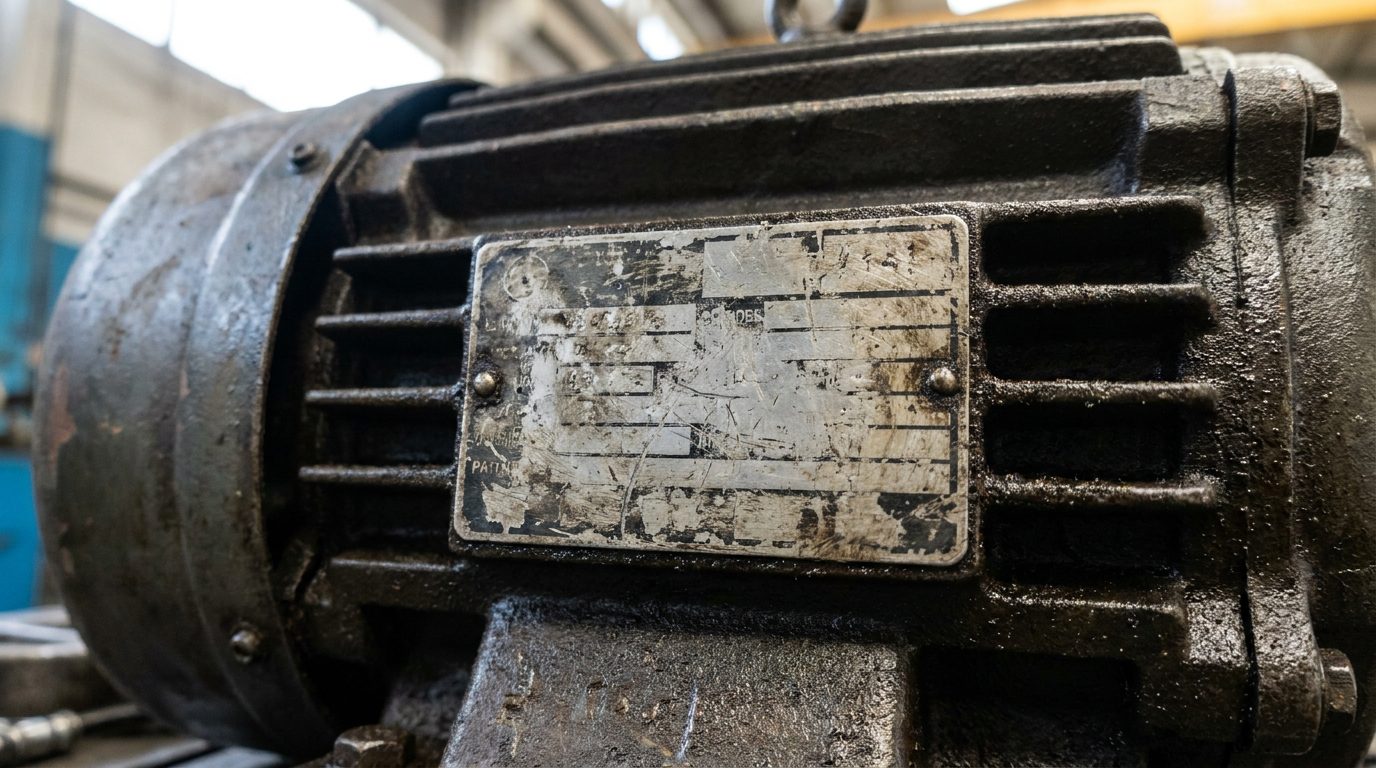
Decoding the Heartbeat of Your Operations: Mastering the Electric Motor Nameplate
In the intricate symphony of an industrial facility, electric motors are the unwavering workhorses, powering everything from intricate assembly lines to the most robust processing equipment. Their reliable performance is paramount to operational efficiency, safety, and profitability. Yet, for many plant managers, maintenance teams, engineers, and operators, the information etched onto an electric motor’s nameplate can feel like a cryptic code. Understanding this vital data isn’t just about troubleshooting; it’s about informed decision-making, proactive maintenance, accurate part procurement, and ultimately, optimizing your motor’s lifespan and performance. This article will demystify the electric motor nameplate, equipping you with the knowledge to interpret its essential parameters, identify potential issues, and make smarter choices for your machinery.
Understanding how to read an electric motor nameplate is crucial for selecting the right motor for your application, but it’s equally important to know how to maintain and repair industrial gearboxes that work in conjunction with these motors. For insights on effective gearbox repair techniques and services, you can refer to this related article on industrial gearbox repair in Savannah, Georgia. For more information, visit Industrial Gearbox Repair in Savannah, Georgia.
Understanding the Core Components of an Electric Motor Nameplate
The electric motor nameplate is a treasure trove of critical information, providing a snapshot of the motor’s design, capabilities, and operational requirements. While layouts can vary slightly between manufacturers, most nameplates share a common set of essential data points. Decoding these will empower you to understand your motor’s identity and its intended function within your system.
Motor Identification and Manufacturer Information
This is where the motor’s fundamental identity is established.
Manufacturer and Brand
The name of the company that manufactured the motor is prominently displayed. This is crucial for identifying the original equipment manufacturer (OEM) and for sourcing replacement parts, technical documentation, and warranty information. Different brands often have specific design nuances and preferred maintenance practices.
Model Number
The model number is a unique identifier for a specific design of motor from that manufacturer. It can indicate the series, frame size, enclosure type, and other key design features. Knowing the model number is essential for ordering exact replacements or compatible alternatives.
Serial Number
The serial number is a unique identifier for that specific motor unit. It’s used for tracking individual units, warranty claims, and historical maintenance records. If you’re reporting a fault or inquiring about a specific motor, the serial number will be indispensable.
Design Letter (e.g., NEMA Design A, B, C, D)
This designation, often found on motors conforming to National Electrical Manufacturers Association (NEMA) standards, indicates the motor’s torque-speed characteristics.
- Design A: High starting torque, high breakdown torque, and low slip. Often used for applications requiring rapid acceleration.
- Design B: Standard starting torque, high breakdown torque, and moderate slip. The most common design, suitable for a wide range of general-purpose applications.
- Design C: High starting torque and moderate breakdown torque. Useful for applications that need to start under heavy loads but don’t require the very high breakdown torque of Design A.
- Design D: Very high starting torque, low starting current, and high slip. Ideal for applications with very high inertia loads or those that frequently stall under load, such as cranes and hoists.
Understanding the design letter helps you assess if the motor is correctly matched to the application’s starting and running load requirements. An incorrectly specified design letter can lead to premature wear, inefficient operation, or a motor that fails to start under load.
Electrical Specifications: The Power Behind the Performance
These parameters define how the motor draws and utilizes electrical energy.
Voltage (V)
This indicates the electrical potential the motor is designed to operate on. Motors can be single-voltage or dual-voltage (e.g., 230/460V). Dual-voltage motors offer flexibility, allowing them to be wired for different voltage systems. Incorrect voltage can lead to overheating, reduced performance, or motor failure. Always ensure the connected power supply matches the nameplate’s specified voltage.
Frequency (Hz)
This denotes the frequency of the alternating current (AC) power supply the motor is designed for, typically 50 Hz or 60 Hz. Operating a motor on a different frequency can alter its speed and performance, and in some cases, lead to damage. For example, running a 60 Hz motor on a 50 Hz supply will result in lower speed and potentially increased heat.
Phase (1Ø or 3Ø)
This specifies whether the motor is designed for single-phase or three-phase power. Single-phase motors are common in residential and light commercial applications, while three-phase motors are the standard for most industrial settings due to their higher efficiency and power output. Using a three-phase motor on a single-phase supply (without a phase converter) will not work.
Amperage (A) or Full Load Amps (FLA)
This is the current the motor will draw when operating at its rated horsepower under full load conditions. FLA is a critical parameter for selecting appropriate overcurrent protection devices (fuses or circuit breakers) and motor starters. It’s also a key indicator for monitoring motor health; a significant increase in FLA during operation can signal a problem.
Horsepower (HP) or Kilowatts (kW)
This is the motor’s mechanical output power rating. It represents the motor’s ability to do work. For example, a 10 HP motor can produce 10 horsepower of mechanical output. Kilowatts (kW) are the metric equivalent, with 1 HP approximately equal to 0.746 kW. It’s vital that the motor’s HP/kW rating is sufficient for the load it’s driving. An undersized motor will overheat and fail, while an oversized motor can lead to inefficient operation and unnecessary costs.
Service Factor (SF)
The service factor indicates how much the motor can be overloaded and for how long while still maintaining acceptable operating temperatures and lifespan. A service factor of 1.15 means the motor can safely deliver 15% more horsepower than its rated rating for intermittent periods. Using the service factor to continuously operate the motor beyond its nameplate rating will significantly reduce its lifespan.
Insulation Class (e.g., Class B, Class F, Class H)
This rating refers to the thermal capabilities of the motor’s winding insulation. It defines the maximum allowable operating temperature for the windings.
- Class B: Allows a hot spot temperature of 130°C (266°F).
- Class F: Allows a hot spot temperature of 155°C (311°F).
- Class H: Allows a hot spot temperature of 180°C (356°F).
Higher insulation classes can withstand higher operating temperatures, offering greater reliability in demanding environments or applications where internal temperatures may rise. Exceeding the insulation class temperature limits can cause premature insulation failure and motor burnout.
Enclosure Type (e.g., TEFC, ODP, TENV)
The enclosure type describes the motor’s protection against environmental factors and its method of cooling.
- TEFC (Totally Enclosed Fan Cooled): The most common industrial enclosure. It prevents the ingress of dust, moisture, and other contaminants while an external fan, mounted on the shaft, blows air over the motor’s frame to dissipate heat. Suitable for most general industrial environments.
- ODP (Open Drip Proof): Allows air to circulate freely through the motor for cooling, but openings are designed to prevent damage from falling liquids or solids. Less protected than TEFC and generally used in cleaner environments.
- TENV (Totally Enclosed Non-Ventilated): Designed for smaller motors or applications where an external fan is impractical. Heat is dissipated through the motor’s frame by radiation and convection.
- Explosion Proof (XP): Designed to prevent ignition of flammable atmospheres. These are typically more robust and expensive.
Choosing the correct enclosure type is critical for motor longevity and safety, especially in hazardous or dirty environments.
Mechanical and Performance Specifications
These parameters describe the physical characteristics and operational performance of the motor.
Frame Size (e.g., NEMA 143T, IEC 90S)
This standardized dimension defines the physical mounting characteristics of the motor, including bolt circle diameter, shaft diameter, and shaft extension length. This is paramount for ensuring the motor will physically fit into its existing mounting location and connect to the driven equipment. NEMA and IEC are the two primary standardization bodies.
RPM (Revolutions Per Minute) or Speed
This indicates the motor’s rated speed at full load. It’s important to match this to the speed requirements of the driven equipment. Motors have varying synchronous speeds (determined by frequency and number of poles) and slip, resulting in a slightly lower full-load RPM.
Duty Cycle (e.g., Continuous, Intermittent)
This specifies how long the motor is designed to operate without interruption.
- Continuous Duty (e.g., S1): Designed to operate at a constant load for an indefinitely long period.
- Intermittent Duty (e.g., S2, S3): Designed to operate for alternating periods of load and no load. The nameplate might specify a percentage of on-time or a specific duty cycle rating.
Operating a motor on a duty cycle it wasn’t designed for can lead to overheating and premature failure.
Power Factor (PF)
This represents the ratio of real power (useful work) to apparent power (total power supplied). A power factor closer to 1.0 (or 100%) indicates efficient use of electrical energy. Low power factor can lead to increased electricity bills and require larger electrical infrastructure. While not always explicitly stated on smaller motors, it’s a critical metric for larger industrial motors.
Bearings (Ball, Sleeve)
While not always on the nameplate, knowing the bearing type is crucial for maintenance. Ball bearings are common and robust, while sleeve bearings are found in some older or specific applications. Bearing type dictates lubrication schedules and replacement procedures.
Warning Signs of Motor Trouble: Beyond the Nameplate
While the nameplate provides design intent, deviations from expected behavior are the most critical warning signs of motor distress.
- Increased Noise: Unusual grinding, whining, or humming sounds can indicate bearing wear, rotor imbalance, or issues with the cooling fan.
- Overheating: A motor that feels excessively hot to the touch (beyond normal operating temperature, which can be inferred from insulation class and ambient temperature) is a serious warning. This could be due to overloaded operation, inadequate cooling, or internal electrical faults.
- Vibration: Excessive vibration can stem from bearing issues, rotor imbalance, loose mounting, or misalignment with the driven equipment.
- Reduced Speed or Torque: If the motor struggles to maintain its rated speed or deliver sufficient power, it could be an overload condition, internal winding problems, or voltage issues.
- Frequent Tripping of Overcurrent Protection: Breakers or fuses tripping repeatedly indicate the motor is drawing more current than it should, pointing to an overload, short circuit, or ground fault.
- Burning Odor: A distinct burning smell is a critical sign of severe overheating and potential insulation breakdown, requiring immediate shutdown.
- Visible Damage: Obvious signs like cracked casings, damaged fans, or corroded terminals are immediate indicators of a problem.
Check out our blog for more articles on industrial gearbox solutions: more articles.
Diagnosing Motor Issues: Using Nameplate Data for Insight
When a motor exhibits warning signs, the nameplate becomes your diagnostic tool, guiding your investigation.
Power Supply Verification
- Voltage and Phase: Use a multimeter to confirm the incoming voltage and phase match the nameplate. Fluctuations or incorrect supply are common causes of motor problems.
- Frequency: Ensure the power supply frequency aligns with the nameplate.
Load Assessment
- Amperage (FLA) Monitoring: Clamp meters are essential. Measure the motor’s current draw under various load conditions (start-up, no-load, full-load). Compare these readings to the FLA on the nameplate. Significantly higher readings indicate overload, internal winding faults, or bearing issues causing excessive drag.
- Horsepower/kW and Duty Cycle: Re-evaluate if the driven equipment’s demands exceed the motor’s HP/kW rating or its specified duty cycle.
Environmental and Enclosure Checks
- Enclosure Type: Is the motor’s enclosure appropriate for the environment? Is a TEFC motor in a dusty area clogged with debris, hindering cooling? Is an ODP motor protected from moisture?
- Cooling: Ensure the cooling fan is intact and not obstructed. For TEFC motors, check for airflow around the motor.
Insulation Integrity
- Insulation Resistance Testing (Megger): This is a crucial diagnostic for winding health. A megger measures the resistance between windings and ground, and between windings themselves. Low readings indicate degradation of insulation, often due to heat, moisture, or age. Compare readings to manufacturer specifications or industry standards. The insulation class on the nameplate helps set expectations for acceptable temperature limits.
Bearing and Mechanical Checks
- Listen and Feel for Vibration: While the nameplate doesn’t specify bearings, unusual noises or vibrations point to mechanical issues.
- Shaft End Play: Excessive play in the shaft can indicate worn bearings.
Understanding how to read an electric motor nameplate is crucial for selecting the right motor for your application, but it’s also important to consider the overall system, including components like gearboxes. For more insights on maintaining and repairing these essential parts, you can check out a related article on industrial gearbox repair. This resource provides valuable information that complements your knowledge of electric motors and ensures your machinery operates efficiently. To learn more, visit industrial gearbox repair.
Repair vs. Replacement: Making the Right Choice
Once a motor issue is diagnosed, you face the critical decision of whether to repair or replace it. The nameplate plays a significant role in this decision.
Repair Options
- Rewinding: If the windings are damaged, a rewind involves stripping the old wire and replacing it with new wire according to the original specifications (including insulation class, wire gauge, and number of turns). This is often a cost-effective option for larger, expensive motors.
- Bearing Replacement: Worn bearings are a common repair. New bearings should match the original type and size, often specified indirectly by the frame size and model number.
- Fan Replacement: Damaged cooling fans can be replaced.
- Seal and Gasket Replacement: For enclosed motors, worn seals and gaskets should be replaced to maintain environmental protection.
Replacement Options
- Direct Replacement: The ideal scenario is finding an identical motor with the same nameplate specifications. This ensures perfect compatibility and minimal installation effort.
- Equivalent Replacement: If an exact match isn’t available, find a motor with equivalent or superior specifications. This involves carefully matching:
- Frame Size: Absolutely critical for physical fit.
- HP/kW: Must meet or exceed the original.
- Voltage and Frequency: Must match your power supply.
- Phase: Must match your power supply.
- RPM: Should be as close as possible to the original, or compatible with the driven equipment.
- Enclosure Type: Should be suitable for the environment.
- Insulation Class: Should be at least equal to the original.
- Design Letter (NEMA): If applicable, match to avoid performance issues.
- Service Factor: If the original motor operated near its service factor limit, a replacement with a higher service factor or HP might be beneficial.
Understanding how to read an electric motor nameplate is crucial for selecting the right motor for your application, and for further insights on this topic, you might find the article on electric motor maintenance particularly helpful. This resource provides valuable tips on keeping your motor in optimal condition, which complements the knowledge gained from deciphering the nameplate information. By combining these two aspects, you can ensure better performance and longevity of your electric motors.
Cost Considerations: Beyond the Initial Purchase
The cost of motor repair or replacement extends beyond the immediate price tag.
Repair Costs
- Labor: Rewinding and complex repairs involve significant labor costs.
- Parts: Bearings, wires, insulation materials, and seals contribute to the cost.
- Downtime: The cost of the facility’s lost production during the repair period is often the most significant hidden cost.
Replacement Costs
- Motor Purchase Price: Varies greatly by HP, efficiency, enclosure, and brand.
- Installation Labor: Replacing a motor involves mounting, alignment, and electrical hookup.
- Downtime: Similar to repair, but potentially shorter if the replacement is readily available.
- Potential for Upgrades: A higher-efficiency motor might have a higher upfront cost but lead to significant energy savings over its lifespan.
- Disposal Costs: Properly disposing of old motors, especially hazardous materials, incurs costs.
Cost-Benefit Analysis:
- Small Motors: For smaller, inexpensive motors, replacement is often more economical than repair.
- Large or Specialized Motors: For larger, high-HP, or specialized motors, rewinding or repairing can be significantly cheaper than buying a new one.
- Downtime Sensitivity: If downtime is extremely costly, a readily available replacement motor might be preferable, even if slightly more expensive.
- Motor Age and Condition: A motor nearing the end of its expected lifespan might be a candidate for replacement even if repairable.
Risks Associated with Motor Issues and Decisions
Ignoring motor issues or making incorrect decisions carries substantial risks.
- Safety Hazards: Overheating motors can be a fire risk. Malfunctioning motors can cause unexpected equipment behavior, leading to injuries.
- Production Downtime: Unplanned shutdowns due to motor failure can halt operations, leading to lost revenue and missed deadlines.
- Equipment Damage: A failing motor can cause secondary damage to the driven equipment or associated components.
- Increased Energy Costs: Inefficient motors, whether due to damage or incorrect sizing, consume more energy.
- Premature Equipment Failure: Operating with a compromised motor can put undue stress on other parts of the system.
- Warranty Voidance: Incorrect repairs or using non-specified parts can void manufacturer warranties.
Prevention: Proactive Measures for Motor Longevity
The best approach to motor issues is prevention. Understanding your motor’s nameplate is the first step in a robust preventive maintenance program.
Regular Inspections and Monitoring
- Visual Checks: Regularly inspect motors for cleanliness, damage, and proper mounting.
- Auditory Checks: Listen for unusual noises.
- Vibration Analysis: Implement a vibration monitoring program for critical motors.
- Thermal Imaging: Use thermal cameras to detect hotspots, indicating potential problems before they become critical.
- Amperage Monitoring: Periodically check motor current draw to identify deviations from baseline.
Lubrication and Cleaning
- Follow Manufacturer’s Lubrication Schedule: Use the correct type and amount of lubricant, as recommended by the motor manufacturer (often detailed in the service manual, which the nameplate helps identify).
- Keep Motors Clean: Dust and debris can impede cooling. Regularly clean motor frames, especially TEFC motors.
Proper Electrical Connections
- Ensure Tight Connections: Loose electrical connections can cause resistance, leading to overheating and power loss.
- Correct Wiring: Verify that wiring matches the voltage, phase, and frequency requirements of the motor.
Load Matching and Alignment
- Correct Sizing: Ensure motors are correctly sized for their applications, considering HP/kW, duty cycle, and design letter.
- Proper Alignment: Misalignment between the motor and driven equipment is a major cause of bearing and seal failure. Perform and maintain proper alignment.
Environmental Protection
- Appropriate Enclosure: Select motors with enclosures suitable for the operating environment.
- Shielding: Protect motors from excessive moisture, corrosive atmospheres, and extreme temperatures.
Frequently Asked Questions (FAQ)
Q: My motor nameplate has a dual voltage rating (e.g., 230/460V). How do I know which voltage to use?
A: You must wire the motor to match the available power supply voltage in your facility. The nameplate will typically indicate how to wire the motor for each voltage (e.g., series connection for 460V, parallel connection for 230V). Consult a qualified electrician and the motor’s wiring diagram.
Q: The FLA on my motor nameplate seems very low compared to what my clamp meter is reading.
A: This could indicate several issues: the motor is significantly overloaded, there’s an internal winding fault (like a short circuit), or the bearings are failing, creating excessive drag. It’s also possible the nameplate is for a different motor, or your clamp meter is not calibrated. Immediately shut down the motor and investigate.
Q: What is the significance of the ‘Service Factor’ on a motor nameplate?
A: The Service Factor indicates how much you can safely overload the motor for intermittent periods. For example, a 1.15 SF on a 10 HP motor means it can operate at 11.5 HP for short durations without damage. Continuously running a motor at or above its Service Factor rating will shorten its lifespan.
Q: Can I replace an older motor with a new one that has a slightly different RPM, even if the HP and frame size match?
A: This depends entirely on the driven equipment. Some machinery is sensitive to speed variations. If the speed difference is significant, it could impact performance or cause damage. Consult the driven equipment’s manufacturer or an experienced engineer to determine if the RPM difference is acceptable.
Q: How do I find a replacement motor if the manufacturer is no longer in business or the model is obsolete?
A: Focus on matching the critical specifications from the old nameplate: frame size, HP/kW, voltage, frequency, phase, RPM (as closely as possible), enclosure type, and insulation class. Many distributors specialize in sourcing obsolete or equivalent motors. Providing them with a clear image of the old nameplate is the best starting point.
Conclusion: Empowering Your Operations with Nameplate Knowledge
The electric motor nameplate is not merely a label; it’s a vital technical document that holds the key to understanding, maintaining, and optimizing your most critical assets. By demystifying its contents, you empower your plant managers, maintenance teams, engineers, and operators to make informed decisions, prevent costly downtime, ensure safety, and maximize the lifespan of your electric motors. Embrace the knowledge encoded on these metal plates, and let it guide you towards a more efficient, reliable, and productive industrial operation. Remember, understanding your motor is the first step in ensuring the continuous heartbeat of your facility.