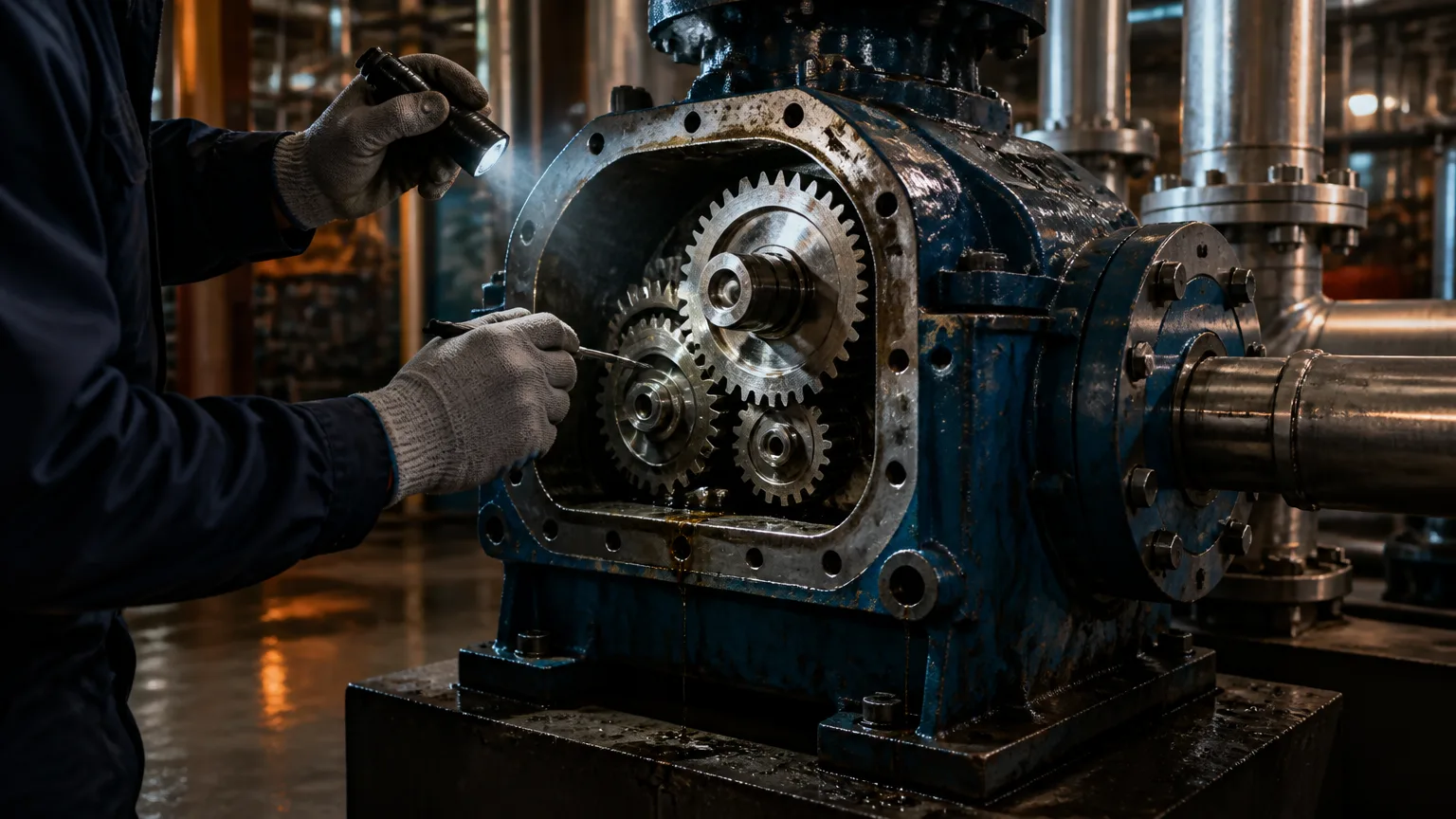
Pump gearbox repair is a reliability and cost-control priority for manufacturers and industrial facilities. These gearboxes regulate torque and speed, helping pumps maintain consistent fluid movement. A minor oil leak, unusual vibration, or rising temperature can quickly cause pump damage, production losses, and an unplanned shutdown.
Early inspection identifies developing faults before they become failures. Repair restores damaged components, while refurbishment renews a gearbox through deeper servicing; complete replacement is reserved for severe damage or uneconomical repairs. Each decision requires qualified diagnosis, accurate measurements, and documented maintenance. For broader guidance, review these effective gearbox repairing practices. This article examines common faults and practical solutions to help protect uptime and control repair costs.
How to Recognize a Failing Pump Gearbox
Early warning signs often appear before a pump gearbox failure stops production. Operators should monitor abnormal noise, rising vibration, overheating, oil leakage, fluctuating output speed, reduced pump pressure, and unusual power consumption.
A grinding or clicking sound may indicate bearing wear or damaged gear teeth. Increasing vibration can result from gear damage, shaft misalignment, imbalance, or excessive loading. Compare readings with established baseline values, rather than relying on operator intuition or visible damage alone.
Temperature trends provide another important warning. A gradual rise may indicate poor lubrication, overloaded operation, or deteriorating bearings. Rapid temperature increases require immediate shutdown, especially when accompanied by severe vibration or changing output speed.
Check the lubricant regularly for the correct level, color, odor, and viscosity. Metal particles in the oil can confirm internal wear and require immediate isolation for inspection. Oil leakage may result from damaged seals, excessive pressure, or shaft misalignment, while low oil levels can quickly cause catastrophic damage.
Reduced pump pressure and unstable speed may reflect gear-tooth damage, coupling problems, or an overloaded gearbox. Track temperature, vibration, oil condition, operating load, pressure, and power consumption together. This condition data supports timely industrial equipment components assessment and more accurate pump gearbox repair decisions. When lubrication is lost, vibration becomes severe, or temperature rises rapidly, stop the equipment immediately and arrange qualified inspection.
Common Pump Gearbox Faults and Their Root Causes
Gear damage is one of the most frequent reasons for pump gearbox repair. Worn, chipped, or pitted teeth can result from fatigue, shock loading, contaminated oil, incorrect gear mesh, or inadequate lubrication. Damaged gears generate vibration and noise, reduce transmission efficiency, and can overload the pump or motor.
Bearing failure often follows misalignment, excessive radial or axial loads, or poor lubrication. These conditions also accelerate shaft wear, coupling damage, and housing distortion or cracking. A damaged coupling can transmit vibration through the pump assembly, while housing movement changes gear alignment and increases tooth wear. Correct load calculations and sound gearbox design principles help prevent these linked failures.
Lubrication faults include incorrect oil viscosity, degraded oil, low oil level, blocked breathers, and water or particulate contamination. Each condition reduces the lubricant’s protective film and can cause overheating, scoring, corrosion, or premature bearing failure.
Operating conditions may create repeat faults. An oversized pump, frequent starts and stops, cavitation-related load changes, or operation beyond the gearbox’s rated duty can impose repeated shock loads. Technicians should therefore assess the gearbox with the pump, motor, coupling, and foundation—not in isolation. Misalignment or foundation movement may otherwise cause the same repair to fail again.
Pump Gearbox Repair Solutions: From Inspection to Testing
A controlled pump gearbox repair begins by isolating the unit, documenting operating conditions, and recording visible damage. Remove and clean the components before inspecting gears, shafts, housings, bearings, and seals. Measure backlash, shaft runout, bearing clearances, and gear contact patterns against manufacturer specifications.
Technicians must identify the initiating fault, not only the damaged component. Overload, contamination, misalignment, lubrication failure, and foundation movement can cause repeat failures. Corrective work may include gear or bearing replacement, shaft repair, housing restoration, seal renewal, alignment correction, lubrication flushing, and coupling adjustment.
Use compatible parts, approved lubricants, and specified tolerances throughout the repair. Replacing one visibly damaged gear without correcting poor alignment or contaminated oil rarely restores reliable service. Specialized designs, including planetary arrangements, may require planetary gearbox repair expertise and dedicated inspection procedures.
Before release, verify backlash, shaft runout, coupling and equipment alignment, and seal integrity. Complete leak checks and no-load rotation, followed by controlled load testing. Monitor vibration, noise, and temperature during operation, then compare results with baseline values. Document every measurement, replaced part, lubricant, and test result to support future maintenance.
Repair or Replace? Choosing the Right Industrial Solution
The right pump gearbox repair decision depends on technical condition and operational priorities, not purchase price alone. Compare repair costs with replacement cost, lead time, remaining service life, parts availability, downtime exposure, and the consequences of another failure.
Repair is usually practical when the housing and major geometry remain sound. Localized damage, such as worn bearings, seals, or gears, can often be corrected when replacement components are available and economical. A rebuild may also restore reliable service without the installation changes required by a new unit.
Replacement or an engineered upgrade is safer when the housing is extensively cracked, failures recur, parts are obsolete, or efficiency and load capacity are inadequate. A new gearbox may also be necessary when the existing unit no longer matches the pump’s duty.
Specify torque, speed ratio, service factor, duty cycle, mounting arrangement, shaft dimensions, lubrication, operating environment, and motor compatibility. These factors make choosing the right heavy-duty gearbox as important as comparing prices. Select capacity and application fit first to protect uptime.
Build a More Reliable Pump Gearbox Maintenance Strategy
Reliable pump gearbox operation starts with controlling lubrication, alignment, loading, contamination, and condition monitoring. These measures address the leading causes of failure and support faster, more accurate diagnosis.
Partner with a repair provider that inspects the complete drive train, documents findings, sources suitable parts, and validates the repaired unit under operating conditions. Evaluate pump gearbox repair and replacement options early, before a developing fault becomes an emergency outage.