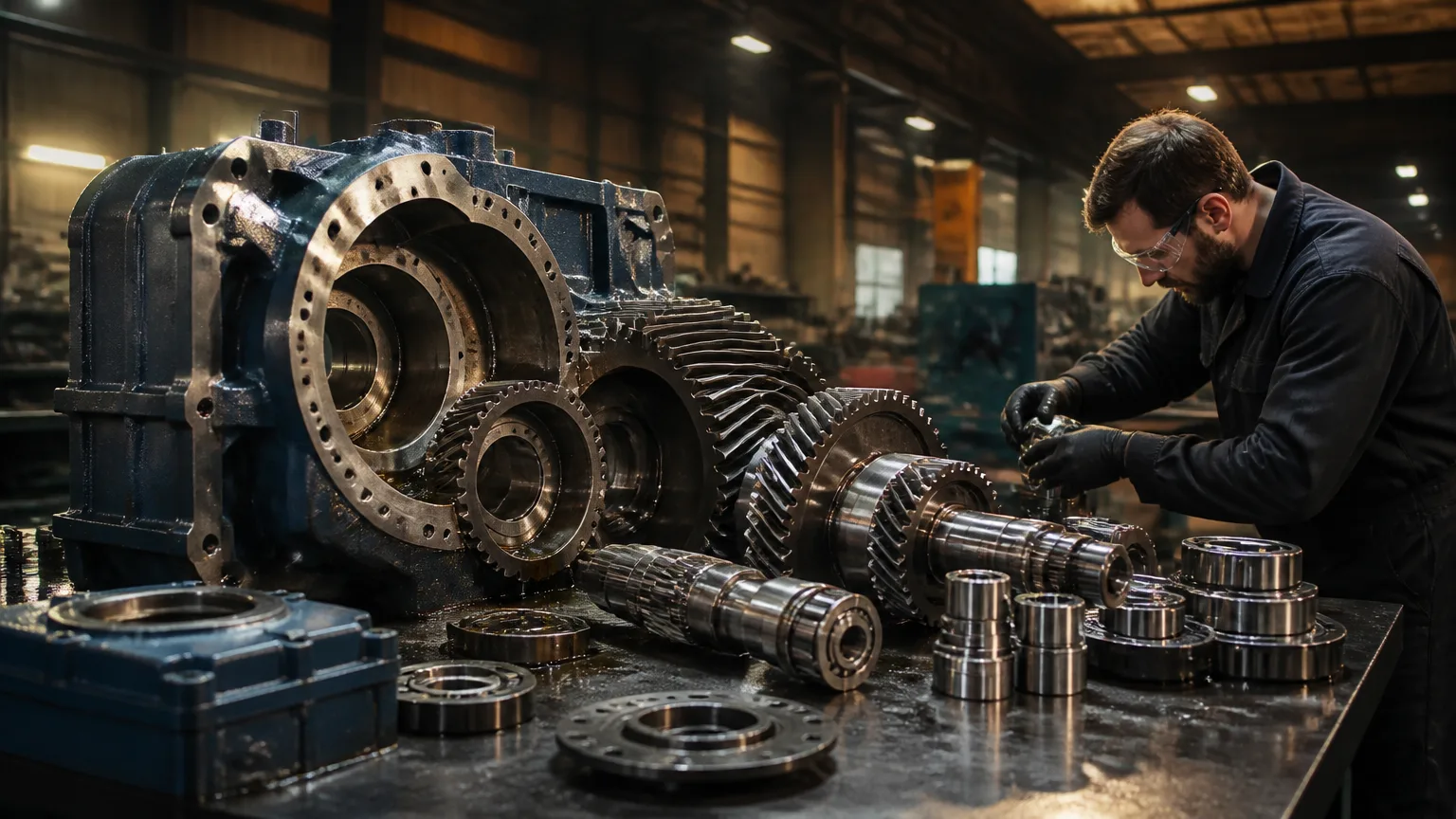
A flender gearbox rebuild can be the smarter choice when a critical drive system shows wear, unusual noise, overheating, lubrication problems, vibration, or unexpected downtime. Flender gearboxes support demanding industrial operations, but restoring one professionally can often recover reliable performance without the cost and lead time of a complete replacement.
Rebuild scope and pricing depend on the gearbox model, damage severity, replacement parts, labor, and testing requirements. A qualified team will inspect internal components, replace worn parts, correct alignment issues, and verify performance under controlled conditions. This article explains the rebuild process, the main cost drivers, and the operational benefits manufacturers can expect. It also highlights considerations for choosing the right gearbox repair service before production losses become more serious.
Step 1: Inspection, Diagnosis, and Rebuild Planning
Before disassembly, technicians review the Flender gearbox’s operating history, load conditions, maintenance records, and failure symptoms. They assess oil analysis, vibration readings, temperature trends, unusual noise, leakage, and visible damage. This evidence helps determine whether a rebuild is technically and financially justified.
The gearbox is then removed safely, identified, and documented. Technicians record gear mesh patterns, bearing positions, shim settings, coupling details, and alignment information. These records support accurate reassembly and help reveal changes that may have contributed to the failure.
During inspection, each component is measured and assessed against manufacturer tolerances. The report should separate repairable parts from those requiring replacement. It should also identify the root cause, such as overload, contamination, misalignment, inadequate lubrication, or improper operating conditions.
This diagnosis defines the rebuild scope instead of approving work based only on symptoms. It establishes the required parts, estimated turnaround time, inspection hold points, and testing plan. For broader maintenance planning, efficient gear repair solutions can also help teams compare repair strategies.
A well-planned flender gearbox rebuild reduces unexpected costs and prevents repeat failures. It also gives maintenance managers a clear basis for deciding whether to rebuild, replace, or modify the unit.
Step 2: Disassembly, Component Repair, and Replacement
Technicians begin by cleaning the Flender gearbox and documenting its condition. They then disassemble it methodically, labeling parts and recording clearances to support accurate reassembly.
Each component undergoes a detailed inspection. This includes housing bores, shafts, gears, bearings, seals, lubrication passages, couplings, and fastening surfaces. Technicians classify parts as reusable, repairable, or replaceable based on wear, damage, and manufacturer tolerances.
Gears may require reconditioning, such as surface restoration or tooth-profile correction. Severely damaged gears usually require replacement. Bearings, seals, gaskets, and damaged fasteners are commonly renewed because small defects can cause leakage, vibration, or premature failure.
Precision repair can include shaft journal restoration and housing bore repair. Technicians also inspect gear tooth condition, measure backlash, verify tooth contact, and confirm critical dimensions against Flender specifications. These checks help restore alignment, load distribution, and smooth operation. Understanding gearbox manufacturing processes also clarifies why these tolerances matter.
Replacement parts must match the gearbox design and duty requirements. Compatible OEM components or high-quality equivalents help preserve load capacity, fit, lubrication performance, and expected service life. Using unsuitable parts can create alignment problems and undermine the entire flender gearbox rebuild.
Step 3: Reassembly, Testing, and Return to Service
Reassembly begins with verified clearances, bearing preload, gear backlash, and shaft alignment. Technicians install seals correctly, apply specified torque settings, and select lubricant suited to the gearbox design and operating conditions.
Quality control then confirms proper rotation, lubrication flow, and gear-tooth contact. A no-load test checks temperature, vibration, unusual noise, oil leakage, and smooth operation before the unit faces production demands.
Load testing follows when results meet acceptance criteria. Technicians monitor the same conditions under operating load and investigate any abnormal temperature rise, vibration, noise, leakage, or tooth-contact pattern. These checks help confirm that the reduction gearbox solution is ready for service.
Installation checks are equally important. Confirm motor and driven-equipment alignment, correct soft-foot conditions, coupling integrity, foundation stability, and lubrication-system cleanliness before commissioning.
Request complete documentation from the rebuild provider. This should include test results, replaced-parts records, inspection measurements, warranty terms, and commissioning guidance. These records support future maintenance and provide evidence that the flender gearbox rebuild meets operational requirements.
Flender Gearbox Rebuild Costs and Key Benefits
The cost of a flender gearbox rebuild depends on the unit’s size, configuration, and inspection findings. Pricing may increase when gears or shafts require replacement, bearings and seals need renewal, or machining is necessary. Freight, testing, urgent turnaround, and the availability of Flender-compatible parts also affect the final quote.
Compare the rebuild estimate with full replacement costs, not only the equipment price. Include engineering, procurement lead time, installation, alignment, controls integration, and likely production losses. Reviewing gear repair services that reduce downtime can help facilities assess these broader costs.
A rebuild often provides shorter downtime, lower capital expenditure, and retained compatibility with existing mounts, drives, and controls. New bearings and seals can improve efficiency and reliability. The inspection also creates an opportunity to correct the original failure cause, such as poor lubrication, misalignment, overload, or contamination.
However, the lowest quote is not always the best value. Confirm inspection depth, component quality, machining tolerances, testing procedures, warranty coverage, and post-installation support before approving the work. These checks help ensure the restored gearbox delivers dependable lifecycle performance.
Making the Right Flender Gearbox Rebuild Decision
A flender gearbox rebuild is appropriate when inspection confirms the housing and major components can support reliable service. Success depends on accurate diagnosis, precision component work, disciplined assembly, documented testing, and correct installation by qualified specialists.
When requesting a proposal, provide the gearbox model and serial numbers, service history, failure symptoms, duty conditions, oil and vibration data, and production requirements. This information enables accurate pricing and planning. Properly evaluated rebuilds extend equipment life, preserve operational continuity, and support effective lifecycle management.