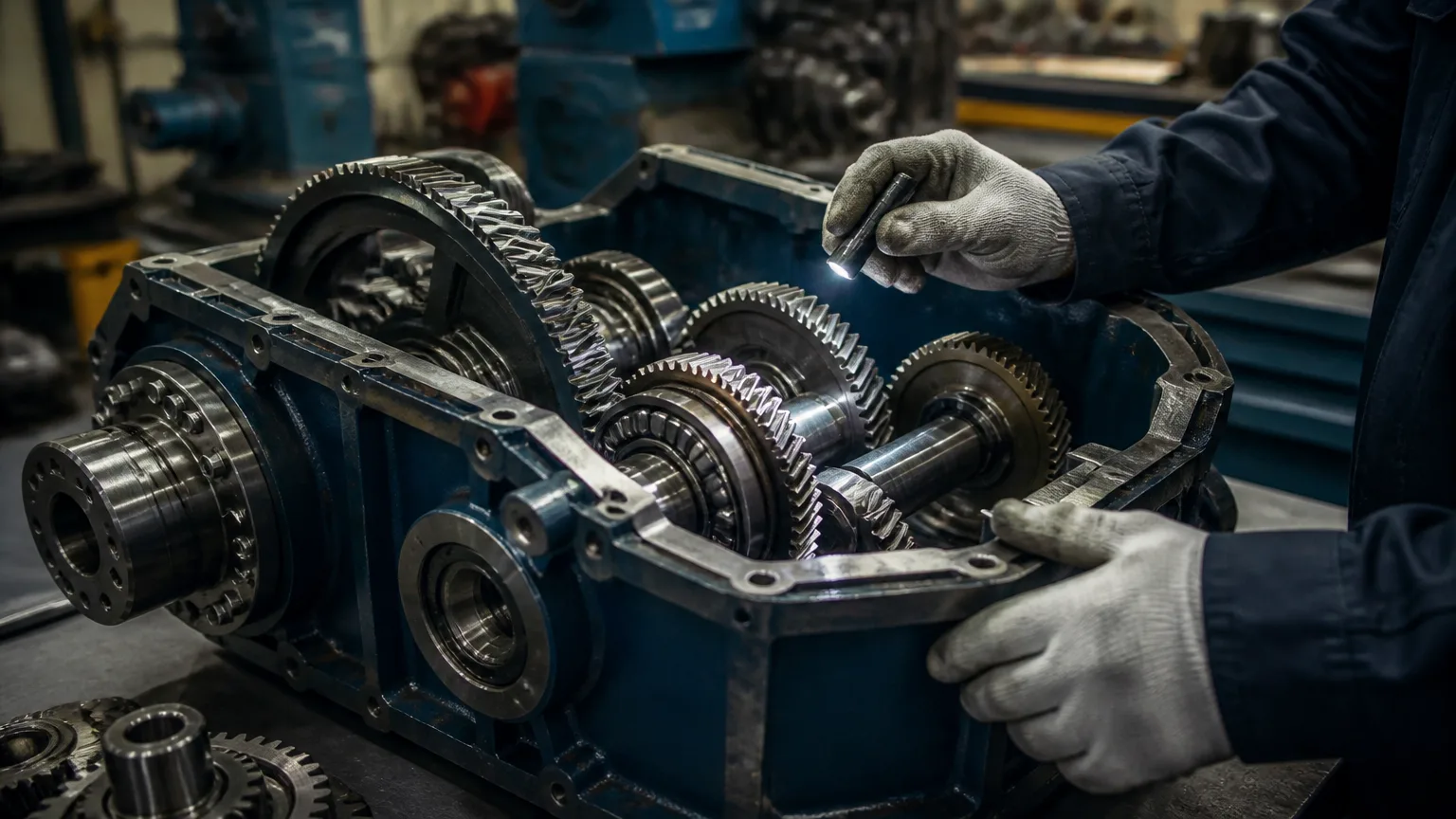
Rossi gearbox repair plays a critical role in protecting industrial production. These gearboxes transmit power across conveyors, mixers, pumps, and other essential equipment. When one fails, a structured repair process can restore performance, limit downtime, and control long-term operating costs.
Professional repair involves more than replacing a damaged gear. Technicians identify the root cause, inspect related components, and restore the unit to manufacturer-appropriate tolerances. Depending on the findings, repair may correct a specific fault, while a rebuild involves broader inspection and refurbishment; full replacement may not be necessary. A quality industrial gearbox rebuild illustrates the inspection, documentation, and precision expected from a thorough Rossi service. This evaluation helps facility managers choose the right solution before ordering new equipment.
1. Initial Inspection and Failure Diagnosis
Rossi gearbox repair begins with a structured review of the reported symptoms. Facilities may note abnormal noise, vibration, overheating, oil leakage, reduced output speed, excessive backlash, or unexpected shutdowns. Technicians also collect operating data, including load conditions, duty cycle, lubrication history, alignment, coupling condition, and maintenance records. These details often reveal whether the failure is isolated or linked to wider system problems, such as the common pump gearbox faults.
The inspection then covers the housing, seals, bearings, gears, shafts, and mounting surfaces. Technicians assess oil condition and contamination, checking for metal particles, water, or degraded lubricant. They take dimensional measurements to identify wear, distortion, or excessive clearance. If cracks or material fatigue are suspected, non-destructive testing can locate defects without damaging reusable components.
The resulting written report should explain what failed and why. It should define the recommended repair scope, required parts, estimated timing, and possible replacement alternatives. This evidence helps determine whether repair is technically sound and economically justified.
2. Disassembly, Cleaning, and Component Assessment
After the initial evaluation, technicians document the Rossi gearbox configuration, including ratios, mounting dimensions, lubrication details, and operating conditions. They then remove covers, shafts, gear assemblies, and other components in a controlled sequence. Each part is tagged and positioned for accurate reassembly, while wear debris, discoloration, and contamination are preserved as evidence of the original failure mechanism.
Cleaning follows disassembly. Technicians clean the housing, shafts, gears, bearings, seals, and lubrication passages before taking measurements. Removing oil sludge and metallic particles reveals damage that could otherwise remain hidden. This step also prevents contamination from affecting inspection results or newly installed parts.
Technicians assess gear teeth for abnormal wear, pitting, scoring, deformation, and cracks. They check shaft runout, bearing condition, housing bores, keyways, and seal surfaces against applicable specifications. These findings show whether a component caused the failure or suffered secondary damage.
Suitable parts may be machined or reconditioned, but damaged gears, bearings, seals, and shafts generally require replacement. Replacement components must match the original ratio, torque capacity, materials, tolerances, and mounting dimensions. Correct specifications are equally important when comparing Kissling gearbox repair options. This evidence defines the final Rossi gearbox repair scope, required parts, timing, and any practical replacement alternatives.
3. Repair, Rebuild, or Rossi Gearbox Replacement
Inspection findings determine whether Rossi gearbox repair is technically sound. A repair may replace seals, bearings, or individual gears while retaining serviceable components. A rebuild is more comprehensive, including internal refurbishment, renewed lubrication, and restoration of critical clearances.
The decision depends on housing condition, parts availability, gearbox age, lead time, and total cost. Engineers must also consider performance requirements and the consequences of another failure. Facilities comparing gearbox repair timing and costs should evaluate downtime and risk, not only the quoted invoice.
Complete replacement may be safer when the housing is damaged, the model is obsolete, or failures recur. Options can include an equivalent Rossi unit, a compatible gearbox, or a redesigned drive package for an undersized application.
Before approval, verify ratio, input and output speed, torque, service factor, mounting arrangement, shaft dimensions, motor compatibility, environmental conditions, and braking or backstop requirements. Lifecycle cost should include installation labor, energy use, downtime, and future maintainability. A lower purchase price may create greater operating expense over time.
4. Reassembly, Testing, and Quality Verification
After the repair scope is approved, technicians complete a controlled reassembly using verified components. They confirm fits, clearances, shaft alignment, and bearing seating, then install new seals where appropriate. Specified lubricants and documented torque procedures help prevent premature wear and leakage.
Testing begins with free-rotation checks, backlash and endplay verification, and a thorough leak inspection. Technicians monitor noise, vibration, and temperature, then perform no-load or load testing when suitable equipment is available. Results should confirm the gearbox meets its required speed, torque, rotation direction, and operating conditions.
Request documentation before shipment or installation. It should include inspection findings, replaced-parts records, test results, lubrication requirements, warranty terms, and installation notes. This traceability supports maintenance planning and helps when choosing a reliable gearbox repair partner.
Successful Rossi gearbox repair also depends on commissioning. Correct alignment, soft-foot correction, coupling inspection, and foundation checks are essential. At the facility, follow the specified break-in procedure and monitor operating conditions to preserve the repair.
5. Installation, Commissioning, and Preventive Maintenance
After the Rossi gearbox repair, confirm the base, mounting surfaces, fasteners, and soft-foot condition. Align shafts and couplings precisely, verify oil level and viscosity, install guarding, and check rotation direction. Confirm connected equipment is not imposing excessive radial, axial, or shock loads.
Start the gearbox under controlled conditions. Record vibration, temperature, motor current, noise, and lubricant leakage at defined intervals. These readings establish a post-repair baseline for future comparison.
Preventive maintenance should include scheduled oil analysis, lubricant changes, breather and seal inspections, fastener checks, vibration trending, and periodic alignment verification. If failures recur, review application sizing, shock loads, contamination, lubrication, alignment, and operator practices. Replacing components repeatedly may conceal the underlying cause and undermine the value of the Rossi gearbox repair.
A Structured Rossi Gearbox Repair Process Reduces Risk
A successful Rossi gearbox repair follows a controlled sequence, not an isolated component change. The process should include inspection, teardown, component assessment, repair or replacement selection, reassembly, testing, installation, and preventive follow-up.
Each stage should produce clear evidence. The inspection and teardown identify what failed and why. Component measurements then confirm which parts remain reusable, which require refurbishment, and which must be replaced. When repair is not technically sound, the provider should recommend a correctly specified replacement.
Manufacturers and industrial facilities should select a repair provider that can explain the failure cause and define the repair scope. The provider should also verify required parts, confirm compatibility, support replacement decisions, and document dimensional checks, assembly controls, and test results.
Recommissioning is equally important. Correct installation, alignment, soft-foot correction, lubrication, coupling inspection, and break-in procedures help protect the repaired unit. Follow-up vibration checks, temperature monitoring, lubrication reviews, and alignment verification can identify developing problems before they cause another stoppage.
This disciplined approach reduces uncertainty throughout Rossi gearbox repair. It helps facilities avoid repeated component failures, unsuitable replacements, and incomplete commissioning. The operational result is less unplanned downtime, improved gearbox reliability, and a clearer basis for future maintenance and capital planning.