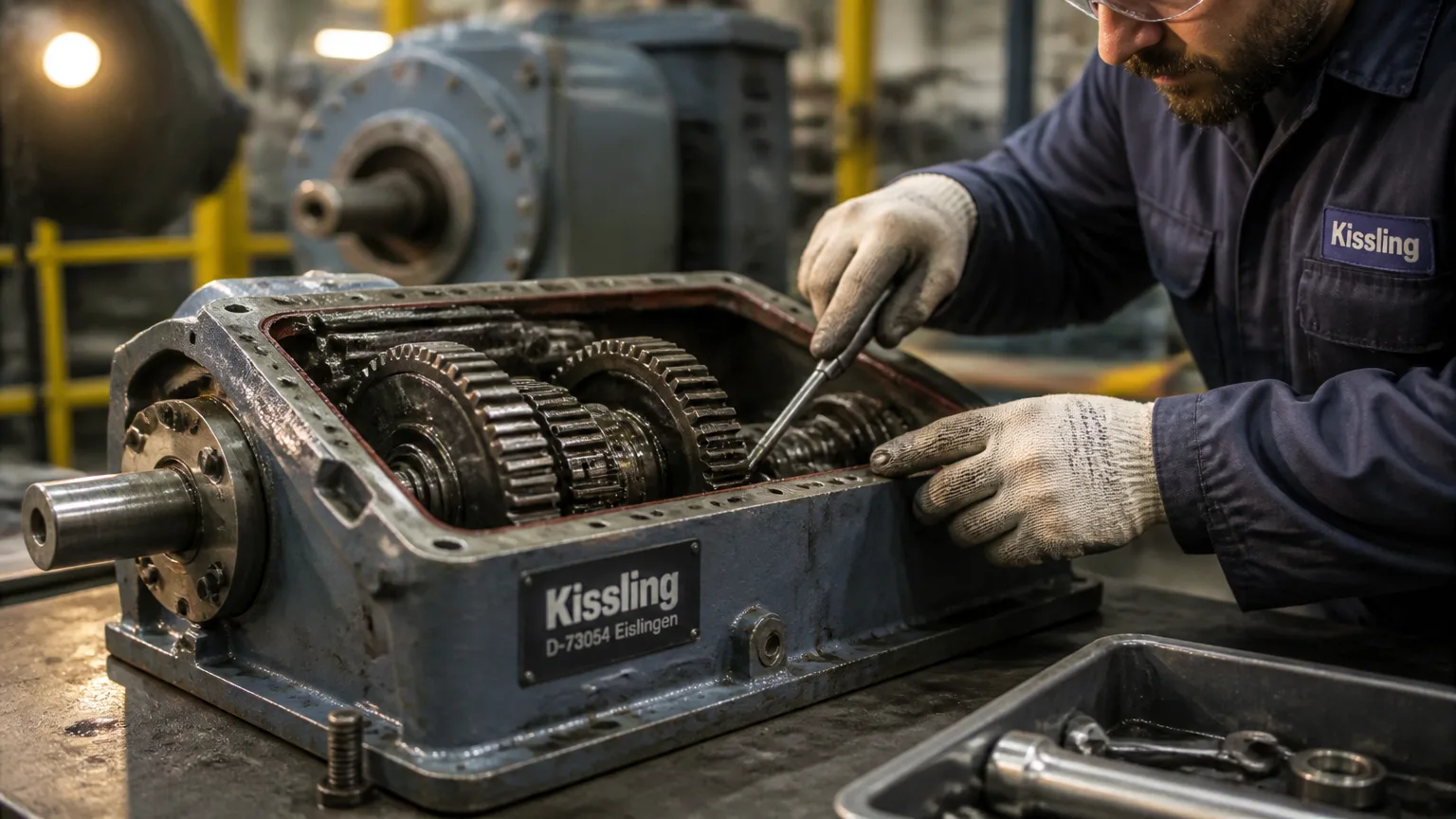
Kissling gearbox repair can help protect industrial uptime when transmission failures disrupt production, create safety concerns, or complicate maintenance planning. Declining performance, unusual noise, overheating, and vibration may signal deeper damage—not merely a mechanical inconvenience. Repairing the unit may also be more practical when an original replacement is difficult to source.
A structured assessment should come before any replacement decision. A qualified provider will accurately identify the Kissling gearbox, review its application and load requirements, and evaluate failure symptoms and operating conditions. This information supports a reliable diagnosis and prevents costly guesswork.
Depending on the findings, the best lifecycle value may come from refurbishment, component replacement, remanufacturing, or a new equivalent gearbox. Applying proven gear repair solutions can restore dependable operation while supporting budget control and planned maintenance. This article explains how to evaluate those options with confidence.
Recognizing When a Kissling Gearbox Needs Repair
Early warning signs often appear before a Kissling gearbox suffers severe damage. Abnormal noise, unusual vibration, overheating, oil leakage, or inconsistent output speed should trigger an inspection. Rising energy consumption can also indicate increased friction, gear damage, or bearing deterioration.
Inspect the gearbox for visible wear, including chipped gear teeth, pitting, scoring, damaged seals, or loose bearings. However, not every symptom originates inside the gearbox. Shaft misalignment, inadequate lubrication, foundation movement, overload, and motor faults can create similar conditions.
For example, vibration may result from misaligned couplings or a moving foundation. Overheating may reflect low oil levels, incorrect lubricant, excessive load, or restricted cooling. Technicians should therefore verify the complete drive system before recommending effective gearbox repairing practices.
Record operating temperatures, noise changes, vibration readings, energy use, recent maintenance, load changes, and when the symptoms began. This information helps technicians identify the root cause instead of replacing parts reactively. It also supports a more accurate decision between component replacement, refurbishment, or full Kissling gearbox repair.
Continued operation after these warnings can damage gears, bearings, seals, and shafts. It may also harm connected equipment and increase unplanned downtime. Prompt inspection allows facilities to correct developing faults while repairs remain controlled and scheduled.
What a Professional Kissling Gearbox Repair Process Includes
A professional repair begins with an intake inspection. Technicians verify the gearbox nameplate, model, ratio, and dimensions against equipment records. Where appropriate, oil analysis identifies contamination, metal particles, or lubricant breakdown. They then photograph and document the unit before controlled disassembly.
After disassembly, each component is cleaned and inspected. Technicians evaluate gears, bearings, shafts, housings, seals, keys, splines, and lubrication systems for wear, cracks, scoring, distortion, and fatigue. Component condition is recorded, creating a clear basis for the repair plan. This structured approach supports choosing the right gearbox repair service.
Precision measurement guides every critical decision. Specialists check gear tooth profiles, backlash, bearing fits, shaft runout, housing bores, and required clearances. Gear-contact checks confirm correct meshing, while shaft alignment prevents uneven loading. Damaged wear components are replaced with suitable original parts or properly engineered alternatives.
During reassembly, technicians confirm fastener torque, seal installation, bearing preload, key and spline engagement, and lubrication passages. They select lubricant based on the gearbox design, speed, load, and operating temperature. The completed Kissling gearbox repair should include no-load or load testing, plus noise and vibration verification.
Finally, the repair report records findings, measurements, replaced parts, lubricants, test results, and recommended maintenance actions. This documentation supports traceability and helps prevent repeat failures.
Repair or Replace? Evaluating the Best Kissling Gearbox Solution
The right Kissling gearbox repair strategy depends on condition, cost, and production requirements. Repair is often attractive when the housing, shafts, and major structural components remain serviceable. Severe gear-train, shaft, or housing damage may instead justify replacement or a complete remanufacture.
Compare total cost, not purchase price alone. Include lead time, installation, alignment, commissioning, lost production, spare-parts availability, and expected service life. A custom rebuild or reduction gearbox solution may restore equipment faster than sourcing a new unit.
Before approving any replacement, engineers must verify torque, ratio, speed, duty cycle, and mounting dimensions. Shaft configuration, lubrication requirements, operating environment, and connected motor or driven equipment also require review. A replacement should never be considered interchangeable until fit and performance are confirmed.
Remanufacturing can provide another practical option. It may combine inspected original components with new gears, bearings, seals, and updated improvements. When redesign is considered, engineers should address recurring overloads, alignment problems, contamination, or inadequate cooling. Selecting the best solution protects uptime while matching the gearbox to current operating demands.
Reducing Future Failures After Kissling Gearbox Repair
Before returning equipment to service, verify the installation and operating conditions. Check base rigidity, coupling condition, shaft alignment, belt or chain tension, fastener torque, and actual load conditions. Proper installation is essential for reliable gear repair services that reduce downtime.
Lubrication control directly affects gear and bearing life. Use the lubricant grade, fill level, cleanliness standard, operating temperature, and change interval specified for the gearbox and application. Generic oil practices may cause overheating, contamination, foaming, or inadequate protection.
After Kissling gearbox repair, establish periodic vibration, temperature, noise, oil, and visual inspections. Compare results with test data and documented baseline readings. Rising vibration, unusual noise, temperature changes, metal particles, or seal leakage can identify developing faults early.
Facilities should also maintain repair records, inspection results, critical spare parts, and clear escalation procedures. Planned maintenance teams can then correct minor issues during scheduled downtime. This approach protects the repaired gearbox and supports more dependable industrial equipment operation.
Build a Reliable Plan for Kissling Gearbox Repair and Replacement
The right decision depends on verified gearbox condition, equipment requirements, lifecycle cost, and downtime consequences. Prompt diagnosis and application-specific engineering help determine whether repair, remanufacturing, or replacement delivers the most reliable result.
Choose a partner that supports immediate restoration and long-term planning. Before requesting a Kissling gearbox repair assessment, gather nameplate data, failure symptoms, drawings or photographs, operating details, and maintenance history. Professional planning restores production confidently and improves future maintenance predictability.