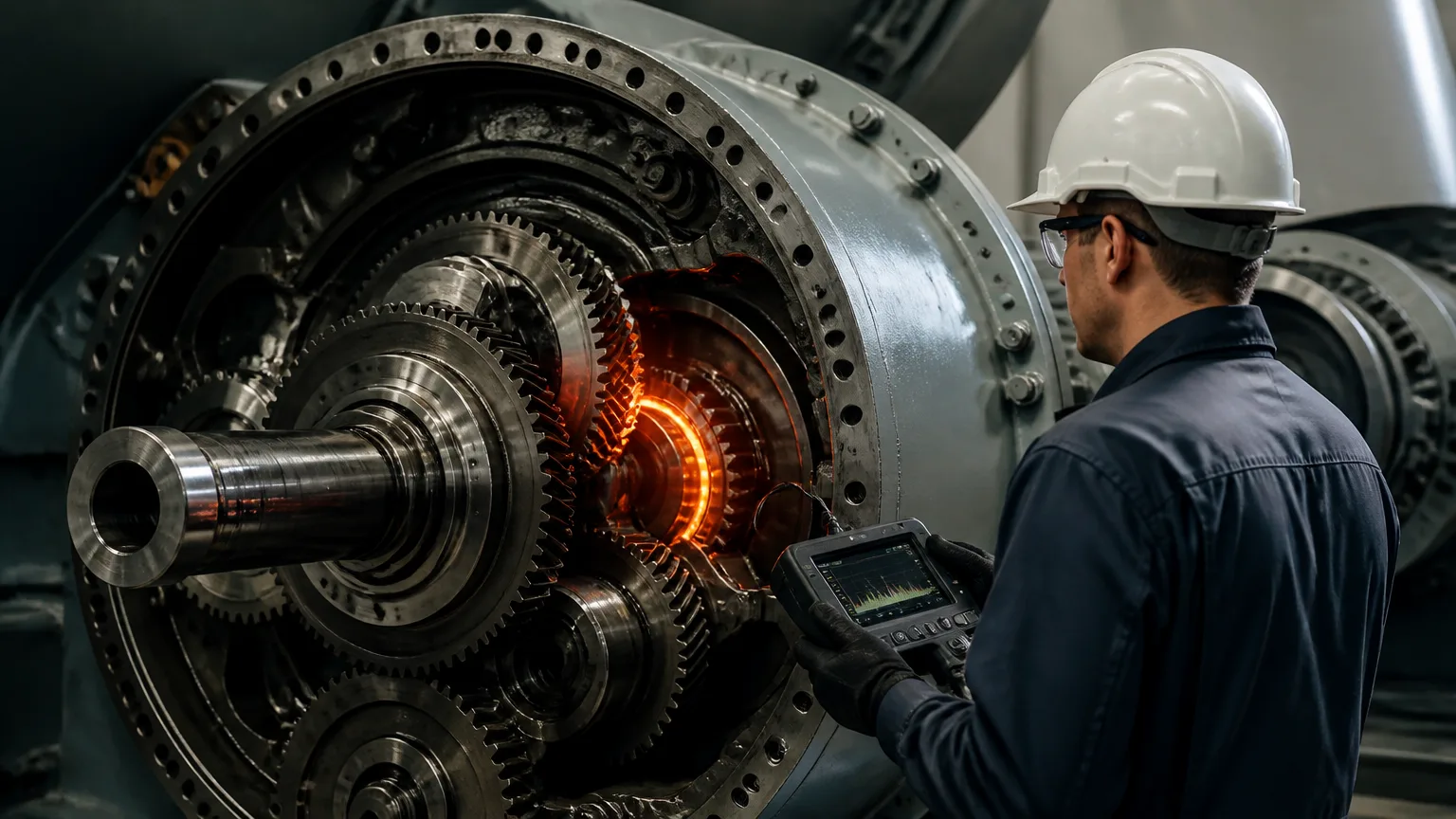
GE gearbox repair demands more than replacing damaged parts. These gearboxes are critical power-transmission assets, and early symptoms can reveal developing faults before catastrophic failure. Vibration, overheating, unusual noise, oil contamination, leakage, and declining output all warrant prompt investigation.
A failed gearbox can reduce throughput, disrupt labor, expose personnel to safety risks, and damage connected equipment. Effective diagnosis combines operating data, inspection, vibration analysis, and oil assessment to identify the root cause. Repair may be the best option, but replacement can make more sense when damage is extensive or the application has changed. Factors such as load, speed, torque, and operating conditions also matter when choosing the right reducing gearbox. This article explains how to evaluate failures and act before downtime escalates.
Common GE Gearbox Failure Symptoms and What They Reveal
Early symptoms can help maintenance teams narrow the likely source of a GE gearbox problem. Abnormal noise or vibration may indicate gear tooth wear, bearing damage, misalignment, looseness, or inadequate lubrication. A rising whine often points to gear mesh wear, while rumbling can suggest bearing damage. Sudden increases in impact or vibration may indicate looseness or a damaged tooth.
Temperature trends provide additional evidence. A temperature rise can result from friction, overloading, poor oil selection, or contamination. Burnt or metallic-smelling oil may signal overheating or internal wear. Foaming can indicate contamination or the wrong lubricant, while falling oil levels often point to seal failure or leakage. These clues should guide inspection and support common gearbox faults and effective repair solutions.
Performance changes also require careful interpretation. Slipping, reduced output speed, irregular torque, or motor overload may involve the gearbox, but couplings, shafts, brakes, and driven machinery can create similar symptoms. Do not assume the gearbox is the only source before beginning GE gearbox repair.
Before dismantling, record operating temperature, noise, vibration, load history, oil level, and symptom timing. Note recent process changes, starts, overloads, and maintenance work. This operating history can reveal whether failure developed gradually or followed a specific event.
A Practical Diagnostic Process for GE Gearboxes
Begin with lockout/tagout and verify that stored energy is controlled. Review the operating history, nameplate data, load profile, and symptom timing before touching the unit. Record recent starts, overloads, process changes, maintenance work, operating temperature, noise, vibration, and oil level.
Next, complete a safe external inspection. Check shaft alignment, mounting bolts, coupling condition, and guards. Look for oil leaks, cracked housings, loose fasteners, or other evidence of damage. These checks often identify installation or operating problems that could make premature part replacement ineffective. Compare observations with industrial gearbox manufacturers and engineering standards when confirming acceptable practices.
Use condition-monitoring tools as complementary evidence. Oil analysis can identify viscosity loss, contamination, and wear metals. Vibration monitoring helps locate imbalance, misalignment, gear-mesh problems, or bearing defects. Thermography can reveal abnormal heat before visible damage develops.
If results justify further examination, use a borescope before dismantling the gearbox. Technicians can inspect gear teeth and bearings, measure backlash, and check for pitting, scoring, spalling, or abnormal contact patterns. They should compare each finding with GE gearbox specifications, service records, and expected loads. This approach identifies the primary failure mechanism rather than treating only the symptom.
Do not continue operating under severe noise, overheating, or metal-contaminated oil. Continued service can turn a manageable GE gearbox repair into a complete rebuild or replacement.
Repair, Rebuild, or Replacement: Choosing the Right Downtime Strategy
The right GE gearbox repair strategy depends on failure severity, equipment criticality, lead time, and remaining service life. Targeted repair suits isolated damage, such as failed bearings, seals, couplings, shafts, or lubrication-system components. It can restore operation quickly when gears, housing, and alignment remain within specification.
A full rebuild is more appropriate when gears are damaged, the housing is distorted, or failures continue after repeated repairs. Rebuilding allows technicians to replace worn components, restore operating clearances, inspect critical surfaces, and document test results. Review the gearbox rebuild steps and benefits to understand typical inspection and assembly stages.
Replacement may provide the shortest path to production when the GE unit is obsolete, severely worn, or urgently needed. However, a suitable replacement must match torque, speed, ratio, mounting, shaft configuration, and duty cycle. Flender resources can help benchmark the gearbox repair process, costs, and typical timing, but Flender and GE gearboxes are not interchangeable.
Compare total cost, not the workshop quotation alone. Include parts, machining, freight, installation, alignment, testing, lost production, spare availability, and expected service life. A repair may cost less initially, while replacement can reduce risk when downtime is expensive or future parts availability is uncertain. Identify the decision quickly, then confirm it through inspection findings.
Reducing Repeat Failures After GE Gearbox Repair
Correct installation and commissioning are essential after GE gearbox repair. Precisely align the gearbox, motor, and driven equipment. Before startup, verify soft foot, shaft runout, coupling fit, mounting torque, and foundation condition. Incorrect alignment can quickly damage bearings, seals, and gears.
Use the specified lubricant grade and fill quantity. Set oil-change and filtration intervals according to operating conditions. Keep water, dust, process material, and incompatible oils out of the housing. Contamination can shorten the life of a repaired gearbox.
Establish a post-repair baseline by recording vibration, temperature, noise, speed, load, and oil condition. Compare future readings with this record to identify changes early. Inspection intervals should reflect duty cycle, starts and stops, shock loads, contamination, ambient temperature, and the business impact of failure—not a generic calendar alone. Schedule earlier checks when operating conditions are severe or downtime carries significant cost.
Turn GE Gearbox Diagnosis Into Reliable Production
A disciplined process turns failure into a reliability improvement: identify symptoms, confirm the root cause, assess repair versus replacement, execute precision work, and verify performance before returning to full production.
When requesting GE gearbox repair support, provide nameplate details, failure history, operating data, and downtime requirements. An experienced partner should clearly document findings, scope, parts, testing, warranty terms, and realistic delivery expectations.