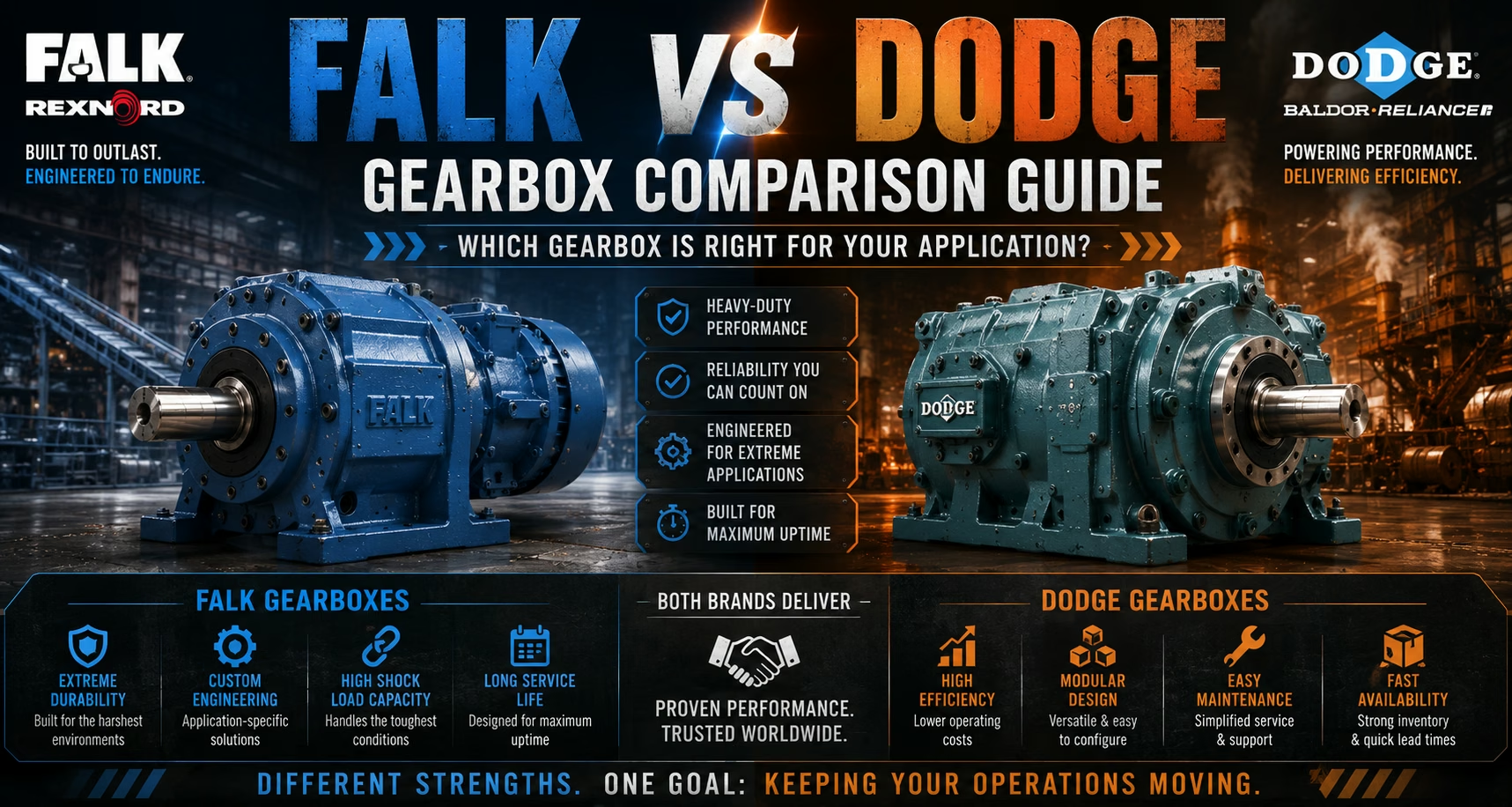
When you’re looking at industrial gearboxes, particularly for heavy-duty applications, Falk and Dodge are two names that consistently pop up. The short answer to “which one is better?” is: it depends entirely on your specific needs, application, and budget. Both manufacturers offer robust, reliable solutions, but they have distinct strengths and nuances that make one a better fit than the other in different scenarios. It’s not a clear-cut “A is always superior to B” situation.
Before diving into the specifics, it’s helpful to understand where these two giants come from. Both have long and storied histories in power transmission, establishing themselves as industry leaders through decades of innovation and manufacturing expertise.
Falk: A Centennial of Gear Prowess
Falk, now part of Rexnord, has been around since 1892. Their roots are deeply entrenched in the design and manufacture of heavy-duty gearing. Think large-scale mining, cement plants, steel mills – applications where reliability under extreme stress is non-negotiable. Over the years, they’ve built a reputation for designing exceptionally durable, custom-engineered solutions.
Dodge: Bridging Power and Performance
Dodge, now a Baldor-Reliance / ABB brand, has an equally impressive history, dating back to 1878. While they also offer heavy-duty gearboxes, Dodge has historically been known for a broader range of power transmission products, including bearings, couplings, and mounted bearing products. Their gearboxes often emphasize efficiency and versatility, catering to a wide array of industrial applications from conveyors to processing equipment.
In the ongoing discussion about the efficiency and performance of industrial gear systems, the comparison between Falk and Dodge gearboxes has garnered significant attention. For those interested in exploring the nuances of gearbox selection and the implications for operational efficiency, a related article can be found at Industrial Gearbox Solutions. This resource provides valuable insights into the features and benefits of various gearbox options, helping engineers and decision-makers make informed choices for their applications.
Key Differences in Design Philosophy
While both produce gearboxes that transmit power and reduce speed, their underlying design philosophies often differ, leading to distinct advantages.
Falk’s Robust, Application-Specific Approach
Falk gearboxes are frequently characterized by their “built like a tank” approach. They prioritize strength, durability, and a low likelihood of failure in the harshest environments.
Cast Iron Housings for Extreme Durability
Many Falk units feature heavy-duty cast iron housings, often thicker and more robust than competitors. This provides superior rigidity, dampens vibrations, and offers excellent protection for the internal components, crucial in applications with high shock loads or significant environmental challenges.
Gear Geometry Optimized for Longevity
Falk is renowned for its precision-ground helical gearing. They often employ larger gear tooth contact areas and specialized tooth profiles designed to distribute load more effectively, reducing wear and tear over extended operating periods. This focus on gear geometry contributes significantly to their reputation for long service life.
Customization and Engineered Solutions
A significant strength of Falk is their willingness and capability to engineer custom solutions. For unique applications requiring specific ratios, mounting, or power requirements, Falk often shines, providing bespoke designs that integrate seamlessly into complex industrial systems. This can be a huge benefit for specialized machinery.
Dodge’s Focus on Efficiency, Modularity, and Availability
Dodge gearboxes, while still robust, often lean towards efficiency, modularity, and ease of installation and maintenance.
High-Efficiency Gearing
Dodge places a strong emphasis on maximizing efficiency, which translates to lower operational costs over time. Their gearing designs often incorporate features aimed at reducing friction losses, like optimized tooth profiles and advanced lubrication systems.
Modular Design for Versatility
Many Dodge gearbox lines are designed with a high degree of modularity. This means components can be easily interchanged, leading to a wider range of configurations from a smaller inventory of parts. This can simplify spare parts management and reduce lead times for certain configurations.
Emphasis on Standardized Solutions
Dodge often excels in offering a comprehensive range of standardized gearboxes ready for off-the-shelf purchase or quick configuration. While they can perform custom work, their strength lies in providing reliable, readily available solutions for common industrial applications.
Performance and Reliability: A Closer Look
Both brands are synonymous with reliability, but how they achieve it and in what contexts they excel can vary.
Falk’s Endurance in Demanding Environments
When you need a gearbox to withstand continuous heavy loads, significant shock, and often dirty, abrasive conditions, Falk often comes to mind.
Sustained High Torque Output
Falk gearboxes are engineered to deliver consistent high torque output without premature wear. Their design choices, from the housing to the gearing, are all aimed at prolonged life under strenuous conditions. This makes them ideal for applications like ball mills, crushers, and large conveyor drives.
Thermal Management for Continuous Operation
In high-power applications, heat is a major enemy. Falk often incorporates generous oil reservoirs, external cooling fins, and sometimes even optional forced lubrication or cooling systems to manage thermal loads effectively, particularly in larger units, ensuring stable operation even under continuous heavy use.
Shock Load Resistance
Industries like mining or steel production frequently subject machinery to abrupt, high-impact loads. Falk units are typically designed with extra material and larger, more robust components to absorb these shocks without experiencing immediate damage or accelerated wear.
Dodge’s Balanced Performance and Adaptability
Dodge gearboxes offer excellent performance across a broad spectrum of applications, often with an eye towards operational cost and ease of integration.
Energy Efficiency Benefits
For applications where energy consumption is a critical factor, Dodge’s focus on high-efficiency gearing can result in measurable savings over the lifespan of the equipment. This is particularly relevant in installations with many gearboxes or units running continuously.
Quiet Operation
Due to their precision manufacturing and optimized tooth profiles, many Dodge gearboxes operate with lower noise levels compared to some heavy-duty alternatives. This can be an advantage in environments where noise reduction is important, such as certain manufacturing plants or indoor facilities.
Wide Application Versatility
From small fractional horsepower units to substantial industrial gearboxes, Dodge offers a comprehensive product line that fits a vast array of common industrial applications, including conveyors, pumps, fans, and mixers. Their modular design contributes to this versatility.
Sure, here is the sentence with the clickable link:
contact Industrial Gearbox Solutions for all your gearbox needs.
Installation, Maintenance, and Support Considerations
Purchasing a gearbox isn’t just about the upfront cost; it’s also about the long-term ease of ownership, maintenance, and the support network available.
Falk’s Long-Term Serviceability
While Falk units are known for their longevity, when maintenance is required, it’s generally straightforward for experienced technicians.
Robust Bearing and Seal Designs
Falk often uses heavy-duty bearings and robust sealing arrangements designed for long intervals between maintenance. When these components do need servicing, their design often allows for relatively easy access and replacement.
Documentation and Technical Support
Given their history and the complexity of some of their custom units, Falk (Rexnord) provides comprehensive documentation and strong technical support. This can be invaluable for troubleshooting or planning maintenance for highly integrated systems.
Specialized Expertise for Repairs
For very large or custom Falk units, sometimes specialized expertise or even factory-level repair services might be recommended due to the sheer scale and precision involved.
Dodge’s Ease of Integration and Maintenance
Dodge often emphasizes user-friendliness in terms of installation and ongoing maintenance.
Readily Available Parts
Due to the modularity and standardization of many Dodge product lines, spare parts are often readily available through a wide distributor network. This can significantly reduce downtime during repairs.
Simplified Lubrication and Inspection
Many Dodge gearboxes are designed with user-friendly features for lubrication checks and maintenance, such as easy-to-access fill and drain plugs, sight gauges, and even some “fill-for-life” options for smaller units.
Extensive Distributor Network
Dodge (Baldor-Reliance / ABB) boasts a very extensive global distributor network. This means easier access to sales, service, and technical support in many regions, which can be a deciding factor for multinational operations or companies in remote locations.
When considering the differences between Falk and Dodge gearboxes, it’s essential to understand the various repair options available for industrial gear systems. For instance, a related article discusses the importance of timely maintenance and repair services, which can significantly extend the lifespan of these gearboxes. You can read more about this topic in the article on industrial gearbox repair services in Bethesda, Maryland, which highlights the benefits of professional assistance. For more details, check out the article here.
Cost Implications: Initial Investment vs. Lifecycle Costs
| Metrics | Falk Gearboxes | Dodge Gearboxes |
|---|---|---|
| Efficiency | High efficiency | Variable efficiency |
| Size Range | Wide range of sizes | Limited size range |
| Application | Heavy-duty industrial applications | General industrial applications |
| Cost | Higher initial cost | Lower initial cost |
Cost is always a factor, but it’s important to look beyond the initial purchase price.
Falk’s Higher Upfront Investment
Generally, a Falk gearbox, especially a custom-engineered heavy-duty unit, will have a higher initial purchase price.
Value in Extreme Lifespan
The justification for the higher cost comes from the extreme longevity and reliability in the most demanding applications. For critical operations where downtime is exorbitantly expensive, the initial investment in a Falk unit often pays for itself many times over in reduced failures and extended operational life.
Specialized Manufacturing Costs
The engineering, materials, and precision manufacturing that goes into Falk’s heavy-duty and custom units contribute to their higher price tag.
Dodge’s Competitive Pricing and Cost Efficiency
Dodge gearboxes are often competitively priced, particularly for their standard lines, offering excellent value.
Optimized for Total Cost of Ownership
While not always the absolute cheapest, Dodge gearboxes are often optimized for a lower total cost of ownership (TCO) through efficiency gains, readily available spare parts, and simpler maintenance requirements.
Broad Range of Price Points
Dodge offers a very wide product range, allowing customers to find a suitable gearbox within various budget constraints, from economical standard units to more advanced configurations.
When considering the differences between Falk and Dodge gearboxes, it’s essential to explore various aspects of industrial gearbox repair to ensure optimal performance and longevity. A related article that provides valuable insights into the repair process can be found at industrial gearbox repair in Marshall, Michigan. This resource discusses common issues, maintenance tips, and the importance of choosing the right gearbox for your specific application, making it a useful read for anyone involved in the selection and maintenance of gear systems.
Which One Should You Choose?
This is where the rubber meets the road, so to speak. The “better” gearbox isn’t an absolute; it’s the one that best fits your specific scenario.
When Falk Might Be the Better Choice
- Extreme Duty Cycles: You need a gearbox for continuous, heavy-duty operation with minimal downtime, like in mining, cement production, or large-scale material handling.
- High Shock Loads: Your application involves frequent and significant shock loads that could damage less robust units.
- Custom Engineering Required: You have a unique application that requires a bespoke gearbox solution, specific ratios, or unusual mounting.
- Harsh Environments: The gearbox will operate in dirty, abrasive, or thermally challenging conditions.
- Long-Term Investment: You’re looking for a gearbox designed to last decades in a critical application, and the initial investment is less of a concern than long-term reliability.
When Dodge Might Be the Better Choice
- Standard Industrial Applications: You need a reliable gearbox for common industrial uses like conveyors, pumps, fans, or mixers where off-the-shelf solutions are applicable.
- Energy Efficiency is Key: Reducing operational energy costs is a high priority.
- Modularity and Versatility: You appreciate the flexibility of modular designs and readily available standard configurations.
- Quick Replacement/Availability: You need a gearbox relatively quickly, and a broad distributor network for parts and service is important.
- Balanced Performance and Cost: You’re looking for a good balance of performance, efficiency, and competitive pricing.
- Quiet Operation: Noise levels are a concern in your operational environment.
In summary, neither Falk nor Dodge is universally superior. Falk excels in rugged, custom-engineered solutions for the most demanding applications where relentless durability is paramount, often accepting a higher initial cost. Dodge shines in providing highly efficient, versatile, and readily available solutions for a broader range of industrial uses, often with an emphasis on total cost of ownership. Your decision should stem from a thorough analysis of your application’s requirements, environmental conditions, future maintenance strategy, and overall budget.
FAQs
What are Falk and Dodge Gearboxes?
Falk and Dodge are both well-known manufacturers of industrial gearboxes. These gearboxes are used in a wide range of applications, including mining, construction, and manufacturing.
What are the differences between Falk and Dodge Gearboxes?
Falk and Dodge gearboxes differ in terms of design, construction, and performance. Falk gearboxes are known for their ruggedness and durability, while Dodge gearboxes are recognized for their efficiency and precision.
Which industries commonly use Falk and Dodge Gearboxes?
Falk and Dodge gearboxes are commonly used in industries such as mining, construction, power generation, and material handling. These gearboxes are designed to withstand heavy loads and harsh operating conditions.
What are the key features of Falk and Dodge Gearboxes?
Falk gearboxes are known for their heavy-duty construction, high torque capacity, and reliable performance. Dodge gearboxes are recognized for their compact design, high efficiency, and low maintenance requirements.
How do I choose between Falk and Dodge Gearboxes for my application?
When choosing between Falk and Dodge gearboxes, it’s important to consider factors such as the specific requirements of your application, the operating environment, and the desired performance characteristics. Consulting with a gearbox specialist can help you make an informed decision.