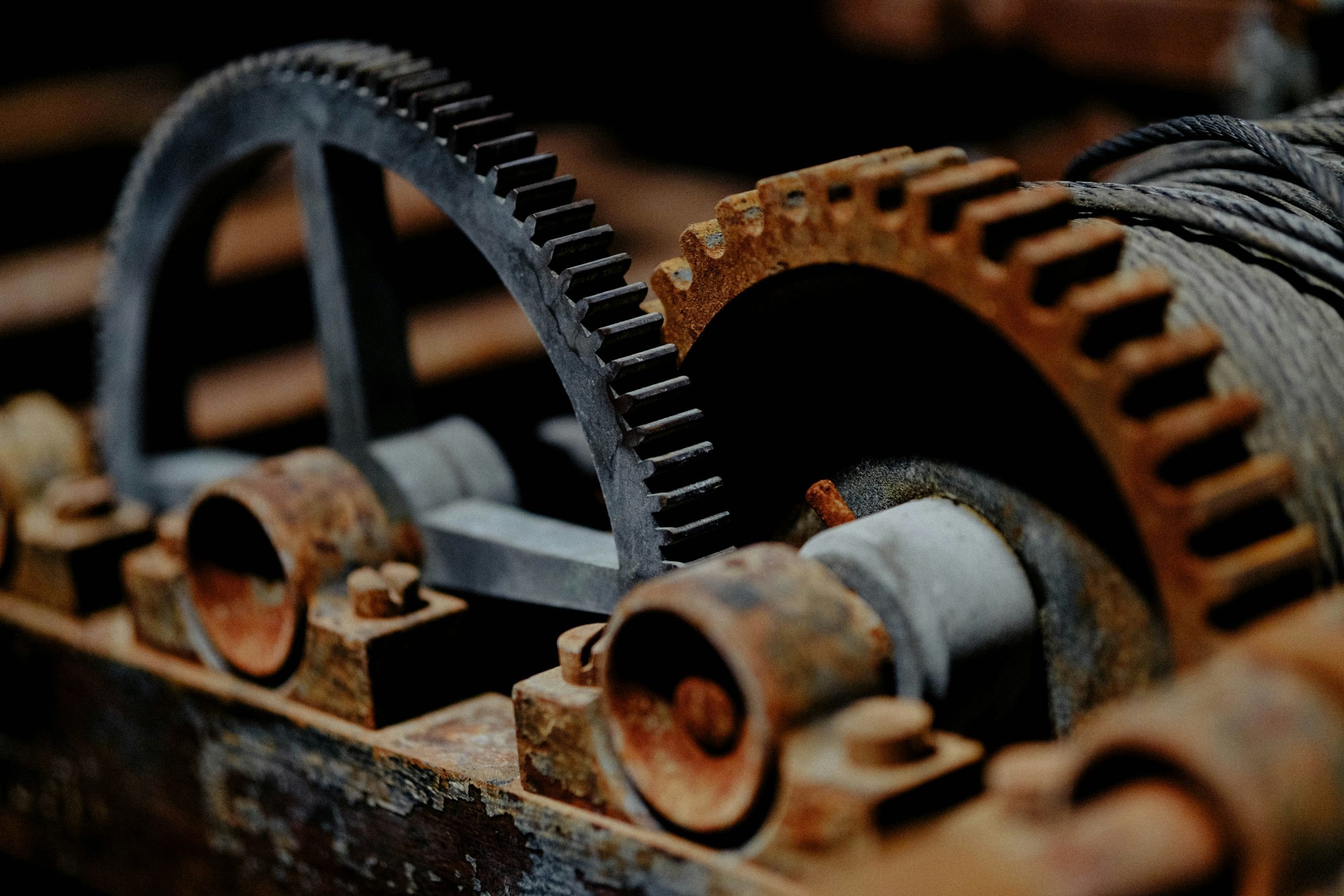
You’re wondering about gearboxes in lumber mills, and what makes them tick, right? Well, the short answer is they’re the workhorses that make all the heavy lifting and precise cutting possible. Think of them as the muscles and brains of the machinery, translating the power from the motor into the right kind of force for sawing, conveyor belts, and pretty much anything else that needs to move wood efficiently and safely. They’re not just about making things spin; they’re about making them spin right for the demanding job of processing lumber.
In the world of lumber, things are big, heavy, and need to be handled with serious power. That’s where gearboxes come in. They’re not just an add-on; they’re fundamental to how a lumber mill operates. Without them, the motors would be spinning at speeds and torques that wouldn’t be able to, say, drive a massive saw blade through a thick log or slowly and steadily move lumber down a conveyor.
Adapting Motor Power for Tough Tasks
Electric motors usually spin at very high speeds. Trying to use that raw speed directly on a saw or a conveyor would be like trying to use a race car engine to power a forklift. It’s the wrong kind of power for the job. Gearboxes take that high-speed, lower-torque output from the motor and convert it into the lower-speed, higher-torque output that’s actually needed to move those heavy logs and cut through them. This adaptation is key to efficiency and preventing damage to the machinery.
Precision and Control: More Than Just Muscle
It’s not just about brute force. Gearboxes also provide crucial control. Think about feeding a log into a headrig. You need a consistent, controlled speed. Or moving cut lumber onto a sorting line – that requires accurate positioning and speed regulation. Gearboxes enable this level of precision, which is vital for maximizing yield, minimizing waste, and ensuring the quality of the finished lumber.
Durability in a Dirty Environment
Lumber mills are tough environments. There’s dust, moisture, vibration, and constant, heavy-duty use. Gearboxes designed for these applications need to be robust, able to withstand these conditions over long periods without failing. Their construction and sealing are therefore just as important as their internal workings.
For those interested in the maintenance and repair of gearboxes used in lumber mills, a valuable resource can be found in the article on industrial gearbox repair services in West Valley City, Utah. This article highlights the importance of regular maintenance to ensure optimal performance and longevity of gearboxes, which are crucial for the efficient operation of lumber mills. You can read more about it by visiting this link: Industrial Gearbox Repair in West Valley City, Utah.
Key Gearbox Types Used in Lumber Mills
Not all gearboxes are created equal, and lumber mills utilize a variety of types, each suited to specific tasks. The choice often comes down to the required torque, speed reduction, and the specific application within the mill.
Helical Gearboxes: The All-Rounder
Helical gearboxes are probably the most common type you’ll find. They have teeth that are cut at an angle to the shaft, which means more teeth are in contact at any given time compared to spur gears.
Advantages of Helical Gearboxes
- Quiet Operation: The angled teeth ensure a smoother, quieter mesh than spur gears, which can be a welcome change in a noisy mill.
- High Torque Capacity: Their design allows them to handle significant torque while still being relatively compact.
- Durability: They are generally very robust and can withstand heavy loads and continuous operation.
- Efficiency: They offer good efficiency, meaning less energy is wasted as heat.
Common Applications in Lumber Mills
You’ll find helical gearboxes driving conveyor systems, powering log debarkers, and even some saw carriages where consistent, powerful torque is needed.
Worm Gearboxes: For Serious Reduction and Braking
Worm gearboxes are characterized by a screw-like “worm” that meshes with a circular gear called a “worm wheel.” They’re known for their ability to achieve very high speed reductions in a single stage.
Advantages of Worm Gearboxes
- High Reduction Ratios: They can provide significant speed reduction, often from a high-speed motor down to a very slow, powerful output.
- Self-Locking Capability: Many worm gearboxes are “self-locking,” meaning the output shaft cannot be back-driven by the load. This is a critical safety feature for applications where holding position is important.
- Compact Design: For a given reduction ratio, they can be quite compact.
Considerations for Lumber Mill Use
- Lower Efficiency: Compared to helical or planetary gearboxes, worm gearboxes are generally less efficient due to the sliding friction between the worm and the wheel. This can lead to more heat generation.
- Heat Dissipation: Adequate cooling or ventilation is often necessary, especially for heavy-duty applications.
Where You’ll See Worm Gearboxes
These are excellent for applications requiring very slow, controlled movement and holding power, such as certain types of winches for moving logs, or for precise positioning systems.
Planetary Gearboxes: Compact Powerhouses
Planetary gearboxes get their name from their arrangement, which resembles a solar system. A central “sun gear” meshes with several smaller “planet gears,” which in turn rotate around the sun gear within an outer “ring gear.”
Advantages of Planetary Gearboxes
- High Torque Density: They can deliver a tremendous amount of torque in a relatively small and compact package.
- Coaxial Input and Output: The input and output shafts are aligned, making them easy to integrate into existing machinery.
- Load Distribution: The load is distributed across multiple planet gears, which reduces stress on individual components and increases durability.
- High Efficiency: They are known for their excellent efficiency.
Why They’re Great for Lumber Mills
The combination of compact size, high torque, and durability makes planetary gearboxes ideal for many demanding applications in lumber mills.
Applications
You’ll find them powering heavy-duty lifts, driving log turners, and in applications where space is limited but significant power is required.
Spur Gearboxes: Simpler, But Still Useful
Spur gearboxes use straight-toothed gears. While they don’t offer the same smoothness or torque density as helical or planetary types, they are simple, cost-effective, and good for certain tasks.
Pros and Cons in a Mill Setting
- Pros: Simple design, easy to manufacture, relatively inexpensive.
- Cons: Can be noisy, less efficient at higher speeds, lower torque capacity for their size compared to other types.
Typical Lumber Mill Roles
Spur gearboxes are often used in less demanding applications or where cost is a primary consideration, such as some basic material handling systems or for low-speed, low-torque applications.
Essential Features for Lumber Mill Gearboxes
It’s not just about the type of gear teeth; several other features are critical for a gearbox to survive and thrive in a lumber mill environment. These aren’t optional extras; they are necessities.
Robust Housing and Sealing
The housing needs to be strong enough to withstand shocks and vibrations common in a mill. More importantly, effective sealing is paramount.
Keeping Contaminants Out
- Dust and Debris: Sawdust, wood chips, and general mill debris can wreak havoc on internal gear mechanisms if they get in. Good seals prevent this ingress.
- Moisture: Lumber mills can be damp environments. Seals protect against water and other liquids that can cause corrosion and damage to bearings and gears.
Materials Matter
The materials used for the housing – often cast iron or heavy-duty steel – are chosen for their strength and resistance to wear and tear.
Cooling and Lubrication Systems
These two are intrinsically linked. Gearboxes generate heat due to friction, and insufficient lubrication leads to excessive friction and premature wear.
The Importance of Proper Lubrication
- Reduced Friction and Wear: Lubricant forms a film between moving parts, reducing direct contact and thus wear.
- Heat Dissipation: Lubricant also helps to carry heat away from the gears and bearings.
- Corrosion Prevention: It coats metal surfaces, protecting them from moisture and contaminants.
Cooling Methods
For high-duty applications, simple oil baths might not be enough. You might see:
- Fins on the Housing: To increase surface area for air cooling.
- External Cooling Fans: Actively blowing air over the gearbox.
- Oil Coolers: Similar to radiators in a car, these actively cool the circulating lubricant, especially critical for very high torque or continuous duty.
Oversized Bearings
The bearings are the components that allow shafts to rotate smoothly. In a lumber mill, these need to be considerably more robust than in lighter applications.
Handling Heavy Loads
- Radial and Axial Loads: Gearboxes experience forces pushing down on shafts (radial) and forces trying to pull them apart (axial). Lumber mill gearboxes are designed to handle significant loads in both directions.
- Shock Loads: The sudden application or removal of heavy loads, common when handling logs, requires bearings that can absorb these shocks without damage.
Types of Bearings
You’ll often find heavy-duty roller bearings (cylindrical, spherical) which are designed to tolerate higher loads and misalignment better than ball bearings, though high-quality ball bearings are also used in certain applications.
Sure, here is the sentence with the clickable link:
Please feel free to contact Industrial Gearbox Solutions for any inquiries.
Maintenance: Keeping Your Gearboxes Running Smoothly
A gearbox is a complex piece of machinery, and like any machinery, it requires regular attention to keep it performing at its best and to prevent costly breakdowns. Neglecting maintenance is one of the quickest ways to shorten a gearbox’s lifespan in a mill.
Regular Oil Analysis: Looking for Trouble Before It Starts
This is one of the most effective proactive maintenance techniques. Instead of just waiting for a problem to appear, you’re actually looking for the subtle signs of wear.
What Oil Analysis Can Tell You
- Wear Particles: Analyzing the oil can reveal the presence and type of metal particles. Different metals (iron, copper, aluminum) can indicate wear in specific components (gears, bearings).
- Contamination: It can also detect the presence of water, dirt, or other contaminants that shouldn’t be there.
- Oil Breakdown: It can assess the condition of the lubricating oil itself, indicating if it’s degrading and losing its protective properties.
How Often to Do It
The frequency depends on the gearbox’s duty cycle and criticality, but for heavy-duty mill applications, quarterly or even monthly analysis might be appropriate, especially if there are any initial concerns.
Visual Inspections: Your First Line of Defense
Don’t underestimate the power of just looking and listening. A quick walk-around can spot issues before they become major problems.
What to Look For
- Leaks: Obvious signs of oil leaks on the housing, seals, or pipes.
- Unusual Noises: Grinding, squealing, or knocking sounds that weren’t there before can indicate bearing wear, gear damage, or improper meshing.
- Vibration: Excessive vibration not normally present could be a sign of imbalance or bearing issues.
- Temperature: Using an infrared thermometer to check for unusually hot spots on the gearbox housing.
Listening for Changes
Pay attention to changes in the operational sound of the gearbox. A gearbox that suddenly starts sounding different is a warning sign.
Cleaning: Simple, But Crucial
Sawdust and debris aren’t just unsightly; they can insidiously work their way into seals or impede cooling.
Keeping the Exterior Clean
- Airflow: Especially important for gearboxes that rely on external cooling. Blocked fins or vents reduce their efficiency.
- Seal Integrity: Dust can accumulate around seals, potentially causing them to wear down faster or become less effective.
Lubricant Changes: More Than Just Topping Up
Lubricant doesn’t last forever. Over time, it degrades, picks up contaminants, and loses its effectiveness.
Following Manufacturer Recommendations
- Timely Replacement: Adhere to the manufacturer’s recommended intervals for oil changes, considering the operating conditions.
- Correct Lubricant: Always use the specific type and grade of lubricant recommended by the gearbox manufacturer. Using the wrong lubricant can be as bad as no lubricant at all.
When considering the efficiency of gearboxes for lumber mills, it’s essential to understand the importance of regular maintenance and repair services. A well-maintained gearbox can significantly enhance the performance and longevity of milling operations. For those interested in learning more about gearbox repair services, you can explore a related article that discusses the specifics of industrial gearbox repair in Mesa, Arizona. This resource provides valuable insights into how proper servicing can prevent costly downtimes and ensure optimal functionality. For further details, visit this article.
Troubleshooting Common Gearbox Problems in Lumber Mills
| Gearbox Type | Power Rating | Speed Range | Efficiency |
|---|---|---|---|
| Parallel Shaft Gearbox | Up to 500 HP | 100-1000 RPM | Up to 98% |
| Right Angle Gearbox | Up to 300 HP | 50-500 RPM | Up to 95% |
| Helical Gearbox | Up to 600 HP | 200-1500 RPM | Up to 97% |
Even with the best maintenance, issues can arise. Knowing how to identify and address common problems can save significant downtime.
Overheating: The Silent Killer
Overheating is a prime indicator of underlying issues. It accelerates lubricant breakdown and can lead to rapid wear and failure.
Common Causes of Overheating
- Insufficient Lubrication: Low oil level or using the wrong type of oil.
- Overloading: The gearbox is being asked to do more work than it’s designed for.
- Seal Drag: Damaged or improperly installed seals creating excessive friction.
- Bearing Failure: Worn bearings generate more friction and heat.
- Blocked Cooling: Dust and debris preventing air from circulating or cooling fins from dissipating heat.
Steps to Take
- Stop the Equipment: Immediately shut down the machinery.
- Check Oil Level: Ensure it’s within the correct range.
- Inspect for External Obstructions: Clean cooling fins/vents.
- Listen for Unusual Sounds: Bearing noise might be apparent.
- If Issues Persist, Seek Expert Advice: Don’t try to power through it.
Excessive Noise and Vibration: Signals of Distress
These symptoms often point to internal component wear or misalignment.
Potential Root Causes
- Worn Gears: Chipped, broken, or worn gear teeth can cause clattering or grinding.
- Bearing Damage: The most common cause for high-pitched whining or rumbling noises.
- Misalignment: Improper alignment between the motor and gearbox, or between shafts within the gearbox.
- Loose Mountings: The gearbox itself isn’t securely attached to its foundation.
Diagnostic Approaches
- Listen Closely: Try to pinpoint the source of the noise.
- Vibration Analysis: Specialized equipment can often diagnose bearing conditions based on vibration signatures.
- Internal Inspection: In severe cases, opening the gearbox for visual inspection of gears and bearings may be necessary.
Oil Leaks: A Clear Sign of Seal or Gasket Failure
Leaks are more than just an environmental concern; they mean that essential lubricant is escaping and contaminants are likely entering.
Troubleshooting Leaks
- Identify the Leak Source: Trace the path of the oil. Is it from a specific seal, gasket, or housing crack?
- Check Oil Level: Ensure the gearbox isn’t overfilled, which can sometimes cause pressure build-up and push oil out.
- Inspect Seals and Gaskets: Look for signs of cracking, hardening, or physical damage.
- Consider Material Compatibility: Ensure the seals are made of a material compatible with the oil and operating temperature.
The Importance of Prompt Repair
Don’t delay fixing leaks. Even small leaks can lead to significant oil loss and subsequent damage if left unattended.
Selecting the Right Gearbox for Your Lumber Mill Application
Choosing the correct gearbox from the outset is as important as proper maintenance. A mismatch can lead to premature wear, inefficiency, and safety hazards.
Understanding Your Needs: Torque, Speed, and Duty Cycle
The first step is a clear assessment of the job the gearbox needs to do.
Torque Requirements:
- Starting Torque: The torque needed to get the load moving from a standstill. This is often higher than the running torque.
- Running Torque: The torque required to maintain the desired speed under load.
- Peak Torque: The maximum torque the gearbox might encounter, including transient loads.
Speed Reduction:
- Input Speed: The rotational speed of the motor (e.g., RPM).
- Output Speed: The desired rotational speed for the application.
- Ratio: The relationship between input and output speed (Input Speed / Output Speed).
Duty Cycle:
- Continuous Duty: The gearbox operates under load for extended periods (e.g., 24/7).
- Intermittent Duty: The gearbox operates for short periods with rest intervals.
- Severity of Duty: Lumber mills are generally considered heavy-duty applications, often involving shock loads and vibration.
Considering Environmental Factors
As mentioned, lumber mills present harsh conditions.
Temperature Extremes:
Will the gearbox be exposed to extreme heat or cold? This affects lubricant viscosity and the need for specialized cooling.
Moisture and Washdowns:
Does the gearbox need to withstand regular washing or high humidity? This dictates the level of sealing and corrosion resistance required.
Dust and Debris:
The amount and type of particulate matter will influence seal design and the need for external cleaning.
Key Considerations for Specific Mill Equipment
Different machines within a mill have unique requirements.
Head Saws and Edgers:
These often require high torque, precision control, and the ability to handle significant shock loads. Helical and planetary gearboxes are common here.
Conveyor Systems:
Typically require consistent, controlled speed and good durability to handle the constant movement of lumber. Helical and sometimes spur gearboxes are used.
Log Turners and Carriages:
These often need high torque, precise positioning, and sometimes self-locking capabilities. Worm and planetary gearboxes can be found in these applications.
Consulting with Experts: Not Just for Emergencies
When in doubt, don’t guess.
Manufacturer Support:
Gearbox manufacturers have application engineers who can help you select the right unit based on your specific needs. They can also advise on proper installation and maintenance.
System Integrators:
Companies that specialize in designing and building mill equipment often have extensive knowledge about the best gearbox choices for their integrated systems.
By carefully considering these factors and working with knowledgeable partners, lumber mills can ensure they are equipped with gearboxes that are not only powerful but also reliable and long-lasting.
FAQs
What are gearboxes for lumber mills?
Gearboxes for lumber mills are mechanical devices that transmit power from the lumber mill’s motor to the cutting blades or other equipment. They are essential for controlling the speed and torque of the equipment to ensure efficient and precise lumber processing.
What are the key features of gearboxes for lumber mills?
Gearboxes for lumber mills are designed to withstand heavy loads and harsh operating conditions. They are typically made of durable materials such as cast iron or steel and are equipped with precision gears to ensure smooth and reliable operation.
How do gearboxes improve the efficiency of lumber mills?
Gearboxes allow lumber mills to control the speed and torque of their equipment, which is essential for optimizing the cutting and processing of lumber. By adjusting the gear ratio, lumber mills can achieve the desired output while minimizing energy consumption and wear on the equipment.
What are the different types of gearboxes used in lumber mills?
Lumber mills may use various types of gearboxes, including helical, bevel, worm, or planetary gearboxes. Each type has its own advantages and is chosen based on the specific requirements of the lumber mill’s equipment and operations.
How important are gearboxes for the overall operation of lumber mills?
Gearboxes are crucial components of lumber mills, as they directly impact the efficiency, precision, and reliability of the equipment. Without properly functioning gearboxes, lumber mills would struggle to maintain consistent production and quality standards.