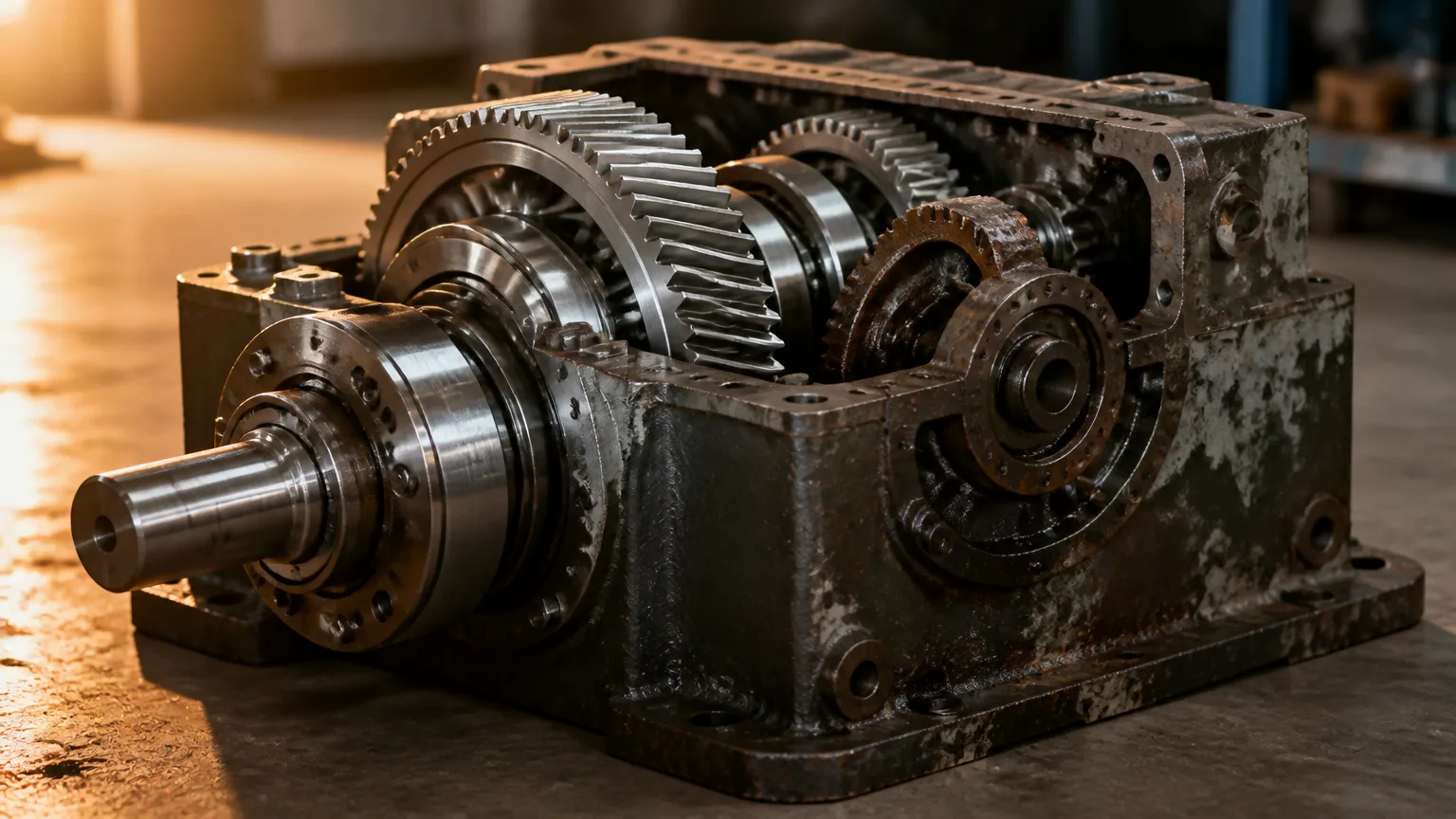
Industrial gear repair can help prevent costly production stoppages, safety risks, and damage to connected equipment. When a gearbox fails, manufacturers must decide whether restoring the existing unit is more practical than purchasing and installing a replacement.
That decision involves more than comparing upfront prices. Failure severity, gearbox age, parts availability, operating demands, and the risk of repeat failures all affect long-term reliability and lifecycle cost. A timely repair may restore dependable service, while an aging or severely damaged gearbox may justify replacement.
Understanding when to rebuild or replace a gearbox helps maintenance teams make informed choices under pressure. This article examines the key factors behind that decision, including downtime exposure, safety requirements, repair quality, and the value of preventing another failure.
Start With a Thorough Gearbox Failure Assessment
Before choosing industrial gear repair or replacement, inspect the gearbox systematically. Abnormal noise, increased vibration, overheating, contaminated lubricant, excessive backlash, leaking seals, and declining output performance can indicate internal damage. However, these symptoms alone do not show the full extent or cause of failure.
Begin with oil analysis to identify metal particles, water, oxidation, or lubricant breakdown. Vibration monitoring can reveal gear tooth damage, bearing wear, imbalance, and misalignment. Visual inspection should check housings, seals, gear teeth, bearings, and lubrication paths for visible wear or distress.
Technicians should measure gear backlash, tooth profiles, bearing clearances, and shaft runout. Alignment verification is also essential, particularly where the gearbox connects to motors, driven equipment, or couplings. These findings help determine whether components remain serviceable or require replacement.
The assessment must identify the root cause, not just the failed part. Overload, poor lubrication, contamination, misalignment, and thermal stress can damage a repaired or replacement unit again. Reviewing GE gearbox repair and failure diagnosis can also help teams evaluate failure patterns and downtime risks. A documented inspection gives maintenance leaders a defensible basis for repairing, rebuilding, or replacing the gearbox.
When Industrial Gear Repair Is the Better Choice
Industrial gear repair is often the practical choice when damage is contained and the gearbox housing remains serviceable. Rebuilding can restore reliable operation when failures involve replaceable wear components, including bearings, seals, bushings, shafts, or individual gears.
A repair also preserves a gearbox that already fits the application. Maintenance teams can avoid extensive integration work, long replacement lead times, and equipment modifications. Existing mounting points, couplings, and interfaces may remain compatible, reducing installation risk and shortening the return-to-service window.
Repair is especially valuable when operational disruption must be minimized. A qualified shop can inspect the unit, identify the failure mechanism, replace damaged components, and verify clearances before shipment. This approach is more defensible when supported by inspection records, dimensional checks, and test results.
For example, a manufacturer may send a production gearbox for a documented rebuild after bearing damage is discovered. Replacing the bearings, seals, and damaged shaft, then correcting alignment issues, can restore performance and extend useful service life.
Application-specific expertise also matters. A provider experienced in Rossi gearbox repair can evaluate original components, confirm rebuild requirements, and help ensure the repaired unit meets operating demands. Repair remains appropriate when the housing, gear geometry, and remaining components can support dependable service.
When Replacement Makes More Operational and Financial Sense
Replacement becomes the stronger option when the gearbox cannot provide a reliable foundation for industrial gear repair. A cracked or distorted housing may prevent correct alignment, while extensive gear damage can make restoration uneconomical. Obsolete components, unavailable replacement parts, and repeated failures also increase reliability risk and future downtime.
A new gearbox may be necessary when the existing unit no longer meets required speed, torque, efficiency, or duty-cycle demands. These limitations can restrict production and increase energy use, even if the gearbox remains repairable. Reviewing Ferguson gearbox information and replacement considerations can also support decisions involving older or specialized equipment.
Compare the complete replacement cost with a rebuild, not just the purchase price. Include engineering, procurement, installation, alignment, controls integration, commissioning, and expected downtime. A rebuild may appear less expensive but offer poor value if another failure remains likely.
Any replacement must be correctly specified for the load profile, duty cycle, service factor, operating environment, lubrication requirements, and available space. Confirming these factors helps prevent premature wear and ensures the new gearbox supports dependable, long-term operation.
Compare Total Lifecycle Cost, Downtime, and Reliability Risk
Compare industrial gear repair and replacement using total cost of ownership, not the initial invoice alone. Include parts and labor, lost production, emergency freight, installation time, energy use, maintenance frequency, and expected remaining life. A lower-cost repair may be the wrong choice if it leaves alignment, lubrication, capacity, or design problems unresolved.
Next, assess reliability risk and maintainability. A repaired gearbox can provide strong value when inspection confirms sound housing, gear geometry, and components. However, recurring failures may justify replacement, especially when spare parts are obsolete or the unit requires frequent intervention. For mixer applications, Lightnin gearbox repair for industrial mixers and agitators can help clarify rebuild requirements and service expectations.
Document inspection results, proposed repair scope, warranty terms, lead times, and commissioning requirements. Operations, maintenance, and purchasing teams should evaluate the same evidence. This shared record supports a defensible decision and reduces surprises during installation, startup, and future maintenance.
Make the Decision Before the Next Gearbox Failure
Repair is strongest when damage is contained and the gearbox remains fundamentally sound. Replacement is usually justified by severe damage, obsolete components, repeated failures, or changing production requirements.
Prepare before an emergency. Maintain inspection records, critical-spares plans, qualified vendor contacts, and preventive monitoring for high-consequence gearboxes. Working with experienced industrial gear repair specialists helps facilities evaluate evidence before downtime forces a rushed choice.
A professional assessment can turn an uncertain repair-versus-replace decision into a controlled reliability decision.