Known as Industry 4.0, manufacturing is undergoing one of the most significant technological transformations in modern history. This new era of production integrates digital technologies, automation, sensors, and intelligent systems into traditional industrial processes.
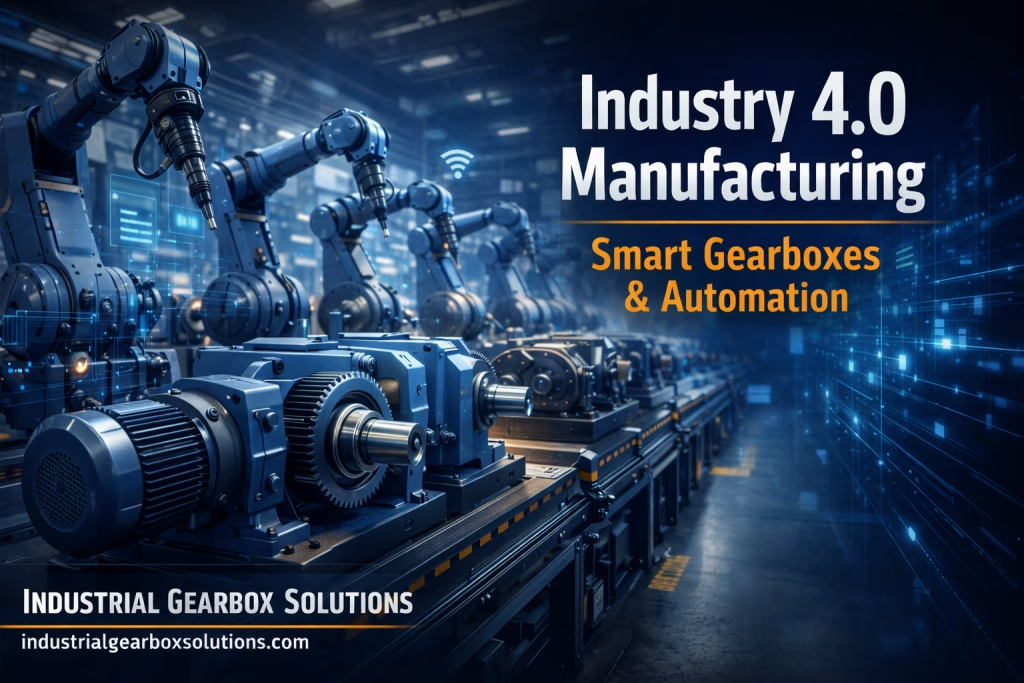
Factories that once relied primarily on mechanical equipment now operate with connected machines, real-time data monitoring, and predictive analytics. These technologies enable companies to improve efficiency, reduce downtime, and optimize production systems.
Industrial gearboxes — the mechanical systems responsible for converting motor power into usable torque and speed — play a central role in this transformation. As Industry 4.0 manufacturing expands, gearboxes are increasingly integrated into automated systems, robotics platforms, and predictive maintenance networks.
In this guide, we’ll explore how Industry 4.0 is transforming industrial gearboxes, the technologies driving smart manufacturing, and how engineers can select gearbox solutions that support modern automated production systems.
If you’re looking for more in-depth gearbox education, reviews, and buying guides, visit our industrial gearbox article hub:
What Is Industry 4.0?
Industry 4.0 refers to the fourth industrial revolution — the integration of advanced digital technologies with traditional manufacturing equipment.
While earlier industrial revolutions introduced mechanization, electricity, and computer automation, Industry 4.0 connects machines, sensors, and software into intelligent production ecosystems.
Key characteristics of Industry 4.0 manufacturing include:
- Connected production equipment
- Real-time monitoring and analytics
- Industrial Internet of Things (IIoT) devices
- Predictive maintenance systems
- Cloud-connected machinery
- Smart robotics and automation
- Data-driven manufacturing decisions
Instead of reacting to equipment failures, manufacturers can now predict mechanical issues before they occur, improving uptime and reducing operational costs.
Industrial power transmission systems — including gearboxes, motors, and drives — are among the most important mechanical components affected by this transformation.
Recommended: Learn more general information about Industry 4.0 from IBM.
How Industry 4.0 Is Transforming Industrial Gearboxes
Traditionally, industrial gearboxes were purely mechanical devices designed to transmit torque from an electric motor to a machine.
However, Industry 4.0 automation is transforming gearboxes into components of intelligent industrial systems.
Modern gearbox applications increasingly include:
- vibration monitoring sensors
- temperature sensors
- oil condition monitoring
- load and torque monitoring
- predictive maintenance software integration
These systems allow manufacturers to monitor gearbox health in real time and detect early signs of mechanical wear.
This transformation is particularly valuable in industries where downtime can cost thousands or even millions of dollars per hour, including:
- mining
- manufacturing
- energy production
- automated warehouses
- heavy material processing
Facilities adopting smart manufacturing Industry 4.0 systems often upgrade both their gearbox and motor systems simultaneously.
Many manufacturers rely on modern NEMA electric motor solutions paired with high-efficiency gearboxes to optimize automated production equipment.
Recommended: Explore available gearbox solutions from top manufacturers.
Industry 4.0 Technologies Used in Gearbox Systems
Several Industry 4.0 technologies are reshaping the way industrial gearboxes are monitored, maintained, and integrated into automated systems.
IoT Sensors
One of the most important innovations in Industry 4.0 manufacturing is the use of Industrial Internet of Things (IIoT) sensors.
These sensors continuously monitor gearbox operating conditions such as:
- vibration patterns
- internal temperatures
- rotational speed
- lubrication quality
- load fluctuations
The data collected by these sensors can be transmitted to centralized monitoring systems that analyze performance trends and detect abnormal behavior.
This allows maintenance teams to intervene before mechanical failure occurs, preventing costly production downtime.
Predictive Maintenance
Predictive maintenance is one of the most powerful advantages of Industry 4.0 automation systems.
Instead of performing maintenance at fixed intervals, predictive maintenance uses real-time data to determine when equipment actually requires service.
In gearbox systems, predictive maintenance can identify:
- bearing wear
- gear tooth fatigue
- lubrication breakdown
- shaft misalignment
- overheating conditions
By detecting these issues early, companies can schedule repairs during planned downtime rather than reacting to unexpected equipment failures.
For facilities experiencing gearbox problems, check out our gearbox repair options.
Machine Learning
Machine learning systems analyze large datasets generated by industrial sensors and identify patterns associated with equipment wear or mechanical stress.
These systems can recognize subtle changes in vibration signatures or temperature patterns that may indicate early gearbox damage.
Machine learning models improve over time as more operational data becomes available.
Digital Twins
A digital twin is a virtual simulation of a physical machine or mechanical system.
In Industry 4.0 environments, digital twins allow engineers to simulate gearbox performance under different operating conditions.
This helps manufacturers:
- optimize gearbox selection
- reduce mechanical stress
- simulate equipment loads
- improve system design
- plan predictive maintenance strategies
Digital twins are especially valuable in industries with extremely expensive equipment such as wind turbines and large mining machinery.
Smart Gearboxes and Predictive Maintenance
As Industry 4.0 adoption increases, gearbox manufacturers are developing smart gearbox systems designed to support predictive monitoring and intelligent maintenance.
These systems may include:
- integrated sensor mounting points
- advanced lubrication monitoring
- modular designs for easier servicing
- compatibility with condition monitoring platforms
- improved cooling systems
These innovations help extend gearbox lifespan and reduce the risk of catastrophic failures.
For example, many modern industrial facilities implement condition monitoring programs that track gearbox health across entire production lines.
If you’re researching different gearbox brands and performance comparisons, you may find our gearbox comparison guide helpful:
Industrial Gearbox Market Growth Statistics for 2026
The global demand for industrial gearboxes continues to grow as automation and smart manufacturing expand across multiple industries.
Recent market data highlights the importance of gearbox systems in modern industrial infrastructure.
Key industrial gearbox market statistics include:
- The global industrial gearbox market is projected to grow from approximately $32.1 billion in 2025 to more than $52 billion by 2035.
- This represents a projected compound annual growth rate (CAGR) of about 5.1%.
- The small power industrial gearbox segment is expected to account for approximately 57.91% of market share.
- Demand for wind turbine gearboxes is increasing as renewable energy investments accelerate worldwide.
These trends indicate that industrial gearboxes will remain a critical component of global manufacturing and energy infrastructure for decades to come.
Industries Driving the Growth
Several industries are responsible for the growing demand for Industry 4.0 gearbox solutions.
Manufacturing
Automated production lines rely heavily on gearboxes to control torque, speed, and motion across conveyor systems, assembly lines, and robotic equipment.
Mining
Mining operations use heavy-duty gearboxes in crushers, mills, conveyors, and processing equipment operating in extremely demanding environments.
Energy
Energy infrastructure requires gearbox systems for turbines, drilling equipment, and power generation systems.
Wind Turbines
Wind turbines rely on multi-stage gearboxes that convert slow rotor speeds into high-speed generator rotation.
As renewable energy continues to expand, demand for high-reliability wind turbine gearboxes is increasing.
Robotics
Industrial robotics systems rely on compact, high-precision gearboxes that allow precise control of movement and torque.
Robotic gearboxes are widely used in:
- automotive manufacturing
- electronics production
- automated warehouses
- packaging systems
How Manufacturers Can Prepare for Industry 4.0
Manufacturers preparing for Industry 4.0 should evaluate both their equipment and operational strategies.
Key steps include:
Invest in connected equipment
Modern gearbox systems should support sensor integration and condition monitoring.
Adopt predictive maintenance
Monitoring systems help identify potential failures before they cause downtime.
Upgrade aging machinery
Legacy mechanical systems may not support modern automation technologies.
Improve data integration
Connecting machinery data to centralized monitoring systems allows manufacturers to analyze performance trends and optimize operations.
Choosing the Right Industrial Gearbox for Smart Manufacturing
Selecting the right gearbox for Industry 4.0 manufacturing environments requires careful consideration of both mechanical performance and system integration capabilities.
Important factors include:
- torque capacity
- efficiency
- durability
- sensor compatibility
- mounting configuration
- operating environment
- load requirements
Many engineers rely on trusted gearbox manufacturers such as Nord, Radicon, and Cone Drive for high-performance industrial applications.
If you’re researching gearbox options, our full library of guides, reviews, and application articles can help.
Need Help Selecting a Gearbox for Industry 4.0 Systems?
Choosing the right gearbox for automated manufacturing systems requires expertise in both mechanical power transmission and modern industrial automation.
At Industrial Gearbox Solutions, our team helps engineers and plant managers identify gearbox solutions that match their torque requirements, production environment, and automation systems.
Whether you’re replacing an existing gearbox or designing a new production line, we can help you find the right solution.
Recommended: Explore our gearbox solutions.
Or contact our team for expert assistance selecting the right gearbox for your application.
Frequently Asked Questions
What is Industry 4.0 in manufacturing?
Industry 4.0 refers to the integration of digital technologies such as automation, sensors, data analytics, and the Industrial Internet of Things (IIoT) into manufacturing systems to create smart factories and connected production environments.
How does Industry 4.0 affect industrial gearboxes?
Industry 4.0 enables industrial gearboxes to be monitored using sensors and predictive maintenance systems. These technologies track vibration, temperature, and lubrication conditions to detect potential failures before they occur.
What technologies are used in Industry 4.0 gearbox systems?
Common Industry 4.0 technologies used in gearbox systems include IoT sensors, predictive maintenance software, machine learning analytics, and digital twin simulations.
Why are industrial gearboxes important in smart manufacturing?
Industrial gearboxes control torque and speed in automated equipment such as conveyors, robotics, and assembly systems. They are essential components in modern Industry 4.0 production environments.