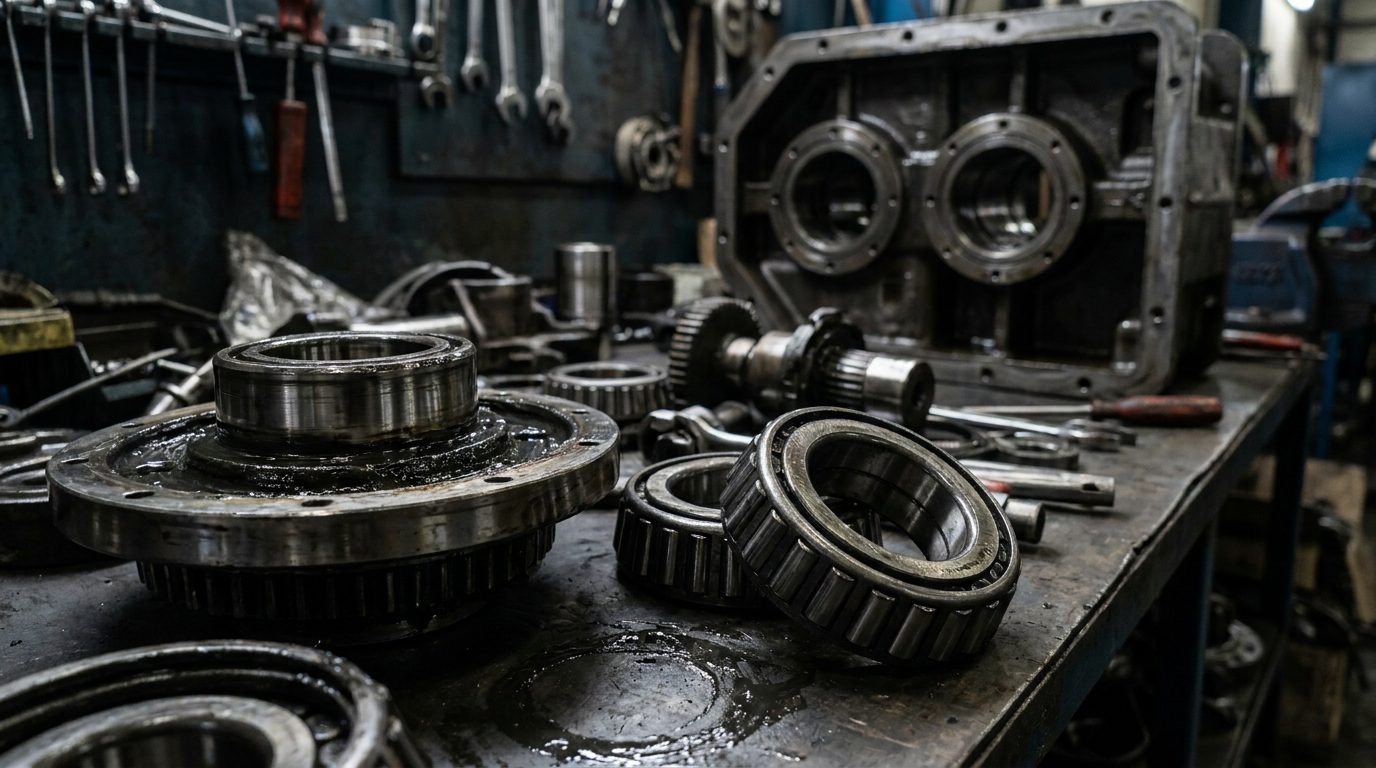
Inspecting Industrial Gearbox Bearings is one of the most important reliability tasks for preventing unplanned downtime, secondary gear damage, lubrication failures, and costly production interruptions. For maintenance managers, plant engineers, reliability engineers, mechanics, and purchasing teams, a structured bearing inspection process helps identify wear before it becomes catastrophic. Gearbox bearings carry radial and axial loads, maintain shaft alignment, support gear mesh accuracy, and protect overall drivetrain performance. When bearings degrade, the entire gearbox is at risk. This step-by-step guide explains how to inspect industrial gearbox bearings, recognize early warning signs, troubleshoot failure modes, document findings, and decide whether repair or replacement is the best path forward.
To inspect industrial gearbox bearings, first review operating history, lock out the equipment, drain and sample the oil, visually inspect the gearbox exterior, open inspection ports where available, check bearing temperatures, vibration signatures, oil condition, shaft endplay, backlash, noise, and lubricant contamination. During teardown, inspect bearing races, rollers, cages, fits, seals, and lubrication pathways for spalling, scoring, brinelling, corrosion, overheating, misalignment, and fatigue. Use vibration analysis, oil analysis, thermography, borescope inspection, and dimensional checks to confirm condition. Replace bearings when damage is advanced, fits are compromised, or continued operation risks gear, shaft, or housing failure.
For those interested in learning more about the maintenance and repair of industrial gearboxes, a related article can provide valuable insights into the repair process. You can explore the intricacies of gearbox repair, including common issues and solutions, by visiting this link: Industrial Gearbox Repair in Hillsdale, Michigan. This resource complements the information on inspecting gearbox bearings, offering a comprehensive understanding of gearbox upkeep.
Why Industrial Gearbox Bearing Inspection Matters
Industrial gearbox bearings are not isolated components. They directly affect gear mesh, shaft positioning, seal life, lubricant film formation, and load distribution. A bearing problem can quickly turn into a gear tooth failure, broken shaft, cracked housing, or full gearbox rebuild.
For facilities running conveyors, mixers, crushers, extruders, cooling towers, mills, hoists, agitators, kilns, or process drives, gearbox bearing inspections should be part of a formal reliability program rather than a reactive maintenance task.
The role of bearings inside an industrial gearbox
Bearings inside an industrial gearbox perform several critical functions:
- Support input, intermediate, and output shafts
- Maintain correct gear alignment and mesh contact
- Carry radial loads from gear forces
- Carry axial or thrust loads in helical, bevel, worm, and planetary gearboxes
- Reduce friction between rotating and stationary components
- Help control shaft deflection and vibration
- Protect seals by limiting shaft movement
If bearings lose internal clearance, develop excessive clearance, overheat, or suffer raceway damage, the gearbox may continue running for a short period. However, hidden damage often progresses rapidly under industrial loads.
Who should be involved in bearing inspections?
A strong inspection program usually includes:
- Maintenance managers who set inspection schedules and maintenance priorities
- Plant engineers who evaluate operating conditions and design limitations
- Reliability engineers who interpret vibration, oil, and thermographic data
- Mechanics and millwrights who perform hands-on inspections and repairs
- Purchasing professionals who source correct bearings, seals, lubricants, and replacement gearboxes
- OEM or repair specialists when failure analysis or precision rebuilds are required
For more support with gearbox evaluation and rebuild planning, visit Industrial Gearbox Solutions’ internal resources on industrial gearbox repair, gearbox rebuilding, and replacement gearbox sourcing at IndustrialGearboxSolutions.com.
Common Causes of Industrial Gearbox Bearing Failure
Bearing damage rarely occurs without a reason. Even when a bearing has reached the end of its fatigue life, the true root cause may involve lubrication, alignment, contamination, overload, or improper installation.
Lubrication failure
Lubrication problems are among the most common causes of gearbox bearing failure. Bearings require the correct lubricant type, viscosity, additive package, cleanliness level, and delivery method.
Common lubrication-related causes include:
- Low oil level
- Excessive oil level causing churning and heat
- Incorrect viscosity
- Wrong lubricant type
- Oxidized or degraded oil
- Water contamination
- Particle contamination
- Incompatible grease or oil
- Blocked oil passages
- Failed oil pump or spray system
- Poor lubricant storage and handling
Noria, a leading authority on lubrication and oil analysis, frequently emphasizes that lubricant cleanliness and condition are essential to machine reliability. Referencing Noria’s lubrication best practices can help plants improve gearbox life through contamination control and oil analysis programs.
Contamination
Contamination damages bearings by disrupting the lubricant film and causing abrasive wear, corrosion, and surface fatigue.
Common contaminants include:
- Dirt and dust
- Metal particles
- Water or process fluids
- Cleaning chemicals
- Degraded lubricant byproducts
- Paint flakes or gasket debris
- Sand, cement, coal dust, or aggregate fines in heavy industries
Contamination often enters through failed seals, open breathers, improper oil transfer containers, poor maintenance practices, or washdown exposure.
Misalignment and improper shaft loading
Gearbox bearings are designed for specific load zones and shaft positions. Misalignment changes load distribution and creates localized stress.
Potential sources include:
- Soft foot on motor or gearbox base
- Improper coupling alignment
- Bent shafts
- Distorted foundation
- Thermal growth
- Overhung loads from belts, chains, or sprockets
- Incorrect shimming
- Housing bore wear
- Gear mesh misalignment
Misalignment can produce edge loading, overheating, vibration, and premature fatigue.
Overload and shock loading
Industrial gearboxes often operate in harsh service. Crushers, shredders, mixers, conveyors, and mills may experience frequent shock loads. Bearings can fail early when actual loads exceed the gearbox rating.
Examples include:
- Jammed conveyors
- Crusher tramp metal events
- Sudden process blockages
- Frequent starts and stops
- Reversing loads
- High torque spikes
- Oversized motors
- Improper drive selection
AGMA standards are useful for evaluating gearbox service factors, load ratings, and application requirements. Plant engineers should consider AGMA guidance when reviewing whether a gearbox is properly selected for its duty cycle.
Installation and handling errors
Even high-quality bearings from manufacturers such as SKF or Timken can fail prematurely if installed incorrectly.
Common installation mistakes include:
- Hammering directly on bearing rings
- Pressing through rolling elements
- Incorrect heating temperature
- Contaminating bearing during installation
- Wrong bearing orientation
- Incorrect internal clearance
- Poor shaft or housing fits
- Reusing damaged locknuts or sleeves
- Failing to verify endplay
- Installing bearings in a dirty work area
SKF and Timken both provide excellent technical resources on bearing mounting, lubrication, fit selection, and failure analysis.
Industrial gearbox bearing failure can lead to costly downtime and production losses, so it’s important to address the issue promptly. Industrial gearbox bearing failure
Symptoms of Failing Gearbox Bearings
Bearing problems often show up before catastrophic failure. The key is knowing what to look, listen, and test for.
Operational warning signs
Common symptoms of failing industrial gearbox bearings include:
- Increased vibration
- Unusual rumbling, grinding, clicking, or whining noises
- Elevated operating temperature
- Intermittent temperature spikes
- Oil leaks near seals
- Metallic particles in oil
- Increased motor current
- Reduced gearbox efficiency
- Excessive shaft movement
- Coupling wear
- Gear tooth contact pattern changes
- Burning smell or darkened oil
- Frequent seal failures
Bearing damage patterns and what they may mean
| Symptom or Finding | Possible Cause | Recommended Action |
||||
| High bearing temperature | Low oil, wrong viscosity, overload, misalignment | Check oil level, viscosity, load, and alignment |
| Rumbling noise | Race damage, spalling, contamination | Perform vibration analysis and inspect oil |
| Metallic debris in oil | Bearing or gear wear | Conduct oil analysis and inspect with borescope |
| Blue or discolored bearing surfaces | Overheating or lubricant starvation | Investigate lubrication system and load conditions |
| Pitting or spalling | Fatigue, contamination, overload | Plan bearing replacement and root cause analysis |
| Rust or staining | Water contamination or poor storage | Improve sealing, breathers, and lubricant handling |
| Cage damage | Misalignment, vibration, poor lubrication | Inspect shaft fits, housing bores, and lubrication |
| Excessive shaft endplay | Bearing wear, incorrect preload, loose fits | Measure endplay and inspect bearing arrangement |
Noise clues during operation
A mechanic’s hearing is still useful, especially when combined with instruments.
Possible noise indicators include:
- Low-frequency rumbling: possible rolling element or raceway damage
- High-pitched whine: possible lubrication or gear mesh issue
- Clicking: localized spall, cracked cage, or debris
- Growling under load: bearing fatigue or excessive clearance
- Cyclic knocking: looseness, cracked component, or severe damage
Use caution: listening rods and stethoscopes should only be used by trained personnel following plant safety procedures.
When it comes to maintaining industrial gearboxes, understanding the intricacies of their components is essential. A related article that delves into enhancing operational efficiency through advanced gearbox technology can be found here: boosting industrial efficiency. This resource provides valuable insights into how modern gearboxes, like those from Cherry Burrell, can significantly improve performance and reliability, complementing the knowledge gained from inspecting gearbox bearings.
Step-by-Step Guide to Inspecting Industrial Gearbox Bearings
| Aspect | Metrics |
|---|---|
| Vibration Analysis | Peak-to-peak displacement, velocity, and acceleration |
| Temperature | Operating temperature range and temperature differentials |
| Lubrication | Oil analysis for viscosity, contamination, and wear particles |
| Noise | Sound level measurements and frequency analysis |
| Visual Inspection | Wear patterns, discoloration, and presence of debris |
A consistent process improves accuracy and prevents missed warning signs. The following method can be adapted for routine inspections, shutdown inspections, or failure investigations.
Step 1: Review gearbox history and operating conditions
Before touching the gearbox, gather background information.
Review:
- Gearbox make, model, ratio, and serial number
- Bearing part numbers if available
- Lubricant type and viscosity
- Oil change history
- Vibration trends
- Oil analysis reports
- Previous repair records
- Load history
- Recent process changes
- Ambient temperature conditions
- Known contamination issues
- Seal replacement history
- Alignment records
Ask whether the gearbox has experienced overloads, jams, oil leaks, recent repairs, unusual noises, or temperature increases.
Step 2: Follow lockout/tagout and safety procedures
Gearbox inspections can expose personnel to rotating equipment, hot oil, pinch points, confined spaces, and heavy components.
Before inspection:
- Shut down equipment according to site procedures
- Lock out and tag out all energy sources
- Verify zero energy state
- Allow gearbox to cool if necessary
- Wear appropriate PPE
- Support connected loads if needed
- Confirm lifting plans for covers, shafts, and components
- Prevent contamination from entering open housings
Safety should never be compromised to speed up inspection.
Step 3: Conduct an external visual inspection
Begin with the gearbox exterior.
Look for:
- Oil leaks at seals, covers, inspection ports, and drain plugs
- Cracked paint or heat discoloration
- Loose mounting bolts
- Soft foot indicators
- Damaged breathers
- Blocked cooling fins
- Dirty or plugged heat exchangers
- Loose guards or couplings
- Damaged foundation or baseplate
- Signs of shaft movement
- Coupling dust or elastomer debris
Document findings with photos. External symptoms often point toward internal bearing distress.
Step 4: Check lubricant level and condition
Lubricant condition provides valuable insight into bearing health.
Inspect:
- Oil level at sight glass or dipstick
- Oil color
- Odor
- Foam
- Water presence
- Sludge
- Metallic particles
- Viscosity changes
- Additive depletion, if oil analysis is available
Collect an oil sample before draining the gearbox if possible. A proper sample should be taken from a live zone, not simply from the bottom drain where debris accumulates.
Recommended oil analysis tests include:
- Particle count
- Water content
- Viscosity at 40°C and 100°C
- Acid number
- Ferrous debris analysis
- Spectrometric wear metals
- FTIR oxidation and nitration
- Analytical ferrography for advanced failure review
Noria’s oil analysis resources are especially useful for building effective lubricant sampling and interpretation programs.
Step 5: Measure temperature
Temperature is a key condition indicator, but it must be interpreted in context.
Use:
- Infrared thermometer
- Thermal imaging camera
- Installed RTDs or thermocouples
- Online temperature sensors
Check temperatures at:
- Input bearing locations
- Intermediate shaft bearing locations
- Output bearing locations
- Oil sump
- Housing near gear mesh areas
- Cooling system inlet and outlet
| Temperature Observation | Possible Meaning |
|||
| Gradual increase over weeks | Lubricant degradation, wear, contamination |
| Sudden spike | Oil loss, overload, bearing damage |
| One bearing area hotter than others | Localized bearing problem or misalignment |
| High sump temperature | Cooling issue, overload, incorrect oil |
| Heat near seal | Excessive shaft movement or seal friction |
Temperature alone does not confirm bearing failure, but it is a valuable early warning sign.
Step 6: Perform vibration analysis
Vibration analysis is one of the most effective non-invasive methods for detecting bearing faults.
A reliability technician may collect:
- Overall vibration velocity
- Acceleration
- Acceleration enveloping
- Time waveform
- FFT spectrum
- Bearing defect frequencies
- Gear mesh frequencies
- Sidebands
- Phase readings
Bearing defects may show frequencies related to:
- Ball pass frequency outer race
- Ball pass frequency inner race
- Ball spin frequency
- Fundamental train frequency
- Harmonics and sidebands
Vibration trends are often more useful than one-time readings. A sudden increase in high-frequency vibration may indicate early bearing damage even before audible noise develops.
Step 7: Use acoustic ultrasound where appropriate
Ultrasound inspection can detect friction, lubrication starvation, and early-stage bearing defects.
Benefits include:
- Early detection of lubrication problems
- Useful for slow-speed bearings in some applications
- Supports condition-based lubrication
- Helps identify changes before severe vibration develops
Ultrasound is not a replacement for vibration analysis, but it can be a powerful complementary tool.
Step 8: Inspect through access covers or with a borescope
If the gearbox has inspection covers or ports, use them carefully.
Look for:
- Bearing discoloration
- Visible cage damage
- Excess lubricant sludge
- Metal debris
- Oil foaming
- Gear tooth contact changes
- Shaft movement
- Signs of overheating
- Corrosion
- Broken retainers or fasteners
A borescope can help inspect internal areas without a full teardown. Make sure the borescope probe is clean and cannot detach inside the gearbox.
Step 9: Drain oil and inspect debris
When draining oil during a shutdown inspection, use a clean container or screen to capture debris.
Check for:
- Fine metallic paste
- Large metal flakes
- Bearing roller fragments
- Cage pieces
- Bronze or brass particles
- Rust particles
- Seal material
- Gear tooth fragments
Magnetic drain plugs should be inspected and photographed. Ferrous debris may indicate bearing race, roller, shaft, or gear wear.
Step 10: Measure shaft endplay and radial movement
Excessive shaft movement can indicate bearing wear, incorrect preload, loose fits, or internal damage.
Use:
- Dial indicators
- Pry bars with controlled force
- Magnetic bases
- Manufacturer specifications
- Shaft lift checks where appropriate
Measurements to record:
- Axial endplay
- Radial lift
- Coupling-side movement
- Gear backlash
- Bearing preload, if applicable
- Shaft runout
Compare measurements to OEM or engineering specifications. If no data is available, consult a gearbox repair specialist.
Step 11: Inspect bearings during teardown
During gearbox disassembly, bearing inspection becomes much more detailed.
Inspect:
- Outer race
- Inner race
- Rolling elements
- Cage or separator
- Retainers
- Locknuts
- Sleeves
- Spacers
- Shaft journals
- Housing bores
- Lubrication grooves
- Oil holes
- Seals and seal journals
Look for damage such as:
- Spalling
- Flaking
- Pitting
- Scoring
- Smearing
- False brinelling
- True brinelling
- Fretting corrosion
- Etching
- Electrical fluting
- Cage cracking
- Heat discoloration
- Wear bands
- Uneven contact marks
Do not discard damaged bearings before documenting them. They are evidence for root cause analysis.
When considering the maintenance of industrial gearbox bearings, it’s essential to understand the broader context of gearbox repair. A related article that provides valuable insights on this topic can be found here: industrial gearbox repair. This resource discusses various repair techniques and best practices that can enhance the longevity and efficiency of your gearbox systems, making it a great complement to your knowledge on inspecting bearings.
Inspection Methods and Tools
Different inspection methods reveal different failure modes. The best results come from combining technologies.
Visual and dimensional inspection tools
Useful tools include:
- Flashlight
- Inspection mirror
- Borescope
- Dial indicator
- Micrometers
- Bore gauges
- Feeler gauges
- Torque wrench
- Straightedge
- Bearing pullers
- Shaft alignment tools
- Clean white cloths
- Magnification lens
Predictive maintenance technologies
| Method | Best For | Limitation |
||||
| Vibration analysis | Bearing defects, imbalance, misalignment, looseness | Requires trained interpretation |
| Oil analysis | Contamination, wear metals, lubricant condition | Sampling quality affects results |
| Thermography | Heat patterns, lubrication issues, overload | Does not identify exact failure mode alone |
| Ultrasound | Early friction and lubrication issues | Requires trending and baseline data |
| Borescope inspection | Internal visual inspection without teardown | Limited access and field of view |
| Motor current analysis | Load changes and electrical/mechanical issues | Less direct for specific bearing faults |
Bearing failure analysis references
Authoritative external resources include:
- SKF bearing failure analysis and lubrication guidance
- Timken bearing damage analysis and installation resources
- AGMA standards for gear drive design, rating, and application factors
- Noria resources on oil analysis, contamination control, and lubrication best practices
Referencing these sources supports better decisions and improves the technical quality of your inspection program.
Troubleshooting Industrial Gearbox Bearing Problems
Troubleshooting should focus on root cause, not just replacing the failed bearing. If the cause is not corrected, the new bearing may fail quickly.
Troubleshooting by symptom
| Problem | Likely Causes | Inspection Steps |
||||
| Bearing overheats after startup | Excess preload, wrong lubricant, overfilled oil, misalignment | Check oil level, verify bearing clearance, inspect alignment |
| Bearing fails repeatedly | Incorrect bearing, overload, contamination, poor installation | Review application, inspect fits, check lubricant cleanliness |
| Oil contains shiny flakes | Spalling bearing or gear tooth fatigue | Perform ferrography, borescope inspection, teardown if needed |
| Seal leaks repeatedly | Shaft movement, worn seal journal, overfilled oil, clogged breather | Check shaft runout, endplay, breather, oil level |
| Vibration increases at bearing frequencies | Race or rolling element defect | Trend vibration, inspect oil, plan controlled shutdown |
| Rust found on bearing | Water ingress, condensation, poor storage | Check seals, breathers, washdown practices, oil water content |
| Cage failure | Lubrication starvation, misalignment, high vibration | Inspect lubrication paths, alignment, shaft/housing fits |
Questions to ask during failure investigation
Ask the following:
- Did the gearbox fail suddenly or gradually?
- Was there a recent oil change?
- Was the correct oil used?
- Has the process load changed?
- Were any overload events recorded?
- Was the gearbox recently rebuilt?
- Were bearings installed with proper tools?
- Are seals and breathers in good condition?
- Is the gearbox exposed to washdown, humidity, dust, or heat?
- Is the equipment base rigid and properly aligned?
- Are bearing part numbers correct for the application?
Distinguishing bearing failure from gear failure
Bearing and gear failures often create similar symptoms. However, some clues can help.
Bearing issues often produce:
- High-frequency vibration
- Rumbling or growling sounds
- Localized heat near bearing housings
- Bearing defect frequencies
- Fine metallic debris from races or rollers
Gear issues often produce:
- Gear mesh frequency peaks
- Broken tooth impacts
- Cyclic noise once per gear revolution
- Tooth contact pattern changes
- Larger gear tooth fragments
In many cases, bearing failure causes gear misalignment, and gear damage then accelerates bearing failure. Inspect both systems together.
Prevention and Maintenance Best Practices
Preventing gearbox bearing failure requires disciplined maintenance practices and consistent documentation.
Lubrication best practices
To improve bearing life:
- Use the OEM-recommended lubricant type and viscosity
- Confirm viscosity for actual operating temperature
- Keep oil clean and dry
- Filter new oil before use
- Use dedicated, sealed transfer containers
- Install desiccant breathers where appropriate
- Avoid mixing incompatible lubricants
- Maintain correct oil level
- Change oil based on condition, not only calendar intervals
- Use oil analysis to optimize drain intervals
- Inspect lubrication lines, pumps, and spray nozzles
Clean oil is one of the most cost-effective ways to extend bearing and gearbox life.
Contamination control
Recommended contamination control practices include:
- Upgrade breathers
- Improve seals
- Avoid pressure washing near seals and breathers
- Store lubricants indoors
- Use quick-connect filtration carts
- Keep inspection covers sealed
- Clean around fill ports before opening
- Use proper gasket materials
- Flush after catastrophic failures
- Monitor ISO particle counts in oil analysis
Alignment and installation best practices
During installation or rebuild:
- Verify shaft and housing fits
- Use induction heaters for bearing mounting when appropriate
- Do not overheat bearings
- Press only on the correct bearing ring
- Use clean gloves and tools
- Check bearing orientation
- Measure endplay and preload
- Confirm gear backlash and contact pattern
- Align couplings precisely
- Torque fasteners to specification
- Check for soft foot
- Recheck alignment after thermal stabilization if needed
Recommended inspection intervals
Inspection frequency depends on criticality, load, operating environment, and gearbox history.
| Gearbox Criticality | Basic Visual Inspection | Vibration/Oil Analysis | Internal Inspection |
|||||
| Low criticality | Monthly | Quarterly or semiannually | During planned outage |
| Medium criticality | Weekly to monthly | Monthly to quarterly | Annually or as indicated |
| High criticality | Daily to weekly | Monthly or continuous monitoring | Planned outage or condition-based |
| Severe duty | Daily | Continuous or monthly | Condition-based with shutdown planning |
Critical assets should have documented baselines for vibration, temperature, oil cleanliness, and operating load.
Repair vs. Replacement: How to Decide
When bearing damage is found, the next decision is whether to repair the gearbox, rebuild it, or replace it.
When bearing replacement may be enough
Bearing replacement may be suitable when:
- Damage is limited to bearings
- Gears are in good condition
- Shaft journals are within tolerance
- Housing bores are not worn
- Lubrication system is functional
- Contamination can be removed
- Root cause is understood and corrected
- Replacement bearings are available quickly
Even then, seals, gaskets, lubricant, and related hardware should typically be replaced.
When a gearbox rebuild is recommended
A complete rebuild may be needed when:
- Multiple bearings show damage
- Gears have pitting, scoring, or abnormal contact
- Shafts are worn or damaged
- Housing bores are loose or out of round
- Seals have failed repeatedly
- The gearbox has been contaminated with metal debris
- Backlash or endplay is outside specification
- The unit has a history of recurring failures
Industrial Gearbox Solutions can support industrial gearbox repair and rebuild evaluations, including inspection, reverse engineering, replacement gearing, bearing replacement, and complete rebuild planning. Explore related resources at IndustrialGearboxSolutions.com for gearbox repair, emergency gearbox service, and replacement industrial gearboxes.
When replacement is the better option
Replacement may be the best choice when:
- Housing damage is severe
- Lead time for repair exceeds downtime tolerance
- The gearbox is obsolete and parts are unavailable
- Repair cost approaches replacement cost
- The gearbox is undersized for the application
- Repeated failures indicate design mismatch
- Upgrading efficiency or reliability is a priority
Purchasing professionals should evaluate total cost of ownership, not only upfront price. A lower-cost replacement may be expensive if it has poor service factor, limited parts availability, or inadequate support.
Repair vs. replacement comparison
| Factor | Repair/Rebuild | Replacement |
||||
| Upfront cost | Often lower if damage is limited | Often higher |
| Lead time | Can be faster if parts are available | Depends on stock and customization |
| Reliability | High if rebuilt correctly | High if properly selected |
| Engineering changes | Limited unless upgraded | Opportunity to improve design |
| Obsolete units | May require reverse engineering | May require retrofit |
| Best for | Salvageable gearboxes | Severe damage or poor application fit |
Documentation and Reporting
Good inspection records help maintenance teams move from reactive repairs to predictive reliability.
What to include in a bearing inspection report
A complete report should include:
- Asset name and ID
- Gearbox manufacturer and model
- Serial number
- Location
- Date of inspection
- Inspector name
- Operating hours
- Load conditions
- Lubricant type and condition
- Oil analysis results
- Vibration readings
- Temperature readings
- Photos of external and internal findings
- Bearing part numbers
- Shaft and housing measurements
- Failure mode observations
- Probable root cause
- Corrective actions
- Recommended follow-up date
Condition rating example
| Rating | Condition | Recommended Action |
||||
| Good | No abnormal readings or visible damage | Continue routine monitoring |
| Monitor | Minor trend changes or early wear indicators | Increase inspection frequency |
| Planned Repair | Confirmed bearing distress but controlled risk | Schedule repair during planned outage |
| Urgent | Rapidly increasing vibration, heat, or debris | Prepare immediate shutdown plan |
| Critical | Severe noise, high heat, large debris, or shaft movement | Stop equipment if safe and inspect immediately |
Suggested Branded Images for This Article
Use original branded visuals to improve engagement, search performance, and AI content interpretation.
Image 1: Technician inspecting gearbox bearing with borescope
Alt text: Technician using a borescope to inspect industrial gearbox bearings through an access port
Caption: Borescope inspections help identify bearing wear, debris, and lubrication issues without complete gearbox disassembly.
Image 2: Damaged industrial gearbox bearing race
Alt text: Close-up of spalling and pitting on an industrial gearbox bearing race
Caption: Bearing spalling is a sign of fatigue, contamination, overload, or lubrication failure.
Image 3: Oil sample with metallic debris from gearbox
Alt text: Industrial gearbox oil sample showing metallic debris from bearing wear
Caption: Oil analysis and debris inspection can reveal early bearing and gear damage before catastrophic failure.
Image 4: Vibration analysis on industrial gearbox
Alt text: Reliability technician collecting vibration data from an industrial gearbox bearing location
Caption: Vibration analysis is one of the most effective tools for detecting bearing defects in operating gearboxes.
Image 5: Rebuilt industrial gearbox with new bearings installed
Alt text: Rebuilt industrial gearbox with new bearings seals and inspected gears
Caption: A precision rebuild should include bearing replacement, fit verification, seal replacement, and root cause correction.
SEO Metadata
Suggested SEO title
Inspecting Industrial Gearbox Bearings: Step-by-Step Guide
Suggested meta description
Learn how to inspect industrial gearbox bearings with step-by-step methods, symptoms, troubleshooting tips, prevention strategies, and repair vs. replacement guidance.
Primary keyword
Inspecting Industrial Gearbox Bearings
Secondary keywords
- Industrial gearbox bearing inspection
- Gearbox bearing failure symptoms
- Gearbox bearing troubleshooting
- Industrial gearbox maintenance
- Gearbox vibration analysis
- Gearbox oil analysis
- Bearing spalling in gearbox
- Gearbox repair vs replacement
- Prevent gearbox bearing failure
Suggested URL slug
inspecting-industrial-gearbox-bearings
Search intent
Informational and commercial investigation. The reader wants to understand how to inspect gearbox bearings, identify failure symptoms, prevent damage, and determine whether expert repair or replacement support is needed.
Key Takeaways
- Industrial gearbox bearings are critical to shaft support, gear alignment, and drivetrain reliability.
- The most common causes of bearing failure include lubrication problems, contamination, misalignment, overload, and installation errors.
- Early symptoms include vibration, noise, heat, oil contamination, seal leaks, and excessive shaft movement.
- Effective inspection combines visual checks, oil analysis, vibration analysis, thermography, ultrasound, borescope inspection, and teardown evaluation.
- Always investigate the root cause before installing new bearings.
- Clean oil, correct alignment, proper installation, and contamination control are essential for long bearing life.
- Repair may be practical when damage is limited, but full rebuild or replacement may be better when gears, shafts, housings, or fits are compromised.
- Detailed documentation improves reliability decisions and helps justify maintenance investments.
FAQs About Inspecting Industrial Gearbox Bearings
How often should industrial gearbox bearings be inspected?
Inspection frequency depends on criticality and operating conditions. High-criticality or severe-duty gearboxes may need daily visual checks, monthly vibration and oil analysis, and internal inspection during planned outages. Lower-criticality units may be inspected monthly or quarterly.
What is the first sign of gearbox bearing failure?
The first sign is often a change in vibration or ultrasound readings. Operators may later notice increased noise, heat, oil discoloration, metallic debris, or seal leakage.
Can a gearbox bearing fail without warning?
Yes. Sudden overloads, lubrication loss, severe contamination, or improper installation can cause rapid failure. However, many bearing failures provide early warning through vibration, oil analysis, or temperature trends.
What does bearing spalling look like?
Spalling appears as flaking, pitting, or small craters on the bearing raceway or rolling elements. It often indicates fatigue, contamination, overload, or inadequate lubrication.
Should gearbox bearings be reused during a rebuild?
In most industrial gearbox rebuilds, bearings are replaced rather than reused. Bearings may have hidden fatigue damage, and the labor cost of reusing questionable bearings usually outweighs the savings.
What oil analysis results indicate bearing wear?
High iron levels, increased particle counts, ferrous debris, abnormal wear metals, rising oxidation, viscosity changes, and water contamination can all indicate bearing risk. Analytical ferrography can help identify wear particle type and severity.
Can vibration analysis identify which bearing is failing?
Often, yes. Vibration analysis can detect bearing defect frequencies and help locate whether the issue is on the input, intermediate, or output shaft. Accurate diagnosis requires bearing geometry, speed data, and skilled interpretation.
What causes gearbox bearings to overheat?
Common causes include low oil level, wrong viscosity, excessive preload, overfilled oil, contamination, misalignment, overload, blocked lubrication passages, and cooling system problems.
Is it safe to keep running a gearbox with a noisy bearing?
It depends on severity, but continued operation can be risky. A noisy bearing may shed debris into the gearbox, damage gears, destroy seals, and cause shaft misalignment. Perform vibration and oil analysis immediately and plan corrective action.
When should I contact an industrial gearbox repair specialist?
Contact a specialist when vibration or oil analysis confirms bearing damage, when metal debris is found, when shaft movement is excessive, when failures repeat, or when teardown inspection requires precision measurement and rebuild expertise.
Conclusion
Inspecting industrial gearbox bearings requires more than a quick visual check. A reliable inspection program combines operating history, safety procedures, lubricant evaluation, vibration analysis, temperature monitoring, borescope inspection, dimensional checks, and detailed teardown analysis when needed. The goal is not only to find damaged bearings but also to understand why they were damaged in the first place. By addressing lubrication, contamination, alignment, loading, and installation practices, maintenance teams can extend gearbox life, reduce unplanned downtime, and make better repair or replacement decisions.
If your gearbox is showing signs of bearing wear, abnormal vibration, overheating, oil contamination, or repeated seal failure, Industrial Gearbox Solutions can help evaluate the problem and recommend the right path forward.
FAQs
What are industrial gearbox bearings?
Industrial gearbox bearings are components that support the rotating shafts of the gearbox, allowing them to rotate with minimal friction. They are crucial for the smooth operation of the gearbox and the machinery it is a part of.
Why is it important to inspect industrial gearbox bearings?
Inspecting industrial gearbox bearings is important to ensure that they are in good working condition. Regular inspections can help identify any signs of wear, damage, or potential failure, allowing for timely maintenance or replacement to prevent costly downtime and repairs.
What are the common signs of gearbox bearing problems?
Common signs of gearbox bearing problems include unusual noises such as grinding, squealing, or rumbling, excessive vibration, increased operating temperatures, and visible signs of wear or damage on the bearings themselves.
How often should industrial gearbox bearings be inspected?
The frequency of inspections for industrial gearbox bearings can vary depending on factors such as the type of machinery, operating conditions, and manufacturer recommendations. However, it is generally recommended to inspect gearbox bearings during routine maintenance intervals or whenever there are signs of potential issues.
What are the steps involved in inspecting industrial gearbox bearings?
The steps involved in inspecting industrial gearbox bearings typically include cleaning the area around the bearings, checking for any signs of wear or damage, measuring bearing clearances, and assessing lubrication levels. It may also involve using specialized tools such as vibration analysis equipment to detect any potential issues.