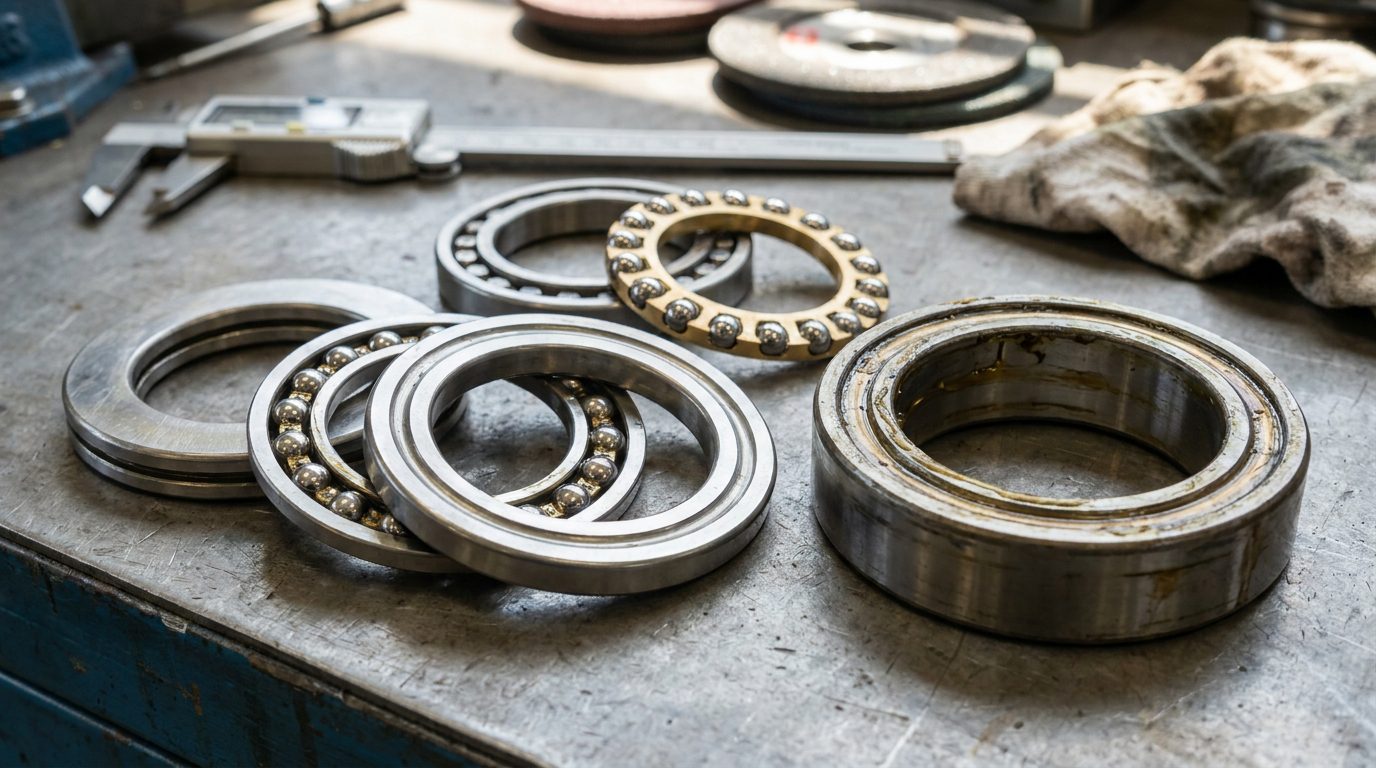
Thrust bearings in industrial gearboxes play a critical role in controlling axial loads, improving gear mesh stability, reducing frictional losses, and extending the service life of high-value rotating equipment. For maintenance managers, plant engineers, reliability engineers, mechanics, and purchasing teams, selecting and maintaining the right thrust bearing is directly tied to uptime, energy efficiency, and total cost of ownership. Whether your gearbox supports conveyors, mixers, crushers, kilns, extruders, cooling towers, or heavy-duty process equipment, thrust bearing performance can determine whether the unit runs smoothly for years or fails unexpectedly under axial stress, heat, contamination, or lubrication breakdown.
Thrust bearings maximize industrial gearbox efficiency by managing axial shaft loads, maintaining proper gear alignment, minimizing friction, and preventing damaging endplay. The best results come from selecting the correct thrust bearing type, maintaining proper lubrication, monitoring temperature and vibration, inspecting wear patterns, and addressing root causes such as misalignment, overloading, contamination, and improper installation. In many cases, a gearbox can be rebuilt with new thrust bearings, seals, and corrected shaft fits; however, severe housing damage, recurring failures, or obsolete components may justify complete gearbox replacement.
Thrust bearings play a crucial role in the performance and longevity of industrial gearboxes, as they help manage axial loads and reduce friction during operation. For those interested in understanding the importance of proper maintenance and repair of gearboxes, a related article can be found at Industrial Gearbox Repair in Brooklyn, Michigan. This resource provides insights into the repair processes that can enhance the efficiency and reliability of gearboxes, ultimately benefiting the thrust bearings and overall machinery performance.
Why Thrust Bearings Matter in Industrial Gearbox Efficiency
Industrial gearboxes convert speed and torque while transmitting power between a driver and driven machine. During this process, gears generate both radial and axial forces. The axial force, also called thrust load, must be controlled by properly selected thrust bearings.
If thrust loads are not managed correctly, shafts can move out of position, gear teeth may misalign, lubrication films can collapse, and the gearbox may experience rapid wear or catastrophic failure. In high-load industrial environments, even minor axial movement can reduce efficiency and increase operating costs.
How Thrust Bearings Improve Gearbox Performance
Thrust bearings support axial loads along the shaft axis. In industrial gearboxes, they help:
- Maintain shaft position under changing loads
- Stabilize helical, bevel, worm, and herringbone gear arrangements
- Reduce sliding friction and heat generation
- Protect gears, seals, and housings from axial overload
- Improve power transmission efficiency
- Reduce vibration caused by endplay or gear mesh instability
- Extend bearing, gear, and lubricant life
A well-functioning thrust bearing helps preserve correct gear contact patterns. That means less wasted energy, less heat, lower noise, and fewer unplanned shutdowns.
Gear Types That Commonly Require Thrust Bearing Support
Different gear designs produce different thrust loads. Gearboxes with the following gear types often depend heavily on thrust bearing performance:
| Gear Type | Axial Load Level | Thrust Bearing Importance | Common Applications |
||:|:||
| Helical gears | Moderate to high | High | Conveyors, mixers, pumps, extruders |
| Bevel gears | High | Very high | Right-angle drives, crushers, cooling towers |
| Worm gears | High | Very high | Hoists, screw conveyors, indexing systems |
| Herringbone gears | Low to moderate when balanced | Moderate | Heavy-duty process drives |
| Spur gears | Low | Lower, but still important for shaft location | General industrial drives |
For more support with gearbox configuration and rebuild planning, see Industrial Gearbox Solutions’ resources on industrial gearbox repair and gearbox maintenance services.
Common Types of Thrust Bearings Used in Industrial Gearboxes
Selecting the right thrust bearing depends on load magnitude, speed, lubrication method, shaft arrangement, temperature, and space constraints. A bearing that performs well in one gearbox may fail quickly in another if thrust direction, operating speed, or lubrication is mismatched.
Thrust Ball Bearings
Thrust ball bearings are designed for axial loads and relatively low to moderate speeds. They have low friction and are suitable for lighter-duty applications where axial load is present in one or both directions.
Common characteristics include:
- Best for light to moderate thrust loads
- Low friction during operation
- Limited tolerance for heavy shock loading
- Available in single-direction and double-direction designs
- Sensitive to misalignment
Thrust ball bearings are not typically the first choice for severe industrial gearbox duty, but they may be used in auxiliary drives, lighter reducers, and specific shaft-locating applications.
Cylindrical Roller Thrust Bearings
Cylindrical roller thrust bearings carry higher axial loads than thrust ball bearings. They are compact and can be effective where high thrust capacity is required in limited axial space.
Advantages include:
- High axial load capacity
- Good stiffness
- Compact design
- Suitable for heavy-duty industrial gearboxes
However, cylindrical roller thrust bearings require accurate alignment and proper lubrication. Poor surface finish, contamination, or insufficient oil film can quickly lead to roller and raceway damage.
Tapered Roller Bearings
Tapered roller bearings are widely used in industrial gearboxes because they can support both radial and axial loads. When installed in pairs, they can control shaft movement in both directions and provide high stiffness.
Key benefits include:
- Excellent combined radial and thrust load capacity
- High rigidity for gear mesh control
- Adjustable preload or endplay
- Strong performance in heavy-duty applications
- Suitable for shock and variable loading when properly selected
Tapered roller bearings are common in helical, bevel, and right-angle gearboxes. However, preload must be carefully controlled. Excessive preload can cause overheating, while excessive endplay can allow gear misalignment.
For technical bearing selection guidance, Timken provides useful engineering references through its bearing resources, and SKF offers bearing selection information through the SKF knowledge center.
Spherical Roller Thrust Bearings
Spherical roller thrust bearings are designed for very high axial loads and can accommodate some misalignment. They are commonly used in heavy industrial applications where shaft deflection, housing movement, or severe load conditions exist.
They are well-suited for:
- Crushers
- Mills
- Kilns
- Marine gearboxes
- Heavy conveyors
- Large vertical drives
- Process industry gear reducers
Their ability to tolerate misalignment makes them valuable in demanding installations, but they still require proper lubrication, cleanliness, and installation practices.
Plain Thrust Bearings and Thrust Washers
Some gearboxes use plain thrust bearings, thrust pads, or bronze thrust washers instead of rolling-element bearings. These components rely heavily on hydrodynamic lubrication or boundary lubrication.
They may be found in:
- Worm gear reducers
- Low-speed heavy-load units
- Legacy gearboxes
- Custom industrial drives
Plain thrust surfaces can be durable when lubricated properly, but they are vulnerable to oil starvation, contamination, and excessive heat.
Industrial gearbox bearing failure can lead to costly downtime and production losses, so it’s important to address the issue promptly. Industrial gearbox bearing failure
Causes of Thrust Bearing Problems in Industrial Gearboxes
Thrust bearing failure is rarely random. Most failures can be traced to lubrication problems, loading issues, alignment errors, contamination, poor installation, or design mismatch.
Lubrication Failure
Lubrication is one of the most important factors in thrust bearing efficiency. The lubricant must provide adequate film thickness to separate rolling or sliding surfaces.
Common lubrication-related causes include:
- Low oil level
- Wrong viscosity grade
- Incorrect lubricant type
- Oxidized or degraded oil
- Water contamination
- Particulate contamination
- Foaming or aeration
- Blocked oil passages
- Inadequate oil flow in forced lubrication systems
According to lubrication best practices from organizations such as Noria, contamination control, oil analysis, and correct viscosity selection are essential for gearbox reliability.
Excessive Axial Load
Gearboxes can experience axial loads beyond their design limits due to process changes, overloads, jams, reverse loading, or incorrect equipment selection.
Examples include:
- Conveyor overloads
- Crusher tramp events
- Mixer blade impact
- Extruder pressure spikes
- Pump cavitation or hydraulic imbalance
- Frequent starts and stops
- Shock loading from driven equipment
Excessive axial load can deform bearing raceways, damage cages, generate heat, and cause premature fatigue.
Misalignment and Shaft Deflection
Misalignment can occur between motor and gearbox, gearbox and driven equipment, or within the gearbox itself. Shaft deflection under load can also change bearing contact patterns.
Misalignment can cause:
- Uneven thrust bearing loading
- Gear tooth edge contact
- Increased vibration
- Seal leakage
- Elevated operating temperature
- Accelerated bearing wear
Laser alignment, soft foot correction, baseplate inspection, and proper coupling selection are essential for preventing misalignment-related thrust bearing damage.
Improper Bearing Installation
Even a high-quality bearing can fail quickly if installed incorrectly. Installation problems include:
- Hammering directly on bearing races
- Contaminating the bearing during assembly
- Incorrect heating practices
- Over-tightening locknuts
- Improper preload or endplay setting
- Damaged shaft shoulders
- Incorrect bearing orientation
- Reusing damaged spacers or lockwashers
Mechanics should always follow manufacturer specifications and document final bearing settings during gearbox rebuilds.
Contamination and Seal Failure
Contaminants such as dirt, metal particles, water, process chemicals, and abrasive dust can destroy bearing surfaces. Seal failure is often the entry point.
Common contamination sources include:
- Worn shaft seals
- Damaged breathers
- Open inspection covers
- Poor oil transfer practices
- Dirty fill containers
- High-pressure washdown
- Condensation in idle gearboxes
Desiccant breathers, filtration, sealed oil transfer containers, and routine oil analysis can greatly reduce contamination risk.
Incorrect Bearing Selection
A thrust bearing must match the application. Problems occur when bearings are selected based only on dimensions rather than operating conditions.
Selection factors include:
- Axial load magnitude and direction
- Radial load contribution
- Speed rating
- Temperature range
- Lubrication method
- Shock load exposure
- Required service factor
- Housing and shaft fits
- Bearing internal clearance
- Gear type and shaft arrangement
For gearbox design and rating standards, consult resources from the American Gear Manufacturers Association.
Thrust bearings play a crucial role in the performance and longevity of industrial gearboxes, ensuring that axial loads are effectively managed. For those interested in understanding more about the maintenance and repair of these essential components, a related article on gearbox repair can provide valuable insights. You can explore this further in the article about industrial gearbox repair in Fort Worth, Texas, which discusses various aspects of maintaining gearboxes and the importance of thrust bearings in the overall system.
Symptoms of Thrust Bearing Wear or Failure
| Thrust Bearings for Industrial Gearboxes | Metrics |
|---|---|
| Load Capacity | Measured in pounds or newtons, indicating the maximum load the bearing can withstand |
| Speed Ratings | Indicates the maximum speed at which the bearing can operate without damage |
| Temperature Range | Specifies the range of temperatures within which the bearing can function effectively |
| Material | Information about the material used in the bearing, such as steel, ceramic, or others |
| Lubrication | Details about the type of lubrication required for optimal performance and longevity |
Recognizing early symptoms helps reliability teams prevent full gearbox failure. Many thrust bearing problems begin gradually and can be detected through routine inspections.
Common Warning Signs
| Symptom | Possible Cause | Recommended Action |
||||
| Rising gearbox temperature | Lubrication failure, excessive preload, overload | Check oil level, viscosity, bearing setting, load |
| Increased axial shaft movement | Bearing wear, loose locknut, spacer damage | Measure endplay and inspect locating components |
| Abnormal vibration | Misalignment, bearing damage, gear mesh issue | Perform vibration analysis and alignment checks |
| Rumbling or growling noise | Bearing raceway fatigue or contamination | Inspect bearing and conduct oil analysis |
| Metallic particles in oil | Bearing or gear wear | Sample oil, inspect magnetic plug, schedule teardown |
| Seal leakage | Shaft movement, pressure buildup, seal wear | Check breather, shaft condition, bearing endplay |
| Gear tooth wear pattern shift | Axial movement or misalignment | Inspect gear contact pattern and bearing condition |
| Frequent lubricant darkening | Excessive heat or oxidation | Test oil and investigate thermal source |
Noise Patterns Linked to Thrust Bearing Issues
Gearbox noise can provide useful clues. A failing thrust bearing may produce:
- Low-frequency rumble
- Cyclical growling
- Clicking during load changes
- Whine that changes with axial load
- Intermittent knocking during reversals
- High-pitched squeal from lubrication starvation
Noise should not be used as the only diagnostic method, but it is a valuable trigger for deeper inspection.
Heat as an Efficiency Indicator
Heat is wasted energy. When thrust bearings create excessive friction, gearbox efficiency drops and oil life shortens.
Possible causes of elevated heat include:
- Excessive bearing preload
- Oil viscosity too high or too low
- Overfilled gearbox causing churning
- Underfilled gearbox causing starvation
- Misalignment
- Contaminated lubricant
- Bearing fatigue
- Overloaded gearbox
A gearbox that previously operated at 150°F and now operates at 180°F under similar load deserves immediate investigation.
Thrust bearings play a crucial role in the performance and longevity of industrial gearboxes, ensuring that axial loads are effectively managed. For those looking to optimize their gearbox systems, understanding the relationship between gear ratios and thrust bearings can be particularly beneficial. A related article that delves into this topic is available at this link, where you can find insights on how to calculate gear ratios and their impact on overall gearbox efficiency.
Troubleshooting Thrust Bearing Problems
Effective troubleshooting starts with data. Replacing the bearing without identifying why it failed often leads to repeat failure.
Step-by-Step Troubleshooting Process
Use this practical sequence when thrust bearing issues are suspected:
- Record operating conditions
Document load, speed, temperature, noise, vibration, duty cycle, and recent process changes.
- Check lubricant condition
Verify oil level, viscosity, appearance, odor, foaming, water contamination, and filtration condition.
- Inspect external components
Check seals, breathers, coupling alignment, base bolts, soft foot, and foundation condition.
- Measure temperature
Use infrared thermography or installed RTDs to compare bearing zones against historical baselines.
- Perform vibration analysis
Look for bearing defect frequencies, gear mesh changes, looseness, and misalignment indicators.
- Check axial shaft movement
Use dial indicators to measure endplay against OEM specifications.
- Review maintenance history
Look for repeated seal failures, overheating events, oil changes, overloads, or recent rebuild work.
- Plan inspection or teardown
If indicators confirm internal damage, schedule controlled disassembly and root cause analysis.
Troubleshooting Table by Failure Mode
| Failure Mode | Likely Root Cause | Inspection Method | Corrective Action |
|||||
| Spalling on raceways | Fatigue, overload, contamination | Bearing teardown, oil debris analysis | Replace bearing, correct load or contamination source |
| Smearing or scoring | Lubrication starvation, sliding | Visual inspection, oil analysis | Improve lubrication, verify viscosity and oil delivery |
| Cage damage | Shock loading, misalignment, poor lubrication | Teardown inspection | Replace bearing, inspect shaft alignment and loading |
| Blue discoloration | Overheating | Visual inspection, temperature history | Correct preload, lubrication, load, or cooling |
| False brinelling | Vibration while stationary | Raceway inspection | Improve storage, rotate shafts, isolate vibration |
| Corrosion | Water contamination, condensation | Oil analysis, visual inspection | Improve seals, breathers, oil handling |
| Uneven wear | Misalignment, shaft deflection | Contact pattern, dial indicator checks | Correct alignment, inspect fits and housing bores |
When to Shut Down Immediately
Not every symptom requires emergency shutdown, but some conditions are serious.
Shut down or reduce load immediately if you observe:
- Rapidly rising gearbox temperature
- Sudden increase in vibration amplitude
- Loud grinding, knocking, or metallic noise
- Heavy metallic debris on magnetic plug
- Severe seal leakage with oil loss
- Smoke, burning smell, or oil discoloration
- Axial shaft movement beyond safe limits
- Repeated overload trips
Continuing operation with a failing thrust bearing can destroy gears, shafts, housings, and driven equipment.
Inspection Methods for Thrust Bearings and Gearboxes
Inspection should combine predictive maintenance, routine field checks, and controlled teardown procedures.
Visual Inspection
Routine visual checks are simple but powerful. Inspect for:
- Oil leaks at shaft seals and covers
- Loose mounting bolts
- Damaged breathers
- Contaminated sight glasses
- Discolored paint from heat
- Cracked housings
- Coupling wear
- Abnormal movement
- Oil level changes
Maintenance teams should document findings with photos and trend changes over time.
Oil Analysis
Oil analysis is one of the most valuable tools for identifying early bearing distress.
Recommended oil tests include:
- Viscosity at 40°C and 100°C
- Water content
- Particle count
- Acid number
- Oxidation and nitration
- Ferrous density
- Spectrometric wear metals
- Analytical ferrography for severe wear
Rising iron, chromium, or bearing alloy metals may indicate thrust bearing distress. Silicon may indicate dirt ingress. Water can point to condensation, washdown, or seal failure.
Vibration Analysis
Vibration monitoring can detect bearing defects, misalignment, looseness, and gear mesh issues.
Useful vibration indicators include:
- Overall velocity trends
- Acceleration enveloping
- Bearing defect frequencies
- Gear mesh frequency sidebands
- Axial vibration levels
- Phase analysis
- Time waveform impacts
Axial vibration is especially important when investigating thrust bearing condition.
Thermography
Infrared thermography can identify abnormal heat patterns around bearing housings, oil lines, and seals. It is non-invasive and useful for comparing identical gearboxes in similar service.
Thermography helps detect:
- Overloaded bearing zones
- Lubrication starvation
- Cooling system issues
- Oil churning
- Misalignment-related friction
- Failed heaters or coolers
Endplay and Preload Measurement
Thrust bearing performance depends heavily on correct shaft location. During inspection or rebuild, mechanics may use:
- Dial indicators
- Feeler gauges
- Torque-to-rotate measurements
- Bearing nut torque checks
- Shim pack measurements
- Blue contact pattern checks
- OEM-specific preload procedures
Incorrect endplay can reduce gearbox efficiency and quickly damage gears.
Prevention Strategies for Maximum Efficiency
Preventing thrust bearing problems requires disciplined maintenance and good operating practices.
Lubrication Best Practices
Lubrication should be treated as an engineered reliability program, not just an oil change task.
Best practices include:
- Use OEM-approved lubricant type and viscosity
- Maintain correct oil level
- Avoid overfilling, which can cause churning and heat
- Filter new oil before adding it
- Use dedicated, sealed transfer containers
- Install desiccant breathers where appropriate
- Conduct routine oil analysis
- Replace oil based on condition, not just calendar time
- Verify oil flow in circulating systems
- Inspect oil coolers and filters regularly
For more lubrication guidance, see Noria’s technical articles on gearbox lubrication and oil analysis.
Alignment and Installation Control
Proper alignment reduces unnecessary axial and radial loads. Best practices include:
- Perform laser alignment after installation
- Correct soft foot before final alignment
- Recheck alignment after thermal growth
- Use proper coupling type and spacing
- Ensure gearbox mounting surfaces are flat
- Torque base bolts in sequence
- Confirm driven equipment is not imposing external thrust loads
Alignment should also be verified after major process changes, foundation repairs, or repeated coupling failures.
Load Management
Operating a gearbox beyond its design rating reduces bearing life dramatically. Maintenance and engineering teams should monitor:
- Motor current
- Torque spikes
- Process jams
- Start/stop frequency
- Reverse loading
- Shock loading events
- Driven machine condition
- Product buildup or plugging
If your process has changed since the gearbox was originally selected, a gearbox engineering review may be needed. Industrial Gearbox Solutions can assist with gearbox failure analysis and application review.
Contamination Control
Clean oil is essential for bearing efficiency. Contamination control strategies include:
- Replace open breathers with desiccant breathers
- Use quick-connect filtration carts
- Keep fill ports closed
- Inspect seals regularly
- Avoid pressure washing around seals
- Store lubricants indoors
- Label lubricants clearly to prevent mixing
- Use clean funnels, pumps, and transfer equipment
- Add offline filtration for critical gearboxes
Even small particles can indent bearing surfaces and initiate fatigue.
Repair vs. Replacement: Making the Right Decision
When a thrust bearing fails, the decision is not simply whether to replace the bearing. The entire gearbox must be evaluated.
When Gearbox Repair Makes Sense
Repair or rebuild is often the best option when:
- Housing bores are within tolerance
- Shafts can be reused or repaired
- Gear teeth are in good condition
- Replacement bearings and seals are available
- Failure root cause is understood
- Lead time for a new gearbox is long
- The gearbox is custom, obsolete, or expensive to replace
- Rebuild cost is significantly lower than replacement
A quality rebuild may include new thrust bearings, radial bearings, seals, gaskets, shims, lubricant, repaired shafts, reconditioned housings, and verified gear contact patterns.
When Replacement Is the Better Option
Replacement may be recommended when:
- Housing bores are severely worn or cracked
- Gear teeth have major pitting, scoring, or breakage
- Shafts are bent or heavily damaged
- The gearbox is undersized for the application
- Repeated failures indicate a design mismatch
- Parts are unavailable or uneconomical
- Efficiency gains from a modern gearbox justify the investment
- Downtime risk is too high for continued rebuilds
Purchasing professionals should compare total lifecycle cost, not only initial price. A cheaper gearbox that fails repeatedly can cost far more in downtime, labor, and lost production.
Repair vs. Replacement Comparison
| Factor | Repair/Rebuild | Replacement |
||||
| Initial cost | Usually lower | Usually higher |
| Lead time | Often faster for large or obsolete units | May be long for custom gearboxes |
| Reliability | High if root cause is corrected | High if properly specified |
| Efficiency improvement | Moderate to high | Potentially highest |
| Engineering changes | Limited but possible | Easier to redesign |
| Best for | Repairable housings, available parts, custom units | Severe damage, undersized units, obsolete designs |
Maintenance Best Practices for Thrust Bearings in Industrial Gearboxes
A strong maintenance program combines inspection, lubrication, condition monitoring, training, and documentation.
Recommended Maintenance Schedule
| Frequency | Maintenance Task | Purpose |
||||
| Daily or weekly | Check oil level, leaks, noise, temperature | Detect obvious problems early |
| Monthly | Inspect breather, seals, mounting bolts, coupling | Prevent contamination and misalignment |
| Quarterly | Take oil sample, review vibration trends | Identify early wear or lubricant degradation |
| Semiannually | Verify alignment on critical units | Reduce bearing and gear loads |
| Annually | Inspect internal components where practical | Confirm gear and bearing condition |
| During shutdown | Measure endplay, inspect contact patterns, replace seals if needed | Restore reliability before failure |
Actual intervals should be adjusted based on criticality, operating environment, load, and historical failure patterns.
Storage and Handling of Replacement Bearings
Replacement thrust bearings must be protected before installation. Poor storage can cause corrosion or false brinelling before the bearing ever enters service.
Best practices:
- Store bearings in original packaging
- Keep bearings in a clean, dry, temperature-controlled area
- Avoid vibration exposure during storage
- Do not open packaging until installation
- Handle with clean gloves
- Never place bearings directly on dirty benches
- Verify part numbers before installation
- Protect bearings from moisture and airborne contaminants
Installation Best Practices for Mechanics
During gearbox assembly:
- Clean all components thoroughly
- Inspect shafts, shoulders, spacers, and housing bores
- Use correct heating tools for bearing mounting
- Apply force only to the ring being fitted
- Verify bearing orientation
- Replace damaged locknuts, washers, and spacers
- Set preload or endplay to specification
- Record measurements
- Confirm gear contact pattern
- Use clean lubricant during assembly
- Rotate shafts by hand before startup
Good installation discipline is one of the most effective ways to increase gearbox efficiency and bearing life.
How Thrust Bearings Affect Energy Efficiency and Total Cost of Ownership
A failing or poorly selected thrust bearing increases friction, heat, vibration, and gear misalignment. These problems waste energy and raise maintenance costs.
Efficiency Losses from Bearing Problems
Thrust bearing problems can reduce efficiency through:
- Increased rolling or sliding resistance
- Gear tooth misalignment
- Oil churning from overheating or incorrect fill level
- Seal drag due to shaft movement
- Higher motor current
- Increased lubricant oxidation
- Unplanned shutdowns and restart losses
In large industrial drives, even small efficiency improvements can produce meaningful savings over time.
Total Cost of Ownership Considerations
Purchasing decisions should consider:
- Bearing quality
- Gearbox service factor
- Lubrication requirements
- Maintainability
- Seal design
- Availability of replacement parts
- Monitoring capabilities
- Rebuild support
- Energy consumption
- Downtime cost
A gearbox with robust thrust bearing support may cost more initially but deliver lower lifecycle cost in demanding service.
Branded Image Suggestions
Use original, branded visuals to improve engagement, demonstrate expertise, and support AI search visibility.
| Image Idea | Suggested Alt Text | Caption |
||||
| Cutaway industrial gearbox showing thrust bearing location | Cutaway view of thrust bearings in an industrial gearbox | Thrust bearings control axial shaft loads and help maintain gear mesh alignment. |
| Technician measuring gearbox shaft endplay with dial indicator | Mechanic measuring axial endplay on an industrial gearbox shaft | Endplay measurement is essential for diagnosing thrust bearing wear and preload issues. |
| Oil sample bottles and gearbox inspection tools | Gearbox oil analysis samples for thrust bearing condition monitoring | Oil analysis can reveal contamination, wear metals, and lubricant degradation before failure. |
| Damaged thrust bearing raceway close-up | Spalled thrust bearing raceway from industrial gearbox failure | Spalling often indicates fatigue, overload, contamination, or lubrication breakdown. |
| Reliability engineer reviewing vibration data | Reliability engineer analyzing gearbox thrust bearing vibration trends | Vibration analysis helps detect thrust bearing defects and axial instability. |
Key Takeaways
- Thrust bearings are essential for controlling axial loads in industrial gearboxes.
- Proper thrust bearing selection improves gear alignment, efficiency, and service life.
- Common failure causes include lubrication problems, overload, misalignment, contamination, and improper installation.
- Early warning signs include heat, vibration, noise, oil debris, seal leakage, and excessive shaft endplay.
- Oil analysis, vibration monitoring, thermography, and endplay measurement are effective inspection tools.
- Repair is often practical when housings, gears, and shafts are salvageable.
- Replacement may be better when damage is severe, the gearbox is undersized, or repeated failures occur.
- Lubrication cleanliness, alignment, load control, and installation accuracy are the foundation of long-term gearbox reliability.
FAQs About Thrust Bearings in Industrial Gearboxes
What does a thrust bearing do in an industrial gearbox?
A thrust bearing supports axial loads along the shaft axis. In an industrial gearbox, it prevents unwanted shaft movement, maintains gear alignment, reduces friction, and protects gears, seals, and housings from axial force.
What causes thrust bearing failure in gearboxes?
The most common causes are poor lubrication, contamination, excessive axial load, misalignment, improper preload or endplay, incorrect installation, and using the wrong bearing type for the application.
How do I know if a thrust bearing is failing?
Warning signs include rising temperature, abnormal axial vibration, rumbling or growling noise, metallic debris in the oil, seal leakage, gear tooth wear pattern changes, and excessive shaft endplay.
Can a gearbox run with a damaged thrust bearing?
It may continue running temporarily, but operation is risky. A damaged thrust bearing can quickly lead to gear misalignment, shaft damage, housing wear, seal failure, and catastrophic gearbox failure.
How often should thrust bearings be inspected?
Critical gearboxes should be monitored continuously or inspected monthly, with oil analysis and vibration checks performed quarterly or based on reliability program requirements. Less critical gearboxes may follow longer intervals, but inspections should be based on operating severity.
Should thrust bearings be replaced during every gearbox rebuild?
In most industrial gearbox rebuilds, replacing thrust bearings is recommended, especially if the gearbox has experienced heat, vibration, contamination, or long service hours. Reusing bearings should only be considered after careful inspection and engineering approval.
What lubricant is best for gearbox thrust bearings?
The best lubricant depends on gearbox design, load, speed, temperature, and OEM recommendations. Correct viscosity, additive package, cleanliness, and oil level are all critical. Always verify lubricant compatibility before switching products.
What is the difference between endplay and preload?
Endplay is controlled axial movement or clearance in the shaft-bearing arrangement. Preload is an intentional compressive load applied to remove clearance and increase stiffness. Both must be set correctly according to gearbox and bearing specifications.
Are tapered roller bearings good for gearbox thrust loads?
Yes. Tapered roller bearings are commonly used in industrial gearboxes because they handle combined radial and axial loads and provide strong shaft support. However, correct preload or endplay setting is essential.
When should I replace the entire gearbox instead of repairing the thrust bearing?
Replacement may be better if the gearbox has cracked housing, severely worn bores, damaged gears, bent shafts, obsolete parts, repeated failures, or insufficient rating for the application.
SEO Metadata
SEO title: Maximizing Efficiency with Thrust Bearings in Industrial Gearboxes
Meta description: Learn how thrust bearings in industrial gearboxes improve efficiency, control axial loads, prevent failures, and reduce downtime with expert maintenance and repair guidance.
Primary keyword: thrust bearings in industrial gearboxes
Secondary keywords:
- industrial gearbox thrust bearing
- gearbox axial load
- thrust bearing failure
- gearbox bearing maintenance
- industrial gearbox repair
- gearbox efficiency
- bearing preload and endplay
- gearbox lubrication best practices
Suggested URL slug: maximizing-efficiency-thrust-bearings-industrial-gearboxes
Search intent: Informational and commercial investigation for industrial gearbox maintenance, repair, troubleshooting, and bearing selection.
Recommended internal links:
Authoritative external sources:
- SKF Rolling Bearings
- Timken Engineering Resources
- AGMA Standards and Technical Resources
- Noria Lubrication and Oil Analysis
Conclusion
Maximizing efficiency with thrust bearings in industrial gearboxes requires more than choosing a bearing that fits the shaft. It requires understanding axial loads, gear forces, lubrication, contamination control, alignment, preload, endplay, operating conditions, and failure history. For maintenance managers and reliability teams, the goal is to detect early warning signs, correct root causes, and prevent small bearing issues from becoming expensive gearbox failures.
For purchasing professionals and plant engineers, the right decision may involve rebuilding an existing gearbox, upgrading bearing arrangements, improving lubrication systems, or replacing an undersized unit. When thrust bearings are properly selected, installed, lubricated, and monitored, they help industrial gearboxes run cooler, quieter, longer, and more efficiently.
Need help diagnosing thrust bearing damage, planning a gearbox rebuild, or deciding whether repair or replacement is the better investment? Contact Industrial Gearbox Solutions today.
FAQs
What are thrust bearings used for in industrial gearboxes?
Thrust bearings are used in industrial gearboxes to support axial loads and provide smooth rotation of the gears. They help to maintain proper alignment and reduce friction between moving parts.
What are the different types of thrust bearings used in industrial gearboxes?
The most common types of thrust bearings used in industrial gearboxes are ball thrust bearings, roller thrust bearings, and fluid film thrust bearings. Each type has its own advantages and is chosen based on the specific requirements of the gearbox.
How do thrust bearings contribute to the efficiency and performance of industrial gearboxes?
Thrust bearings help to reduce friction and wear between the moving parts of industrial gearboxes, which in turn improves efficiency and performance. They also help to maintain proper alignment and reduce vibration, leading to smoother operation.
What factors should be considered when selecting thrust bearings for industrial gearboxes?
When selecting thrust bearings for industrial gearboxes, factors such as load capacity, speed, operating temperature, and lubrication requirements should be taken into consideration. It is important to choose the right type and size of thrust bearings to ensure optimal performance and longevity of the gearbox.
How can maintenance and proper installation of thrust bearings prolong the life of industrial gearboxes?
Regular maintenance and proper installation of thrust bearings can prolong the life of industrial gearboxes by ensuring that the bearings are properly lubricated, aligned, and free from contaminants. This helps to prevent premature wear and failure of the gearbox components.