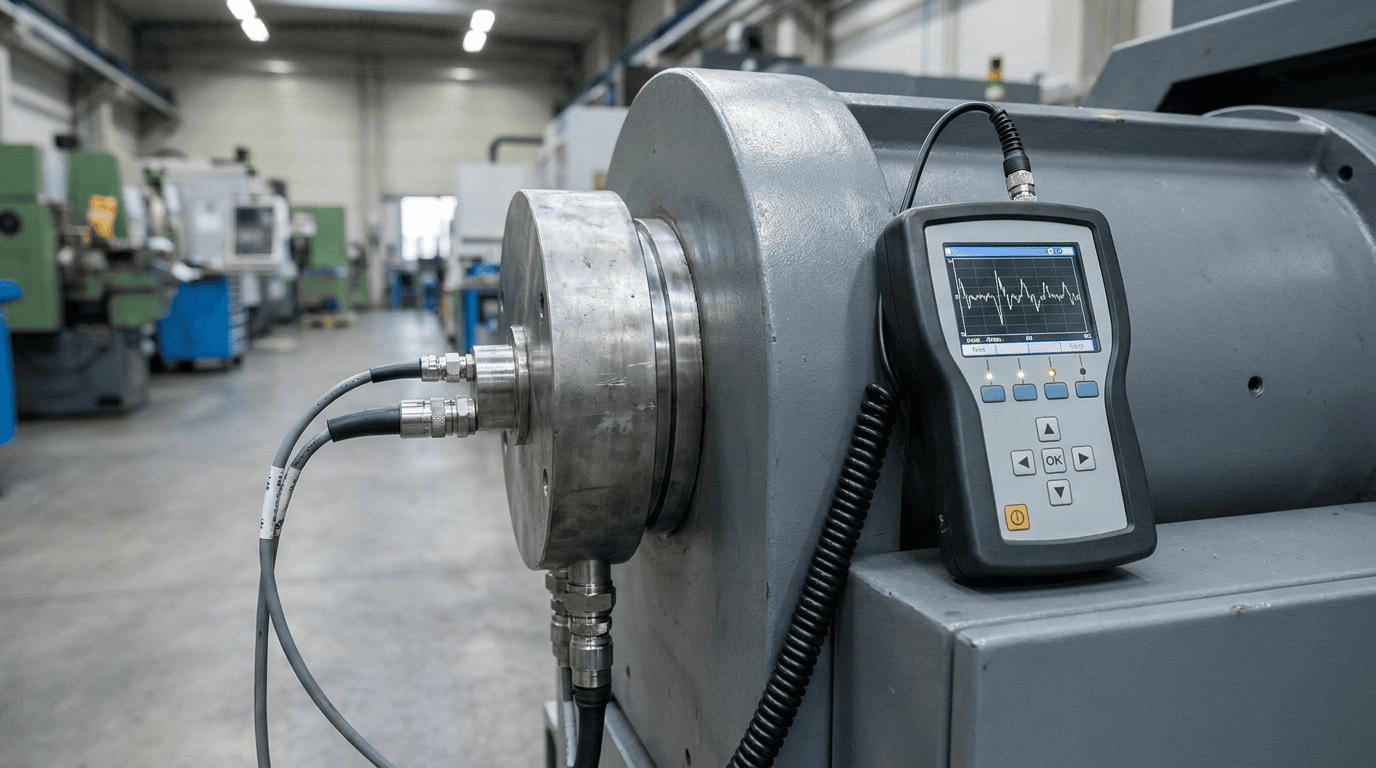
Preventing bearing failure with vibration monitoring is one of the most effective ways to reduce unplanned downtime, protect industrial gearboxes, and extend rotating equipment life. For maintenance managers, plant engineers, reliability teams, mechanics, and purchasing professionals, bearing failures are not just component issues—they often trigger shaft damage, gear mesh problems, lubrication breakdown, seal failure, motor overload, and costly production interruptions. Vibration monitoring helps identify bearing defects early by detecting changes in frequency, amplitude, and vibration patterns before audible noise, heat, or catastrophic damage occurs. When combined with lubrication analysis, alignment checks, and disciplined maintenance practices, vibration monitoring becomes a powerful predictive maintenance tool for gearbox reliability.
Vibration monitoring prevents bearing failure by detecting early warning signs such as imbalance, misalignment, looseness, lubrication starvation, outer race defects, inner race defects, rolling element damage, and cage wear. Sensors collect vibration data from gearboxes, motors, pumps, conveyors, and other rotating assets. Analysts or monitoring software then compare vibration signatures against baseline readings and known bearing fault frequencies. When abnormal trends appear, maintenance teams can schedule inspection, lubrication correction, bearing replacement, or gearbox repair before the bearing fails and damages surrounding components.
In the realm of industrial machinery maintenance, understanding the nuances of vibration monitoring is crucial for preventing bearing failure. A related article that delves into the comparison of gearboxes, specifically the Nord vs. Radicon gearboxes, can provide valuable insights into how different gearbox designs can impact overall machinery performance and reliability. For more information on this topic, you can read the article here: Nord vs. Radicon Gearboxes.
Why Bearing Failure Matters in Industrial Gearboxes
Bearings support rotating shafts, maintain gear alignment, reduce friction, and help transfer mechanical loads throughout the gearbox. When a bearing begins to fail, it can create a chain reaction of mechanical problems. A small spall on a raceway may eventually become excessive vibration, gear tooth misalignment, oil contamination, shaft scoring, and housing damage.
For industrial facilities, the cost of bearing failure is often far greater than the cost of the bearing itself. Unplanned downtime may stop a production line, delay shipments, increase overtime labor, and require emergency part sourcing. In heavy-duty applications such as mining, cement, steel, food processing, wastewater, paper mills, and power generation, gearbox bearing failures can become six-figure events.
Common consequences of bearing failure include:
- Unexpected gearbox shutdown
- Gear tooth wear or breakage
- Shaft misalignment or scoring
- Oil seal failure and lubricant leakage
- Increased operating temperature
- Excessive noise and vibration
- Motor overload or coupling damage
- Contaminated lubricant from metallic debris
- Extended lead times for replacement parts
- Safety risks for mechanics and operators
For related gearbox reliability topics, see Industrial Gearbox Solutions’ resources on industrial gearbox repair, gearbox maintenance, and gearbox troubleshooting.
How Vibration Monitoring Works
Vibration monitoring measures the movement of rotating machinery. Every gearbox, motor, pump, fan, and conveyor drive has a unique vibration signature when operating normally. As bearings wear or defects develop, the vibration signature changes.
The Basics of Vibration Measurement
Vibration is commonly measured using sensors such as accelerometers mounted on bearing housings, gearbox casings, motor frames, or other rigid surfaces close to the rotating component. These sensors measure motion in terms of:
- Displacement: Movement distance, often used for low-speed machinery
- Velocity: Speed of vibration, commonly used for general machine health
- Acceleration: Rate of vibration change, useful for early bearing defect detection
- Frequency: How often vibration occurs per second, typically measured in hertz
- Amplitude: Severity or strength of vibration
A vibration analyst reviews these measurements to determine whether the machine is operating normally or developing a defect.
Route-Based vs. Continuous Monitoring
There are two common vibration monitoring strategies: route-based monitoring and continuous monitoring.
| Monitoring Method | Best For | Advantages | Limitations |
|||||
| Route-based vibration monitoring | Moderate-criticality assets | Lower cost, flexible, useful for trend analysis | Defects can develop between inspection intervals |
| Continuous vibration monitoring | Critical gearboxes and production assets | Real-time alerts, early detection, remote monitoring | Higher upfront investment |
| Wireless vibration monitoring | Hard-to-access or distributed equipment | Easier installation, scalable, safer inspections | Battery life and signal reliability must be managed |
| Online condition monitoring | High-value assets with downtime risk | Integrated alarms and analytics | Requires setup, thresholds, and data management |
For critical gearboxes where downtime is extremely expensive, continuous vibration monitoring is often justified. For less critical assets, monthly or quarterly route-based monitoring may be sufficient.
Bearing Fault Frequencies
Rolling element bearings produce characteristic frequencies when defects occur. These are based on bearing geometry, shaft speed, number of rolling elements, pitch diameter, contact angle, and ball or roller diameter.
Common bearing fault frequencies include:
- BPFO: Ball Pass Frequency Outer Race
- BPFI: Ball Pass Frequency Inner Race
- BSF: Ball Spin Frequency
- FTF: Fundamental Train Frequency, often related to cage defects
When vibration data reveals peaks at these frequencies or their harmonics, a bearing defect may be developing.
SKF provides useful technical resources on bearing condition monitoring and fault detection at SKF.com. Timken also publishes bearing maintenance and failure analysis guidance at Timken.com.
Industrial gearbox bearing failure can lead to costly downtime and production losses, so it’s important to address the issue promptly. Industrial gearbox bearing failure
Common Causes of Bearing Failure
Bearing failures rarely happen without warning. Most are caused by operating conditions, installation errors, lubrication problems, contamination, or mechanical stress. Vibration monitoring helps identify many of these issues before they become catastrophic.
Lubrication Failure
Lubrication is one of the most common causes of bearing failure. Bearings require the correct lubricant type, viscosity, volume, and cleanliness. Too little lubricant causes metal-to-metal contact. Too much grease can cause overheating and churning. Incorrect oil viscosity can prevent proper film formation.
Signs of lubrication-related bearing problems include:
- Rising vibration acceleration
- Increased high-frequency noise
- Elevated bearing temperature
- Discolored or burnt lubricant
- Grease leakage
- Oil foaming or aeration
- Metal particles in oil analysis
Noria offers practical lubrication best practices and oil analysis resources at Noria.com.
Contamination
Dirt, water, process chemicals, abrasive dust, and metal particles can enter bearings through failed seals, improper handling, or contaminated lubricant. In gearboxes, contamination accelerates bearing and gear wear.
Common contamination sources include:
- Damaged oil seals
- Open breathers without filtration
- Poor storage of lubricants
- Dirty grease guns
- Washdown water intrusion
- Condensation inside gearbox housings
- Debris from prior component failure
Contamination often appears in vibration data as elevated noise levels and increasing broadband vibration.
Misalignment
Misalignment between motors, couplings, gearboxes, and driven equipment places abnormal loads on bearings. Even small misalignment can reduce bearing life dramatically.
Typical vibration symptoms of misalignment include:
- High vibration at 1x and 2x running speed
- Axial vibration
- Coupling wear
- Elevated bearing temperatures
- Uneven seal wear
- Premature bearing failure after installation
Laser alignment after gearbox installation, motor replacement, or coupling work is a best practice.
Overloading
Bearings are selected based on load, speed, duty cycle, shock load, and service factor. If the gearbox is overloaded, bearings may experience excessive contact stress and fatigue.
Overload causes may include:
- Increased production demands
- Conveyor jams
- Process upsets
- Undersized gearbox selection
- Shock loading
- Repeated starts and stops
- Improper application of service factor
The American Gear Manufacturers Association provides standards and technical publications related to gear drive ratings and application considerations at AGMA.org.
Improper Installation
A bearing can fail early if installed incorrectly. Mechanical damage during mounting may create microscopic defects that later grow into spalling or raceway failure.
Installation-related problems include:
- Hammering directly on bearing rings
- Applying force through rolling elements
- Incorrect fits or clearances
- Poor shaft or housing condition
- Improper heating methods
- Contaminated assembly environment
- Incorrect bearing orientation
- Reusing damaged locknuts, sleeves, or seals
Vibration monitoring may reveal these issues soon after startup, especially if a baseline measurement is taken after installation.
Electrical Fluting
Motors driven by variable frequency drives can create stray electrical currents that pass through bearings. This can cause fluting, frosting, and pitting on raceways.
Symptoms may include:
- High-frequency vibration
- Audible whining or growling
- Repetitive washboard-like raceway damage
- Premature bearing failure
- Motor bearing issues along with gearbox vibration
Mitigation may require shaft grounding rings, insulated bearings, proper VFD cabling, or electrical system review.
In the realm of industrial maintenance, understanding the importance of vibration monitoring can significantly enhance equipment longevity and reliability. For instance, a related article discusses the critical role of timely industrial gearbox repair in preventing costly downtimes and ensuring optimal performance. By exploring how effective maintenance strategies can be implemented, you can gain insights into the best practices for safeguarding your machinery. To learn more about this essential aspect of industrial operations, check out the article on industrial gearbox repair.
Symptoms of Bearing Failure Detected by Vibration Monitoring
| Metrics | Benefits |
|---|---|
| Early detection of bearing wear | Prevents unexpected downtime |
| Monitoring of vibration levels | Reduces maintenance costs |
| Identification of potential issues | Increases equipment lifespan |
| Real-time data analysis | Improves overall equipment reliability |
Vibration monitoring is especially valuable because it can detect defects before they become obvious to operators. However, maintenance teams should also understand the physical symptoms that often accompany abnormal vibration.
Early-Stage Symptoms
Early bearing defects may not be visible during routine walkdowns. Vibration data may show subtle changes before heat, noise, or lubricant contamination becomes obvious.
Early symptoms include:
- Increase in high-frequency acceleration
- Slight rise in overall vibration trend
- Small peaks at bearing fault frequencies
- Intermittent ultrasonic noise
- Minor temperature increase
- Increased vibration during load changes
At this stage, maintenance can often plan corrective action with minimal disruption.
Intermediate-Stage Symptoms
As defects progress, symptoms become easier to detect.
Intermediate symptoms include:
- Audible bearing noise
- Noticeable vibration at bearing housing
- Increasing oil debris
- Temperature rise
- Seal leakage
- Gear mesh vibration changes
- Increased current draw in motors
- Recurring lubrication issues
At this stage, the bearing should be inspected and replacement should be planned.
Advanced-Stage Symptoms
Advanced bearing failure requires urgent action. Continued operation can damage the gearbox beyond the bearing.
Advanced symptoms include:
- Loud grinding, rumbling, or knocking
- Rapidly increasing vibration levels
- Severe bearing temperature rise
- Metallic debris in lubricant
- Shaft movement or looseness
- Gear tooth contact pattern changes
- Smoke, burnt oil odor, or seal failure
- Automatic shutdown or trip alarms
If advanced symptoms are present, the machine should be stopped safely and inspected immediately.
Effective vibration monitoring plays a crucial role in preventing bearing failure, and understanding the operational patterns of machinery can further enhance maintenance strategies. For instance, an insightful article discusses how different gearbox duty cycles can significantly affect the lifespan of gearboxes, which are often closely linked to bearing performance. By examining these operating patterns, maintenance teams can better predict potential issues and implement timely interventions. To learn more about this topic, you can read the article on gearbox duty cycles.
Troubleshooting Bearing Problems Using Vibration Data
Vibration analysis is most effective when combined with mechanical inspection, lubrication analysis, operating data, and maintenance history.
Step-by-Step Troubleshooting Process
Use the following process when vibration monitoring indicates a possible bearing problem:
- Confirm the measurement point and sensor mounting condition.
- Compare current data with historical baseline readings.
- Review overall vibration, spectrum, waveform, and trend data.
- Identify frequency peaks related to shaft speed, gear mesh, or bearing fault frequencies.
- Check whether vibration increases with load, speed, or temperature.
- Inspect lubrication condition, level, type, and contamination.
- Check bearing housing temperature with infrared or contact measurements.
- Inspect seals, breathers, oil sight glass, and drain plugs.
- Verify coupling alignment and soft foot condition.
- Plan corrective action based on severity and criticality.
Vibration Pattern Reference Table
| Vibration Finding | Possible Cause | Recommended Action |
||||
| High 1x running speed vibration | Imbalance, eccentricity, looseness | Inspect coupling, shaft, fan, sheave, or rotating component |
| High 2x running speed vibration | Misalignment | Perform laser alignment and inspect coupling |
| High axial vibration | Angular misalignment, thrust bearing issue | Check alignment and thrust loading |
| High-frequency acceleration increase | Early bearing defect or lubrication issue | Inspect lubricant, trend bearing frequencies |
| Peaks at BPFO | Outer race defect | Plan bearing inspection or replacement |
| Peaks at BPFI | Inner race defect | Inspect bearing and shaft fit |
| Broadband noise | Lubrication failure or contamination | Perform oil analysis and contamination control |
| Sidebands around gear mesh | Gear wear, eccentricity, bearing looseness | Inspect gears, bearings, shaft support |
| Random impacts in waveform | Rolling element damage or debris | Inspect lubricant and bearing condition |
| Increasing vibration after repair | Installation error, alignment issue, improper fit | Recheck installation, fits, preload, and alignment |
Avoiding False Diagnoses
Not every vibration increase is a bearing problem. Gearboxes can produce complex vibration signatures because gear mesh frequencies, shaft speeds, bearing frequencies, and structural resonances interact.
Potential sources of misdiagnosis include:
- Loose sensor mounting
- Poor data collection location
- Incorrect machine speed entered into software
- Gear mesh vibration mistaken for bearing defects
- Structural resonance
- Foundation looseness
- Coupling defects
- Belt drive problems
- Process-related vibration
A qualified vibration analyst should review critical findings before major repair decisions are made.
Inspection Methods for Bearing Condition
Vibration monitoring is powerful, but it should be part of a broader condition monitoring strategy.
Visual Inspection
Visual inspections should be performed during routine maintenance and shutdowns. Look for:
- Oil leakage at seals
- Damaged or clogged breathers
- Loose bolts or foundation issues
- Discolored paint near bearing areas
- Damaged guards or couplings
- Abnormal shaft movement
- Debris on magnetic drain plugs
- Grease contamination or purge condition
Temperature Monitoring
Bearing temperature can indicate lubrication issues, overloading, misalignment, or advanced failure. However, temperature usually rises after vibration symptoms appear, so it is not always the earliest warning sign.
Methods include:
- Infrared thermography
- Contact temperature probes
- Online temperature sensors
- Bearing housing temperature trending
Oil Analysis
For oil-lubricated gearboxes, oil analysis provides critical information about lubricant health and machine wear.
Recommended oil analysis tests include:
- Viscosity
- Particle count
- Water content
- Ferrous density
- Acid number
- Oxidation
- Spectrometric metals
- Karl Fischer moisture testing
- Analytical ferrography for severe wear
Combining oil analysis with vibration monitoring improves diagnostic accuracy. For example, vibration may indicate a bearing defect while oil analysis confirms ferrous wear particles.
Ultrasound Inspection
Ultrasound can detect high-frequency friction, lubrication starvation, and early bearing distress. It is especially useful for grease-lubricated bearings and slow-speed applications where traditional vibration readings may be less sensitive.
Borescope Inspection
A borescope allows internal inspection of some gearbox components without complete disassembly. It may reveal:
- Bearing cage damage
- Raceway spalling
- Gear tooth wear
- Oil sludge
- Rust or corrosion
- Debris accumulation
- Seal damage
For severe or recurring bearing issues, a professional teardown inspection may be required.
Prevention Strategies for Bearing Failure
Preventing bearing failure requires a combination of monitoring, maintenance discipline, correct lubrication, proper installation, and root cause analysis.
Establish Baseline Vibration Readings
After installation, rebuild, or major repair, collect baseline vibration data while the gearbox is operating under normal load. This baseline becomes the reference point for future trend comparisons.
Baseline data should include:
- Operating speed
- Load condition
- Lubricant type and temperature
- Measurement locations
- Sensor orientation
- Overall vibration levels
- Spectral data
- Time waveform data
Set Alarm Thresholds
Alarm limits should be based on machine criticality, historical data, manufacturer recommendations, and applicable vibration standards. Generic alarm limits can be helpful, but custom thresholds are often more accurate.
Alarm levels may include:
- Alert: Investigate during normal maintenance window
- Alarm: Schedule corrective action
- Danger: Shut down or inspect immediately
Improve Lubrication Practices
Lubrication best practices have a direct impact on bearing life.
Key lubrication practices include:
- Use the correct oil or grease specified for the application
- Maintain proper oil level
- Avoid mixing incompatible lubricants
- Filter new oil before use
- Use desiccant breathers where appropriate
- Store lubricants in clean, sealed containers
- Label grease guns by lubricant type
- Use oil sampling ports and consistent sampling methods
- Maintain cleanliness targets for critical gearboxes
Control Contamination
Contamination control is one of the most cost-effective ways to extend bearing and gearbox life.
Recommended actions include:
- Upgrade breathers to desiccant or particulate-filtered breathers
- Replace worn seals promptly
- Use sealed transfer containers
- Filter oil during filling and top-offs
- Keep inspection covers closed
- Prevent washdown water intrusion
- Use proper storage for spare bearings
- Maintain clean rebuild and assembly areas
Ensure Correct Alignment and Installation
After bearing replacement, gearbox repair, motor changeout, or coupling replacement, alignment should always be verified.
Best practices include:
- Inspect shaft and housing fits
- Use induction heaters for bearing mounting when appropriate
- Never hammer directly on bearings
- Apply mounting force to the correct ring
- Verify internal clearance or preload
- Use torque specifications for fasteners
- Perform precision shaft alignment
- Check for soft foot
- Conduct post-repair vibration testing
Repair vs. Replacement: Making the Right Decision
When vibration monitoring detects bearing damage, the next question is whether to repair the gearbox, replace the bearing, rebuild the unit, or replace the entire gearbox.
When Bearing Replacement May Be Enough
Bearing replacement may be sufficient when:
- Damage is detected early
- Shaft journals are within tolerance
- Housing bores are not worn
- Gears show acceptable wear patterns
- Lubrication system is clean
- No major contamination has spread
- Root cause is understood and corrected
In these cases, planned bearing replacement can be a cost-effective solution.
When Gearbox Repair Is Recommended
A more complete gearbox repair may be required when bearing failure has affected nearby components.
Consider gearbox repair when:
- Bearing debris has contaminated the gearbox
- Shaft fits are worn or damaged
- Housing bores are egg-shaped or oversized
- Gear tooth contact pattern is abnormal
- Seals and lubrication passages are damaged
- Multiple bearings show distress
- Vibration indicates gear mesh problems
- Previous bearing failures have occurred repeatedly
Industrial Gearbox Solutions can support inspection, repair, reverse engineering, and rebuild decisions. Learn more about gearbox rebuild services and emergency gearbox repair.
When Replacement May Be Better
Complete gearbox replacement may be appropriate when:
- Repair costs approach replacement cost
- Housing damage is severe
- Lead time for repair is unacceptable
- The gearbox is obsolete and parts are unavailable
- The application has changed beyond original design limits
- Repeated failures indicate undersized equipment
- Efficiency improvements justify replacement
Purchasing professionals should compare total lifecycle cost, not just initial purchase price. A lower-cost replacement gearbox may fail prematurely if it is not properly rated for load, speed, duty cycle, environment, and service factor.
Decision Matrix
| Condition | Recommended Action |
|||
| Early bearing defect, no secondary damage | Plan bearing replacement |
| Bearing defect plus contaminated oil | Bearing replacement, flush gearbox, oil analysis |
| Bearing failure with shaft wear | Gearbox repair and shaft restoration or replacement |
| Bearing failure with gear damage | Full gearbox rebuild or replacement |
| Repeated bearing failures | Root cause analysis before repair |
| Obsolete gearbox with long parts lead time | Evaluate rebuild, reverse engineering, or replacement |
| Critical asset with high downtime cost | Consider spare gearbox and continuous monitoring |
Maintenance Best Practices for Reliable Bearings
A strong bearing reliability program is built on consistency. Maintenance teams should use documented procedures, accurate records, and condition-based decisions.
Recommended Maintenance Schedule
| Task | Suggested Frequency | Notes |
||||
| Operator visual inspection | Daily or weekly | Look for leaks, noise, vibration, temperature changes |
| Check oil level | Weekly | Verify level under correct operating condition |
| Vibration route | Monthly or quarterly | Frequency depends on asset criticality |
| Oil analysis | Monthly to semiannual | More frequent for critical gearboxes |
| Breather inspection | Monthly | Replace saturated desiccant breathers |
| Alignment check | After repair or installation | Also check after base or foundation work |
| Infrared temperature scan | Monthly | Trend temperatures over time |
| Torque and foundation inspection | Semiannual | Look for looseness and soft foot |
| Internal inspection | During planned shutdown | Use borescope where possible |
| Full rebuild inspection | As needed | Based on vibration, oil analysis, and operating history |
Documentation Matters
Good records help reliability engineers identify patterns. Document:
- Bearing manufacturer and part number
- Installation date
- Lubricant type and quantity
- Shaft and housing measurements
- Alignment readings
- Vibration baseline
- Oil analysis reports
- Failure photos
- Operating load and speed
- Maintenance actions taken
This data supports root cause analysis and improves future repair decisions.
Train Mechanics and Operators
Mechanics and operators are often the first to notice changes. Training should include:
- Recognizing abnormal noise and vibration
- Proper lubricant handling
- Correct greasing practices
- Basic inspection routes
- Reporting small leaks early
- Understanding alarm response procedures
- Avoiding contamination during repairs
Tables for Bearing Failure Diagnosis
Bearing Failure Cause and Prevention Table
| Cause | Typical Symptoms | Vibration Indicator | Prevention |
|||||
| Poor lubrication | Heat, noise, discoloration | High-frequency acceleration | Correct lubricant, proper intervals, oil analysis |
| Contamination | Abrasive wear, dirty oil | Broadband vibration/noise | Better seals, breathers, filtration |
| Misalignment | Coupling wear, heat | 1x/2x vibration, axial vibration | Laser alignment, soft foot correction |
| Overload | Fatigue spalling | Rising defect frequencies | Verify load, service factor, application design |
| Improper installation | Early failure after repair | Abnormal post-startup vibration | Proper tools, heating, fits, cleanliness |
| Electrical fluting | Washboard raceways | High-frequency vibration | Shaft grounding, insulated bearings |
| Looseness | Rattling, movement | Harmonics and impacts | Tighten bases, inspect fits and housings |
| Corrosion | Rust, pitting | Irregular noise and impacts | Moisture control, correct storage |
Monitoring Technology Comparison
| Technology | Detects | Best Use |
||||
| Vibration analysis | Bearing faults, imbalance, misalignment, looseness | Core predictive maintenance tool |
| Oil analysis | Lubricant condition, wear particles, contamination | Gearboxes and oil-lubricated bearings |
| Ultrasound | Friction, lubrication starvation, early defects | Greased bearings and slow-speed equipment |
| Thermography | Heat from friction, overload, lubrication problems | Quick route inspections |
| Motor current analysis | Electrical/mechanical load changes | Motor-driven systems |
| Borescope | Visible internal damage | Shutdown inspection |
Key Takeaways
- Preventing bearing failure with vibration monitoring reduces downtime, repair cost, and secondary gearbox damage.
- Vibration analysis can detect bearing defects before heat, noise, or catastrophic failure occurs.
- Common causes of bearing failure include lubrication problems, contamination, misalignment, overload, improper installation, and electrical fluting.
- Bearing fault frequencies such as BPFO, BPFI, BSF, and FTF help identify specific defect locations.
- Vibration monitoring works best when combined with oil analysis, ultrasound, thermography, and visual inspections.
- Baseline vibration readings after installation or rebuild are essential for accurate trend analysis.
- Repair vs. replacement decisions should consider shaft condition, housing fits, gear wear, contamination, lead time, and lifecycle cost.
- Root cause analysis is critical when bearing failures repeat.
- Proper lubrication, contamination control, precision alignment, and installation discipline are the foundation of bearing reliability.
Frequently Asked Questions
What is the first sign of bearing failure in vibration monitoring?
The first sign is often an increase in high-frequency vibration or acceleration. Early defects may also appear as small peaks at bearing fault frequencies before audible noise or temperature rise occurs.
Can vibration monitoring predict exactly when a bearing will fail?
Vibration monitoring can estimate failure progression and help prioritize maintenance, but it cannot predict the exact failure time with perfect accuracy. Load changes, lubrication condition, contamination, and operating environment all affect remaining bearing life.
How often should vibration monitoring be performed?
For critical gearboxes, continuous monitoring is recommended. For less critical equipment, monthly or quarterly route-based monitoring may be adequate. Frequency should be based on asset criticality, failure history, operating speed, and downtime cost.
Is vibration monitoring useful for slow-speed bearings?
Yes, but slow-speed bearings may require specialized techniques such as high-resolution data collection, ultrasound, enveloping, or time waveform analysis. Standard overall vibration readings may not be sensitive enough for very slow-speed applications.
What is better: vibration analysis or oil analysis?
Neither is universally better. They detect different problems. Vibration analysis is excellent for mechanical defects such as bearing damage, misalignment, and imbalance. Oil analysis identifies lubricant degradation, contamination, and wear particles. Together, they provide a stronger reliability program.
Can too much grease cause bearing failure?
Yes. Overgreasing can cause churning, heat buildup, seal damage, and lubricant breakdown. Grease-lubricated bearings should be lubricated with the correct type and quantity at the proper interval.
Why do new bearings fail shortly after installation?
Early failure may result from improper mounting, contamination, incorrect fits, misalignment, overloading, wrong bearing selection, inadequate lubrication, or electrical damage. A post-installation vibration baseline can help catch these issues early.
When should a gearbox be shut down due to bearing vibration?
A gearbox should be shut down when vibration reaches danger alarm levels, increases rapidly, is accompanied by high temperature or metallic debris, or indicates imminent bearing collapse. Always follow site safety procedures and equipment-specific alarm criteria.
Who should analyze vibration data?
Trained vibration analysts, reliability engineers, or qualified condition monitoring providers should evaluate critical equipment data. Automated systems are useful, but expert review is important for complex gearbox diagnostics.
Does vibration monitoring eliminate the need for preventive maintenance?
No. Vibration monitoring improves maintenance timing, but it does not replace lubrication, alignment, inspections, contamination control, or proper installation procedures.
Suggested Branded Images
Image 1: Technician Installing a Vibration Sensor on a Gearbox
Alt text: Technician installing vibration sensor on industrial gearbox bearing housing
Caption: Vibration sensors mounted near bearing locations help detect early bearing defects before failure.
Image 2: Vibration Spectrum Showing Bearing Fault Frequency
Alt text: Vibration analysis spectrum showing bearing fault frequency peaks
Caption: Bearing fault frequencies such as BPFO and BPFI help reliability teams identify defect locations.
Image 3: Failed Bearing from Industrial Gearbox
Alt text: Failed industrial gearbox bearing with raceway spalling and metal debris
Caption: Early vibration monitoring can prevent bearing spalling from escalating into gearbox failure.
Image 4: Maintenance Team Reviewing Gearbox Condition Monitoring Data
Alt text: Reliability engineers reviewing gearbox vibration monitoring data on laptop
Caption: Trend-based analysis allows maintenance teams to schedule repairs before unplanned downtime occurs.
Image 5: Oil Sampling from Industrial Gearbox
Alt text: Mechanic collecting oil sample from industrial gearbox for contamination analysis
Caption: Combining vibration monitoring with oil analysis improves bearing failure diagnosis.
SEO Metadata
SEO Title
Preventing Bearing Failure with Vibration Monitoring | Industrial Gearbox Solutions
Meta Description
Learn how vibration monitoring prevents bearing failure in industrial gearboxes. Explore causes, symptoms, troubleshooting, inspections, prevention, repair decisions, and maintenance best practices.
Primary Keyword
Preventing bearing failure with vibration monitoring
Secondary Keywords
- bearing failure detection
- gearbox vibration monitoring
- industrial gearbox bearing failure
- vibration analysis for bearings
- predictive maintenance for gearboxes
- bearing fault frequencies
- gearbox condition monitoring
- bearing maintenance best practices
- industrial gearbox repair
- bearing failure troubleshooting
Suggested URL Slug
preventing-bearing-failure-vibration-monitoring
Search Intent
Informational and commercial investigation. The reader wants to understand how vibration monitoring helps prevent bearing failure and may also need inspection, repair, rebuild, or replacement support for industrial gearboxes.
Recommended Internal Links
- Industrial Gearbox Repair
- Gearbox Rebuild Services
- Emergency Gearbox Repair
- Gearbox Maintenance
- Gearbox Troubleshooting
Recommended External Sources
- SKF bearing condition monitoring resources: https://www.skf.com/
- Timken bearing maintenance and failure analysis resources: https://www.timken.com/
- AGMA gear drive standards and technical resources: https://www.agma.org/
- Noria lubrication and oil analysis resources: https://www.noria.com/
Conclusion
Bearing failure is one of the most common and costly causes of industrial gearbox downtime, but it is also one of the most preventable. Vibration monitoring gives maintenance and reliability teams the ability to detect early-stage bearing defects, identify root causes, and schedule corrective action before secondary damage occurs. The best results come from combining vibration analysis with oil analysis, proper lubrication, contamination control, precision alignment, skilled installation, and accurate maintenance records.
For maintenance managers, plant engineers, reliability engineers, mechanics, and purchasing professionals, preventing bearing failure is not just about replacing parts—it is about protecting production, improving safety, reducing lifecycle cost, and extending gearbox service life. If your gearbox is showing signs of vibration, noise, heat, oil contamination, or repeated bearing failures, a professional inspection can help determine whether bearing replacement, gearbox repair, rebuild, or replacement is the right next step.
FAQs
What is vibration monitoring?
Vibration monitoring is the process of using sensors to measure the vibration levels of machinery and equipment. This data is then analyzed to detect any abnormalities or potential issues that could lead to equipment failure.
How does vibration monitoring prevent bearing failure?
Vibration monitoring can detect early signs of bearing wear, misalignment, or other issues that could lead to bearing failure. By identifying these issues early, maintenance can be scheduled to prevent catastrophic failure and costly downtime.
What are the benefits of using vibration monitoring for bearing health?
Using vibration monitoring for bearing health can lead to increased equipment reliability, reduced maintenance costs, and improved safety. It allows for proactive maintenance rather than reactive, which can extend the lifespan of bearings and other critical components.
What types of equipment can benefit from vibration monitoring?
Vibration monitoring can be used for a wide range of equipment, including pumps, motors, compressors, fans, and other rotating machinery. It is particularly beneficial for equipment with critical bearings that are prone to failure.
How often should vibration monitoring be performed?
The frequency of vibration monitoring depends on the criticality of the equipment and the operating conditions. In general, it is recommended to perform vibration monitoring regularly, with more frequent monitoring for equipment operating in harsh environments or under heavy loads.