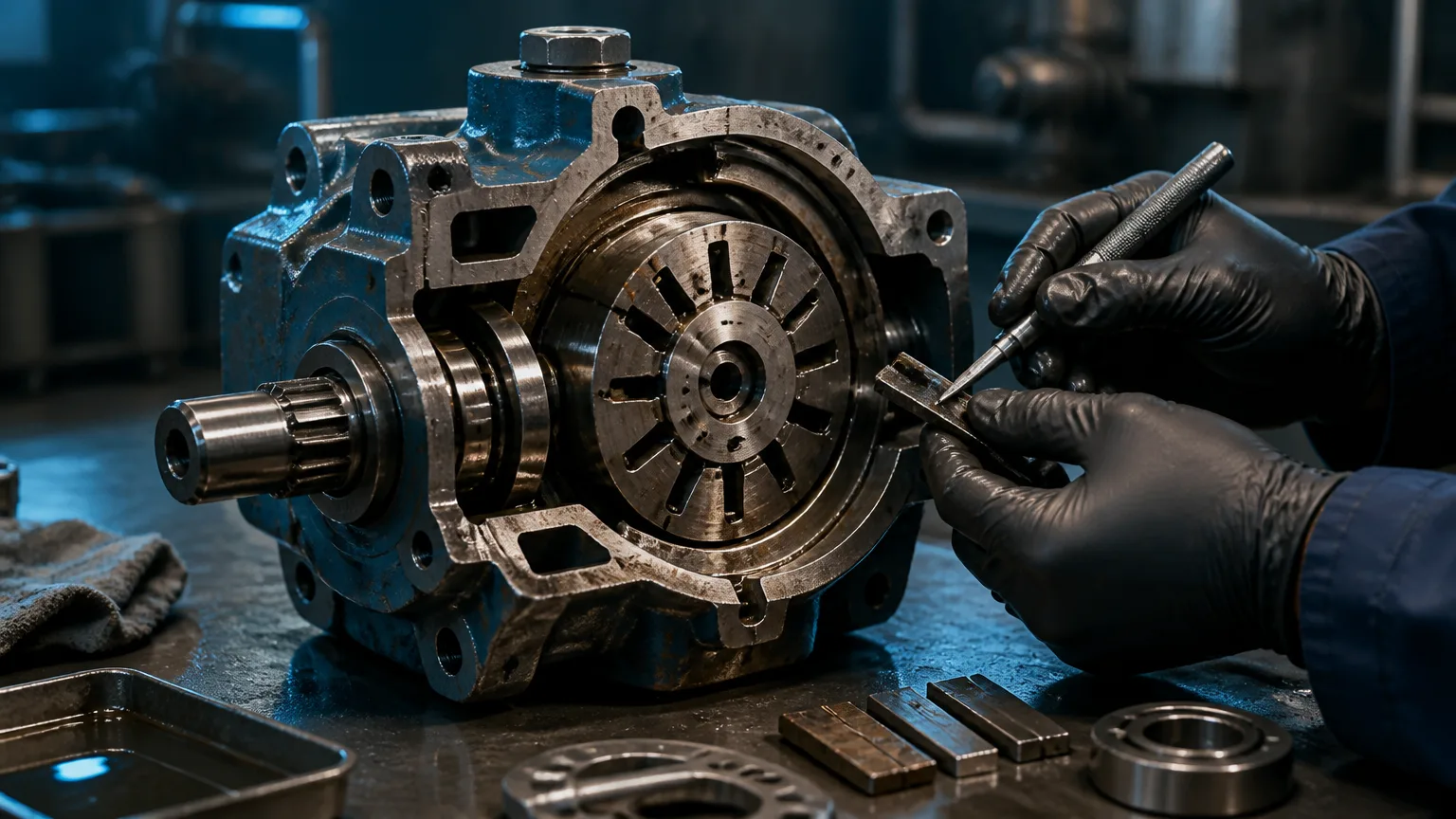
Rineer vane pumps repair is essential when fluid-handling equipment supports production, cooling, lubrication, or process control. A pump failure can interrupt operations, damage connected equipment, and create costly production delays—not merely add a maintenance task.
Early diagnosis helps teams identify wear, contamination, seal failure, or vane damage before secondary faults develop. Correct replacement parts also matter because incompatible components can reduce efficiency or cause repeat failures. Qualified technicians verify the repair, restore alignment, and recommission the pump safely.
Vane pump repair differs from gearbox repair, but both require accurate fault diagnosis, compatible components, and dependable recommissioning. Facilities facing urgent problems can apply the same disciplined approach used in emergency Tonkaflo pump repair: troubleshoot quickly, control repair decisions, and return equipment to service with confidence.
Common Rineer Vane Pump Faults and Their Warning Signs
Low flow, pressure loss, and unstable operation often provide the first warning of developing pump problems. Worn vanes, damaged rotor or cam-ring surfaces, contaminated fluid, or restricted inlet lines may reduce hydraulic performance. Do not treat one symptom as a complete diagnosis.
Abnormal noise and vibration can indicate air ingress, inadequate lubrication, blocked lines, incorrect rotation, or misalignment. These issues may also originate outside the pump. Coupling wear, motor problems, gearbox defects, and poor mounting can increase loads and accelerate vane pump damage.
Overheating and leakage require prompt investigation. Excessive heat may result from internal wear, high operating pressure, insufficient lubrication, or fluid contamination. Leakage can involve shaft seals, housing joints, fittings, or damaged components. Together, these warning signs can signal declining efficiency and a risk of sudden failure.
Before dismantling equipment, record pressure, temperature, flow, fluid condition, noise, vibration, and recent process changes. Check whether maintenance, motor replacement, piping work, or control adjustments preceded the fault. Reviewing related industrial equipment components can reveal problems affecting the complete drive system.
A disciplined inspection supports effective rineer vane pumps repair. Maintenance teams should compare current readings with normal operating data, verify rotation and alignment, and inspect fluid cleanliness before selecting replacement parts.
Rineer Vane Pump Parts: What Inspectors Should Evaluate
Effective rineer vane pumps repair begins by treating the pump as a coordinated wear system. Inspectors should evaluate the vanes, rotor, cam ring, side plates, bearings, seals, shaft surfaces, gaskets, and fasteners together. Wear on one component can alter clearances and damage its mating surfaces.
Inspect vanes for chipping, scoring, uneven wear, and sticking. Check the rotor slots, cam ring profile, and side plates for grooves, distortion, or heat discoloration. Measure bearing condition, shaft runout, and shaft seal contact surfaces. Replace gaskets and seals when hardened, cut, compressed, or chemically degraded.
Matched clearances, correct materials, and model-specific dimensions directly affect efficiency, pressure capability, and service life. A vane or side plate that appears serviceable may still be unsuitable if its thickness or clearance falls outside specifications. Similar standards apply when coordinating Waukesha pump repair with broader pump maintenance requirements, including Waukes pump repair.
Before ordering parts, verify the pump model, serial information, duty conditions, fluid compatibility, and original failure mode. Review operating pressure, speed, temperature, and contamination history. These findings determine whether parts can be reused, refurbished, or replaced.
Replacing only the visibly damaged component often causes repeat failure. Inspectors should identify contamination sources, correct alignment or lubrication problems, and confirm that fasteners and mating surfaces remain suitable for recommissioning.
The Rineer Pump Repair and Testing Process
A reliable rineer vane pumps repair begins by making the system safe. Isolate electrical and hydraulic energy, relieve stored pressure, and follow site lockout procedures. Before removal, document the pump model, rotation, port arrangement, shims, coupling position, and operating readings.
Remove the pump without introducing dirt into open lines. Cap connections, clean the exterior, and move the unit to a controlled work area. During teardown, label components and record wear patterns. Inspect the housing, rotor, vanes, shaft, bearings, seals, and mating surfaces for scoring, erosion, cracks, and distortion.
Dimensional inspection should follow the manufacturer’s limits or a documented remanufacturing standard. If the housing and major components remain serviceable, remanufacturing can provide a practical alternative. Facilities may also review vacuum pump remanufacturing services when evaluating broader refurbishment strategies.
Cleanliness remains critical during reassembly. Install approved replacement parts, lubricate seals correctly, protect sealing lips, and apply specified torque to every fastener. Confirm shaft alignment, coupling condition, and inlet cleanliness before installation.
Test the repaired pump under controlled conditions. Verify flow, pressure, leakage, vibration, noise, temperature, and motor load—not only whether the pump starts. Finally, confirm rotation, inlet pressure, alignment, and operating readings against baseline data before releasing the equipment for service.
Repair, Replacement, or Broader Drive-System Service?
Choosing between Rineer vane pumps repair and replacement requires more than comparing part prices. Assess remaining component condition, parts availability, pump criticality, operating duty, warranty expectations, downtime cost, and total installed cost. Repair is often practical when the housing and shaft remain serviceable. Replacement may provide better value when damage is extensive, parts are obsolete, or failure risks threaten production.
A replacement pump must match more than connection dimensions. Confirm displacement, pressure rating, speed, fluid compatibility, temperature range, rotation, mounting, and system requirements. Incorrect selection can create poor performance, excess heat, or another early failure.
If a gearbox drives the pump, inspect the complete transmission before recommissioning. Check the ratio, backlash, lubrication, bearings, seals, and shaft alignment. Otherwise, a replacement pump may conceal a drive-train fault. Heavy-duty gearbox selection and repair should therefore support the facility’s broader reliability plan. Use this guide to choose the right heavy-duty gearbox for the application, load, and service conditions.
Building a More Reliable Rineer Vane Pump Service Strategy
Successful rineer vane pumps repair depends on finding the root cause, not simply replacing worn parts. Use genuine or correctly specified components, controlled testing, and planned maintenance to reduce repeat failures and protect production uptime.
Maintain pump records, document recurring symptoms, and monitor operating conditions. Keep critical spares or reliable sourcing options available. Qualified pump and gearbox service can restore performance while supporting better long-term maintenance decisions.