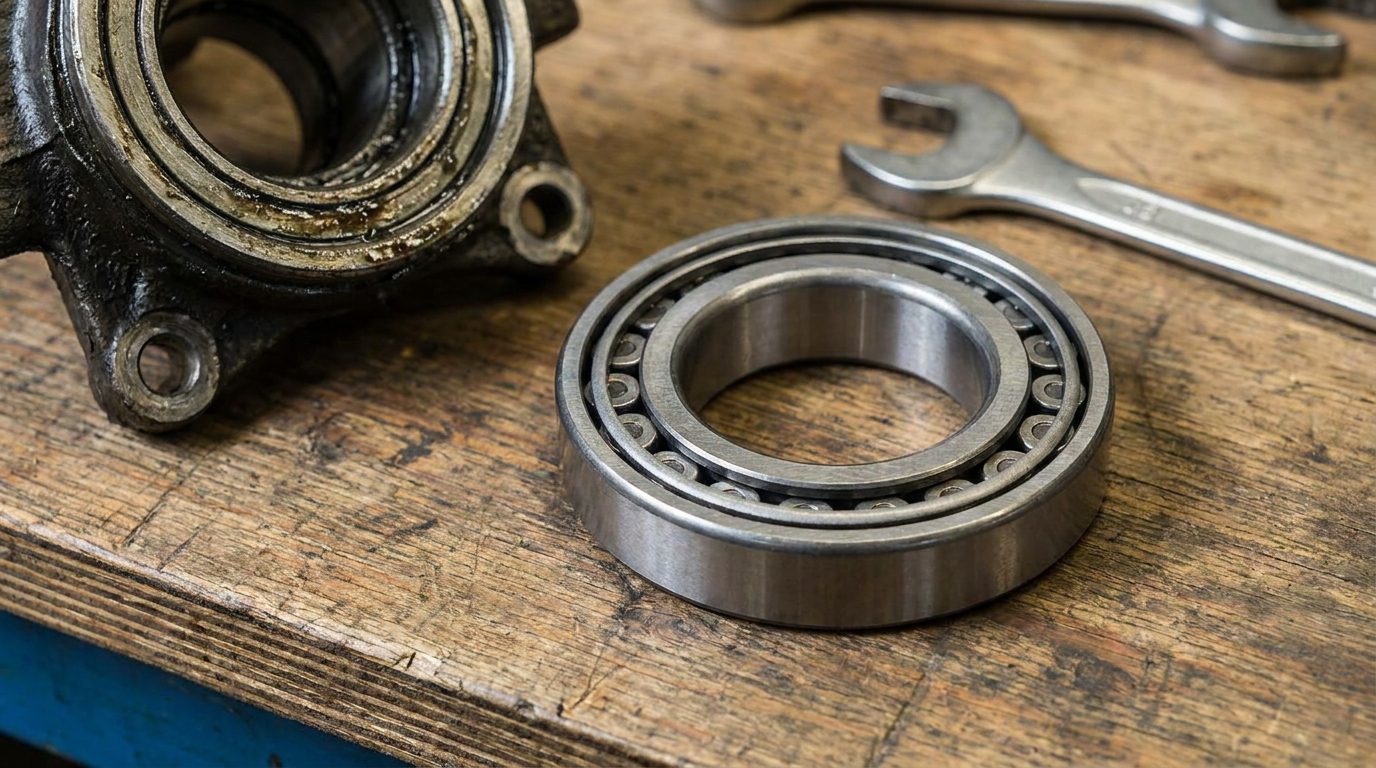
Replacement bearing selection is one of the most important decisions maintenance managers, plant engineers, reliability teams, mechanics, and purchasing professionals make when restoring industrial gearbox performance. The wrong bearing can shorten gearbox life, increase vibration, damage shafts and housings, contaminate lubrication systems, and create costly unplanned downtime. The right bearing, however, supports load, speed, temperature, lubrication, alignment, sealing, and service-life requirements while fitting the gearbox and operating environment. This guide explains how to identify the correct replacement bearing, diagnose bearing-related gearbox problems, inspect failed components, compare repair versus replacement options, and prevent repeat failures through better maintenance practices.
To select the perfect replacement bearing for an industrial gearbox, match the original bearing’s dimensions, type, load rating, speed rating, clearance, cage material, precision class, sealing configuration, and lubrication requirements to the gearbox’s operating conditions. Never select a bearing by size alone. Confirm shaft and housing fits, operating temperature, lubricant compatibility, contamination exposure, vibration history, and failure mode before purchasing. If the original bearing failed prematurely, determine why before installing an identical replacement.
When selecting the appropriate replacement bearing for your machinery, it’s essential to consider various factors such as load capacity, speed, and environmental conditions. A related article that delves deeper into the intricacies of gearbox selection and maintenance can be found at this link. This resource provides valuable insights into the different gearbox manufacturers and their offerings, helping you make informed decisions for optimal performance and longevity of your equipment.
Why Replacement Bearing Selection Matters in Industrial Gearboxes
Industrial gearboxes rely on bearings to support rotating shafts, maintain gear mesh alignment, absorb radial and axial loads, and minimize friction. When a bearing is incorrectly specified or improperly installed, the entire gearbox can suffer.
A poor bearing choice may cause:
- Excessive vibration
- Gear tooth misalignment
- Premature seal failure
- Overheating
- Lubricant degradation
- Shaft scoring or fretting
- Housing bore damage
- Catastrophic gearbox failure
For facilities operating conveyors, mixers, crushers, extruders, cooling towers, kilns, pumps, or heavy process equipment, a bearing failure is rarely just a bearing problem. It can become a production, safety, and reliability problem.
For help evaluating a failing gearbox before ordering parts, visit Industrial Gearbox Solutions’ inspection and repair resources:
- Gearbox Repair Services: https://industrialgearboxsolutions.com/gearbox-repair/
- Gearbox Rebuild Services: https://industrialgearboxsolutions.com/gearbox-rebuild/
- Emergency Gearbox Repair: https://industrialgearboxsolutions.com/emergency-gearbox-repair/
- Industrial Gearbox Maintenance: https://industrialgearboxsolutions.com/industrial-gearbox-maintenance/
Understanding the Main Bearing Types Used in Gearboxes
The first step in selecting a replacement bearing is identifying the bearing type. Industrial gearboxes use different bearing designs depending on shaft position, load direction, speed, and gear geometry.
Ball Bearings
Ball bearings are commonly used where speeds are moderate to high and loads are relatively light to medium. They can support radial loads and limited axial loads.
Common gearbox applications include:
- Small gear reducers
- Motor input shafts
- Auxiliary drives
- Light-duty speed reducers
Advantages:
- Low friction
- Good high-speed capability
- Widely available
- Cost-effective
Limitations:
- Lower load capacity than roller bearings
- Less tolerant of shock loading
- Sensitive to misalignment
Cylindrical Roller Bearings
Cylindrical roller bearings are designed for high radial load capacity. They are often used on intermediate and output shafts in gearboxes where radial forces are significant.
Advantages:
- High radial load capacity
- Good rigidity
- Suitable for heavy-duty gearboxes
- Can accommodate thermal expansion in certain designs
Limitations:
- Limited axial load capacity unless specially configured
- Require accurate alignment
- Sensitive to poor lubrication
Tapered Roller Bearings
Tapered roller bearings support both radial and axial loads. They are commonly used in gearboxes with helical, bevel, or hypoid gears because these gear types produce thrust loads.
Advantages:
- Excellent combined load capacity
- Adjustable preload or endplay
- Suitable for heavy-duty gearboxes
- Handles thrust loads effectively
Limitations:
- Requires proper setup
- Excessive preload can cause overheating
- Incorrect endplay can reduce gear mesh accuracy
Spherical Roller Bearings
Spherical roller bearings are designed for heavy radial loads and moderate axial loads. They can accommodate shaft misalignment better than most other bearing types.
Advantages:
- High load capacity
- Misalignment tolerance
- Good for shock and vibration conditions
- Common in large industrial gearboxes
Limitations:
- Higher friction than some bearing types
- Requires proper lubrication
- May generate more heat at high speeds
Needle Roller Bearings
Needle roller bearings are used where space is limited and radial loads are high relative to bearing size.
Advantages:
- Compact design
- High radial load capacity
- Useful in limited-space applications
Limitations:
- Sensitive to shaft hardness and finish
- Limited axial load capacity
- Requires precise installation
Industrial gearbox bearing failure can lead to costly downtime and production losses, so it’s important to address the issue promptly. Industrial gearbox bearing failure
Key Specifications to Match When Selecting a Replacement Bearing
A replacement bearing should never be selected by bore, outside diameter, and width alone. Dimensional fit is essential, but performance characteristics are equally important.
Bearing Dimensions
Start with the basic dimensions:
| Dimension | What It Means | Why It Matters |
||||
| Bore diameter | Inside diameter of the bearing | Must match shaft fit |
| Outside diameter | Outer ring diameter | Must match housing bore |
| Width | Bearing thickness | Affects shaft positioning and gear alignment |
| Shoulder dimensions | Shaft and housing support areas | Ensures proper seating |
| Chamfer radius | Edge clearance | Prevents interference with shaft or housing fillets |
If the bearing number is visible, use manufacturer catalogs from SKF, Timken, NSK, Schaeffler, or NTN to confirm dimensions and ratings.
Authoritative references:
- SKF Rolling Bearings: https://www.skf.com
- Timken Engineering Manual: https://www.timken.com
- AGMA Gear Standards: https://www.agma.org
- Noria Lubrication Resources: https://www.noria.com
Load Rating
Gearbox bearings must handle radial loads, axial loads, shock loads, and dynamic operating conditions. Compare:
- Dynamic load rating
- Static load rating
- Equivalent bearing load
- Application factor
- Shock or impact factor
- Gear-induced thrust loads
A bearing with the same dimensions may have different internal geometry, roller count, cage design, and load capacity. Choosing a lower-rated equivalent can reduce service life dramatically.
Speed Rating
The bearing’s speed rating must match or exceed gearbox operating speed. Consider:
- Input shaft speed
- Output shaft speed
- Oil bath or circulating lubrication
- Grease lubrication
- Operating temperature
- Cage design
- Seal drag
High-speed applications may require premium cage materials, improved lubrication, or tighter precision tolerances.
Internal Clearance
Internal clearance is the space between rolling elements and raceways before installation. Common clearance classes include C2, Normal, C3, C4, and C5.
In gearboxes, C3 clearance is frequently used where interference fits and operating heat reduce internal clearance. However, clearance should not be guessed.
Incorrect clearance can cause:
- Overheating
- Noise
- Skidding
- Excessive vibration
- Reduced fatigue life
- Shaft movement
- Poor gear tooth contact
Bearing Fits and Tolerances
The correct shaft and housing fits are critical. A loose fit can cause fretting, creep, and bore damage. An overly tight fit can reduce internal clearance and overheat the bearing.
Important fit considerations include:
- Rotating inner ring load
- Stationary outer ring load
- Shaft material
- Housing material
- Thermal expansion
- Load direction
- Ease of assembly and removal
If shaft or housing damage is present, a new bearing alone will not solve the problem. The gearbox may require machining, sleeving, metalizing, or replacement components.
Cage Material
Bearing cages separate rolling elements and guide movement. Common cage materials include:
- Pressed steel
- Machined brass
- Polyamide
- Pin-type steel
- Bronze
High-load, high-temperature, or shock-load gearbox applications often require machined brass or heavy-duty steel cages. Purchasing teams should avoid substituting cage designs without engineering review.
Seal and Shield Options
Some gearbox bearings are open because they rely on gearbox oil lubrication. Others may be sealed or shielded depending on the application.
Selection factors include:
- Oil bath lubrication
- Grease lubrication
- Contamination exposure
- Shaft orientation
- Temperature
- Speed
- Maintenance access
Installing a sealed bearing where open oil flow is required can restrict lubrication and cause premature failure.
When selecting the appropriate replacement bearing for your machinery, it’s essential to consider various factors that can impact performance and longevity. A related article that provides valuable insights into the intricacies of gearbox repair can be found here: industrial gearbox repair. This resource outlines common issues and solutions, helping you make informed decisions about your equipment maintenance needs.
Common Causes of Bearing Failure in Gearboxes
| Factors | Considerations |
|---|---|
| Load capacity | Ensure the replacement bearing can handle the same or higher load capacity as the original bearing. |
| Speed rating | Check the replacement bearing’s speed rating to ensure it matches or exceeds the original bearing’s speed requirements. |
| Size and dimensions | Verify that the replacement bearing has the same size and dimensions as the original bearing to ensure proper fit and function. |
| Material and lubrication | Consider the material and lubrication requirements of the application to select a replacement bearing with suitable properties. |
| Operating conditions | Take into account the operating environment and conditions to choose a replacement bearing that can withstand the same conditions as the original bearing. |
Before ordering a replacement bearing, determine why the original failed. Replacing a failed bearing without root cause analysis often leads to repeat downtime.
Lubrication Failure
Lubrication-related issues are among the most common causes of gearbox bearing failure. Noria has extensively documented how incorrect lubricant selection, contamination, and poor lubrication practices reduce bearing life.
Common lubrication problems include:
- Wrong oil viscosity
- Low oil level
- Excessive oil level causing churning
- Oxidized or degraded oil
- Water contamination
- Particle contamination
- Grease incompatibility
- Blocked oil passages
- Poor lubricant delivery at startup
Symptoms of lubrication failure:
- Blue or black heat discoloration
- Scoring
- Smearing
- Spalling
- Increased temperature
- Burnt oil smell
- Varnish or sludge deposits
Contamination
Contamination damages raceways and rolling elements. Particles create dents that become stress risers, eventually leading to fatigue spalling.
Common contaminants include:
- Dirt and dust
- Metal particles
- Water
- Process chemicals
- Rust
- Paint flakes
- Seal debris
Sources of contamination:
- Failed seals
- Open inspection ports
- Dirty oil transfer containers
- Poor storage practices
- Improper bearing handling
- Inadequate breathers
Misalignment
Misalignment causes uneven load distribution across rolling elements. Gearboxes may experience misalignment due to:
- Soft foot
- Improper coupling alignment
- Shaft deflection
- Foundation movement
- Distorted housing
- Incorrect shimming
- Thermal growth
- Worn bearing seats
Symptoms may include:
- Edge loading
- Uneven wear patterns
- High axial vibration
- Elevated temperature
- Gear tooth contact problems
Improper Installation
Even the correct replacement bearing can fail quickly if installed incorrectly.
Common installation mistakes:
- Hammering directly on bearing rings
- Applying force through rolling elements
- Heating bearings unevenly
- Overheating during induction heating
- Contaminating bearings during installation
- Incorrect preload or endplay
- Using damaged locknuts or washers
- Reusing worn sleeves
- Ignoring shaft or housing damage
Electrical Discharge Damage
Gearboxes driven by variable frequency drives may experience electrical discharge through motor and gearbox bearings. This can produce fluting, frosting, and pitting.
Symptoms include:
- Washboard-like raceway patterns
- Audible bearing noise
- High vibration readings
- Premature lubricant degradation
Solutions may include insulated bearings, shaft grounding rings, proper motor grounding, and VFD mitigation strategies.
Overloading and Shock Loading
Industrial gearboxes exposed to impact loads, jams, start-stop cycling, or overload conditions may require bearings with higher capacity than the original design.
Examples include:
- Crushers
- Shredders
- Conveyors
- Mixers
- Bucket elevators
- Mills
- Presses
If operating conditions have changed since the gearbox was installed, the original bearing may no longer be adequate.
Symptoms That Indicate a Gearbox Bearing Needs Replacement
Maintenance and reliability teams should monitor symptoms before failure becomes catastrophic.
Audible Noise
Bearing noise can indicate lubrication breakdown, raceway damage, clearance issues, or contamination. Listen for:
- Rumbling
- Growling
- Clicking
- Whining
- Squealing
- Rhythmic knocking
Noise should be compared with vibration data, temperature readings, and oil analysis before making a replacement decision.
Excessive Vibration
Vibration analysis is one of the most effective methods for detecting bearing defects. Common indicators include:
- High-frequency bearing fault frequencies
- Increased overall vibration
- Harmonic patterns
- Sidebands
- Gear mesh modulation
- Envelope acceleration peaks
A reliability engineer can use bearing geometry and shaft speed to calculate expected defect frequencies for the inner race, outer race, rolling elements, and cage.
Elevated Temperature
A rising bearing temperature may indicate:
- Excessive preload
- Insufficient clearance
- Poor lubrication
- Overloading
- Misalignment
- Contamination
- Seal drag
- Oil churning
Temperature trending is more useful than one-time measurements. Use infrared thermography, fixed sensors, or gearbox monitoring systems.
Oil Analysis Warnings
Oil analysis can reveal bearing distress before obvious symptoms appear.
Watch for:
- Increased iron
- Chromium
- Tin
- Copper
- Lead
- Water content
- Particle count increase
- Oxidation
- Viscosity changes
- Abnormal wear debris
For lubrication best practices, Noria is a useful external resource: https://www.noria.com
Visible Wear or Damage
During inspection, look for:
- Spalling
- Pitting
- Brinelling
- False brinelling
- Smearing
- Rust
- Fretting
- Cage damage
- Cracked rings
- Heat discoloration
- Etching
- Roller skewing
Photograph all damage before cleaning components. These images help with root cause analysis and warranty documentation.
Troubleshooting Bearing Problems Before Ordering Replacements
A systematic troubleshooting process prevents wasted parts and repeat failures.
Step-by-Step Troubleshooting Checklist
| Step | Action | Purpose |
||||
| 1 | Record gearbox model, ratio, speed, and load | Establish operating conditions |
| 2 | Identify bearing number and location | Confirm part requirements |
| 3 | Review maintenance history | Find recurring patterns |
| 4 | Check oil type, level, and condition | Identify lubrication issues |
| 5 | Inspect seals and breathers | Check contamination control |
| 6 | Measure vibration and temperature | Confirm operating symptoms |
| 7 | Check coupling alignment | Identify external forces |
| 8 | Inspect shaft and housing fits | Prevent repeat fit-related failure |
| 9 | Analyze failed bearing damage | Determine root cause |
| 10 | Confirm replacement specification | Avoid incorrect substitution |
Questions to Ask Before Buying a Replacement Bearing
Purchasing professionals should confirm the following before placing an order:
- Is the bearing number fully identified, including suffixes?
- Is the bearing OEM, aftermarket, or upgraded?
- What clearance class is required?
- What cage material is required?
- Is the bearing open, sealed, or shielded?
- Does the bearing require special precision?
- Is the application high temperature?
- Is the gearbox exposed to water, dust, or chemicals?
- Has the gearbox failed repeatedly?
- Are shaft and housing fits still within tolerance?
- Is the bearing available from a reputable manufacturer or distributor?
- Is documentation available for traceability?
Avoiding Dangerous Bearing Substitutions
Bearings may look identical but perform differently. Pay close attention to suffixes and manufacturer-specific designations.
Potentially risky substitutions include:
- Replacing C3 clearance with normal clearance
- Replacing brass cage with pressed steel cage
- Replacing open bearing with sealed bearing
- Using a lower-capacity equivalent
- Changing precision class
- Changing roller complement
- Ignoring high-temperature requirements
- Using counterfeit or unverified bearings
SKF and Timken both publish engineering resources explaining bearing selection, suffixes, fits, and application factors. Always verify equivalents through manufacturer data, not just cross-reference charts.
Inspection Methods for Replacement Bearing Decisions
The more accurately a failed bearing is inspected, the better the replacement decision will be.
Visual Inspection
Visual inspection is the first diagnostic step. Inspect:
- Inner race
- Outer race
- Rolling elements
- Cage
- Seals
- Lubricant residue
- Shaft seat
- Housing bore
- Retaining hardware
Use good lighting and magnification. Do not discard damaged parts until the root cause is documented.
Dimensional Inspection
Measure critical surfaces:
- Shaft diameter
- Housing bore diameter
- Shaft roundness
- Housing roundness
- Shoulder squareness
- Bearing width
- Endplay
- Gear backlash
- Shaft runout
Use calibrated micrometers, bore gauges, dial indicators, and feeler gauges. Out-of-tolerance fits can destroy a new bearing quickly.
Vibration Analysis
Vibration analysis can detect defects while the gearbox is still running. It is especially useful for critical assets.
Useful techniques include:
- Velocity vibration trending
- Acceleration readings
- High-frequency enveloping
- FFT spectrum analysis
- Time waveform analysis
- Bearing fault frequency analysis
Oil and Wear Debris Analysis
Oil analysis helps determine whether bearing wear is active and severe.
Recommended tests:
- Viscosity at 40°C and 100°C
- Particle count
- Water content
- Total acid number
- Elemental spectroscopy
- Ferrous density
- Analytical ferrography
Thermal Imaging
Infrared thermography can identify:
- Hot bearing housings
- Lubrication starvation
- Overloaded shafts
- Seal friction
- Misalignment-related heating
- Cooling system problems
Thermal data should be trended under similar load and ambient conditions.
Prevention: How to Extend Replacement Bearing Life
Selecting the right bearing is only part of the solution. Preventive practices determine how long the bearing actually lasts.
Improve Lubrication Control
Best practices include:
- Use the correct lubricant viscosity and additive package
- Maintain proper oil level
- Filter oil before adding it to the gearbox
- Use dedicated, sealed transfer containers
- Install desiccant breathers where appropriate
- Sample oil at regular intervals
- Replace oil based on condition, not just calendar time
- Verify grease compatibility before relubrication
AGMA provides gear lubrication standards and guidelines that help engineers select appropriate lubricants for gear drives: https://www.agma.org
Control Contamination
Contamination control may include:
- Upgraded seals
- Labyrinth seals
- Desiccant breathers
- Filter carts
- Quick-connect oil ports
- Closed-loop oil transfer
- Clean storage practices
- Proper washdown protection
- Regular inspection of inspection covers and plugs
Maintain Proper Alignment
Alignment should be checked after:
- Gearbox installation
- Motor replacement
- Coupling replacement
- Foundation repair
- Major process changes
- Excessive vibration events
- Bearing or seal failure
Laser alignment is preferred for many industrial applications.
Store Bearings Correctly
Replacement bearings can be damaged before installation if stored improperly.
Bearing storage best practices:
- Keep bearings in original packaging
- Store in a clean, dry, temperature-stable area
- Avoid vibration exposure
- Keep away from chemicals and moisture
- Do not open packaging until ready to install
- Rotate stock using first-in, first-out practices
- Verify shelf life for greased or sealed bearings
Install Bearings Correctly
Installation quality directly affects service life.
Recommended practices:
- Use clean tools and work surfaces
- Verify shaft and housing dimensions
- Use induction heaters with temperature control
- Avoid open flames
- Apply mounting force to the correct ring
- Use proper sleeves, locknuts, and retainers
- Set preload or endplay to specification
- Confirm free rotation after installation
- Document installation measurements
SKF offers detailed mounting and dismounting guidance for rolling bearings: https://www.skf.com
Repair vs. Replacement: Which Option Is Best?
Not every bearing-related gearbox problem requires complete gearbox replacement. In many cases, a precision rebuild with correct bearing replacement is the most cost-effective option.
When Bearing Replacement Is Usually Enough
Bearing replacement may be sufficient when:
- Gear teeth are in good condition
- Shafts are within tolerance
- Housing bores are not worn
- Lubrication system is clean and functional
- Failure cause is known and corrected
- No severe overheating occurred
- No cracks are present
- Gear mesh can be restored properly
When Gearbox Repair Is the Better Option
Gearbox repair may be needed when bearing failure has damaged surrounding components.
Repair may include:
- Shaft repair or replacement
- Housing bore restoration
- Seal journal repair
- Gear inspection and reconditioning
- Bearing seat machining
- Endplay and backlash correction
- Oil system cleaning
- Seal upgrades
- Load testing
Learn more about gearbox repair options at Industrial Gearbox Solutions:
- Industrial Gearbox Repair: https://industrialgearboxsolutions.com/gearbox-repair/
- Gearbox Rebuild: https://industrialgearboxsolutions.com/gearbox-rebuild/
- Gearbox Failure Analysis: https://industrialgearboxsolutions.com/gearbox-failure-analysis/
When Full Gearbox Replacement May Be Necessary
A complete gearbox replacement may be justified when:
- Housing is cracked beyond repair
- Gear set is severely damaged
- Replacement parts are obsolete
- Repair cost approaches replacement cost
- Lead time for repair is unacceptable
- Gearbox is undersized for the application
- Repeated failures indicate design mismatch
- Efficiency upgrades are required
Cost Comparison Table
| Option | Best For | Advantages | Limitations |
|||||
| Bearing replacement only | Isolated bearing failure | Lowest cost, fastest repair | Risky if root cause is unknown |
| Gearbox repair | Bearing failure with related damage | Preserves existing gearbox, corrects fits | Requires skilled inspection |
| Gearbox rebuild | Worn gearbox needing complete restoration | Extends asset life, improves reliability | Longer downtime than simple bearing swap |
| Gearbox replacement | Severe damage or obsolete unit | New equipment, possible efficiency gain | Highest cost, longer procurement time |
Maintenance Best Practices for Long-Term Gearbox Bearing Reliability
A proactive maintenance program reduces emergency failures and extends bearing life.
Recommended Maintenance Schedule
| Interval | Maintenance Task |
|||
| Daily or weekly | Check for abnormal noise, vibration, leaks, and temperature |
| Monthly | Inspect oil level, breathers, seals, and mounting bolts |
| Quarterly | Collect oil samples and trend vibration data |
| Semiannually | Check alignment, inspect coupling, verify lubrication condition |
| Annually | Inspect internal components if accessible and review failure trends |
| During shutdown | Perform detailed bearing, shaft, gear, and housing inspections |
Reliability Metrics to Track
Maintenance managers and reliability engineers should track:
- Mean time between failures
- Bearing failure frequency by gearbox
- Oil analysis trends
- Vibration alarm history
- Temperature trends
- Repair cost per gearbox
- Emergency downtime hours
- Repeat failure rate
- Lubricant consumption
- Seal failure rate
Documentation to Keep
Good documentation improves future replacement decisions.
Maintain records of:
- Bearing part numbers and suffixes
- Manufacturer and batch information
- Installation date
- Installer name
- Shaft and housing measurements
- Lubricant type
- Alignment readings
- Endplay or preload values
- Vibration baseline
- Oil analysis reports
- Photos of failed components
- Root cause findings
Purchasing Considerations for Replacement Bearings
Purchasing professionals play a major role in gearbox reliability. Cost matters, but the lowest-priced bearing is not always the best value.
What to Request from Suppliers
Ask suppliers for:
- Manufacturer datasheet
- Country of origin
- Authenticity documentation
- Full bearing designation
- Clearance class
- Cage type
- Seal or shield configuration
- Load ratings
- Speed ratings
- Availability and lead time
- Warranty terms
- Storage recommendations
Counterfeit Bearing Risks
Counterfeit bearings can look convincing but fail rapidly. Risks include:
- Inferior steel
- Poor heat treatment
- Inaccurate dimensions
- Incorrect markings
- Low load capacity
- Short fatigue life
- Safety hazards
Buy from authorized distributors or trusted industrial repair partners.
Standard vs. Upgraded Bearings
In some cases, upgrading the bearing is appropriate. Possible upgrades include:
- Higher load capacity bearing
- Improved cage material
- Insulated bearing
- High-temperature bearing
- Corrosion-resistant bearing
- Specialty coating
- Improved sealing
- Optimized internal clearance
Upgrades should be reviewed by an engineer to confirm compatibility with shaft fits, housing fits, lubrication, and gear geometry.
Suggested Branded Images for This Article
Image 1: Technician Measuring a Gearbox Bearing
Alt text: Technician measuring an industrial gearbox replacement bearing with a micrometer
Caption: Accurate dimensional inspection helps ensure the replacement bearing matches shaft and housing requirements.
Image 2: Failed Bearing Raceway Close-Up
Alt text: Close-up of spalling and pitting on a failed gearbox bearing raceway
Caption: Bearing failure patterns reveal root causes such as contamination, overload, or lubrication breakdown.
Image 3: Industrial Gearbox Bearing Installation
Alt text: Mechanic installing a heated replacement bearing on an industrial gearbox shaft
Caption: Proper installation methods reduce the risk of premature bearing failure.
Image 4: Oil Analysis Sample from Gearbox
Alt text: Gearbox oil sample used to detect bearing wear and lubricant contamination
Caption: Oil analysis can identify bearing distress before catastrophic gearbox failure occurs.
Image 5: Branded Gearbox Repair Shop Inspection
Alt text: Industrial Gearbox Solutions technician inspecting gearbox bearings and shafts during rebuild
Caption: A complete gearbox inspection confirms whether bearing replacement, repair, or rebuild is the best option.
FAQs About Selecting the Perfect Replacement Bearing
How do I identify the correct replacement bearing for my gearbox?
Start with the bearing number stamped on the bearing ring, then confirm the bore, outside diameter, width, clearance class, cage type, seal configuration, and manufacturer suffixes. Also check the gearbox manual, bill of materials, and OEM drawings if available. If the original bearing failed prematurely, perform a root cause analysis before ordering the same bearing.
Can I replace a gearbox bearing with any bearing that has the same dimensions?
No. Bearings with identical dimensions can have different load ratings, internal clearances, cage materials, precision classes, and speed limits. Selecting by size alone can cause overheating, vibration, and early failure.
What does C3 clearance mean in a bearing?
C3 clearance means the bearing has greater internal clearance than normal before installation. This is often used where interference fits or operating heat reduce clearance during service. However, C3 is not always correct. The clearance must match the gearbox design and operating conditions.
What is the most common cause of gearbox bearing failure?
Lubrication failure is one of the most common causes. This includes incorrect viscosity, low oil level, contamination, degraded oil, water ingress, and poor lubricant delivery. Contamination and misalignment are also frequent contributors.
Should I replace all gearbox bearings at the same time?
It depends on the gearbox condition, downtime cost, and inspection results. During a major rebuild, replacing all bearings is often practical. For an isolated failure, replacing only the damaged bearing may be acceptable if the remaining bearings are verified to be in good condition.
How can I tell if a bearing failure damaged the gearbox housing?
Inspect the housing bore for fretting, scoring, out-of-round conditions, looseness, cracks, or discoloration. Measure the bore with calibrated tools. A bearing that has spun in the housing may require bore restoration before a new bearing is installed.
Is an OEM bearing always required?
Not always. A high-quality equivalent from a reputable manufacturer may be suitable if all specifications are matched correctly. However, suffixes and internal design differences must be verified. For critical gearboxes, engineering review is recommended.
When should I call a gearbox repair specialist?
Call a specialist if the gearbox has repeated bearing failures, abnormal vibration, overheating, shaft damage, housing bore wear, gear damage, contamination, or uncertain bearing specifications. A repair specialist can inspect the full assembly and prevent repeat failures.
Key Takeaways
- The perfect replacement bearing must match more than dimensions.
- Confirm load rating, speed rating, clearance, cage material, fits, lubrication, and seals.
- Always investigate why the previous bearing failed.
- Lubrication failure, contamination, misalignment, improper installation, and overload are leading causes of gearbox bearing failure.
- Vibration analysis, oil analysis, thermal imaging, and dimensional inspection improve replacement decisions.
- Bearing suffixes matter and should not be ignored.
- Shaft and housing damage must be corrected before installing a new bearing.
- Proper storage, handling, installation, and lubrication extend bearing life.
- Repair may be more cost-effective than full gearbox replacement when damage is limited.
- Partnering with a qualified gearbox repair provider improves reliability and reduces downtime.
SEO Metadata
Meta title: Selecting the Perfect Replacement Bearing for Industrial Gearboxes
Meta description: Learn how to select the right replacement bearing for industrial gearboxes. Includes causes, symptoms, inspection, troubleshooting, prevention, repair vs. replacement, and maintenance best practices.
Primary keyword: replacement bearing
Secondary keywords: gearbox bearing replacement, industrial bearing selection, bearing failure analysis, gearbox repair, bearing troubleshooting, bearing maintenance, replacement gearbox bearing
Suggested URL slug: selecting-perfect-replacement-bearing
Search intent: Informational and commercial investigation for maintenance, engineering, reliability, and purchasing teams selecting industrial gearbox bearings.
Recommended internal links:
- Gearbox Repair Services: https://industrialgearboxsolutions.com/gearbox-repair/
- Gearbox Rebuild Services: https://industrialgearboxsolutions.com/gearbox-rebuild/
- Gearbox Failure Analysis: https://industrialgearboxsolutions.com/gearbox-failure-analysis/
- Emergency Gearbox Repair: https://industrialgearboxsolutions.com/emergency-gearbox-repair/
- Industrial Gearbox Maintenance: https://industrialgearboxsolutions.com/industrial-gearbox-maintenance/
Recommended external references:
- SKF bearing selection and mounting guidance: https://www.skf.com
- Timken engineering resources: https://www.timken.com
- AGMA gear standards and lubrication guidance: https://www.agma.org
- Noria lubrication and oil analysis resources: https://www.noria.com
Conclusion
Selecting the right replacement bearing is a reliability decision, not just a purchasing task. The best bearing for an industrial gearbox must match the application’s load, speed, clearance, fit, lubrication, sealing, temperature, and operating environment. Just as important, the cause of the original bearing failure must be understood before the new bearing is installed. By combining proper inspection, root cause analysis, precision installation, lubricant control, and preventive maintenance, plants can reduce unplanned downtime and extend gearbox service life.
If your gearbox is noisy, overheating, vibrating, leaking, or experiencing repeat bearing failures, Industrial Gearbox Solutions can help evaluate the damage, identify the correct replacement bearing, and determine whether repair, rebuild, or replacement is the best option.
FAQs
What factors should be considered when choosing a replacement bearing?
When choosing a replacement bearing, it is important to consider factors such as the bearing type, size, load capacity, speed rating, operating temperature, and environmental conditions. These factors will help ensure that the replacement bearing is suitable for the specific application.
What are the different types of replacement bearings available?
There are various types of replacement bearings available, including ball bearings, roller bearings, plain bearings, and fluid bearings. Each type has its own unique characteristics and is suitable for different applications and operating conditions.
How do I determine the correct size of the replacement bearing?
To determine the correct size of the replacement bearing, it is important to measure the shaft diameter, housing bore diameter, and the width of the bearing. These measurements will help identify the appropriate bearing size and ensure a proper fit for the application.
What are the common causes of bearing failure?
Common causes of bearing failure include inadequate lubrication, contamination, improper installation, overloading, misalignment, and excessive heat. Understanding these causes can help in selecting the right replacement bearing and implementing proper maintenance practices to prevent future failures.
Where can I purchase replacement bearings?
Replacement bearings can be purchased from various sources, including authorized distributors, online retailers, and directly from bearing manufacturers. It is important to ensure that the replacement bearing is sourced from a reputable supplier to guarantee its quality and authenticity.