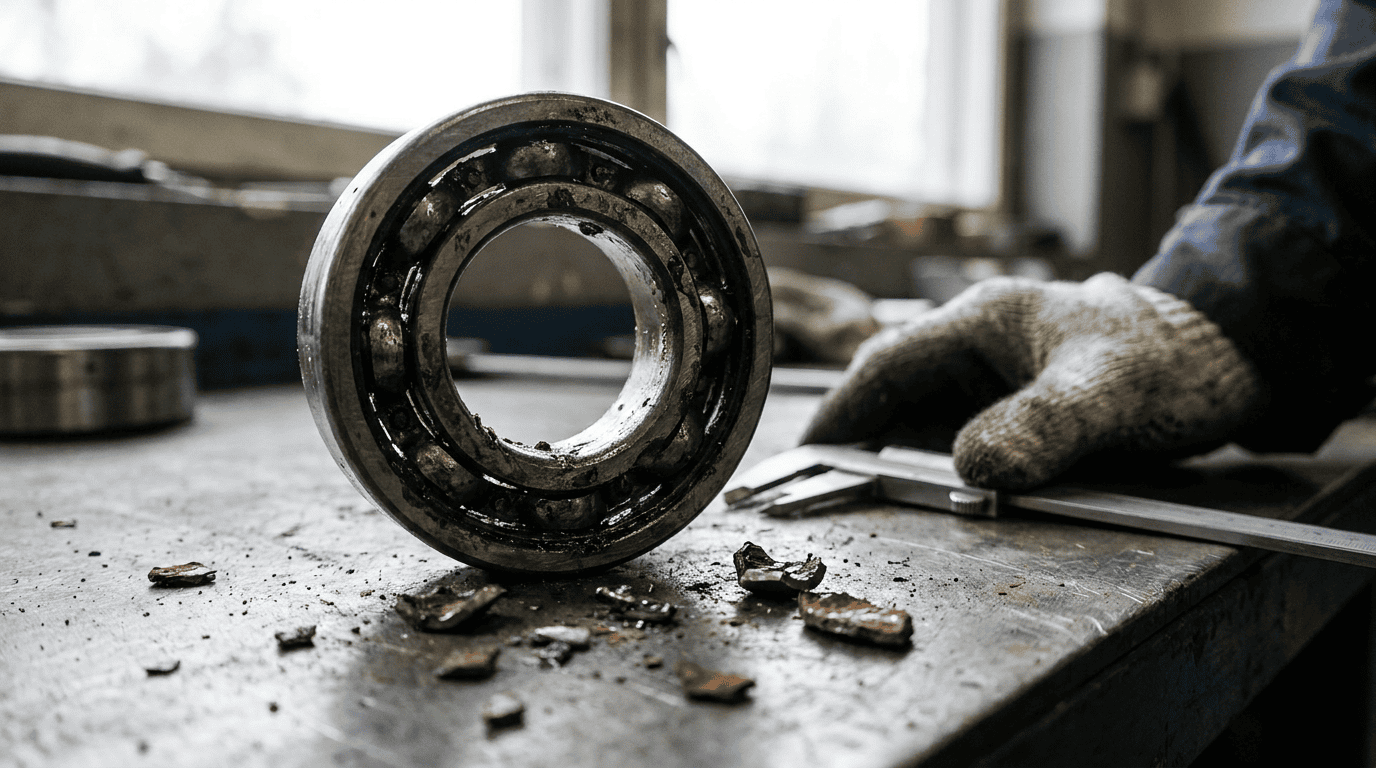
Bearing failure from dirt, dust, and debris is one of the most common—and most preventable—causes of premature gearbox downtime in industrial facilities. In gearboxes, bearings operate under high loads, tight clearances, and demanding lubrication conditions, making even small amounts of contamination a serious threat. For maintenance managers, plant engineers, reliability teams, mechanics, and purchasing professionals, understanding how abrasive particles enter a gearbox, damage bearing surfaces, and accelerate failure is essential to reducing unplanned outages, repair costs, and production losses. This guide explains the causes, symptoms, inspection methods, troubleshooting steps, prevention strategies, and repair-versus-replacement considerations for contamination-related bearing failure.
Dirt, dust, and debris cause bearing failure by contaminating the lubricant, damaging rolling elements and raceways, increasing friction, generating heat, and accelerating wear. Common entry points include failed seals, poor breathers, improper storage, dirty oil handling practices, and inadequate filtration. Early symptoms include abnormal vibration, rising temperature, lubricant discoloration, metallic particles, noise, and reduced gearbox efficiency. Prevention requires clean lubrication practices, high-quality seals and breathers, regular oil analysis, proper filtration, contamination control procedures, and scheduled inspections.
In addition to understanding the hidden causes of bearing failure as discussed in “Dirt, Dust, and Debris: Hidden Causes of Bearing Failure,” it’s essential to explore the broader implications of maintenance and repair in industrial settings. A related article that delves into the specifics of gearbox repair can provide valuable insights into preventing such failures. For more information, you can read about industrial gearbox repair in Kansas at this link.
Why Contamination Is a Silent Bearing Killer
Bearings inside industrial gearboxes are designed to operate with a thin lubricating film separating rolling elements from raceways. When that film is clean and properly maintained, bearings can achieve long service life. When dirt, dust, and debris enter the lubricant, however, those particles interrupt the oil film and create abrasive contact.
Unlike catastrophic overload or obvious misalignment, contamination-related bearing failure often develops quietly. The gearbox may continue running for weeks or months while microscopic particles gradually damage bearing surfaces. By the time vibration, noise, or heat becomes obvious, the bearing may already be severely compromised.
For facilities operating conveyors, mixers, crushers, cooling towers, agitators, extruders, or heavy-duty process equipment, contamination control is not just a maintenance issue—it is a reliability strategy.
How Dirt and Dust Damage Bearings
Contaminants damage bearings in several ways:
- Abrasive wear: Hard particles scratch raceways and rolling elements.
- Denting and bruising: Larger particles are trapped between rolling elements and raceways, causing surface indentations.
- Lubricant degradation: Dust and debris accelerate oxidation and reduce lubricant performance.
- Increased friction: Damaged surfaces create higher resistance and operating temperatures.
- Fatigue initiation: Surface defects become stress risers that lead to spalling and pitting.
- Corrosion: Moisture-laden debris can introduce rust and chemical attack.
According to bearing reliability resources from SKF and Timken, contamination is among the leading contributors to premature bearing damage. Even particles too small to see with the naked eye can reduce bearing life significantly.
Recommended sources for further technical reference:
- SKF Bearing Damage and Failure Analysis: https://www.skf.com
- Timken Bearing Damage Analysis: https://www.timken.com
- AGMA Gearbox Standards and Technical Resources: https://www.agma.org
- Noria Lubrication and Contamination Control Resources: https://www.noria.com
Why Gearboxes Are Especially Vulnerable
Industrial gearboxes are particularly sensitive to contamination because they combine:
- Rolling bearings
- Gear mesh contact
- Oil circulation or splash lubrication
- Shaft seals
- Breathers
- Inspection ports
- Drain and fill points
- High operating loads
A single source of dirt ingress can affect the entire system. Contaminated oil does not only damage bearings; it can also wear gear teeth, clog oil passages, degrade seals, and shorten the life of the complete gearbox assembly.
For related support, maintenance teams can explore Industrial Gearbox Solutions resources such as:
- Industrial Gearbox Repair
- Gearbox Rebuild Services
- Gearbox Inspection Services
- Emergency Gearbox Repair
Common Causes of Bearing Failure from Dirt, Dust, and Debris
Contamination can enter a gearbox at many stages: during operation, maintenance, storage, installation, or lubricant handling. Understanding the source is the first step toward solving the problem.
Failed or Worn Shaft Seals
Shaft seals are one of the most common contamination entry points. When seals become worn, hardened, cracked, misaligned, or damaged by shaft scoring, they allow dirt and dust to migrate into the gearbox.
Common seal-related issues include:
- Cracked elastomer lips
- Grooved shafts
- Improper seal installation
- Excessive shaft runout
- High operating temperatures
- Pressure buildup inside the gearbox
- Wrong seal material for the environment
In dusty applications such as cement plants, aggregate processing, mining, grain handling, and wood products manufacturing, seal performance is especially critical.
Poor Breather Selection
Standard open breathers can allow airborne dust, moisture, and debris to enter the gearbox as it heats and cools. During operation, the gearbox expands and expels air. When it cools, it draws air back in. If that incoming air is not filtered, contaminants enter the lubricant.
Desiccant breathers or high-efficiency particulate breathers are often recommended for harsh environments.
Dirty Lubricant Handling Practices
New oil is not always clean enough for precision gearbox bearings. Lubricant can become contaminated during:
- Transfer from drums
- Use of dirty funnels or containers
- Open storage
- Improper dispensing
- Unsealed oil carts
- Exposure to shop dust
- Mixing old and new oil
Noria frequently emphasizes that lubricant cleanliness is a critical factor in machine reliability. Oil should be stored, transferred, and applied using clean, sealed, filtered systems.
Inadequate Filtration
Gearboxes with circulating lubrication systems require proper filtration to remove particles before they damage bearings. If filters are missing, undersized, clogged, bypassing, or incorrectly rated, contamination remains in circulation.
Filtration problems may include:
- Wrong micron rating
- Infrequent filter changes
- Filter bypass valve stuck open
- Poor filter placement
- No offline kidney-loop filtration
- Lack of differential pressure monitoring
Contamination During Maintenance or Rebuilds
Even well-intentioned maintenance can introduce dirt and debris if cleanliness controls are not followed. Gearboxes are vulnerable when covers, inspection plates, bearing housings, or lubrication ports are open.
Contamination can enter from:
- Dirty tools
- Shop rags
- Open bearings
- Unclean workbenches
- Grinding dust
- Paint chips
- Gasket material
- Metal shavings
- Inadequate flushing after repair
For this reason, professional gearbox repair and rebuild work should include controlled cleaning, component inspection, proper assembly practices, and post-rebuild testing.
Environmental Exposure
Some industrial environments are naturally contamination-heavy. Gearboxes operating near airborne particulates require more aggressive protection.
High-risk industries include:
- Mining
- Cement
- Aggregates
- Steel
- Pulp and paper
- Food processing
- Agriculture
- Grain handling
- Wastewater
- Chemical processing
- Power generation
- Lumber and sawmills
Industrial gearbox bearing failure can lead to costly downtime and production losses, so it’s important to address the issue promptly. Industrial gearbox bearing failure
Symptoms of Contaminated Bearing Failure
Contamination-related bearing damage often begins subtly. Detecting symptoms early can prevent catastrophic gearbox failure.
Early Warning Signs
Early symptoms may include:
- Slight increase in bearing temperature
- Minor vibration changes
- Darkened or cloudy lubricant
- Increased oil particle counts
- Faint rumbling or growling noise
- Higher current draw from the driven equipment
- Decreased gearbox efficiency
- Small metallic particles on magnetic drain plugs
These signs should not be ignored. Contamination typically accelerates once bearing surfaces begin to degrade.
Advanced Symptoms
As damage progresses, symptoms become more obvious:
- Loud grinding, rumbling, or knocking
- High vibration amplitudes
- Bearing defect frequencies in vibration analysis
- Overheating gearbox housing
- Oil foaming or severe discoloration
- Visible metal flakes in lubricant
- Shaft movement or looseness
- Seal leakage
- Gear tooth wear
- Complete bearing seizure
At this stage, continued operation may damage shafts, gears, housings, and other expensive components.
Table: Symptoms and Likely Causes
| Symptom | Possible Contamination-Related Cause | Recommended Action |
||||
| Rising bearing temperature | Increased friction from abrasive particles | Inspect lubricant, seals, and bearing condition |
| Rumbling or growling noise | Raceway wear or pitting | Perform vibration analysis and borescope inspection |
| Dark oil | Oxidation, debris, or dirt contamination | Send oil sample for analysis |
| Metal particles on drain plug | Bearing or gear wear | Shut down if severe and inspect immediately |
| High ISO particle count | Filtration or ingress problem | Improve filtration and identify contamination source |
| Repeated seal leakage | Pressure buildup, shaft wear, or poor seal selection | Inspect breather, shaft, and seal design |
| Vibration at bearing defect frequencies | Spalling or raceway damage | Plan bearing replacement or gearbox repair |
In the exploration of bearing failure, it is essential to consider various contributing factors, including the impact of environmental elements. A related article discusses the implications of fluid leaks in gearboxes, which can also lead to significant operational issues. Understanding how these leaks can compromise the integrity of machinery is crucial for effective maintenance. For more insights on this topic, you can read the article on gearbox fluid leaks.
Troubleshooting Contamination-Related Bearing Problems
| Causes of Bearing Failure | Effects |
|---|---|
| Dirt, Dust, and Debris | Increased friction, wear, and heat generation |
| Contamination | Reduced lubricant effectiveness and accelerated fatigue |
| Corrosion | Surface damage and reduced bearing life |
Effective troubleshooting requires identifying both the bearing damage and the contamination source. Replacing a failed bearing without eliminating the dirt ingress pathway often leads to repeat failure.
Step 1: Review Operating History
Start by gathering data:
- When was the gearbox installed or rebuilt?
- When was the lubricant last changed?
- Was there a recent seal replacement?
- Has the operating environment changed?
- Are there nearby dust-generating processes?
- Were any inspection covers opened recently?
- Has there been overheating?
- Are failures recurring in the same position?
Maintenance records often reveal patterns that point toward the root cause.
Step 2: Inspect Lubricant Condition
Oil condition is one of the best indicators of contamination. Pull a representative oil sample using clean sampling practices.
Look for:
- Dirt or grit
- Water contamination
- Dark color
- Burnt odor
- Foam
- Sludge
- Metallic flakes
- Abnormal viscosity
Send the sample to a qualified laboratory for:
- ISO particle count
- Spectrometric wear metals
- Ferrous density
- Viscosity analysis
- Water content
- Acid number
- Oxidation and nitration
- Additive depletion
Step 3: Inspect Seals and Breathers
A contaminated gearbox often has a failed defense system. Inspect all possible entry points.
Check:
- Input shaft seal
- Output shaft seal
- Inspection cover gaskets
- Breather element
- Fill plug
- Drain plug
- Oil level sight glass
- Bearing caps
- Split housing joints
A dirty breather or damaged seal may explain the entire failure.
Step 4: Use Vibration Analysis
Vibration analysis can detect bearing defects before total failure. Reliability engineers should compare readings against baseline data and trend changes over time.
Common bearing fault indicators include:
- Ball pass frequency outer race
- Ball pass frequency inner race
- Ball spin frequency
- Fundamental train frequency
- High-frequency acceleration
- Demodulation or envelope spectrum peaks
Contamination damage often produces broadband noise initially, followed by specific defect frequencies as raceway damage develops.
Step 5: Perform Visual and Borescope Inspection
A borescope can help inspect internal gearbox components without full disassembly. This is useful when planning downtime or determining whether immediate shutdown is necessary.
Look for:
- Bearing discoloration
- Raceway pitting
- Spalling
- Cage damage
- Gear tooth scoring
- Sludge deposits
- Rust
- Debris accumulation
- Oil distribution problems
If significant metal debris is found, disassembly may be required.
Inspection Methods for Dirt-Related Bearing Damage
Inspection should combine visual, analytical, and condition-monitoring techniques. No single method provides the full picture.
Visual Bearing Inspection
When bearings are removed, inspect them carefully before cleaning away all evidence. Contamination damage may appear as:
- Frosted raceways
- Fine scratches
- Dents
- Pitting
- Spalling
- Embedded particles
- Cage wear
- Discoloration
- Uneven wear paths
Photograph the bearing before and after cleaning. This documentation helps reliability teams and repair vendors determine the root cause.
Oil Analysis
Oil analysis is one of the most valuable tools for identifying contamination. A proper oil analysis program can detect dirt before it causes severe damage.
Important oil analysis metrics include:
| Test | What It Reveals | Why It Matters |
||||
| ISO particle count | Quantity and size of particles | Tracks cleanliness level |
| Silicon levels | Dirt or dust ingress | Indicates airborne contamination |
| Iron levels | Bearing or gear wear | Identifies active wear |
| Viscosity | Lubricant condition | Confirms correct oil film performance |
| Water content | Moisture contamination | Prevents corrosion and lubricant breakdown |
| Acid number | Oxidation level | Indicates oil degradation |
| Ferrous density | Large iron wear particles | Detects severe wear |
Magnetic Plug and Filter Inspection
Magnetic drain plugs and used filters provide important clues. When inspecting them, look for:
- Fine metallic paste
- Large flakes
- Bronze or brass particles
- Steel chips
- Grit or sand
- Black sludge
Fine paste may indicate normal wear or early damage. Larger flakes often suggest active bearing or gear failure.
Thermal Imaging
Infrared thermography can identify abnormal heat patterns. A bearing running hotter than normal may be experiencing friction caused by contamination, poor lubrication, or misalignment.
Use thermal imaging to compare:
- Similar gearboxes
- Inboard and outboard bearings
- Input and output shafts
- Pre- and post-maintenance temperatures
- Temperature trends over time
Endplay and Shaft Movement Checks
Contaminated bearings may develop excessive clearance as raceways and rolling elements wear. Mechanics should check shaft movement, endplay, and radial looseness according to the gearbox manufacturer’s specifications.
Excessive movement can damage seals, gears, couplings, and housings.
Prevention Strategies for Contamination Control
Preventing contamination is almost always less expensive than repairing a failed gearbox. A comprehensive contamination control plan should address air, oil, seals, maintenance practices, and storage.
Upgrade Breathers
Replace open or low-quality breathers with appropriate filtration technology.
Options include:
- Desiccant breathers
- Particulate breathers
- Hybrid breathers
- Expansion chambers
- Closed-loop breathers
Benefits include:
- Reduced dirt ingress
- Moisture control
- Longer oil life
- Lower bearing wear
- Improved gearbox reliability
Improve Seal Protection
In dusty or dirty environments, standard lip seals may not be enough. Consider:
- Labyrinth seals
- Taconite seals
- V-ring seals
- Bearing isolators
- Dual-lip seals
- Purged seals
- Shaft repair sleeves
Seal selection should consider speed, temperature, shaft condition, lubricant type, pressure, and contamination severity.
Filter New Oil Before Use
New oil should be filtered before entering the gearbox. Use dedicated transfer carts with proper filtration.
Best practices include:
- Use sealed containers
- Filter oil during transfer
- Label lubricants clearly
- Avoid open funnels
- Keep dispensing equipment clean
- Store drums indoors or protected
- Use quick-connect fittings where possible
Establish Cleanliness Targets
Set lubricant cleanliness targets based on gearbox criticality and bearing sensitivity. ISO 4406 particle count targets help maintenance teams measure and manage contamination.
For critical gearboxes, work with your lubricant supplier, gearbox OEM, or reliability consultant to establish appropriate cleanliness goals.
Use Offline Filtration
Offline filtration, also known as kidney-loop filtration, continuously cleans oil even when the gearbox’s main lubrication system is not running. This is useful for large gearboxes, critical assets, or systems operating in harsh environments.
Benefits include:
- Continuous particle removal
- Improved oil cleanliness
- Extended lubricant life
- Reduced bearing wear
- Better reliability trending
Maintain Positive Housekeeping Practices
Cleanliness around the gearbox matters. Maintenance teams should:
- Keep gearbox exteriors clean
- Remove dust buildup near seals
- Avoid compressed air blasting near breathers or seals
- Clean around fill ports before opening
- Cover exposed components during maintenance
- Use lint-free wipes
- Keep bearings packaged until installation
Maintenance Best Practices for Bearings and Gearboxes
A contamination control program is most effective when integrated into the overall gearbox maintenance plan.
Routine Maintenance Checklist
| Task | Frequency | Purpose |
||:||
| Check oil level | Daily or weekly | Prevent low lubrication conditions |
| Inspect seals | Weekly | Detect leakage and dirt ingress |
| Check breather condition | Monthly | Maintain clean air exchange |
| Monitor temperature | Weekly or continuous | Detect friction or lubrication issues |
| Take vibration readings | Monthly or quarterly | Identify bearing defects early |
| Sample oil | Quarterly or based on criticality | Track contamination and wear |
| Inspect magnetic plug | During oil changes | Detect wear particles |
| Change filters | Based on differential pressure or schedule | Maintain filtration efficiency |
| Clean gearbox exterior | As needed | Reduce contamination near openings |
Lubrication Best Practices
Proper lubrication is central to bearing life. Follow these practices:
- Use the OEM-recommended lubricant type and viscosity.
- Avoid mixing incompatible oils.
- Maintain proper oil level.
- Prevent overfilling, which can cause heat and foaming.
- Prevent underfilling, which can starve bearings.
- Use clean transfer equipment.
- Filter oil before use.
- Verify lubricant compatibility with seals.
- Track lubricant batch and change history.
Installation Best Practices
Contamination can begin before the gearbox even starts. During bearing or gearbox installation:
- Store bearings in original packaging.
- Do not unwrap bearings until ready to install.
- Keep work areas clean.
- Use proper bearing heaters instead of open flames.
- Avoid hammering directly on bearings.
- Use clean gloves.
- Protect open gearbox housings.
- Flush housings after machining or repair.
- Verify shaft and housing fits.
- Install seals correctly.
Repair vs. Replacement: Making the Right Decision
When contamination-related bearing failure occurs, the decision to repair or replace depends on severity, criticality, lead time, and total cost of ownership.
When Bearing Replacement May Be Enough
Bearing replacement may be appropriate if:
- Damage is limited to one bearing.
- Gears are in good condition.
- Shafts are not scored or worn.
- Housing bores are within tolerance.
- No severe metal debris circulated.
- Root cause is identified and corrected.
- Downtime window is limited but controlled.
However, the gearbox should still be cleaned, flushed, and inspected thoroughly.
When Gearbox Repair or Rebuild Is Recommended
A complete gearbox repair or rebuild may be necessary when:
- Multiple bearings show damage.
- Gear teeth are scored, pitted, or worn.
- Shafts are damaged.
- Housing fits are loose or worn.
- Metal debris has circulated throughout the unit.
- Seals repeatedly fail.
- Lubrication passages are contaminated.
- The gearbox has experienced overheating.
- Vibration remains high after bearing replacement.
Industrial Gearbox Solutions can support evaluation through services such as gearbox failure analysis, gearbox rebuilds, and reverse engineering for obsolete gearbox parts.
When Replacement May Be Better
Replacement may be the best choice when:
- The gearbox is obsolete and parts are unavailable.
- Housing damage is severe.
- Repair cost approaches replacement cost.
- The unit is undersized for the application.
- Repeated failures indicate a design issue.
- Production demands require a spare or upgraded unit.
- Efficiency improvements justify modernization.
Purchasing professionals should compare not just the purchase price but also lead time, expected service life, downtime cost, repairability, and availability of spare parts.
Repair vs. Replacement Comparison Table
| Factor | Repair/Rebuild | Replacement |
||||
| Initial cost | Often lower | Often higher |
| Lead time | Faster if parts are available | May be long for custom units |
| Reliability | High if properly rebuilt | High if correctly specified |
| Obsolete parts | May require reverse engineering | May eliminate obsolete design |
| Downtime impact | Can be minimized with emergency repair | Depends on availability |
| Best for | Salvageable gearboxes | Severely damaged or outdated units |
Root Cause Analysis: Avoiding Repeat Failures
The most expensive bearing failure is the one that happens twice. Root cause analysis helps prevent repeat contamination damage.
Questions to Ask After Failure
Maintenance and reliability teams should ask:
- What type of contamination was present?
- Where did it enter?
- Was the lubricant clean when installed?
- Were seals damaged before failure?
- Was the breather adequate?
- Was the oil analysis program effective?
- Did filtration meet cleanliness targets?
- Was the gearbox opened in a dirty environment?
- Did the bearing fail from contamination alone or combined causes?
- Were there signs of misalignment, overload, or poor lubrication?
Common Combined Failure Modes
Contamination often works together with other failure modes. For example:
- Dirt plus low oil level accelerates wear.
- Dust plus moisture causes abrasive corrosion.
- Debris plus misalignment increases localized stress.
- Contaminated oil plus overload causes rapid fatigue.
- Poor filtration plus high temperature accelerates lubricant breakdown.
This is why a professional failure analysis should examine the complete system, not just the bearing.
Industry Applications Where Dust and Debris Are High Risk
Some industries face contamination threats every day. These facilities should apply stricter inspection and prevention standards.
Cement and Aggregate Plants
Cement dust and aggregate fines are highly abrasive. Gearboxes on conveyors, kilns, crushers, bucket elevators, and mills require robust seals, breathers, and filtration.
Mining Operations
Mining gearboxes are exposed to dirt, mud, ore dust, water, and shock loading. Contamination control should be paired with vibration monitoring and frequent oil analysis.
Food and Grain Processing
Flour, grain dust, sugar, and other fine particulates can enter gearboxes through poor seals or breathers. Clean lubricant handling is especially important where washdown procedures introduce moisture.
Pulp, Paper, and Lumber
Wood fibers, paper dust, and moisture can damage gearbox bearings and seals. Bearing isolators and desiccant breathers may help extend service life.
Wastewater and Chemical Plants
Contaminants may include grit, moisture, chemicals, and corrosive vapors. Seal material compatibility and breather selection are critical.
Suggested Branded Images for IndustrialGearboxSolutions.com
Image 1: Contaminated Gearbox Bearing Close-Up
Alt text: Contaminated industrial gearbox bearing showing dirt-related wear and raceway damage
Caption: Dirt, dust, and debris can scratch bearing raceways, increase friction, and shorten gearbox service life.
Image 2: Technician Inspecting Gearbox Oil Sample
Alt text: Industrial gearbox oil sample inspection for contamination and bearing wear particles
Caption: Routine oil analysis helps detect contamination before bearing failure causes unplanned downtime.
Image 3: Gearbox Seal and Breather Inspection
Alt text: Maintenance technician inspecting gearbox shaft seal and desiccant breather
Caption: Seals and breathers are the first line of defense against airborne dust and debris.
Image 4: Gearbox Rebuild Workbench
Alt text: Industrial Gearbox Solutions technician rebuilding a contaminated gearbox in a clean repair environment
Caption: Proper cleaning, inspection, and assembly practices are essential after contamination-related bearing failure.
Image 5: Vibration Analysis on Industrial Gearbox
Alt text: Reliability engineer performing vibration analysis on industrial gearbox bearings
Caption: Vibration monitoring can identify bearing defects caused by contamination before catastrophic failure.
SEO Metadata Recommendations
SEO Title
The Silent Culprits: Bearing Failure from Dirt, Dust, and Debris
Meta Description
Learn how dirt, dust, and debris cause industrial gearbox bearing failure, including symptoms, troubleshooting, inspection methods, prevention, and repair vs. replacement guidance.
Primary Keyword
bearing failure from dirt, dust, and debris
Secondary Keywords
- contaminated gearbox bearings
- dirt in gearbox oil
- industrial bearing failure
- gearbox contamination
- bearing wear from dust
- gearbox oil analysis
- gearbox seal failure
- gearbox repair services
- industrial gearbox maintenance
Suggested URL Slug
bearing-failure-dirt-dust-debris
Search Intent
Informational and commercial investigation. The article should help industrial maintenance and reliability professionals identify contamination-related bearing failure and determine whether inspection, repair, rebuild, or replacement is needed.
Key Takeaways
- Dirt, dust, and debris are major causes of premature bearing failure in industrial gearboxes.
- Contaminants damage bearings by scratching raceways, denting surfaces, degrading lubricant, and accelerating fatigue.
- Common entry points include failed seals, poor breathers, dirty oil handling, open maintenance practices, and inadequate filtration.
- Early warning signs include vibration changes, rising temperature, abnormal noise, oil discoloration, and increased particle counts.
- Oil analysis, vibration monitoring, borescope inspection, and visual bearing inspection are essential diagnostic tools.
- Preventive strategies include better seals, desiccant breathers, clean oil transfer, filtration, and disciplined maintenance procedures.
- Replacing a bearing without correcting the contamination source can lead to repeat failure.
- A full gearbox rebuild may be necessary if debris has damaged gears, shafts, housings, or multiple bearings.
FAQs
What is the most common cause of dirt entering a gearbox?
The most common causes are worn shaft seals, inadequate breathers, dirty lubricant handling practices, and opening the gearbox in a dusty environment. In many cases, more than one entry point contributes to contamination.
Can small dust particles really cause bearing failure?
Yes. Particles too small to see can still disrupt the lubricant film and create microscopic surface damage. Over time, this damage leads to wear, pitting, spalling, heat, vibration, and eventual bearing failure.
How do I know if gearbox oil is contaminated?
Signs include dark or cloudy oil, visible debris, metallic particles, sludge, abnormal odor, increased vibration, and rising temperature. The most reliable method is laboratory oil analysis, including ISO particle count and wear metal testing.
Should new oil be filtered before adding it to a gearbox?
Yes. New oil is not always clean enough for critical gearbox bearings. Filtering new oil during transfer helps reduce particle contamination and improves bearing life.
How often should gearbox oil be sampled?
Sampling frequency depends on gearbox criticality, operating environment, and failure history. Critical gearboxes may require monthly or quarterly oil analysis, while less critical units may be sampled semiannually or annually.
Are desiccant breathers worth it?
In dusty or humid environments, desiccant breathers are often a cost-effective upgrade. They help prevent airborne particles and moisture from entering the gearbox as it breathes during temperature changes.
Can contaminated bearings be cleaned and reused?
Usually, bearings with raceway scratches, dents, pitting, spalling, or cage damage should not be reused. Cleaning may remove debris, but it cannot restore damaged bearing surfaces.
What happens if I replace the bearing but not the oil?
If contaminated oil remains in the gearbox, the new bearing can fail quickly. The gearbox should be drained, flushed when appropriate, inspected, and refilled with clean, filtered lubricant.
When should a contaminated gearbox be rebuilt?
A rebuild is recommended when contamination has damaged multiple bearings, gears, shafts, seals, housing bores, or lubrication passages. Severe metal debris circulation usually requires complete disassembly and cleaning.
Who should inspect a gearbox after contamination-related failure?
Inspection should involve qualified maintenance personnel, reliability engineers, and an experienced gearbox repair provider. Industrial Gearbox Solutions can assist with inspection, failure analysis, repair, rebuild, and replacement recommendations.
Conclusion
Bearing failure from dirt, dust, and debris is preventable, but only when contamination control is treated as a core part of gearbox reliability. The smallest particles can create major damage by attacking bearing surfaces, degrading lubricant, increasing heat, and triggering fatigue failure. For maintenance managers, plant engineers, mechanics, reliability professionals, and purchasing teams, the best approach is proactive: inspect seals and breathers, filter oil, monitor lubricant cleanliness, trend vibration data, and investigate early warning signs before they become catastrophic failures.
If your gearbox is showing signs of bearing noise, heat, vibration, oil contamination, or repeated seal failure, do not wait for a forced outage. A professional inspection can determine whether the issue requires cleaning, bearing replacement, rebuild, or complete gearbox replacement.
FAQs
What are the hidden causes of bearing failure?
Dirt, dust, and debris are often overlooked as potential causes of bearing failure. These contaminants can infiltrate the bearing and cause damage to the rolling elements and raceways, leading to premature failure.
How do dirt, dust, and debris affect bearings?
When dirt, dust, and debris enter a bearing, they can create abrasive wear, increase friction, and cause corrosion. This can lead to increased heat generation, reduced lubrication effectiveness, and ultimately, bearing failure.
What are some common sources of dirt, dust, and debris in industrial settings?
Common sources of contaminants in industrial settings include airborne particles, improper maintenance practices, inadequate sealing, and environmental factors such as wind and weather.
How can bearing failure due to dirt, dust, and debris be prevented?
Preventative measures include implementing proper sealing and shielding, using effective lubrication, conducting regular maintenance and cleaning, and minimizing exposure to external contaminants.
What are the consequences of ignoring the impact of dirt, dust, and debris on bearings?
Ignoring the impact of contaminants on bearings can result in increased maintenance costs, unplanned downtime, reduced equipment lifespan, and potential safety hazards. It is important to address these hidden causes of bearing failure to ensure optimal performance and reliability.