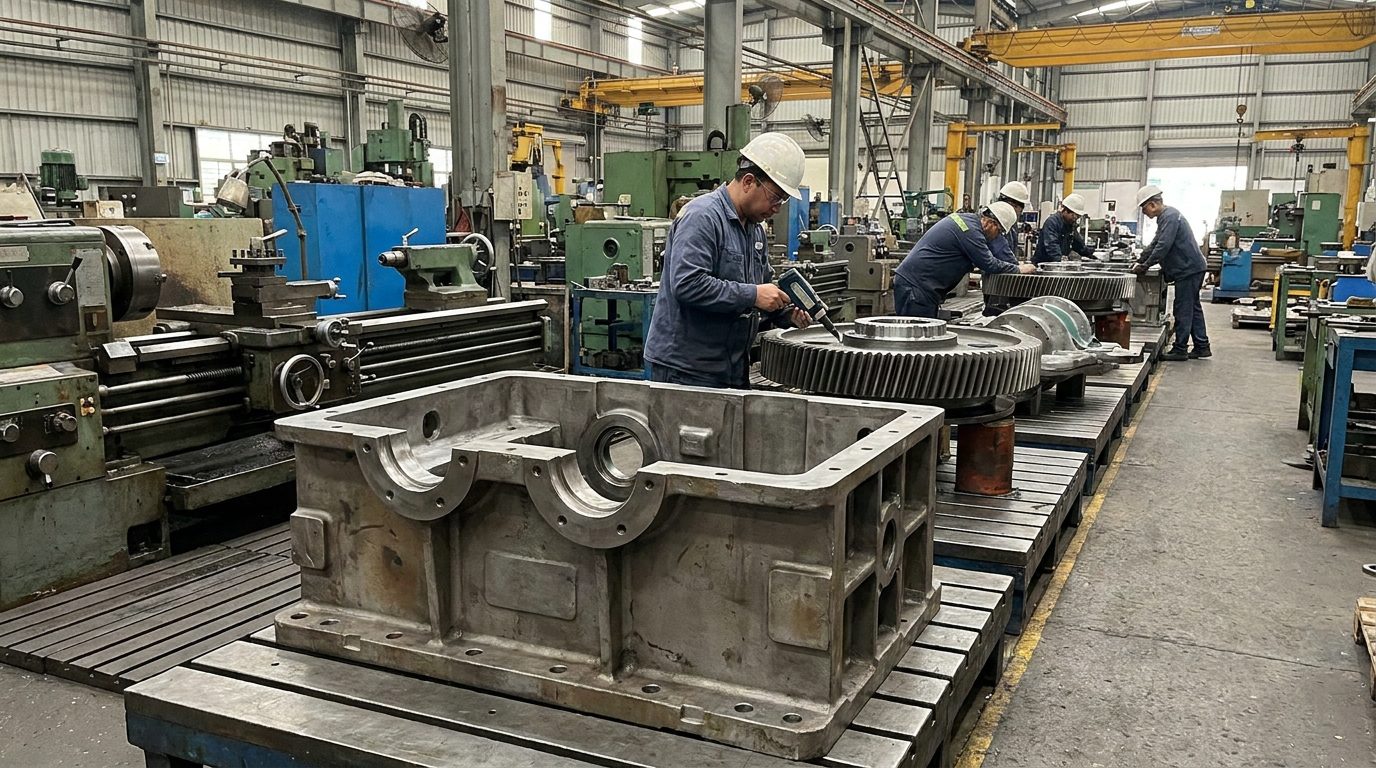
Industrial gearboxes are critical components in manufacturing plants, material handling systems, mining operations, energy facilities, food processing lines, packaging equipment, and heavy-duty machinery. When a gearbox fails, the result is often more than a mechanical issue—it can mean unplanned downtime, production losses, safety risks, and expensive emergency repairs.
Choosing from the top industrial gearbox manufacturers is not just about brand recognition. It is about selecting a manufacturer or replacement partner that can deliver proven reliability, correct torque capacity, application-specific engineering, fast lead times, and long-term support. For maintenance professionals, engineers, plant managers, OEMs, and industrial buyers, the right gearbox supplier can significantly improve uptime and lifecycle value.
This guide reviews what makes a gearbox manufacturer dependable, highlights leading global gearbox manufacturers, explains how to compare quality and reliability, and offers practical tips for sourcing new, rebuilt, or replacement industrial gearboxes.
If you are dealing with a failed, obsolete, or hard-to-identify gearbox, Industrial Gearbox Solutions can help you determine the correct replacement, rebuild option, or compatible alternative. Our team works with maintenance departments, OEMs, and procurement teams to simplify gearbox sourcing and reduce downtime.
Send us your nameplate data, photos, ratio, shaft dimensions, mounting style, or application details, and we can help identify the best path forward.
When exploring the top industrial gearbox manufacturers, it’s also important to consider the maintenance and repair services available for these critical components. A related article that provides valuable insights on this topic is about industrial gearbox repair in Nebraska. You can read more about it here: Industrial Gearbox Repair in Nebraska. This resource highlights the significance of timely repairs and the expertise required to ensure optimal performance of industrial gearboxes.
What Defines a Top Industrial Gearbox Manufacturer?
Not all gearbox manufacturers are equal. Industrial gearboxes operate under demanding loads, harsh environments, continuous duty cycles, shock loading, and extreme temperature conditions. A quality manufacturer must combine precision engineering with manufacturing consistency and strong technical support.
Engineering Expertise and Application Knowledge
A top manufacturer understands that gearboxes are not one-size-fits-all components. The gearbox must be selected based on:
- Horsepower or kilowatt rating
- Output torque requirements
- Input and output speed
- Gear ratio
- Service factor
- Duty cycle
- Load characteristics
- Mounting configuration
- Lubrication requirements
- Ambient conditions
- Shaft arrangement
- Industry-specific standards
For example, a conveyor gearbox in a distribution center may experience frequent starts and stops, while a mining gearbox may face shock loads, contamination, vibration, and continuous high-torque operation. A reliable manufacturer designs products to handle the actual working conditions—not just catalog specifications.
Manufacturing Quality and Precision
Gearbox performance depends heavily on gear geometry, tooth profile accuracy, heat treatment, bearing selection, housing rigidity, and lubrication design. High-quality manufacturers invest in:
- CNC gear cutting and grinding
- Advanced heat treatment processes
- Precision machining
- Quality inspection equipment
- Load testing
- Noise and vibration analysis
- Metallurgical testing
- ISO-certified production systems
Small errors in gear tooth contact, bearing alignment, or housing machining can lead to premature wear, overheating, vibration, oil leakage, or catastrophic failure.
Reliability, Availability, and Support
Industrial buyers should evaluate not only the gearbox itself but also the manufacturer’s ability to support the product over time. Important factors include:
- Replacement part availability
- Technical documentation
- Engineering support
- Warranty coverage
- Global distribution network
- Repair and rebuild support
- Interchange options
- Lead time reliability
A gearbox that performs well but has a 20-week replacement lead time may not be ideal for critical production equipment unless spares are stocked in advance.
Leading Industrial Gearbox Manufacturers to Know
The industrial gearbox market includes global manufacturers, specialty engineering companies, and niche suppliers serving specific industries. The following manufacturers are widely recognized for quality, reliability, innovation, and broad industrial use.
SEW-Eurodrive
SEW-Eurodrive is one of the most recognized names in industrial gearboxes, gearmotors, and drive automation. The company is known for modular gearbox systems, high availability, and broad application coverage.
SEW gearboxes are commonly used in:
- Conveyor systems
- Packaging equipment
- Automotive manufacturing
- Food and beverage processing
- Material handling
- Logistics and warehousing
- General industrial machinery
Their product range includes helical gear units, bevel-helical gearboxes, parallel shaft gearboxes, worm gear units, planetary gearboxes, and integrated gearmotor solutions.
A major advantage of SEW-Eurodrive is its modular approach. Many configurations can be assembled from standardized components, helping reduce lead times and simplify replacement.
Flender
Flender, formerly part of Siemens, is a leading manufacturer of heavy-duty industrial gearboxes, couplings, and drivetrain systems. Flender gearboxes are often selected for demanding industries where high torque, long service life, and engineered reliability are essential.
Common applications include:
- Cement mills
- Mining conveyors
- Power generation
- Marine applications
- Steel production
- Wind energy
- Pulp and paper
- Crushers and mills
Flender is especially known for large industrial gear units, planetary gearboxes, and custom-engineered drive systems. Their products are frequently used in severe-duty applications where downtime is extremely costly.
Sumitomo Drive Technologies
Sumitomo is a major global manufacturer of gear reducers, gearmotors, speed reducers, and power transmission products. The company is known for its Cyclo® technology, which provides high shock-load capacity and compact design.
Sumitomo gearboxes are commonly found in:
- Wastewater treatment
- Food processing
- Material handling
- Mining
- Chemical processing
- Packaging
- Bulk material handling
Sumitomo’s Cyclo reducers are valued for their unique cycloidal design, which distributes load across multiple contact points. This can provide excellent durability in applications where shock loading is a concern.
Nord Drivesystems
Nord Drivesystems manufactures gear units, motors, variable frequency drives, and complete drive solutions. Nord is recognized for energy-efficient gearmotors, modular product design, and corrosion-resistant options.
Industries served include:
- Food and beverage
- Airports and baggage handling
- Intralogistics
- Grain handling
- Packaging
- Bulk material processing
- Water and wastewater
Nord’s modular platform allows for many combinations of motors, gearboxes, brakes, encoders, and controls. Their solutions are popular in facilities seeking integrated drive packages.
Bonfiglioli
Bonfiglioli is a global manufacturer of industrial gearboxes, planetary drives, electric motors, and drive systems. The company serves both mobile and industrial applications and is well known for compact, high-torque solutions.
Bonfiglioli gearboxes are used in:
- Construction machinery
- Renewable energy
- Packaging machinery
- Material handling
- Agriculture
- Mining equipment
- Industrial automation
Their planetary gearboxes are often selected when high torque density and compact dimensions are required.
David Brown Santasalo
David Brown Santasalo specializes in engineered industrial gear systems for heavy-duty applications. The company has a long history in industrial gearing and is known for custom gearboxes, large gear units, and gearbox service.
Key industries include:
- Mining
- Defense
- Power generation
- Oil and gas
- Cement
- Metals
- Pulp and paper
- Marine
David Brown Santasalo is often chosen for complex applications where standard catalog gearboxes are not suitable. Their expertise in inspection, repair, and reverse engineering also makes them a strong option for legacy equipment.
Dodge Industrial
Dodge Industrial manufactures mounted bearings, enclosed gearing, mechanical drive components, and power transmission products. Dodge gear reducers are common across North American industrial facilities.
Typical applications include:
- Aggregate processing
- Conveyors
- Food processing
- Unit handling
- Grain operations
- Wood products
- Packaging machinery
Dodge gearboxes are valued for availability, rugged design, and broad distribution support. Many maintenance teams are familiar with Dodge reducers, which can simplify replacement and spare parts planning.
Rexnord and Falk Gearboxes
Falk, now part of Regal Rexnord, has a strong reputation in heavy-duty enclosed gearing. Falk gear drives are commonly used in mining, aggregate, cement, power generation, and industrial processing.
Applications include:
- Ball mills
- Kilns
- Crushers
- Drag conveyors
- Bucket elevators
- Cooling towers
- Mixers
- Heavy-duty conveyors
Falk gearboxes are known for robust housings, high torque capacity, and long service life in severe environments.
Rossi
Rossi manufactures gear reducers, gearmotors, planetary gearboxes, and electric motors for industrial applications. The company provides modular solutions and custom configurations for many sectors.
Common uses include:
- Material handling
- Packaging
- Food processing
- Mining
- Chemical processing
- Industrial automation
Rossi is often selected for applications requiring flexible mounting, compact designs, and reliable performance.
Check out our latest posts at https://industrialgearboxsolutions.com/blog/ for valuable industry insights.
Comparison of Top Industrial Gearbox Manufacturers
The best industrial gearbox manufacturer depends on the application, operating environment, required configuration, budget, and availability. The following comparison provides a practical overview.
| Manufacturer | Strengths | Common Applications | Best Fit |
|||||
| SEW-Eurodrive | Modular gearmotors, broad availability, automation integration | Conveyors, packaging, logistics | Standard and integrated drive systems |
| Flender | Heavy-duty engineered gearboxes, high torque capacity | Mining, cement, power, marine | Severe-duty industrial applications |
| Sumitomo | Cycloidal reducers, shock-load resistance, compact designs | Wastewater, conveyors, food processing | Shock-load and high-duty applications |
| Nord Drivesystems | Energy-efficient gearmotors, modular drive packages | Food, logistics, baggage handling | Integrated gearbox/motor/VFD systems |
| Bonfiglioli | Compact planetary drives, mobile and industrial coverage | Construction, automation, material handling | High torque in limited space |
| David Brown Santasalo | Custom engineered gear systems, repair expertise | Mining, oil and gas, metals | Large, custom, or legacy gearbox needs |
| Dodge Industrial | Strong North American support, rugged reducers | Aggregate, grain, conveyors | Readily available industrial replacements |
| Falk / Regal Rexnord | Heavy-duty enclosed gearing, severe service | Crushers, mills, conveyors | High-load industrial equipment |
| Rossi | Flexible configurations, modular reducers | Automation, processing, handling | General industrial machinery |
When exploring the top industrial gearbox manufacturers, it’s essential to consider not only the quality of their products but also the services they offer, such as repair and maintenance. For instance, if you’re located in Kentucky and need reliable gearbox repair services, you might find valuable insights in this article about industrial gearbox repair in Madisonville. Understanding the repair options available can help you make informed decisions when selecting a manufacturer for your industrial needs.
How to Evaluate Gearbox Quality and Reliability
Choosing a gearbox based only on price can create long-term problems. A low-cost gearbox may appear attractive at purchase, but poor reliability can result in repeated failures, downtime, labor costs, and production losses.
Review Service Factor and Load Ratings
The service factor accounts for operating conditions beyond basic horsepower and speed. It helps determine whether the gearbox can handle the actual severity of the application.
Factors that influence service factor include:
- Number of operating hours per day
- Frequency of starts and stops
- Shock loading
- Reversing duty
- Driven equipment type
- Ambient temperature
- Load uniformity
- Required reliability level
For example, a lightly loaded fan may require a lower service factor than a rock crusher, even if both use similar horsepower. Underestimating service factor is a common cause of gearbox failure.
Examine Gear Materials and Heat Treatment
High-quality industrial gearboxes typically use alloy steel gears with controlled heat treatment. Processes such as carburizing, hardening, and grinding improve wear resistance and load capacity.
Important gear quality considerations include:
- Gear tooth hardness
- Case depth
- Surface finish
- Tooth profile accuracy
- Contact pattern
- Metallurgical consistency
- Resistance to pitting and scuffing
In demanding applications, precision-ground gears often provide better efficiency, quieter operation, and longer life than lower-grade cut gears.
Check Bearing and Seal Design
Bearings and seals are frequent failure points in gearboxes. A reliable manufacturer selects bearings based on radial loads, axial loads, shaft speed, lubrication method, and expected life.
Seal design is also critical. Poor sealing can allow oil leakage or contamination ingress, both of which shorten gearbox life. In dusty, wet, or washdown environments, upgraded seals or labyrinth sealing systems may be necessary.
Consider Housing Strength and Thermal Capacity
The gearbox housing must maintain gear and bearing alignment under load. Weak or poorly machined housings can distort, causing misalignment and premature failure.
Thermal capacity is equally important. Even if a gearbox can handle torque mechanically, it must dissipate heat effectively. Overheating can reduce lubricant viscosity, accelerate oxidation, damage seals, and shorten bearing life.
Ask About Testing and Quality Control
Top industrial gearbox manufacturers often perform factory testing before shipment. Depending on the gearbox type and criticality, testing may include:
- No-load run testing
- Load testing
- Vibration analysis
- Noise testing
- Oil leak testing
- Backlash measurement
- Gear contact pattern inspection
- Dimensional verification
For critical equipment, buyers should request test reports, inspection documentation, and quality certifications when available.
Common Industrial Gearbox Types and Their Uses
Understanding gearbox types helps maintenance and engineering teams select the right manufacturer and product family.
Helical Gearboxes
Helical gearboxes are widely used because they offer smooth operation, good efficiency, and high load capacity. The angled gear teeth engage gradually, reducing noise and vibration compared to spur gears.
Common applications include:
- Conveyors
- Mixers
- Pumps
- Fans
- Packaging machinery
- General manufacturing equipment
Helical gearboxes are often available in inline, parallel shaft, and bevel-helical configurations.
Bevel Gearboxes
Bevel gearboxes transmit power between intersecting shafts, commonly at a 90-degree angle. They are useful when machinery layout requires a change in drive direction.
Typical applications include:
- Right-angle conveyors
- Packaging lines
- Printing machines
- Material handling systems
- Industrial mixers
Bevel-helical gearboxes combine the advantages of bevel and helical gearing for efficient right-angle power transmission.
Worm Gearboxes
Worm gear reducers are compact and can provide high reduction ratios in a single stage. They are often used in lower-speed applications where cost and compact size are important.
Common uses include:
- Small conveyors
- Lifts
- Gates
- Packaging equipment
- Positioning systems
However, worm gearboxes may be less efficient than helical or bevel-helical designs, especially at higher ratios.
Planetary Gearboxes
Planetary gearboxes provide high torque density in a compact package. Load is distributed across multiple planet gears, making them suitable for heavy-duty and precision applications.
Common applications include:
- Robotics
- Wind turbines
- Mobile equipment
- Heavy machinery
- Servo systems
- Mining equipment
Planetary gearboxes are often selected where space is limited but torque requirements are high.
Cycloidal Gear Reducers
Cycloidal reducers use a unique rolling motion and multiple contact points to achieve high shock-load resistance. They are often used in demanding industrial applications where durability is essential.
Typical uses include:
- Wastewater treatment equipment
- Mixers
- Conveyors
- Agitators
- Heavy-duty automation
- Material handling equipment
Sumitomo is particularly well known for cycloidal reducer technology.
Selecting the Right Gearbox Manufacturer for Your Application
The “best” manufacturer is the one that can meet your technical, operational, and commercial requirements. A gearbox for a food-grade washdown conveyor has very different needs than a gearbox for a cement kiln or mine conveyor.
Start With Application Data
Before contacting a gearbox manufacturer or replacement supplier, gather as much information as possible. Useful data includes:
- Existing gearbox manufacturer and model number
- Gear ratio
- Input horsepower or motor size
- Input speed
- Output speed
- Mounting position
- Shaft size and orientation
- Service factor
- Operating hours per day
- Driven equipment type
- Lubricant type
- Ambient temperature
- Photos of the gearbox and nameplate
- Failure symptoms or history
The more information you provide, the easier it is to identify a correct replacement or equivalent gearbox.
Balance Lead Time and Technical Fit
A technically perfect gearbox may not help if delivery takes too long and production is down. In many situations, the best solution may be:
- A direct OEM replacement
- A compatible equivalent gearbox
- A rebuilt gearbox
- A remanufactured unit
- A custom-engineered replacement
- An emergency repair
- A temporary rental or interim solution, where available
Industrial Gearbox Solutions can help evaluate these options based on urgency, budget, and application requirements.
Consider Total Cost of Ownership
Initial purchase price is only one part of gearbox cost. Total cost of ownership includes:
- Purchase price
- Installation labor
- Downtime cost
- Spare parts availability
- Maintenance requirements
- Energy efficiency
- Lubrication cost
- Expected service life
- Repairability
- Replacement lead time
For critical equipment, paying more for a higher-quality gearbox can be less expensive over the long term if it prevents downtime and repeated failures.
Gearbox Replacement, Repair, and Rebuild Considerations
When an industrial gearbox fails, maintenance teams must decide whether to replace, repair, or rebuild. The right choice depends on damage severity, parts availability, downtime cost, and gearbox age.
When Replacement Is the Best Option
Replacement may be the best path when:
- The gearbox housing is cracked or severely damaged
- Gears and shafts are extensively worn
- Replacement parts are obsolete
- The gearbox has failed repeatedly
- The existing unit is undersized
- Lead time for rebuild parts is too long
- A modern equivalent offers better efficiency or reliability
A replacement gearbox can often reduce future maintenance risk, especially if the original unit was incorrectly specified.
When a Rebuild Makes Sense
A rebuild may be cost-effective when the gearbox is large, expensive, custom, or difficult to replace. Rebuilding may include:
- Disassembly and inspection
- Gear repair or replacement
- Bearing replacement
- Seal replacement
- Shaft repair
- Housing inspection
- Cleaning and machining
- Backlash adjustment
- Reassembly and testing
For large gearboxes used in mining, cement, steel, and power generation, rebuilding can be significantly faster and less expensive than purchasing a new custom unit.
When Reverse Engineering Is Needed
Some older gearboxes have missing nameplates, obsolete models, or manufacturers that no longer exist. In these cases, reverse engineering may be required.
Reverse engineering may involve:
- Measuring shaft dimensions
- Identifying gear ratio
- Inspecting mounting dimensions
- Analyzing gear tooth geometry
- Matching bearing arrangements
- Determining torque and speed requirements
- Creating drawings for replacement parts
This is especially valuable for legacy equipment that is still productive but difficult to support.
Practical Examples for Industrial Buyers and Maintenance Teams
Real-world gearbox selection often involves tradeoffs between availability, cost, performance, and risk. The following examples show how different situations may be handled.
Example 1: Conveyor Gearbox Failure in a Distribution Center
A distribution center experiences a gearbox failure on a critical conveyor line. The failed unit is a standard right-angle gearmotor with a visible nameplate.
Best approach:
- Identify the manufacturer, model, ratio, and motor specifications.
- Check for direct OEM replacement availability.
- Verify shaft dimensions and mounting position.
- Compare equivalent units if OEM lead time is too long.
- Replace lubricant according to manufacturer recommendations.
- Inspect conveyor loading and alignment to prevent repeat failure.
In this case, a manufacturer such as SEW-Eurodrive, Nord, Dodge, or Sumitomo may offer a fast replacement depending on the configuration.
Example 2: Heavy-Duty Crusher Gearbox in an Aggregate Plant
An aggregate facility has a gearbox on a crusher that has failed multiple times. The current gearbox may be undersized for shock loading.
Best approach:
- Review horsepower, torque, and service factor.
- Inspect driven equipment for shock loads and jams.
- Evaluate whether the gearbox is properly rated.
- Consider a heavy-duty gearbox from Falk, Flender, Dodge, or another severe-duty manufacturer.
- Improve lubrication, sealing, and contamination control.
- Consider vibration monitoring for early warning.
In this case, upgrading the gearbox may be more cost-effective than repeatedly installing the same undersized replacement.
Example 3: Obsolete Gearbox on a Production Machine
A manufacturer has an older production machine with a gearbox that has no readable nameplate. The OEM no longer supports the equipment.
Best approach:
- Take detailed photos of the gearbox.
- Measure shaft sizes, center distances, and mounting dimensions.
- Determine input and output speeds.
- Identify ratio through rotation counting or inspection.
- Evaluate whether a modern equivalent can fit.
- Consider rebuild or reverse engineering if no equivalent exists.
Industrial Gearbox Solutions can assist with these hard-to-identify gearbox situations.
Maintenance Practices That Improve Gearbox Reliability
Even the best industrial gearbox manufacturers cannot overcome poor maintenance practices. Proper installation, lubrication, alignment, and monitoring are essential for long gearbox life.
Lubrication Management
Lubrication is one of the most important factors in gearbox reliability. Incorrect lubricant type, low oil level, contamination, or extended oil intervals can cause rapid wear.
Best practices include:
- Use the manufacturer-recommended oil type and viscosity.
- Check oil level regularly.
- Monitor oil condition.
- Replace oil at proper intervals.
- Use breathers and filters where appropriate.
- Avoid mixing incompatible lubricants.
- Inspect for water, metal particles, or sludge.
Oil analysis can detect early signs of gear wear, bearing failure, contamination, or overheating.
Alignment and Installation
Misalignment can create excessive bearing loads, vibration, heat, and gear wear. During installation, verify:
- Shaft alignment
- Base flatness
- Coupling condition
- Proper bolt torque
- Correct mounting orientation
- Adequate ventilation
- Proper oil fill level
- Correct rotation direction
A gearbox that is installed incorrectly may fail prematurely even if it comes from a top manufacturer.
Temperature, Noise, and Vibration Monitoring
Routine inspections can identify problems before failure occurs. Maintenance teams should monitor:
- Operating temperature
- Unusual noise
- Vibration levels
- Oil leaks
- Seal condition
- Breather condition
- Bolt looseness
- Coupling wear
- Changes in load or speed
Predictive maintenance tools such as vibration analysis, thermography, and oil analysis can significantly reduce unplanned downtime.
Key Questions to Ask Before Buying an Industrial Gearbox
Before purchasing a gearbox, ask technical and commercial questions to avoid costly mistakes.
Technical Questions
- Is the gearbox rated for the required torque and service factor?
- Is the gear ratio correct?
- Does it match the shaft arrangement and mounting style?
- Is it suitable for the duty cycle?
- Can it handle shock loading?
- Is the lubrication system appropriate?
- Is the housing suitable for the environment?
- Are seals adequate for dust, moisture, or washdown?
- Does it meet industry-specific requirements?
Supplier and Manufacturer Questions
- What is the lead time?
- Are spare parts available?
- Is technical documentation provided?
- What warranty is included?
- Can the unit be rebuilt later?
- Is factory testing available?
- Are equivalent or interchangeable models available?
- Is emergency support available?
Procurement Questions
- What is the total landed cost?
- Is expedited shipping available?
- Are there stocking options for critical spares?
- Can multiple manufacturers be cross-referenced?
- Is a rebuilt or remanufactured option available?
- What is the expected service life?
Why Work With Industrial Gearbox Solutions?
Industrial Gearbox Solutions helps maintenance professionals, engineers, OEMs, and buyers source the right gearbox for demanding applications. Whether you need a direct replacement, an equivalent gearbox, a rebuilt unit, or help identifying an obsolete drive, working with an experienced gearbox partner can save time and reduce risk.
Support for Multiple Manufacturers
Instead of being limited to a single brand, Industrial Gearbox Solutions can help evaluate options across many leading industrial gearbox manufacturers. This is especially useful when:
- The OEM has a long lead time
- The original gearbox is obsolete
- A lower-cost equivalent is needed
- A direct replacement is unavailable
- A custom solution is required
- Emergency downtime requires fast action
Assistance With Identification and Cross-Reference
Many gearbox replacement projects begin with incomplete information. Nameplates may be damaged, manuals may be missing, and the original machine builder may no longer support the equipment.
Industrial Gearbox Solutions can help review:
- Nameplate photos
- Shaft measurements
- Gear ratio data
- Mounting dimensions
- Application details
- Existing part numbers
- Manufacturer references
- Failure history
This helps determine whether the best option is replacement, rebuild, repair, or redesign.
Practical Guidance for Critical Applications
For critical plant equipment, choosing the wrong gearbox can be extremely costly. Industrial Gearbox Solutions provides practical support focused on uptime, fit, function, and reliability—not just part numbers.
This includes helping buyers compare:
- OEM vs. aftermarket options
- New vs. rebuilt units
- Standard vs. custom gearboxes
- Lead time vs. cost
- Direct replacement vs. upgraded design
- Short-term repair vs. long-term reliability
Conclusion: Quality and Reliability Start With the Right Gearbox Partner
The top industrial gearbox manufacturers—such as SEW-Eurodrive, Flender, Sumitomo, Nord, Bonfiglioli, David Brown Santasalo, Dodge, Falk, Rossi, and others—have earned their reputations through engineering expertise, manufacturing quality, and proven performance in demanding industrial environments.
However, the best gearbox choice depends on your specific application. Torque, speed, service factor, mounting style, duty cycle, environment, lead time, and maintenance requirements all matter. A reliable gearbox is not just a product—it is the result of proper selection, correct installation, preventive maintenance, and dependable supplier support.
If you need help identifying, replacing, repairing, or sourcing an industrial gearbox, contact Industrial Gearbox Solutions today. Share your gearbox photos, nameplate data, dimensions, or application details, and our team can help you find a practical, reliable solution that keeps your operation moving.
FAQs
What are industrial gearboxes and their importance in manufacturing?
Industrial gearboxes are mechanical devices used to transmit power from one part of a machine to another. They are crucial in manufacturing as they help control the speed, torque, and direction of the machinery, allowing for efficient and precise operation.
What factors should be considered when choosing an industrial gearbox manufacturer?
When choosing an industrial gearbox manufacturer, factors such as the company’s experience, reputation, quality of products, customer support, and adherence to industry standards should be considered. It’s important to select a manufacturer with a proven track record of delivering reliable and durable gearboxes.
What are some of the top industrial gearbox manufacturers in the industry?
Some of the top industrial gearbox manufacturers in the industry include Siemens, SEW-Eurodrive, Bonfiglioli, Nord Drivesystems, and Flender. These companies are known for their high-quality gearboxes and have a strong presence in the industrial sector.
What are the common types of industrial gearboxes available in the market?
Common types of industrial gearboxes include helical gearboxes, worm gearboxes, bevel gearboxes, planetary gearboxes, and parallel shaft gearboxes. Each type has its own unique characteristics and is suitable for specific applications in various industries.
How can industrial gearbox manufacturers ensure the quality and reliability of their products?
Industrial gearbox manufacturers can ensure the quality and reliability of their products by using high-quality materials, employing advanced manufacturing processes, conducting rigorous testing and quality control measures, and adhering to industry standards and regulations. Additionally, providing comprehensive customer support and after-sales services can further enhance the reliability of their products.