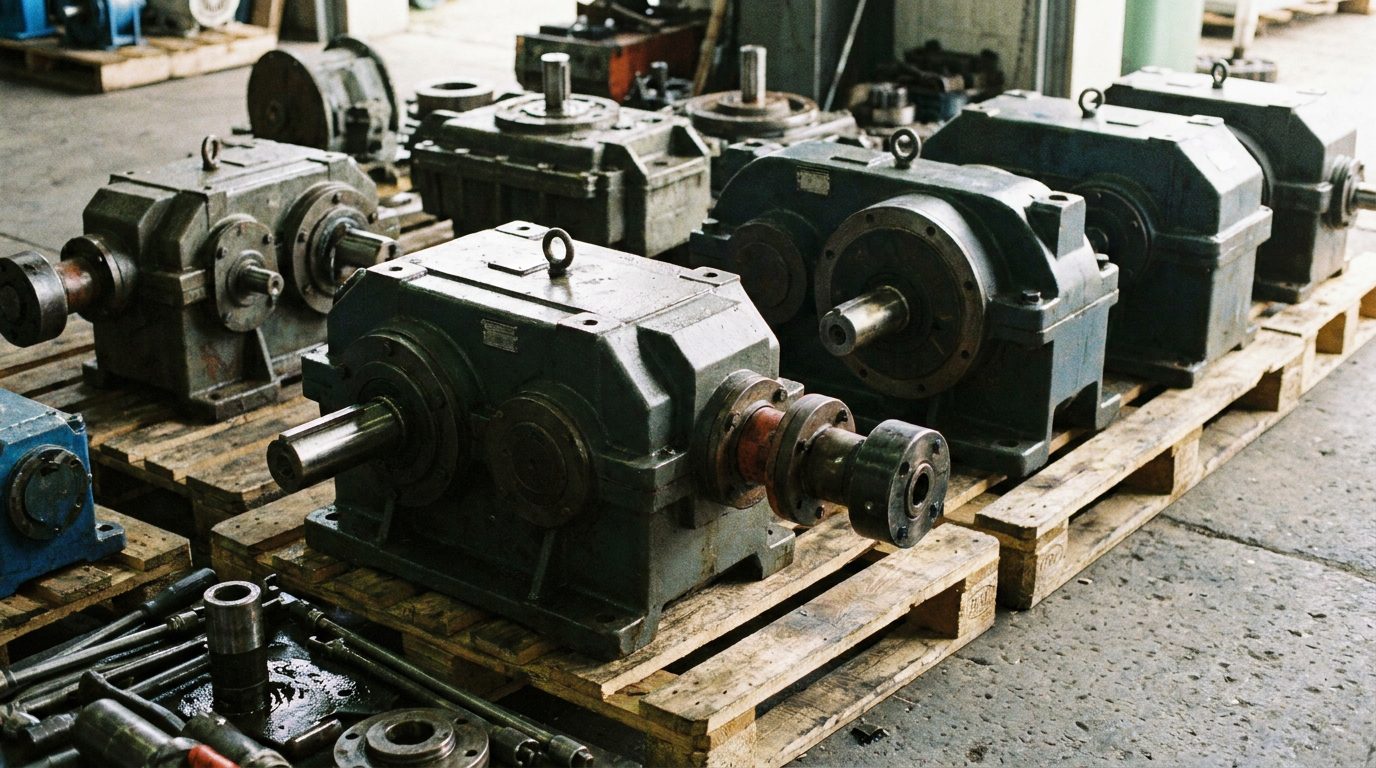
Conveyors are the backbone of modern material handling. From mining and aggregate plants to food processing, parcel distribution, packaging, cement, recycling, and automotive manufacturing, conveyor systems depend on reliable gearbox performance to keep products and bulk materials moving safely and efficiently.
Choosing the right industrial gearbox for conveyors is not just about matching horsepower. It requires understanding torque demand, duty cycle, load shock, speed ratio, shaft arrangement, mounting style, environmental exposure, washdown requirements, and long-term serviceability. The wrong gearbox can lead to overheating, belt slippage, premature bearing failure, unexpected downtime, and costly production losses.
This guide reviews the top industrial gearboxes for conveyors, explains where each type performs best, and provides practical selection and maintenance guidance for maintenance professionals, engineers, plant managers, OEMs, and industrial buyers.
If you are replacing a failed conveyor gearbox, upgrading an obsolete reducer, or trying to cross-reference a unit from a nameplate, the right technical support can save hours of downtime and prevent an incorrect replacement.
Industrial Gearbox Solutions can help identify gearbox type, ratio, mounting configuration, shaft size, torque requirements, and compatible replacement options for demanding conveyor applications.
When considering the best industrial gearboxes for conveyors, it’s essential to also understand the importance of maintenance and repair to ensure optimal performance. For insights into how to keep your gearboxes in top condition, you can refer to this informative article on industrial gearbox repair in Flint, MI. This resource provides valuable information on repair services that can extend the lifespan of your gearboxes, ultimately enhancing the efficiency of your conveyor systems.
Why Conveyor Gearbox Selection Matters
Industrial conveyors often operate for long hours, under heavy loads, and in harsh environments. A gearbox that performs well in one application may fail quickly in another if it is not matched to the conveyor’s operating conditions.
Gearboxes Convert Motor Speed Into Usable Conveyor Torque
Most electric motors run at speeds far higher than what conveyor belts, chains, screws, or rollers require. An industrial gearbox reduces motor speed while multiplying torque.
For example, a motor running at 1,750 RPM may need to drive a conveyor pulley at 60 RPM. A gearbox provides the reduction ratio required to achieve that output speed while delivering enough torque to move the load.
Downtime Costs More Than the Gearbox
In many plants, the gearbox is a relatively small component compared to the total value of the conveyor line. However, when it fails, production can stop immediately.
A failed conveyor gearbox can cause:
- Missed production targets
- Damaged belts, chains, or pulleys
- Product waste or contamination
- Emergency repair labor
- Expedited freight costs
- Safety risks during unplanned maintenance
For this reason, reliability and serviceability should be weighted as heavily as upfront purchase price.
Conveyor Applications Have Unique Load Conditions
Conveyors can experience steady loads, intermittent starts and stops, shock loading, reversing operation, and high starting torque.
Common gearbox stress factors include:
- Heavy material loading at startup
- Jammed belts or blocked chutes
- Abrasive dust contamination
- Outdoor temperature swings
- High humidity or washdown exposure
- Misaligned shafts or couplings
- Improper lubrication intervals
The best industrial gearboxes for conveyors are selected with these factors in mind.
Top Industrial Gearbox Types for Conveyors
Different conveyor designs require different gearbox solutions. Below are the most commonly used industrial gearbox types for conveyors and where they are typically applied.
Shaft-Mounted Gearboxes
Shaft-mounted gearboxes are among the most popular choices for belt conveyors, especially in aggregate, mining, cement, recycling, and bulk material handling.
These reducers mount directly onto the conveyor head shaft, eliminating the need for a separate coupling and baseplate alignment. A torque arm is typically used to prevent the reducer from rotating around the shaft.
Best suited for:
- Belt conveyors
- Incline conveyors
- Aggregate conveyors
- Mining conveyors
- Grain handling conveyors
- Recycling systems
Key advantages:
- Compact installation
- Reduced alignment requirements
- Easy retrofit for many conveyor systems
- Strong torque capacity
- Good reliability in heavy-duty applications
Shaft-mounted gearboxes are especially practical when floor space is limited or when a simple, rugged drivetrain is preferred.
Helical Gearboxes
Helical gearboxes are known for smooth operation, high efficiency, and strong load-carrying capacity. They use angled gear teeth that engage gradually, reducing vibration and noise compared with spur gears.
For conveyors that operate continuously, helical gearboxes are often a strong choice because they provide excellent efficiency and long service life when properly sized.
Best suited for:
- Packaging conveyors
- Manufacturing conveyors
- Assembly lines
- Food processing conveyors
- Parcel handling systems
- High-duty-cycle conveyor drives
Key advantages:
- High efficiency
- Quiet operation
- Smooth torque transmission
- Good thermal performance
- Long gear life
Helical gearboxes are available in inline, parallel shaft, and right-angle configurations, giving engineers flexibility when designing conveyor layouts.
Bevel-Helical Gearboxes
Bevel-helical gearboxes combine bevel gears and helical gears to provide right-angle power transmission with high efficiency and high torque capacity.
They are commonly used when the motor shaft must be positioned at 90 degrees to the conveyor drive shaft. This makes them useful in tight installations or where equipment layout requires a right-angle arrangement.
Best suited for:
- Heavy belt conveyors
- Large industrial conveyors
- Mining and quarry conveyors
- Cement plant conveyors
- Port and terminal conveyors
- High-torque right-angle drives
Key advantages:
- High torque density
- Efficient right-angle drive
- Durable construction
- Suitable for heavy loads
- Good for continuous operation
Bevel-helical gearboxes are frequently used in demanding conveyor applications where efficiency and reliability are more important than low initial cost.
Worm Gearboxes
Worm gearboxes use a worm screw and worm wheel to provide high reduction ratios in a compact right-angle package. They are often used on lighter-duty conveyors or applications where compactness and low speed are required.
However, worm gearboxes are generally less efficient than helical or bevel-helical gearboxes, especially at high reduction ratios. They also generate more heat, which must be considered during selection.
Best suited for:
- Light-duty conveyors
- Small packaging conveyors
- Low-speed transfer conveyors
- Indexing conveyors
- Space-limited applications
Key advantages:
- Compact right-angle design
- High reduction ratios
- Simple design
- Cost-effective for light-duty use
- Smooth operation
For heavy-duty conveyor systems, worm gearboxes may not be the best option unless carefully sized for thermal capacity and service factor.
Planetary Gearboxes
Planetary gearboxes provide very high torque density in a compact package. Their internal design distributes load across multiple planet gears, allowing them to handle high torque in a relatively small footprint.
They are often used in high-performance conveyor systems where space is limited, torque is high, or precise motion control is required.
Best suited for:
- High-torque conveyors
- Compact conveyor drives
- Servo-driven conveyor systems
- Indexing conveyors
- Automated production lines
- Heavy-duty mobile equipment conveyors
Key advantages:
- High torque density
- Compact size
- High efficiency
- Low backlash options
- Good for precision applications
Planetary gearboxes are typically more expensive than basic worm or shaft-mounted reducers, but they can be the best choice where performance and compactness are critical.
Parallel Shaft Gearboxes
Parallel shaft gearboxes are widely used in industrial conveyor systems where the input and output shafts need to remain parallel. They are available in helical and spur configurations, although helical designs are more common in industrial applications.
Best suited for:
- Chain conveyors
- Belt conveyors
- Roller conveyors
- Industrial processing lines
- Heavy manufacturing conveyors
Key advantages:
- Strong torque capacity
- Efficient operation
- Suitable for continuous duty
- Flexible mounting options
- Durable for industrial environments
Parallel shaft gearboxes are often selected when engineers need a rugged, efficient reducer with straightforward installation and maintenance.
Check out our latest posts at https://industrialgearboxsolutions.com/blog/ for valuable industry insights.
Comparing Conveyor Gearbox Options
The best gearbox type depends on the conveyor design, load profile, available space, and operating environment. The table below provides a practical comparison.
| Gearbox Type | Best Conveyor Applications | Main Advantages | Key Considerations |
|||||
| Shaft-Mounted Gearbox | Belt conveyors, mining, aggregate, bulk handling | Simple installation, compact, rugged | Requires correct torque arm setup and shaft fit |
| Helical Gearbox | Packaging, manufacturing, continuous conveyors | Efficient, quiet, long-lasting | May require alignment and base mounting |
| Bevel-Helical Gearbox | Heavy-duty right-angle conveyor drives | High torque, efficient, durable | Higher initial cost |
| Worm Gearbox | Light-duty, low-speed conveyors | Compact, cost-effective | Lower efficiency and higher heat generation |
| Planetary Gearbox | High-torque, compact, precision conveyors | High torque density, compact, efficient | Higher cost and more specialized selection |
| Parallel Shaft Gearbox | Chain, roller, belt conveyors | Strong, efficient, versatile | Requires proper alignment and mounting |
Best Gearbox for Heavy-Duty Belt Conveyors
For heavy-duty belt conveyors, shaft-mounted gearboxes and bevel-helical gearboxes are often the top choices.
Shaft-mounted units are popular because they install directly on the conveyor shaft and perform well in rugged environments. Bevel-helical gearboxes are preferred where high torque, high efficiency, and right-angle configuration are required.
Industries such as mining, quarrying, cement, and bulk terminals often use these gearbox types because they can handle shock loading, long operating hours, and harsh conditions.
Best Gearbox for Food and Packaging Conveyors
For food processing and packaging conveyors, helical gearboxes, stainless steel gearmotors, and washdown-rated reducers are common choices.
In these applications, engineers must consider:
- Corrosion resistance
- Sanitary design
- Smooth surfaces
- Food-grade lubricants
- IP washdown ratings
- Noise reduction
- Compact installation
Helical gearboxes are efficient and quiet, making them well suited for continuous packaging lines and production environments where uptime is essential.
Best Gearbox for Compact Conveyor Systems
When space is limited, worm gearboxes and planetary gearboxes are frequently considered.
Worm gearboxes are economical and compact for light-duty applications. Planetary gearboxes offer much higher torque density and efficiency, making them better for demanding compact conveyor drives.
The right choice depends on load, duty cycle, precision, and budget.
When considering the best industrial gearboxes for conveyors, it’s essential to also understand the importance of maintenance and repair to ensure optimal performance. A related article discusses the various aspects of industrial gearbox repair, highlighting services available in specific locations such as Norwalk, Connecticut. This information can be invaluable for businesses looking to maintain their equipment efficiently. For more details, you can read about it in this article on industrial gearbox repair.
Key Factors When Selecting Industrial Gearboxes for Conveyors
Selecting industrial gearboxes for conveyors requires more than choosing a ratio from a catalog. A proper specification should account for mechanical, environmental, and operational requirements.
Torque Requirements
Torque is one of the most important selection factors. The gearbox must provide enough output torque to start and operate the conveyor under full load.
Torque demand can vary based on:
- Belt width and length
- Conveyor incline
- Material weight
- Pulley diameter
- Friction
- Startup conditions
- Frequency of starts and stops
Undersizing torque capacity can lead to gear tooth damage, shaft failure, overheating, or reduced service life.
Gear Ratio and Output Speed
The gear ratio determines how much the motor speed is reduced. Selecting the correct ratio ensures the conveyor runs at the desired belt, chain, screw, or roller speed.
For example, if a motor runs at 1,800 RPM and the conveyor requires approximately 90 RPM at the drive shaft, a 20:1 ratio may be appropriate before accounting for motor slip and other drivetrain factors.
Incorrect ratio selection can result in poor throughput, excessive belt speed, product spillage, or process bottlenecks.
Service Factor
Service factor accounts for operating severity. A conveyor operating eight hours per day under steady load may require a lower service factor than a conveyor running 24/7 with frequent starts, shock loads, or reversing duty.
Typical factors that increase service severity include:
- Continuous operation
- High starting frequency
- Reversing loads
- Shock loading
- High ambient temperature
- Dirty or dusty conditions
- Poor ventilation
- Outdoor exposure
For critical conveyors, it is often wise to select a gearbox with additional capacity rather than operating near the limit.
Mounting Configuration
Mounting style has a major impact on installation and maintenance. Common conveyor gearbox mounting options include:
- Shaft-mounted
- Foot-mounted
- Flange-mounted
- Torque-arm mounted
- Vertical mounting
- Horizontal mounting
A replacement gearbox must match the existing mounting arrangement or be adaptable without major structural modifications.
Shaft Size and Arrangement
Input and output shaft dimensions must be verified carefully. This includes:
- Shaft diameter
- Keyway size
- Shaft length
- Hollow bore size
- Taper bushing dimensions
- Output shaft orientation
- Rotation direction
Many gearbox replacement errors happen because shaft details are assumed rather than measured.
Environmental Conditions
Conveyors often operate in harsh environments. Gearbox selection should account for exposure to:
- Dust
- Water spray
- Chemicals
- Extreme temperatures
- Abrasive particles
- Outdoor weather
- High humidity
- Washdown cleaning
- Explosive atmospheres
In dirty or wet environments, upgraded seals, breathers, coatings, stainless housings, or washdown-duty designs may be needed.
When considering the best industrial gearboxes for conveyors, it’s essential to also understand the importance of maintenance and repair to ensure optimal performance. For those in need of reliable repair services, a related article on industrial gearbox repair in Milford, Delaware, provides valuable insights into keeping your equipment running smoothly. You can read more about it in this informative piece on industrial gearbox repair. This knowledge can help you make informed decisions about both your gearboxes and their upkeep.
Common Conveyor Gearbox Problems and Causes
Even high-quality industrial gearboxes can fail if they are misapplied, poorly installed, or neglected. Understanding common failure modes helps maintenance teams prevent downtime.
Overheating
Overheating is one of the most common signs of gearbox trouble. It may be caused by:
- Incorrect lubricant
- Low oil level
- Excessive load
- Poor ventilation
- Misalignment
- Contaminated oil
- Overfilled housing
- Wrong gearbox size
A gearbox that runs hotter than normal should be inspected promptly. Heat accelerates oil breakdown and can damage seals, bearings, and gears.
Oil Leaks
Oil leakage often starts small but can quickly lead to lubrication failure. Common leak points include shaft seals, inspection covers, drain plugs, and breather locations.
Possible causes include:
- Worn seals
- Excessive internal pressure
- Clogged breather
- Shaft wear
- Incorrect oil level
- Improper installation angle
A leaking gearbox should not simply be topped off repeatedly without identifying the root cause.
Bearing Failure
Bearings support shafts and gear loads. When bearings fail, the gearbox may produce noise, vibration, heat, or metal particles in the oil.
Common causes include:
- Contaminated lubricant
- Overload
- Misalignment
- Shock loading
- Improper mounting
- Lubrication starvation
Regular vibration analysis and oil analysis can detect bearing problems before catastrophic failure occurs.
Gear Tooth Wear or Damage
Gear tooth damage can appear as pitting, scoring, spalling, cracking, or broken teeth. This is often related to overload, contamination, poor lubrication, or misalignment.
Early detection is important. If gear damage progresses, the reducer may fail suddenly and damage connected conveyor components.
Excessive Vibration or Noise
Unusual gearbox noise should never be ignored. Grinding, whining, knocking, or rumbling may indicate bearing wear, gear damage, coupling misalignment, loose mounting bolts, or inadequate lubrication.
Tracking baseline vibration levels helps maintenance teams recognize changes before failures become severe.
Maintenance Best Practices for Conveyor Gearboxes
Preventive maintenance is essential for maximizing the life of industrial gearboxes for conveyors. A consistent program reduces downtime and improves safety.
Check Lubrication Regularly
Lubrication is the lifeblood of the gearbox. Maintenance teams should verify oil level, oil condition, lubricant type, and change intervals.
Best practices include:
- Use the lubricant specified by the gearbox manufacturer
- Check oil level with the gearbox stopped and at the correct temperature
- Avoid mixing incompatible oils
- Replace oil after the recommended break-in period
- Use oil analysis for critical gearboxes
- Keep fill, drain, and inspection areas clean
Contaminated or incorrect lubricant is a leading cause of premature gearbox failure.
Inspect Seals and Breathers
Seals keep lubricant in and contaminants out. Breathers allow pressure equalization inside the gearbox housing.
If a breather becomes clogged, internal pressure can build and force oil past seals. In dusty environments, desiccant breathers or filtered breathers may improve reliability.
Monitor Temperature
Temperature should be monitored routinely. A sudden increase may indicate overload, lubrication problems, bearing damage, or ventilation issues.
Infrared thermometers, thermal cameras, and installed temperature sensors can help identify developing issues.
Verify Alignment and Mounting
Misalignment places extra stress on bearings, shafts, seals, and couplings. Gearboxes should be installed according to manufacturer recommendations and checked after startup.
For shaft-mounted gearboxes, confirm that:
- The torque arm is properly installed
- The reducer is not forced into position
- The bore and shaft fit are correct
- The bushing is tightened correctly
- The belt or chain tension is not excessive
Use Vibration and Oil Analysis
For critical conveyors, predictive maintenance tools provide valuable early warning signs.
Common methods include:
- Vibration analysis
- Oil particle analysis
- Ferrography
- Thermography
- Acoustic monitoring
- Motor current analysis
These tools help plant teams schedule repairs before unplanned downtime occurs.
Replacement and Retrofit Considerations
Replacing a conveyor gearbox is often urgent, especially when a production line is down. However, rushing the process can lead to incorrect selection.
Gather Nameplate Information
The gearbox nameplate provides critical replacement data. Record the following:
- Manufacturer
- Model number
- Ratio
- Serial number
- Input speed
- Output speed
- Horsepower rating
- Service factor
- Mounting position
- Lubrication type
- Build or assembly code
If the nameplate is missing or unreadable, physical measurements and application data become even more important.
Measure Critical Dimensions
Before ordering a replacement, confirm:
- Overall gearbox dimensions
- Mounting hole spacing
- Shaft diameter
- Hollow bore size
- Keyway dimensions
- Shaft height
- Flange dimensions
- Torque arm location
- Input configuration
- Output orientation
A gearbox with the same ratio and horsepower may still fail to fit if the mounting or shaft dimensions are different.
Consider Upgrading Instead of Like-for-Like Replacement
A direct replacement is not always the best long-term solution. If the original gearbox failed repeatedly, the application may require an upgrade.
Possible upgrades include:
- Higher service factor
- Improved sealing package
- Synthetic lubricant
- Larger thermal capacity
- Heavy-duty bearings
- Corrosion-resistant coating
- Washdown-duty housing
- Backstop or holdback option
- Condition monitoring sensors
For example, a conveyor gearbox in a dusty aggregate plant may benefit from improved seals and a filtered breather. A food plant conveyor may need a stainless or washdown-rated gearbox to reduce corrosion and contamination risk.
Check Motor and Drive Compatibility
The gearbox does not operate alone. Replacement planning should also consider the motor, coupling, VFD, belts, chains, pulleys, and driven equipment.
If a conveyor uses a variable frequency drive, confirm that the gearbox can handle low-speed operation and thermal conditions. Some gearboxes rely on shaft speed for lubrication distribution, so very low operating speeds may require special consideration.
Industry-Specific Conveyor Gearbox Recommendations
Different industries place different demands on conveyor drive systems. Matching the gearbox to the industry environment improves reliability.
Mining and Aggregate Conveyors
Mining and aggregate conveyors commonly handle heavy, abrasive materials such as stone, ore, sand, and gravel. These conveyors often experience shock loading and operate in dusty outdoor conditions.
Recommended gearbox features include:
- Shaft-mounted or bevel-helical design
- High service factor
- Heavy-duty sealing
- Rugged cast iron housing
- Backstop for inclined conveyors
- Easy oil drain and fill access
- Contamination-resistant breathers
Food and Beverage Conveyors
Food and beverage operations require cleanliness, corrosion resistance, and reliable washdown performance.
Recommended gearbox features include:
- Stainless steel or coated housing
- Food-grade lubricant
- IP-rated sealing
- Smooth cleanable surfaces
- Helical or right-angle design
- Corrosion-resistant output shafts
- Minimal dirt-trap geometry
Packaging and Distribution Conveyors
Packaging and distribution centers often use many conveyors operating at moderate loads with frequent starts and stops.
Recommended gearbox features include:
- Efficient helical gear design
- Low-noise operation
- Compact footprint
- Modular mounting
- Easy replacement availability
- Compatibility with VFD-controlled motors
Cement and Bulk Material Conveyors
Cement plants and bulk handling facilities require gearboxes that can withstand dust, high loads, and continuous operation.
Recommended gearbox features include:
- Heavy-duty shaft-mounted reducer
- Bevel-helical reducer for high torque
- High-efficiency gearing
- Dust-resistant seals
- Strong thermal capacity
- Backstop for incline conveyors
Practical Conveyor Gearbox Selection Checklist
Before specifying or purchasing an industrial gearbox for a conveyor, use the following checklist.
Application Data
- What type of conveyor is being driven?
- What material or product is being moved?
- What is the conveyor speed requirement?
- What is the total load?
- Is the conveyor horizontal, inclined, or declined?
- How many hours per day does it operate?
- How many starts and stops occur per hour?
Mechanical Requirements
- Required output torque
- Motor horsepower and speed
- Desired gear ratio
- Shaft size and arrangement
- Mounting style
- Rotation direction
- Coupling or direct-mount requirements
- Backstop or brake requirement
Environmental Requirements
- Indoor or outdoor installation
- Dust exposure
- Water or washdown exposure
- Temperature range
- Corrosive chemicals
- Food-grade requirements
- Explosion-rated area requirements
Maintenance Requirements
- Lubrication access
- Drain plug location
- Inspection cover access
- Seal replacement access
- Spare parts availability
- Condition monitoring options
- Lead time for replacement units
Using this checklist helps reduce specification errors and improves long-term conveyor reliability.
Conclusion: Choose the Right Industrial Gearbox for Conveyor Reliability
The top industrial gearboxes for conveyors include shaft-mounted gearboxes, helical gearboxes, bevel-helical gearboxes, worm gearboxes, planetary gearboxes, and parallel shaft gearboxes. Each type has strengths depending on the conveyor load, duty cycle, speed, layout, and operating environment.
For heavy-duty belt conveyors, shaft-mounted and bevel-helical gearboxes are often the best choices. For packaging, food processing, and manufacturing conveyors, efficient helical gearboxes are widely used. For compact systems, worm and planetary gearboxes may offer the right balance of space savings and performance.
The most reliable conveyor gearbox is the one properly matched to the application, installed correctly, lubricated consistently, and monitored over time. Whether you are replacing a failed reducer, upgrading an obsolete gearbox, or designing a new conveyor system, expert support can help you avoid costly mistakes.
Contact Industrial Gearbox Solutions today for help identifying, sourcing, repairing, or replacing industrial gearboxes for conveyors.
FAQs
What are industrial gearboxes for conveyors?
Industrial gearboxes for conveyors are mechanical devices that transmit power from a motor to the conveyor belt, allowing it to move materials along the production line. These gearboxes are designed to handle the heavy loads and continuous operation required in industrial settings.
What are the key factors to consider when choosing industrial gearboxes for conveyors?
When choosing industrial gearboxes for conveyors, it is important to consider factors such as the required torque and speed, the size and weight of the materials being transported, the environmental conditions, and the specific application requirements. Additionally, factors such as reliability, maintenance needs, and energy efficiency should also be taken into account.
What are the different types of industrial gearboxes for conveyors?
There are several types of industrial gearboxes commonly used for conveyors, including helical gearboxes, worm gearboxes, bevel gearboxes, and planetary gearboxes. Each type has its own unique design and features, making them suitable for different applications and operating conditions.
What are the benefits of using high-quality industrial gearboxes for conveyors?
Using high-quality industrial gearboxes for conveyors can result in improved efficiency, reduced maintenance costs, longer equipment lifespan, and increased productivity. These gearboxes are designed to withstand the demands of industrial operations and provide reliable power transmission for conveyor systems.
How can industrial gearboxes for conveyors contribute to overall production efficiency?
Industrial gearboxes for conveyors play a crucial role in maintaining the smooth and continuous operation of conveyor systems, which are essential for the efficient movement of materials along the production line. By providing reliable power transmission and precise control over speed and torque, these gearboxes contribute to overall production efficiency and output.