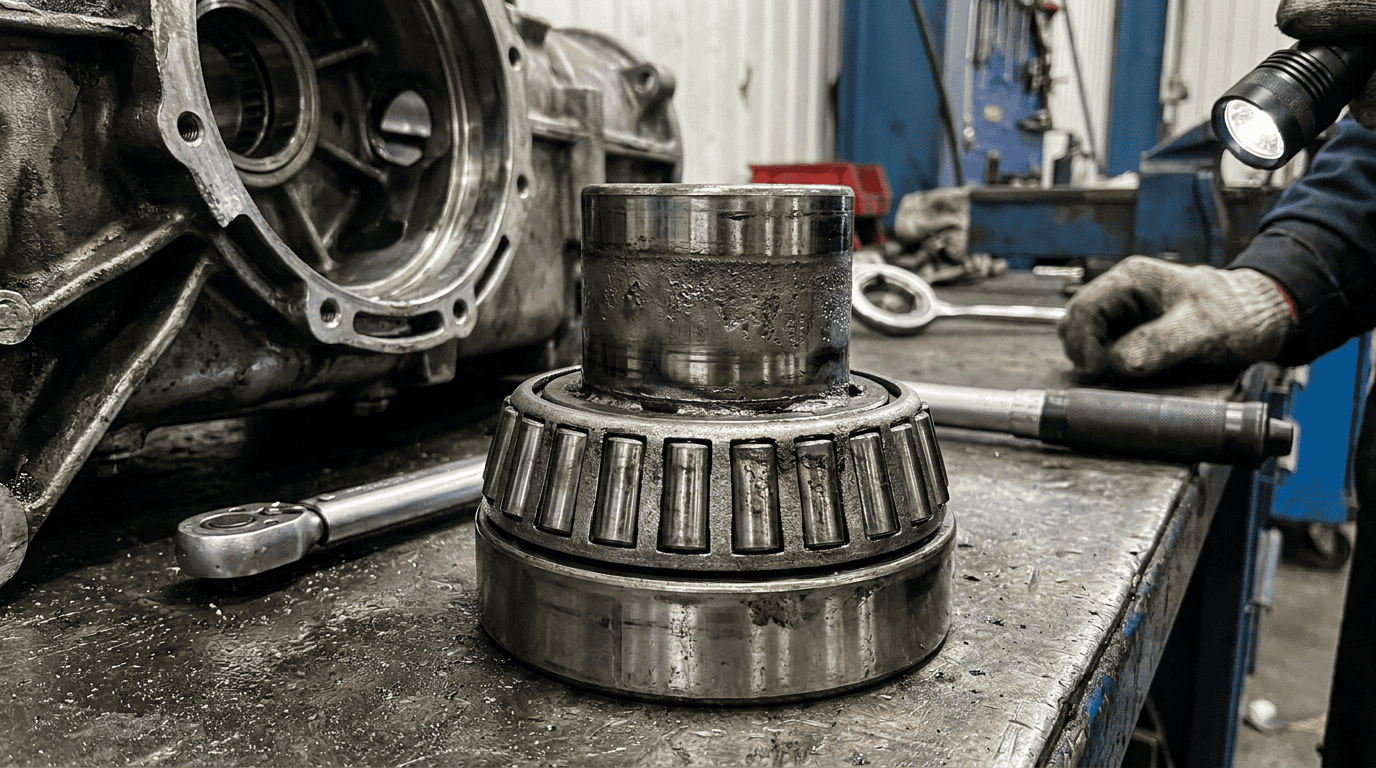
Troubleshooting a faulty gearbox bearing is one of the most important reliability tasks in any plant that depends on industrial gearboxes for uptime, torque transmission, and production continuity. A failing bearing can quickly escalate from minor noise or elevated temperature to gear misalignment, shaft damage, oil contamination, housing wear, and catastrophic gearbox failure. For maintenance managers, plant engineers, reliability teams, mechanics, and purchasing professionals, the goal is not just to identify a bad bearing, but to understand why it failed, how severe the damage is, and whether repair or replacement is the most cost-effective path forward.
A faulty gearbox bearing is typically identified by abnormal noise, vibration, heat, oil contamination, shaft movement, or declining gearbox performance. The most common causes include lubrication failure, misalignment, overloading, contamination, improper installation, electrical pitting, and normal fatigue. Effective troubleshooting includes visual inspection, oil analysis, vibration analysis, temperature checks, endplay and backlash measurements, and bearing condition assessment. If damage is minor and caught early, bearing replacement and gearbox reconditioning may be sufficient. If the failure has damaged gears, shafts, bores, or housings, a full gearbox rebuild or replacement may be required.
If you’re looking to understand more about the intricacies of gearbox maintenance and repair, you may find the article on industrial gearbox repair in Columbus, Ohio, particularly insightful. This resource provides detailed information on diagnosing issues, including failed gearbox bearings, and offers guidance on effective repair solutions. For more information, you can read the article here: Industrial Gearbox Repair in Columbus, Ohio.
Why Gearbox Bearings Fail
Gearbox bearings support rotating shafts, maintain gear alignment, absorb radial and axial loads, and help preserve proper gear mesh. When a bearing begins to fail, the entire gearbox system is affected. Because bearings are relatively small compared to gears and housings, they are sometimes underestimated. In reality, a bearing failure can be the first visible sign of deeper gearbox problems.
Common Causes of Faulty Gearbox Bearings
Several conditions can cause a gearbox bearing to fail prematurely:
| Cause | Description | Typical Result |
||||
| Lubrication failure | Low oil level, wrong viscosity, degraded oil, or blocked lubrication paths | Heat, wear, scoring, seizure |
| Contamination | Dirt, water, metal particles, process material, or chemical ingress | Abrasive wear, corrosion, spalling |
| Misalignment | Shaft, coupling, or housing misalignment | Uneven bearing loading and early fatigue |
| Overloading | Loads beyond gearbox design limits | Brinelling, cracking, cage damage |
| Improper installation | Incorrect fit, excessive force, poor handling, wrong tools | Race damage, preload issues |
| Electrical damage | Stray current passing through the bearing | Fluting, pitting, vibration |
| Poor storage or handling | Moisture, corrosion, impact damage before installation | Reduced bearing life |
| Normal fatigue | Long-term cyclic loading over service life | Spalling and noise |
For related gearbox failure analysis, see Industrial Gearbox Solutions’ internal resource on gearbox repair and rebuild services: https://industrialgearboxsolutions.com/gearbox-repair/
Lubrication-Related Bearing Failure
Lubrication problems are among the most common causes of industrial gearbox bearing failure. Bearings rely on a proper lubricant film to separate rolling elements from raceways. If the oil film breaks down, metal-to-metal contact occurs.
Typical lubrication problems include:
- Oil level too low or too high
- Incorrect viscosity for operating speed and load
- Oxidized or thermally degraded lubricant
- Contaminated oil
- Plugged oil lines or spray nozzles
- Inadequate lubricant flow to upper bearings
- Foaming or aeration
- Incompatible lubricant changes
Noria provides excellent educational guidance on lubrication analysis and contamination control at https://www.noria.com.
Contamination and Ingress
Contaminants act like grinding compounds inside a gearbox. Even small particles can damage precision bearing surfaces. Water contamination is especially harmful because it can cause corrosion, lubricant degradation, hydrogen embrittlement, and micro-pitting.
Common contamination sources include:
- Failed shaft seals
- Open breathers
- Improper washdown practices
- Dirty oil transfer containers
- Poor storage of drums and totes
- Dusty environments
- Internal wear debris from gears or bearings
A high-quality breather, proper seal design, and disciplined lubricant handling can significantly extend gearbox bearing life.
Misalignment and Excessive Load
Misalignment creates uneven bearing loading. Instead of distributing force across the bearing as designed, misalignment concentrates load on specific areas. This can cause premature fatigue, edge loading, raceway wear, and abnormal vibration.
Possible sources of misalignment include:
- Soft foot at the motor or gearbox base
- Improper coupling alignment
- Thermal growth not considered during alignment
- Distorted baseplate
- Worn mounting surfaces
- Improperly machined replacement parts
- Shaft deflection under load
AGMA standards and technical resources can help guide gearbox design, alignment, and rating considerations. Visit the American Gear Manufacturers Association at https://www.agma.org.
Symptoms of a Faulty Gearbox Bearing
Bearing problems often develop gradually. The earlier the symptoms are identified, the better the chance of preventing secondary gearbox damage.
Audible Noise Changes
A faulty bearing may produce:
- Grinding
- Growling
- Rumbling
- Clicking
- Whining
- Intermittent knocking
- High-pitched squealing
Noise alone does not confirm bearing failure, but it is a strong warning sign when combined with vibration, heat, or oil contamination.
Increased Vibration
Vibration is one of the most reliable indicators of bearing distress. A damaged bearing can create distinct vibration frequencies related to the inner race, outer race, rolling elements, or cage.
Common vibration-related symptoms include:
- Increased overall vibration velocity
- High-frequency bearing fault signals
- Sidebands around gear mesh frequency
- Vibration changes during load variation
- Increased axial vibration
- Resonance triggered by bearing looseness
Reliability engineers often use vibration analysis to detect bearing defects before they become audible or visible.
Excessive Heat
A gearbox bearing that is running hot may be overloaded, under-lubricated, misaligned, or internally damaged. Elevated bearing temperature can accelerate lubricant breakdown and increase failure speed.
Potential causes of high temperature include:
- Low oil level
- Wrong oil viscosity
- Excessive preload
- Bearing internal clearance issues
- Misalignment
- Overloading
- Contaminated lubricant
- Restricted oil flow
- Cooling system failure
Temperature trending is more useful than a single reading. A gearbox that normally operates at 150°F but rises to 190°F under the same load deserves immediate attention.
Oil Contamination
Oil condition often tells the story of what is happening inside the gearbox. Bearing failure may produce metallic debris, discoloration, abnormal particle counts, or elevated wear metals in oil analysis.
Signs to look for include:
- Shiny metallic particles
- Dark or burnt-smelling oil
- Milky oil indicating water contamination
- Magnetic debris on plugs or filters
- Elevated iron, chromium, or tin in oil analysis
- Increased ISO particle count
- Sludge or varnish deposits
For lubricant and bearing failure references, SKF offers useful technical resources at https://www.skf.com, and Timken provides bearing engineering information at https://www.timken.com.
Shaft Movement or Endplay
Excessive shaft movement can indicate worn bearings, incorrect bearing fit, damaged housings, or improper bearing preload. Mechanics should check both radial and axial movement when troubleshooting gearbox bearing issues.
Symptoms may include:
- Coupling misalignment that keeps returning
- Seal leakage
- Gear contact pattern changes
- Backlash variation
- Noise during load reversals
- Shaft movement visible during operation
Industrial gearbox bearing failure can lead to costly downtime and repairs, so it’s important to address the issue promptly. Industrial gearbox bearing failure
Step-by-Step Troubleshooting Process
A structured troubleshooting process helps avoid guesswork. The objective is to confirm whether the bearing is faulty, identify the root cause, and determine the correct repair scope.
Step 1: Gather Operating History
Before opening the gearbox, collect as much information as possible. This helps separate a bearing-specific issue from a system-level problem.
Ask these questions:
- When did the symptoms begin?
- Was there a recent change in load, speed, lubricant, or process conditions?
- Has the gearbox been repaired before?
- Was the unit recently installed or aligned?
- Are failures recurring on the same bearing position?
- Is the gearbox exposed to moisture, dust, washdown, or chemicals?
- Are oil samples available?
- Are vibration trends available?
Recurring failures often indicate a root cause that was not corrected during the previous repair.
Step 2: Perform an External Visual Inspection
Inspect the gearbox while it is safely shut down and locked out according to plant procedures.
Check for:
- Oil leaks
- Damaged seals
- Loose mounting bolts
- Soft foot
- Cracked housing
- Broken cooling fan or clogged cooling fins
- Loose or damaged coupling
- Foundation deterioration
- Discoloration from overheating
- Abnormal breather condition
External symptoms can often point to internal bearing distress.
Step 3: Check Lubricant Level and Condition
Verify the oil level using the sight glass, dipstick, or level plug. Be sure the gearbox is checked under the correct operating or shutdown condition based on manufacturer guidance.
Evaluate lubricant for:
- Correct type and viscosity
- Correct oil level
- Water contamination
- Foaming
- Burnt odor
- Sludge
- Metal particles
- Excessive darkening
If the oil is severely contaminated, do not simply drain and refill without determining the contamination source.
Step 4: Measure Temperature
Use infrared thermography, contact probes, or installed sensors to measure operating temperature. Compare the bearing locations against historical trends and similar equipment.
Useful temperature checks include:
- Input shaft bearing area
- Intermediate shaft bearing locations
- Output shaft bearing area
- Oil sump temperature
- Cooler inlet and outlet temperature
- Motor and coupling temperatures
A localized hot spot near a bearing is more concerning than uniform gearbox warming.
Step 5: Conduct Vibration Analysis
Vibration analysis can distinguish bearing faults from gear mesh problems, imbalance, looseness, or misalignment. A skilled vibration analyst can identify bearing defect frequencies and severity.
Common vibration techniques include:
- Overall vibration trending
- FFT spectrum analysis
- Time waveform analysis
- Envelope detection
- Acceleration measurements
- Phase analysis
- Route-based condition monitoring
- Online vibration monitoring for critical gearboxes
If your plant lacks internal vibration analysis capability, consider using a gearbox repair and reliability partner. Industrial Gearbox Solutions can support inspection and repair planning through https://industrialgearboxsolutions.com/contact/.
Step 6: Inspect Magnetic Plugs and Filters
Magnetic drain plugs and filters provide important evidence. Bearing damage can produce fine metallic particles, flakes, or larger fragments.
Debris interpretation:
| Debris Type | Possible Meaning |
|||
| Fine powder | Normal wear or early abnormal wear |
| Shiny flakes | Bearing or gear surface fatigue |
| Large chunks | Advanced failure or broken component |
| Bronze/brass particles | Cage or thrust component wear |
| Black sludge | Oxidation, overheating, contamination |
| Rust-colored debris | Water contamination and corrosion |
Save debris samples for analysis before cleaning the gearbox.
Step 7: Check Shaft Endplay and Radial Movement
Measure shaft movement using dial indicators. Compare readings to OEM specifications or gearbox engineering data.
Excessive movement may indicate:
- Worn bearings
- Incorrect internal clearance
- Damaged bearing seats
- Housing bore wear
- Loose fits
- Missing or damaged spacers
- Improper shim packs
- Gear thrust overload
This step is especially important before deciding whether a simple bearing replacement is enough.
Step 8: Inspect Internally When Required
If external testing confirms severe bearing damage, internal inspection is necessary. During disassembly, document everything.
Inspect:
- Bearing raceways
- Rolling elements
- Bearing cages
- Shaft journals
- Housing bores
- Gear tooth contact patterns
- Spacer condition
- Shims and retainers
- Oil passages
- Seals and breathers
- Fasteners and locking devices
Photograph components before removal. This supports root cause analysis and repair documentation.
When dealing with a malfunctioning gearbox, understanding the signs of a failed bearing is crucial for timely repairs. For those looking to delve deeper into the complexities of gearbox maintenance, a related article provides valuable insights into the repair processes involved. You can explore more about this topic in the article on industrial gearbox repair, which outlines essential steps and considerations for ensuring optimal performance and longevity of your equipment.
Bearing Inspection Methods
| Symptoms | Possible Causes | Diagnosis |
|---|---|---|
| Unusual noise from gearbox | Worn out bearing, lack of lubrication | Inspect gearbox for unusual wear, check lubrication levels |
| Difficulty shifting gears | Damaged bearing affecting gear engagement | Check gearbox for bearing damage, inspect gear engagement mechanism |
| Leakage of gearbox oil | Bearing seal failure | Inspect bearing seals for damage, check gearbox oil levels |
Proper inspection determines whether the bearing failed from fatigue, contamination, lubrication loss, installation error, or overload.
Visual Bearing Inspection
Once removed, examine the bearing carefully under good lighting. Do not clean away all evidence before documenting the condition.
Look for:
- Spalling
- Pitting
- Scoring
- Discoloration
- Cage cracks
- Roller skewing
- Corrosion
- Smearing
- Brinelling
- Fluting
- False brinelling
- Heat bands
- Uneven raceway wear
SKF and Timken both provide bearing damage classification resources that can help maintenance teams identify failure modes.
Raceway and Rolling Element Patterns
The contact pattern on the bearing raceway can reveal the operating condition.
| Pattern | Possible Cause |
|||
| Centered, even track | Normal operation |
| Edge loading | Misalignment or shaft deflection |
| Heavy axial track | Excessive thrust load |
| Pitting or fluting | Electrical current damage |
| Frosted surface | Fine contamination |
| Smearing | Lubrication failure or sliding |
| Rust marks | Moisture contamination |
| Indentations | Shock loading or improper handling |
A bearing should not be evaluated in isolation. Always inspect the shaft, housing, lubricant, seals, and gears as part of the system.
Oil Analysis
Oil analysis is one of the most valuable tools for detecting early gearbox bearing problems.
Recommended oil analysis tests include:
- Viscosity
- Acid number
- Water content
- Particle count
- Ferrous debris analysis
- Spectrometric wear metals
- Oxidation and nitration
- Additive depletion
- Analytical ferrography for severe cases
Oil analysis can detect abnormal wear before vibration levels become severe.
Borescope Inspection
A borescope allows internal gearbox inspection without full disassembly. This can be useful for confirming visible bearing or gear damage through inspection ports.
Borescope inspection can identify:
- Spalling on visible bearing surfaces
- Gear tooth damage
- Oil distribution problems
- Corrosion
- Loose components
- Debris accumulation
- Housing damage
However, borescope inspection has limitations. It may not reveal hidden bearing race defects or internal clearance problems.
When diagnosing a failed gearbox bearing, it’s essential to understand the broader context of gearbox maintenance and the components involved. A related article that provides valuable insights into the selection and performance of electric motors can be found at this link. Understanding how electric motors interact with gearboxes can help in identifying potential issues and ensuring optimal performance in machinery.
Faulty Bearing Troubleshooting Table
Use the following table as a practical field guide.
| Symptom | Likely Cause | Recommended Action |
||||
| Rumbling noise | Bearing fatigue or spalling | Perform vibration analysis and inspect oil debris |
| High temperature | Lubrication failure, overload, preload issue | Check oil level, viscosity, load, and bearing fit |
| Metallic particles in oil | Bearing or gear wear | Inspect magnetic plug, filter, and oil sample |
| Repeated seal leaks | Shaft movement or bearing looseness | Measure endplay and radial movement |
| Vibration at bearing frequencies | Inner/outer race or rolling element defect | Schedule inspection and bearing replacement |
| Gear whine plus bearing heat | Misalignment or gear mesh issue | Check contact pattern, coupling alignment, and housing |
| Milky oil | Water contamination | Identify ingress source and flush gearbox |
| Cage fragments | Advanced bearing failure | Shut down and disassemble immediately |
| Repeated bearing failure | Root cause unresolved | Conduct full failure analysis |
Repair vs. Replacement: What Makes Sense?
A faulty gearbox bearing does not always mean the entire gearbox must be replaced. However, replacing only the bearing without correcting the root cause can lead to repeated failure.
When Bearing Replacement May Be Enough
Bearing replacement may be appropriate when:
- Damage is localized to one bearing
- Shaft journals are within tolerance
- Housing bores are not worn
- Gears show acceptable contact and wear
- Lubrication system is functional
- No major contamination remains
- Root cause is identified and corrected
- Gearbox housing is structurally sound
In this case, the gearbox can often be repaired cost-effectively with new bearings, seals, gaskets, lubricant, and proper setup.
When a Gearbox Rebuild Is Recommended
A full gearbox rebuild may be required when bearing failure has caused secondary damage.
Rebuild indicators include:
- Damaged gears
- Worn or spun bearing seats
- Cracked housing
- Excessive shaft wear
- Heat damage
- Multiple bearing failures
- Severe contamination
- Damaged lubrication system
- Incorrect internal clearances
- Recurring failures
A professional rebuild may include machining, re-boring, sleeving, gear replacement, shaft repair, bearing upgrades, seal improvements, and load verification.
Learn more about complete gearbox repair options at https://industrialgearboxsolutions.com/industrial-gearbox-repair/.
When Replacement Is the Better Option
Replacement may be the best decision when:
- Repair cost approaches or exceeds replacement cost
- The gearbox is obsolete and parts are unavailable
- Lead time for repair is longer than replacement
- Housing damage is severe
- The gearbox is undersized for the application
- Multiple rebuilds have failed
- Production risk is too high
- Upgraded gearbox design is available
Purchasing professionals should compare total cost of ownership, not just purchase price. Downtime, installation labor, crane rental, expedited freight, and production loss can exceed the gearbox cost itself.
Preventing Gearbox Bearing Failure
Prevention is more cost-effective than emergency repair. A strong gearbox reliability program combines lubrication control, condition monitoring, alignment, inspection, and documentation.
Lubrication Best Practices
Follow these lubrication practices:
- Use the correct lubricant viscosity and specification
- Keep oil clean, cool, and dry
- Filter new oil before use
- Use dedicated transfer containers
- Install desiccant breathers where appropriate
- Maintain correct oil levels
- Avoid mixing incompatible lubricants
- Establish oil sampling intervals
- Monitor viscosity, water, and particle count
- Replace oil based on condition, not only calendar time
A gearbox operating with clean, dry oil will generally deliver significantly longer bearing and gear life.
Alignment and Installation Best Practices
Proper installation is essential for bearing reliability.
Best practices include:
- Use precision laser alignment
- Check soft foot before alignment
- Consider thermal growth
- Verify coupling condition
- Use proper bearing installation tools
- Avoid hammering directly on bearings
- Heat bearings correctly when required
- Verify shaft and bore fits
- Use correct shims and spacers
- Torque fasteners to specification
- Confirm gear contact pattern after assembly
Improper installation can destroy a new bearing quickly, even if the bearing is high quality.
Condition Monitoring Program
Critical gearboxes should be included in a formal condition monitoring program.
Recommended monitoring methods:
- Vibration analysis
- Oil analysis
- Infrared thermography
- Ultrasonic inspection
- Motor current analysis when applicable
- Visual inspection rounds
- Online sensors for high-criticality assets
- Failure trend documentation
The best programs combine multiple technologies rather than relying on a single inspection method.
Contamination Control
Contamination control should cover the entire lubricant lifecycle.
Key practices include:
- Store oil indoors
- Keep drums sealed
- Use filtration carts
- Clean fill ports before opening
- Install proper breathers
- Replace damaged seals promptly
- Avoid pressure washing near seals
- Use quick-connect fittings for oil transfer
- Inspect breathers and sight glasses regularly
Contamination control is especially important in mining, cement, paper, steel, food processing, aggregate, chemical, and wastewater applications.
Maintenance Best Practices for Gearbox Bearings
A repeatable maintenance process helps ensure bearing problems are detected early and corrected properly.
Daily or Weekly Checks
Operators and mechanics should routinely check:
- Unusual noise
- Visible leaks
- Oil level
- Temperature changes
- Vibration changes
- Breather condition
- Coupling guard area
- Foundation bolts
- Unusual odor
- External contamination buildup
Small changes should be logged. Trend data is more useful than isolated observations.
Monthly or Quarterly Checks
Depending on criticality and operating conditions, monthly or quarterly tasks may include:
- Vibration route collection
- Oil sampling
- Infrared temperature scan
- Coupling inspection
- Seal inspection
- Breather inspection
- Filter inspection
- Bolt torque checks
- Review of operating loads
Annual or Shutdown Inspections
During planned outages, consider:
- Borescope inspection
- Oil drain and internal debris review
- Gear tooth contact inspection
- Endplay measurement
- Backlash measurement
- Shaft seal replacement
- Lubrication system cleaning
- Cooler cleaning
- Alignment verification
- Foundation inspection
For critical assets, planned inspection is almost always less expensive than unplanned gearbox failure.
Root Cause Analysis for Repeated Bearing Failures
If the same gearbox bearing fails repeatedly, replacing the bearing again is not enough. A root cause analysis should be performed.
Questions to Ask During RCA
Ask the following:
- Is the bearing correct for the application?
- Is the gearbox overloaded?
- Has the process changed?
- Is alignment verified under operating conditions?
- Is the lubricant correct and clean?
- Are seals allowing contamination?
- Is the housing bore worn?
- Is the shaft journal undersized?
- Is electrical current passing through the bearing?
- Are installation procedures documented?
- Are mechanics using proper tools?
- Was the bearing stored correctly?
- Are gear loads creating unexpected thrust?
Common Hidden Causes
Some root causes are not obvious during routine inspection.
Hidden causes include:
- Soft foot creating dynamic misalignment
- Thermal expansion shifting alignment
- Inaccurate replacement bearing fits
- Incorrect internal clearance
- Shaft bending under load
- Resonance amplifying vibration
- Inadequate lubrication to high-mounted bearings
- Housing distortion from improper mounting
- Electrical discharge from VFD-driven motors
- Incorrect gearbox selection for duty cycle
When the root cause is corrected, bearing life often improves dramatically.
Branded Image Suggestions
Image 1: Gearbox Bearing Failure Close-Up
Alt text: Close-up of a faulty gearbox bearing with spalling and raceway damage
Caption: Spalling, pitting, and discoloration on bearing raceways can indicate lubrication failure, overload, or contamination.
Suggested placement: Near “Bearing Inspection Methods”
Image 2: Maintenance Technician Inspecting Gearbox
Alt text: Industrial maintenance technician inspecting gearbox bearing temperature with infrared tool
Caption: Temperature monitoring helps identify localized bearing distress before catastrophic gearbox failure occurs.
Suggested placement: Near “Step-by-Step Troubleshooting Process”
Image 3: Oil Sample With Metallic Debris
Alt text: Industrial gearbox oil sample showing metallic particles from bearing wear
Caption: Oil analysis and debris inspection provide early evidence of bearing and gear wear.
Suggested placement: Near “Oil Contamination”
Image 4: Gearbox Rebuild in Shop
Alt text: Industrial gearbox rebuild with new bearings, seals, shafts, and gears
Caption: A professional gearbox rebuild addresses bearing failure and corrects related shaft, gear, and housing damage.
Suggested placement: Near “Repair vs. Replacement”
Image 5: Vibration Analysis on Industrial Gearbox
Alt text: Reliability engineer performing vibration analysis on industrial gearbox bearing housing
Caption: Vibration analysis can detect bearing defects before they become audible or visible.
Suggested placement: Near “Conduct Vibration Analysis”
Key Takeaways
- A faulty gearbox bearing can cause noise, vibration, heat, oil contamination, shaft movement, and gear damage.
- The most common causes are lubrication failure, contamination, misalignment, overload, improper installation, and fatigue.
- Troubleshooting should include operating history, visual inspection, oil analysis, vibration analysis, temperature checks, and endplay measurement.
- Replacing the bearing without identifying the root cause can lead to repeat failures.
- Bearing replacement may be enough for localized damage, but a full rebuild is often required if shafts, gears, bores, or housings are damaged.
- Clean oil, proper alignment, contamination control, and condition monitoring are the best ways to prevent gearbox bearing failure.
- Maintenance managers and purchasing teams should evaluate total cost of ownership, not just immediate repair or replacement cost.
FAQs About Troubleshooting a Faulty Gearbox Bearing
What is the first sign of a faulty gearbox bearing?
The first sign is often a subtle increase in vibration or noise. In many cases, vibration analysis or oil analysis detects the problem before mechanics hear abnormal sounds. Other early signs include rising temperature, seal leakage, and fine metallic debris in the oil.
Can a gearbox run with a bad bearing?
A gearbox may continue running with a bad bearing for a short period, but doing so is risky. Bearing damage can quickly spread to gears, shafts, seals, and housings. If vibration, temperature, or debris levels are severe, the gearbox should be shut down and inspected.
What does a failing gearbox bearing sound like?
A failing bearing may sound like grinding, rumbling, growling, clicking, or whining. The sound may change with speed or load. However, noise alone is not enough for diagnosis. Confirm the issue with vibration analysis, oil inspection, and mechanical measurements.
How do you confirm gearbox bearing failure?
Confirmation usually requires a combination of vibration analysis, temperature measurement, lubricant inspection, debris analysis, endplay checks, and internal inspection. Final confirmation often occurs when the gearbox is opened and the bearing raceways, rolling elements, and cage are inspected.
What causes gearbox bearings to overheat?
Common causes include insufficient lubrication, excessive oil level, wrong lubricant viscosity, bearing preload problems, misalignment, overload, contamination, restricted oil flow, and internal damage. Localized heat near one bearing usually indicates a specific mechanical or lubrication issue.
Should all gearbox bearings be replaced if one fails?
In many gearbox repairs, replacing all bearings is recommended because contamination and debris from one failed bearing may affect others. However, the decision depends on gearbox criticality, bearing condition, operating hours, repair scope, and inspection findings.
Can oil analysis detect bearing failure?
Yes. Oil analysis can detect wear metals, particle contamination, water, lubricant degradation, and debris associated with bearing failure. Analytical ferrography can be especially useful when abnormal wear is suspected.
What is the difference between bearing repair and gearbox rebuild?
Bearing repair usually means replacing damaged bearings, seals, and lubricant while confirming fits and clearances. A gearbox rebuild is more comprehensive and may include shaft repair, gear replacement, housing bore restoration, machining, reassembly, testing, and root cause correction.
How often should gearbox bearings be inspected?
Inspection frequency depends on criticality, load, speed, environment, and failure history. Critical gearboxes may require monthly vibration checks and quarterly oil analysis, while less critical units may be inspected during scheduled preventive maintenance. High-risk gearboxes should use condition-based monitoring.
What happens if a faulty bearing is ignored?
Ignoring a faulty bearing can lead to gear tooth damage, shaft scoring, seal failure, lubricant contamination, housing bore wear, overheating, and catastrophic gearbox failure. The repair cost and downtime can increase significantly.
SEO Metadata
Meta title: Troubleshooting a Faulty Gearbox Bearing: Causes, Symptoms, Inspection, and Repair
Meta description: Learn how to troubleshoot a faulty gearbox bearing, including causes, symptoms, vibration analysis, oil inspection, repair vs. replacement, and prevention tips.
Primary keyword: Troubleshooting a Faulty Gearbox Bearing
Secondary keywords:
- gearbox bearing failure
- faulty gearbox bearing symptoms
- industrial gearbox troubleshooting
- gearbox bearing inspection
- gearbox vibration analysis
- gearbox oil contamination
- gearbox repair vs replacement
- industrial gearbox maintenance
Suggested URL slug: troubleshooting-a-faulty-gearbox-bearing
Search intent: Informational and commercial investigation
Recommended internal links:
- Gearbox Repair: https://industrialgearboxsolutions.com/gearbox-repair/
- Industrial Gearbox Repair: https://industrialgearboxsolutions.com/industrial-gearbox-repair/
- Gearbox Rebuild Services: https://industrialgearboxsolutions.com/gearbox-rebuild/
- Contact Industrial Gearbox Solutions: https://industrialgearboxsolutions.com/contact/
Authoritative external sources:
- SKF bearing resources: https://www.skf.com
- Timken engineering resources: https://www.timken.com
- AGMA standards and gear industry resources: https://www.agma.org
- Noria lubrication education: https://www.noria.com
Conclusion
Troubleshooting a faulty gearbox bearing requires more than listening for noise or replacing a worn part. A bearing failure is often the result of lubrication problems, contamination, misalignment, overload, improper installation, or unresolved system issues. The best approach is systematic: gather operating history, inspect externally, analyze oil, measure vibration and temperature, check shaft movement, and perform internal inspection when needed.
For maintenance managers, reliability engineers, mechanics, plant engineers, and purchasing professionals, early detection can prevent costly secondary damage and reduce unplanned downtime. Whether your gearbox needs a bearing replacement, complete rebuild, or replacement evaluation, the key is to identify the true root cause and correct it before the unit returns to service.
If your facility is experiencing gearbox noise, vibration, overheating, oil contamination, or repeated bearing failures, Industrial Gearbox Solutions can help evaluate the problem and recommend the right repair path.
FAQs
What are the common symptoms of a failed gearbox bearing?
Common symptoms of a failed gearbox bearing include unusual noises such as grinding, whining, or rumbling coming from the gearbox, as well as difficulty shifting gears or a feeling of vibration or roughness while driving.
How can I diagnose a failed gearbox bearing?
To diagnose a failed gearbox bearing, you can perform a visual inspection of the gearbox for any signs of damage or wear. You can also listen for unusual noises while the vehicle is in motion, and pay attention to any changes in the smoothness of gear shifting.
What are the potential causes of a failed gearbox bearing?
Potential causes of a failed gearbox bearing include lack of lubrication, excessive heat, contamination from debris or water, and normal wear and tear over time. Additionally, manufacturing defects or improper installation can also contribute to bearing failure.
Can a failed gearbox bearing be repaired, or does it need to be replaced?
In most cases, a failed gearbox bearing will need to be replaced rather than repaired. Attempting to repair a failed bearing may not provide a long-term solution, and could lead to further damage to the gearbox.
What are the potential consequences of driving with a failed gearbox bearing?
Driving with a failed gearbox bearing can lead to further damage to the gearbox and other components of the vehicle. This can result in costly repairs and potentially unsafe driving conditions. It is important to address gearbox bearing issues promptly to avoid more extensive damage.