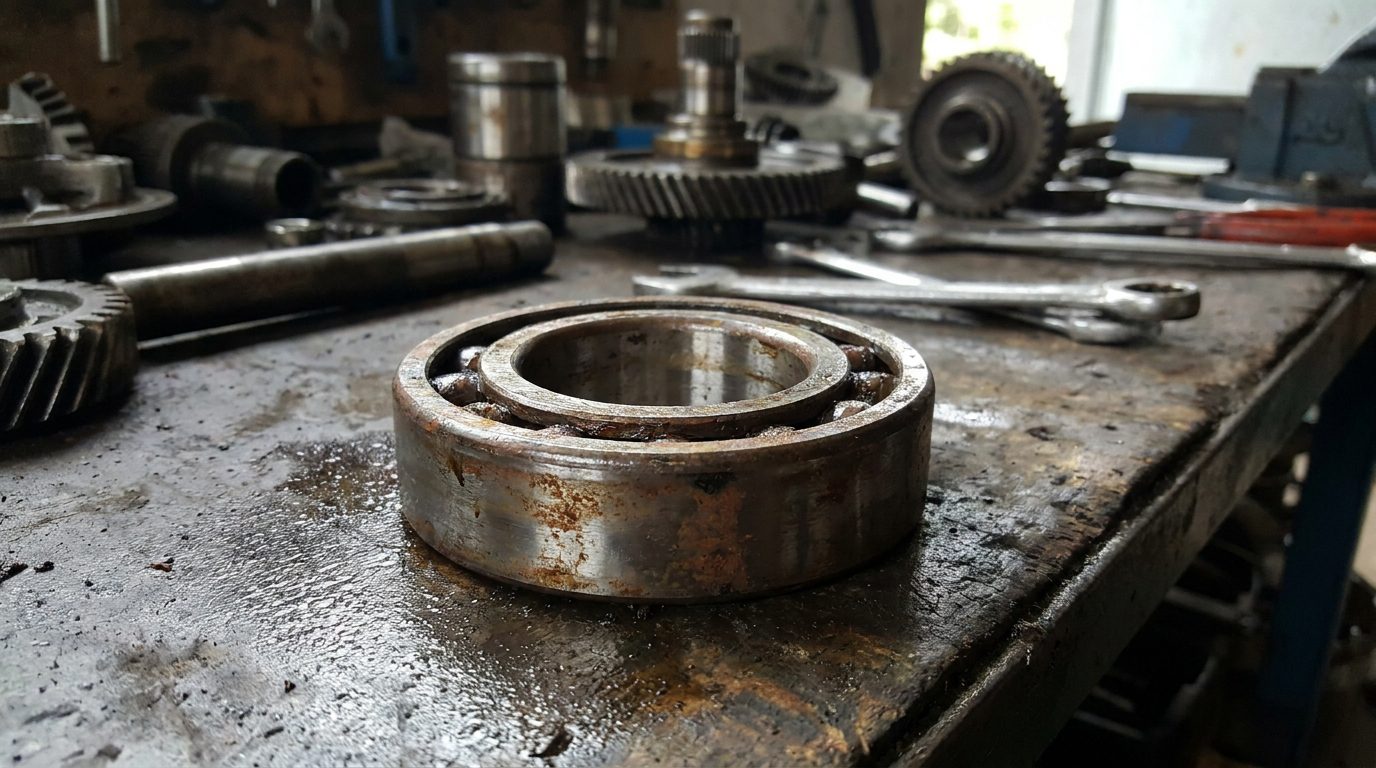
Troubleshooting Gearbox Bearing Failures is a critical maintenance skill because bearings are often the first components to show distress when lubrication, alignment, loading, contamination, or installation practices fall short. In industrial gearboxes, bearing problems can escalate quickly into gear tooth damage, shaft movement, seal failure, overheating, and unplanned downtime. For maintenance managers, plant engineers, reliability engineers, mechanics, and purchasing professionals, the goal is not only to identify the failed bearing but to understand why it failed and how to prevent recurrence. This guide explains the causes, symptoms, inspection methods, troubleshooting steps, repair decisions, and maintenance best practices that support longer gearbox life and lower total cost of ownership.
Gearbox bearing failures are commonly caused by inadequate lubrication, contamination, misalignment, overload, improper installation, electrical fluting, excessive heat, and fatigue. The most reliable troubleshooting approach is to combine vibration analysis, oil analysis, temperature monitoring, visual inspection, shaft alignment checks, and bearing damage pattern analysis. If the bearing damage is isolated and the gearbox housing, shafts, gears, and bores remain within tolerance, repair may be practical. If multiple components are damaged or the gearbox has repeated failures, replacement or engineered rebuild may be the better long-term solution.
If you’re experiencing persistent issues with your gearbox bearing failing, you may find it helpful to read a related article that delves deeper into the common causes and solutions for such problems. This article provides valuable insights into maintenance practices and troubleshooting tips that can help extend the lifespan of your gearbox components. For more information, check out the article here: Why Does My Gearbox Bearing Keep Failing?.
Why Gearbox Bearings Fail in Industrial Applications
Bearings support rotating shafts, maintain gear mesh alignment, and absorb radial and axial loads. When a bearing begins to fail, it can allow shaft deflection, misalignment, gear tooth overload, seal leakage, and increased vibration. In many industrial gearboxes, the failed bearing is only the visible result of a deeper issue.
A failed bearing should never be treated as a standalone event. The root cause may be related to lubrication strategy, gearbox selection, operating conditions, foundation integrity, maintenance practices, or contamination control.
Common Root Causes of Gearbox Bearing Failure
| Cause | What Happens | Typical Evidence |
||||
| Poor lubrication | Film thickness is insufficient to separate rolling elements and raceways | Blue discoloration, scoring, high temperature, metal debris |
| Contamination | Dirt, water, process material, or wear particles enter the lubricant | Abrasive wear, pitting, cloudy oil, rust |
| Misalignment | Shaft or housing geometry creates uneven loading | Edge loading, uneven wear, elevated vibration |
| Overload | Bearing is exposed to forces beyond design capacity | Spalling, cracked races, cage damage |
| Improper installation | Incorrect fits, impact damage, wrong tools, or poor handling | Brinelling, fretting, early-life failure |
| Electrical discharge | Stray currents pass through the bearing | Fluting, washboard raceway pattern |
| Excessive heat | Lubricant thins and bearing clearances change | Oxidized oil, varnish, discoloration |
| Fatigue | Bearing reaches the end of its useful life | Subsurface spalling, progressive noise increase |
For additional bearing failure reference material, SKF provides useful technical information on bearing damage modes at SKF Bearing Damage and Failure Analysis, and Timken offers practical bearing inspection guidance at Timken Bearing Damage Analysis.
Why Bearings Often Fail Before Gears
In many gearboxes, bearings fail before the gears because they are highly sensitive to lubrication film breakdown, contamination, and small alignment errors. Gears may continue operating with moderate wear, but bearings depend on precise internal geometry and clean, properly selected lubricant.
Bearing failure can also trigger secondary gear damage. Once a bearing loses stiffness or develops excessive internal clearance, the shaft may move out of position. That movement changes gear mesh contact, causing tooth pitting, scoring, noise, and eventual gear failure.
If your gearbox is already showing signs of gear damage, review Industrial Gearbox Solutions’ related resources on industrial gearbox repair and gearbox failure analysis.
Symptoms of Gearbox Bearing Failure
Early detection is essential. Bearings rarely fail without warning, but those warning signs can be missed if maintenance teams rely only on reactive inspections.
Audible Noise Changes
One of the first signs of bearing distress is a change in sound. Operators may notice:
- High-pitched whining
- Rumbling or growling
- Clicking or ticking
- Cyclic knocking
- Intermittent scraping
- Noise that changes with load or speed
A low-frequency rumble often suggests advanced bearing wear, while higher-frequency tones may indicate early-stage defects on the inner race, outer race, rolling elements, or cage.
Increased Vibration
Vibration is one of the most valuable indicators for troubleshooting gearbox bearing failures. Common vibration findings include:
- Rising overall vibration levels
- Peaks at bearing defect frequencies
- Sidebands around gear mesh frequency
- Increased axial vibration
- Sudden changes in vibration after lubrication or load changes
- High-frequency acceleration spikes
Reliability engineers should trend vibration data over time instead of relying on one reading. A single vibration measurement can identify a concern, but trend data helps confirm whether the issue is progressing.
Excessive Heat
Heat is both a cause and symptom of bearing failure. Temperature increases may result from lubrication starvation, overloading, excessive preload, contamination, or internal friction.
Common warning signs include:
- Gearbox housing hotter than normal
- Bearing cap temperature increases
- Oil temperature rise
- Paint discoloration
- Burnt oil odor
- Grease leakage or hardening near seals
Temperature guns, infrared cameras, and permanently mounted sensors can help identify bearing locations that are operating above normal baseline conditions.
Lubricant Changes
Oil and grease often reveal bearing problems before external symptoms become obvious. Maintenance teams should look for:
- Metallic particles
- Darkened or oxidized oil
- Milky oil from water contamination
- Burnt odor
- Foaming
- Sludge or varnish
- Increased particle counts
- Abnormal iron, chromium, or tin levels in oil analysis
Noria provides excellent lubrication reliability resources at Noria Lubrication Articles, especially for teams improving oil sampling, contamination control, and lubricant selection.
Seal Leakage
Bearing failure and seal leakage often occur together. A failing bearing can create shaft movement that damages the seal lip. Conversely, a failed seal can allow contamination to enter and destroy the bearing.
Warning signs include:
- Oil leakage around input or output shafts
- Grease purge near bearing caps
- Dirt buildup around seals
- Shaft wear grooves
- Water intrusion
- Dust or process material inside the housing
If leakage is present, replacing the seal without inspecting the bearing and shaft condition may only provide a temporary fix.
Industrial gearbox bearing failure can lead to costly downtime and production losses, so it’s important to address the issue promptly. Industrial gearbox bearing failure
Troubleshooting Gearbox Bearing Failures Step by Step
A structured troubleshooting process helps prevent unnecessary replacement, repeated failure, and incorrect diagnosis.
Step 1: Document Operating Conditions
Before disassembly, gather as much operating information as possible. Useful data includes:
- Gearbox model and serial number
- Application and driven equipment
- Motor horsepower and speed
- Gear ratio
- Operating hours
- Load profile
- Start-stop frequency
- Shock loading history
- Lubricant type and viscosity
- Oil change frequency
- Ambient temperature
- Recent repairs or changes
- Vibration history
- Oil analysis reports
This information helps determine whether the failure was caused by operating conditions, maintenance practices, or component defects.
Step 2: Inspect While the Gearbox Is Still Installed
If safe and practical, perform inspections before removal. This preserves valuable evidence.
Recommended checks include:
- Measure temperature at bearing locations
- Record vibration readings
- Listen with an ultrasonic tool or mechanic’s stethoscope
- Check oil level
- Inspect breather condition
- Look for leaks
- Check foundation bolts
- Inspect coupling condition
- Verify alignment
- Measure motor current draw
These checks help identify whether the gearbox failure is connected to external influences such as misalignment, soft foot, base movement, or coupling wear.
Step 3: Perform Oil Analysis
Oil analysis is one of the most effective tools for troubleshooting bearing failures in enclosed industrial gearboxes.
Important oil analysis tests include:
| Test | What It Reveals |
|||
| Viscosity | Confirms whether the lubricant remains within specification |
| Particle count | Measures cleanliness and contamination level |
| Water content | Detects moisture that can cause rust and lubricant failure |
| Spectrometric analysis | Identifies wear metals and additive depletion |
| Ferrography | Evaluates larger ferrous wear particles |
| Acid number | Indicates oxidation and oil degradation |
| FTIR analysis | Detects oxidation, nitration, water, and contaminants |
A rising iron level may suggest gear or bearing wear. Chromium may point toward bearing race or rolling element wear. Tin or copper may indicate cage or bushing material, depending on the gearbox design.
Step 4: Analyze Vibration Data
Vibration analysis can help distinguish between bearing failure, gear mesh problems, imbalance, looseness, and misalignment.
Key vibration indicators include:
- Bearing defect frequencies
- Gear mesh frequency sidebands
- High-frequency acceleration
- Envelope spectrum peaks
- Axial versus radial vibration patterns
- Harmonics of running speed
- Changes under different load conditions
A bearing defect may appear first in the high-frequency range before it becomes visible in standard velocity readings. This is why many reliability programs use acceleration enveloping or demodulation for early bearing fault detection.
Step 5: Disassemble Carefully and Preserve Evidence
When the gearbox is removed for teardown, disassembly should be done carefully. Do not clean, grind, or damage the evidence before inspection.
Best practices include:
- Photograph the gearbox before disassembly
- Mark bearing locations and orientations
- Record shim packs and endplay measurements
- Inspect oil before draining completely
- Capture oil and debris samples
- Photograph gear contact patterns
- Measure shaft end float
- Inspect bearing fits before removing bearings
- Save failed bearings for analysis
Avoid using torches, hammers, or destructive removal methods unless required. Improper removal can hide the original failure pattern.
If you’re struggling with recurrent gearbox bearing failures, you might find it helpful to explore related topics that delve into the intricacies of gearbox maintenance and replacement. One such article discusses the importance of understanding the various components of gearboxes and offers insights into effective replacement strategies. You can read more about this in the article on Cone Drive Gearbox Replacement, which provides valuable information that could help you address the issues you’re facing with your gearbox bearings.
Bearing Damage Patterns and What They Mean
| Reasons for Gearbox Bearing Failure | Potential Solutions |
|---|---|
| Improper lubrication | Regularly check and maintain proper lubrication levels |
| Overloading | Ensure the gearbox is not being overloaded |
| Contamination | Implement proper sealing and protection from contaminants |
| Poor installation | Ensure proper installation and alignment of the gearbox |
| Material fatigue | Use high-quality bearings and monitor for signs of wear |
Bearing appearance can reveal the root cause. A trained inspection should evaluate raceways, rolling elements, cages, shoulders, seals, fits, and lubricant condition.
Spalling
Spalling appears as flaked or pitted areas on the raceway or rolling elements. It often indicates fatigue, overload, contamination, or poor lubrication.
Possible causes include:
- Normal fatigue after long service life
- Excessive load
- Misalignment
- Shock loading
- Debris dents that developed into fatigue cracks
- Insufficient lubricant film
Brinelling and False Brinelling
True brinelling occurs when rolling elements create permanent dents in the raceway due to shock or excessive static load. False brinelling appears as wear marks caused by vibration while the bearing is stationary.
Common causes include:
- Hammering during installation
- Transport vibration
- Standby equipment vibration
- Improper storage
- Shock loading
- Incorrect mounting tools
False brinelling is common in spare gearboxes stored near operating machinery without proper shaft rotation or vibration isolation.
Smearing and Scuffing
Smearing or scuffing indicates sliding contact between bearing surfaces. It is often related to lubrication failure, rapid acceleration, excessive load, or incorrect internal clearance.
Signs include:
- Torn metal surfaces
- Heat discoloration
- Rough raceways
- Surface welding
- Cage wear
Fretting Corrosion
Fretting corrosion appears as reddish-brown or black oxide at bearing seats, shaft fits, or housing bores. It is caused by microscopic movement between surfaces.
Potential causes include:
- Loose fits
- Poor shaft or housing tolerances
- Vibration
- Improper bearing selection
- Insufficient clamping force
- Housing distortion
Fretting is especially important because it can damage the shaft or housing enough to make simple bearing replacement unreliable.
Electrical Fluting
Electrical fluting creates a washboard-like pattern on bearing raceways. It is typically associated with stray electrical current, often from variable frequency drives, grounding issues, or motor discharge currents.
Corrective actions may include:
- Shaft grounding rings
- Insulated bearings
- Proper VFD cable installation
- Improved grounding
- Common-mode chokes
- Electrical testing
Cage Damage
Bearing cage damage can result from vibration, poor lubrication, excessive speed, misalignment, or improper handling.
Symptoms include:
- Cage cracking
- Pocket wear
- Rolling element skewing
- Metallic debris
- Sudden temperature rise
- Noise increase
Cage failure can quickly become catastrophic because rolling elements may no longer remain evenly spaced.
Inspection Methods for Gearbox Bearing Problems
A reliable troubleshooting program uses multiple inspection methods. No single test tells the entire story.
Visual Inspection
Visual inspection remains one of the most important steps. Inspect:
- Bearing raceways
- Rolling elements
- Cages
- Shaft journals
- Housing bores
- Seals
- Gear teeth
- Lubricant condition
- Breathers
- Magnetic drain plugs
- Oil sight glass
- Couplings
- Baseplate and mounting bolts
Use bright lighting and magnification when needed. Photograph all abnormal findings.
Dimensional Inspection
Dimensional checks help determine whether the gearbox can be repaired successfully.
Key measurements include:
- Shaft bearing seat diameter
- Housing bore diameter
- Roundness
- Taper
- Shaft runout
- Gear backlash
- Bearing endplay
- Bearing preload
- Seal journal diameter
- Gear tooth contact pattern
If bearing seats or housing bores are worn beyond tolerance, installing a new bearing may not solve the problem. Machining, sleeving, metalizing, or housing replacement may be required.
Lubricant Inspection
Lubricant should be inspected visually and analytically.
Field checks include:
- Oil level
- Oil color
- Odor
- Foam
- Water presence
- Sediment
- Magnetic debris
- Filter condition
Laboratory oil analysis should be part of a predictive maintenance program for critical gearboxes.
Alignment and Foundation Inspection
Many bearing failures are caused by forces outside the gearbox. Inspect:
- Motor-to-gearbox alignment
- Gearbox-to-driven-equipment alignment
- Coupling condition
- Soft foot
- Baseplate cracks
- Loose anchor bolts
- Pipe strain
- Belt or chain tension
- Thermal growth
Laser alignment is preferred for precision applications. Alignment should be checked under realistic operating conditions when thermal growth is significant.
Non-Destructive Testing
For critical gearboxes, non-destructive testing may be appropriate.
Common methods include:
- Magnetic particle inspection
- Dye penetrant inspection
- Ultrasonic testing
- Borescope inspection
- Endoscopic gear inspection
These methods can identify cracks, surface defects, and internal damage that may not be visible during routine inspection.
Troubleshooting Table by Symptom
| Symptom | Possible Bearing-Related Cause | Recommended Action |
||||
| Rising temperature | Lubrication starvation, excessive preload, overload | Check oil level, viscosity, flow, bearing clearance, load |
| Rumbling noise | Advanced spalling, contamination, looseness | Inspect vibration data, oil debris, bearing condition |
| High-frequency vibration | Early bearing defect | Use envelope analysis and trend readings |
| Oil leakage | Shaft movement, seal wear, overfilled gearbox | Inspect bearing clearance, seals, breathers, oil level |
| Metallic particles in oil | Bearing or gear wear | Perform oil analysis and inspect magnetic plug |
| Repeated bearing failure | Misalignment, housing bore wear, wrong bearing | Verify fits, alignment, loading, lubricant, installation |
| Blue discoloration | Heat from lubrication failure or overload | Inspect oil, preload, cooling, and operating load |
| Cage fragments | Severe bearing distress | Stop equipment and inspect immediately |
| Rust on raceways | Water contamination or poor storage | Check seals, breathers, oil handling, storage practices |
| Fluted raceways | Electrical discharge | Inspect grounding, VFD system, and motor bearings |
Prevention Strategies for Gearbox Bearing Failures
Preventing bearing failure requires disciplined lubrication, contamination control, installation practices, and condition monitoring.
Improve Lubrication Practices
Lubrication is one of the most important factors in gearbox bearing life.
Best practices include:
- Use the correct lubricant type and viscosity
- Confirm EP additives are compatible with gearbox materials
- Maintain proper oil level
- Avoid overfilling and underfilling
- Use filtered oil transfer equipment
- Keep lubricant containers sealed
- Label lubricants clearly
- Follow oil change intervals based on condition, not only calendar time
- Install desiccant breathers where moisture is a concern
- Use oil sampling ports in representative locations
AGMA provides widely referenced standards and technical guidance for enclosed gearing. Visit the American Gear Manufacturers Association for standards related to gear drive rating, lubrication, and inspection.
Control Contamination
Contamination is a major cause of bearing wear. Dirt, water, process chemicals, and metal particles reduce lubricant film life and accelerate fatigue.
Recommended contamination control measures:
- Upgrade breathers
- Use proper shaft seals
- Install filtration systems
- Store oil indoors
- Use dedicated transfer containers
- Avoid open funnels
- Clean fill ports before adding oil
- Keep gearbox inspection covers sealed
- Monitor ISO cleanliness codes
- Investigate water contamination immediately
Install Bearings Correctly
Improper installation can destroy a bearing before the gearbox returns to service.
Installation best practices:
- Use induction heaters or proper heating methods
- Never apply heat with an uncontrolled torch
- Press only on the ring being fitted
- Use clean gloves and tools
- Confirm shaft and housing fits
- Measure bearing clearance when required
- Set preload or endplay to specification
- Protect bearings from dust and moisture
- Avoid impact loading
- Use calibrated tools
Maintain Proper Alignment
Misalignment creates uneven load distribution and shortens bearing life.
Alignment best practices include:
- Perform precision laser alignment
- Correct soft foot before alignment
- Account for thermal growth
- Inspect coupling wear
- Verify base rigidity
- Recheck alignment after major repairs
- Avoid excessive belt or chain tension
Monitor Condition Regularly
Condition monitoring allows teams to detect problems before failure.
Recommended monitoring technologies:
- Vibration analysis
- Oil analysis
- Infrared thermography
- Ultrasonic inspection
- Motor current analysis
- Online temperature monitoring
- Wear debris monitoring
- Borescope inspection
For critical assets, continuous monitoring may be justified. For non-critical gearboxes, route-based monitoring may be sufficient.
Repair vs. Replacement: How to Make the Right Decision
Not every gearbox with a failed bearing needs to be replaced. However, not every gearbox should be repaired either. The decision should be based on technical condition, downtime risk, part availability, cost, and long-term reliability.
When Gearbox Repair Makes Sense
Repair may be appropriate when:
- Bearing damage is detected early
- Gears are still in good condition
- Shafts are within tolerance
- Housing bores are not worn
- Replacement parts are available
- Lead time for a new gearbox is too long
- The gearbox is specialized or obsolete
- The repair can address the root cause
- Total repair cost is significantly lower than replacement
A professional rebuild may include bearing replacement, seal replacement, shaft repair, gear inspection, housing bore restoration, backlash adjustment, contact pattern verification, and load testing.
Learn more about rebuild options at Industrial Gearbox Rebuild Services.
When Replacement May Be Better
Replacement may be the better choice when:
- The gearbox has repeated bearing failures
- Housing bores are severely damaged
- Multiple gears and shafts are damaged
- The unit is undersized for the application
- Parts are obsolete or unavailable
- Efficiency upgrades are needed
- Downtime risk is unacceptable
- Repair cost approaches replacement cost
- The gearbox design is not suitable for current operating conditions
Purchasing professionals should consider not just acquisition cost, but total lifecycle cost. A cheaper gearbox that repeatedly fails can cost far more in downtime, labor, lost production, and emergency freight.
Key Questions Before Approving Repair
Before approving a repair, ask:
- Was the root cause identified?
- Were shaft and housing fits measured?
- Were gear teeth inspected?
- Was oil analysis performed?
- Were alignment and foundation conditions checked?
- Are upgraded bearings or seals recommended?
- Is the gearbox properly sized?
- Will the repair include test running?
- What warranty is provided?
- What is the expected lead time?
Maintenance Best Practices for Longer Bearing Life
A strong gearbox maintenance program combines planned inspections, lubrication discipline, and reliability data.
Recommended Preventive Maintenance Tasks
| Frequency | Maintenance Task |
|||
| Daily or shift-based | Listen for abnormal noise, check leaks, observe temperature |
| Weekly | Check oil level, inspect breather and seals |
| Monthly | Record vibration and temperature trends |
| Quarterly | Inspect coupling, mounting bolts, and external condition |
| Semiannual | Pull oil sample, inspect magnetic plug, review trend data |
| Annual | Verify alignment, inspect foundation, review lubricant suitability |
| During outage | Borescope gears, inspect bearing endplay, replace seals as needed |
Maintenance frequency should be adjusted based on duty cycle, environment, criticality, and operating history.
Lubricant Selection Considerations
When choosing gearbox lubricant, consider:
- Gear type
- Bearing type
- Operating speed
- Load
- Temperature
- Ambient conditions
- OEM recommendations
- Additive chemistry
- Seal compatibility
- Food-grade or environmental requirements
- Synthetic versus mineral oil options
Incorrect viscosity can cause major bearing problems. Oil that is too thin may not provide adequate film strength. Oil that is too thick can cause churning, heat, and energy losses.
Spare Gearbox and Bearing Storage
Improper storage can cause bearing damage before installation.
Storage best practices:
- Store indoors in a clean, dry area
- Keep bearings in original packaging
- Control humidity
- Rotate stored gearbox shafts periodically
- Protect units from vibration
- Use rust inhibitors where appropriate
- Seal breathers and openings
- Avoid storing gearboxes directly on the floor
- Document storage date and inspection history
False brinelling in stored equipment is a common but preventable failure mode.
FAQs About Troubleshooting Gearbox Bearing Failures
What is the most common cause of gearbox bearing failure?
The most common causes are lubrication-related problems, including insufficient oil level, incorrect viscosity, lubricant contamination, oil degradation, and poor grease practices. Contamination and misalignment are also frequent contributors.
How do I know if a gearbox bearing is failing?
Common signs include increased vibration, rising temperature, rumbling or whining noise, metallic debris in the oil, seal leakage, and abnormal oil analysis results. Vibration analysis and oil analysis are the best tools for early detection.
Can a gearbox run with a bad bearing?
A gearbox may continue running with a damaged bearing for a limited time, but continued operation increases the risk of gear damage, shaft damage, housing damage, and catastrophic failure. Critical equipment should be evaluated immediately.
Why do new bearings fail shortly after installation?
Early-life bearing failure is often caused by improper installation, contamination during assembly, incorrect fits, misalignment, excessive preload, lubrication mistakes, or failure to correct the original root cause.
Should I replace all bearings during a gearbox rebuild?
In many rebuilds, replacing all bearings is recommended because the labor required to access them is significant and other bearings may have been exposed to the same contamination, loading, or lubrication conditions. However, the final decision should be based on inspection, criticality, and cost.
What oil analysis results indicate bearing wear?
Elevated iron, chromium, or other bearing-related wear metals may indicate bearing wear. Increased particle count, abnormal ferrous debris, water contamination, and viscosity changes can also point to conditions that damage bearings.
How does misalignment damage gearbox bearings?
Misalignment increases radial and axial loads, creates uneven load zones, and can cause edge loading inside the bearing. This leads to heat, vibration, spalling, cage stress, and premature fatigue.
What is electrical fluting in gearbox bearings?
Electrical fluting is raceway damage caused by electrical current passing through the bearing. It creates a washboard-like pattern and is often associated with variable frequency drives, grounding issues, or motor shaft currents.
Is bearing failure always caused by the bearing itself?
No. In many cases, the bearing is the victim rather than the root cause. The real issue may be poor lubrication, contamination, misalignment, overload, improper installation, housing wear, or electrical discharge.
Key Takeaways
- Gearbox bearing failure is usually a symptom of a larger mechanical, lubrication, or operating problem.
- The most common causes include poor lubrication, contamination, misalignment, overload, heat, improper installation, and electrical discharge.
- Early warning signs include vibration changes, abnormal noise, rising temperature, oil contamination, and seal leakage.
- Effective troubleshooting requires oil analysis, vibration analysis, visual inspection, dimensional checks, and operating history review.
- Bearing damage patterns such as spalling, brinelling, fretting, smearing, and fluting provide valuable root cause clues.
- Repair may be cost-effective when the damage is limited and the root cause can be corrected.
- Replacement may be better when the gearbox is undersized, obsolete, repeatedly failing, or extensively damaged.
- Preventive maintenance should focus on lubrication quality, contamination control, precision alignment, correct installation, and condition monitoring.
Suggested Branded Images
Image 1: Failed Gearbox Bearing Close-Up
Alt text: Failed industrial gearbox bearing with spalling and raceway damage
Caption: Close inspection of bearing raceway damage helps identify the root cause of gearbox failure.
Image 2: Mechanic Inspecting Gearbox Bearings During Rebuild
Alt text: Industrial gearbox technician inspecting bearings during gearbox rebuild
Caption: Careful bearing inspection during teardown preserves evidence and supports accurate failure analysis.
Image 3: Vibration Analysis on Industrial Gearbox
Alt text: Reliability engineer collecting vibration data from an industrial gearbox bearing housing
Caption: Vibration analysis helps detect bearing defects before catastrophic gearbox failure occurs.
Image 4: Oil Sample from Gearbox Lubrication System
Alt text: Gearbox oil sample showing contamination and wear debris analysis
Caption: Oil analysis provides early warning of bearing wear, lubricant degradation, and contamination.
Image 5: Precision Alignment of Motor and Gearbox
Alt text: Laser alignment tool used on motor and industrial gearbox coupling
Caption: Precision alignment reduces bearing loads and extends gearbox service life.
SEO Metadata
Meta title: Troubleshooting Gearbox Bearing Failures | Causes, Symptoms, Repair
Meta description: Learn how to troubleshoot gearbox bearing failures with causes, symptoms, inspection methods, oil analysis, vibration testing, prevention, and repair vs. replacement guidance.
Primary keyword: Troubleshooting Gearbox Bearing Failures
Secondary keywords: gearbox bearing failure, industrial gearbox repair, bearing failure analysis, gearbox vibration, gearbox oil analysis, gearbox maintenance, gearbox troubleshooting
Suggested URL slug: troubleshooting-gearbox-bearing-failures
Search intent: Informational and commercial investigation for maintenance, reliability, engineering, and purchasing teams evaluating gearbox bearing problems and repair options.
Conclusion
Troubleshooting gearbox bearing failures requires more than replacing the damaged bearing. A successful reliability approach identifies the true root cause, verifies gearbox geometry, evaluates lubricant condition, checks alignment, reviews operating loads, and confirms that the repair plan eliminates the conditions that caused the failure. Bearings are precision components, and small errors in lubrication, installation, contamination control, or alignment can create major downtime events.
For plants that depend on conveyors, mixers, crushers, extruders, mills, pumps, cooling towers, and other gearbox-driven equipment, early diagnosis can prevent secondary damage and reduce emergency repair costs. If your gearbox is noisy, overheating, leaking, vibrating, or showing metal in the oil, schedule a professional inspection before the failure becomes catastrophic.
FAQs
1. What are the common reasons for gearbox bearing failure?
Common reasons for gearbox bearing failure include inadequate lubrication, contamination from dirt or debris, overloading, misalignment, and improper installation.
2. How does inadequate lubrication contribute to gearbox bearing failure?
Inadequate lubrication can lead to increased friction and heat, causing premature wear and eventual failure of the gearbox bearing.
3. What are the effects of contamination on gearbox bearings?
Contamination from dirt, debris, or moisture can accelerate wear and corrosion of gearbox bearings, leading to premature failure.
4. How does overloading impact gearbox bearing performance?
Overloading places excessive stress on gearbox bearings, leading to increased wear and potential failure due to fatigue.
5. What steps can be taken to prevent gearbox bearing failure?
To prevent gearbox bearing failure, it is important to ensure proper lubrication, minimize contamination, avoid overloading, maintain proper alignment, and follow manufacturer’s guidelines for installation and maintenance. Regular inspections and proactive maintenance can also help identify potential issues before they lead to failure.