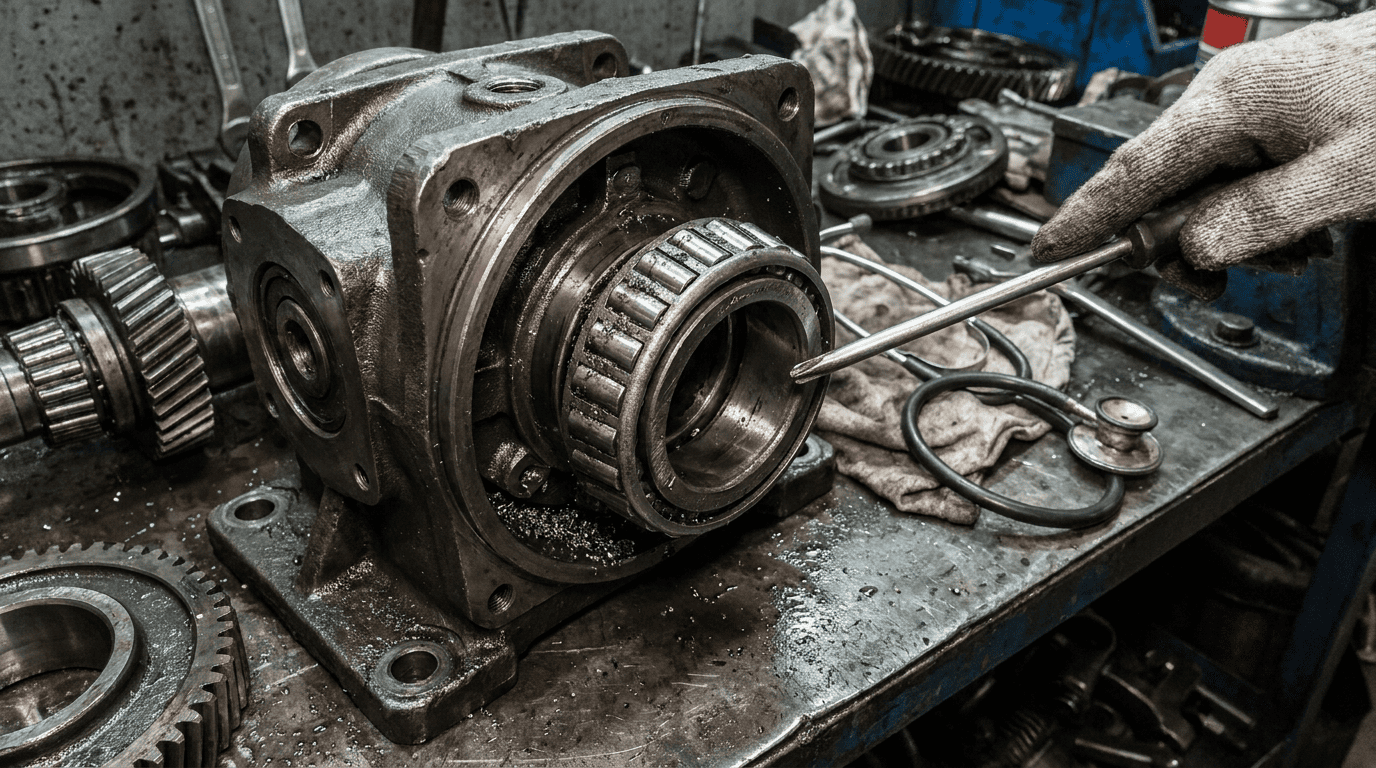
Troubleshooting Gearbox Bearing Noises starts with identifying the sound, operating condition, and bearing location before a small defect becomes an unplanned outage. In industrial gearboxes, bearing noise can signal lubrication failure, misalignment, overload, contamination, looseness, electrical damage, or progressive fatigue. For maintenance managers, plant engineers, reliability teams, mechanics, and purchasing professionals, the goal is not just to quiet the gearbox—it is to determine risk, protect production, and decide whether inspection, repair, rebuild, or replacement is the right next step. This guide explains how to diagnose gearbox bearing noises using practical field methods, vibration analysis, oil inspection, temperature checks, and failure pattern recognition.
Gearbox bearing noises are commonly caused by poor lubrication, contamination, misalignment, overloading, worn bearing races, damaged rolling elements, excessive shaft endplay, loose housings, or gear mesh issues being transmitted through the bearing locations. A low rumble often points to lubrication or wear, clicking may indicate spalling or cage damage, squealing can suggest lubricant starvation, and rhythmic knocking may indicate looseness, misalignment, or severe bearing damage. The best troubleshooting process is to document the noise, inspect lubricant condition, check temperature and vibration, verify alignment and mounting, isolate the bearing location, and plan repair before catastrophic failure.
If you’re experiencing unusual noises from your gearbox bearing, it may be beneficial to explore related topics that can provide further insights into gearbox maintenance and performance. One such article is titled “Gearboxes for Bucket Elevators,” which discusses the specific requirements and considerations for gearboxes used in bucket elevator applications. You can read more about it by following this link: Gearboxes for Bucket Elevators. This resource may help you understand how proper gearbox selection and maintenance can impact overall functionality and noise levels.
Why Gearbox Bearing Noise Matters
Bearing noise is one of the most common early warnings of industrial gearbox failure. Gearboxes are designed to transmit torque reliably under controlled loads, lubrication conditions, alignment tolerances, and operating temperatures. When bearings begin making abnormal sounds, they may be telling you that operating conditions have moved outside acceptable limits.
Ignoring bearing noise can lead to:
- Shaft damage
- Gear misalignment
- Tooth contact pattern problems
- Seal failure
- Lubricant degradation
- Bearing seizure
- Housing bore wear
- Coupling damage
- Unplanned downtime
- Full gearbox replacement
For facilities that depend on conveyors, mixers, extruders, crushers, cooling towers, mills, pumps, kilns, or heavy-duty production drives, bearing noise should be treated as a reliability event—not just a maintenance nuisance.
If your gearbox is already showing signs of abnormal sound, vibration, heat, or oil contamination, Industrial Gearbox Solutions can help with industrial gearbox inspection and repair and gearbox rebuild services.
Common Types of Gearbox Bearing Noises
Different bearing noises often point to different failure modes. While sound alone should not be the only diagnostic tool, it is a valuable starting point when paired with vibration, temperature, oil analysis, and inspection findings.
Rumbling or Growling Noise
A deep rumble or growl usually indicates rolling contact distress, inadequate lubrication, contaminated oil, or advanced bearing wear. This noise often increases with speed and load.
Common causes include:
- Fatigue spalling on inner or outer raceways
- Roller or ball surface damage
- Inadequate oil film thickness
- Dirty lubricant
- Incorrect lubricant viscosity
- Excessive radial load
- Bearing clearance problems
A rumbling gearbox should be prioritized for inspection, especially if the sound is growing louder or is paired with elevated temperature.
Squealing or Screeching Noise
High-pitched squealing often points to lubricant starvation, excessive friction, improper preload, or skidding rolling elements. In high-speed applications, it can occur when the bearing is not receiving enough oil or grease to maintain a protective film.
Possible causes include:
- Low oil level
- Blocked lubrication passages
- Wrong lubricant type
- Excessive bearing preload
- Overheating
- Insufficient viscosity at operating temperature
- Bearing cage distress
SKF provides excellent technical resources on bearing lubrication and failure modes at https://www.skf.com.
Clicking, Ticking, or Popping Noise
Clicking or ticking may indicate localized bearing damage. When a rolling element passes over a defect in the raceway, it can create a repeating impact sound.
Common causes include:
- Raceway spalling
- Cracked rolling element
- Damaged bearing cage
- Debris denting
- False brinelling
- Electrical fluting
- Loose fit on shaft or housing
If the clicking is periodic and changes with shaft speed, vibration analysis can often identify whether the defect is on the inner race, outer race, rolling element, or cage.
Knocking or Clunking Noise
Knocking is usually more severe than light ticking. It may indicate looseness, excessive clearance, shaft movement, cracked components, or severe bearing damage.
Likely causes include:
- Loose bearing fit
- Worn housing bore
- Broken bearing cage
- Excessive shaft endplay
- Misalignment
- Coupling issues
- Gear tooth damage transmitted through the shaft
A gearbox making a heavy knocking sound should be inspected immediately and may require shutdown depending on criticality and risk.
Whining or Howling Noise
Whining is often associated with gear mesh, but bearing problems can contribute to or amplify this sound. A high-pitched whine that changes with speed may be caused by improper gear contact, misalignment, bearing preload, or resonance.
Potential causes include:
- Gear mesh misalignment due to bearing wear
- Excessive bearing preload
- Shaft deflection
- Housing distortion
- Lubricant viscosity issues
- Resonant vibration
Because gear and bearing noises often overlap, technicians should avoid assuming all whining is gear-related without checking bearing condition.
Industrial gearbox bearing failure can lead to costly downtime and production losses, so it’s important to address the issue promptly. Industrial gearbox bearing failure
Causes of Gearbox Bearing Noises
A bearing becomes noisy when its surfaces, lubrication film, fit, geometry, or load path are compromised. Understanding the root cause helps prevent repeat failures after repair.
Lubrication Failure
Lubrication is one of the most common causes of gearbox bearing noise. Bearings require a lubricant film thick enough to separate metal surfaces under load. When that film fails, friction increases, heat rises, and noise develops.
Lubrication-related causes include:
- Low oil level
- Wrong oil viscosity
- Oxidized or aged oil
- Water contamination
- Solid particle contamination
- Incompatible lubricant
- Foaming or aeration
- Blocked oil passages
- Failed oil pump or spray system
Noria offers strong educational resources on lubrication best practices and oil analysis at https://www.noria.com.
Contamination
Contamination damages bearing surfaces and accelerates wear. Hard particles can create dents, scratches, and abrasive wear. Water can reduce lubricant film strength, cause corrosion, and promote additive depletion.
Common contaminants include:
- Dirt and dust
- Metal wear debris
- Process material
- Water
- Cleaning chemicals
- Coolant
- Incorrect lubricant
- Rust particles
Contamination often produces grinding, rumbling, or clicking noises depending on severity.
Misalignment
Misalignment changes the load distribution across the bearing. Instead of evenly carrying load, the bearing may experience edge loading, uneven raceway stress, and increased heat.
Misalignment may be caused by:
- Poor coupling alignment
- Soft foot
- Improper gearbox installation
- Foundation movement
- Thermal growth
- Shaft deflection
- Housing distortion
- Worn bearing seats
For help with alignment-related gearbox problems, see gearbox failure analysis.
Overloading
Bearings are selected for specific radial and axial loads. When a gearbox is overloaded, bearings may develop fatigue damage much earlier than expected.
Overload sources include:
- Increased production demands
- Jammed conveyors
- Shock loading
- Frequent starts and stops
- Improper gear ratio for the application
- Torque spikes
- Undersized gearbox
- Incorrect service factor
AGMA provides standards and guidance related to gear drive design and rating at https://www.agma.org.
Improper Bearing Fit or Installation
Even a new bearing can become noisy if it is installed incorrectly. Poor installation practices can damage raceways, cages, seals, and fits before the gearbox returns to service.
Common installation problems include:
- Hammering directly on bearing rings
- Applying force through rolling elements
- Incorrect heating method
- Excessive shaft interference
- Loose housing fit
- Wrong bearing clearance
- Improper preload
- Contaminated assembly environment
Timken provides useful bearing installation and maintenance resources at https://www.timken.com.
Electrical Damage
Motors, VFDs, and grounding problems can cause electrical current to pass through bearings. This may create fluting or pitting on bearing raceways. The result is often a distinct whining, humming, or washboard-like vibration signature.
Electrical damage is common in:
- VFD-driven equipment
- Large motor applications
- Poorly grounded systems
- Equipment without shaft grounding
- Applications with stray currents
Bearing Fatigue
All bearings have a fatigue life. Over time, repeated stress cycles can produce microscopic cracks that grow into spalling. Once spalling begins, noise and vibration typically increase.
Fatigue may be accelerated by:
- Overload
- Contamination
- poor lubrication
- Misalignment
- Improper bearing selection
- Excessive speed
- High temperature
If you’re experiencing unusual sounds from your gearbox bearing, it may be time to investigate further to prevent potential damage. A related article that provides valuable insights into gearbox maintenance and repair can be found here: industrial gearbox repair in Plainfield, Indiana. Understanding the common causes of noise can help you take the necessary steps to ensure your equipment operates smoothly and efficiently.
Symptoms That Often Accompany Gearbox Bearing Noise
| Reason | Impact |
|---|---|
| Lack of lubrication | Increased friction and wear on the bearing |
| Contamination | Causes abrasive damage to the bearing surfaces |
| Incorrect installation | Uneven load distribution leading to premature wear |
| Overloading | Excessive stress on the bearing leading to noise and failure |
Gearbox bearing noise rarely occurs alone. Supporting symptoms help confirm the likely failure mode and urgency.
| Symptom | Possible Meaning | Recommended Action |
||||
| Rising temperature | Lubrication failure, preload, overload, friction | Check oil level, viscosity, load, and bearing condition |
| Increased vibration | Bearing defect, looseness, misalignment | Perform vibration analysis |
| Metallic particles in oil | Bearing or gear wear | Conduct oil analysis and inspect magnet/plugs |
| Oil discoloration | Oxidation, overheating, contamination | Sample oil and review operating temperature |
| Intermittent clicking | Localized raceway or rolling element defect | Use vibration spectrum/envelope analysis |
| High-pitched squeal | Lubricant starvation or excessive preload | Verify lubrication delivery and bearing setup |
| Leaking seals | Pressure, shaft movement, worn seals | Inspect breather, shaft, and bearing endplay |
| Coupling wear | Misalignment or shaft movement | Check alignment and bearing fits |
Temperature Changes
A gearbox bearing that is failing often runs hotter than normal. However, temperature alone can be misleading because changes in ambient conditions, load, and lubricant viscosity can also affect readings.
Use temperature monitoring to establish trends rather than relying on one reading.
Vibration Increases
Vibration analysis is one of the most reliable ways to detect bearing damage before failure. Bearing defect frequencies can identify whether the problem is likely related to the inner race, outer race, rolling elements, or cage.
Oil Condition Changes
Oil is a diagnostic tool. If the lubricant contains metallic particles, water, sludge, or abnormal odor, the bearing noise may be part of a larger lubrication or wear issue.
For more guidance, see industrial gearbox maintenance.
Step-by-Step Troubleshooting Process
A disciplined troubleshooting process prevents guesswork and helps teams make better repair decisions.
Step 1: Document the Noise
Record the noise condition before making changes.
Document:
- Date and time
- Operating speed
- Load condition
- Oil temperature
- Ambient temperature
- Noise description
- Location where sound is loudest
- Recent maintenance history
- Recent process changes
- Vibration or temperature trends
Use a mechanic’s stethoscope, ultrasonic tool, or vibration sensor to locate the loudest bearing area.
Step 2: Determine When the Noise Occurs
When the noise occurs can narrow the cause.
| Noise Condition | Likely Cause |
|||
| At startup only | Low oil viscosity, dry start, preload, cold lubricant |
| Under load only | Overload, misalignment, gear mesh issue, bearing fatigue |
| At high speed | Lubrication starvation, imbalance, resonance, cage issue |
| During coast-down | Bearing defect, looseness, gear mesh change |
| Constant at all speeds | Severe wear, contamination, damaged bearing |
| Intermittent | Loose component, contamination, cage damage |
Step 3: Check Lubricant Level and Condition
Before assuming a bearing has failed, confirm the basics.
Inspect:
- Oil level sight glass
- Oil sampling port
- Breather condition
- Oil color and clarity
- Foam or aeration
- Water presence
- Metal particles
- Drain plug magnets
- Filter differential pressure
A low oil level or clogged lubrication system can cause immediate bearing noise and damage.
Step 4: Inspect for External Looseness
Noise can be amplified by loose components even when internal bearing damage is minor.
Check:
- Mounting bolts
- Foundation condition
- Coupling hubs
- Guarding
- Motor feet
- Gearbox feet
- Torque arm
- Fan assemblies
- Backstops
- Shaft keys and keyways
Loose mounting can create knocking or rattling that mimics internal gearbox damage.
Step 5: Perform Vibration Analysis
Vibration testing is essential for accurate gearbox bearing diagnosis. Use overall vibration, spectrum analysis, time waveform, and envelope detection when possible.
Look for:
- Bearing defect frequencies
- Harmonics
- Sidebands
- High-frequency impacts
- Gear mesh frequency changes
- Looseness indicators
- Misalignment patterns
A qualified analyst can often distinguish bearing defects from gear tooth damage, coupling misalignment, imbalance, and structural resonance.
Step 6: Use Oil Analysis
Oil analysis can reveal wear modes that sound alone cannot confirm.
Recommended tests include:
- Viscosity
- Water content
- Particle count
- Ferrous debris analysis
- Spectrometric metals
- Acid number
- Oxidation
- Additive depletion
- ISO cleanliness code
If bearing noise is accompanied by elevated iron, chromium, or other bearing alloy metals, internal inspection should be considered.
Step 7: Inspect Internally When Required
If vibration, oil analysis, and symptoms point to bearing distress, internal inspection may be necessary.
During inspection, look for:
- Spalling
- Pitting
- Scoring
- Smearing
- Cage cracks
- Roller skewing
- Corrosion
- Fluting
- Discoloration from heat
- Loose fits
- Housing bore wear
- Shaft journal damage
If the unit must be removed from service, Industrial Gearbox Solutions can support emergency gearbox repair and rebuild evaluation.
Inspection Methods for Gearbox Bearing Noises
Different inspection tools provide different levels of confidence. Combining methods improves accuracy.
Visual Inspection
Visual inspection is the first step and should include exterior and accessible interior checks.
Inspect:
- Seals
- Breathers
- Oil level
- Oil leaks
- Mounting bolts
- Couplings
- Shaft movement
- Housing cracks
- Paint discoloration from heat
- Oil condition
Acoustic and Ultrasonic Inspection
Acoustic tools help locate the source of noise. Ultrasonic devices can detect high-frequency friction and early-stage bearing defects before they are audible.
Useful for:
- Comparing identical bearing points
- Detecting lubrication starvation
- Identifying early bearing distress
- Trending changes over time
Infrared Thermography
Infrared inspection helps identify abnormal heat patterns. A hot bearing housing may indicate friction, overload, poor lubrication, or misalignment.
Best practices:
- Compare similar assets
- Record load and ambient conditions
- Trend readings over time
- Verify with contact temperature measurements
Borescope Inspection
A borescope allows limited internal inspection without complete teardown. It can help identify gear tooth damage, oil distribution problems, and visible bearing distress when access is available.
Precision Measurement
When a gearbox is disassembled, precision measurement is critical.
Measure:
- Shaft journals
- Housing bores
- Bearing seats
- Endplay
- Backlash
- Contact patterns
- Gear runout
- Bearing clearance
- Seal surfaces
These measurements help determine whether replacing bearings alone is enough or whether machining, sleeving, gear replacement, or full rebuild is required.
Gearbox Bearing Noise Troubleshooting Table
| Noise Type | Probable Cause | Inspection Method | Urgency |
|||||
| Deep rumble | Bearing wear, contamination, poor lubrication | Vibration, oil analysis, internal inspection | High |
| High-pitched squeal | Lubricant starvation, preload, friction | Oil level check, temperature, ultrasonic inspection | High |
| Clicking/ticking | Spalling, debris denting, cage damage | Vibration envelope, oil debris, borescope | Medium to high |
| Knocking/clunking | Looseness, severe bearing damage, shaft movement | Endplay check, vibration, internal inspection | High to critical |
| Whining/howling | Gear mesh issue, bearing preload, misalignment | Vibration, alignment, contact pattern | Medium to high |
| Grinding | Severe contamination or advanced wear | Oil analysis, magnet inspection, teardown | Critical |
| Humming with fluting pattern | Electrical bearing damage | Vibration, raceway inspection, grounding check | High |
Prevention: How to Reduce Gearbox Bearing Noise and Failure
Preventing bearing noise is easier and less expensive than reacting after damage has progressed.
Improve Lubrication Practices
Strong lubrication practices are essential for gearbox reliability.
Best practices include:
- Use the OEM-recommended lubricant type and viscosity
- Adjust viscosity for actual operating temperature
- Maintain proper oil level
- Use filtered transfer containers
- Avoid mixing incompatible lubricants
- Sample oil regularly
- Change oil based on condition, not guesswork
- Keep breathers clean and functional
- Use desiccant breathers in humid environments
- Maintain filtration systems
Control Contamination
Contamination control extends bearing and gear life.
Recommended practices:
- Install high-quality breathers
- Seal inspection covers properly
- Use clean oil handling equipment
- Filter new oil before filling
- Keep gearbox washdown water away from seals
- Maintain positive sealing where appropriate
- Replace damaged shaft seals promptly
- Monitor ISO cleanliness codes
Align Equipment Correctly
Precision alignment reduces bearing load and extends gearbox life.
Alignment practices:
- Correct soft foot
- Use laser alignment where possible
- Account for thermal growth
- Check coupling condition
- Verify baseplate integrity
- Recheck alignment after startup
- Monitor alignment after foundation repairs
Manage Load and Shock
Unexpected overloads shorten bearing life.
To reduce overload risk:
- Confirm gearbox service factor
- Review torque requirements
- Use soft starts or VFD ramping where appropriate
- Avoid repeated shock loading
- Inspect driven equipment for jams
- Monitor process changes
- Confirm gearbox is correctly sized
Train Maintenance Personnel
Many bearing failures begin during installation or maintenance. Training mechanics on bearing handling, heating, mounting, fits, and lubrication can prevent repeat failures.
Repair vs. Replacement: How to Decide
When gearbox bearing noise is confirmed, the next question is whether to repair, rebuild, or replace the gearbox.
When Repair May Be Enough
Repair may be suitable when:
- Damage is limited to bearings and seals
- Gears are in good condition
- Shafts are within tolerance
- Housing bores are not worn
- Lead time for replacement is long
- The gearbox is valuable or custom-built
- Root cause can be corrected
Typical repair scope may include bearing replacement, seal replacement, cleaning, inspection, lubrication system service, and alignment correction.
When a Full Rebuild Is Better
A rebuild may be appropriate when bearing noise has caused secondary damage.
A rebuild may include:
- Bearing replacement
- Seal replacement
- Gear inspection or replacement
- Shaft repair or replacement
- Housing bore restoration
- Gear contact pattern correction
- Backlash adjustment
- Lubrication system repair
- Load testing when available
See gearbox rebuild services for more information.
When Replacement Makes Sense
Replacement may be the better option when:
- Housing is cracked or severely worn
- Gears are obsolete and damaged
- Repair cost approaches replacement cost
- A more efficient gearbox is available
- Existing gearbox is undersized
- Downtime risk is unacceptable
- Lead time and lifecycle cost favor replacement
Purchasing professionals should evaluate not only purchase price but also availability, warranty, installation cost, production risk, and expected service life.
Maintenance Best Practices for Noisy Gearboxes
A noisy gearbox needs immediate attention, but long-term reliability depends on a maintenance program that finds defects early.
Recommended Maintenance Checklist
| Task | Frequency | Purpose |
||||
| Check oil level | Daily or weekly | Prevent lubricant starvation |
| Listen for abnormal noise | Daily or weekly | Detect early changes |
| Check temperature | Weekly or monthly | Identify friction or overload |
| Inspect seals and leaks | Weekly | Prevent contamination and oil loss |
| Sample oil | Quarterly or based on criticality | Monitor lubricant and wear condition |
| Vibration analysis | Monthly, quarterly, or continuous | Detect bearing and gear defects |
| Check breathers | Monthly | Prevent moisture and dirt ingress |
| Verify alignment | Annually or after repairs | Reduce bearing loads |
| Inspect mounting bolts | Scheduled PM | Prevent looseness |
| Review operating load | Periodically | Prevent overload failures |
What to Do If Noise Suddenly Gets Worse
If gearbox bearing noise rapidly increases:
- Reduce load if possible
- Check oil level immediately
- Inspect for leaks
- Measure temperature
- Collect vibration data
- Pull an oil sample
- Inspect magnetic plugs or filters
- Prepare contingency plans
- Avoid running to destruction if the gearbox is critical
In critical applications, shutting down early can save shafts, gears, and housings.
FAQs About Troubleshooting Gearbox Bearing Noises
What does a bad gearbox bearing sound like?
A bad gearbox bearing may sound like rumbling, growling, grinding, clicking, squealing, knocking, or humming. The exact sound depends on the failure mode. Spalling often produces clicking or rumbling, lubricant starvation may create squealing, and severe looseness can cause knocking.
Can a gearbox bearing make noise even if vibration levels are low?
Yes. Early lubrication problems, resonance, or intermittent defects may produce audible noise before vibration alarms trigger. However, vibration analysis is still one of the best tools for confirming bearing defects and tracking severity.
Is gearbox whining always a gear problem?
No. Whining is often related to gear mesh, but worn bearings, misalignment, preload, shaft deflection, or housing distortion can change gear contact and create or amplify whining. Both gears and bearings should be evaluated.
How long can a noisy gearbox bearing run?
It depends on the severity and cause. A lightly noisy bearing with early-stage damage may run for weeks or months under controlled conditions, while a bearing suffering from lubricant starvation or severe spalling can fail quickly. Trend vibration, temperature, and oil debris to assess risk.
Should I add more oil if the gearbox bearing is noisy?
Only add oil if the level is low and the correct lubricant is available. Overfilling can cause foaming, heat, and leakage. Always verify the correct oil type, viscosity, and fill level.
Can contaminated oil cause bearing noise?
Yes. Dirt, metal particles, and water contamination can damage bearing surfaces, reduce lubricant film strength, and cause grinding, rumbling, or clicking noises. Oil analysis and filtration are recommended.
What is the best test for gearbox bearing noise?
The best approach combines vibration analysis, oil analysis, temperature trending, acoustic inspection, and visual inspection. No single test tells the entire story, but vibration and oil analysis together provide strong diagnostic evidence.
When should a noisy gearbox be shut down?
Consider shutdown if noise is rapidly worsening, temperature is rising, vibration is high, oil contains heavy metal debris, seals are failing, or the gearbox is critical to safety or production. Severe knocking, grinding, or overheating should be treated as urgent.
Key Takeaways
- Gearbox bearing noise is an early warning sign that should be investigated quickly.
- Rumbling, squealing, clicking, knocking, grinding, and whining each suggest different possible failure modes.
- Common causes include lubrication failure, contamination, misalignment, overload, improper installation, electrical damage, and fatigue.
- Troubleshooting should include noise documentation, oil inspection, vibration analysis, temperature checks, alignment review, and internal inspection when needed.
- Oil analysis and vibration analysis are among the most valuable tools for confirming bearing damage.
- Repair may be enough for isolated bearing damage, but a full rebuild may be required if shafts, gears, fits, or housings are affected.
- Preventive maintenance, contamination control, proper lubrication, and precision alignment are the best ways to reduce repeat bearing noise and failure.
Suggested Branded Images
Image 1: Technician Using Stethoscope on Industrial Gearbox
Alt text: Technician troubleshooting gearbox bearing noises with a mechanic’s stethoscope
Caption: Acoustic inspection helps locate abnormal bearing noise before teardown.
Image 2: Close-Up of Spalled Gearbox Bearing Race
Alt text: Spalled bearing race from industrial gearbox bearing failure
Caption: Raceway spalling often creates clicking, rumbling, or vibration changes.
Image 3: Oil Sample with Metallic Wear Debris
Alt text: Contaminated gearbox oil sample with metallic bearing wear particles
Caption: Oil analysis can confirm wear debris linked to bearing or gear damage.
Image 4: Vibration Analyst Testing Gearbox Bearing Housing
Alt text: Vibration analysis sensor mounted on industrial gearbox bearing housing
Caption: Vibration testing helps identify bearing defect frequencies and severity.
Image 5: Rebuilt Industrial Gearbox in Service Center
Alt text: Industrial gearbox rebuild after bearing noise diagnosis
Caption: A complete rebuild may be required when bearing noise causes secondary damage.
SEO Metadata
SEO Title
Troubleshooting Gearbox Bearing Noises: Causes, Symptoms, Inspection & Repair
Meta Description
Learn how to troubleshoot gearbox bearing noises, including common causes, symptoms, inspection methods, vibration analysis, oil checks, prevention, and repair vs. replacement guidance.
Primary Keyword
Troubleshooting Gearbox Bearing Noises
Secondary Keywords
- gearbox bearing noise
- industrial gearbox troubleshooting
- noisy gearbox bearing
- gearbox bearing failure symptoms
- gearbox vibration analysis
- gearbox lubrication failure
- gearbox repair
- industrial gearbox maintenance
Suggested URL Slug
troubleshooting-gearbox-bearing-noises
Search Intent
Informational and commercial investigation: users want to identify the cause of gearbox bearing noise, determine severity, and decide whether inspection, repair, rebuild, or replacement is needed.
Recommended Internal Links
- Industrial Gearbox Repair
- Gearbox Rebuild Services
- Gearbox Failure Analysis
- Industrial Gearbox Maintenance
- Emergency Gearbox Repair
Authoritative External Sources
- SKF bearing maintenance and lubrication resources: https://www.skf.com
- Timken bearing installation and service resources: https://www.timken.com
- AGMA gear drive standards and technical resources: https://www.agma.org
- Noria lubrication and oil analysis education: https://www.noria.com
Conclusion
Troubleshooting gearbox bearing noises requires more than listening for a sound and replacing parts. A noisy bearing may be the symptom of lubrication failure, contamination, misalignment, overload, installation error, electrical damage, or fatigue. The most reliable approach is to document the noise, inspect the lubricant, measure vibration and temperature, verify alignment and mounting, and perform internal inspection when evidence points to bearing distress.
For maintenance and reliability teams, the objective is to prevent a bearing issue from becoming a shaft, gear, housing, or production failure. For purchasing professionals, the right decision depends on lifecycle cost, lead time, criticality, and whether the gearbox can be repaired or should be replaced.
If your gearbox is rumbling, clicking, squealing, knocking, overheating, leaking, or showing elevated vibration, Industrial Gearbox Solutions can help diagnose the problem and recommend the right repair or rebuild path.
FAQs
What are the common causes of gearbox bearing noise?
Common causes of gearbox bearing noise include lack of lubrication, worn-out bearings, misalignment, and excessive loads on the gearbox.
How can I diagnose gearbox bearing noise?
You can diagnose gearbox bearing noise by listening for unusual sounds such as grinding, whining, or rumbling coming from the gearbox. Additionally, you can inspect the gearbox for any signs of wear or damage on the bearings.
What are the potential consequences of ignoring gearbox bearing noise?
Ignoring gearbox bearing noise can lead to further damage to the gearbox, increased wear on other components, and potential failure of the gearbox, resulting in costly repairs and downtime.
How can gearbox bearing noise be prevented?
Gearbox bearing noise can be prevented by ensuring proper lubrication, regular maintenance and inspections, and addressing any issues such as misalignment or excessive loads promptly.
When should I seek professional help for gearbox bearing noise?
If you notice unusual noise coming from the gearbox, it is advisable to seek professional help immediately to diagnose and address the issue before it leads to further damage or failure of the gearbox.